REVIEW · PARIS
Montmartre guided walking tour with local guide in small group
Book on Viator →Operated by Paris Tours Experiences · Bookable on Viator
Montmartre is better when someone points things out. This small-group walking tour threads together the big sights and the small details, from the mosaic at Sacré-Cœur to the artist-soaked corners of the hill. You’ll get a guided route in English (mobile ticket included) that stays easy to follow, with stops that feel like chapters instead of random photo spots.
Two things I really like: first, the pace. About 2 hours 20 minutes gives you enough time to learn without feeling like you’re sprinting up cobblestones. Second, the storytelling angle. Guides can connect art, music, and neighborhoods—so when you see a place like Place du Tertre, it comes with context instead of just scenery.
One possible drawback: Montmartre is hilly, and this tour is not recommended for reduced mobility. If steps or steep grades are tough for you, you’ll want to plan for that before booking.
In This Review
- Key highlights you’ll feel fast
- Why Montmartre feels different on a guided walk
- Carrousel de Saint-Pierre: your start point and orientation
- Le Mur des Je t’aime: the Wall of Love in 20 minutes
- Le Bateau-Lavoir: where Picasso’s Cubism started
- La Maison de Dalida and Place Dalida: music meets the street
- La Petite Maison Rose and Place du Tertre: Montmartre’s artist core
- Finishing at Sacré-Cœur: mosaic, views, and the big church moment
- Guides can make the uphill feel easy (and fun)
- Price and value: what $42.05 gets you in real terms
- Who this Montmartre walk suits best
- Should you book this Montmartre guided walking tour?
- FAQ
- How long is the Montmartre guided walking tour?
- What does the tour cost?
- How big is the group?
- Is the tour offered in English?
- Where do I meet the guide and where does the tour end?
- Do I need tickets or is admission free at the stops?
- Is a guided tour included?
- What’s not included?
- Can I cancel for a full refund?
Key highlights you’ll feel fast
- Small group cap of 10 means questions and quick course-corrections if the group gets separated
- Sacré-Cœur finale includes the church experience and time to take in the area around the basilica
- Picasso connection at Le Bateau-Lavoir ties the neighborhood to the start of Cubism
- Dalida stops on the route add a pop-culture layer to Montmartre beyond painters
- Le Mur des Je t’aime gives you a memorable, quick-hit landmark that’s easy to understand
Why Montmartre feels different on a guided walk
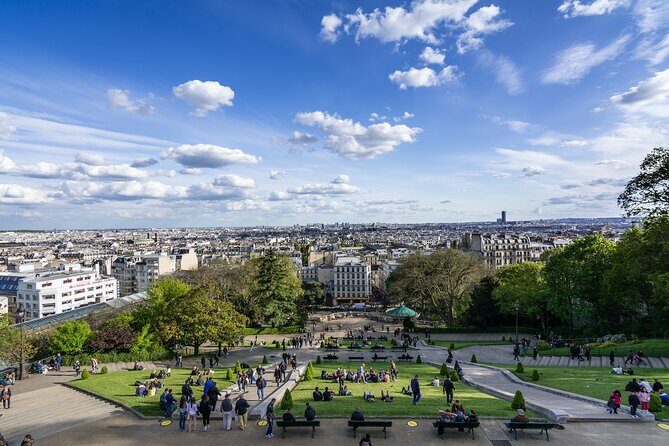
Montmartre can be a bit like a movie set: pretty, chaotic, and easy to wander past without noticing what matters. This kind of guided route helps you read the neighborhood. You stop where stories begin, not just where crowds point.
The other win is the structure. You’re moving through a clear sequence—meeting at Carrousel de Saint-Pierre, working your way through key landmarks, then finishing at Sacré-Cœur. That means you spend less time deciding where to go next, and more time looking up at facades, down alleyways, and across squares.
And because it’s offered in English, you’re not stuck playing museum-translation roulette. You can actually follow the thread of how art and music shaped this hillside district.
You can also read our reviews of more walking tours in Paris



Carrousel de Saint-Pierre: your start point and orientation
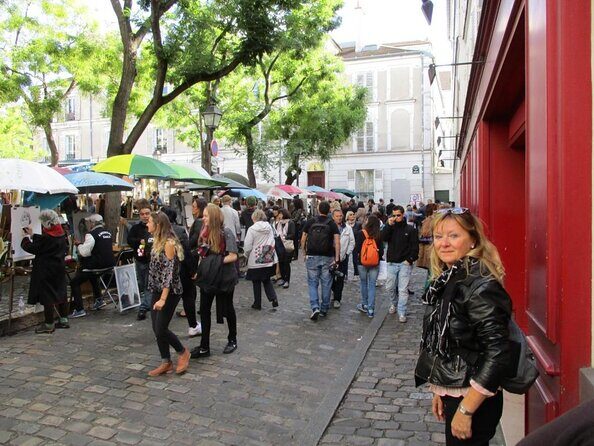
You meet at Carrousel de Saint-Pierre at Pl. Saint-Pierre (75018). Expect a short setup period—about 20 minutes is built around the meeting point timing.
This first stop matters more than you might think. Carrousel de Montmartre is a practical anchor: it helps you get your bearings quickly, especially if it’s your first time navigating the hill streets. It also sets the tone for the walk. When the guide starts by framing what you’re about to see—artists’ squares, famous facades, and the mix of religious and creative Montmartre—it makes every next corner feel connected.
Quick tip: wear shoes that can handle uneven pavement. The route includes uphill segments, and Montmartre’s charm comes with real street texture under your feet.
Le Mur des Je t’aime: the Wall of Love in 20 minutes
Next up is Le Mur des Je t’aime—the Wall of Love. You’ll spend about 20 minutes here, which is a sweet spot. Long enough to take photos, read the symbolism, and understand why this spot became such an icon.
What makes this stop work on a walking tour is that it’s easy to grasp. The wall is a clear landmark, and it gives you a quick emotional palate cleanser between deeper art stops. If you’re traveling with someone who thinks tours are mostly lectures, this is often where you’ll both relax and enjoy the moment.
Also, because the tour notes admission as free for this stop, it’s less hassle. You’re not losing time hunting ticket windows.
Le Bateau-Lavoir: where Picasso’s Cubism started
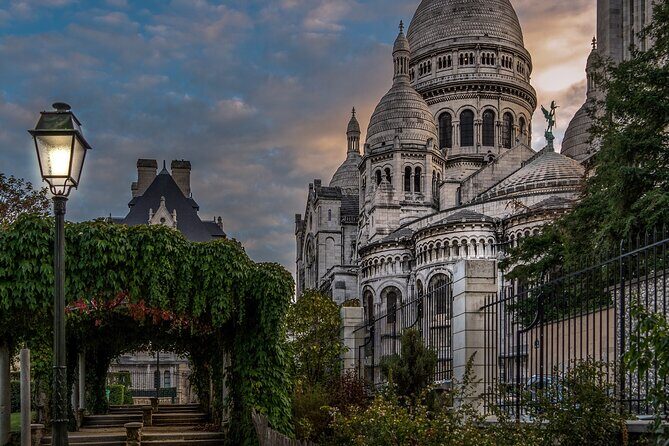
Then comes Le Bateau-Lavoir, another 20-minute stop. This is the Picasso-linked landmark that points to the beginnings of Cubism.
Here’s why I like this as a guided stop: it turns a name you’ve heard into an actual sense of place. Instead of treating Picasso like a distant museum chapter, you’re seeing the setting tied to the start of a major art shift. That neighborhood-to-art connection is exactly what makes Montmartre more than a pretty hill.
There’s also a practical angle. This kind of stop helps you look at architecture differently. You start noticing the way streets funnel views, how studios fit into the urban fabric, and why artists were drawn to this area in the first place.
And yes—admission at this stop is listed as free, so you can keep your day simple.
La Maison de Dalida and Place Dalida: music meets the street

After Picasso’s trail, you’ll switch gears with La Maison de Dalida (about 20 minutes). The walk moves by Dalida’s house and includes music-related stories tied to Montmartre.
This is a smart inclusion, especially if you think Montmartre is only about paintings and painters. Dalida represents another kind of creativity—one that feels closer to modern visitors. It also changes your mental image of the neighborhood. You begin to see it as a stage, not just a studio district.
From there you go to Place Dalida, where there’s a famous bust of Dalida. Again, you’ll get around 20 minutes. This is one of those stops that works as a photo moment, but it also helps you understand why Dalida’s name is attached to this corner of Montmartre.
One practical consideration: if you prefer quieter streets, the area around major landmarks can get busy. The tour’s small group size (max 10) helps you move through at a human pace without feeling like cattle.
You can also read our reviews of more guided tours in Paris





La Petite Maison Rose and Place du Tertre: Montmartre’s artist core
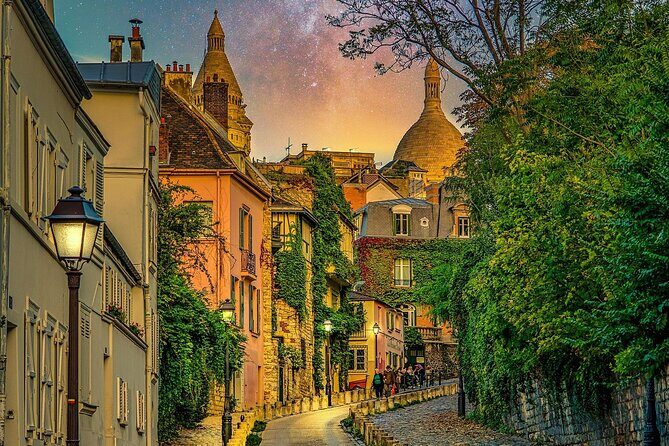
Two more 20-minute stops bring you deeper into the artist heart of the hill.
First is La Petite Maison Rose de Montmartre (since 1920). The name tells you what to look for: a small pink house tied to artists who were born or connected to Montmartre’s creative scene. This kind of stop is fun because it trains your eye. You start spotting details—the colors, the shape of buildings, the way Montmartre preserves small-scale charm even as it draws crowds.
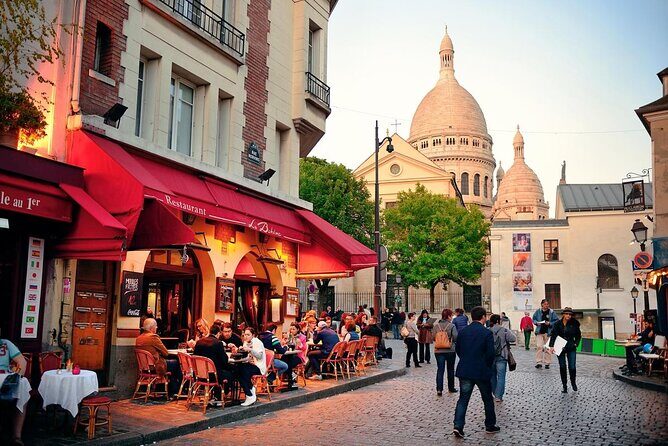
Then you reach Place du Tertre, the artists’ square. This is where the neighborhood’s identity becomes obvious. The square is described as rich in Parisian charm, and that’s exactly what you’ll feel: it’s the place where Montmartre performs itself.
Here’s the “guide value” piece. Without a guide, you can treat Place du Tertre like a backdrop. With one, you start understanding how the area’s reputation was built—through art markets, portraits, and the theater of street creativity. You’re not just watching; you’re decoding.
A quick self-check before you go: if you hate waiting for photos or browsing stalls, tell yourself you’ll keep it brisk here. Place du Tertre can tempt you into staying longer than planned, and your tour is designed to finish at Sacré-Cœur.
Finishing at Sacré-Cœur: mosaic, views, and the big church moment
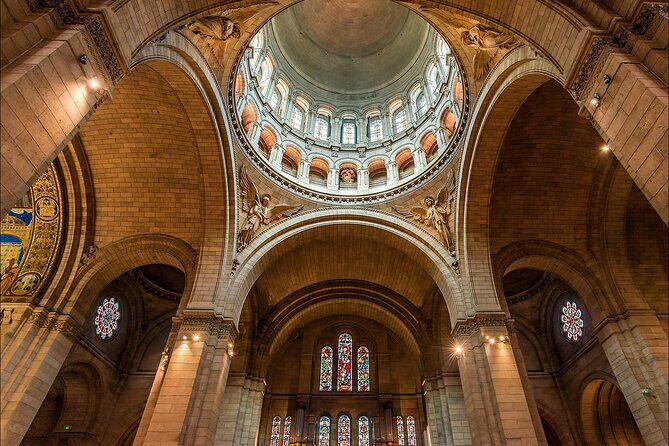
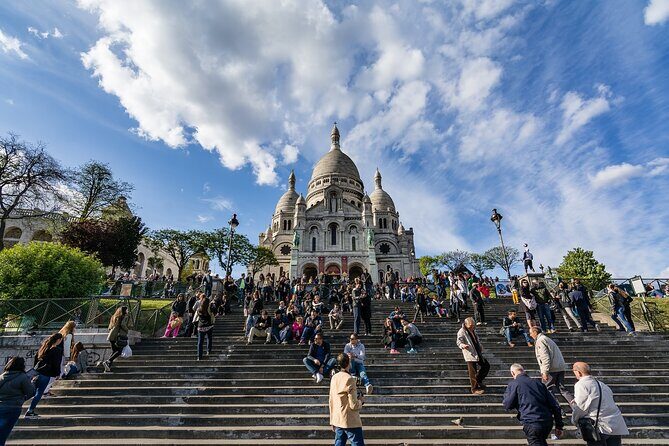
Your walk ends at Basilique du Sacré-Cœur de Montmartre on 35 Rue du Chevalier de la Barre. The route finishes by the basilica, described as one of the most famous church sites of Montmartre and the second most visited of the world.
Sacré-Cœur is not just a pretty end point. It’s the spiritual and visual payoff of the whole tour route. You started with street creativity and icon landmarks; now you reach the place that crowns the hill.
The tour highlight specifically calls out Sacré-Cœur and the “world’s largest mosaic of Jesus.” That mosaic detail gives you a reason to look carefully rather than just stand for a quick picture. If you pace yourself, you’ll have time to take in the basilica area and get your bearings for any onward plans.
Practical advice: plan your energy. The last leg can be the steepest part of the day. If you’re winded, don’t fight it—use the final minutes to pause, breathe, and enjoy the scale of the place. Big churches take time to take in, and that’s part of the experience.
Guides can make the uphill feel easy (and fun)
This tour’s quality shows in the way guides tell the story. In the supplied feedback, one name comes up often: Yazid. His style is described as enthusiastic and energetic, with humor that keeps people engaged even as the walk winds uphill. I’d treat that as a sign of what you can expect: not dry lectures, but a guide who uses pacing and small jokes to keep the group moving.
Other guide names also appear: Marcella is noted for expertise and descriptions of the visited areas, and Jean Baptiste is mentioned for being fun and informative while moving through lots of interesting spots. Translation: this isn’t a one-note tour.
How you can get the most out of it:
- Ask a question early, not at the end. Small groups make that easier.
- When the guide mentions music or artists, look around immediately. Don’t wait until later to mentally file the info.
- If you’re the type who loves facts, you’ll likely enjoy the art and architecture connections woven through the route.
Price and value: what $42.05 gets you in real terms
At $42.05 per person for about 2 hours 20 minutes, you’re paying for three things: a local guide, a structured walk through major landmarks, and enough time at each stop to actually see what you came for.
A self-guided Montmartre day can be great, but you risk missing the links. Paying for a guide helps you connect the dots—Picasso to a specific location, Dalida to places with meaning, and Sacré-Cœur to why it matters beyond being the final photo.
You also get a mobile ticket, which reduces day-of friction. And admission is listed as free at several stops (including Le Mur des Je t’aime and Le Bateau-Lavoir, plus others on the route). That means you’re not juggling extra costs or scrambling for tickets while your feet are already working overtime.
Is it the cheapest way to see Montmartre? No. But at this price point, it can still feel like good value if you care about context—not just scenery.
Who this Montmartre walk suits best
This tour is listed as Most travelers can participate, and it allows service animals. That’s a good sign for practical planning.
Still, it’s also marked as not recommended for travelers with reduced mobility. The route is described in feedback as a winding uphill walk, so if your mobility is limited, the hills will be the limiting factor—not the number of stops.
This is a great fit if you:
- Want to see the main Montmartre landmarks without building a route
- Like art and stories, including music-related ones
- Prefer a small group (max 10) over crowded, slow-moving tours
If you’re coming to Paris for a quick hit and want one Montmartre experience that ties everything together, this is a strong candidate.
Should you book this Montmartre guided walking tour?
If you want Montmartre with meaning, I’d book it. The route focuses on famous, easy-to-understand landmarks—Sacré-Cœur, Le Mur des Je t’aime, the Picasso connection, Dalida stops, and Place du Tertre—while still giving you enough time to look closely instead of just pass through.
I’d skip it only if hills are a big problem for you or if you dislike structured walking tours. Also, bring realistic expectations: Sacré-Cœur is a major sight, so you’ll want to move and look at a pace that works for you.
If you’re choosing between random wandering and a guided storyline, this one leans toward the better payoff for your time.
FAQ
How long is the Montmartre guided walking tour?
It’s approximately 2 hours 20 minutes.
What does the tour cost?
The price is $42.05 per person.
How big is the group?
The tour has a maximum of 10 travelers.
Is the tour offered in English?
Yes, it’s offered in English.
Where do I meet the guide and where does the tour end?
You meet at Carrousel de Saint-Pierre, Pl. Saint-Pierre, 75018 Paris. The tour ends at Basilique du Sacré-Cœur de Montmartre, 35 Rue du Chevalier de la Barre, 75018 Paris.
Do I need tickets or is admission free at the stops?
The stops listed on the route show free admission ticket for each of those points.
Is a guided tour included?
Yes, the guided tour is included.
What’s not included?
Tips, and food and drinks are not included.
Can I cancel for a full refund?
Yes, you can cancel for a full refund if you cancel at least 24 hours in advance of the experience start time.