REVIEW · PARIS
Montmartre & Sacré Coeur: 2.5-Hour Walking Tour
Book on GetYourGuide →Operated by Babylon Tours LLC · Bookable on GetYourGuide
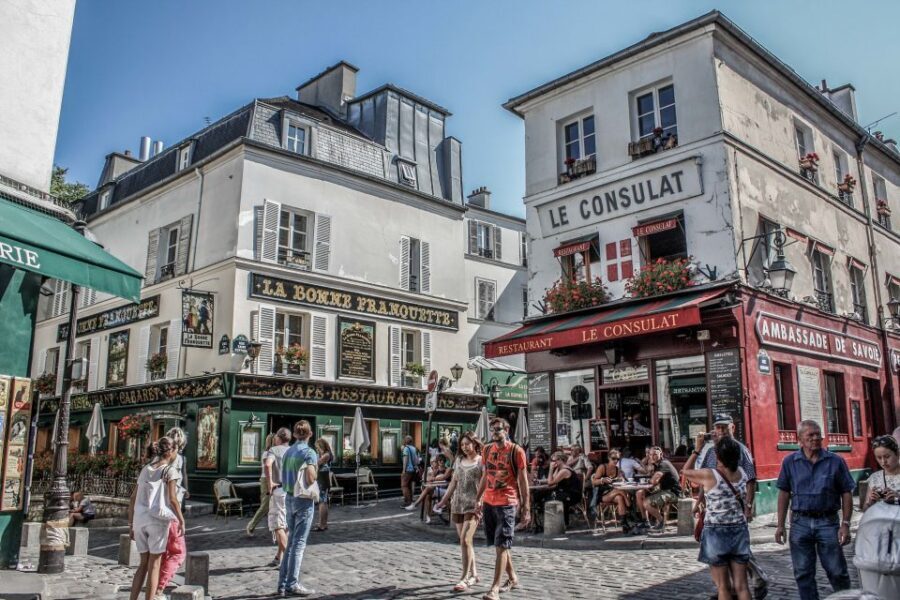
Montmartre feels like a movie set.
This 2.5-hour walking tour takes you through the hilltop quarter where old Paris still shows through: cobbled streets, artist hangouts, and the kind of stop-and-stare corners you’d miss if you just wandered. You’ll also get context for the Belle Époque and the neighborhood’s famous cabarets, not just a list of sights.
Two things I really like about this experience are the mix of art-focused landmarks and the guide-led storytelling. You’ll see Place du Tertre and then connect that vibe to where artists lived and worked, including the home of Van Gogh and Pablo Picasso’s art studio, plus Toulouse-Lautrec’s former haunts. The other big plus is the finish at Sacré-Cœur, with its iconic white basilica and panoramic views when the light starts to turn.
One consideration: this is a moderate walking tour with lots of hills. Good shoes matter, and it’s not suitable for people with mobility impairments or wheelchair users. If your legs get cranky on steep cobblestones, plan for slower moments and fewer photo sprints.
In This Review
- Quick hits: what makes this Montmartre & Sacré-Cœur walk worth it
- Why Montmartre feels different on foot
- Getting oriented: the Montmartre streets and the art behind them
- Place du Tertre: postcard Paris with real street life
- The Moulin Rouge stop: seeing the cabaret beyond the sign
- Van Gogh and Picasso connections you can actually picture
- A note on Toulouse-Lautrec: the atmosphere he’s tied to
- The Sacré-Cœur moment: when the hill finally pays off
- What the guide experience adds (and who might be your guide)
- Pacing, walking comfort, and the practical side of Montmartre
- Timing: why the 2.5 hours works well
- Is there food? What you should do with your appetite
- Value check: what you’re paying for (and what it saves you)
- Who this tour is for—and who should skip it
- Should you book the Montmartre & Sacré-Cœur walking tour?
- FAQ
- How long is the Montmartre & Sacré Coeur walking tour?
- What’s included in the price?
- Does this tour visit Sacré-Cœur?
- How many people are in a group?
- Is this tour private?
- What languages are the guides available in?
- Do I need to bring ID?
- Can I bring luggage or a large bag?
- Is the tour suitable for wheelchair users or people with mobility impairments?
- What if Sacré-Cœur or a venue has an unexpected closure?
Quick hits: what makes this Montmartre & Sacré-Cœur walk worth it
- Small group feel with a max of 12 guests per guide for a more personal pace
- Real artist geography, including Van Gogh and Picasso-linked stops (plus Toulouse-Lautrec-era stories)
- Place du Tertre for that quintessential Montmartre scene of street art and outdoor creativity
- Moulin Rouge seen in context, with the cabaret history tied to what you’re looking at
- Sacré-Cœur visit + Paris panorama, timed to the downhill view that hits hard at sunset
- Guide quality varies by person, but the strong reviews consistently praise energy and clear art/history framing
Why Montmartre feels different on foot
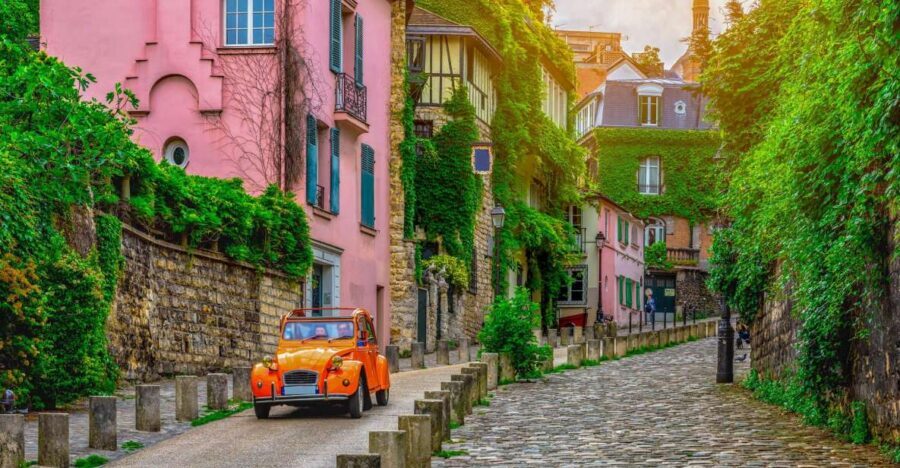
Montmartre is one of those Paris neighborhoods where walking actually changes what you notice. On the ground, the streets don’t feel like a grid. They feel like shortcuts through different eras, with views that pop up between buildings like a surprise.
This tour is built around that hilltop rhythm. You’ll move through the “village on a hill” feel of Montmartre, then shift from street-level charm to landmark-level drama at Sacré-Cœur. And because it’s guided, the sights connect in your head instead of turning into a pile of photos.
You can also read our reviews of more walking tours in Paris



Getting oriented: the Montmartre streets and the art behind them
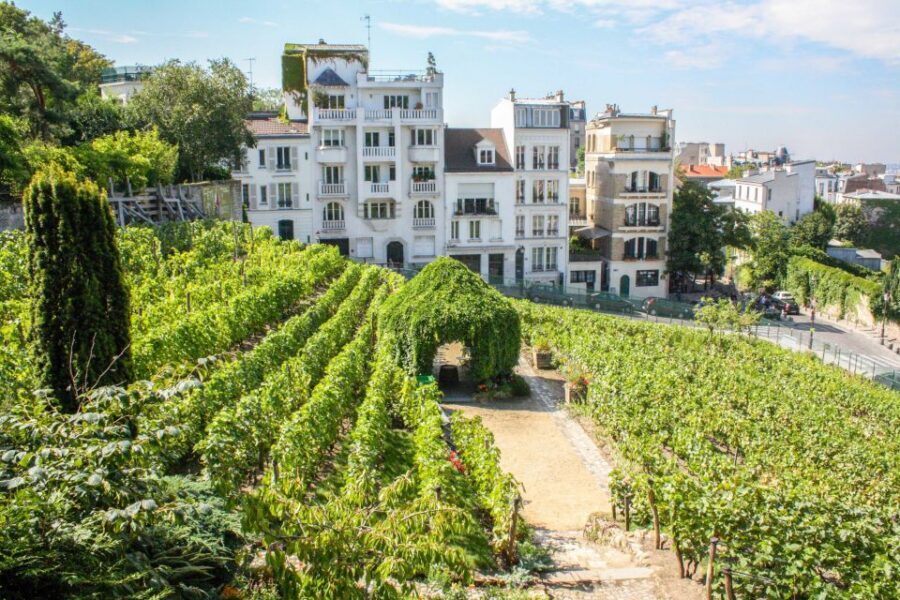
The best part of a guided Montmartre walk is that it helps you read the neighborhood. From cobbled lanes to tiny squares, you start to understand why people keep talking about this place as an artist magnet.
Your guide covers the neighborhood’s story in an English-speaking, lively way (languages offered include Spanish, English, Italian, French, Russian, and German). You’ll hear about the area’s cabarets and the Belle Époque energy that made Montmartre a magnet for performers, painters, and writers. That’s what turns a walk into a sense of place.
You’ll also walk in the footsteps of famous names, including stops connected with Vincent van Gogh, Pablo Picasso, and Henri de Toulouse-Lautrec. Even if you’re not chasing every museum-level fact, you’ll come away with a map in your mind: where creativity clustered, how the streets fed that scene, and why the neighborhood became legend.
Place du Tertre: postcard Paris with real street life
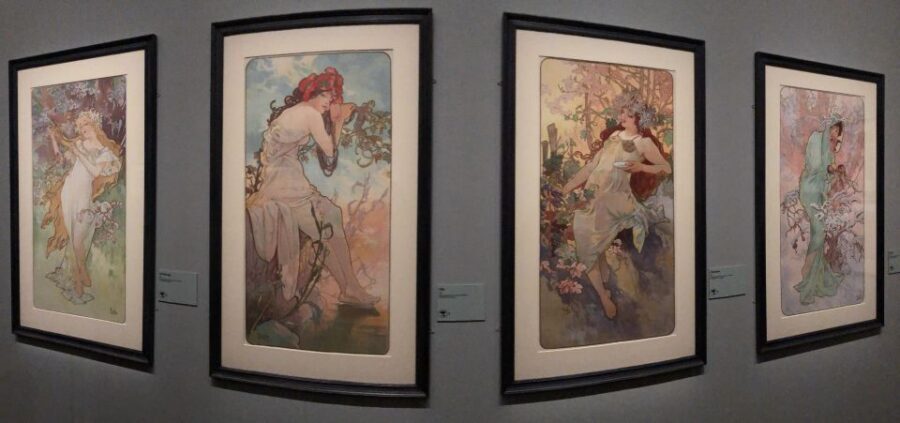
Place du Tertre is Montmartre’s public stage. It’s where you feel the neighborhood’s artist identity most strongly—outdoor drawing, display tables, and that slightly chaotic, creative energy that looks staged until you’re standing in it.
On this tour, Place du Tertre isn’t just a quick photo stop. You get it as a living part of Montmartre’s history: a place where you can understand the neighborhood’s long-running reputation for art and performance. It’s also a good spot for pausing, people-watching, and taking in the viewlines that don’t show up from the main roads.
If you want value from the time you spend here, ask your guide what to look for: how the square fits into the broader artist neighborhood, and how it links back to the names you hear all tour long. This is where the walking tour starts to click.
The Moulin Rouge stop: seeing the cabaret beyond the sign
Montmartre and the Moulin Rouge are basically joined at the hip. But the trick is to see it as more than an iconic building.
You’ll learn the cabaret story behind the lights, including why this area became synonymous with performance. That context matters because it changes the feeling of the stop: you’re not just checking off a landmark. You’re understanding why this corner of Paris earned its reputation.
If you’ve seen the Moulin Rouge image a hundred times, this is your chance to put it into a timeline. A good guide makes that connection fast, and many guides on this experience are praised for bringing strong art/history framing (including energetic, conversational delivery).
Van Gogh and Picasso connections you can actually picture
One of Montmartre’s strengths is that it turns famous artists into walkable geography. With this tour, you don’t just hear names—you connect them to places on the hill.
You’ll visit the home of Van Gogh, plus see where Picasso’s art studio was. That matters for how you absorb the neighborhood. If you’ve ever stood in a museum and thought the labels didn’t feel real, walking between artist-linked locations is the fix. Your brain can connect the human story to the streets.
Guides with an art history background can make these stops feel especially sharp. In reviews tied to this experience, guides like Anastasia and Liliyana are singled out for linking art ideas to the physical places you see, so the stories land instead of floating by.






A note on Toulouse-Lautrec: the atmosphere he’s tied to
Henri de Toulouse-Lautrec’s name shows up throughout Montmartre. On this walk, you’ll get those “former haunts” referenced as part of the larger cabaret and nightlife story that shaped the neighborhood.
The value here isn’t pretending you’re in the exact room from 1900. It’s learning how the vibe and creative culture worked together. When your guide connects Toulouse-Lautrec to the cabaret scene, you start to see how Montmartre’s creative engine ran.
The Sacré-Cœur moment: when the hill finally pays off
Then you climb—because of course you do. Montmartre is built on slopes, and the route to Sacré-Cœur rewards that effort with a payoff you can feel.
The tour includes a visit to Sacré Coeur Cathedral (Sacré-Cœur). You’ll be standing before that white basilica that seems to glow even when the sky doesn’t cooperate. And you’ll get the big view over Paris, especially as the light shifts toward evening.
From a planning standpoint, this is one reason I like taking Sacré-Cœur as part of a guided walk. You get the emotional moment plus the “why” behind it. The guide helps you understand what you’re seeing and why the basilica sits where it does—both visually and historically.
One review standout phrase was that the view from Sacré-Cœur felt unbelievable. That matches the reality: it’s one of those spots where the city looks different, and you instantly understand why people climb the hill just for this.
What the guide experience adds (and who might be your guide)
This is a guided walking tour run by Babylon Tours LLC, and the format limits groups to a maximum of 12 guests per guide. That cap matters. It keeps the pacing more flexible and gives the guide room to talk without everyone tuning out.
Also, some guides bring extra tools. One Montmartre walk included a tablet with before-and-after photos to show how the neighborhood evolved. That kind of visual support helps you build a mental timeline fast—especially if it’s your first time in Paris.
If you’re curious about guide personalities, the reviews mention a range of standout names—Eden, Tamari, Francois, Fred, Anastasia, Elena, Alex, and Felix—with praise for knowledge, energy, friendliness, and the ability to make landmarks feel connected rather than random.
That doesn’t mean every run is identical. But it does suggest a consistent standard: guides who care about translating art and architecture into clear, usable context.
Pacing, walking comfort, and the practical side of Montmartre
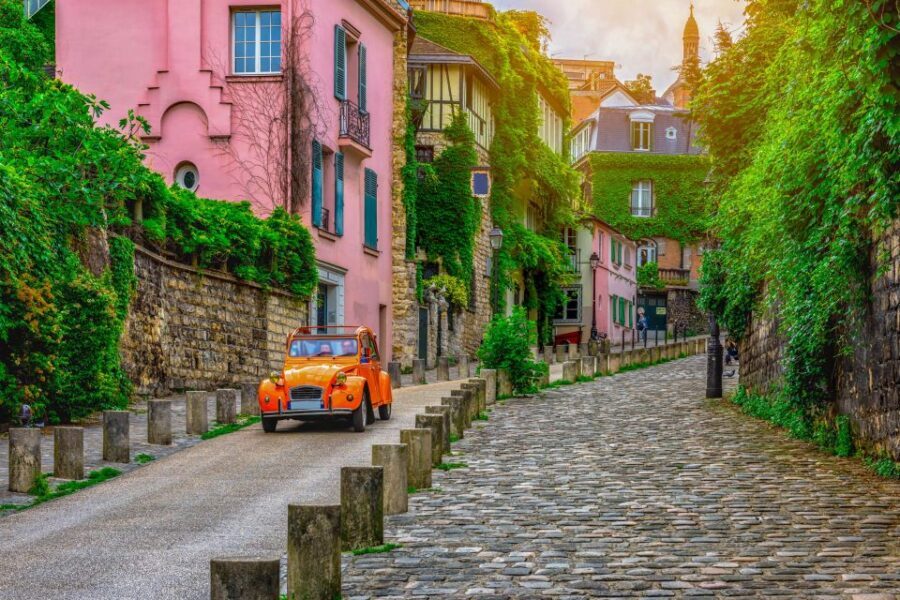
Here’s the blunt part: Montmartre means hills and stairs. Even if you aren’t rushing, your legs will notice. In reviews tied to this experience, people explicitly recommended good shoes and called out lots of hills.
Plan your pace like a local: slow down on the steep parts, drink water when you can, and accept that you’ll walk more than you think. This is moderate walking, not a casual flat stroll.
Also note the baggage rule. No large bags or suitcases are allowed. If you’re traveling light, great. If not, sort your luggage plans before you commit.
Timing: why the 2.5 hours works well
Two and a half hours is a sweet spot for Montmartre. Long enough to see the main “layers” of the neighborhood—artist squares, cabaret energy, and Sacré-Cœur. Short enough that you still have time afterward to wander on your own without feeling wiped out.
You’ll end back at the meeting point, which is helpful if you’re trying to keep the day clean and not guess your way back down. Starting times vary, so check availability for the slot that fits your Paris schedule best.
If you’re aiming for the best Sacré-Cœur light, pick a time that gives you that feeling of approaching sunset. The tour description specifically points to enjoying the panorama as the sun goes down.
Is there food? What you should do with your appetite
Food and drinks aren’t included. That’s not a problem; it’s actually better for flexibility. Montmartre has plenty of spots to pause, but you’ll want to choose based on what’s near you and how hungry you feel.
If your guide suggests a snack stop or you spot something tempting, you can treat it as a bonus. In at least one review tied to this experience, the walk included a traditional baguette from a bakery. That’s the kind of small extra you might appreciate—just don’t assume it’s guaranteed on every tour.
Value check: what you’re paying for (and what it saves you)
At $53 per person for 2.5 hours, this isn’t a bargain price. But it can be good value if you care about learning what you’re seeing.
Here’s the value logic that makes sense:
- You’re getting a guided walk where the stops connect into a story instead of standing alone.
- Sacré-Cœur entry is included.
- The group size cap (max 12) keeps the experience from feeling like a stampede.
If you only want a quick checklist of big landmarks, you could self-walk Montmartre. But if you want the difference between seeing Moulin Rouge as a photo background and understanding why it matters, the guide-led format is the whole point. This tour is priced for that added clarity.
Who this tour is for—and who should skip it
This is a great fit if you want:
- Art-and-history context while walking the real neighborhood
- A smooth route that hits Montmartre’s key sights without you guessing
- A guided Sacré-Cœur visit plus panoramic views
It’s less ideal if you:
- Have mobility limitations that make steep hills tough (it’s not suitable for wheelchair users)
- Need a low-walking option
- Are traveling with large luggage
If you’re a first-time Paris visitor, this can be an especially strong “orientation” experience for Montmartre. If you’ve been to Paris before and you still love art history, it gives you a way to re-see the neighborhood with a better story in your head.
Should you book the Montmartre & Sacré-Cœur walking tour?
My take: book it if you want Montmartre to make sense. The combo of Place du Tertre, Moulin Rouge, artist-linked stops, and Sacré-Cœur is exactly the kind of Paris day that gets better with a guide.
Don’t book it if hills are a hard no for your body. And do book with the mindset that you’re trading a bit of comfort for views, atmosphere, and better understanding.
If you’re choosing between this and a self-guided walk, pick the guided option when you want the stories. It’s the difference between looking at Montmartre and getting the point of Montmartre.
FAQ
How long is the Montmartre & Sacré Coeur walking tour?
The tour lasts 2.5 hours.
What’s included in the price?
The tour includes a walking tour, a guide, and a visit to Sacré Coeur Cathedral.
Does this tour visit Sacré-Cœur?
Yes. Sacré Coeur Cathedral is included as part of the experience.
How many people are in a group?
There is a maximum of 12 guests per guide for a more intimate experience.
Is this tour private?
A private group is available, and there is also a semi-private format depending on the option booked.
What languages are the guides available in?
Guides are offered in Spanish, English, Italian, French, Russian, and German.
Do I need to bring ID?
Yes. You should bring a passport or ID card.
Can I bring luggage or a large bag?
No. Luggage or large bags are not allowed.
Is the tour suitable for wheelchair users or people with mobility impairments?
No. It is not suitable for people with mobility impairments, and wheelchair users are not able to participate.
What if Sacré-Cœur or a venue has an unexpected closure?
The tour notes that occasional closures can happen without prior warning. If the museum opening time is delayed by more than 1 hour from the tour start time, you’ll be provided an appropriate alternative, but refunds or discounts are not provided in these cases.