REVIEW · PARIS
Montmartre Tour Paris
Book on Viator →Operated by Eye Prefer Paris Tours · Bookable on Viator
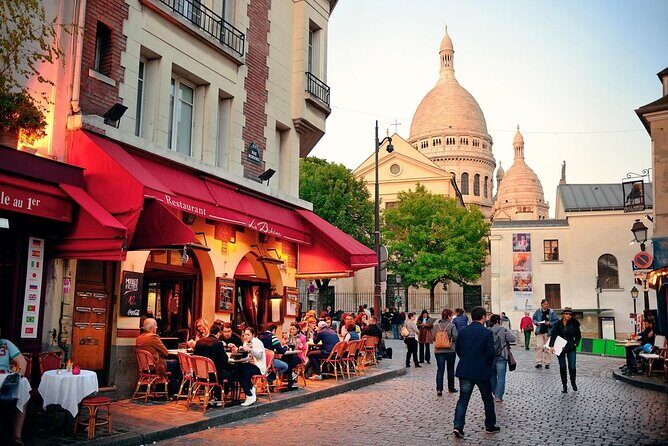
Montmartre has a way of stealing your attention. This 2-hour private tour takes you up to the hilltop—about 500 feet above the city—for classic sights and quieter corners in one smooth walk. You’ll see the Basilique du Sacré-Cœur, roam the streets around Place du Tertre, and follow your guide to spots most people miss.
I especially like how this tour feels personalized. With a private setup, you can ask questions, move at a pace that fits you, and get the kind of help that makes the neighborhood click. If you want the “Paris in layers” experience—artist colony, working vineyard, market streets—this format does it without dragging.
One thing to consider: Montmartre is hilly. The tour is listed for moderate physical fitness, so wear supportive shoes and expect some steady climbing, especially when you’re aiming for good viewpoints.
In This Review
- Key Points at a Glance
- Why Montmartre Feels Like Another World on Foot
- From Place des Abbesses to the Hill: Starting Smart
- Basilique du Sacré-Cœur: The Views Are the Main Event
- Place du Tertre: Artists, Street Life, and Easy Photo Moments
- Studios and Creative Legends You Can Actually Walk Between
- Windmills and a Working Vineyard: History That Still Produces
- Gourmet Streets and Market Corners: The Fun Part That Feeds You
- Price and What $159.19 Buys You in Real Life
- Who This Montmartre Tour Suits Best
- Weather Matters: When to Plan Your Montmartre Day
- Should You Book This Montmartre Tour?
- FAQ
- How long is the Montmartre Tour Paris?
- Where does the tour start?
- Is this tour private?
- What’s the price per person?
- What language is the tour offered in?
- Is there a mobile ticket?
- Is confirmation provided after booking?
- Do I need a specific fitness level?
- Are service animals allowed?
- What is the cancellation policy?
Key Points at a Glance
- Private, group-only experience: only your group participates, so you’re not squeezed into a big pack.
- Sacre-Cœur panoramic payoff: the views are a big part of why people come up here.
- Artist history in real places: you’ll connect the dots between studios and the creative legends linked to Montmartre.
- Working vineyard stop: you’re not just looking at history—you’re seeing something still producing wine yearly.
- Food-street energy: you’ll end up walking through a famous gourmet shopping area on a food-focused route.
- Guide attention for photos: one guide name that comes up in the best feedback is Richard, and he’s described as considerate about taking pictures.
Why Montmartre Feels Like Another World on Foot
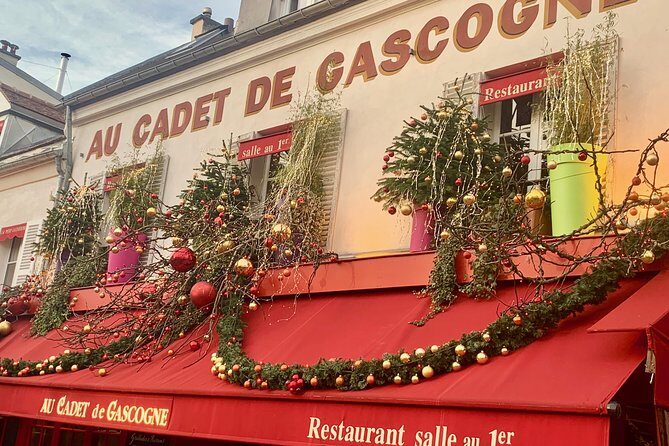
Montmartre is one of those parts of Paris where you can almost forget you’re in a major city. The streets curve, the viewpoints open up, and the neighborhood tells stories through buildings and street names. You’re walking on a slope that used to function like its own village, and that still shows in the vibe.
The best part is that you’re not limited to the postcard version. This tour blends the big ticket sights—like Sacré-Cœur—with practical, street-level moments: small lanes, artist-focused squares, and the everyday rhythm of market streets. You get a sense of how Montmartre became a magnet for artists and visitors long before it became the must-see stop on every Paris checklist.
And because it’s private, you’re not stuck watching the guide bounce from person to person. You can actually hear the story, then look around and understand why that spot matters.
You can also read our reviews of more tours and experiences in Paris.



From Place des Abbesses to the Hill: Starting Smart
You’ll begin at Place des Abbesses (75018 Paris). It’s a good launch point because it puts you right where Montmartre’s identity begins to feel real: steep streets, local texture, and quick access to public transport if you need it later.
This kind of meeting spot also makes it easier to plan your day. You’re not starting deep in tourist chaos, and you’re less likely to lose time figuring out where you should be. The tour ends back at the meeting point, so you don’t have to worry about a second location or trying to trace your route down afterward.
Timing-wise, you’re in for about 2 hours. That’s long enough for a meaningful walk and a few stops where you can actually absorb what you’re seeing, without turning it into a half-day hike. If your Paris schedule is tight—museum in the morning, dinner plans later—this duration is a nice fit.
Basilique du Sacré-Cœur: The Views Are the Main Event
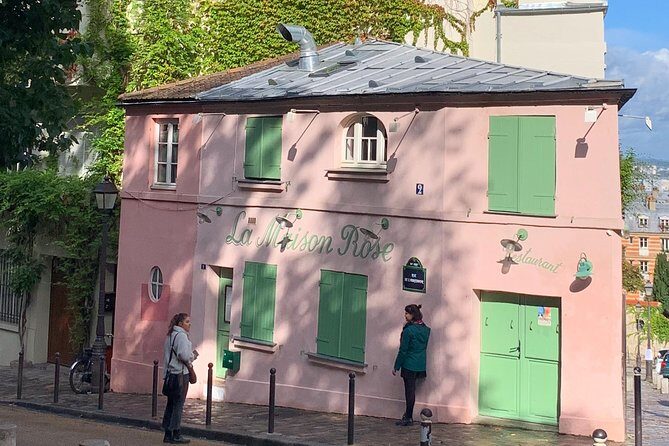
The tour’s first stop is the Basilique du Sacré-Cœur de Montmartre. Even if you’ve seen photos, you’ll still feel it when you get close: the scale, the bright stone look, and the sense that the building is perched above the whole city.
What makes this stop worth your time is how much you get in a short window. You’re not just visiting a church; you’re reaching one of the classic viewpoint points in Paris. From up there, the city spreads out below you, and the hill’s height starts to make sense. It’s a chance to orient yourself—where you are, how the city is laid out, and why Montmartre became famous.
There’s also an architectural detail that helps you look beyond the obvious. The basilica is known for its marble Byzantine-style domes, and once someone points out what you’re looking at, the building becomes more than a backdrop. It’s also a place where your guide can connect the symbolism of the church to why Montmartre drew so many people in the first place.
Practical note: if you’re sensitive to crowds or you want photos without shoulder-to-shoulder pressure, go with the flow of your guide’s timing. A private tour helps here because you’re not stuck in a rigid group rhythm.
Place du Tertre: Artists, Street Life, and Easy Photo Moments
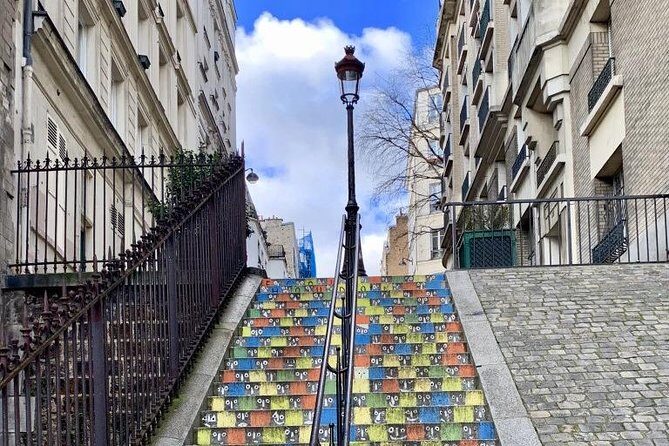
Next up is Place du Tertre—the kind of square that immediately tells you what Montmartre is famous for. It’s closely associated with artists and the tradition of street-level art, and that connection matters because it explains the neighborhood’s character.
This stop works well even if you’re not shopping for souvenirs. I like using Place du Tertre as a “story checkpoint.” You’ll get context for what you saw earlier and then carry it forward to the studios and creative-era references later in the walk. It’s also an easy place to pause, watch, and take photos without feeling like you’re constantly in motion.
If you want good pictures, this is where the guide support really shines. In the strongest feedback for this experience, the guide is described as considerate about taking photos for the group. That means fewer awkward moments with someone else trying to line up the shot while you’re balancing your phone and your shoes.
Studios and Creative Legends You Can Actually Walk Between
One of the most interesting parts of this Montmartre walk is that it ties famous names to physical places. You’ll follow your guide to areas connected with the former artist colony and studios, where major painters created work that shaped how people think about art history.
In particular, the tour highlights connections to Picasso, Toulouse Lautrec, Van Gogh, and Degas. The key value here isn’t memorizing names. It’s the feeling that you’re seeing the same neighborhood that influenced their work. That’s what turns “art history talk” into something you can picture.
You’ll also hear about how Montmartre’s creative pull developed over time, not as a vague myth, but as something that happened in real streets, studios, and gathering spots. On a hill like this, those details matter. Without a guide, it’s easy to wander past cues and miss why that corner matters.
A private guide also makes this part more efficient. If you’re the type who likes clarifying questions—How did artists live here? Why did they gather here?—you’re not forced to wait for the entire group to catch up.



Windmills and a Working Vineyard: History That Still Produces
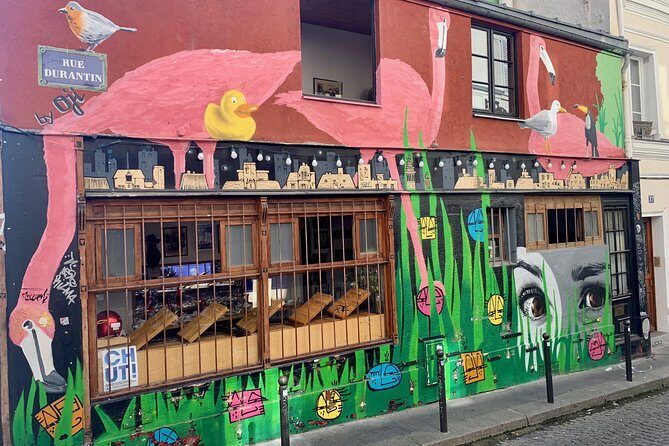
Montmartre isn’t only a museum district. It has parts that still operate in ways that feel almost time-bending. The tour includes stops tied to ancient windmills and—one of the standout points— a still-operating vineyard that produces an annual wine.
This is one reason I’d recommend the tour to people who are tired of only seeing restored buildings. A working vineyard gives you a different type of connection: it’s living agriculture on a slope that tourists often treat like scenery. When someone explains how wine production fits into Montmartre’s story, the neighborhood becomes more than a backdrop for photos. It becomes a place with real work and real seasons.
The windmill element adds another layer. Even if you don’t go deep into mechanics, seeing these reminders helps you understand how the hill supported everyday life long ago. Montmartre’s “artist village” identity is famous, but it also had practical, local roots—farming and production—that came before the paint.
If you like experiences where the past feels tangible, this section is a strong reason to book.
Gourmet Streets and Market Corners: The Fun Part That Feeds You
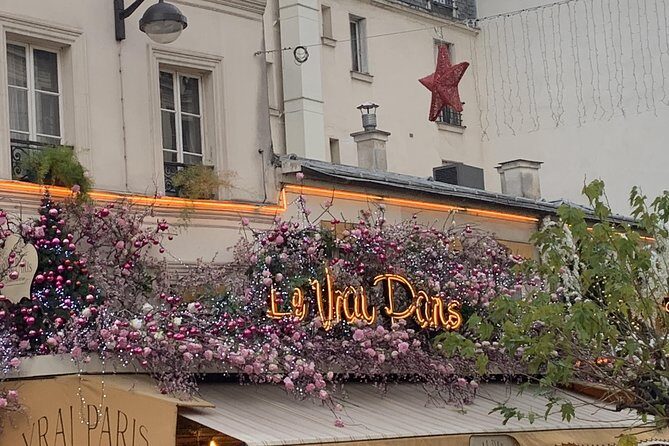
After the major sights, the tour moves into the kind of street time that makes travel feel real. You’ll pass through market-style streets and then walk on one of the best gourmet food shop streets in Paris.
This is where I think the 2-hour structure is smart. Many tours rush through Montmartre like it’s just a list of landmarks. Here, you get a calmer, more local-feeling rhythm that includes everyday browsing and food-focused wandering.
You don’t have to be a foodie to enjoy it. Even if you only plan to snack later, walking through a concentrated area of great shops can help you map what neighborhoods you want to return to. It’s also a satisfying way to end the tour: you’re leaving with ideas for what to buy for dinner or what to look for on your next walk.
If you’re traveling with anyone who gets tired of “standing and listening,” this part helps. It turns history into a sensory route—small shops, street scenes, and the easy momentum of walking.
Price and What $159.19 Buys You in Real Life
At $159.19 per person for a private, English-led tour lasting about 2 hours, you’re paying for more than access. You’re paying for time, pace control, and a guide who can tailor the walk to your interests.
That’s the value of private here: you’re not fighting for attention in a crowded group. In a place like Montmartre—where the hills, viewpoints, and street corners can be a bit tricky to navigate—having someone steer you is worth real money. You save effort, you spend less time guessing, and you’re more likely to leave feeling like you understood the neighborhood.
Also, the experience notes mention group discounts. If you’re coming with friends or family, that can turn the per-person cost into something more reasonable than you might expect for a private tour.
One more practical point: this tour is often booked fairly far out, with an average booking window of 67 days in advance. If your trip dates are fixed, I’d treat that as a gentle nudge. Popular Paris walks don’t always stay available.
Who This Montmartre Tour Suits Best
This is a good match if you want:
- A private, more thoughtful walk with plenty of chances to ask questions.
- The major Montmartre highlights plus extra context about studios, windmills, and the working vineyard.
- A blend of views, art stories, and street-level wandering.
It’s especially ideal for visitors who feel overwhelmed by Montmartre’s maze of streets. A guide helps you choose the right paths so you get the payoff without doubling back all afternoon.
It’s not ideal if you expect fully flat terrain. The tour calls for moderate physical fitness, and the hill is part of the point. Plan for comfortable shoes and a slower pace if you need it.
And if you care about animal-friendly travel, service animals are allowed. The tour is also noted as being near public transportation, which is useful for building a flexible Paris itinerary.
Weather Matters: When to Plan Your Montmartre Day
This experience requires good weather. In practice, that means your day can shift if conditions aren’t right. If you’re visiting in a season with frequent rain, build in some flexibility so you’re not forced into a stressful “sun or nothing” schedule.
When weather is good, the hills and viewpoints feel worth it instead of tiring. On a grey day, you might still enjoy the street sights, but panoramic payoff can be less satisfying.
The good news is that the tour is designed for walking and seeing, so a good weather window can make the difference between a nice stroll and a genuinely memorable Montmartre moment.
Should You Book This Montmartre Tour?
I’d book this if you want Montmartre to make sense fast—views, basilica details, artist-era context, and a working vineyard, all within a manageable 2-hour private walk. The strongest draw for me is the mix: big landmark energy plus real neighborhood texture.
You should think twice if you’re not comfortable with hills or if your schedule is so tight you can’t handle a weather-based change. Also, if you’re the type who loves wandering completely unguided, you may prefer a self-paced plan and spend longer exploring at your own speed.
If you do book, I’d aim for comfortable shoes and a camera ready for photo stops. And if your guide is Richard, you’re likely to get the style that’s been praised most: lots of history and story, plus real care taken with pictures.
FAQ
How long is the Montmartre Tour Paris?
It’s about 2 hours (approx.).
Where does the tour start?
The tour starts at Place des Abbesses, 75018 Paris, France.
Is this tour private?
Yes. It’s listed as a private tour/activity, and only your group participates.
What’s the price per person?
The price is $159.19 per person.
What language is the tour offered in?
It’s offered in English.
Is there a mobile ticket?
Yes, it includes a mobile ticket.
Is confirmation provided after booking?
Yes. Confirmation will be received at time of booking.
Do I need a specific fitness level?
The tour calls for moderate physical fitness.
Are service animals allowed?
Yes, service animals are allowed.
What is the cancellation policy?
You can cancel for a full refund up to 24 hours before the experience’s start time. If you cancel less than 24 hours before, it’s not refunded. The experience also notes that it requires good weather and may be offered a different date or a refund if canceled for poor weather.