REVIEW · PARIS
Montmartre Walking Tour
Book on GetYourGuide →Operated by Soul Tours · Bookable on GetYourGuide
One steep street at a time, Montmartre turns into a living art lesson. I like how this tour strings together major landmarks with clear stories (Picasso at the Bateau-Lavoir and Van Gogh on Rue Lepic), and I also love the photo-friendly stops where you get views and context fast. The main consideration: there are cases of guide no-shows, so I’d double-check your meeting details before you head out.
This is a small-group style walk led by a guide fluent in English and Spanish (with French also available), and it’s paced for about 1.5 hours. You’ll cover the cobbled climb, the artist squares, and end with the Sacré-Cœur panorama—exactly the kind of route that helps you make sense of Montmartre without getting lost.
In This Review
- Key Points at a Glance
- From Moulin Rouge to Sacré-Cœur: The 90-Minute Montmartre Arc
- Moulin Rouge as a Starting Line (Not Just a Photo)
- Place des Abbesses and the I Love You Wall Detour
- Rue Lepic and Van Gogh’s Real-Life Address
- Place du Tertre: Artists, Work, and the Montmartre Crowd
- Le Bateau-Lavoir (13 Rue Ravignan) and Picasso’s Early Breakthrough
- Saint-Pierre de Montmartre: Romanesque Church Details You Might Miss Alone
- Sacré-Cœur Basilica Steps: The Classic View and the Big Finish
- What You Get for the Price (and Where Value Can Break)
- Best Fit: Who Will Enjoy This Montmartre Walk Most
- A Reality Check: What the Guide Reliability Issue Means for You
- Should You Book the Montmartre Walking Tour?
- FAQ
- How long is the Montmartre Walking Tour?
- Where does the tour start and where does it end?
- What languages are available for the tour?
- Is food and drinks included?
- Is the tour suitable for wheelchair users?
- What should I bring?
- Is there free cancellation?
Key Points at a Glance
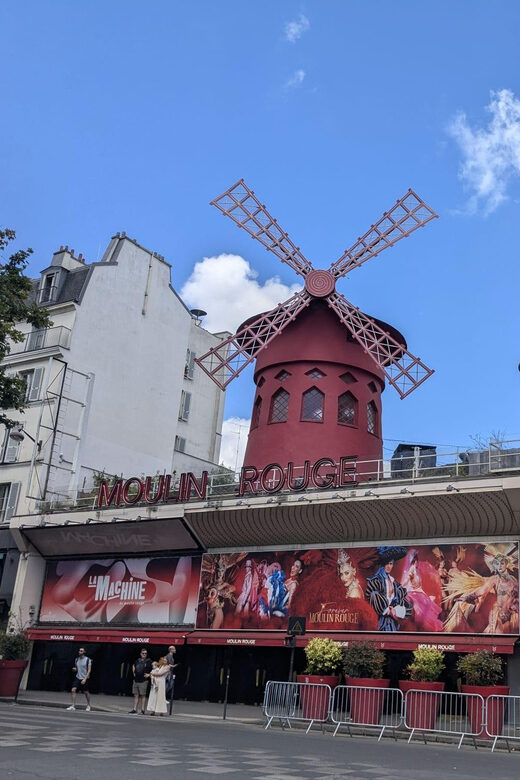
- Moulin Rouge start: You kick off at the iconic cabaret that’s been a symbol since 1889.
- Art on the route: Picasso and Van Gogh themes show up in real locations, not just general talk.
- I Love You Wall stop: A striking detour you can spot fast and photograph easily.
- Le Bateau-Lavoir address: You visit the building at 13 Rue Ravignan tied to Picasso’s early work.
- Sacré-Cœur viewpoint finish: Get the classic Paris view from the basilica steps.
- Watch the practical side: The route isn’t for wheelchair users, and meeting-up reliability matters.
From Moulin Rouge to Sacré-Cœur: The 90-Minute Montmartre Arc
If you only have a short window in Paris, this walk is a smart way to connect the dots. Montmartre can feel like a film set—pretty, dramatic, and easy to wander—but the tour keeps you moving with a storyline: cabaret glamour, then artist neighborhoods, then the big church view at the top.
The pacing works well for a 1.5-hour group experience. You’re not expected to “tour museums” here. Instead, you learn by seeing: street corners, squares, and a handful of landmark buildings. If you like your Paris with a guide’s commentary while you walk, this fits.
One more thing to know: this is an up-and-down neighborhood. Even if you’re used to walking, you’ll still feel the incline getting to Sacré-Cœur. Comfortable shoes aren’t optional advice—they’re the difference between enjoying the views and just trying to survive the climb.
You can also read our reviews of more walking tours in Paris



Moulin Rouge as a Starting Line (Not Just a Photo)
You begin at Moulin Rouge, the famous cabaret that has been part of French pop culture since 1889. Starting here matters because it gives you an instant anchor. From that point on, every next stop can connect back to the arts scene that made Montmartre famous.
Here’s how I’d use this first stretch: treat it like orientation. You’re basically learning the neighborhood’s cultural “north star” while you’re still fresh. Then you move from the broader spectacle into smaller places where artists actually worked and lived.
And yes, it’s a photo magnet. You’ll get your shots without needing to line up for anything—just remember that this area is popular, so you’ll want to be ready to capture and then keep walking.
Place des Abbesses and the I Love You Wall Detour
Place des Abbesses is the kind of stop where Montmartre shows its personality in one frame. The square is lively, and the metro entrance here has that distinctive art nouveau look that’s hard to miss once you spot it.
The best part for many people is the Le Mur des Je t’aime stop—the I Love You Wall, with the phrase written in over 300 languages. It’s brief, it’s colorful, and it’s the sort of detail that makes the tour feel special. You don’t need deep art knowledge to enjoy it; you just need a few minutes and a camera.
Practical note: because this is a walking tour, you’re not meant to linger for long. If you’re the type who likes to read every line carefully (fair!), you might want to focus on the languages you recognize and move on before the group does.
Rue Lepic and Van Gogh’s Real-Life Address
Next you head along Rue Lepic, where Vincent van Gogh lived with his brother Theo at No. 54. This is one of those stops that changes the way you see a street. Suddenly it’s not just “cute Paris streets,” it’s a place tied to a specific artist’s time in the city.
What I like about this kind of stop is the clarity. The tour doesn’t just say Van Gogh was in Paris. It places him on the map, which makes his story feel grounded.
This is also where the tour’s theme becomes obvious: Montmartre wasn’t only for painters selling works in squares. It was a place where artists found community, inspiration, and the day-to-day reality of making art.
If you’re a Van Gogh fan, you’ll likely enjoy the talk here the most because it connects the neighborhood to the artist’s early life and period in Paris—rather than keeping it generic.
Place du Tertre: Artists, Work, and the Montmartre Crowd
Place du Tertre is famous for a reason. It’s filled with artists painting and selling their work, and it’s been closely tied to Montmartre’s artistic heart for generations.
During this stop, you’ll hear why the area mattered historically—especially stories about famous artists who had connections to the neighborhood, including Picasso’s workshop there. Even if you don’t plan to buy anything, it’s a useful place to stand back and watch: you’re seeing the “living version” of the myth.
A balanced expectation: this is also one of the busier spots. You’ll likely get your photos, but you’ll be sharing the space. The tour’s small-group size helps here, because it gives you a bit more control over when you stop and where you stand.
Also, if you’re hoping for silence and slow pacing, adjust your mindset. This square is activity. Think “street life” more than “quiet viewpoint.”






Le Bateau-Lavoir (13 Rue Ravignan) and Picasso’s Early Breakthrough
This is the stop that gives the tour its strongest art-nerd payoff. You visit 13 Rue Ravignan, known as Le Bateau-Lavoir, the building associated with Picasso living and working there.
The big reason this location matters is that it supports the tour’s Picasso storyline. You’ll hear about his early career and the context around the creation of Les Demoiselles d’Avignon. That’s not a casual mention, either. It’s the kind of cultural hook that helps you understand why Montmartre keeps showing up in art discussions.
How to get the most out of this stop: look at it as a “creative incubator.” You’re seeing a place where an artist’s early ideas took shape alongside the energy of Montmartre’s art world. It’s not just about Picasso’s name—it’s about why that kind of neighborhood environment mattered.
The stop is also a solid photo moment, but don’t let the camera steal your attention. The guide’s explanation is the real value here, because it makes the address meaningful.
Saint-Pierre de Montmartre: Romanesque Church Details You Might Miss Alone
Then you pivot from the art-world theme to something older and architectural: Saint-Pierre de Montmartre. This is one of the oldest churches in Paris, dating back to the 12th century.
This stop is a good reminder that Montmartre isn’t only about painters and postcards. It has layers. The Romanesque architecture gives you a sense of how long this area has been shaped by major buildings and community life—not just by modern art scenes.
Why this helps you as a visitor: you start noticing styles. You begin to understand that Montmartre’s identity includes both historic structure and artistic street culture. A guide’s commentary makes that shift feel obvious instead of accidental.
If the weather is clear, you’ll often feel the change in the air here: you’re near a quieter pocket of Montmartre while still being close to the main climb toward Sacré-Cœur.
Sacré-Cœur Basilica Steps: The Classic View and the Big Finish
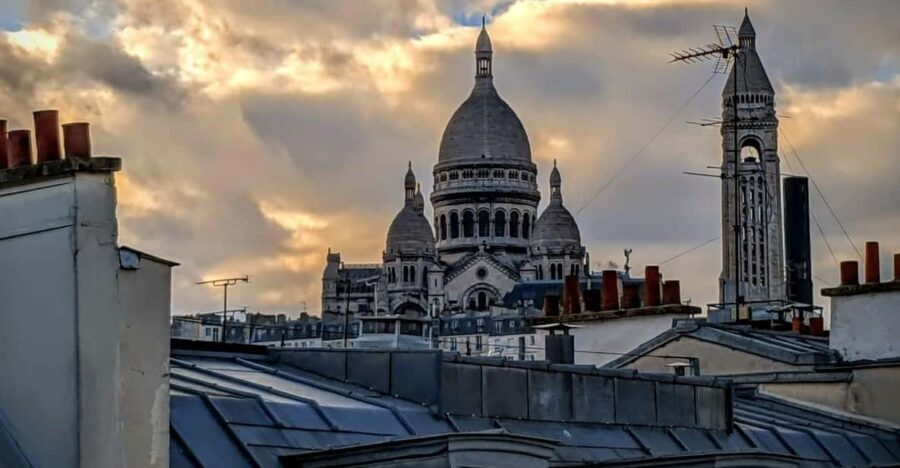
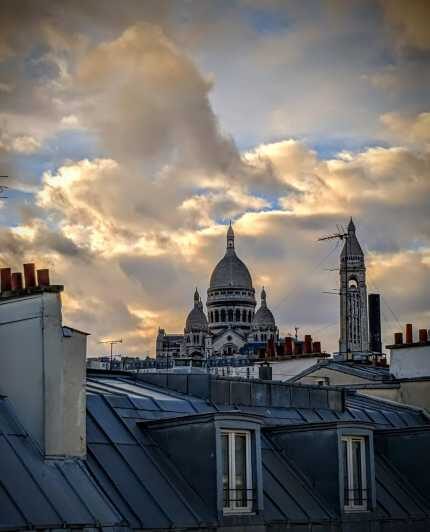
The tour culminates at Sacré-Cœur Basilica, located at the summit of Montmartre. This is the moment most visitors picture before they even arrive: the wide Paris view and the long stretch of sky and rooftops.
The steps of Sacré-Cœur are also a natural finishing point because the viewpoint is instant. You don’t have to figure out the best angle—you’re guided to the right spot, then the talk connects the basilica’s history and architecture to why this landmark became so central to Montmartre’s identity.
The view here is the payoff. After 1.5 hours of walking and learning, you get the reward: a broad look at the city that makes the whole neighborhood feel like a strategic vantage point.
Practical expectation: the steps and the basilica area can be crowded. Try to treat this as a “hold still and take it in” moment, not a “perfect photo for every angle” moment. Your best shot might be the one you take while everyone else is also arriving and shifting positions.
What You Get for the Price (and Where Value Can Break)
At about $28 per person for a 1.5-hour guided route, this is positioned as a budget-friendly Montmartre overview. The value isn’t in access to special tickets or timed entry. It’s in having a professional guide connect multiple places—Moulin Rouge, Rue Lepic, Picasso’s Le Bateau-Lavoir, Saint-Pierre, and Sacré-Cœur—into one understandable storyline.
Included in the experience:
- A professional guide fluent in English and Spanish (French also listed)
- Historical insights and anecdotes tied to Picasso, Van Gogh, and related art topics
- Lots of photo opportunities, plus assistance with group photos
- A small group size designed for a more personal feel
So where can value break? Two places:
1) Meeting reliability. There have been serious complaints about guides not showing up and no response when trying to contact them. That turns a $28 “easy win” into a lost afternoon fast.
2) Fitness and terrain. It’s not suitable for wheelchair users, and the route involves hills and uneven walking. If you’re already dealing with mobility constraints, this won’t be a comfortable plan.
If you’re mentally set for walking uphill and you treat it as a guide-led art and architecture walk, the price can feel fair.
Best Fit: Who Will Enjoy This Montmartre Walk Most
This tour is ideal if you want:
- A guided way to see Montmartre’s key art landmarks in a short amount of time
- Clear commentary at stops like Le Bateau-Lavoir and Rue Lepic, where the addresses anchor the stories
- A classic end-point at Sacré-Cœur without navigating the area yourself
It’s also a good fit for couples, friends, or solo travelers who don’t want to commit to longer museum days but still want substance. If you’re the type who loves hearing how famous artists actually lived and worked, you’ll likely enjoy the Picasso and Van Gogh focus.
If you’re traveling with someone who hates walking or can’t handle inclines, rethink it. And if you’re the “I need reliability at all costs” type, plan to confirm details the day of.
A Reality Check: What the Guide Reliability Issue Means for You
I want to be blunt here because it affects planning. The overall concept sounds great—especially with the Picasso and Van Gogh stops—but the experience depends heavily on the guide arriving on time and responding when needed.
There have been cases where participants reported the guide did not show up, with no answer to calls or messages until they contacted the provider/platform for help. That’s the kind of problem you can’t solve with a good attitude.
So here’s my practical advice:
- Confirm the meeting point and timing before you leave your hotel.
- Keep your phone on for messages and check the guide contact info you receive after booking.
- If something feels off, don’t wait forever—reach out to the booking support route fast, especially in bad weather.
This won’t change the art stories you’ll hear, but it will change whether you get to hear them.
Should You Book the Montmartre Walking Tour?
Book it if you want a short, guide-led Montmartre walk that connects Picasso’s early career, Van Gogh’s presence on Rue Lepic, and the classic Sacré-Cœur viewpoint—without spending hours in ticket lines.
Skip it or at least go in with your eyes open if:
- You can’t handle hills or uneven pavement (it’s not suitable for wheelchair users)
- You need absolute reliability and can’t tolerate the risk of a no-show
- Bad weather ruins your day (the route is outdoors most of the time)
If you do book, plan smart: wear comfortable shoes, arrive early, and have a backup plan for contacting support quickly if timing goes sideways.
FAQ
How long is the Montmartre Walking Tour?
It lasts about 1.5 hours.
Where does the tour start and where does it end?
It starts at Moulin Rouge and ends at Sacré-Cœur Basilica on the summit of Montmartre.
What languages are available for the tour?
The tour is offered in English, Spanish, and French.
Is food and drinks included?
No. Any snacks or beverages you want to buy at stops are not included.
Is the tour suitable for wheelchair users?
No, it is not suitable for wheelchair users.
What should I bring?
Wear comfortable shoes, since it’s a walking tour around Montmartre.
Is there free cancellation?
Yes, you can cancel up to 24 hours in advance for a full refund.
If you want, tell me your travel dates and the day of the week you plan to go, and I can help you choose a smart time of day for the best Sacré-Cœur views and the least crowd stress.