REVIEW · PARIS
Paris Jewish Heritage: Le Marais & Montmartre Guided Walking Tour
Book on Viator →Operated by Walks In Europe · Bookable on Viator
Jewish Paris hits differently when you walk it. This tour connects Le Marais to Montmartre so you can see how Jewish life in Paris changed from old neighborhood life to art-world reinvention, guided by a local expert at a real human pace. What makes it work is the mix of street-level wandering plus story-driven stops that explain why these places matter.
Two things I really like: you get the small-group feel (more questions, fewer headcount headaches), and the guide uses landmark exteriors and neighborhood context to keep the story moving instead of turning it into a museum checklist. I also like the way the itinerary includes a short public transfer between districts, so the day doesn’t feel like one long slog with no reset.
One consideration: you’ll see some major sites from the outside only, including the synagogue and the Mémorial de la Shoah, since interior monument entry isn’t included. If you’re hoping for lots of inside-the-building time, you’ll want to plan extra ticketed visits separately.
In This Review
- Key points before you go
- Jewish Paris in 3.5 hours: small group, story-first pacing
- Starting at L’Elephant du Nil and getting oriented fast
- Le Marais: medieval streets, rebuilt community, and how the guide sets the scene
- Agoudas Hakehilos Synagogue (exterior only) and the Hector Guimard connection
- Mémorial de la Shoah seen from outside: context, remembrance, and an emotional reset
- Rue des Rosiers: when food, shops, and everyday rhythms carry the story
- Public transport between districts: a short link that keeps energy up
- Montmartre: Jewish artists, cafés, and the shadow of rising antisemitism
- Sacré-Cœur steps and Square Louise-Michel: closing with view and meaning
- What you get for $102.12: value depends on how you like to learn
- Who this tour suits best (and who might want something else)
- Should you book this Jewish Paris walk?
- FAQ
- FAQ
- What time does the tour start?
- Where is the meeting point?
- Where does the tour end?
- How long is the tour?
- Is the tour in English?
- What group size should I expect?
- Do we go inside synagogues?
- Do I get entry tickets for the Holocaust Memorial?
- Is public transport included?
- What is the cancellation policy?
Key points before you go

- Small group size (max 12, often up to 9) keeps the pace flexible and questions welcome
- Exterior-only synagogue and memorial stops still come with strong context and sensitivity
- Le Marais + Montmartre contrast shows tradition in one area and artistic reinvention in the other
- Public transport tickets included makes the transfer between districts simple
- Ending at Sacré-Cœur steps gives you a classic Paris payoff with new meaning
Jewish Paris in 3.5 hours: small group, story-first pacing
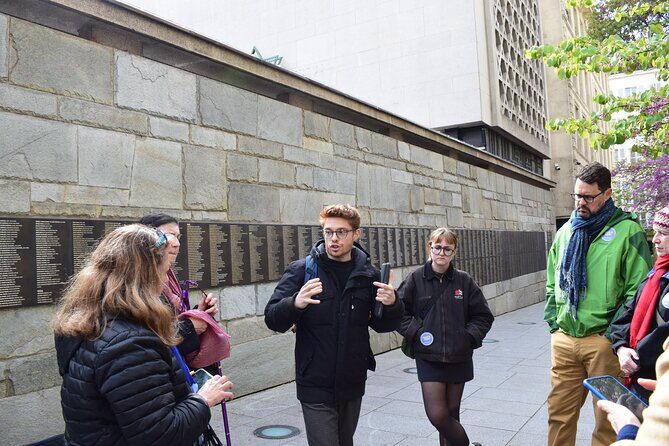
This is a 3-hour-30-minute walking experience built around two very different neighborhoods. You start in the Marais, then take a short public transfer to Montmartre, and finish with time at Sacré-Cœur’s steps and a view of the city.
The value here is not just the locations. It’s the way the route is designed to connect people, institutions, and historical moments to streets you can actually stand on. One review favorite was the guide’s ability to make the whole place feel like a living narrative, not disconnected facts.
At $102.12 per person, you’re paying for a guided, small-group framework and real-time interpretation. You’re not paying for museum entry or inside visits, so you’ll get the best return if you enjoy hearing stories and spotting context in everyday streets.
You can also read our reviews of more walking tours in Paris



Starting at L’Elephant du Nil and getting oriented fast
You meet at L’Elephant du Nil, 125 Rue Saint-Antoine in the 4th arrondissement. The start time is 2:30 pm, and the tour is strict about timing—if you’re late, you can’t join after it begins.
The meeting point matters because it sets your first neighborhood mood. From there, you’ll move into Le Marais, which has been shaped by centuries of Jewish presence and community life, including traditional businesses, religious life, and cafés that still operate today.
A heads-up from the experience vibe: one person felt the tour started slow at first because the connection to the Jewish core of the story wasn’t obvious right away. If you tend to dislike long setups, give it a little time—once the guide frames the sequence, the route tends to click.
Le Marais: medieval streets, rebuilt community, and how the guide sets the scene
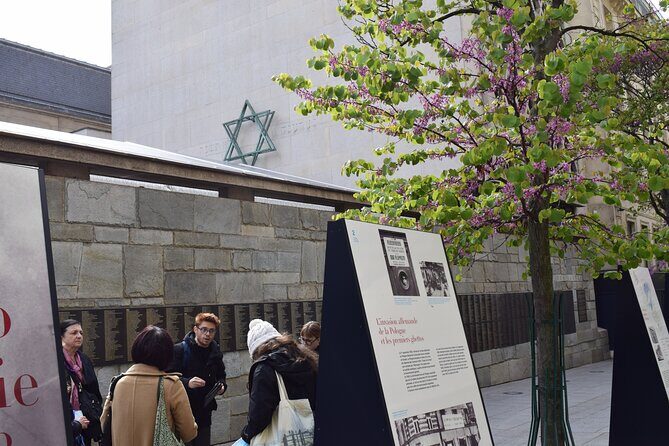
Your first hour is in Le Marais, the historic Jewish quarter. This is the “walk the narrow streets and hear what happened here” portion, focused on medieval enclave patterns and what came after wartime destruction, including rebuilding, migration, and identity.
This is where a good guide makes or breaks the tour. Guides featured in past groups—like Benjamin, Thomas, Adrian, and Pierre Louis—were repeatedly praised for storytelling depth and for answering questions with care. You can also feel the difference between a history lecture and a walking tour by how often the guide points out why you’re standing where you’re standing.
One practical plus: the pace is designed for questions. In reviews, people liked that the guide walked at the group’s pace and didn’t bulldoze through stops, even when weather turned cold and rainy.
Agoudas Hakehilos Synagogue (exterior only) and the Hector Guimard connection
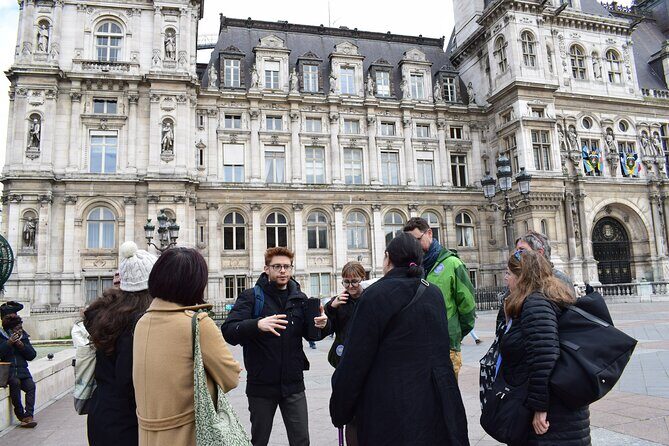
One of the most specific, standout stops is the exterior of the Agoudas Hakehilos Synagogue. It’s noted as a rare example of Art Nouveau synagogue architecture by Hector Guimard, which gives the walk an extra layer beyond standard “place and name” history.
Important detail: interior visits are not included. So you’re relying on the guide’s explanations of what you can see from the outside, plus the historical context of Eastern European Jewish immigration that reshaped this part of the city in the late 19th and early 20th centuries.
This can actually be a good fit for many people. Even without entering, the exterior architecture becomes a visual anchor for the stories about institutions, schools, and cultural life that endured here. The trade-off is simple: if your dream is interior synagogue time, you’ll need to add that separately.
Mémorial de la Shoah seen from outside: context, remembrance, and an emotional reset
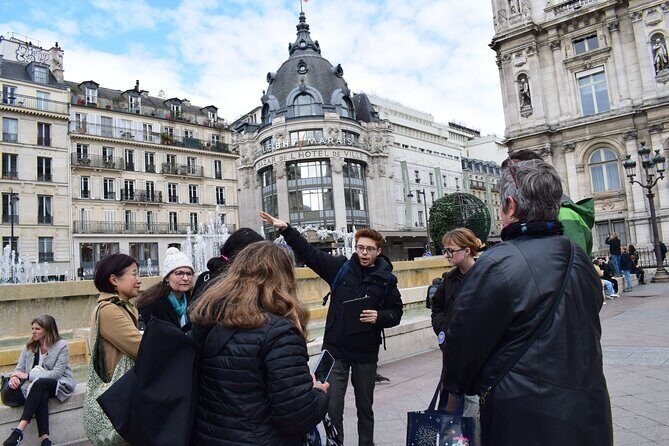
Next comes a stop at the Holocaust Memorial, the Mémorial de la Shoah. You view it from the exterior, and your guide provides the historical context around occupation, resistance, and remembrance—and how that memory shapes Jewish identity in Paris.
This portion deserves a careful word choice because it’s not just informational. One of the praised moments in past groups was how a guide handled sensitivity while also keeping the discussion grounded. You come away with a stronger sense of why Jewish Paris is both cultural and memorial.
Still, it’s fair to mention a possible mismatch: one person felt the tour put too much emphasis on the Shoah relative to other Marais Jewish stories. If you’re looking for a heavier focus on daily life and neighborhood institutions in the Marais, ask the guide early on to clarify the balance you want.
You can also read our reviews of more guided tours in Paris





Rue des Rosiers: when food, shops, and everyday rhythms carry the story
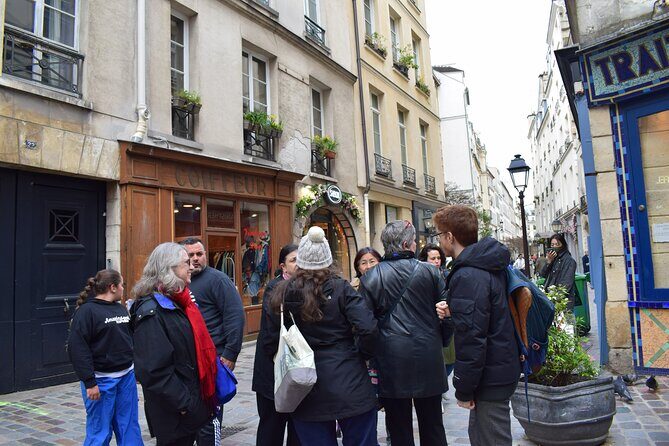
After the memorial stop, the tour continues along Rue des Rosiers, historically a centerpiece for Jewish commercial and community life in the Marais. Here, the guiding theme is how traditions were preserved over generations, while the neighborhood changed and rebuilt through the 20th century.
Practically, this is also a fun street to walk. Bakeries, delis, and specialty shops line the road, so you’ll naturally see the neighborhood’s present-day energy while your guide connects it to the past.
One extra detail that popped up in reviews: some groups received a falafel tasting connected to L’As du Falafel. Even if that exact moment doesn’t happen for every group, it’s a nice reminder that this tour’s storytelling can include small, real-world experiences instead of staying purely academic.
The Marais segment ends near Hôtel de Ville, setting you up to switch gears before Montmartre.
Public transport between districts: a short link that keeps energy up
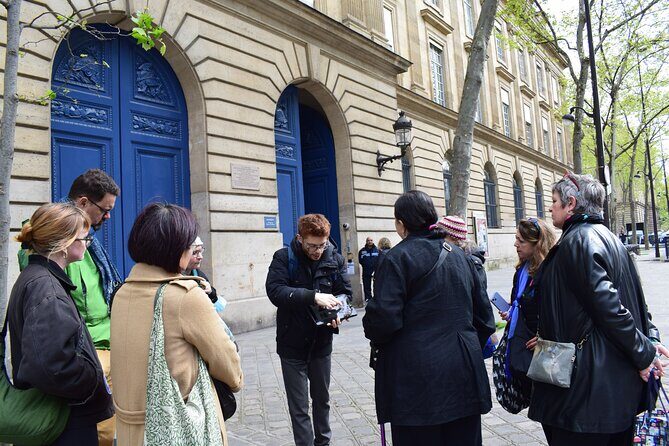
You’ll then continue to Montmartre by public transport. The tour includes public transport tickets, so you don’t need to figure out the logistics on the fly mid-walk.
This matters more than it sounds. Without the transit reset, a two-neighborhood tour can turn into constant motion fatigue. Here, the short journey gives you a breather, then you arrive in Montmartre ready to absorb a very different chapter of Jewish Paris.
Montmartre: Jewish artists, cafés, and the shadow of rising antisemitism
Montmartre is the artistic half of the story, and the guide makes the contrast feel intentional. You’ll learn how immigrant artists, writers, and musicians found community in cafés, studios, and literary circles—names mentioned include Amedeo Modigliani, Max Jacob, and Marc Chagall.
The key context here is not just who lived where, but what the atmosphere was like. The neighborhood energy came with rising nationalism, antisemitism, and political uncertainty across Europe, and many of the cultural figures connected to Montmartre later faced exile, persecution, or rupture during the Second World War.
This part can feel surprisingly balanced if your guide is good at linking the art-world excitement to the looming danger. In reviews, people liked guides who could place the stories into broader European context without losing the plot.
Sacré-Cœur steps and Square Louise-Michel: closing with view and meaning
The tour finishes at the steps of the Basilique du Sacré-Cœur, one of the most iconic viewpoints in Paris. It’s a classic “end of walk” moment, but your guide’s framing gives it a different emotional tone than the usual tourist photo stop.
After that, the tour concludes at Square Louise-Michel, where you’re meant to leave with renewed appreciation for the layers of Jewish history, creativity, and resilience that contributed to Parisian life.
If you’re the type who likes a strong finish, this ending helps. You’re not just dropped off and sent on your way—you’re handed a last moment to connect the neighborhoods into one bigger story.
What you get for $102.12: value depends on how you like to learn
Let’s talk value in plain terms. You pay for a guided, small-group tour in English, with local interpretation, street-level storytelling, and included public transport tickets. You also get specific stops: Agoudas Hakehilos synagogue exterior, the Mémorial de la Shoah exterior, Rue des Rosiers, and an ending tied to Sacré-Cœur and Square Louise-Michel.
What you don’t pay for is indoor monument time. Interior visits of synagogues are not included, and entry to monuments & historical sites is not included. That means your budget is best spent on guided context rather than on ticketed museum rooms.
So who gets the best deal? People who enjoy learning from guides and seeing how a route tells history through buildings you can stand in front of, plus people who are okay with exteriors and street scenes rather than inside exhibits.
Also, because the tour is capped at a maximum of 12 travelers and described as an interactive experience for up to 9, you’re paying for conversation and pacing. If that matters to you, the price makes more sense than a big-bus-style tour.
Who this tour suits best (and who might want something else)
This tour fits well if you want a focused walking route with a local guide who can connect the dots. It’s a good choice for first-time visitors who already plan to spend time in Le Marais and Montmartre on their own, but want a story lens before they wander.
It also works for families. One review specifically said it was good for children, which usually means the guide paced things to keep attention on people and places rather than turning it into a dense lecture.
It might feel less ideal if you want lots of indoor time, since interiors and monument entries aren’t part of the deal. It may also feel uneven if you’re expecting one specific theme. A couple of comments showed that some people wanted more emphasis on Marais Jewish life and less on the Shoah portion, so you’ll want to be clear about what you want to hear.
Should you book this Jewish Paris walk?
I’d book it if you’re drawn to the idea of seeing Jewish Paris as a set of connected neighborhood chapters. The Le Marais to Montmartre structure is smart because it shows continuity and change, from community institutions and rebuilding to the creative world of early modernism.
I’d hesitate only if your top priority is inside-the-building access or a heavy museum-style program. Since the key sites are primarily exterior stops, the tour lives and dies by the guide’s storytelling. That said, reviews repeatedly praised guides like Benjamin, Thomas, Adrian, and Pierre Louis for clarity, sensitivity, and context.
If you come ready for walking, conversation, and meaningful street-level interpretation, this is a strong afternoon plan in Paris.
FAQ
FAQ
What time does the tour start?
It starts at 2:30 pm.
Where is the meeting point?
You meet at L’Elephant Du Nil, 125 Rue Saint-Antoine, 75004 Paris.
Where does the tour end?
It ends at Square Louise Michel, 6 Pl. Saint-Pierre, 75018 Paris.
How long is the tour?
The duration is about 3 hours 30 minutes.
Is the tour in English?
Yes, the tour is offered in English.
What group size should I expect?
The tour has a maximum of 12 travelers, and it’s described as an intimate small-group experience for up to 9 persons.
Do we go inside synagogues?
No. The Agoudas Hakehilos Synagogue stop is exterior only, and interior visits are not included.
Do I get entry tickets for the Holocaust Memorial?
No. You see the Mémorial de la Shoah from the exterior, and entry to monuments & historical sites is not included.
Is public transport included?
Yes. The short transfer between Le Marais and Montmartre uses public transport tickets that are included.
What is the cancellation policy?
You can cancel for a full refund up to 24 hours before the experience’s start time.