REVIEW · PARIS
Napoleon’s Paris: A Self-Guided Audio Tour
Book on Viator →Operated by VoiceMap Audio Tours · Bookable on Viator
Napoleon’s Paris works best when you slow down. This self-guided GPS audio walk strings together some of the city’s most dramatic imperial sights, then adds human stories that make the stones feel less like a museum and more like a timeline. I especially liked the GPS guidance (it helps you stay on track) and the lifetime access (you can start when you want, and revisit later).
You’ll also like the pacing control. You can pause the audio for a water break or a quick stop when you need it, and you don’t have to keep up with a group. One drawback to flag: on very hot days, the walking can feel like a lot, so plan your time and breaks.
In This Review
- Key highlights at a glance
- Napoleon’s Paris: how the self-guided audio tour really works
- Starting at Arc de Triomphe du Carrousel: easy setup, big first impression
- Tuileries Garden and the walk toward Rue de Rivoli: calm space with an imperial backbone
- Madeleines and luxury streets: turning shopping streets into a story route
- Revolution echoes: bullet holes, arcades, and assassination intrigue
- Place Vendôme and the Luxor Obelisk square: power symbols you can stand under
- Hôtel des Invalides: from wounded-soldier hospital to legend
- Timing, comfort, and what to bring on a 1.5–2 hour walk
- Price and value: is $11.99 worth it?
- Support experience: the kind of help that matters when plans go sideways
- Should you book Napoleon’s Paris?
- FAQ
- Is this tour self-guided?
- What language is the audio available in?
- Do I need headphones and a smartphone?
- Can I use the audio and maps offline?
- How long does the tour take?
- Where does the tour start and end?
- Does the tour have time limits?
- Is this a private activity?
- Can I cancel for free?
Key highlights at a glance
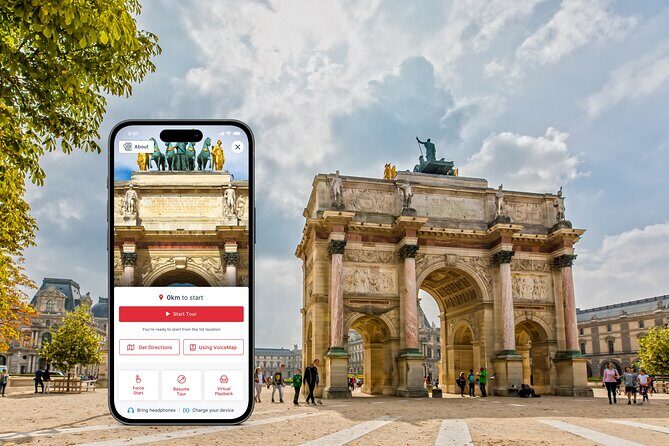
- Smartphone-first setup: directions to the starting point and GPS guidance so you don’t wander in circles
- Lifetime access: you can use the tour before and after your booking, with no time limits
- Offline everything: audio, maps, and geodata available when you’re on the move
- Built for your pace: pause when you need water, snacks, or rest stops
- A classic Napoleon route: from the triumphal arch down to Tuileries and on through key landmarks to the tomb
Napoleon’s Paris: how the self-guided audio tour really works
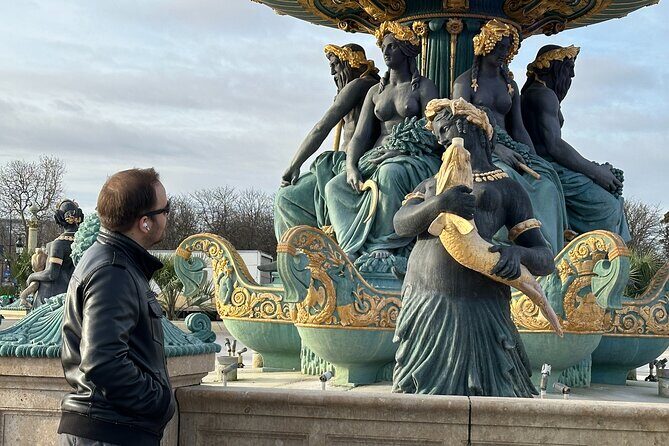
This is an audio tour you run on your phone, not a guided guide in person. That sounds simple, and it is. The payoff is control: you decide when to start, how long to linger, and when to move on. If you hate the feeling of being herded, this format usually feels like a win.
The core idea is that the app acts like a quiet companion. It offers directions to the starting point so you can get set up in the right place, then uses GPS to guide you between major sights. You’re not guessing which street comes next, and you’re not stuck trying to read every sign at once. You also get offline access to the audio and maps (plus geodata), which matters in big cities where mobile service can be spotty.
One more practical note: the “tour end” is at Napoleon’s Tomb. That’s helpful, because it turns your walk into a route with a finish line instead of an open-ended wander.
You can also read our reviews of more guided tours in Paris



Starting at Arc de Triomphe du Carrousel: easy setup, big first impression

You begin at Arc de Triomphe du Carrousel, Pl. du Carrousel, 75001 Paris. This is a strong start point because it’s a clear monument you can orient around right away. The app’s directions are meant to help you start at the correct spot, so you’re not stuck trying to decide which entrance is the right one.
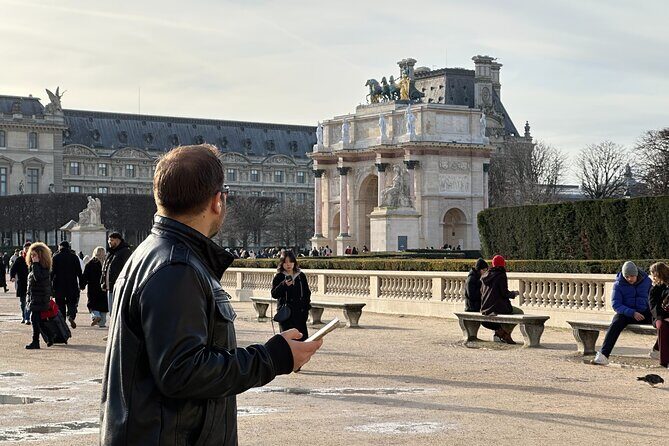
Your first audio moment is designed to give you that Napoleon-scale visual punch. You’ll see an ornate triumphal arch with a bronze quadriga on top, plus bas-reliefs showing Napoleon’s victories. As you walk past, the arch frames the entrance to the grand Tuileries Garden, which is a neat visual trick: you’re not just looking at an object, you’re stepping into a corridor between eras.
How to use this start wisely:
- Arrive with your app ready and your audio queued.
- Keep your phone brightness up enough to read cues, but don’t stare the whole time. Look at the architecture first, then let the story land.
Tuileries Garden and the walk toward Rue de Rivoli: calm space with an imperial backbone
Next comes the Tuileries Garden. Expect wide, manicured paths, classic statues, and fountains. This part is less about frantic sightseeing and more about absorbing scale. The garden works like a breather before you hit the sharper lines of city streets.
The tour’s logic here is smart. Napoleon isn’t just about battles and portraits. He’s also about planning—where people walk, where power is displayed, and how space shapes a city. As you stroll, you’ll feel that shift from royal-era grandeur to a place locals still use today.
After the garden, you’ll move into Rue de Rivoli, described as a grand street stretching through central Paris with arcaded buildings and luxury shops. The key word here is order. You get architectural symmetry and a sense of urban planning that feels intentional, not random.
Possible drawback during this stretch: if you pause too much, the whole route can start to feel longer than you planned. The good news is that the app’s flexible pacing makes it easy to control that—slow down for the garden, then pick up the pace when you want.
Madeleines and luxury streets: turning shopping streets into a story route

One stop is built around a very Paris-style break: a pâtisserie known for buttery madeleines. This isn’t just about food. It’s a reminder that Napoleon’s Paris wasn’t sealed off from daily life. It still had markets, snacks, and people doing ordinary things between moments of power.
If you want to make this stop work for you, treat it like a planned reset. Buy something small, eat it while standing or walking nearby, and then use the audio to carry you onward. You’ll get the sweetness of the moment without losing your momentum.
You’ll also pass through a street known for luxury boutiques and historic landmarks, where the tour frames the mix of modern elegance and older charm. Even if you never step into a store, it helps to walk and notice the rhythm—arcades, storefront lines, and the way streets funnel movement toward bigger landmarks.
This is the kind of segment that’s best when you’re actively looking. If you spend the whole time scanning phone directions, you’ll miss what makes the route interesting.
Revolution echoes: bullet holes, arcades, and assassination intrigue
A standout moment comes at a baroque-style church whose facade still shows bullet holes from the French Revolution. That’s a heavy detail, and the tour uses it well. Instead of turning it into a scare-story, the audio sets up the contrast: a marked exterior facing turbulent history, then a calmer interior when you approach it.
Next, you’ll walk through a picturesque street lined with Neoclassical arcades. Here, the tour leans into intrigue, tied to assassination plots and local historical drama. This segment can be surprisingly fun because the streets themselves feel like the stage props for the story. You’re not reading about intrigue in the abstract. You’re seeing the architectural type that would have surrounded those events.
My practical advice for this section: don’t rush it. When you’re dealing with heavy history and mystery together, speed makes it harder to absorb. If you need a breather, use it here. It’s better to pause once thoughtfully than to skim everything while wishing you could.
You can also read our reviews of more tours and experiences in Paris





Place Vendôme and the Luxor Obelisk square: power symbols you can stand under
The walk brings you to Place Vendôme, rising from it a bronze column adorned with spiraling reliefs made from melted enemy cannons. That’s one of those details that sounds technical until you’re standing in front of it. The tour helps you see what the symbolism was meant to do: turn military force into public art and make victory hard to ignore.
Then you move to a large square featuring the Luxor Obelisk. This area gives you sweeping views of Paris, and it works as a visual transition. You’re leaving behind more enclosed streets and entering a broad stage where you can see how different parts of the city pull focus.
After that comes a stop at the French National Assembly. The building is described as stately and Neoclassical in style, with columns and a role in shaping modern France. This is a good checkpoint to remember that Napoleon’s story isn’t just a personal saga. It also connects to what came after—how political power gets housed, presented, and normalized.
Hôtel des Invalides: from wounded-soldier hospital to legend

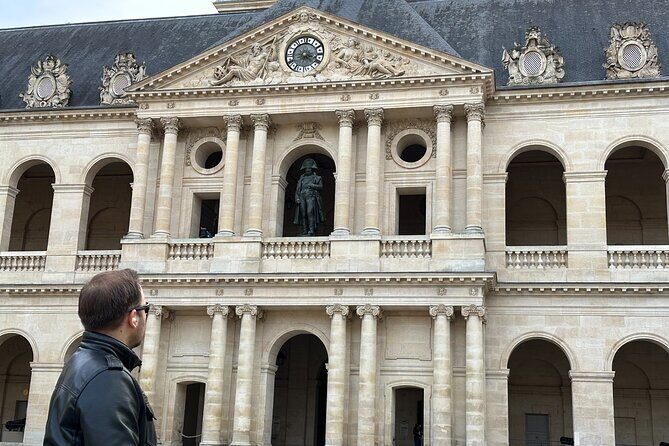
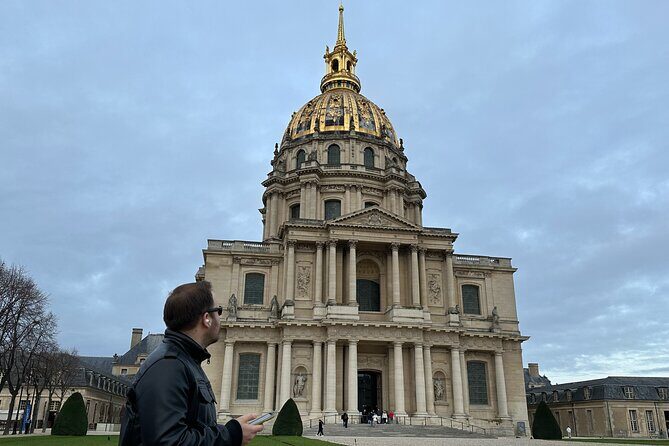
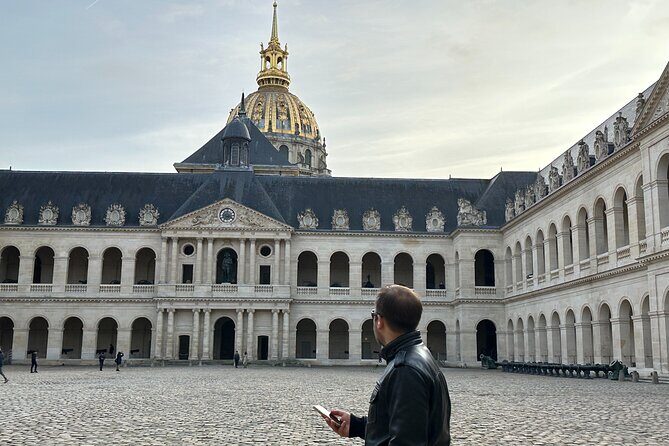
Your route ends with a dramatic emotional arc. You’ll pass Hôtel des Invalides, described as a grand complex with a gilded dome and courtyards, originally built as a hospital for wounded soldiers. That matters because it reframes the tone. You’re not only moving toward a tomb. You’re moving into the space that held people whose lives were shaped by war.
Then you’ll arrive at Napoleon’s tomb, housed under the golden dome. The tour points you to a grand marble sarcophagus surrounded by intricate sculptures. Standing before it, the experience is meant to make the scale of legacy feel physical, not just historical.
If you like your tours to end with a moment that feels more final than a photo stop, you’ll probably appreciate this ending. It’s a clear emotional crescendo.
Timing, comfort, and what to bring on a 1.5–2 hour walk
The tour runs about 1 hour 30 minutes to 2 hours (approx.). That’s a realistic window for an audio route where you pause and read cues when you want. If you normally walk slowly or stop often for photos, plan closer to the higher end.
Because it’s self-guided, the comfort tips matter:
- Bring water, especially if it’s warm. One recommendation I’d repeat from the experience pattern is to avoid a very hot day if you can.
- Use the audio pause feature when you take breaks. The tour is designed so you’re not trapped in motion.
- You’ll need your own smartphone and headphones. The tour provider includes the app (Android and iOS), but your hardware is on you.
Also, because the app includes offline access, you still want your phone battery to be healthy. Offline audio is great, but screens drain fast when GPS is active.
Good to know: the experience is near public transportation, and service animals are allowed.
Price and value: is $11.99 worth it?
At $11.99 per person, this tour is priced like a practical add-on instead of a full-on guided tour experience. What makes it feel like value isn’t just the price tag—it’s what you get for that money:
- GPS guidance and directions to the starting point
- Offline access to audio, maps, and geodata
- Lifetime access before and after your booking date
- English audio, so you’re not stuck with translation work
If you’ve ever paid more for a guided walk that only runs once at a fixed time, you’ll likely see the advantage here. You can start when you want and take breaks without checking a clock every few minutes.
The tradeoff is that you need to actively manage your phone setup and you won’t get a real-time person answering questions. But for many people, that’s exactly the kind of swap they want.
Support experience: the kind of help that matters when plans go sideways
One small detail from a booking-support experience is worth noting: I saw mention of Victor, described as kind, helpful, and punctual. The same note said Victor stayed to help sort out a room issue on arrival and even provided a ride to the airport on the return. That’s not the audio tour itself, but it hints that the service around your trip can be responsive when things get messy.
For an audio tour, that kind of backup can make you feel calmer. You’re planning a self-guided route, but it’s still reassuring when the human side of the process is there if you hit a snag.
Should you book Napoleon’s Paris?
Book it if you want:
- A GPS-backed walk that keeps you moving without getting lost
- Freedom to go slower, pause for water or a bathroom break, and control your pace
- A route that ends at Napoleon’s tomb instead of looping endlessly back to where you started
Skip it or think twice if:
- You dislike walking for about 1.5 to 2 hours with frequent sight stops
- You don’t want to rely on your phone and headphones during sightseeing
- You’re traveling on a very hot day and you hate long outdoor stretches
This one is a strong fit for independent travelers who enjoy architecture, symbols, and the way stories can change how you read a street.
If you do decide to book, a quick timing tip: start at a time when you can comfortably walk and then settle into the tour’s rhythm. And if your plans are flexible, you have room to adjust since free cancellation is available up to 24 hours in advance.
FAQ
Is this tour self-guided?
Yes. It’s a self-guided GPS audio tour, so you control when you start and how you pace the walk.
What language is the audio available in?
The tour is offered in English.
Do I need headphones and a smartphone?
Yes. The tour does not include a smartphone or headphones.
Can I use the audio and maps offline?
Yes. You get offline access to audio, maps, and geodata.
How long does the tour take?
It runs about 1 hour 30 minutes to 2 hours (approx.).
Where does the tour start and end?
It starts at Arc de Triomphe du Carrousel (Pl. du Carrousel, 75001 Paris) and ends at Napoleon’s Tomb (129 Rue de Grenelle, 75007 Paris).
Does the tour have time limits?
No. The listing notes there are no time limits, and you get lifetime access.
Is this a private activity?
Yes. It’s described as a private tour/activity, meaning only your group participates.
Can I cancel for free?
Yes. You can cancel for a full refund up to 24 hours in advance.