REVIEW · PARIS
Paris: Anzac Day Day Tour to Villers Bretonneux
Book on GetYourGuide →Operated by Paris' TRIP · Bookable on GetYourGuide
Watching dawn turn into remembrance
This full-day Anzac Day Somme Battlefields trip is built around one powerful morning moment, the Villers-Bretonneux Dawn Service, then ties it to the ground where so many lives were changed. I love the clear focus on the big memorial sites of World War I, and I also like the fact that you travel with an English-speaking guide who keeps the day meaningful (not just scenic). The main drawback is simple: it’s a long, early, full schedule, and there’s not much slack for wandering off or lingering.
You’ll start in Paris, head north to the Somme, and spend the day moving through places like Adelaide Cemetery, Lochnagar Crater, Thiepval, and Mont Saint-Quentin. You’ll also get a key context stop at Villers-Bretonneux’s Victoria School, tied to the Franco-Australian bond formed after the war. Just plan for cold mornings, lots of walking, and a lot of standing still for the important parts.
In This Review
- Key highlights at a glance
- A Dawn Service day with a clear purpose in Villers-Bretonneux
- Getting from Paris to the Somme: transport that keeps the day on track
- What to bring (because food and drinks aren’t included)
- Villers-Bretonneux and the Victoria School: the story behind the stones
- Adelaide Cemetery: a place for quiet respect
- Lochnagar Crater at La Boiselle: seeing the physical shock of 1916
- Pozières and Thiepval: the Missing Soldiers memorial hits hard
- Péronne and Mont Saint-Quentin: a final view over the Somme
- Price and value: why $330 can make sense for this kind of day
- How to get the most out of a packed schedule
- Who this tour suits best (and who should look elsewhere)
- Should you book the Paris to Somme Anzac Day tour?
- FAQ
- How long is the Paris to Villers-Bretonneux Anzac Day tour?
- Where do I meet in Paris?
- Is there an English-speaking guide?
- What transportation is included?
- Is food and drinks included?
- Which Somme sites and memorials are visited?
- Will the Australian National Memorial tower be open?
- Is the tour wheelchair accessible?
- What is the cancellation policy?
Key highlights at a glance
- Anzac Day Dawn Service in Villers-Bretonneux, a centerpiece moment for many Australians and New Zealanders
- Somme memorial circuit: Thiepval, Missing Soldiers memorial, and multiple cemeteries and battle sites
- Victoria School connection in Villers-Bretonneux, built as a gift from the children of Victoria to France
- Lochnagar Crater at La Boiselle, a stark battlefield scar you can still see today
- Mont Saint-Quentin viewpoint at Péronne, with the Somme valley laid out beneath it
A Dawn Service day with a clear purpose in Villers-Bretonneux
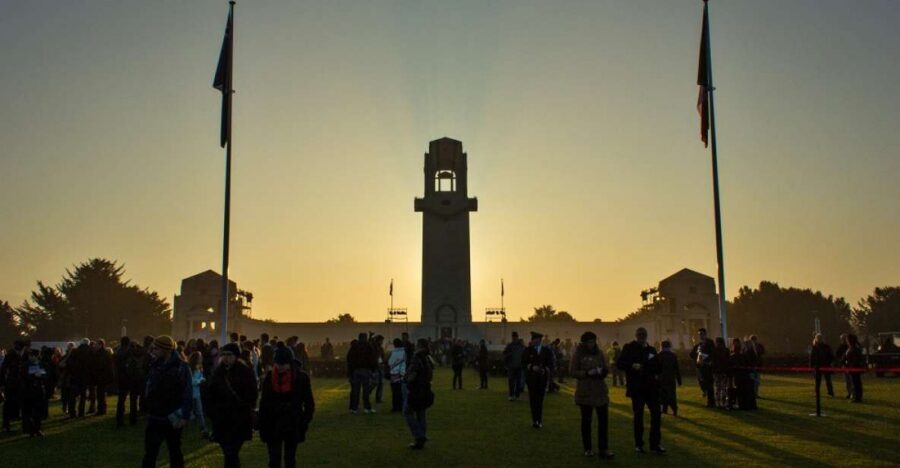
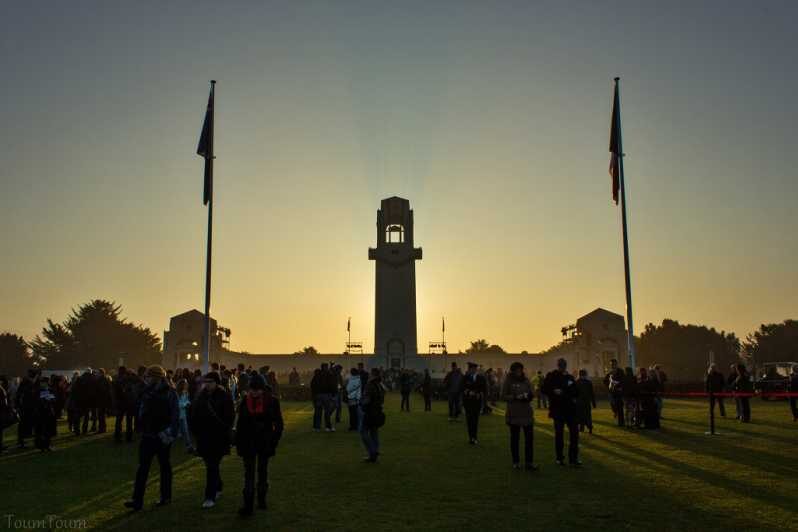
If you’re booking this kind of tour, you’re not here for a casual sightseeing loop. The heart of the day is the Anzac Day Dawn Service in Villers-Bretonneux. That timing matters. The service is solemn, but it’s also organized around the logistics of a major event with crowds and technical setup.
One practical heads-up: due to installation of technical equipment for the Dawn Service, the central tower of the Australian National Memorial won’t be open to the public. That means you should mentally plan for views and memorial areas around it, not climbing into or around that tower for extra vantage points.
You’ll also want to dress like you actually believe it’s early. Comfortable shoes matter because you’ll be on your feet for ceremonies and site visits, and warm clothing is strongly recommended. Early November chill in the Somme region (or any cold spring morning vibe) can sneak up on you, even if Paris felt mild when you left.
You can also read our reviews of more tours and experiences in Paris.



Getting from Paris to the Somme: transport that keeps the day on track
This tour runs for 12 hours, departing from the meeting point in front of Opera Garnier (Metro Opera or bus lines 3, 7, and 8). It’s a straightforward start—public transport access is handy—but do not treat it like a leisurely meet-up. Arrive a bit early so you’re not doing the last-minute scramble in a crowd.
Transportation is included, and the vehicle depends on group size: a minibus, a 15-seater coach, or a coach. The value here is that you avoid the stress of figuring out schedules, parking, and driving across multiple battlefield towns in one day. You also get dropped close enough to sites so you’re not burning half your day on transit.
In past experiences like this, the biggest difference between a pleasant trip and a miserable one is how calmly the guide keeps the timeline moving. The guide approach tends to make or break it, and on this route the guidance is part of what makes the sites click into place instead of becoming a stack of names.
What to bring (because food and drinks aren’t included)
Food and drinks aren’t included, so treat the day like a “pack-and-plan” event. Even if lunch happens during a planned window, you don’t want your mood to depend on finding a place that’s open, quick, and affordable at the exact moment you’re hungry.
At minimum:
- Bring snacks and water so you can handle gaps without getting cranky.
- Wear shoes you’re happy to walk in for hours, not shoes that look good for a photo and then punish your feet later.
Villers-Bretonneux and the Victoria School: the story behind the stones
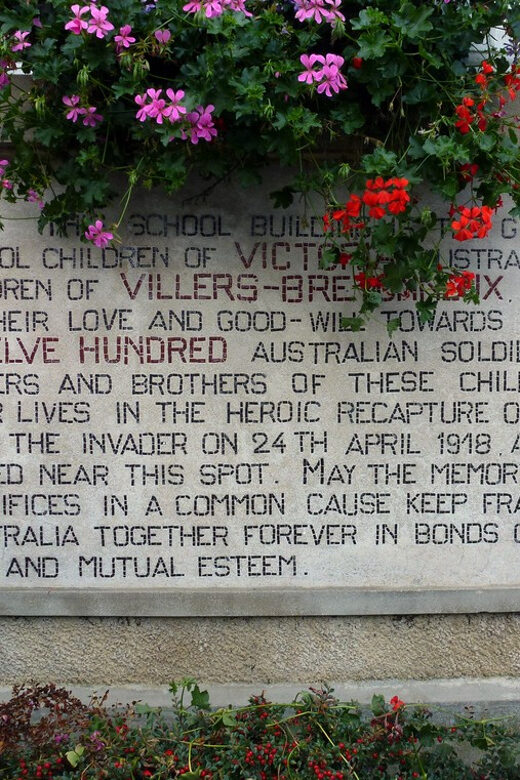
The first major stop after you reach Villers-Bretonneux is the Victoria School, built from 1923 to 1927. This school wasn’t just local architecture—it was a gift from the children of the state of Victoria in Australia to the children of Villers-Bretonneux as proof of love and goodwill toward France.
That detail is more than a neat trivia line. It’s one of the reasons this area resonates so strongly on Anzac Day. The war is here, but so is the post-war human thread: people chose connection over forgetting.
You’ll likely see the names and symbols that tie memorial efforts in Australia to specific places in France. And once you understand that “why,” it’s easier to stand in front of the cemeteries later and feel the weight of the losses without tuning out.
Adelaide Cemetery: a place for quiet respect
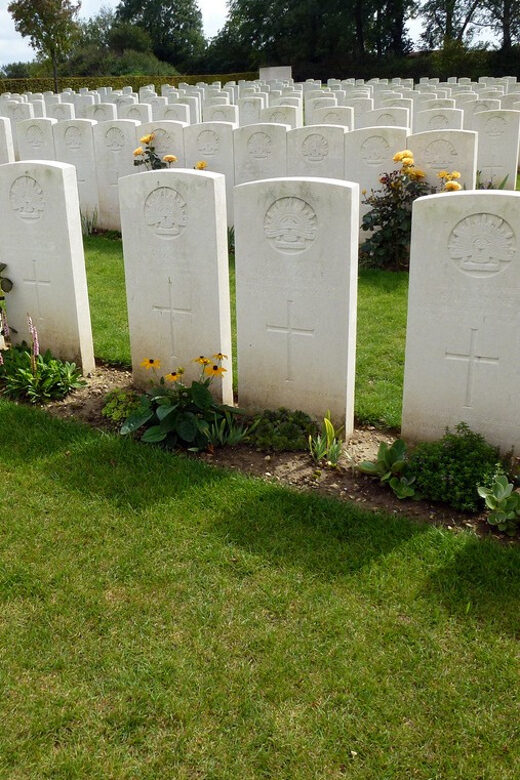
Adelaide Cemetery is one of the stops where the tone turns fully reflective. It’s included specifically so you can pay your respects to the fallen soldiers, and that’s the point of being here with a group and a guide.
What I find useful about cemetery visits on guided battlefield days is that you’re not trying to interpret everything alone while also trying to keep moving with the schedule. The guide context helps you slow down for the right reasons. Look closely at the memorial markers, read the names if you can, and let yourself spend a few moments without photographing everything. You’ll remember the silence more than any picture.



Lochnagar Crater at La Boiselle: seeing the physical shock of 1916
At La Boiselle, the highlight is the deep Lochnagar Crater, left behind from 1916. Even if you’ve read about mines and counterattacks, standing near a crater like this gives you a more honest sense of scale.
This is one of those stops where it’s worth paying attention to what the guide explains about the battlefield’s logic—how a terrain feature becomes a strategic tool, and how that same tool becomes a wound that lasts. The crater is a stark reminder that war wasn’t only about lines on a map. It was about earth being torn open, lives being changed in seconds, and landscapes never fully returning to normal.
Pozières and Thiepval: the Missing Soldiers memorial hits hard
From Lochnagar, the day continues through the major Somme battle areas. The stop at Pozières is tied to the Battle of Pozières, one of the Somme battles that’s remembered for its brutality and its heavy casualties.
Then you reach Thiepval, where you’ll see the Memorial to the Missing of the Somme. This is a different kind of memorial than a cemetery. In a cemetery, you can often find individual names and places of burial. At a memorial for the missing, you’re facing loss that can’t be fully resolved by a grave.
That’s why Thiepval tends to be such a focal moment on Anzac Day tours. You’re not just looking at a monument; you’re confronting the idea that some families had no clear closure. If you want a tip that will help you get the most out of Thiepval, it’s this: take a minute to find your bearings first, then circle back to slow down where the guide’s context helps you connect the names to the broader story of the Somme.
Péronne and Mont Saint-Quentin: a final view over the Somme
Péronne comes with a very different mood from the craters and trenches. You’ll visit the war memorial of Mont Saint-Quentin, overlooking the Somme River.
This viewpoint matters because it helps you visualize why the high ground was fought over so fiercely. When you can see the lay of the land, the battlefield becomes more than a collection of locations. It starts to feel like a system—routes, sightlines, and terrain choices.
Don’t worry if the weather changes your view. Even on a cloudy day, this stop brings you back to why these sites were strategically important. And as the day winds down, it offers a quieter kind of reflection: the war is still visible in the memorials, but you’re also witnessing the present-day valley that those soldiers once looked over from positions you can still imagine.
Price and value: why $330 can make sense for this kind of day
At $330 per person for a 12-hour guided day from Paris, this isn’t a budget outing. But the value isn’t just “transport and a tour guide.”
You’re paying for:
- Round-trip transportation from Paris by minibus or coach
- An English-speaking guide who ties the stops into a coherent Somme route
- Access to a full Anzac Day schedule that’s hard to replicate safely and calmly on your own in one day
- Multiple major sites across several towns, including places that are emotionally significant for many visitors
Could you do parts of the trip independently? Possibly. But the hard part isn’t getting there once. The hard part is managing the timing of a major day like Anzac Day while still honoring the day with the right pace.
So if your goal is a respectful, time-managed “Somme highlights” route with the most important memorials bundled in, the price starts to look less like a splurge and more like a convenience premium. If your goal is maximum freedom to stop whenever you want, this kind of day trip won’t feel flexible.
How to get the most out of a packed schedule
This tour is full-day by design. I’d think of it as a moving memorial circuit: you’re continually going from one emotionally weighty site to the next. That can be powerful, but it also means you don’t get endless time at each place.
Here’s how to make it work for you:
- Decide before you go what you want most: ceremony time, cemetery time, or detailed site reading. Then let the guide keep the flow.
- Plan for cold and fatigue. A warm layer and good shoes can save your whole day.
- Since food and drinks are not included, eat something beforehand and keep snacks handy for the in-between moments.
- After the Dawn Service, remember that your group schedule still continues. If you’re hoping to stay out and linger, that might be limited by the day’s plan.
The result is that the experience can feel smooth when you’re prepared, and rushed when you show up relying on flexibility. So I’d treat the itinerary like a respectful relay, not an open buffet.
Who this tour suits best (and who should look elsewhere)
This experience fits best if you:
- Want a guided Anzac Day experience tied directly to the Somme battlefields
- Prefer an organized route with an English-speaking guide instead of DIY navigation
- Care about memorial context, not just photos of battlefield landmarks
- Are comfortable with a long day and a lot of standing and walking
It may feel less ideal if you:
- Need lots of free time at each stop
- Don’t like rigid schedules on travel days
- Have mobility needs that make the walking and site access challenging (this tour isn’t wheelchair accessible)
If you’re unsure, ask yourself a simple question: do I want the structure of a guided memorial day, or do I want maximum independence? This tour clearly leans toward structure.
Should you book the Paris to Somme Anzac Day tour?
Book it if you want a well-focused Anzac Day route from Paris that takes you to the major Somme memorials and battlefield sites, including the Dawn Service at Villers-Bretonneux. The strong point here is not “seeing everything.” It’s seeing the right places in the right order, with the day’s meaning explained in a way that helps you understand what you’re looking at.
Skip it (or consider a more flexible plan) if you hate tight timing, dislike early starts, or need a lot of meal and downtime control. Also consider that one key memorial area—the central tower of the Australian National Memorial—won’t be open because of Dawn Service technical setup.
If you do book, show up prepared: warm layers, comfortable shoes, and snacks. Then let the guide and the route do what they’re designed to do—help you connect the Anzac Day ceremony to the Somme ground where the story still lives.
FAQ
How long is the Paris to Villers-Bretonneux Anzac Day tour?
The tour duration is 12 hours.
Where do I meet in Paris?
You meet in front of Opera Garnier, at the Metro Opera area (or bus lines 3, 7, and 8).
Is there an English-speaking guide?
Yes, the tour includes a live English-speaking guide.
What transportation is included?
Round-trip transportation from Paris is included, using a minibus, a 15 seater coach, or a coach depending on the number of participants.
Is food and drinks included?
No. Food and drinks are not included.
Which Somme sites and memorials are visited?
You’ll visit places including Villers-Bretonneux’s Victoria School, Adelaide Cemetery, Lochnagar Crater at La Boiselle, the Battle of Pozières area, the Memorial to the Missing of the Somme at Thiepval, and the war memorial of Mont Saint-Quentin overlooking the Somme River near Péronne.
Will the Australian National Memorial tower be open?
No. Due to technical equipment for the Dawn Service, the central tower of the Australian National Memorial will not be open to the public.
Is the tour wheelchair accessible?
No, this tour is not wheelchair accessible and is not suitable for people with mobility impairments.
What is the cancellation policy?
You can cancel up to 24 hours in advance for a full refund. No cancellations, modifications, or refunds apply 5 days prior to the scheduled tour date.