REVIEW · PARIS
Paris: Best of the Louvre Guided Tour with Pre-booked Ticket
Book on GetYourGuide →Operated by CONNECTING FRANCE · Bookable on GetYourGuide
Two hours, and the Louvre finally makes sense. This is a small-group tour built to cut through chaos fast, with skip-the-line entry and a guide who can explain what you’re actually looking at. You’ll see headline masterpieces like the Venus de Milo, Mona Lisa, and Nike of Samothrace, plus major themes from the Louvre’s royal-palatine past—often in a way that’s way easier than wandering on your own. In recent tours, guides such as Clara, Flo, Maxim, and Matteo were praised for clear explanations and keeping the pace moving without turning it into a race.
The one thing to think about is the Louvre’s updated ticket rules. As of January 2026, you won’t be allowed to re-enter after your tour ends, so plan your post-tour wandering accordingly. That change can be a little annoying if you’re hoping to pop out for a café break and come back.
In This Review
- Key things I’d watch for before you book
- From Place Colette to the Pyramid: how you start strong
- Skip-the-line entry and the reality of security
- The Venus de Milo stop: why the first big artwork matters
- The 2-hour guided plan: what you actually get to see
- “The three ladies” effect: seeing art with better questions
- Da Vinci, Carravaggio, Botticelli, Géricault: a fast art timeline you can use
- Napoleon and the royal rooms: why this part feels different
- Navigation and pace: the crowd-management advantage
- After the tour: planning your Louvre time with the January 2026 rule
- Price and value: is $130 worth it?
- Who this tour is best for (and who should consider another option)
- Should you book the Louvre Best Of guided tour?
- FAQ
- How long is the Louvre guided tour?
- Is skip-the-line entry included?
- Where do we meet the guide?
- What artworks are included in the tour highlights?
- Are temporary exhibitions included?
- What languages are available?
- What can’t you bring into the Louvre?
Key things I’d watch for before you book
- Fast-track entry that actually saves time after security
- Max 6 people, so you can ask questions instead of just listening
- A tight set of must-see works, not a vague random walk
- Clear context on how the Louvre shifted from fortress to royal residence to museum
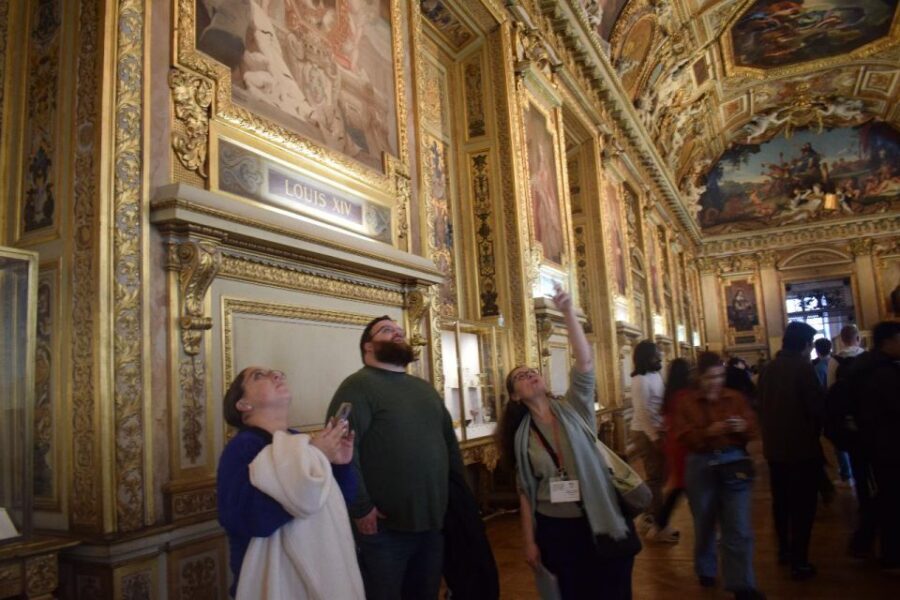
- Real guidance on crowd navigation, with a steady pace inside the galleries
From Place Colette to the Pyramid: how you start strong
Your day begins outdoors, at Place Colette, right between Le Kiosque des Noctambules (those very colorful glass-ball sculptures) and the building called Comédie Française. The guide waits with a sign reading Connecting France. It’s a simple start, but it matters: getting the meet-up right saves you that first chunk of stress.
From there, you’ll pass by the Louvre Pyramid. Even though you’re not going inside yet, this quick orientation moment helps you “map” the museum in your head. The Louvre is huge. A short first glance at the Pyramid gives your later turns meaning, so you’re not constantly thinking, Where am I?
You can also read our reviews of more tours and experiences in Paris



Skip-the-line entry and the reality of security
This tour includes a timed ticket plus skip-the-line entry through a separate entrance. In the Louvre, those two details aren’t luxuries. They’re the difference between an afternoon and a long, overheated waiting room.
Once you’ve passed security, you should expect a swift entry into the museum. The tour is designed to get you into the galleries quickly enough that you still have energy to look closely. And because this is a semi-private group (max 6 people) with a live guide, the time isn’t wasted circling for stragglers. You’ll notice the pace is purposeful.
One small practical note: don’t show up dragging a heavy bag. Oversize luggage, large bags, backpacks, and baby strollers aren’t allowed, so pack light. And wear comfortable shoes, because the Louvre can feel like a marathon even when you’re only there for two hours.
The Venus de Milo stop: why the first big artwork matters
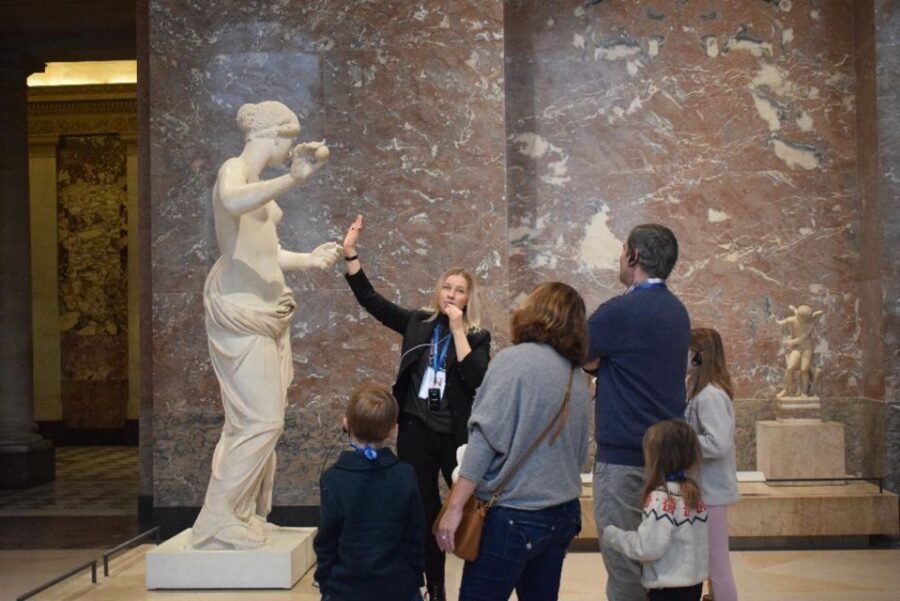
A highlight early on is Venus de Milo. This isn’t just a “famous statue photo op.” It’s a useful starting anchor because it puts you in the right mindset: the Louvre is not only paintings behind glass. It’s also sculptural storytelling—pose, proportion, setting, and what survives (and what doesn’t).
When you meet Venus early, you also get an immediate contrast with later works. After a couple of grand masterpieces, it becomes easier to notice patterns your brain might otherwise miss—like how artists reuse symbols, or how different schools of art aim for different kinds of beauty and emotion.
The 2-hour guided plan: what you actually get to see
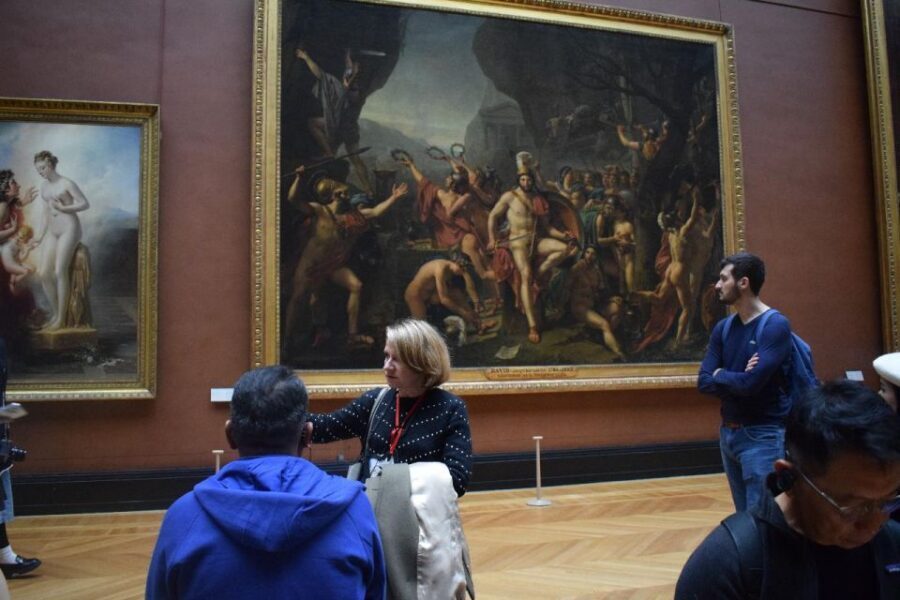
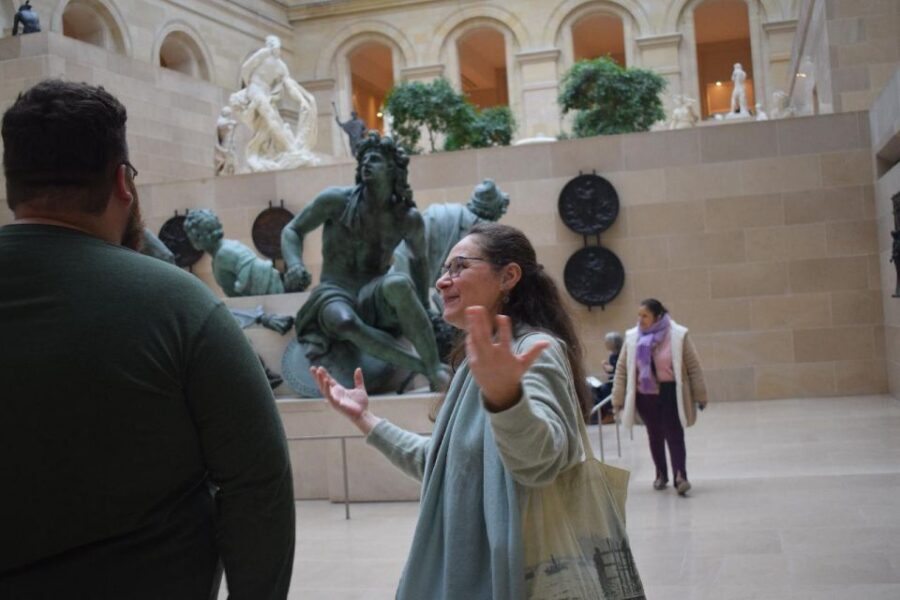
The core of the experience is a 2-hour guided tour inside the Louvre, with a group size limited to up to 6 people. That small size changes everything. You get more back-and-forth, and your guide can adjust if your group wants more time at one stop.
The tour is built around famous anchor works and key themes. Expect you’ll be shown major highlights such as:
- Venus de Milo
- Mona Lisa
- Nike of Samothrace
- Winged Victory of Samothrace
- Napoleon’s coronation
- Napoleon’s apartments (mentioned as included in some highlights routes)
- French paintings and major European art from several eras
You’re also set up to understand the Louvre itself, not just the objects. The guide should explain how this former royal palace evolved over about 800 years—from medieval fortress to Renaissance royal residence, and later serving partly as a museum. You’ll also hear how it expanded under two emperors and grew into the world’s most-visited museum by the end of the 20th century, with over 35,000 works.
That context is where the guided part really pays off. Without it, the Louvre can turn into a blur of rooms. With it, you start seeing the museum as one long story.
“The three ladies” effect: seeing art with better questions
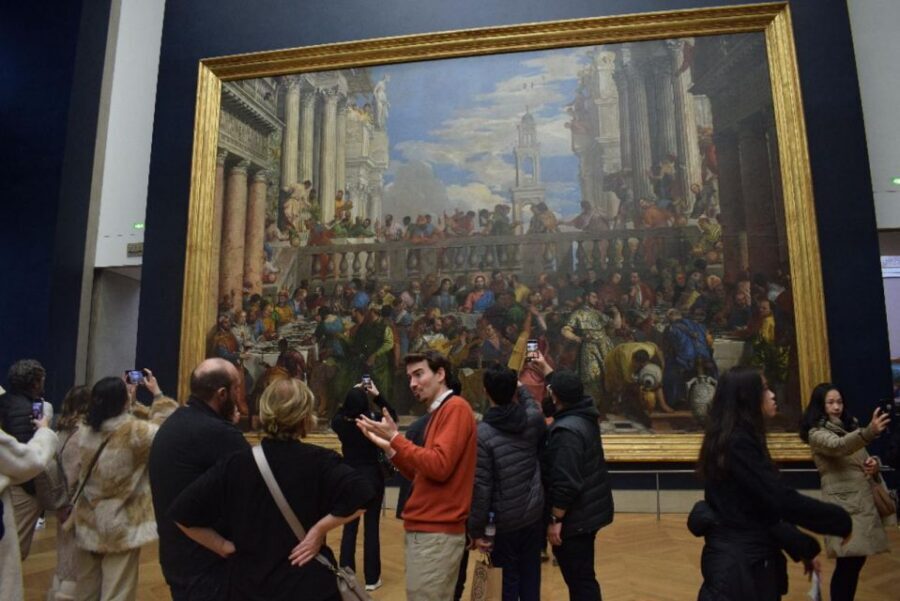
One of the most praised parts of this tour is the focus on the Louvre’s star women—often talked about as the three ladies of the Louvre: Venus, Mona Lisa, and Nike. Even if you’ve seen their images online, this kind of guided viewing changes your relationship with them.
Here’s why:
- Venus helps you read classic sculpture: form, gesture, and survival of antiquity.
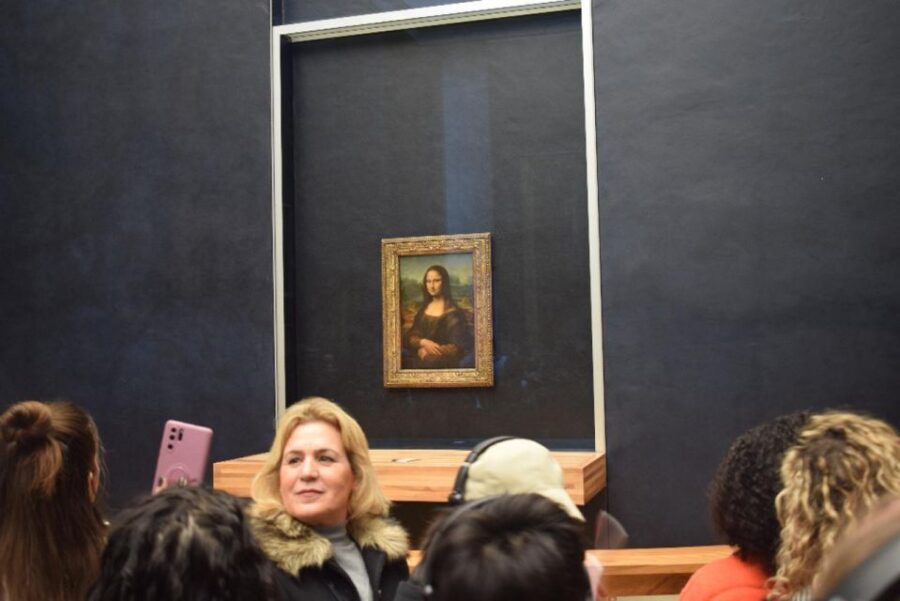
- Mona Lisa becomes less about the spectacle and more about the layers—composition, technique, and why she became a magnet.
- Nike of Samothrace teaches you to look at drama and movement, not just a static figure.
Guides in recent groups—like Clara, Floriane, and Benjamin—were praised for pointing out what you’d likely miss on your own. That’s the real value of having a guide for even a short session: you’re not just collecting landmarks, you’re learning how to notice.
You can also read our reviews of more guided tours in Paris






Da Vinci, Carravaggio, Botticelli, Géricault: a fast art timeline you can use
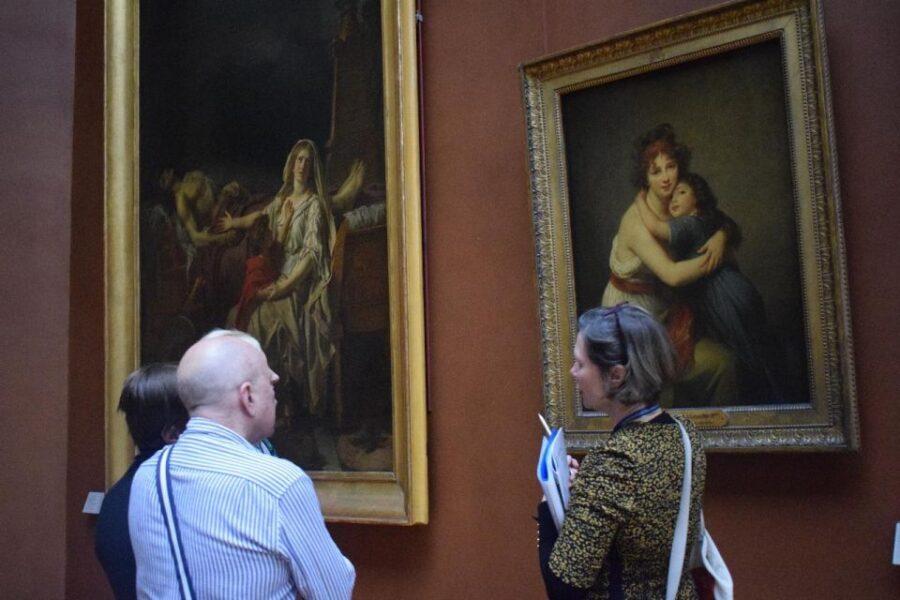
This isn’t only “walk-and-take-pictures.” The tour is designed to cover a spread of major artists you’ll hear about constantly in art history—da Vinci, Carravaggio, Botticelli, and Géricault—so you leave with a working sense of what the Louvre represents.
Even if you don’t consider yourself an art person, this kind of timeline helps. You can’t possibly see everything in two hours. But you can come away knowing which schools and periods you’d want to return to later. And that is often the difference between:
- visiting the Louvre once, feeling impressed, then moving on
vs.
- visiting the Louvre once, then planning a smart second visit to the sections you actually care about
Napoleon and the royal rooms: why this part feels different
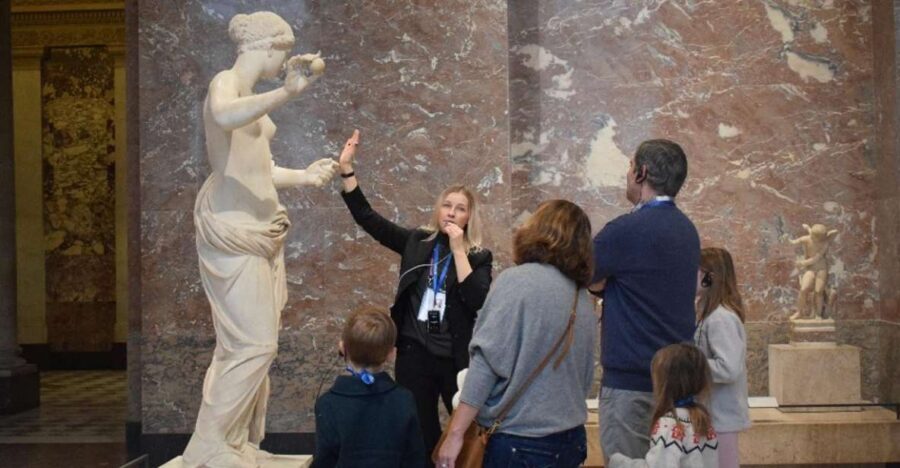
A lot of visitors love paintings and sculpture most, but the Napoleon-related stops can give the Louvre a different kind of energy. If your tour route includes Napoleon’s apartments and artworks tied to power—like Napoleon’s coronation—you’ll get a sense that the Louvre is still a stage for stories.
This matters because the Louvre isn’t just a museum built for display. It’s a palace turned into a public institution. When your guide connects that transformation to what you see, the rooms don’t feel random. They feel staged, like history with lighting.
If you like your art with context (and you don’t want to spend your time figuring it out), this section is often the best kind of surprise.
Navigation and pace: the crowd-management advantage
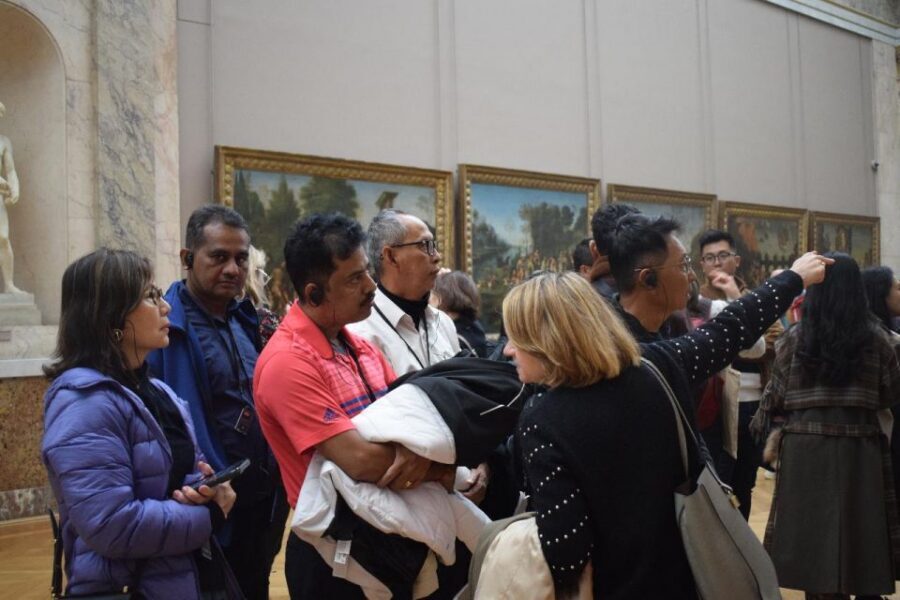
The Louvre crowd can feel like weather—unpredictable and thick. One of the most consistently praised elements of this tour is how guides kept groups moving and helped with navigation.
A few practical things you can expect in this small-group format:
- Your guide keeps you together so you don’t lose the thread between rooms.
- The pace aims to hit the best known highlights without totally exhausting you.
- You’ll have a chance to ask questions instead of just absorbing facts while sprinting.
In multiple examples, guides such as Patrick, Jerome, Zack, Marine, and Victor were noted for humor, clear explanations, and maintaining momentum. Also, some guides provided audio support so you can hear them even in busy spaces. If that’s offered on your date, it’s worth using—standing closer or adjusting your position is fine, but the audio helps you keep your attention on the artwork.
After the tour: planning your Louvre time with the January 2026 rule
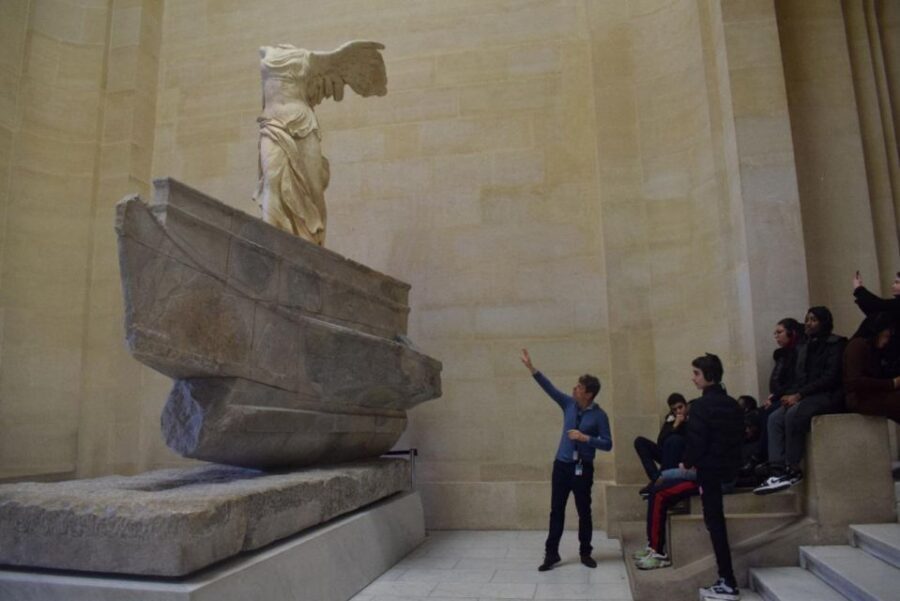
Here’s a key adjustment you need to make because the Louvre changed ticketing rules.
As of January 2026, you can’t re-enter after your guided tour is over. That means you should treat the guided window as the official moment you’re spending inside with your group, and treat the rest as “only if you’re still inside when the tour ends” rather than a guaranteed follow-up loop.
So when you plan your afternoon, do two things:
- Decide in advance what you might want to do next, if time and access allow.
- Don’t structure your plan around leaving to grab a coffee and then coming back for more galleries.
This is exactly the kind of rule that can turn a small confusion into a missed opportunity.
Price and value: is $130 worth it?
At $130 per person for a 2-hour small-group highlights tour, it’s not cheap. But it can be good value if you understand what you’re buying:
You’re paying for:
- Skip-the-line entry and a timed ticket that reduces dead time.
- A guide to select and sequence the most important objects, so you don’t waste your limited energy.
- Context that turns “I saw it” into “I get why it matters.”
If you only have one Louvre day, this format is often worth it because you’re buying decisions: what to prioritize, what to skim, and what to return to later. If you have two or three days and you love wandering freely, you might not need a guided tour at all.
But if your time is limited—or you want the Louvre to feel coherent—this guided approach is a smart use of money.
Who this tour is best for (and who should consider another option)
This tour fits best if you:
- want the biggest highlights without losing your bearings
- like learning through stories while still seeing the most famous art
- prefer small-group pacing over a large bus-style crowd
It’s not suitable if you:
- have mobility impairments or use a wheelchair, since it’s not designed for that
If you’re traveling with kids, this format can work well too. Several guide-led sessions were enjoyed by families, including teens, because the tour gives structure without turning into a long lecture.
Languages are also handled well: guides operate in English, French, German, Spanish, Italian, Arabic, and Chinese, so you can choose what works for your group.
Should you book the Louvre Best Of guided tour?
I’d book this tour if you’re trying to see the Louvre in a way that feels organized and meaningful. The combination of skip-the-line access, a max-6 group, and strong guided storytelling is the kind of support that makes a massive museum manageable in just two hours.
Skip it if you:
- have plenty of time and enjoy unstructured wandering
- don’t want to follow someone else’s route
- need reassurance about leaving and coming back later (because of the updated no re-entry rule as of January 2026)
If your priority is seeing the right masterpieces efficiently and understanding what you’re looking at, this is a solid plan.
FAQ
How long is the Louvre guided tour?
It’s listed as a 2-hour small-group tour.
Is skip-the-line entry included?
Yes. The tour includes skip-the-line access and a separate entrance.
Where do we meet the guide?
Meet at Place Colette, between Le Kiosque des Noctambules and the Comédie Française building. Your guide will be holding a sign that says Connecting France.
What artworks are included in the tour highlights?
You’ll visit major highlights such as Venus de Milo, Mona Lisa, and Nike / Winged Victory of Samothrace, along with other well-known works like Napoleon’s coronation and additional key rooms and galleries.
Are temporary exhibitions included?
No. The tour does not include a tour of temporary exhibitions.
What languages are available?
The guide is available in English, French, German, Spanish, Italian, Arabic, and Chinese.
What can’t you bring into the Louvre?
You can’t bring oversize luggage, baby strollers, luggage or large bags, or backpacks. You should bring passport or ID and wear comfortable shoes.