REVIEW · PARIS
Paris: Covered Passages Walking Tour
Book on GetYourGuide →Operated by ExperienceFirst · Bookable on GetYourGuide
Paris has secret roofed streets.
This is the kind of tour that makes you look up in Paris. The covered passages are part shopping streets, part architecture show, with light pouring through glass roofs and a timeline that stretches back to the 1700s. I love the sunlit shop glow you get in Passage Choiseul, and I love how Galerie Vivienne feels like a national monument turned into a walk-through lifestyle magazine. You’ll get clear historical context, plus guidance on where to shop and where to stop for food.
One thing to consider: it runs rain or shine. That means you’ll want proper shoes, and you may still have to keep moving even if the streets are wet or busy.
Guides set the tone. Names that come up again and again include Ben, Joanna, Maria, and David, and the common thread is the way they point out architectural details you’d likely miss on your own. You’ll meet at the Basilica of Notre-Dame des Victoires with an orange ExperienceFirst sign, then work through the passage maze and end at Passage Verdeau.
In This Review
- Key highlights you should care about
- Covered Passages: Why Paris Built Shopping Streets Under Glass
- Meeting at Notre-Dame des Victoires and What I’d Wear
- Galerie Vivienne: Neoclassical Arcade and Luxury Shopping Inside a Monument
- Passage Choiseul: Sunlit Shops, 600+ Feet of Glass Roof, and Tiled-Floor Details
- Passage des Panoramas: The First Covered Walkway with Old-Paris Charm
- Passage Jouffroy: Narrow, Glass-and-Iron Style, and a Wax Museum Stop
- Passage Verdeau: Antiques, Vintage Curiosities, and Where the Tour Finishes
- Optional Narrated Seine Cruise Upgrade: A Nice Second Act
- Price and Value: Why $42 for 90 Minutes Can Add Up
- Who This Tour Fits Best (and the one reason you might skip it)
- Should You Book This Paris Covered Passages Walking Tour?
- FAQ
- How long is the Paris covered passages walking tour?
- Where do I meet the guide?
- What language is the tour in?
- Is the Seine river cruise included?
- Does the tour run in rain or shine?
- Is the tour wheelchair accessible?
- Can I cancel for a full refund?
Key highlights you should care about
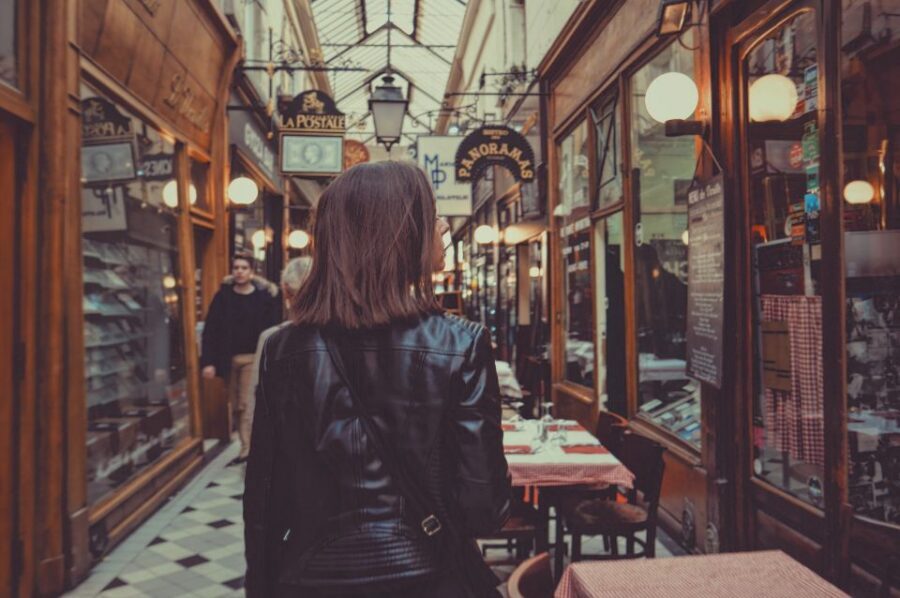
- Passage Choiseul’s glass roof and tiled floor: easy to photograph, and it changes how the whole street feels.
- Galerie Vivienne as a national monument: neoclassical design with luxury boutiques in a real, working passage.
- A first covered walkway stop in Passage des Panoramas: old Paris atmosphere with artisanal shops and eateries.
- Passage Jouffroy’s glass-and-iron look: plus a wax museum stop that adds variety.
- Passage Verdeau for antiques and vintage browsing: a strong finale if you like looking at objects.
- Optional narrated Seine cruise upgrade: valid for a year from your tour date, so it can fit your schedule later.
Covered Passages: Why Paris Built Shopping Streets Under Glass
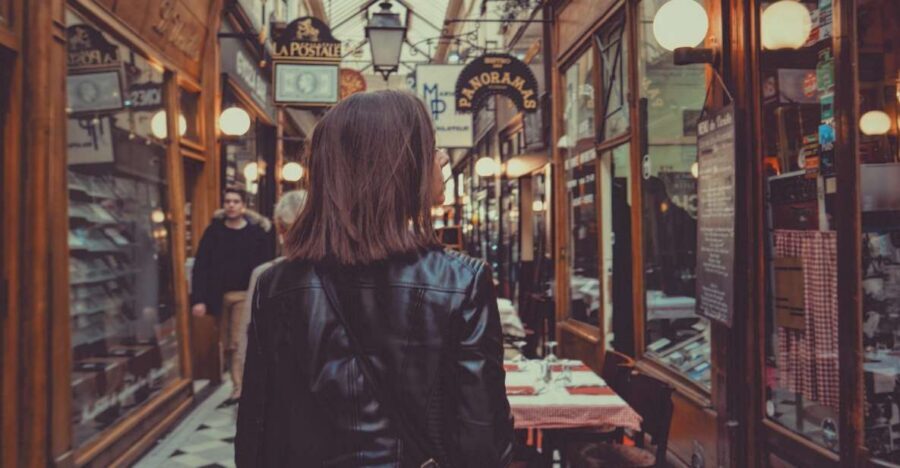
Paris covered passages are one of those ideas that sound simple until you stand inside them. Picture a narrow corridor, lined with shops and cafés, but topped by glass and iron. Daylight filters in, the air feels different, and the street becomes calmer than the sidewalk outside.
These passages also tell a story about how Parisians shopped and socialized long before modern malls. The whole concept dates back to the 1700s era of arcade-style covered walkways. Then you get specific chapters: for example, Galerie Vivienne has been around since 1823, and Passage des Panoramas is described as the first covered walkway in Paris, built over two centuries ago.
That mix matters because this tour isn’t just walking from one pretty roof to another. It’s learning why these spaces exist, how they influenced fashion and retail, and where to look for details you’ll actually remember.
You can also read our reviews of more walking tours in Paris

Meeting at Notre-Dame des Victoires and What I’d Wear
You’ll meet your guide in front of the Basilica of Notre-Dame des Victoires. Look for the guide holding an orange ExperienceFirst sign.
From a practical standpoint, plan around a 90-minute walk that stays focused. It’s not a sit-and-watch kind of tour. I’d wear shoes that feel good on uneven stone and that you can handle if the weather turns.
The tour runs rain or shine. That doesn’t mean it becomes miserable—just that you should show up prepared. Bring something light for rain, and keep your camera ready because the glass roofs make for strong, bright photo angles even when the sky is gray.
Galerie Vivienne: Neoclassical Arcade and Luxury Shopping Inside a Monument
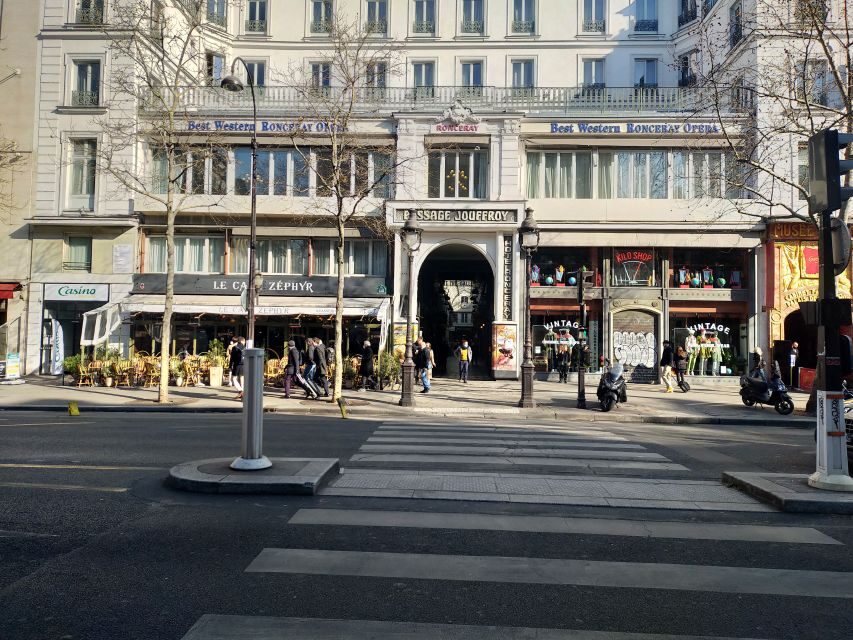
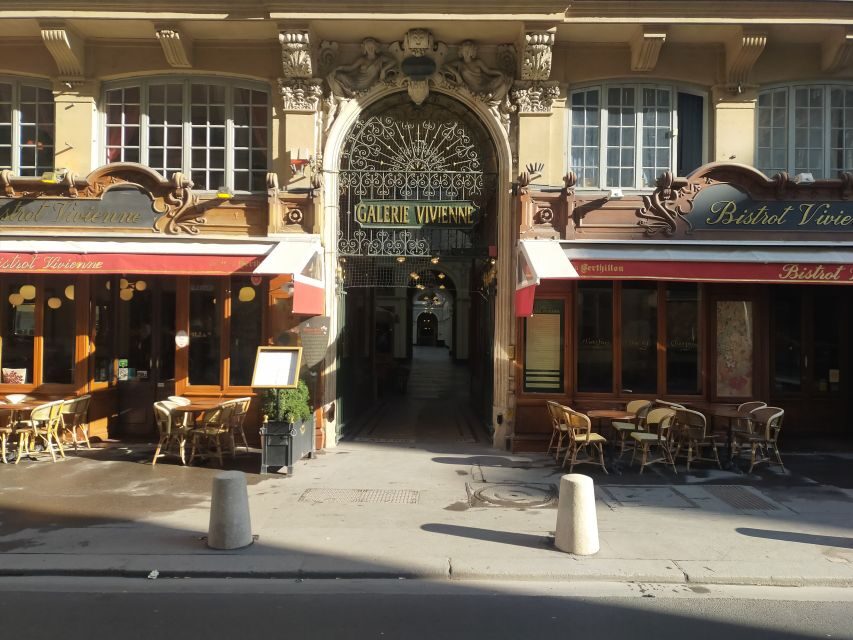
Your first major stop is Galerie Vivienne. This is a neoclassical-style covered passage that has been part of the city since 1823, and it’s now recognized as a national monument. That’s a big deal in a city where lots of “old” spaces have changed hands over the years. Here, the design is still clearly legible, and the passage still functions as a shopping destination.
Expect the guide to frame the building as more than decor. You’ll learn what makes this passage distinct, and you’ll see how luxury boutiques fit into the arcade layout. In other words: you’re not just sightseeing. You’re reading the space like a map—where the light falls, how the passage creates a sheltered corridor, and why these places became magnets for fashion and shoppers.
A subtle tip: treat Galerie Vivienne like a warm-up. When you understand the “shape” here—glass roof, storefront rhythm, passage-to-passage flow—you’ll recognize that pattern again and again as you move deeper into the arcade network.
Passage Choiseul: Sunlit Shops, 600+ Feet of Glass Roof, and Tiled-Floor Details
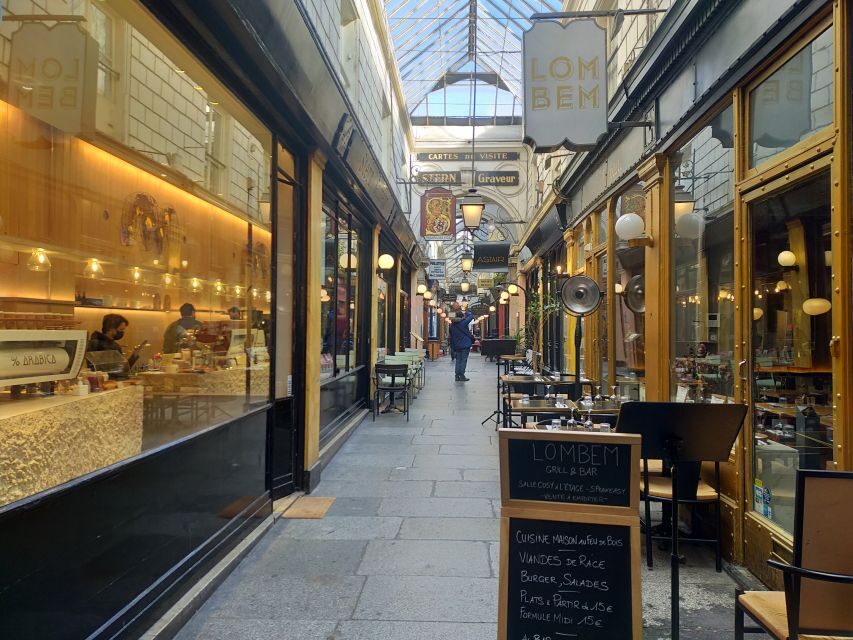
If you care about photos, Passage Choiseul is where you’ll probably pause the most. The tour highlights how this passage stretches with sunlit shops below a magnificent glass roof—over 600 feet long. It also has an ornate tiled floor, and the guide will point it out.
This is a great example of why a guided tour is worth it even if you love exploring on your own. You could wander in and out of Choiseul, sure. But with a guide, you’ll know exactly what to look down at, not only what to look at straight ahead.
Also, don’t rush your photos. The light changes how the iron-and-glass structure shows up, and tiled details can get lost if you only shoot one angle. Give yourself a couple minutes to walk slowly, glance down, and shoot from the same spot twice—once quickly, then again after you notice how daylight shifts.
Passage des Panoramas: The First Covered Walkway with Old-Paris Charm
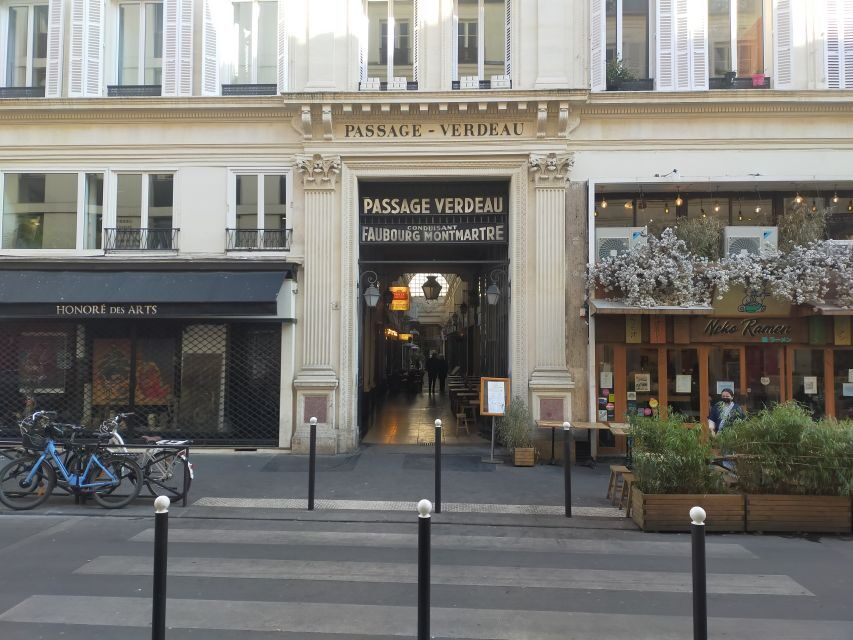
Next comes Passage des Panoramas. It’s described as the first covered walkway in Paris, built over two centuries ago. That alone makes it a must-stop if you like architectural firsts and historical “origin stories.”
Here, the tour leans into atmosphere. Think old-world charm, timeless layout, and a passage that still feels like a real part of city life—not a museum corridor. Your guide should point out artisanal shops and eateries, which is useful because this is one of those spots where you might want to make a decision: browse now, or save it for later when you can settle in.
One caution: because the passage is “old,” you may notice it’s not built for speed. If you’re the kind of person who likes to cover ground fast, you’ll need to adjust your pace. The payoff is that the place rewards slow looking.

Passage Jouffroy: Narrow, Glass-and-Iron Style, and a Wax Museum Stop
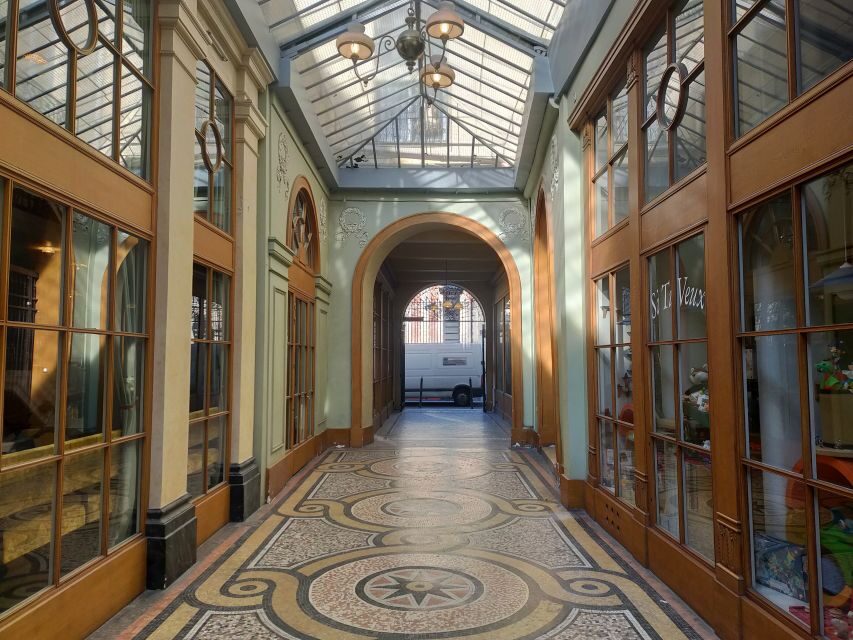
Passage Jouffroy is a narrower passage with glass and iron accents. That design shift from the larger passages matters. Narrower corridors create a different feeling—more framed, more intimate, and better for spotting the ironwork details.
This is also where the tour adds a bit of playful variety: it includes a wax museum housed in the passage. Even if you’re not a wax-museum person, it breaks up the “shops and glass roof” rhythm and gives you a new way to interact with the space.
From a photo point of view, Jouffroy is often easier to shoot than it looks. The narrower walls and iron structure can make for strong lines in your images, and you’ll capture more “passage” per step. Just remember: keep moving as a group, or you’ll miss the chance to see what your guide points out in the best viewing spots.
Passage Verdeau: Antiques, Vintage Curiosities, and Where the Tour Finishes
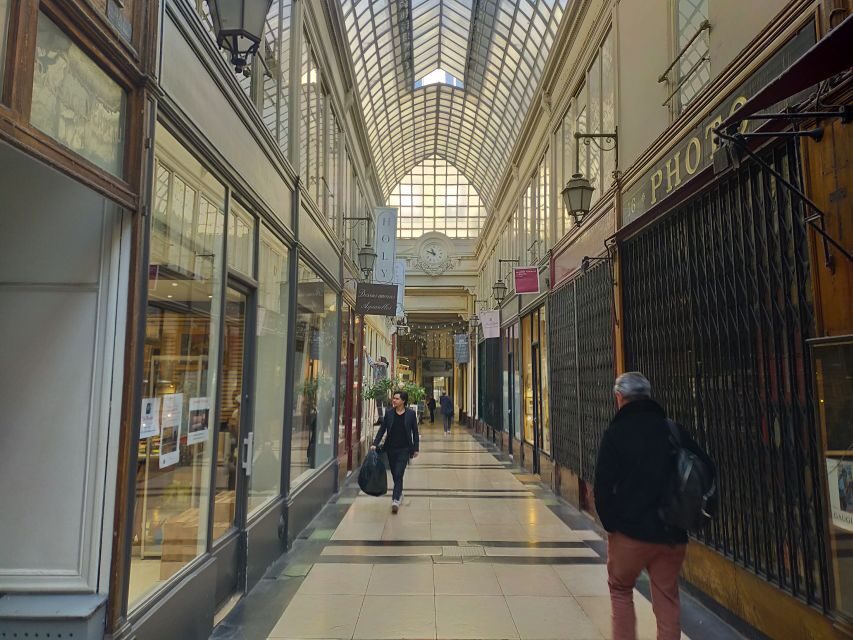
The tour ends at Passage Verdeau, and it’s a fitting finale if you like browsing. This is the passage where antique dealers and vintage curiosities line the pathway.
What I like about ending here is that it shifts the mood from architectural focus to object focus. Instead of only looking up at glass roofs and iron details, you can look sideways and down at what people sell—old posters, small antiques, and the kind of curated clutter that makes browsing fun.
It also gives you a natural “what now?” moment. When a tour finishes with a browsing-heavy destination, you can decide on the spot whether you want to keep exploring on your own. If you’re thinking lunch next, you’ll probably feel ready—because you’ve walked, you’ve learned, and now you’re in a place that invites you to keep wandering.
Optional Narrated Seine Cruise Upgrade: A Nice Second Act
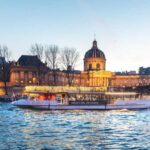
You can upgrade to enjoy a narrated cruise on the Seine. It’s valid for one year from your tour date, which is smart if you’re trying to keep your Paris schedule flexible.
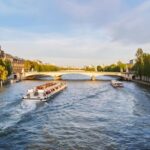
The cruise is a good match for this tour because it closes the loop. After walking through covered passages, you’ll have a new angle on Paris—on the water, where light and bridges create their own photo story. Even if you don’t think you’re a “cruise person,” the narrated format can turn a simple ride into something with context.
One practical note: the upgrade is optional, so if you plan to add it, make sure you know how the cruise time works relative to your tour. A past booking issue mentioned cruise tickets not being received, so I’d handle that step early rather than assuming it will sort itself out close to departure.
Price and Value: Why $42 for 90 Minutes Can Add Up
At $42 per person for a 90-minute walking tour, this isn’t just “pay for someone to point things out.” You’re paying for three things at once:
- Time-saving discovery: these passages are easy to miss if you’re not looking for them. You also don’t have to guess which order makes sense.
- Context that makes the architecture readable: learning what makes Galerie Vivienne special, why Choiseul has such strong design details, and how Panoramas fits into the “first” story helps you remember what you saw.
- A practical shopping-and-food lens: the tour is set up to guide you on places to shop and dine inside the passages, not just outside them.
Add in that a Paris shuttle is included, and the value argument gets stronger. You’re not only walking in protected corridors; you’re also getting help with getting to and from the area.
Who This Tour Fits Best (and the one reason you might skip it)
This is best for you if you:
- like architecture and design details you can photograph
- want a calmer slice of Paris that feels distinct from the main landmarks
- enjoy shopping browsing, especially in narrow specialty corridors
- want a guide who can connect the spaces to how Paris fashions and retail evolved
You might skip it if you strongly dislike walking rain or shine. The tour still takes place in bad weather, and it’s designed to move efficiently through multiple passages.
Also, there’s a point worth double-checking before booking: the info says the tour is wheelchair accessible, but it also lists wheelchair users as not suitable. If you use a wheelchair, confirm directly with the operator before you commit, so you don’t end up with an unpleasant surprise.
Should You Book This Paris Covered Passages Walking Tour?
I think you should book it if you want one high-value afternoon in Paris that feels more local than a checklist. The best part is that it’s not only pretty. It’s guided, structured, and focused on spaces—Galerie Vivienne, Passage Choiseul, Panoramas, Jouffroy, and Verdeau—where the glass, iron, and tile details actually mean something.
If you’re flexible, consider adding the narrated Seine cruise as a second act. It’s valid for a year from your tour date, so you can slot it in without stress.
One final practical tip: wear comfortable shoes and plan to do a little browsing right after. The tour gives you a route and context, but the fun keeps going once you’re released into Passage Verdeau with nothing left to “check”—just places to look.
FAQ
How long is the Paris covered passages walking tour?
The tour lasts 90 minutes.
Where do I meet the guide?
Meet the guide in front of the Basilica of Notre-Dame des Victoires. The guide will be holding an orange ExperienceFirst sign.
What language is the tour in?
The tour is in English.
Is the Seine river cruise included?
The Seine river cruise is an optional upgrade. It’s narrated and good for one year from your tour date.
Does the tour run in rain or shine?
Yes. The tour takes place rain or shine.
Is the tour wheelchair accessible?
The information provided says wheelchair accessible, but it also lists wheelchair users as not suitable. It’s worth confirming directly before booking if you need wheelchair support.
Can I cancel for a full refund?
Yes. Free cancellation is available up to 24 hours in advance for a full refund.