REVIEW · PARIS
Paris French Baking Class Baguettes and Croissants in a Bakery
Book on Viator →Operated by Meeting the French · Bookable on Viator
Warm bread changes your whole trip.
This Paris French baking class takes you behind the scenes of a real bakery kitchen, where master baker Didier works close-up and you get hands-on time shaping baguettes and folding in classic techniques for buttery croissants. It runs about 2 hours 30 minutes in English, capped at 10 people, so you’re not lost in a crowd.
I especially love two things: the small-group size (maximum 10) that keeps the lesson personal, and the fact that you leave with warm bread you baked yourself, not just a demo and a snack. One possible drawback to know up front: the session has a strong baguette focus, so croissants may feel more like learning how they’re made and rolling/shaping with guidance rather than full-on, from-start-to-finish croissant mastery.
In This Review
- Paris Bread Class Essentials: Didier’s Bakery Kitchen in Oberkampf-Bastille
- Entering The Bakery Kitchen: What This Class Feels Like in Real Life
- The 2.5-Hour Schedule: How the Time Actually Gets Used
- Baguettes vs. Croissants: What You’ll Master (and What to Assume)
- You’ll get serious baguette practice
- Croissants are hands-on, but they’re taught differently
- Meet Didier and Luz: Teaching That Makes Dough Feel Understandable
- What You’ll Taste: Warm Results Beat Any List of Attractions
- Price and Value: Is $264.95 Worth It?
- Where to Go and What to Bring: Practical Tips for Oberkampf-Bastille
- Who This Class Suits Best (and Who Might Want to Skip It)
- After Class: Making the Bread Work at Home
- Should You Book This Paris Baguette and Croissant Class?
- FAQ
- How long is the Paris French baking class?
- Is the class offered in English?
- What’s the group size?
- What will I make during the workshop?
- What’s included in the price?
- Is hotel pickup included?
- Where is the meeting point?
- What’s the minimum age for participants?
- Is this class safe for people with allergies?
- Can I cancel for a full refund?
Paris Bread Class Essentials: Didier’s Bakery Kitchen in Oberkampf-Bastille
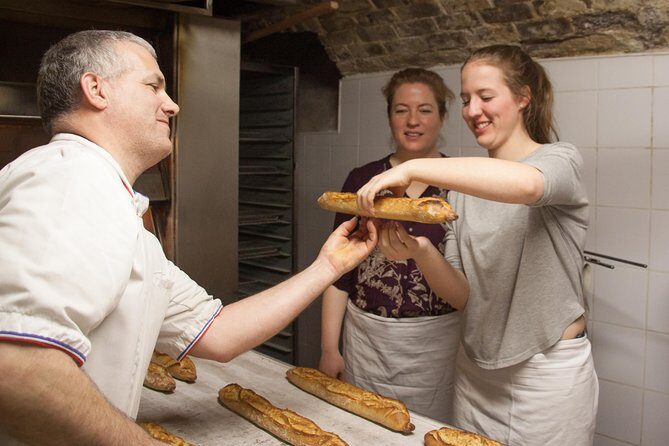
- Small group (max 10) keeps the pacing human and your questions on time with the dough.
- Didier and translator Luz help you understand techniques and reasoning, not just steps.
- You make baguettes and croissants, and you taste what comes from the oven while it’s still warm.
- Recipes are included, so you’re not stuck guessing after you’re back home.
- This is set up for hands-on participation, including shaping dough and working with tools like the long wooden paddle (used to handle/transfer bread).
Entering The Bakery Kitchen: What This Class Feels Like in Real Life
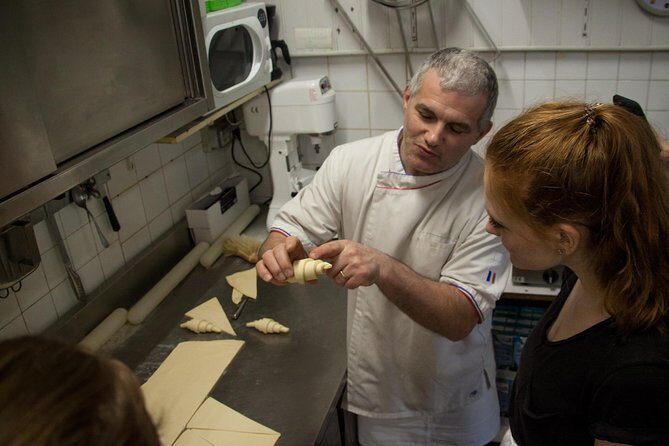
Paris can be a museum on repeat. This class gives you a different kind of proof that you’re in France: flour on your hands, warm bread in your arms, and a baker talking through what dough is doing while it changes.
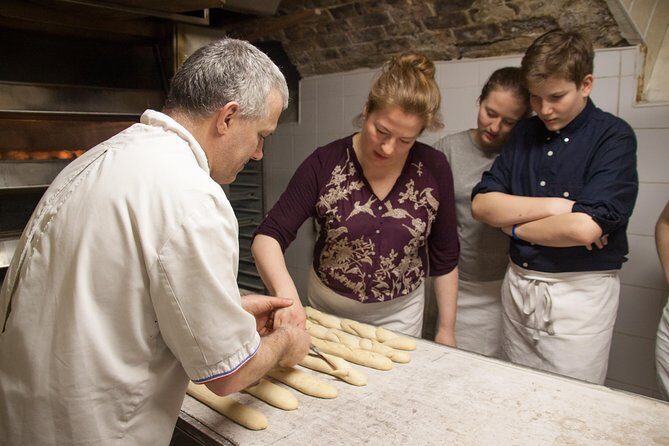
The meeting spot is a working bakery in the Oberkampf / Bastille area: Boulangerie Pâtisserie Le Petit Mitron à Oberkampf Bastille, 8 Rue Oberkampf, 75011 Paris. You’ll go from the front-of-house into the kitchen space for the lesson. That behind-the-counter access is a big part of the appeal, because you see how bread gets made when nobody is watching for photos—just the process.
The tone is practical. You’ll be shown how French bakers handle dough—timing, texture, shaping, and the small moves that make a difference. And because the instruction is offered in English (with an interpreter), you aren’t stuck hoping your brain translates French pastry terms into something usable.
You can also read our reviews of more cooking classes in Paris
The 2.5-Hour Schedule: How the Time Actually Gets Used
You’re planning for about 2 hours 30 minutes, and it’s structured like a real bakery workflow: demo, practice, tasting, and wrap-up.
Here’s the flow you should expect at a high level:
1) Arrive, get set up, meet the team
You’ll start in the bakery and then move into the kitchen area. Expect quick orientation so you’re working with the right dough and tools without wasting time.
2) Baguette instruction and hands-on shaping
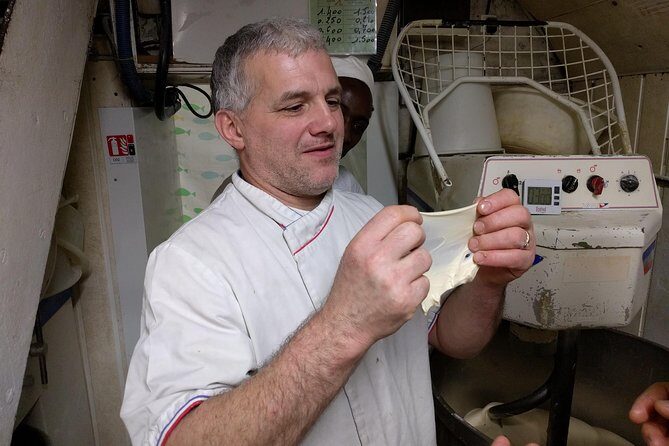
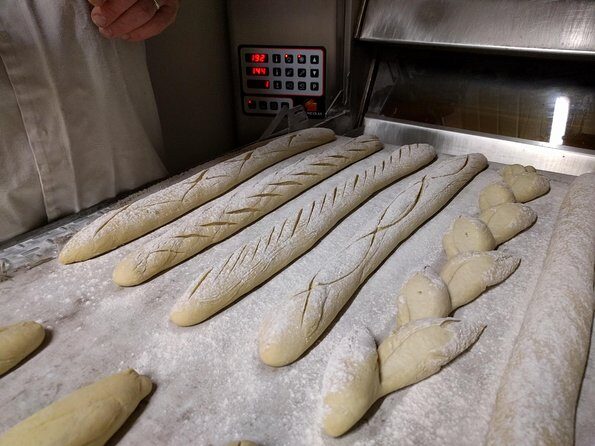
Baguettes take center stage in this class. You’ll learn how to shape them and why bakers pay attention to dough behavior—especially how the dough looks and feels as it’s handled.
3) Croissant technique and rolling/shaping practice
Croissants are included, and you’ll work with the dough process too. The goal here is to help you understand the method well enough to repeat it later, even if the session can’t cover every stage of croissants with the same depth as a full multi-day course.
4) Tasting warm bread right from the oven
The best part isn’t just eating pastry in Paris—it’s eating what you helped make, while it’s still warm. That moment matters. Fresh bread tastes different because crust and crumb are still in their best window.
5) Recipes to take home
You’ll leave with recipes, plus the kind of “do this, not that” tips you usually only hear from someone who bakes for a living.
Baguettes vs. Croissants: What You’ll Master (and What to Assume)
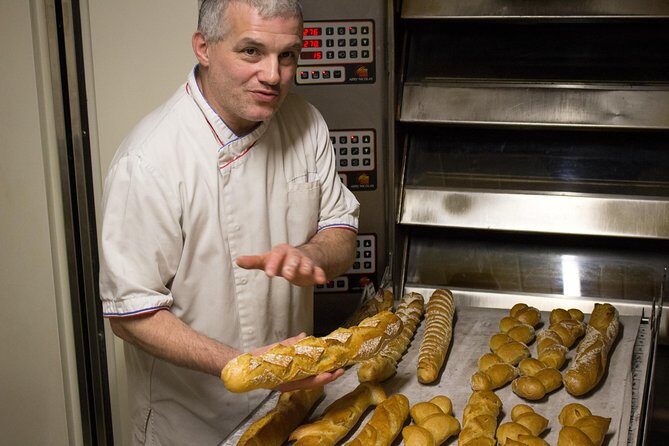
Let’s talk expectations plainly, because bread is all about expectations.
You’ll get serious baguette practice
This class is heavily weighted toward baguettes, and that’s a plus if you want something you can actually recreate at home with confidence. Baguette success depends on technique you can feel: how you handle dough, how you shape for structure, and how you work without deflating the dough’s life.
In the class, you’re not just watching from afar. You’re working and getting corrections—exactly what you need if your at-home results have ever come out flat, dense, or oddly shaped.
Croissants are hands-on, but they’re taught differently
This is not presented as a full-day croissant training program. Instead, it’s better to think of croissants here as: you’ll learn the key ideas and do practice steps so you understand the mechanics—especially the tricky dough handling and shaping parts—rather than doing a long, start-to-finish croissant marathon.
You should still come away feeling capable. The croissant part is baked into the session so you can connect the buttery pastry world to the discipline you’re learning with bread.
You can also read our reviews of more tours and experiences in Paris




Meet Didier and Luz: Teaching That Makes Dough Feel Understandable
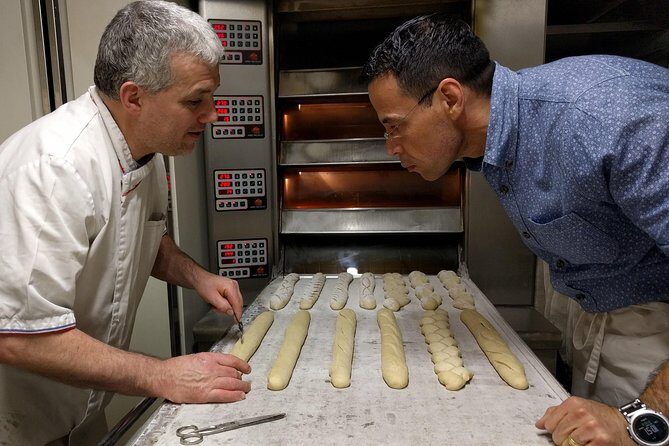
The teacher matters in a bread class. This one has a baker named Didier and an interpreter Luz (often both in the room together). The best baking lessons don’t just teach steps—they translate what’s happening in the dough into normal language.
What I like about this teaching style:
- Didier’s focus stays on technique and ingredient behavior, not just tradition. Even the flour story is practical: he’s described as milling his own flour on site, which supports a “from-grain to bread” mindset rather than relying on generic shortcuts.
- Luz keeps the class moving. Translation here isn’t an afterthought; it’s built into how you follow along with instructions in real time.
- The lesson encourages questions. You’re in a group of 10, so there’s room for back-and-forth instead of watching the baker talk to the ceiling.
If you’re not a confident baker, this combination helps. If you are a confident baker, this still works because you’re learning how a French baker explains texture and timing.
What You’ll Taste: Warm Results Beat Any List of Attractions
The class includes a tasting of baguettes and pastries and you’ll eat what you bake while it’s warm. That matters more than most people think.
A warm baguette isn’t just food—it’s sensory calibration. You can compare crust snap and crumb softness against what you’ve made at home. And that makes the recipes more useful, because you understand what the target should feel like.
Croissants taste the same way: butter, flake, and aroma are hard to judge from a picture. Eating yours right after baking makes the technique feel real.
Price and Value: Is $264.95 Worth It?
At $264.95 per person, this is not the cheapest thing on your Paris list. But it is priced like a working bakery experience: limited group size, live instruction, active participation, tastings, and recipes included.
Here’s how I’d think about value before you book:
- You’re paying for hands-on coaching from a master baker, with room to ask questions.
- You get time in the kitchen, not just a storefront talk.
- You leave with warm bread plus take-home recipes, so you’re not just spending money on a memory.
- The class being capped at 10 people is part of the value. In a larger group, you’d likely spend more time waiting.
If you enjoy food crafts—bread, pastry, fermentation, shaping—this price can make sense fast. If you mainly want sightseeing or you’re short on time, you may feel it’s steep. For many people, though, bread is one of those “once per trip” experiences that earns its place.
Where to Go and What to Bring: Practical Tips for Oberkampf-Bastille
This class starts at 8 Rue Oberkampf (Bastille area). It’s near public transportation, and there’s no hotel pickup or drop-off, so plan to get there on your own.
A few practical notes that will help your day:
- Wear clothes you don’t mind getting flour on. Baking is messy by nature.
- Arrive a bit early. You want a calm minute to settle in before the dough work starts.
- If you’re bringing kids, remember this runs about 2.5 hours. The format is interactive and family-friendly, but it still requires standing, focusing, and waiting your turn.
- If you have sensitive airborne allergies, this may not be the right fit. Bread-making environments can be flour-heavy.
You’ll leave back at the meeting point when the session ends.
Who This Class Suits Best (and Who Might Want to Skip It)
This is a strong match if you want something real and hands-on in Paris.
It’s especially suitable for:
- Families with children age 6 and up (minors must be accompanied by an adult).
- People who like baking enough to care about technique and texture.
- Couples or small groups who want a shared activity without the big-tour crowd.
It may be less ideal if:
- You need a fully croissant-centered program. Expect a baguette-heavy session with croissants included, not a croissant-only deep training.
- You’re very sensitive to airborne flour.
After Class: Making the Bread Work at Home
The class includes recipes to take home, and that’s the bridge between the Paris kitchen and your counter at home.
I’d use the recipes in a specific way:
- Recreate your first win with baguettes or the pieces you practiced most confidently.
- Don’t judge your first attempt harshly. Dough responds to your kitchen air, flour, and oven. The class helps you understand what dough should look and feel like, which makes troubleshooting easier.
Also, when a baker gives you tips in person, save those notes. Small guidance—how to handle dough, how to shape, when to move—can be the difference between good-looking bread and bread that tastes like effort.
Should You Book This Paris Baguette and Croissant Class?
If you want an authentic Paris food experience that isn’t another line and another selfie spot, I’d book it. The combination of Didier’s teaching, Luz’s translation, the small group (10 max), and the fact that you bake and then taste your results while warm is a rare blend.
Book it if:
- You want real bakery technique, especially around baguettes.
- You’ll enjoy hands-on practice and want recipes you can use later.
- You’re traveling with kids age 6+ and can handle 2.5 hours of active participation.
Skip or reconsider if:
- Your main goal is a croissant-only deep program.
- You have airborne flour allergy concerns.
- You’re looking for a quick, low-effort food stop rather than a true workshop.
FAQ
How long is the Paris French baking class?
It runs about 2 hours 30 minutes.
Is the class offered in English?
Yes, the workshop is offered in English.
What’s the group size?
The class is capped at 10 travelers.
What will I make during the workshop?
You’ll make classic French baguettes and work on croissants, with guidance from the baker.
What’s included in the price?
The price includes the cooking class, tasting of baguettes and pastries, and recipes.
Is hotel pickup included?
No. You’ll make your own way to the meeting point, and the activity ends back there.
Where is the meeting point?
Start at Boulangerie Pâtisserie Le Petit Mitron à Oberkampf Bastille, 8 Rue Oberkampf, 75011 Paris, France.
What’s the minimum age for participants?
The minimum age is 6 years old, and minors must be accompanied by an adult.
Is this class safe for people with allergies?
It is not recommended for travelers with sensitive airborne allergies.
Can I cancel for a full refund?
Yes. You can cancel up to 24 hours in advance for a full refund.
If you want, tell me your travel dates and whether you’re most excited about baguettes or croissants—I can help you pick the best class time slot and plan what to do nearby after.