REVIEW · PARIS
Paris: Guided Tour of the Must-Sees of the Louvre Museum
Book on GetYourGuide →Operated by Memories France · Bookable on GetYourGuide
The Louvre gets manageable in 90 minutes. I love the pre-reserved tickets that cut the worst queue time, and I love that you get headsets so you can actually hear the stories while you’re walking. It’s a smart way to tackle a museum that’s enormous in both size and fame, with a guide leading you from the Arc du Carrousel du Louvre straight into the galleries.
One thing to plan for: even with skip-the-line entry, you should expect some waiting at security screening, especially in high season. Once you’re inside, crowds can still bunch up near popular rooms, so the value of a guide is real.
In This Review
- Quick hits you’ll feel right away
- Where the tour starts: Arc du Carrousel du Louvre, then straight in
- Tickets and headsets: why this tour saves time even before art
- A 90-minute hit list through major Louvre eras
- Entering the Louvre galleries: how the guide keeps you from getting lost
- The Mona Lisa stop: what to do when the room is full
- Venus de Milo and Winged Victory: sculpture that feels less silent
- Ancient Egypt, Greece, and Rome: the Louvre’s big jump in scale
- 19th-century French paintings: a more modern Louvre viewpoint
- The royal palace idea: seeing the building like part of the show
- Crowd management and group size: what small-group touring changes
- Where you finish: how to keep the day going after the tour
- Price and value: does $82 make sense for the time you save
- Should you book this Louvre must-sees tour?
- FAQ
- Where is the meeting point?
- How long is the tour?
- Does it include pre-reserved tickets?
- Are headsets included?
- What should I bring?
- Is this tour wheelchair accessible?
Quick hits you’ll feel right away
- Start at the Arc du Carrousel du Louvre (opposite the glass pyramid) to avoid guesswork
- Skip the ticket line with pre-reserved entrance tickets
- Headsets make the commentary clear even while moving through busy halls
- See the big three: Mona Lisa, Venus de Milo, and Winged Victory
- Cover major eras: Italian Renaissance, ancient Egypt, Greece and Rome, plus 19th-century French painting
- A small group keeps you together without feeling like you’re sprinting
Where the tour starts: Arc du Carrousel du Louvre, then straight in
Your tour meeting point is the Arc du Carrousel du Louvre, the arch at the Louvre, opposite the glass pyramid. This matters more than it sounds. The Louvre complex has multiple entrances and lots of foot traffic, so meeting at a clearly identified landmark helps you begin stress-free instead of wandering for 20 minutes while other people slip inside.
The guide will be wearing a guide card on an orange lanyard with the Memories France logo, which is a handy visual cue. You’ll then walk together to the museum. That short “walk-in” is useful because it sets up the route and helps you understand what to look for before the chaos starts.
For best results, show up a few minutes early and keep your documents ready. You’ll need a passport or ID card, and you can expect a reasonable amount of walking in proper museum shoes.
You can also read our reviews of more guided tours in Paris



Tickets and headsets: why this tour saves time even before art
The big practical win here is pre-reserved entrance tickets, which are designed to let you skip the ticket line. That reduces one of the biggest time traps at the Louvre: standing around while the clock ticks and your energy drains.
But here’s the honest part. Even with reserved tickets, you still need to go through security. The tour info is clear that security waiting can be up to 20 minutes during high season. So don’t plan a tight schedule right after the tour. Build in buffer time for that screening step.
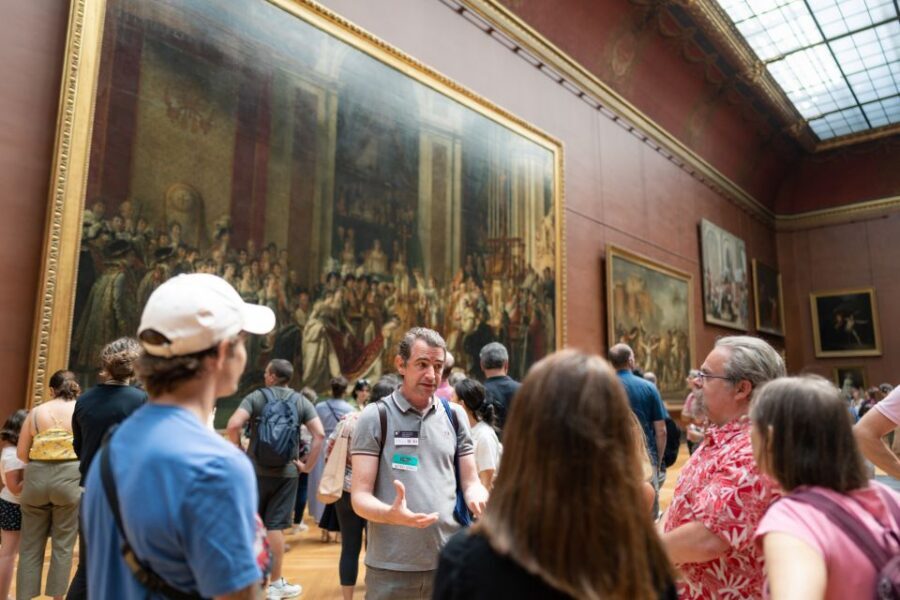
What you gain once you’re past that is sound. Headsets are included, and they help you follow the guide’s explanations without craning your neck or giving up your place in the group when you step to see something close up. That’s a big deal at the Louvre, where people stop suddenly and conversations happen at a variety of volumes.
A 90-minute hit list through major Louvre eras
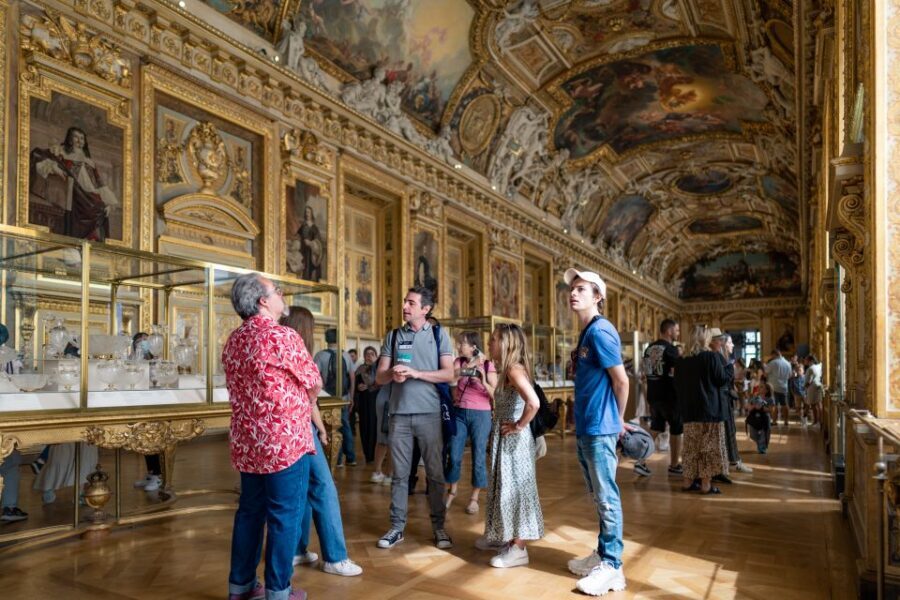
This tour is built as a “must-sees, properly explained” loop. You’re guided through the Louvre’s main highlights rather than attempting a free-for-all across its sprawling wings. It’s listed as a 90-minute experience overall, with about 1.5 hours of guided time inside.
What makes the pacing work is that the guide connects art to context. You don’t just get a list of famous names. You move through major artistic periods the Louvre is known for, including the Italian Renaissance, ancient Egypt, Greece and Rome, and French paintings from the 19th century.
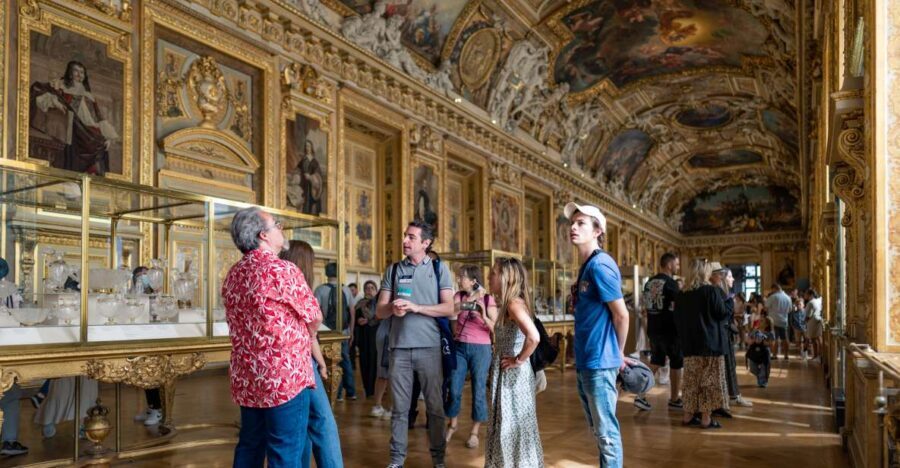
You also get a key storyline: the Louvre wasn’t only a museum. It was a royal palace, so you’ll walk through sumptuous corridors where kings, queens, and emperors once moved. That royal-palace context helps you understand why the architecture feels monumental. It’s not “extra decoration.” It’s part of the museum’s logic.
The goal is to help you feel oriented. In a museum this large, orientation is the difference between a great day and a frustrating one where you keep backtracking.
Entering the Louvre galleries: how the guide keeps you from getting lost
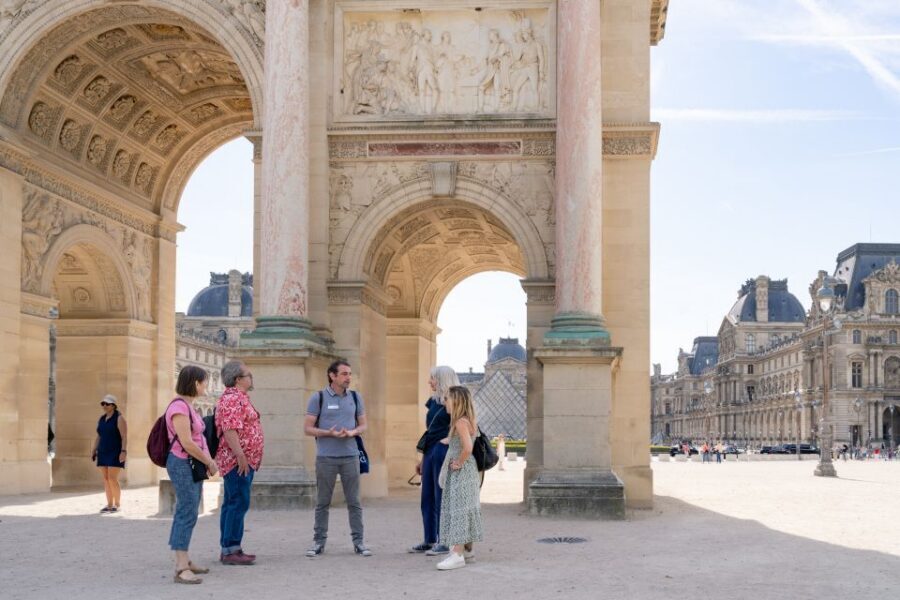
Once inside, the Louvre can overwhelm you fast. The galleries sprawl, signage can be confusing, and the most famous pieces attract the heaviest clusters of people. This is where the guided format becomes the real service.
A pattern shows up in the praise: guides are repeatedly praised for getting groups in and maneuvering through crowds efficiently. You’ll feel that when the tour doesn’t stall every few minutes. The guide also keeps everyone together, which matters because stopping to admire one landmark can easily turn into being separated from your group in a sea of visitors.
Headsets also support this “stay together” style. You can keep walking while still catching the story. If you’ve ever tried to guide yourself through the Louvre while reading a phone map, you know how quickly you lose time to constant recalculations.
The Mona Lisa stop: what to do when the room is full
The Mona Lisa is included, and you should treat that as both a highlight and a logistics challenge. Even with skip-the-line entry, the Mona Lisa area is typically one of the densest places in the museum.
The tour’s value is that you’re not just arriving at the world’s most crowded masterpiece. You arrive with context. The guide’s job is to explain what makes the painting iconic and what details people miss when they stare for ten seconds and move on.
You’ll also likely move through the area more efficiently than you would on your own. That’s because the guide can time your viewing and keep the group from turning into a traffic jam. The result is that you still get a proper look instead of only seeing the famous painting from a distance while trying to squeeze through elbows.
If you’re the type who wants a meaningful moment, this setup is ideal: you’ll see it as part of a broader Renaissance story, not as a random stamp on a checklist.
You can also read our reviews of more museum experiences in Paris






Venus de Milo and Winged Victory: sculpture that feels less silent
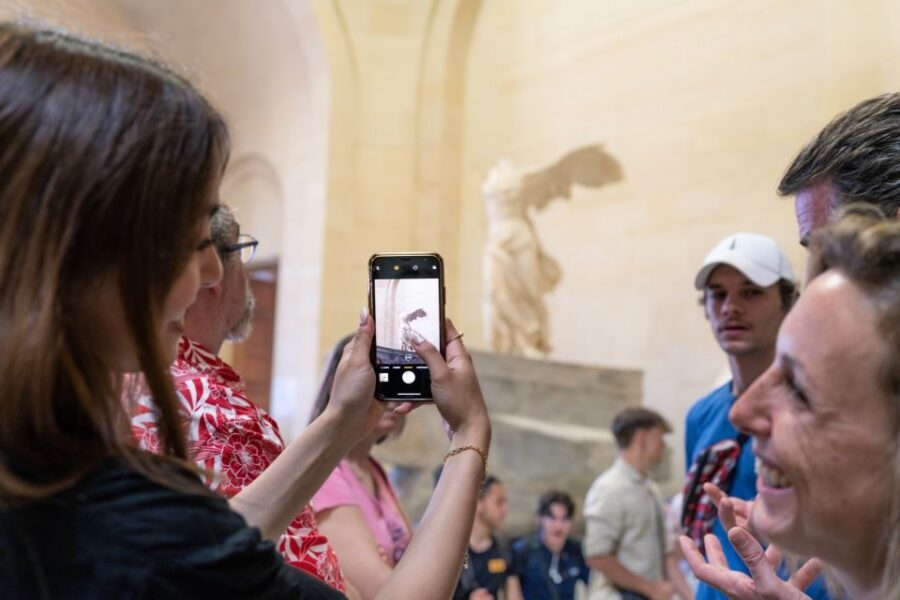
Two of the most celebrated sculptures are on the route: Venus de Milo and Winged Victory. Sculptures can be tricky on your own because it’s easy to look without understanding what you’re looking at. This tour aims to fix that.
The guide explains the symbolism and significance behind the works, not just basic facts. You’ll hear how style, subject matter, and historical meaning connect to why these pieces gained iconic status. This is where art history becomes practical. Instead of asking, What am I supposed to notice? you start noticing things because you have a frame.
Venus de Milo and Winged Victory also work well in a short tour because they give variety. You go from one kind of visual experience to another: paintings and portrait-level attention, then sculpture with texture, silhouette, and form.
And since the tour keeps a steady flow, you’re less likely to spend half your time stuck near the single most famous object on earth.
Ancient Egypt, Greece, and Rome: the Louvre’s big jump in scale

One of the tour’s strengths is that it doesn’t stop at just “Paris famous.” It includes ancient Egypt, Greece, and Rome, which shifts your perspective from Renaissance painting drama to older visual languages.
In a museum the size of the Louvre, this type of jump is exactly what you want if you only have limited time. You’ll see how the museum organizes human history through objects, styles, and cultural themes. The guide connects those themes so the ancient sections don’t feel like a random detour.
This is also where having a guide matters for pacing. Without one, you might know the major names but not know where to look next. With a guide, the ancient-world stops feel like a sequence rather than a scattered grab bag.
19th-century French paintings: a more modern Louvre viewpoint
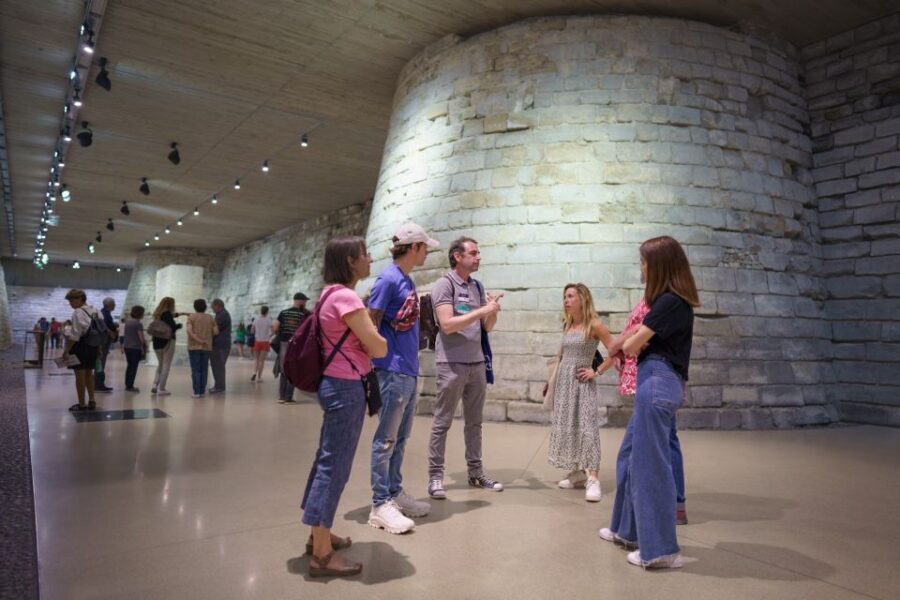
The tour also includes French painting from the 19th century. That’s an important contrast. After ancient and Renaissance works, the 19th-century pieces can feel more emotionally immediate, closer in time to the world you’re living in.
Even if you don’t consider yourself an “art person,” this segment can land well because the themes and presentation style often feel easier to follow than older cultural objects. Still, the value isn’t that you suddenly become an expert. The value is that you get the story lines that make the works intelligible.
A short guided sweep across eras gives you a sense of how the Louvre built its reputation. You leave understanding why the museum is so concentrated with masterpieces, not just why it’s famous.
The royal palace idea: seeing the building like part of the show

One of the more memorable parts of this tour is the emphasis on the Louvre as a royal palace. You explore sumptuous corridors and get a sense of how kings, queens, and emperors once moved through spaces that now house art.
This does two useful things for you. First, it makes the building feel less like background noise. Second, it gives you a reason to look up and around, not only at framed objects. When the architecture is tied to power and history, it stops being “just a pretty museum interior.”
The effect is that the Louvre becomes more coherent. You’re not just collecting artworks. You’re walking through a historic machine that connects art, authority, and public identity.
Crowd management and group size: what small-group touring changes
This is described as a small group option, and that typically changes how the experience feels. In a large group, you often can’t stop to look closely because someone is always pushing for the next room. In a small group, the guide can slow down when it counts and keep the pace steady where you’ll still move efficiently.
In the strongest praise from different guides, you’ll notice the recurring theme: the tour is organized well enough to prevent aimless wandering and to keep everyone together. That shows up especially around high-pressure spots like security and major highlights.
Another detail that matters: you should expect some walking, and comfortable shoes are a must. Also, this tour isn’t suitable for wheelchair users, and baby strollers and luggage or large bags are not allowed. If you’re traveling light, you’re set up for the smoothest experience.
Where you finish: how to keep the day going after the tour
The tour finishes at the Musée du Louvre. In practice, that means you’re not left outside the museum or stranded at a distant entrance. You’ll have a clearer idea of where the major areas are, so you can continue at your own pace for whatever you care about most.
This is a big win if the Louvre is your first stop in Paris, or if you want to save some energy for other parts of the city afterward. The guide covers the must-sees and gives you context, so you don’t have to start from zero when you return to independent exploring.
If you’re the kind of visitor who likes to spend extra time with one or two works, this tour sets you up to do that. You’ll know which rooms felt most powerful to you, and you can go back with purpose.
Price and value: does $82 make sense for the time you save
At $82 per person for a 90-minute experience, this isn’t a bargain. It is, however, a value play for the type of museum day you’re trying to buy.
Here’s what you’re paying for, based on what’s included:
- a local English-speaking guide
- pre-reserved entrance tickets that help you skip the ticket line
- headsets so the commentary stays audible
When you’re short on time, skipping the ticket line can be worth a lot. When you’re overwhelmed by the museum’s scale, the guide’s route saves the mental cost of trying to design your own plan. And the headsets are a small-but-important upgrade because you can keep moving without losing the thread of what you’re seeing.
If you have a full day at the Louvre and enjoy building your own itinerary, you might choose a different approach. But if you want the museum’s best-known works with meaning, in a manageable chunk of time, the price starts looking fair.
Should you book this Louvre must-sees tour?
Book it if:
- you want the Mona Lisa, Venus de Milo, and Winged Victory with context
- you’re worried the Louvre will be too big to enjoy
- you prefer a plan that helps you avoid aimless walking
- you like hearing stories while you look at art
Consider another option if:
- you have mobility limitations that conflict with a walking-heavy, non-wheelchair-friendly tour
- you’re traveling with strollers or large luggage
- you’re hoping to spend your entire day going slowly through everything (this tour is designed to cover highlights, not the full museum)
If you’re weighing “guided or not,” I’d choose guided. The Louvre rewards attention, but it punishes indecision. This format helps you arrive, see the big names, and understand why they matter, without turning the whole day into a queue and a maze.
FAQ
Where is the meeting point?
Meet at the Arc du Carrousel du Louvre, the arch at the Louvre opposite the glass pyramid.
How long is the tour?
The experience is listed as 90 minutes total, with about 1.5 hours of guided time inside the museum.
Does it include pre-reserved tickets?
Yes. The tour includes pre-reserved entrance tickets to the Louvre and is described as skipping the ticket line.
Are headsets included?
Yes. Headsets are included so you can hear the guide clearly while you walk.
What should I bring?
Bring a passport or ID card and wear comfortable shoes.
Is this tour wheelchair accessible?
No. It is not suitable for wheelchair users, and baby strollers and luggage or large bags are not allowed.