REVIEW · PARIS
Paris: Kids in the Kitchen – Croissant
Book on GetYourGuide →Operated by MUCURISA · Bookable on GetYourGuide
Croissants, but make it kid-sized. In this Paris cooking class, you’ll learn about croissant origins and viennoiseries, then get hands-on in a private apartment designed for families. I love the kid-first approach for ages 3+ and how it’s built around simple steps you can actually repeat.
You also get a small-group setup (up to 4 people), so the instructor can move at a pace kids can handle. I appreciate the focus on using home-style tools, not industrial gear, so the experience feels doable rather than fancy-factory baking.
One thing to consider: the apartment is on the 5th floor with no elevator, so plan for stairs with strollers or little legs.
In This Review
- Key highlights at a glance
- A Croissant Class in a Private Apartment (5th Floor, No Elevator)
- From La Mise en Place to Viennoiseries Through the Centuries
- Home-Style Tools for Making Croissants With Kids
- What You Learn You Can Repeat Back Home
- The Small-Group Advantage With English and Spanish Instruction
- Price of $182: Is This Worth It for Families?
- Who This Croissant Class Is Best For
- Quick Practical Notes Before You Go
- Should You Book This Paris Kids Croissant Class?
- FAQ
- What is the duration of the croissant class?
- Where does the experience take place?
- How many people are in the group?
- What languages does the instructor speak?
- What’s included in the price?
- What ages are allowed?
- How much does it cost?
Key highlights at a glance
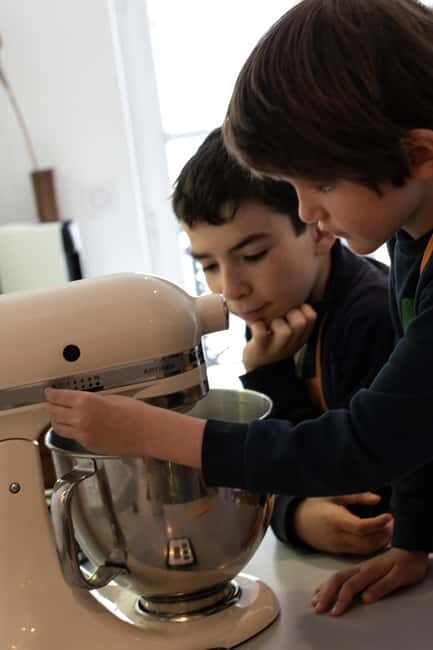
- Kids start at age 3: the class is specifically developed for young children and families.
- Small group of 4: more time for questions, fewer distractions, better attention.
- Home-style tools: you recreate the experience using equipment that feels like what you’d have at home.
- Croissant story + hands-on: you start with la mise en place, then connect it to viennoiseries and origins.
- Private Paris apartment setting: intimate, local-feeling, and great for family gatherings.
A Croissant Class in a Private Apartment (5th Floor, No Elevator)
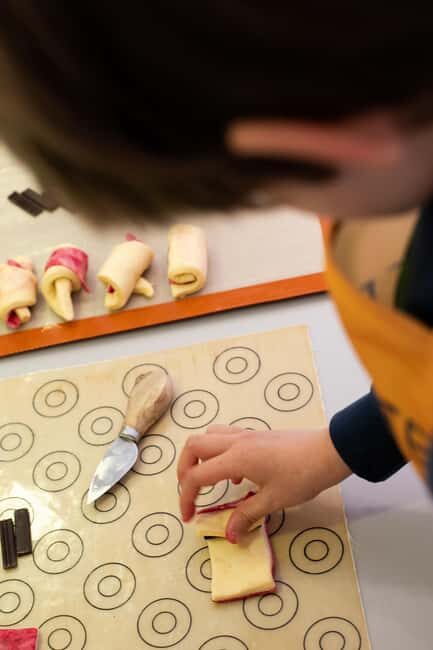
This is not a big cooking school room with long rows of benches. You meet in a private Parisian apartment, which instantly changes the vibe. It feels like you’re being welcomed into someone’s home kitchen, with a schedule built for families and a calmer rhythm for kids.
The setup comes with one practical catch: it’s on the 5th floor with no elevator. If you’re coming with a stroller, a small carrier, or very young kids who tire quickly, you’ll want to plan your route and timing accordingly. It’s totally manageable, but it’s the kind of detail that can make or break the start of the class.
Because it’s a private apartment, you should also expect a cozy space. That’s a plus for kids (less walking around, fewer crowds), but it’s not the place to arrive like it’s an open-air market. Show up ready to settle in, wash hands, and start right away.
You can also read our reviews of more tours and experiences in Paris.



From La Mise en Place to Viennoiseries Through the Centuries
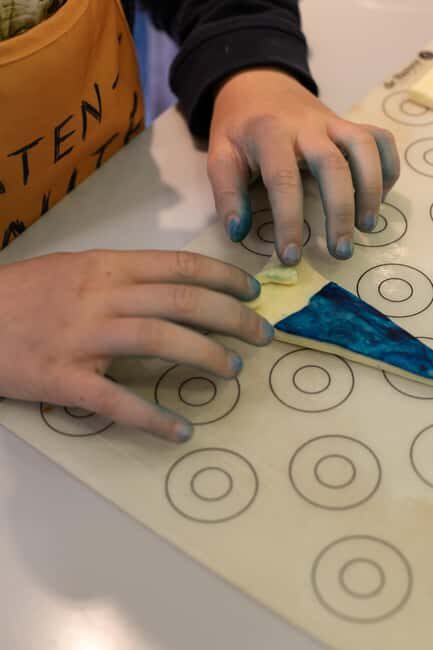
The experience is built like a mini lesson, not just a recipe workshop. You begin with la mise en place, which is the French way of saying: set up your ingredients and tools so the cooking part can flow smoothly. For kids, this matters. It gives them a clear start, and it prevents the whole thing from turning into chaos at step one.
Then you travel through the story of croissant and viennoiseries, including the note that croissant was created in Austria. That kind of detail is small, but it gives the class context. Instead of learning croissants as a single finished product, you’re learning how pastries fit into a bigger European timeline.
Even if your family already loves baking, this “story-to-kitchen” structure keeps attention. Kids get the fun novelty of discovering that croissants have an origin outside France, while adults get the satisfaction of learning the why behind the skill.
And by the end, there’s a dégustation—tasting—so you’re not just watching dough become something. You’re actually trying it.
Home-Style Tools for Making Croissants With Kids
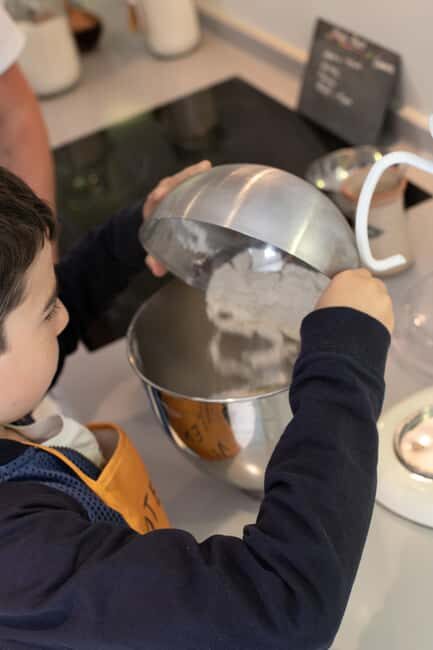
What I like most about this class is the promise that you’re using simple tools as at home. That’s a big deal. A lot of cooking experiences give you a great story and then rely on industrial equipment or techniques that feel impossible to recreate later.
Here, the goal is different: you should walk away able to do it again at home. You’re also working in a way the experience is designed around kids—starting from 3 years old—and families rather than culinary pros.
So what does that mean in real life? Expect the class to be paced and structured enough that little participants can participate, not just hover. The hands-on making is the core, and the tools are meant to feel familiar and manageable. That’s exactly what makes it work for a mixed group with adults and children in the same room.
One other practical point: aprons are borrowed for the experience. That helps with the mess factor, which is a real concern for parents. It won’t make kids sterile, but it keeps the day practical.
What You Learn You Can Repeat Back Home
The class doesn’t position itself as a one-time performance. It explicitly aims to teach you how to do “everything about croissant,” then gives you what you need to make it after the class.
Even without getting lost in technical jargon, the “repeat at home” goal tells you what you should pay attention to while you’re there:
- How the ingredients and setup come together during la mise en place
- How the steps are guided so you can follow them without special equipment
- How the process feels when you use at-home tools (not a professional-only workflow)
If you’ve ever tried to recreate a pastry from a video and ended up stuck on the setup or the timing, you’ll appreciate the focus on doing it in a way that translates. And because it’s designed for families, the instruction style likely keeps things clear and supportive—especially helpful if you have kids who get bored or frustrated when they can’t see what’s next.
Also, coffee or tea is included, which turns the tasting into more of a shared table moment. It’s a small detail, but it makes the end feel like a finish to something, not just the last bite before everyone heads out.
The Small-Group Advantage With English and Spanish Instruction
This is a small group limited to 4 participants, and that’s exactly the kind of limit that matters in a cooking class with kids. When the group is tiny, the instructor can:
- help slower learners without rushing
- answer questions without shutting down the activity
- step in when a child needs a hand or reassurance
The instructor supports English and Spanish, which is useful if your family has mixed language comfort. You’ll be able to understand what to do, and kids can follow along too.
From the way the experience is described in the booking feedback, the instruction style is patient and kind. One parent specifically highlighted that their sons had fun with the hands-on making and that the instructor was patient and supportive. Another comment in Spanish praised the experience as fun for small kids and noted the instructor’s presence and energy.
You don’t need fancy words to understand what that means. In practice, it points to a class where kids aren’t treated like an inconvenience. They’re part of the plan.



Price of $182: Is This Worth It for Families?
Let’s talk money without pretending it’s cheap. At $182 per person for a 90-minute class, this isn’t a budget activity.
But here’s where the value comes in:
- You get a private apartment setting, not a standard tourist kitchen.
- Materials are included, along with an apron and coffee/tea.
- Group size is capped at 4, which is rare for this kind of family-friendly experience.
- The class is designed for young kids, not just marketed to them. That development work costs something.
So the question becomes: is your family getting something you can’t easily get elsewhere? If your kids love hands-on activities, and you want a pastry skill you can repeat, the price can feel fair. If you’re just looking for a quick food taste with minimal effort, you might feel it’s too much.
My practical advice: treat this as a family experience, not a casual snack stop. If you’ll make it a “real event” in your Paris days—short, hands-on, and meaningful—the cost is easier to justify.
Who This Croissant Class Is Best For
This activity fits best with families who want a calmer, more participatory Paris day. It’s also a strong choice for private booking with friends or family gatherings, including anniversaries, since it’s hosted in a private apartment and structured around your group size.
Because it’s not suitable for children under 2 years old, it’s aimed squarely at toddlers who can follow simple instructions and enjoy mixing, rolling, or shaping with guidance.
You’ll especially like it if:
- your kids are at least around 3 years old
- you want something interactive instead of another walk-and-look activity
- you prefer using tools that match what you have at home
- you want an instructor-led experience without a crowded room
If your group includes very elderly adults, you’ll want to factor in the 5th-floor walk-up. And if your kids are the type that melt down quickly in confined spaces, arriving calm and using the included apron plan helps.
Quick Practical Notes Before You Go
This is a 90-minute class in a private apartment. It includes all main materials, plus an apron and coffee/tea. The instructor works in English and Spanish, and the group size is up to 4.
You can also book with flexible payment options (reserve now, pay later) and cancel within a window for a full refund. Those policies can be handy when your Paris plans are still shifting day to day.
Finally, use the arrival instructions tied to the meeting point location. The apartment is on the 5th floor with no elevator, so the best plan is the one that helps you avoid arriving frazzled.
Should You Book This Paris Kids Croissant Class?
If you want a Paris activity that’s genuinely hands-on, family-focused, and designed so kids can participate instead of just watch, I’d book it. The combination of home-style tools, a small group, and a structured lesson starting from la mise en place is exactly what makes this more than just eating pastries.
I’d skip it (or at least think twice) if your main goal is low-cost, minimal effort, or if the 5th-floor walk-up is a dealbreaker for your family. Also, because it’s 90 minutes, come with the right expectations: it’s a focused class, not an all-day event.
Overall, this is a smart pick for families traveling in Paris who want one memorable activity that ends with tasting and the confidence to try croissants again at home.
FAQ
What is the duration of the croissant class?
The class lasts 90 minutes.
Where does the experience take place?
It takes place in a private Parisian apartment in the Ile-de-France area. The apartment is on the 5th floor with no elevator.
How many people are in the group?
The group is limited to 4 participants.
What languages does the instructor speak?
The instructor speaks English and Spanish.
What’s included in the price?
All main materials are included, plus an apron you borrow for the experience. Coffee or tea is also included.
What ages are allowed?
The activity is not suitable for children under 2 years old, and it is developed for kids starting from age 3 with families in mind.
How much does it cost?
The price is $182 per person.