REVIEW · PARIS
Montmartre: Guided tour to Sacré-Coeur
Book on GetYourGuide →Operated by My Super Tour · Bookable on GetYourGuide
Montmartre tells stories through every step. I love how this tour pairs Sacré-Cœur inside explanations with the big payoff of sunset views over Paris. One thing to keep in mind: it’s not wheelchair-friendly, and even though the climb uses an easier route with just a short set of stairs, you’ll still be walking and climbing.
This is a tight, two-hour loop that starts at the metro Blanche (Line 2), outside the only metro access. The meeting point is marked with a sign for My Super Tour, and the group is kept small (up to 8), so you’re not just staring at street corners—you’re getting context. Guides can be English or Russian speaking, and you may get a lively, story-led local like Sacha or Dina.
You’ll move from Moulin Rouge and the Pigalle atmosphere up into Montmartre’s artists’ quarter, with photo stops, quick guided segments, and lots of time for the hill’s views. Along the way you’ll hit painter-linked spots, quirky landmarks, and the crowds around Place du Tertre before finishing on the top of the hill.
In This Review
- Key reasons this Montmartre tour works
- From Pigalle to the hilltop: why this route feels like Paris in fast-forward
- Moulin Rouge and Pigalle: setting the art scene’s dark-and-funny mood
- Abbesses and Le Bateau-Lavoir: where art history becomes street-level
- Le Passe-Muraille and cobblestones: the Montmartre details that most people miss
- The hill’s quirks: windmills, vineyard wine, and the pink restaurant
- Place du Tertre: painters, portraits, and why this square matters
- Sacré-Cœur inside: what the guide adds (and why it’s worth the stop)
- The 180° view over Paris: Eiffel Tower included, sunset-ready
- Finishing at the hilltop: your last hour around Place du Tertre
- Price and value: is $50 worth it for 2 hours?
- Who should book this Montmartre: Guided Tour to Sacré-Cœur?
- Should you book it?
- FAQ
- Where do I meet for the tour?
- How long is the Montmartre: Guided tour to Sacré-Coeur?
- What’s included in the ticket price?
- Is food or drinks included?
- Is the tour suitable for wheelchair users?
- How big is the group?
- Can I cancel and get a refund?
Key reasons this Montmartre tour works
- Small-group pacing (max 8) keeps it chatty, not chaotic.
- Guided visit inside Sacré-Cœur means you’re not guessing what you’re looking at.
- Pigalle to Montmartre story arc connects nightlife history to art history in one climb.
- One short stair segment on the route up makes the hill easier than it looks.
- 180-degree Paris viewpoints are the payoff you came for, including the Eiffel Tower.
- Montmartre oddities like the pink restaurant and old hill windmills add real personality.
From Pigalle to the hilltop: why this route feels like Paris in fast-forward
Montmartre isn’t just a postcard. It’s a layer cake of Paris eras—nightlife in Pigalle, then artists packing up their lives and moving uphill for light, space, and inspiration. Starting near Moulin Rouge is a smart choice because it sets the tone: you’re not arriving at the art hill from nowhere. You’re arriving with backstory.
I like that the early part of the tour doesn’t rush you. You get a quick photo moment near Moulin Rouge and then a guided walk through spots that explain what made Montmartre famous to painters and writers. This matters because the hill can feel random if you’re wandering on your own.
You’ll also notice how the guide keeps transitions simple. The itinerary is built around short stops—often about 15 minutes—so you’re moving, looking, and learning without long stretches where everyone’s tired and silent. In a place this steep and this crowded, that pacing is a big deal.
You can also read our reviews of more guided tours in Paris



Moulin Rouge and Pigalle: setting the art scene’s dark-and-funny mood
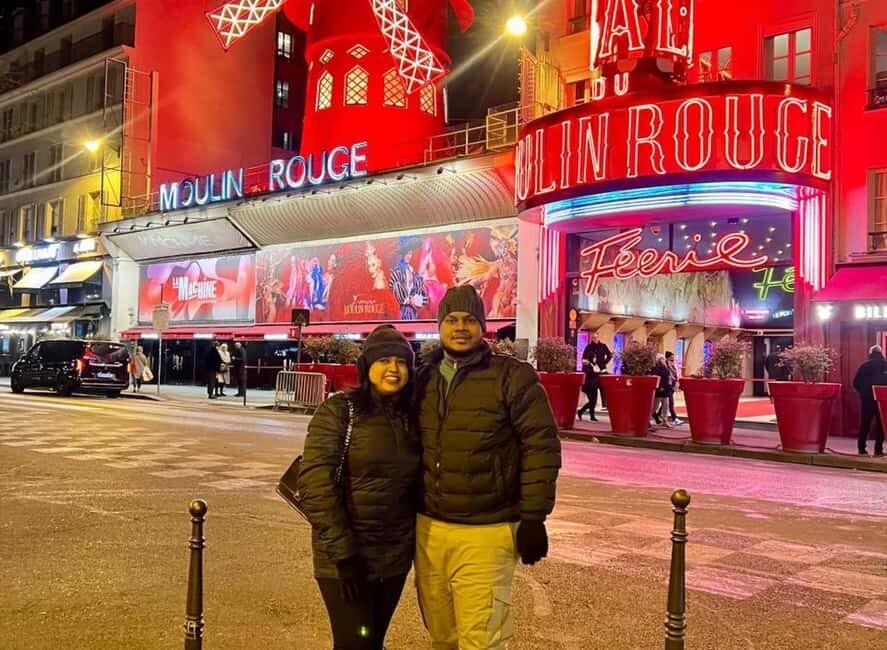
You start at Blanche and head toward the area around Moulin Rouge. Even if you don’t care about cabaret trivia, the area makes sense once you hear how it connects to artists and writers. Pigalle wasn’t just entertainment—it was a magnet for people who wanted to live outside the rules.
The guide’s job here is to help you look past the obvious. You’ll get a sense of why Montmartre became a crossroads for creative types: painters who needed subjects, writers who needed characters, and performers who needed an audience. Once you understand that, the climb up feels purposeful instead of like “just going uphill again.”
If you’re the type who likes history but hates lectures, this part hits the sweet spot. You’ll get stories and then you’ll keep walking. No long classroom energy.
Abbesses and Le Bateau-Lavoir: where art history becomes street-level
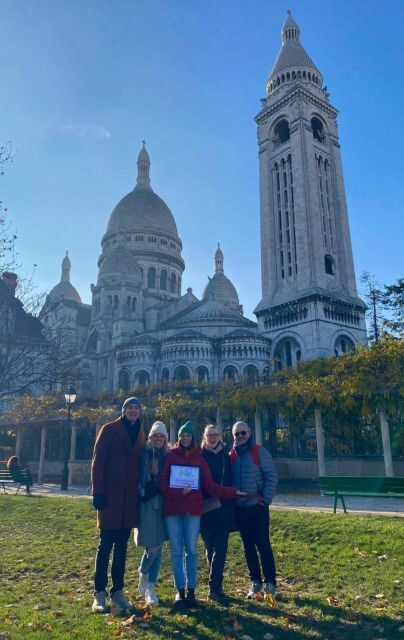
As you work your way upward, you’ll pass through Place des Abbesses, a spot that’s not just scenic—it’s a landmark in Montmartre’s everyday geography. The guided stop here helps you get your bearings fast so you understand how the hill’s streets connect.
Then comes Le Bateau-Lavoir, one of those places that sounds symbolic even before you know why. It’s tied to the kind of creative community that turned Montmartre into a working artists’ neighborhood, not just a tourist destination. You’ll walk with the explanation, so the name makes sense instead of feeling like random trivia.
The tour also includes small photo opportunities that break up the walk. It’s a simple rhythm: look, listen, take a photo, then move on. That rhythm helps you remember what you saw because each stop has a clear reason.
One practical benefit: when the guide points out what to notice, you save time later. You don’t have to stand there trying to figure out what a building is or why a street is important. You get the why up front.
Le Passe-Muraille and cobblestones: the Montmartre details that most people miss
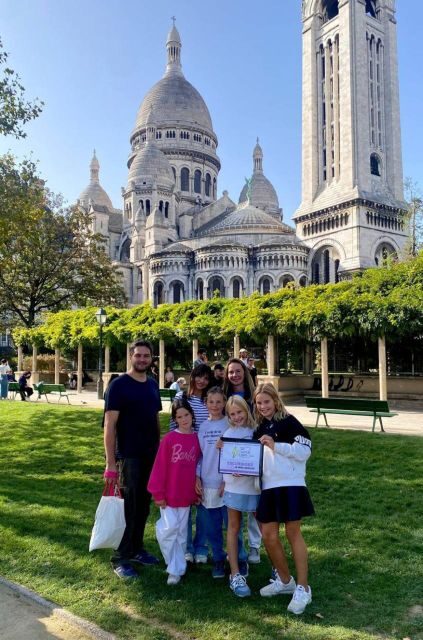
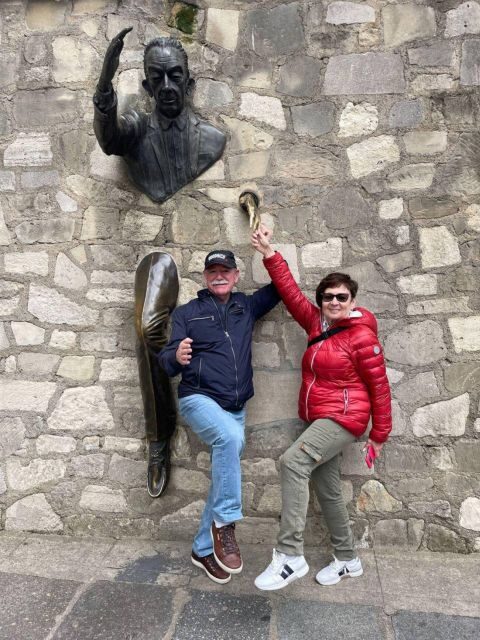
There’s a point where Montmartre stops being about big monuments and becomes about small stories. Le Passe-Muraille is a good example: it’s the kind of landmark that feels playful, but it also carries meaning in how the hill imagines itself—artists, outsiders, and characters who don’t fit the usual mold.
From there, you’ll move through small squares and streets where the guide explains what’s going on. You’ll hear anecdotes that match what you can actually see: the cobblestones, the tight street angles, the way the buildings press in. In other words, it’s not just art talk—it’s art walk.
The stops around places like Square Suzanne Buisson and Square Marcel Bleustein Blanchet may feel brief, but they act like anchors. They’re the little nodes that give you a mental map of the hill, so your later photos (especially around Sacré-Cœur) feel intentional instead of random.
The hill’s quirks: windmills, vineyard wine, and the pink restaurant
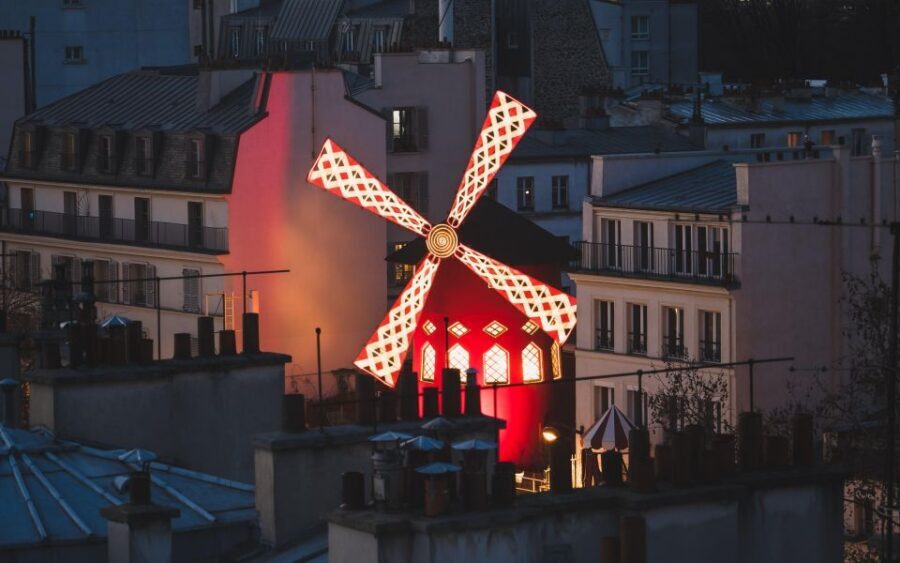
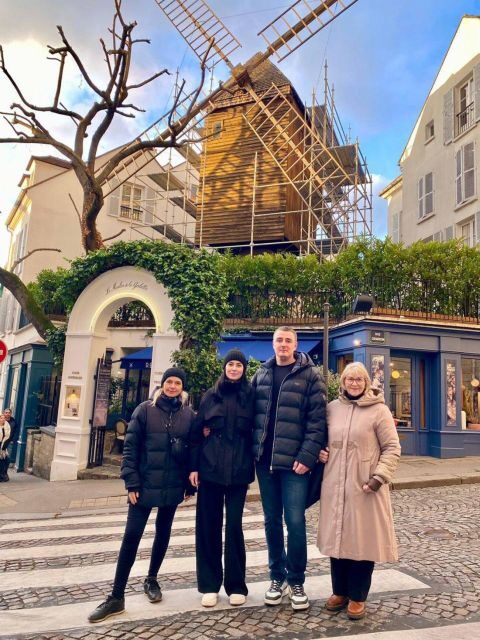
Montmartre has a reputation for being charming, but the charm is more specific than most people realize. You’ll visit the last still-existing windmills on the hill, which is a rare mix of practicality and poetry. It’s the kind of landmark that reminds you this area wasn’t always a gallery district—it had real work and real production up here.
You’ll also see a vineyard created by artists that still produces wine. Even if wine isn’t your thing, it’s a powerful concept: artists shaping the physical landscape, not just painting it. It’s one more reason Montmartre feels different from other Paris neighborhoods. The creativity didn’t stop at canvases.
And then there’s La Maison Rose, the famously pink restaurant. The story is part of the fun part: it became so because of a drunk artist. That kind of tale might sound silly, but it’s exactly the Montmartre logic the guide wants you to understand—eccentric people leaving marks they can’t help but notice later.
These stops also do something practical. They break the hill into “chapters” so you’re not grinding upward with no memory of where you’ve been. Every quirky landmark becomes a checkpoint.






Place du Tertre: painters, portraits, and why this square matters
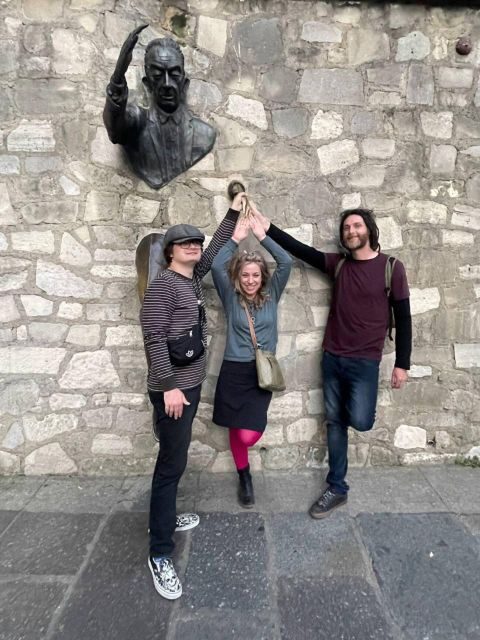
When you reach Place du Tertre, you’re entering the square that most people recognize—even if they’ve never heard its context. This is where you’ll spot painters working and you’ll feel the tourist energy rise. The guide helps you see what’s real versus what’s staged.
You’ll also get time to enjoy the atmosphere around the square and decide how long you want to stay. This stop isn’t designed to trap you. It’s your launchpad to explore the shops and small streets nearby once the guided portion finishes.
If you like people-watching, this is your moment. If you want to shop, it’s also a good time because the surrounding blocks are full of small storefronts. Just go in with expectations: the square is popular, so plan to take your time rather than trying to “get everything done” in one pass.
Sacré-Cœur inside: what the guide adds (and why it’s worth the stop)
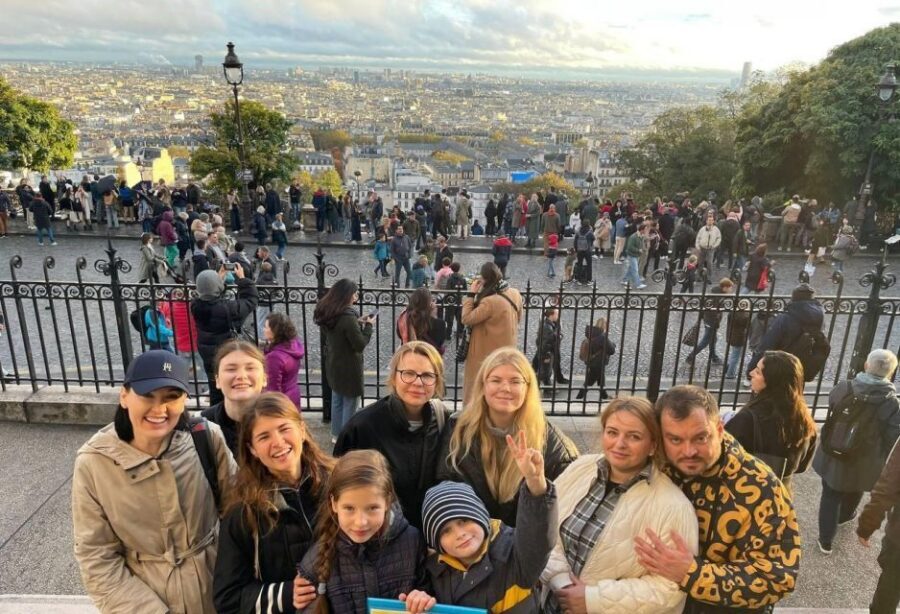
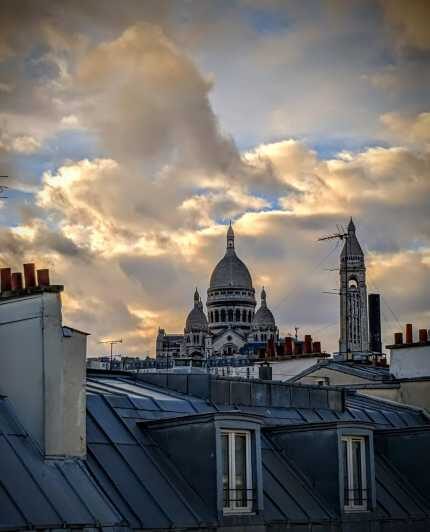
The highlight for many people is Sacré-Cœur, and for good reason. It’s Paris’ biggest church and it dominates the hill. But the best part of this experience isn’t only the outside views. It’s the guided visit inside, because that’s where you learn how to look.
Inside a major church, it’s easy to wander and miss the point. A guide changes that by pointing out what you should focus on and connecting what you see to why the building matters to the city. Since this tour includes that interior time, you avoid the common issue where you only get an exterior “wow” moment and then the church turns into generic sightseeing.
Time here is balanced. The tour structure keeps things efficient: photo stops, short guided segments, and then the big payoff. That way Sacré-Cœur doesn’t become a long slog, but it still gets the attention it deserves.
If you’re someone who likes religious art and architecture, you’ll feel satisfied. If you’re not, the guide’s context helps you make sense of the church’s role in Paris identity, even if you just want the atmosphere.
The 180° view over Paris: Eiffel Tower included, sunset-ready
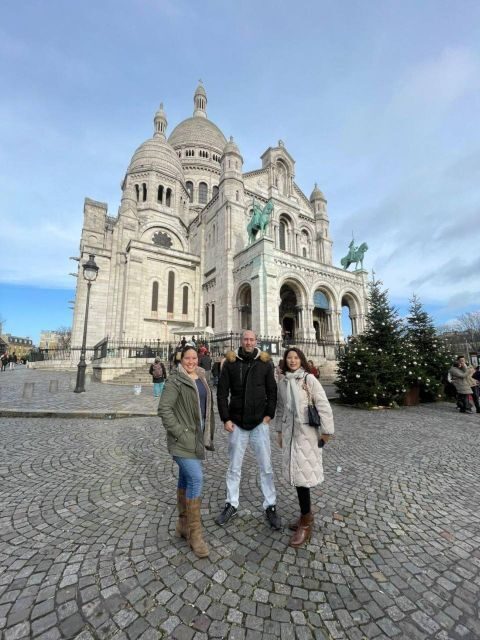
After Sacré-Cœur, the tour shifts into the most visual mode: the views. You get the kind of perspective that’s hard to recreate without knowing where to stand. The panorama stretches across Paris and includes the Eiffel Tower, which is the detail most people care about.
The tour is designed so this works as a sunset moment. That timing matters because the city looks very different when the light softens. You’ll be able to take photos, but you’ll also get a guided sense of what you’re seeing—helping you orient yourself instead of just shooting from instinct.
One of the smartest choices here is that you’re still with the guide when you’re at your peak viewpoint. So if you want to ask questions about what you’re looking at—major landmarks, direction, or why the area feels the way it does—you can. This isn’t a “good luck up there” stop.
Finishing at the hilltop: your last hour around Place du Tertre
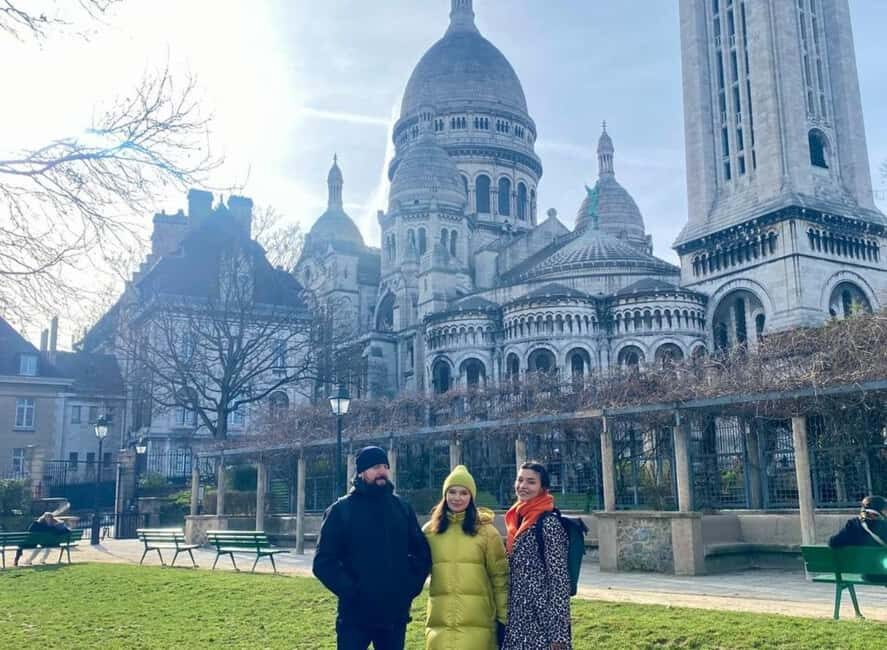
The tour ends at Place du Tertre, which is a practical choice. By the time you finish, you’re already at the heart of the neighborhood and you can keep going in whatever direction you want—shops, cafes, or just wandering the side streets.
This is also where you decide how you’ll get back down. The tour gives you options: you can use the open stairs or take the cog railway that leads to the metro station Anvers. That flexibility helps you avoid the “now what” moment when your legs are tired and you just want a smooth exit.
If you plan to eat up on the hill, remember that food and drinks are not included. But having that free time at the end means you can pick what fits your budget and your mood.
Price and value: is $50 worth it for 2 hours?
For about $50 per person and roughly 2 hours, the value is in three places: the professional guide, the small group size, and the inside visit to Sacré-Cœur. Without those, Montmartre turns into a self-guided scramble where you’d spend time figuring out what’s worth seeing and why.
Also, the pacing is efficient. Short, repeated guided segments keep energy up and help you remember what you saw. In a steep neighborhood, wasting time is costly—time and energy both disappear quickly.
You should consider one factor: food and drinks aren’t included, so if you plan to linger for a meal, budget extra. Another factor is physical comfort. The route is made easier with only one short stair segment, but the tour isn’t designed for wheelchairs.
Overall, if you want a guided storyline from Pigalle into Montmartre and a meaningful Sacré-Cœur visit, this price feels fair for what you get.
Who should book this Montmartre: Guided Tour to Sacré-Cœur?
This tour is a great fit if you want:
- A guided walk with clear stops and short learning bursts
- The best Paris viewpoints without hunting for them yourself
- The story behind Montmartre’s artists’ legacy, not just the obvious sights
It’s also ideal if you’ve been to Paris before and you want something that still feels character-driven instead of museum-only. Montmartre is one of those places where context makes the experience, and this tour gives you that context in a manageable time window.
If you dislike crowds or have mobility limitations that make stairs difficult, you’ll want to think carefully. The tour is not suitable for wheelchair users, and you’ll be walking on an active hill.
Should you book it?
Yes, if you want a focused Montmartre experience with a strong payoff at Sacré-Cœur and the viewpoint. The guide-led inside church visit and the Eiffel Tower sunset panorama are the two big reasons. The rest of the route—Pigalle to painters’ corners, windmills, vineyard, and the pink restaurant—builds the story so those views feel earned, not accidental.
Skip it if you’re mainly after a long, slow wander with no guidance, or if stair climbing is a problem for you. In that case, you’d be better off choosing a plan that matches your pace and your access needs.
FAQ
Where do I meet for the tour?
You meet outside the only metro access at Blanche (Metro Line 2). If you arrive by taxi, the address is 80 Boulevard de Clichy, 75018 Paris. The guide holds a sign that says My Super Tour.
How long is the Montmartre: Guided tour to Sacré-Coeur?
The tour duration is 2 hours.
What’s included in the ticket price?
The ticket includes a professional tour guide and a visit inside Sacré-Cœur.
Is food or drinks included?
No. Food and drinks are not included.
Is the tour suitable for wheelchair users?
No. It is not suitable for wheelchair users.
How big is the group?
It’s a small group limited to 8 participants.
Can I cancel and get a refund?
Yes. There is free cancellation up to 24 hours in advance for a full refund. You can also reserve now and pay later.