REVIEW · PARIS
Paris: Le Marais Walking Tour
Book on GetYourGuide →Operated by ExperienceFirst · Bookable on GetYourGuide
Le Marais reads like a street-level documentary. In a short 90 minutes, you see how architecture, religion, and culture overlap in one of Paris’s trendier neighborhoods—while your guide stitches it all together scene by scene. I like that this isn’t just big monuments; you get human-scale details and real neighborhood atmosphere.
Two moments I really like are the inside-out look at Centre Pompidou (you can’t help noticing the building’s attitude) and the playful stop at the Street of Rosebushes area, where the narrow lanes feel like a different Paris. One thing to keep in mind: there’s about 2 miles of walking, and the Stravinsky Fountain has been under renovation until 2023, so what you see there may vary.
In This Review
- Key highlights that make this tour worth your time
- Picking your starting spot: Stravinsky Fountain or Centre Pompidou
- Stravinsky Fountain: kinetic sculptures and what to photograph
- Centre Pompidou from the street: the inside-out idea
- Jewish-quarter streets to today: history you can walk through
- Sainte-Croix-de-la-Bretonnerie and LGBTQ Paris: place names with meaning
- Église des Billettes and Notre-Dame-des-Blancs-Manteaux: churches with a timeline
- Cloister of Billettes: quiet space between louder streets
- Impasse des Arbalétriers and the Street of Rosebushes
- Library of the Hôtel de Ville and Hôtel Carnavalet: culture with a soft landing
- Place des Vosges and Le Village Saint-Paul: finishing with style
- Value and logistics: is $42 for 90 minutes a good deal?
- Who should book this Marais tour?
- Should you book this Le Marais walking tour?
- FAQ
- How long is the Paris Le Marais walking tour?
- Where can I start the tour?
- Is the tour offered in English?
- Is the tour wheelchair accessible?
- Is food included in the price?
- Can I add a Seine river cruise to this experience?
Key highlights that make this tour worth your time
- Two starting points (Stravinsky Fountain or Centre Pompidou) so you can line it up with your day
- Stravinsky Fountain’s moving, water-spraying sculptures—big photo energy
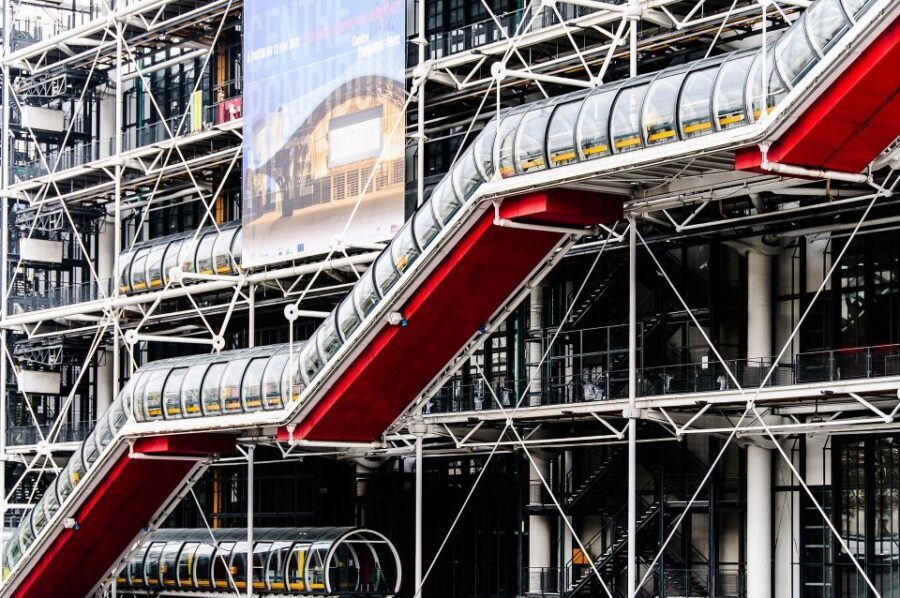
- Centre Pompidou’s inside-out architecture—design you can read from the street
- Jewish-quarter streets plus LGBTQ community context, explained with the buildings and place names
- Historic churches and cloisters, including the Église des Billettes tied to Saint Louis (built-in 1258)
- A shop-friendly ending at Le Village Saint-Paul with antiques and art
Picking your starting spot: Stravinsky Fountain or Centre Pompidou
This tour gives you two clean entry points, and that matters in Paris. If you like to start with art that moves and water that sprays, go with Stravinsky Fountain at 2 Rue Brisemiche. If you’d rather begin in a bigger landmark zone and ease into the smaller streets after, choose Centre Pompidou.
Either way, plan to arrive a few minutes early and make sure you’re at the exact spot your booking indicates. Meeting points can vary depending on the option, so don’t rely on memory once you’re on the ground. Also, the included Paris shuttle can simplify things if you’re juggling other plans that day.
The pace is leisurely, but you’re still covering around 2 miles total. This is rain-or-shine, so wear shoes you’d trust for cobblestones and curb changes. The route works with strollers and wheelchairs, which is a real plus in a neighborhood full of tight lanes.
You can also read our reviews of more walking tours in Paris



Stravinsky Fountain: kinetic sculptures and what to photograph

Your tour kicks off at the Stravinsky Fountain, where abstract and slightly outlandish sculptures move and spray water. Even if you’re not usually a fountain person, it’s one of those stops that grabs your attention fast because the motion makes it feel alive rather than decorative.
The fountain is known for whimsical behavior: figures appear to jolt, swirl, or react as the water does its thing. Your best move is to watch for a minute before you start shooting, then position yourself for the angle where you can frame both the sculpture shapes and the water action.
One practical caution: the Stravinsky Fountain has been under renovation until 2023. That means you should be mentally prepared that the full show might not be identical to what you see in photos online. Still, the surrounding area is photogenic, so you won’t feel stuck if the fountain isn’t performing at full intensity.
Centre Pompidou from the street: the inside-out idea
After you’ve got the fountain’s spectacle out of the way, you head toward Centre Pompidou, and this is where design becomes part of the story. The building’s famous concept is that it shows the inside structure from the outside—an architectural statement you can literally see as you walk by.
What I like about this stop is that it anchors the tour’s themes: Paris isn’t only old stone and quiet squares. You also get bold modern design sitting right in the middle of older neighborhoods, and your guide helps you connect that contrast to the way the Marais evolved.
Since this is a walking tour, you’ll experience Pompidou as a presence you move around, not a distant landmark. Look up while you’re walking, not just straight ahead. The “inside-out” effect is easiest to understand when you notice how the outside reads like a diagram of what’s happening within.
Jewish-quarter streets to today: history you can walk through
One of the best parts of the tour is how it treats the Jewish quarter area as more than a label on a map. As you move through the Marais lanes, you get explanations tied to the streets and buildings instead of a dry timeline.
The guide’s route also includes places that help you understand how religious life shaped architecture. You’ll pass or reference several key areas linked to older Paris, and the narration gives you context for why certain street patterns and sites matter.
If you enjoy walking with your eyes open—doorways, corner churches, small courtyards—this section is satisfying. It’s the kind of route where you start noticing how many “small” sites add up to a big picture.
Sainte-Croix-de-la-Bretonnerie and LGBTQ Paris: place names with meaning
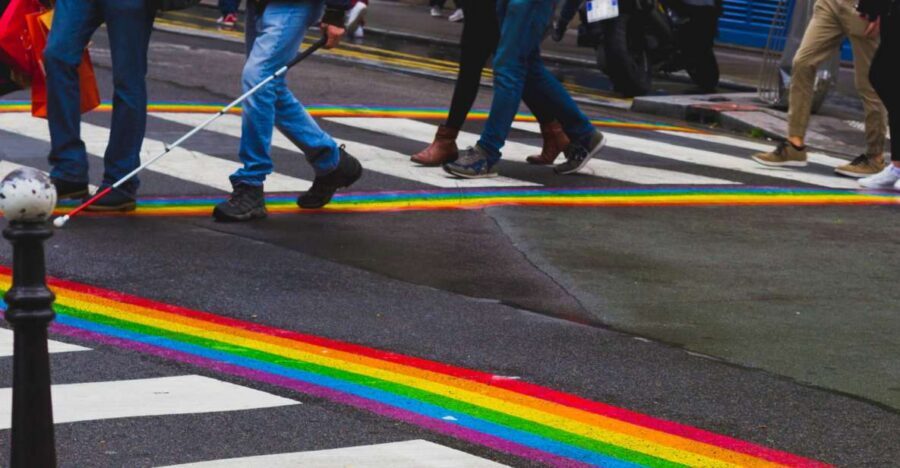
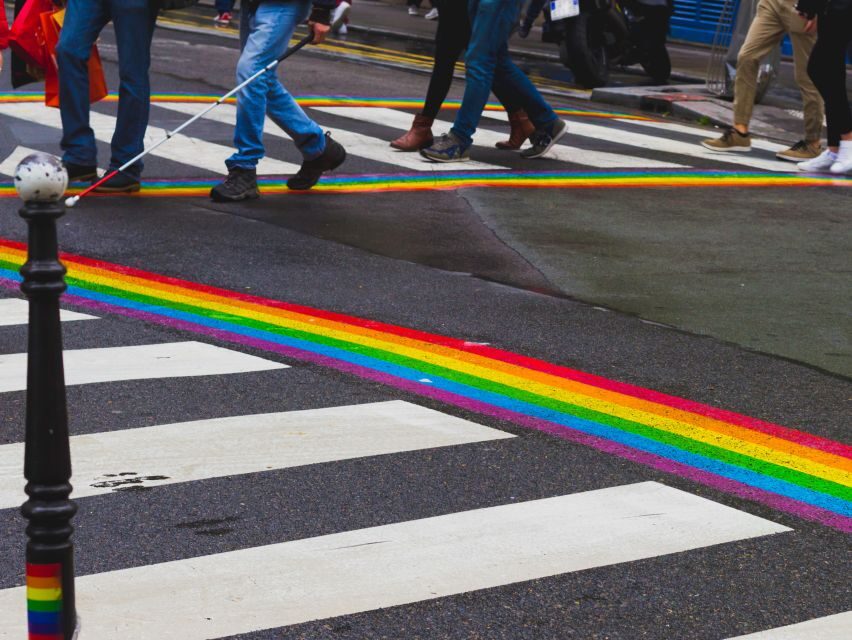
The Marais is also a major chapter in LGBTQ+ Paris history, and your guide brings that story into view. A highlight is the stop near Sainte-Croix-de-la-Bretonnerie, where your narration connects community history to the streets around you.
This matters because LGBTQ history can feel hard to pin down when you only see modern nightlife. Here, you’re learning how a place’s identity forms over time through institutions, landmarks, and the people who came together there.
You’ll also get a sense of how the neighborhood’s layers—religious, cultural, social—stack next to each other. That’s a big part of why I’d recommend this tour even if you’ve visited Paris before. It gives you a lens that changes how you read the same streets.






Église des Billettes and Notre-Dame-des-Blancs-Manteaux: churches with a timeline
A major portion of the tour is built around churches and nearby spaces, which is perfect for travelers who like architecture but don’t want to sit still. You’ll get guided time at Église des Billettes, including context that it relates to Saint Louis and was built-in 1258 (as described on this route).
These stops aren’t just about dates. Your guide helps you connect the church locations to the surrounding neighborhood logic—how religious sites fit into the street grid and how people once moved through these areas day to day.
You’ll also pass through or stop around Notre-Dame-des-Blancs-Manteaux, another church tied to the area’s story. The value here is that you’re not treating churches as isolated objects; you see them as part of neighborhood identity.
Cloister of Billettes: quiet space between louder streets
Between the bigger-name stops, the Cloister of Billettes adds a pause that feels like a deep breath. Even if you’re not sure what you’re looking at at first, cloisters have a rhythm—less street noise, more enclosure, more focus on how space shapes behavior.
On this tour, you’re guided to see how these places served practical and spiritual functions. The result is that the Marais doesn’t feel like one long crowd scene. It feels like a sequence of different moods you can step into.
If you want a little moment to slow down and take in details, this is where you’ll appreciate it. Keep a small “look and listen” mindset here: short gazes at stonework and layouts tend to pay off more than trying to photograph everything.
Impasse des Arbalétriers and the Street of Rosebushes
This is the section where the Marais starts acting like a secret you can walk into. You’ll go toward Impasse des Arbalétriers and then into the area locals connect with the Street of Rosebushes.
Narrow lanes like these do something to your sense of speed. Even at a leisurely pace, you feel like you’re moving through a different scale—smaller, slower, more intimate. It’s a great place to watch how buildings and plants interact, and why gardens matter in dense cities.
Your guide’s narration helps you see why these lanes and courtyards became known as they did, and that extra context makes the place feel less random. Also, keep your camera ready for small framed views: Paris loves to surprise you with a perfect angle around a corner.
Library of the Hôtel de Ville and Hôtel Carnavalet: culture with a soft landing
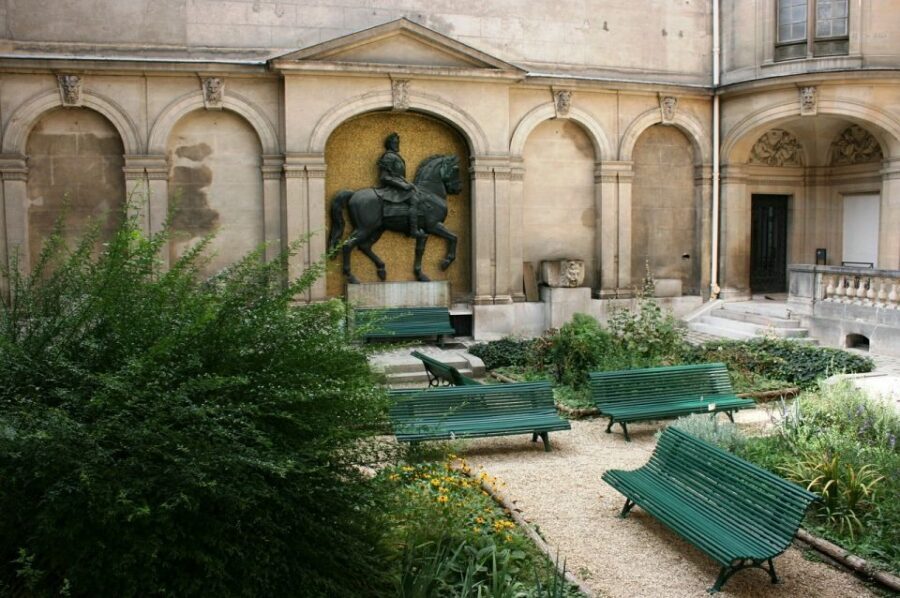
As you work toward the tour’s end, the route brings you into more civic and museum-adjacent territory. You’ll spend time near the bibliothèque de l’hôtel de ville de Paris and also by Hôtel Carnavalet.
Even if you don’t go inside, the impact is in the setting. These spots help you understand how the city preserves its own memory, and how public culture lives right next to everyday street life.
This is also a useful transition zone if you’re trying to plan the rest of your day. You’re moving from guided moments into areas where you can choose your next step—whether that means more wandering, a coffee stop, or popping into one of the nearby attractions.
Place des Vosges and Le Village Saint-Paul: finishing with style
You’ll reach Place des Vosges, one of the Marais’s most recognizable squares. This stop is valuable as a reset point: you get open space after tight streets, and your brain has a chance to organize what you just learned.
Then the tour finishes at Le Village Saint-Paul, which is basically a shopping and art corridor feel. Think antiques, art galleries, and artisan boutiques—the kind of ending that makes sense if you want to keep the neighborhood vibe going after the guide leaves you.
This finish is ideal for travelers who don’t want the tour to end with a commute. You get to linger where the Marais is fun to browse. If you’re hungry, this is also a smart place to decide between a quick bite nearby or a more planned sit-down later.
Value and logistics: is $42 for 90 minutes a good deal?
At $42 per person for about 90 minutes, this tour can be a strong value if you care about context. You’re not paying just for a walking route; you’re paying for a local guide who connects architecture, community history, and the meaning of specific streets.
A big practical plus: the Paris shuttle is included. That reduces one of the biggest hassles in Paris touring—figuring out how to get to the starting point efficiently.
You also have an optional upgrade to enjoy a narrated Seine river cruise. It’s valid for a full year from your tour date, which is handy if your schedule is tight or you want to bundle it with a later day. If you like “one guided story, then a scenic follow-up,” this upgrade makes sense.
If you’re already a serious self-guided walker with strong French and lots of background knowledge, you might question paying for a guide. But if you want the neighborhood read aloud—especially for LGBTQ and historical layers—this is the sort of time investment that pays back quickly.
Who should book this Marais tour?
I’d book this tour if you want to see multiple Marais identities in one shot: modern design at Centre Pompidou, historical religious sites, and neighborhood community stories tied to place names. It’s also a good fit if you like guided pacing—enough structure to feel productive, but not so rigid you can’t wander on your own afterward.
It’s especially worth it if you want a guide who can keep things engaging. Guides such as Joanna and Zack are known for being engaging and humorous with the narration, and Maria has been noted for sharing a follow-up email with recommendations. That kind of after-tour help is more than nice; it helps you turn the walk into a plan for the rest of your day.
One last practical point: because meeting points can vary by starting option, take a screenshot of your exact location in your booking confirmation. Paris is full of near-misses—one street off can cost you the start of your tour.
Should you book this Le Marais walking tour?
Yes, if you want a 90-minute orientation to the Marais that blends architecture with community history, not just sightseeing. The guide-led route through places like Centre Pompidou, Église des Billettes, and the rosebush area gives you a broader picture of what this neighborhood has been—and what it became.
Book it if you value a guided narrative and you like finishing near places where you can keep exploring. Skip it only if you dislike churches, aren’t comfortable with about 2 miles of walking, or you specifically only want stops with the Stravinsky Fountain fully operating as shown online.
FAQ
How long is the Paris Le Marais walking tour?
The tour is 90 minutes.
Where can I start the tour?
You can start at Stravinsky Fountain (2 Rue Brisemiche) or at Centre Pompidou, depending on the option booked.
Is the tour offered in English?
Yes. The live tour guide speaks English.
Is the tour wheelchair accessible?
Yes. The tour is wheelchair accessible and is also described as suitable for strollers.
Is food included in the price?
No. Food and drink are not included.
Can I add a Seine river cruise to this experience?
Yes. There is an optional upgrade for a narrated Seine river cruise, good for a year from the tour date.