REVIEW · PARIS
Paris by Night Walking Tour: Ghosts, Mysteries and Legends
Book on Viator →Operated by City Wonders Ltd · Bookable on Viator
That’s not the Paris you see in postcards. This Paris by Night walking tour leans into the city’s darker chapters—Revolution, plague years, the Paris Commune, and even Nazi occupation—while you move through central streets with a guide. I like that it stays focused and practical: you get a clear route, short stops, and a story thread that connects sites like the Hotel de Conciergerie and key execution grounds.
Two things I especially like: you’ll get access to stops that most daytime routes skip, and you’ll hear guide-led storytelling that’s built for night walking, not museum time. Even guides such as Sophia, Daniel, Thelma, Ami, and Kritika have been highlighted for holding attention and answering questions as you go.
One consideration: this can feel more like dark history than a full-on spooky ghost show. If you’re hunting for supernatural thrills, go in expecting murders, trials, and executions first, legends second.
In This Review
- Key things to know before you go
- Why Paris Looks Different on a Night Walk with a Story
- Price and Time: $18.10 and the Reality of 10,000 Steps
- Pont Neuf Meeting Point: Getting Oriented Before the Dark Story Starts
- Hotel de Conciergerie: Marie Antoinette’s Prison Stop
- Square du Vert-Galant: Henry IV’s Love Story Meets the Templars
- Eglise St-Germain-l’Auxerrois: The Huguenot Massacre Connection
- Île de la Cité Pass-By: Roman Fort Foundations Under Modern Streets
- Palais de Justice: Trials, Guillotines, and Torture in Public
- Place de l’Hôtel de Ville: Where Celebrations Turned to Executions
- So, Is It Really Ghosts and Legends or Just Gory History?
- Practical Tips: Shoes, Timing, and How to Get More Out of Each Stop
- Who Should Book This Tour, and Who Might Skip It
- Final Call: Should You Book Paris by Night: Ghosts, Mysteries and Legends?
- FAQ
- How long is the Paris by Night walking tour?
- Where do I meet and where does the tour end?
- How much does the tour cost?
- Is it a small group tour?
- Is hotel pickup included?
- What kind of sights and stories will I hear?
- Can I cancel for a full refund?
Key things to know before you go

- Small group (max 20): easier for questions and a less chaotic vibe on narrow streets
- Night pace with a long walking chunk: plan for about 10,000 steps in roughly 2 hours
- Conciergerie focus: Marie Antoinette’s imprisonment is a centerpiece
- St-Germain-l’Auxerrois stop: tied to the St. Bartholomew’s Day Massacre and Huguenot killings
- Palais de Justice viewpoint: where revolutionary justice turned into spectacle
- Ends at Hôtel de Ville area: executions happened here for centuries
Why Paris Looks Different on a Night Walk with a Story
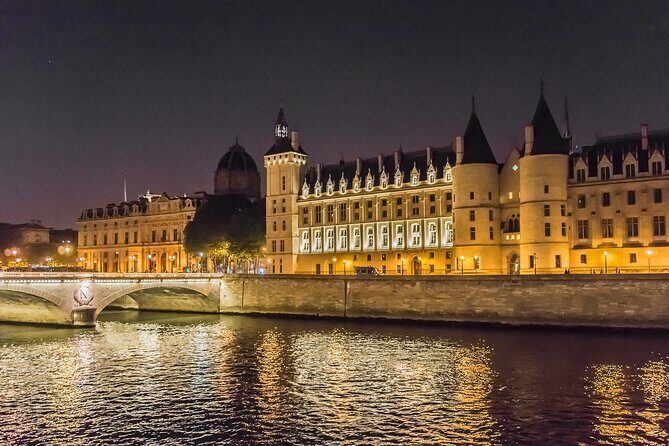
Paris at night does something daytime can’t: it turns stone, shadows, and street sounds into part of the tale. This tour leans into that mood on purpose. Instead of treating history like a list of dates, you’re walking through the same corridors where real people lived, were judged, and often didn’t make it out.
The experience is also built around connected storytelling. You start near Pont Neuf and move toward the Hôtel de Ville area, picking up themes as you go: political revenge, religious violence, public punishment, and the way crowds loved a spectacle. One of the best aspects is that the guide doesn’t just point at landmarks—they explain why these places mattered when Paris was in crisis.
The guides vary in style, but the common thread in praise is clear pacing and solid explanation. If your guide is strong at storytelling—think the kind of energy associated with Sophia or Daniel in feedback—you’ll feel the route click into place. If your guide is more reserved, you can still follow the narrative, but you may want to ask questions when a good moment appears.
You can also read our reviews of more walking tours in Paris



Price and Time: $18.10 and the Reality of 10,000 Steps
At $18.10 per person for about 2 hours, this is good value if you like history told on foot. You’re paying for a live guide, a tight route, and less time wasted figuring things out on your own. It’s also a smart way to get oriented at night, when the city looks unfamiliar and you’d rather not rely on guesswork.
But here’s the trade-off: it’s a walking tour. One review noted roughly 10k steps, and that matches what this kind of night route usually requires. So wear comfortable shoes even if you feel “fine” at the start. The end comes fast, and your legs will remember it.
A final time note: since this is about central Paris, you’ll keep moving between stops. There can be stretches where you feel like you’re just walking. That’s normal for any guided route, but it’s worth knowing up front so you don’t feel let down if you came expecting more frequent set-piece moments.
Pont Neuf Meeting Point: Getting Oriented Before the Dark Story Starts
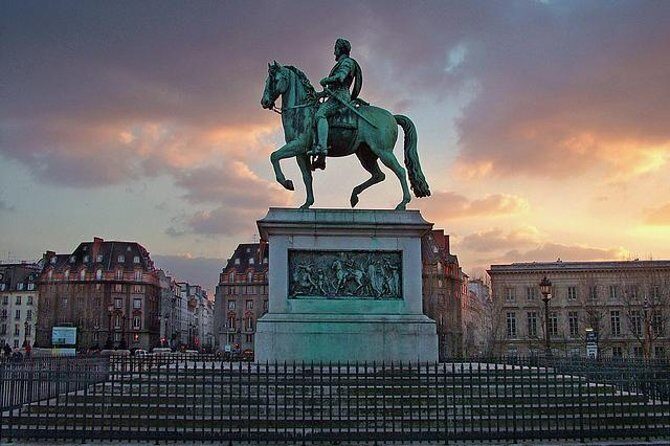
You meet at the Equestrian Statue of Henri IV, at 15 Pl. du Pont Neuf. That location is handy. You’re in the historic core, near major routes, and easy to reach by public transport. It also works visually: Pont Neuf is one of those anchors that helps you understand where “old Paris” sits in relation to today.
The tour begins with a framing idea: before Paris became the city of fashion and romance, it endured centuries of unrest—wars, plagues, and political crackdowns. The guide then builds the night’s story across periods, from the French Revolution to the Paris Commune and the era of Nazi occupation.
This matters because it changes how you view the landmarks. When you hear the theme first—public punishment, fear, and power—you stop seeing buildings as neutral scenery. You start seeing them as tools used by rulers, prosecutors, and crowds.
Hotel de Conciergerie: Marie Antoinette’s Prison Stop
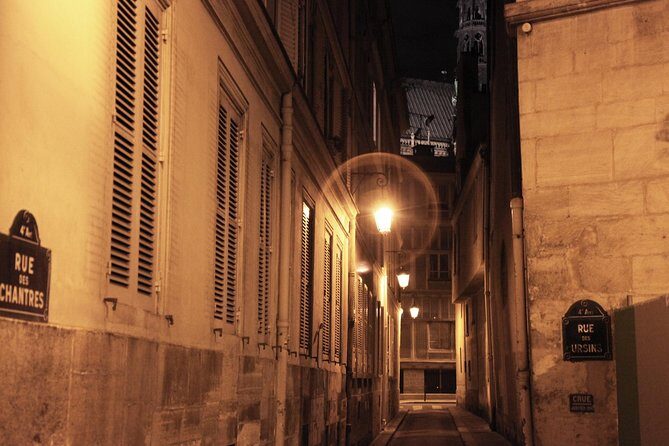
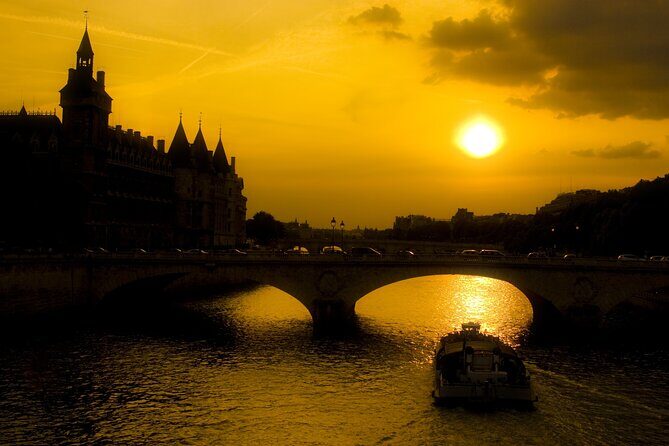
One of the biggest fixed points on the route is the Hotel de Conciergerie area, where Marie Antoinette was once imprisoned. This isn’t just a “name check.” The guide ties it to the bigger machinery of the Revolution: detention, trial, and the political theater around justice.
Why this stop is worth your attention: it’s a recognizable figure in a place that represents the system. It’s one thing to read about Marie Antoinette; it’s another to stand near the venue type where power narrowed down to a single outcome.
Also, placing it early helps. After you hear about captivity and the logic of revolutionary justice, later stops—church violence, the guillotine era, execution squares—hit harder. The tour builds tension in a way that sticks.
Square du Vert-Galant: Henry IV’s Love Story Meets the Templars
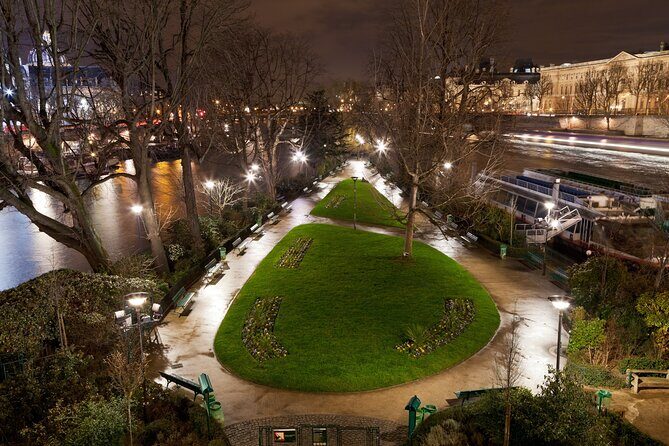
Next comes Square du Vert-Galant, a romantic riverside green space associated with Henry IV and his mistresses. The contrast is part of the fun of this stop: you’re in a place people enjoy today, but the guide points out what once happened here.
This is where you hear about the last Knights’ Templar burned at the stake. The park is modern enough to feel like a break, but the story flips it into a grim historical marker.
A practical takeaway: if you like hearing how history repurposes spaces, this stop delivers. You get the “today vs. then” feeling fast, and because it’s outdoors, the night setting helps the story land.
You can also read our reviews of more evening experiences in Paris





Eglise St-Germain-l’Auxerrois: The Huguenot Massacre Connection
At Eglise St-Germain-l’Auxerrois, you’ll hear why this 7th-century church mattered to the St. Bartholomew’s Day Massacre. The tour frames it around the killing of around 30,000 Huguenots.
This stop is important for two reasons. First, it gives religious history a location you can actually stand next to. Second, it shows how violent events weren’t just abstract politics—they happened in real neighborhoods, and often in the shadow of institutions people still recognize.
If you’re hoping for a ghostly chill, the emotion here comes from atrocity, not supernatural effects. It’s intense, and it fits the tour’s overall tone.
Île de la Cité Pass-By: Roman Fort Foundations Under Modern Streets
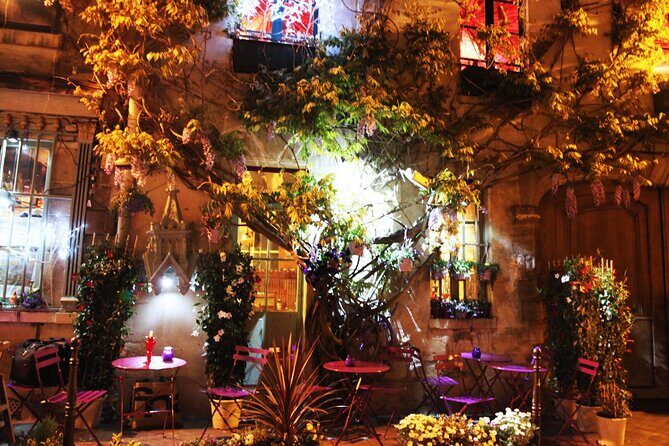
The route also includes a pass-by of Île de la Cité, the island in the Seine at the center of Paris. The guide connects it to older layers of the city, including its role in the 4th century as the site of a fortress of the Roman governor.
This is one of those stops that can feel quick in the moment, but it’s valuable if you tend to think Paris is only “medieval and later.” The island’s long continuity helps you understand why so many powers fought over control of this exact spot.
If you want to make the pass-by more useful, glance around while the guide talks. Even without stepping inside, you can mentally map where the island sits relative to everything else you’ve been seeing.
Palais de Justice: Trials, Guillotines, and Torture in Public
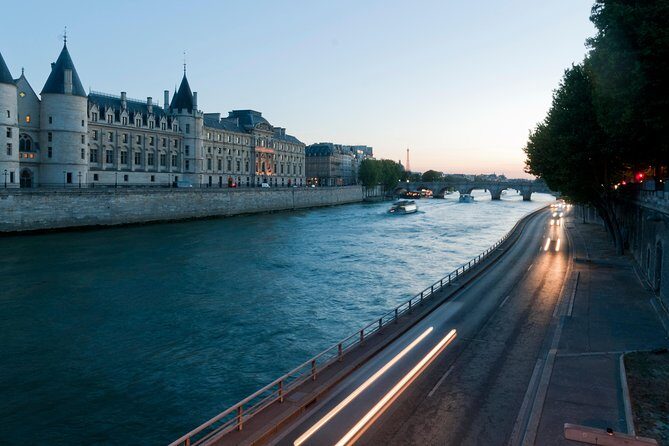
The tour brings you to the Palais de Justice de Paris, where the guide explains how sentencing during the Revolution could end in the guillotine, sometimes in front of cheering crowds. The stop also mentions torture happening publicly, and it notes that the brutality could apply even to high-status targets, including kings or revolutionaries.
There’s also a detail about the building receiving the Grand Prix de l’Empereur as a top work of art produced in France in that decade. That pairing matters: it forces you to hold two ideas at once. Paris could admire grand architecture while using that power to carry out brutal punishment.
This stop is also why night matters. The idea of public spectacle in a dim street setting feels more immediate than it would on a bright afternoon walk.
One watch-out: if you are very sensitive to gruesome topics, this is where you’ll feel the tour lean hardest into “dark.” The tour is not shy about it, and the theme is consistent from start to finish.
Place de l’Hôtel de Ville: Where Celebrations Turned to Executions
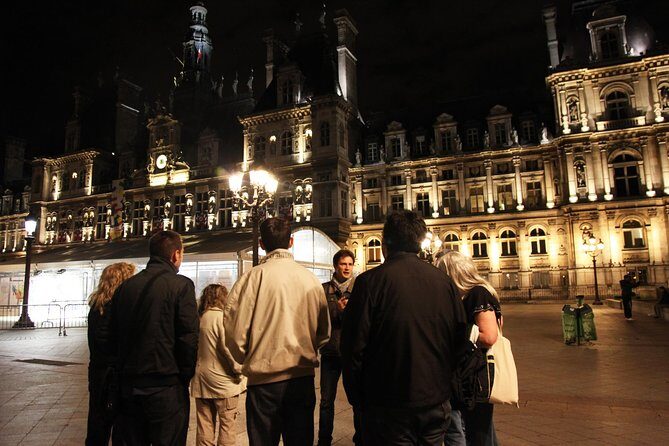
The walk ends near Place de l’Hôtel de Ville, at the end point: 70 Rue de Rivoli. The reason this area fits the tour theme so well is that it served two different roles over time: municipal celebrations and important executions.
The tour connects that timeline from 1310 to 1830, including references to executions of people such as Ravaillac and La Brinvilliers. You get the sense of how power and violence coexisted in the same civic heart.
This stop is a good mental “wrap.” By the end, you’ve already heard about prison, church violence, revolutionary justice, and past empires. Then you land at a place that shows the civic face of cruelty.
If your feet are tired, this final segment still works because it’s conceptually satisfying. You can look at the square and understand why people once gathered here—both for celebration and for punishment.
So, Is It Really Ghosts and Legends or Just Gory History?
The title says Ghosts, Mysteries and Legends, but the content described is heavily weighted toward murder, wars, plagues, trials, massacres, torture, and executions. That mismatch is the main complaint thread in the feedback.
So here’s a fair way to set expectations: treat this as a dark history tour with legend-flavored storytelling, not a theatrical haunted walk. Some guides may include spooky touches and connected folklore. But the spine of the route is the factual grim side of Paris’s past.
This is also why it works for many people. If you want a night activity that gives you context for what you see in Paris—especially if you’ve done some museum time and want something different—this is a strong choice. The “mystery” is more about political intrigue and historical turning points than about specters.
If you want obvious supernatural effects, you might end up disappointed. If you’re okay with “spooky because of what happened here,” you’ll probably have a great time.
Practical Tips: Shoes, Timing, and How to Get More Out of Each Stop
A few practical moves will make your night run smoother.
Wear shoes you can trust. The tour is about two hours and covers a lot of ground. One review even called out comfort shoes as a must.
Ask questions when the guide pauses. Small groups help, and guides praised for engagement tended to answer people along the way. If your guide isn’t interacting much, you can steer the vibe by asking a question about a place or person.
Dress for night walking. The tour is outdoors, and Paris evenings can turn cool. Keep a light layer handy.
Use the “connect the dots” mindset. Even if you already know some Revolutionary history, don’t just wait for the next landmark. Listen for the through-line: who held power, how mobs and institutions acted, and why specific buildings mattered.
Finally, don’t judge the entire tour based on one stretch between stops. If there’s a quieter walking segment, it’s usually setting you up for a stronger location ahead.
Who Should Book This Tour, and Who Might Skip It
This one is a good fit if:
- You want an evening activity that feels different from a standard museum visit
- You like learning dark, lesser-known Paris history in a guided way
- You’re happy with walking and can handle gruesome topics without flinching
I’d be cautious if:
- You came specifically for a scary ghost tour with lots of supernatural content
- You already know a large amount of French history and want brand-new details
- You prefer a more interactive or theatrically spooky format
For families: the feedback suggests it’s not for young kids. If you’re traveling with teens who like history, it can land well.
As for guide choice, keep an eye on who’s leading on your date. Names like Sophia, Daniel, Thelma, Ami, and Kritika show up in positive comments for clarity and storytelling.
Final Call: Should You Book Paris by Night: Ghosts, Mysteries and Legends?
Book it if you want a low-cost, small-group way to understand the “other Paris” after dark. The Conciergerie focus, the church stop tied to the St. Bartholomew’s Day Massacre, and the Palais de Justice angle make it more than a generic walking tour.
Skip it or adjust expectations if you want heavy supernatural ghost theatrics. This is more about what happened here—told with a nighttime edge—than about watching ghosts materialize around corners.
FAQ
How long is the Paris by Night walking tour?
It runs for about 2 hours.
Where do I meet and where does the tour end?
You meet at the Equestrian Statue of Henri IV on Pl. du Pont Neuf (75001 Paris) and you end near Hotel La Ville at 70 Rue de Rivoli (75004 Paris).
How much does the tour cost?
The price is $18.10 per person.
Is it a small group tour?
Yes. The group size is capped at 20 travelers, and you’ll have a local guide.
Is hotel pickup included?
No, hotel pickup and drop-off are not included.
What kind of sights and stories will I hear?
You’ll walk through central Paris and hear darker historical stories tied to events like the French Revolution, the Paris Commune, and Nazi occupation, plus stops such as the Hotel de Conciergerie (Marie Antoinette’s imprisonment), St-Germain-l’Auxerrois, and the Palais de Justice area.
Can I cancel for a full refund?
Yes. You can cancel up to 24 hours in advance for a full refund.
If you want, tell me your travel dates and how much French history you already know—I can help you decide whether this is the right night activity or better paired with something more daytime-and-visual the next morning.