Montmartre has a way of catching you off guard. This walking tour strings together the neighborhood’s art legacy with practical street-level Paris sights, so you leave with stories and directions you can actually use. I especially like the focus on artist-linked landmarks (Van Gogh and Toulouse-Lautrec come up often) and the way the walk ends with a real place to eat at La Bonne Franquette. One consideration: it’s a hilly neighborhood with narrow, sometimes busy streets, so pack comfortable shoes and be ready for some uphill effort even without stairs.
You’ll start at the Saint-Jean de Montmartre area and move through the Montmartre you see in postcards—but also the bits that explain why artists stayed here. I like that the tour includes both big-name sights (Moulin de la Galette and Sacré-Cœur) and smaller stops like the I Love You wall and the only vineyard in Paris. The one drawback for some people is that it’s not suitable for wheelchair users, even though the route doesn’t include stairs.
In This Review
- Key Points You’ll Notice on This Walk
- Montmartre in 90 Minutes: What This Walk Really Covers
- Meeting at Saint-Jean de Montmartre and Getting Oriented Fast
- The I Love You Wall: A Soft Landing Before the Climb
- Place du Tertre and the Reality of Paris Artists
- Moulin de la Galette and Rue des Abbesses: Art Anchors in Real Streets
- The Only Vineyard in Paris: A Detour Worth the Effort
- Sacré-Cœur Hilltop Views: What You Learn Before You Look
- Ending at La Bonne Franquette: Historic Food Stops Make It Stick
- Price and Value: Why $41 Can Make Sense Here
- Who This Tour Is Best For (and Who Should Rethink It)
- A Note on Guides: What Strong Ones Do Differently
- Should You Book This Montmartre Walking Tour?
- FAQ
- How long is the Montmartre walking tour?
- Where do I meet the guide, and where does the tour end?
- What’s the starting price, and is food included?
- Does the route include stairs?
- Can I enter Sacré-Cœur Basilica during the tour?
- Is the tour refundable if plans change?
Key Points You’ll Notice on This Walk
- I Love You Wall first: a quick, colorful hit of romance and language before you head into the hills.
- Place du Tertre time: you see the square with working French artists and cozy terraces.
- Food talk that feels local: cheese and charcuterie come into the story in a natural way.
- Moulin de la Galette + Rue des Abbesses: landmarks that connect art, design, and everyday street life.
- The last vineyard in Paris: a surprising stop that breaks up the views and photos.
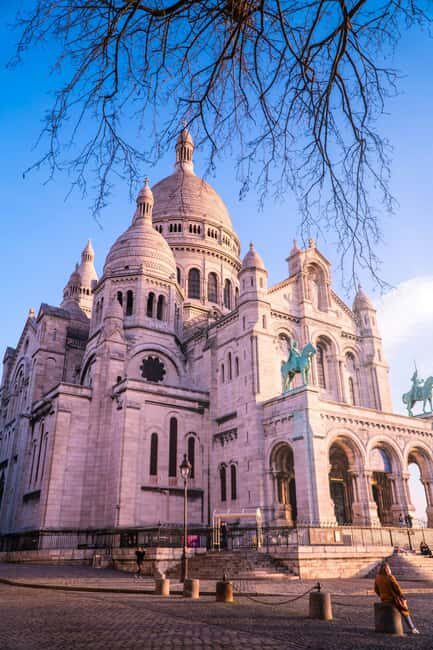
- Sacré-Cœur hilltop context: you get architectural guidance, then optional self-guided time if it’s open.
Montmartre in 90 Minutes: What This Walk Really Covers
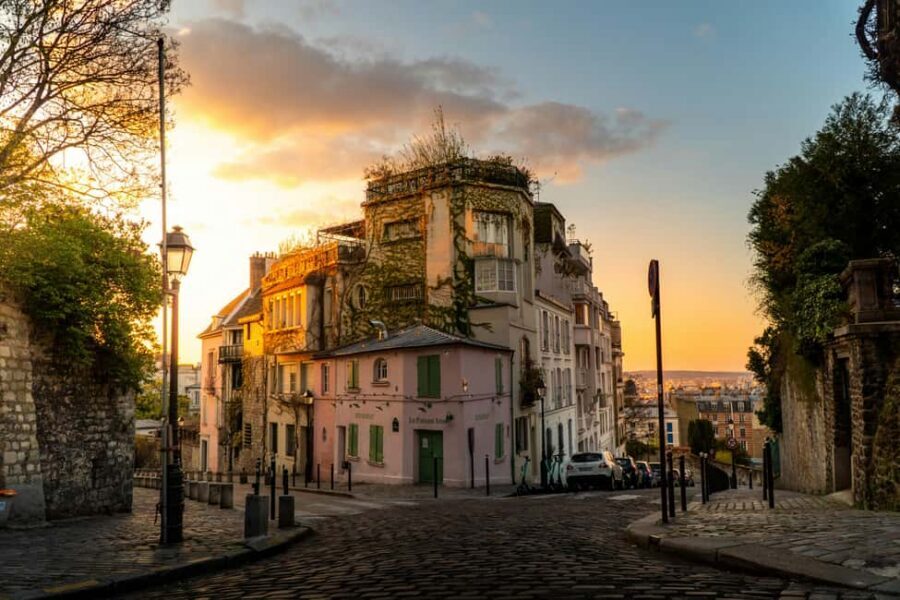
This is a 90-minute guided walking tour of Montmartre, priced at $41 per person, with an English-speaking expert guide. The tempo is built for a compact hit of the neighborhood: art history, recognizable landmarks, and a few local details that help you understand what you’re looking at when you’re there on your own.
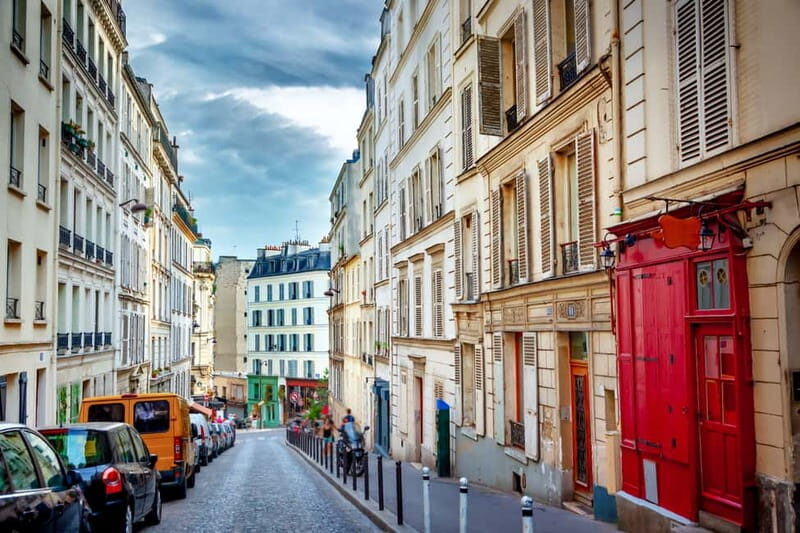
The smartest thing about this tour is that it doesn’t treat Montmartre like a museum with one big statue at the end. You get a path that explains the neighborhood’s artist pull: the winding streets, the viewpoints, and the places where creativity clustered. You’ll also get context for big sights like Sacré-Cœur, instead of just being told what it is.
Practical note: the route doesn’t include stairs, but it does involve hills and narrow, sometimes busy streets. Plan for uphill walking, and keep your expectations realistic if you’re sensitive to crowds or steep grades.
You can also read our reviews of more walking tours in Paris



Meeting at Saint-Jean de Montmartre and Getting Oriented Fast

You’ll meet in front of Saint-Jean de Montmartre church, at 19 Rue des Abbesses, 75018 Paris. Your guide holds an orange sign that says ExperienceFirst, which makes it easier to spot your group even if the street is busy.
This is a helpful starting point because it places you immediately in Montmartre’s rhythm—slightly elevated, close to the streets that funnel toward the main sights, and right where you’ll need to start walking. Since the tour ends back at the meeting point, you don’t have to worry about finishing somewhere far from transit or your next plan.
If you’re visiting Paris for a short window, this tour works well as an early “map builder.” It’s the kind of walk that helps you later decide what to revisit and what to skip.
The I Love You Wall: A Soft Landing Before the Climb
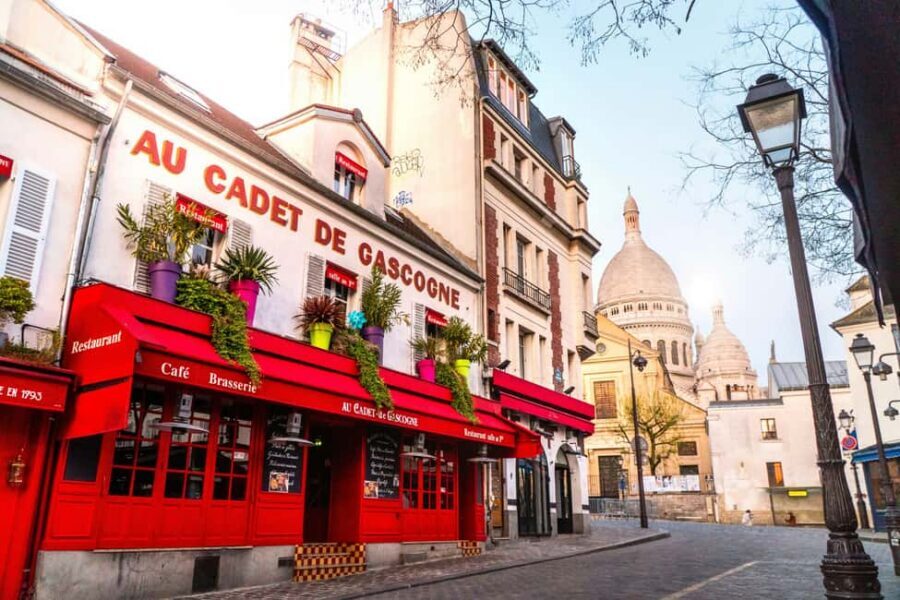
Most Montmartre itineraries hit Sacré-Cœur fast. This one eases you in with the I Love You wall, an art piece featuring the phrase I Love You in over 300 languages. It’s an easy stop, but it does something useful: it sets a tone.
Then you move into Montmartre’s streets, where the vibe shifts from street-art romance to history-on-stone. That early colorful moment makes it feel less like you’re “doing sights” and more like you’re getting oriented in a neighborhood.
Tip: if you’re the kind of traveler who likes photos, arrive mentally ready. This stop is quick, so have your phone out early rather than trying to scramble while everyone else is walking.
Place du Tertre and the Reality of Paris Artists
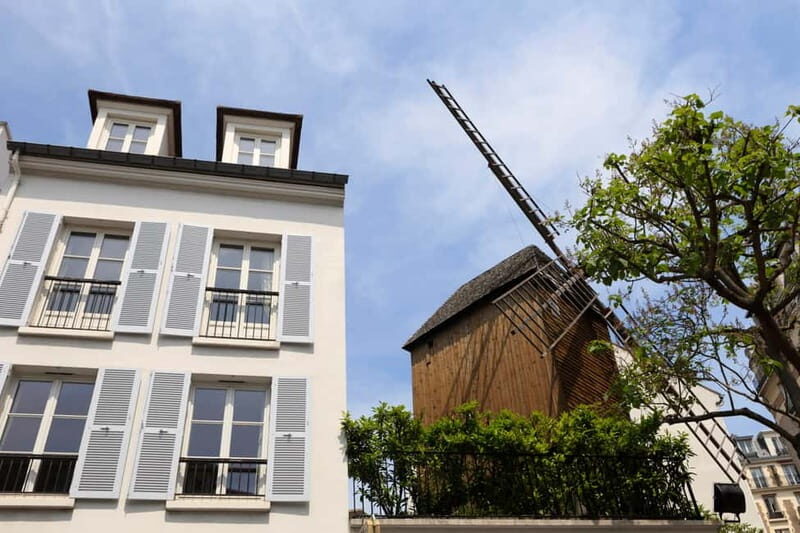
From there, you’ll head toward Place du Tertre, the famous square known for French artists working in view of the public. It’s lively in the way only a place with consistent foot traffic can be—there’s movement, conversation, and the constant background of small street performances and art sales.
What I like here is that it’s not only about scenery. Your guide adds context around what’s happening in the square, and you’ll also get a local angle on Parisian food, from cheese to charcuterie. This matters because Montmartre often gets portrayed as strictly “artsy.” The food talk brings it back to daily life.
If you’re hungry later, this is the point where you’ll feel what kind of snack mood you might want—something simple, salty, and very French.
Moulin de la Galette and Rue des Abbesses: Art Anchors in Real Streets
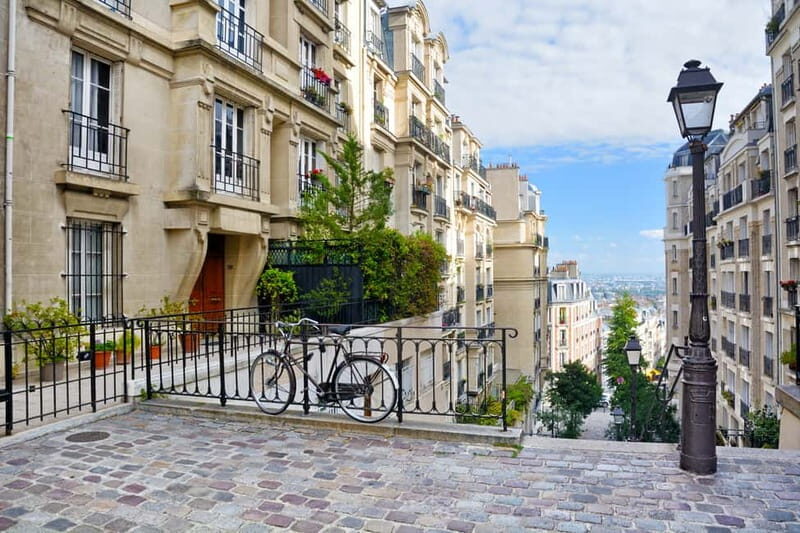
You’ll pass major landmark scenery including the Moulin de la Galette—associated in the tour story with Renoir—and Rue des Abbesses, one of Montmartre’s historic streets.
These stops are valuable because they’re not isolated points. You experience them from the street, while walking through the neighborhood instead of just standing and staring. That’s the difference between seeing Montmartre and understanding it.
What can be a drawback: the streets here can get busy, and the walking route includes hills. If you prefer wide-open spaces and low crowd density, you’ll want to keep your pace steady and accept that you’ll be sharing sidewalks.






The Only Vineyard in Paris: A Detour Worth the Effort
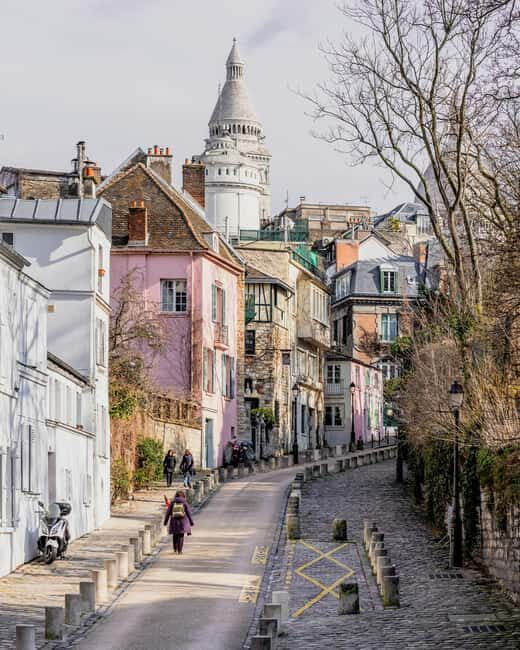
One of the most distinctive parts of this tour is the stop where you follow your guide to the last remaining vineyard in Paris. This breaks the usual Montmartre pattern. Instead of only focusing on paintings, sculptures, and churches, you get something practical and grounded: agriculture in the middle of a major city.
It’s also a great reset for your legs. You’ll be walking uphill through dense streets, then you get a change of scene before the biggest viewpoint payoff. If you like travel moments that feel specific to a single place (and not just general “Paris” vibes), this vineyard stop is one of your best shots.
Because the tour is only 90 minutes, you don’t get a long lecture here. You get enough to understand why it’s significant, then you move on—ready to see the city from above again.
Sacré-Cœur Hilltop Views: What You Learn Before You Look
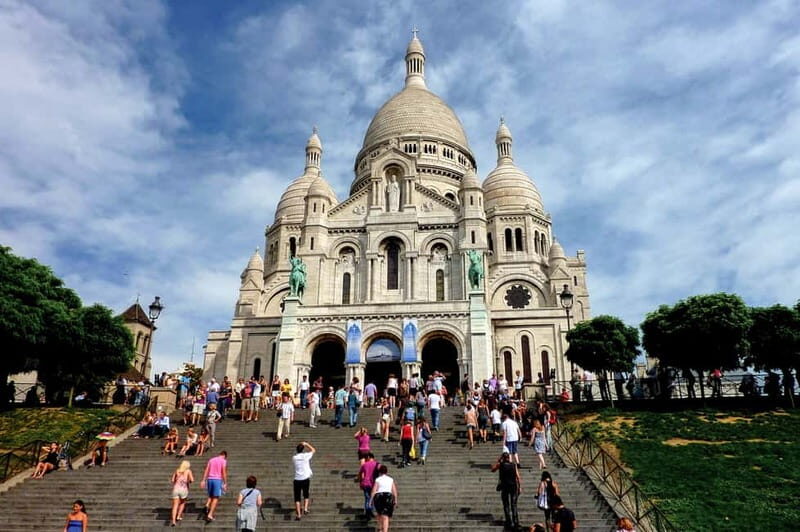
As you reach the top, you’ll get jaw-dropping views of Paris from Montmartre’s hilltop. The tour includes the exterior of Sacré-Cœur Basilica, and your guide shares tips about its striking 19th-century architecture.
This is one of those experiences where the guide’s role matters. If you’re just walking by, you might notice the “wow” moment. With the guided explanation, you also notice details—how the building dominates the skyline, how the style feels, and why people connect the basilica with the neighborhood identity.
If it’s open, you’re welcome to explore Sacré-Cœur Basilica on your own after the tour, and entry is free when open. The tour doesn’t promise your entire visit inside, but it gives you the reason to go and what to pay attention to when you do.
Practical expectation: you’ll likely spend some time looking out at the city. Plan your time for photos and for simply enjoying the view—this is Montmartre’s payoff.
Ending at La Bonne Franquette: Historic Food Stops Make It Stick
The tour ends at La Bonne Franquette, a historic restaurant that the tour connects with Van Gogh and Monet. The nice part is that it’s not just a landmark finish; it’s a place where you can actually keep your day going.
Food and drinks are not included on this tour, but you can step inside and savor traditional French cuisine. If you want a low-effort next step, this ending works well: you’ve just spent the whole walk thinking about art and atmosphere, and then you can switch gears without needing to hunt for a restaurant right away.
If you’re booking this as one of your first activities in Paris, treat it as a launch point: eat here or use it as a guide for where to go next. Either way, it keeps your Montmartre story alive after you leave the square.
Price and Value: Why $41 Can Make Sense Here
At $41 per person for about 1.5 hours, this tour isn’t cheap in the absolute sense. But in practical value terms, it’s a solid way to spend time in Montmartre because you’re paying for three things that are hard to assemble on your own quickly:
First, you’re paying for a route that hits the right mix of big sights and specific Montmartre markers—like the vineyard and the I Love You wall—without you needing to build an itinerary from scratch.
Second, you’re paying for interpretation. The Sacré-Cœur architecture tips and the art-linked story help you understand what you’re looking at while you’re still there, when it’s fresh.
Third, you’re paying for time efficiency. Montmartre is a maze of hills and changing streets. A guided walk helps you avoid wandering while still keeping the experience lively.
You should consider this tour especially if you want a structured introduction and you’re planning to explore on your own afterward. If you already know Montmartre well and just want viewpoints, you might not need the guide.
Who This Tour Is Best For (and Who Should Rethink It)
This tour is a strong fit if you:
- want an English-speaking guide who tells stories tied to actual landmarks
- like walking neighborhoods that feel old, artistic, and slightly unpredictable
- want Sacré-Cœur views with context, not just a quick photo stop
- plan to keep exploring after the tour, including optional self-guided time at the basilica
It may be less ideal if you:
- need wheelchair access (it’s not suitable for wheelchair users)
- have trouble with uphill walking or prefer flat routes
- get overwhelmed by crowds, since parts of Montmartre can be busy
One more helpful detail: the route does not include stairs, which can make it easier than some other old-neighborhood walks. Still, plan for uneven street conditions and hill effort.
A Note on Guides: What Strong Ones Do Differently
The experience quality here often comes down to the guide. Names like Linda, David, Sara, Heidi, Paula, Eleanor, Sam, and Denise show up repeatedly in feedback, with people praising storytelling, professionalism, and helpful local recommendations.
What you should look for in a good guide (and what this one tends to deliver) is pacing. Several comments point out that the walk up the hills stays manageable, and that the guide handles questions and keeps the group moving without rushing. If you’re traveling with family or different ages, that kind of pacing matters a lot.
Should You Book This Montmartre Walking Tour?
Yes, if you want a smart way to see Montmartre that mixes artist-linked stops, practical local flavor, and a viewpoint payoff at Sacré-Cœur within 90 minutes. It’s especially worth it if you’d rather have someone else handle the flow, so you can focus on the streets and the views.
I’d skip (or at least reconsider) if you’re trying to avoid hills entirely, need wheelchair-friendly access, or dislike walking through crowded areas. In that case, you could still enjoy Montmartre on your own, but this specific structure may not fit your comfort level.
If you’re undecided, here’s the simplest test: if you’ll enjoy a mix of art history + real neighborhood atmosphere + a couple of standout photo moments, this tour is a good use of your time in Paris.
FAQ
How long is the Montmartre walking tour?
The tour lasts about 1.5 hours (90 minutes).
Where do I meet the guide, and where does the tour end?
Meet in front of Saint-Jean de Montmartre church at 19 Rue des Abbesses, 75018 Paris. The tour ends back at the same meeting point.
What’s the starting price, and is food included?
The price is $41 per person. Food and drinks are not included.
Does the route include stairs?
The route doesn’t include stairs, but it does involve hills and narrow, sometimes busy streets.
Can I enter Sacré-Cœur Basilica during the tour?
The tour passes by Sacré-Cœur Basilica exterior and is free to enter when open. Your guide shares tips, and you’re welcome to explore on your own after the tour if it’s open.
Is the tour refundable if plans change?
Yes. You can cancel up to 24 hours in advance for a full refund.