REVIEW · PARIS
Paris Montmartre & Sacre Coeur Semi-Private Guided Tour 12ppl Max
Book on Viator →Operated by Babylon Tours Paris · Bookable on Viator
That first hill climb is the whole point.
This semi-private tour (max 12) turns Montmartre into a readable neighborhood, not just a list of sights, with a guide who points out what you’d miss on your own. I especially like the Sacré-Cœur viewpoint time plus the steady walk through artist streets like Rue Lepic and Place du Tertre. One thing to plan for: Montmartre is all ups and downs, so you’ll want sturdy shoes and you should expect a workout.
What makes it work is the order. You start at Blanche Métro, then grind up through cobbled lanes before things get crowded, and you end still in the neighborhood (so you can keep exploring or grab dinner nearby). Guides praised in real experiences—like Alistair, Eden, Georgia, Paloma, Tamas, Augustina, Emma, Belle, Romain, Jean, and Heidi—often bring the area’s characters to life with details tied to specific corners and buildings. If you’re after a slow, flat stroll, this is not that tour.
In This Review
- Key things that make this Montmartre tour worth your time
- Meeting at Blanche: why the tour starts where it does
- Up the butte to Sacré-Cœur: the payoff and what to expect
- Montmartre’s “main characters”: Moulin Rouge, Van Gogh, and Place du Tertre
- Moulin Rouge area
- Van Gogh’s house on Rue Lepic
- Place Dalida and Place du Tertre
- Artists, creators, and surprising stops: Bateau-Lavoir, Dali, and Dalida
- Le Bateau-Lavoir
- Espace Dali (Dali Museum area)
- La Maison de Dalida
- Art Nouveau metro at Place des Abbesses
- Hidden nature and small-scale Paris wine: the Jardin Sauvage and Clos Montmartre
- Jardin Sauvage de St-Vincent
- Le Clos Montmartre vineyard
- The walking pace: how 2.5 hours feels on the ground
- Price and value: what $59.69 includes (and what it doesn’t)
- Weather, route changes, and what to pack for Montmartre hill day
- Who this tour suits best (and who should skip it)
- So, should you book it?
- FAQ
- Where is the meeting point?
- Where does the tour end?
- How long is the tour?
- How big is the group?
- Is it really rain or shine?
- Do I need tickets or extra admission fees?
- What kind of walking is involved?
- Will the route change if there are celebrations?
Key things that make this Montmartre tour worth your time
- Small-group size (12 max): you get time for questions, not just a shuffle through crowds.
- Sacré-Cœur with inside access (if you want it): you’ll get time at the basilica, including the famous mosaic interior.
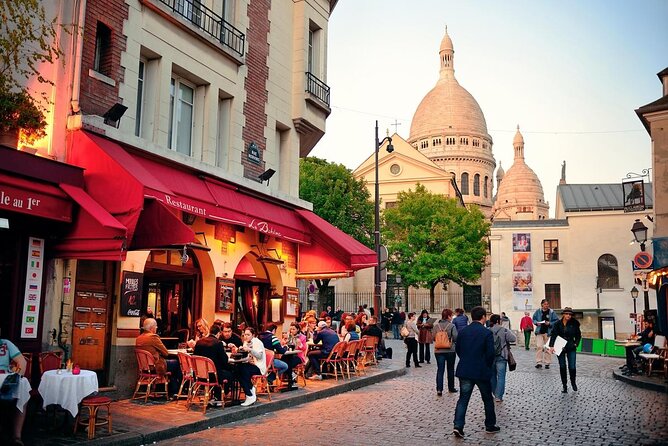
- Artist-and-cabaret route, not random stops: Moulin Rouge area, Van Gogh’s home, and Place du Tertre are linked by stories.
- Street-level Montmartre facts: you pass landmarks tied to bohemians, music icons, and creative communities.
- Nice change of pace moments: a wild garden slope and one of central Paris’s remaining vines add variety.
- Runs rain or shine: you’ll still get the highlights, because the guide adjusts the flow as needed.
Meeting at Blanche: why the tour starts where it does
You meet at Blanche 75018 Paris, at the Métro station near the heart of Montmartre. That’s a smart start because you’re right where the neighborhood begins to feel like a world of its own—hills, stairs, and streets that twist away from the big avenues.
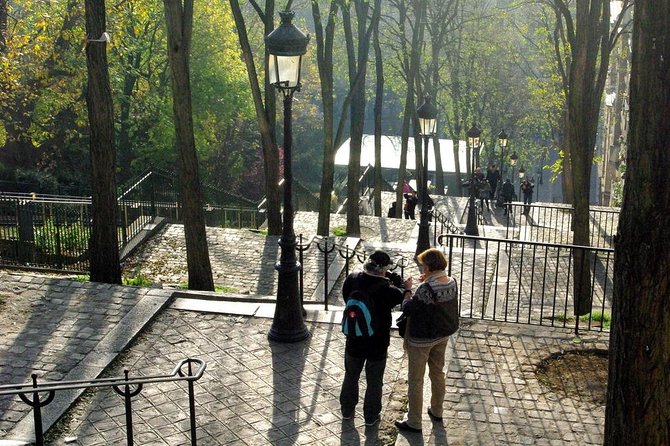
From there, the guide leads you into the climb. This matters for two reasons. First, it gets you moving before the area fully fills up. Second, it sets your perspective: Montmartre is vertical, so you want to understand the “butte” while you’re still fresh.
The tour is in English, with a professional guide, and it’s mobile-ticket ready. You’re not dealing with a paper maze at the start.
You can also read our reviews of more tours and experiences in Paris.



Up the butte to Sacré-Cœur: the payoff and what to expect
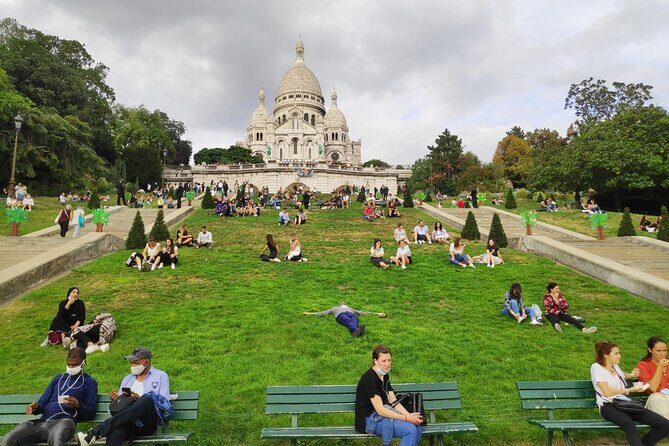
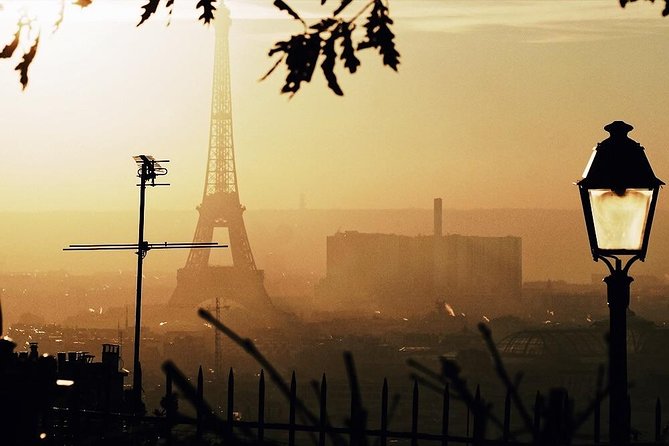
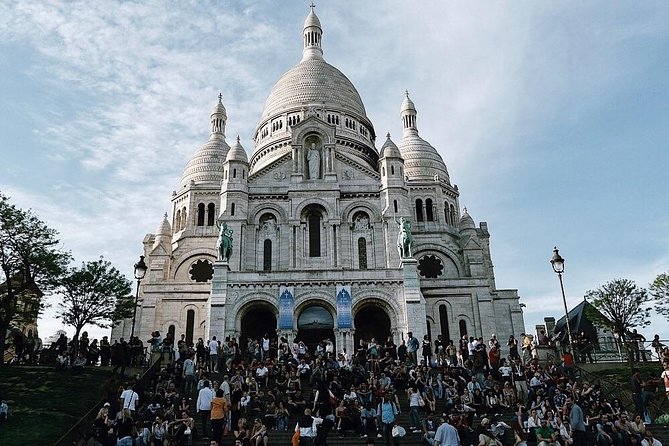
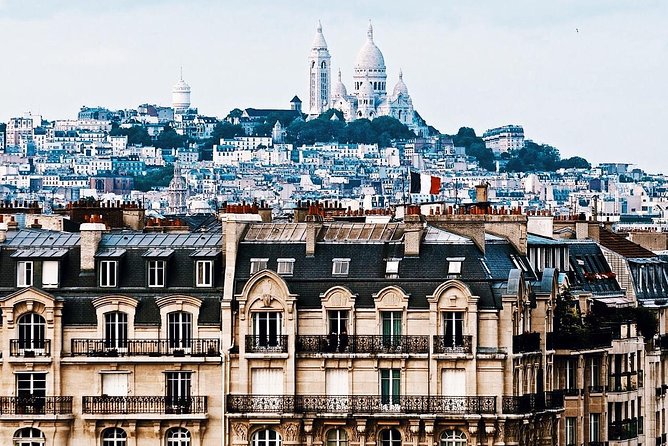
The big moment arrives when you reach the summit: Sacré-Cœur Basilica. You’ll stop there for sweeping views over Paris—this is the part that makes Montmartre worth the effort. When you stand up high like this, the city looks different: you can spot neighborhoods spreading outward and see why artists and dreamers flocked here.
You’ll also be able to enter Sacré-Cœur for some time inside. The church’s interior includes one of the world’s largest mosaics depicting Jesus Christ. Even if you’re not a religious-site person, it’s still a striking “Paris landmark meets art” experience.
Here’s the practical truth: you’ll do well if you treat the climb like a gradual effort, not a sprint. People who brought walking aids have found they help on the steep, uneven streets. If you like to stay comfortable, bring a bottle of water and take short pauses when your guide naturally stops for photos or context.
Montmartre’s “main characters”: Moulin Rouge, Van Gogh, and Place du Tertre
After Sacré-Cœur, the tour keeps walking through the layers of Montmartre—cabaret glamour, artist history, and the everyday creative vibe that still lingers.
Moulin Rouge area
You’ll head toward Moulin Rouge, the famous cabaret tied to entertainment history. You won’t get inside here (admission isn’t included), but you’ll see it from street level and hear how it became an international symbol. If you’re thinking about doing a show later, this is a good setup: you’ll understand why the area attracted talent in the first place.
Van Gogh’s house on Rue Lepic
Next is Van Gogh’s house on Rue Lepic, where Van Gogh lived with his brother starting in 1886. Admission isn’t included, so you’re seeing the location from the outside. Still, it lands differently after you’ve learned the neighborhood flow—Rue Lepic doesn’t feel random once you know how Montmartre’s hills shaped artists’ daily lives.



Place Dalida and Place du Tertre
You’ll pass Place Dalida, a square dedicated to the singer Dalida, where fans still stop to pay tribute. Then you’ll reach Place du Tertre, one of the most famous artist squares near Sacré-Cœur. It’s visually busy, but the point is clear: this is where Montmartre’s reputation as a modern-art meeting place became visible in everyday life.
If you want photos, this is a good place to slow down and look around. The view lines and street textures are part of the charm.
Artists, creators, and surprising stops: Bateau-Lavoir, Dali, and Dalida
One thing I like about this route is how it mixes famous names with the places they actually worked from. It’s not just “look at a statue”—it’s more like, Here’s where the creative community formed.
Le Bateau-Lavoir
You’ll see Le Bateau-Lavoir, famous as an artistic creation space. It’s tied to years of artists living and discussing ideas here, starting in the late 1800s. The building’s role in the artistic community is the story you carry with you as you walk—suddenly the streets feel linked to work, not just scenery.
Espace Dali (Dali Museum area)
You’ll also pass the Espace Dali, a museum devoted to Salvador Dali’s sculptures and engravings, with around 300 original artworks. Admission isn’t included, but the stop helps you understand why Dali belongs in this Montmartre conversation even if you think of him as more “museum spotlight” than “street café.”
La Maison de Dalida
Then comes La Maison de Dalida, the house where Dalida lived from 1962 to 1987. The note that it’s linked to her death in 1987 makes this stop feel heavier than the usual Montmartre postcard. Again, admission isn’t included, but the guide can frame why this kind of pop-culture landmark is part of the district’s identity.
Art Nouveau metro at Place des Abbesses
Near the end, you’ll head toward Place des Abbesses and see the Art Nouveau metro entrance designed by Hector Guimard—one of the surviving entrances of its kind in Paris. This is the kind of detail a guide earns their fee for, because it turns a transit stop into a mini-sight.
Hidden nature and small-scale Paris wine: the Jardin Sauvage and Clos Montmartre
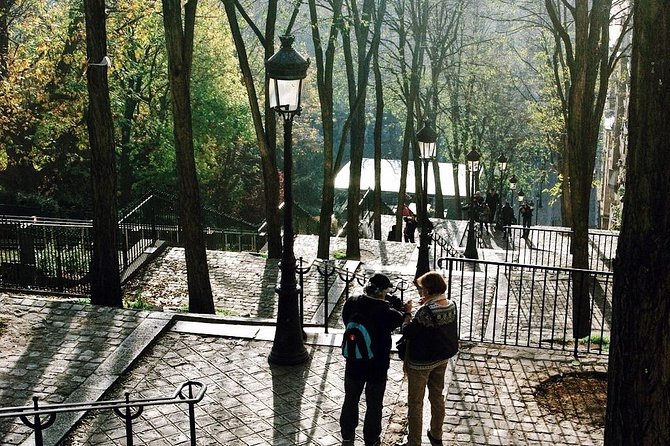
Montmartre can feel like straight-up stone and steps—but this tour gives you two calmer side stops that change the rhythm.
Jardin Sauvage de St-Vincent
You’ll stroll past Jardin Sauvage de St-Vincent, a sloping piece of land left in a fragile state so you can observe ecosystem and biodiversity. Instead of being “pretty garden” by design, it’s a living example of wild plants, elderberry trees, ivy, and wild insects. Even if you don’t care about gardens, it’s a great visual break after the heavy art stops.
Le Clos Montmartre vineyard
Then you’ll see Le Clos Montmartre, a hidden vineyard tucked behind the Sacré-Cœur area. It’s described as one of the last remaining vines in central Paris. This is one of those moments where the neighborhood’s image expands: not only art and music, but actual agriculture—small and tucked away like a secret.
The walking pace: how 2.5 hours feels on the ground
The total time is about 2 hours 30 minutes, and it’s designed as a steady walking experience. You’re moving between a lot of landmark clusters, and the itinerary is structured so you don’t just stare at one place for ages.
You should go in with moderate physical fitness. The tour is not recommended for people using a wheelchair or for those with walking disabilities, mainly because of steep, uneven walking.
Also, note the route timing logic: the tour ends in Montmartre after finishing the final cluster around Abbesses and nearby streets. That’s useful because you’re not forced into one “tour end zone.” You can continue exploring for snacks, shopping, or a sit-down meal.
One review theme that pops through: the guide makes a huge difference. With guides like Emma, Belle, or Jean, the tone tends to be lighter and more story-driven, which helps when you’re tired from the climb. When the guide is in full storyteller mode, even crowded areas feel more manageable because you’re focused on the next meaningful stop.
Price and value: what $59.69 includes (and what it doesn’t)
At $59.69 per person for about 2.5 hours, you’re paying for a professional guide plus the advantage of a tight route through the most story-rich corners of Montmartre. It’s not just walking. It’s interpretation: why these places matter and what they connect to across the neighborhood.
What’s included:
- Semi-private guided walking tour (max 12)
- Professional guide
- Rain or shine
- Mobile ticket
What’s not included:
- Hotel pickup/drop-off
- Gratuities (optional)
- Entrance tickets for some sights
It’s also smart to understand the pattern of included vs. not included. Stops like Sacré-Cœur are listed as free admission (and the tour allows time inside Sacré-Cœur). But other stops—Moulin Rouge, Van Gogh’s house, Au Lapin Agile, and La Maison de Dalida—are noted as admission not included. So you’re mostly looking from the outside and learning the context, not touring every building.
If you want a full indoor museum-style day, you might add a separate ticketed visit for anything you especially care about. If you want the best neighborhood overview with a guide, this is a strong value.
Weather, route changes, and what to pack for Montmartre hill day
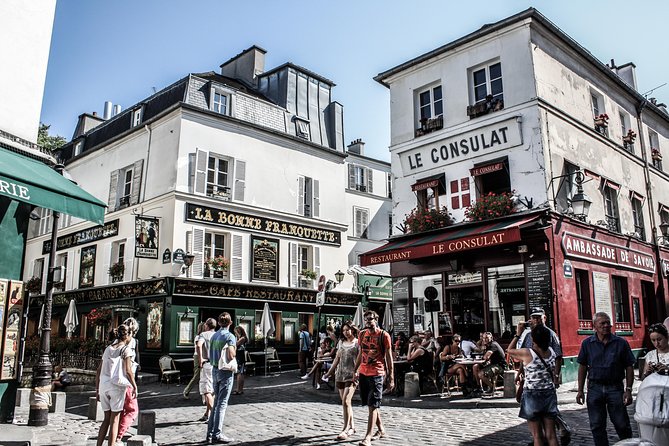
The tour runs rain or shine. That means you should show up ready for the fact that Paris weather can do quick changes, especially with cloud cover on higher ground.
Here’s what you’ll thank yourself for bringing:
- Comfortable shoes (non-negotiable)
- A bottle of water
- An umbrella for rain
- A hat in summer
One more thing: national celebrations can affect the route. If streets close, you’ll still see the highlights, but the route may shift. On those days, refunds or discounts aren’t provided, so keep your expectations flexible.
Who this tour suits best (and who should skip it)
I’d book this tour if you want:
- A compact, guided overview of Montmartre’s art and music world
- Excellent viewpoint time at Sacré-Cœur
- A small-group feel where your guide can answer questions
- A story-led walk rather than a checklist
I’d skip it (or at least reconsider) if:
- You have walking limitations or use a wheelchair, because the route is on steep, uneven terrain
- You expect lots of indoor admissions, because several stops are outside-only with tickets not included
If you’re a first-time Montmartre visitor, this tour helps you understand what to revisit later on your own. If you’ve been to Paris before, it’s still a nice change of pace from the big-axis sights.
So, should you book it?
For most people, yes. This is one of those Paris experiences where the location does the heavy lifting—Montmartre’s hills, Sacré-Cœur’s views—but the guide is what turns it into a “now I get it” tour. With the small-group cap (12 max) and the mix of famous and less-obvious stops—cabaret, artists’ addresses, a wild garden slope, and a central-Paris vineyard—you get variety without wasting time.
Book it if you’re ready for the climb and you want a guided story route. Pass if you need flat walking or you want an itinerary packed with paid interior visits.
FAQ
Where is the meeting point?
You’ll meet at Blanche 75018 Paris, France, near the Montmartre district.
Where does the tour end?
The tour ends in the Montmartre neighborhood (75018 Paris).
How long is the tour?
It runs for about 2 hours 30 minutes.
How big is the group?
This is a semi-private tour with a maximum of 12 travelers.
Is it really rain or shine?
Yes, the tour runs rain or shine.
Do I need tickets or extra admission fees?
Some stops are listed as ticket free, including time at Sacré-Cœur. Other sights have admission not included, like Moulin Rouge, Van Gogh’s house, Au Lapin Agile, and La Maison de Dalida.
What kind of walking is involved?
It’s designed for travelers with moderate physical fitness, and it involves climbing Montmartre’s steep, uneven streets. It’s not recommended for those with walking disabilities or wheelchair use.
Will the route change if there are celebrations?
Yes. National celebrations can affect the route, and the guide will provide an alternative route still covering the highlights. In those cases, refunds or discounts aren’t provided.