REVIEW · PARIS
Paris Montmartre Walking Tour: Art & Rebel Legacy – Small Group
Book on Viator →Operated by Dayin · Bookable on Viator
A morning walk in Montmartre changes fast. This small-group tour threads together cabaret legend, street-art corners, and real artist hangouts while you move through neighborhoods you’d miss on your own. I like the 2-hour, max-8 pace because it stays personal, and I also like that you get practical local guidance for photos, routes, and where to go next. One consideration: it’s an uphill walking tour, and expect a workout even if your guide picks easier back-road paths.
You start at the Moulin Rouge area and end at the Sacré-Cœur, so your legs do most of the sightseeing heavy lifting. I’ve seen guides like Clara, Lou, Benoit, and Ruben described as lively and very good at tailoring the walk—especially for first-time visitors who want the neighborhood to make sense quickly. If you’re sensitive to steep climbs, wear good shoes and plan for extra time at the top for the views and photos.
In This Review
- Key Points You’ll Actually Care About
- Moulin Rouge To Sacré-Cœur: How This Walk Plays in Real Life
- Meeting Logistics: Where to Start, How to Finish, and What the Climb Means
- Stop-by-Stop: Moulin Rouge and Rue Lepic
- Moulin Rouge: Cabaret Legend, Can-Can Origins, and Icon Photos
- Rue Lepic: Art-Forward Paris in a Smaller Key
- Place des Abbesses and Mur des Je t’aime: Love Notes in Stone
- Place des Abbesses: Architecture + Local Meaning
- The Wall of I love you (Mur des Je t’aime): 250 Languages, One Photo Moment
- Le Bateau-Lavoir, La Petite Maison Rose, and Sacré-Cœur Views
- Le Bateau-Lavoir: Modern Art Started Here
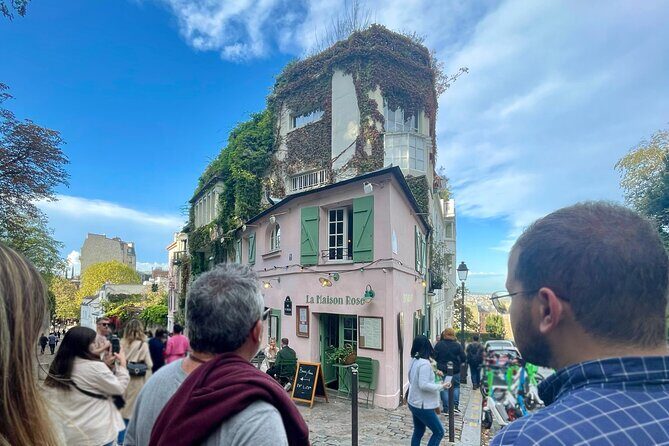
- La Petite Maison Rose (Since 1920): A Restaurant With Longevity
- Sacré-Cœur: Big Views, Big Hours, and the Best Finish Line
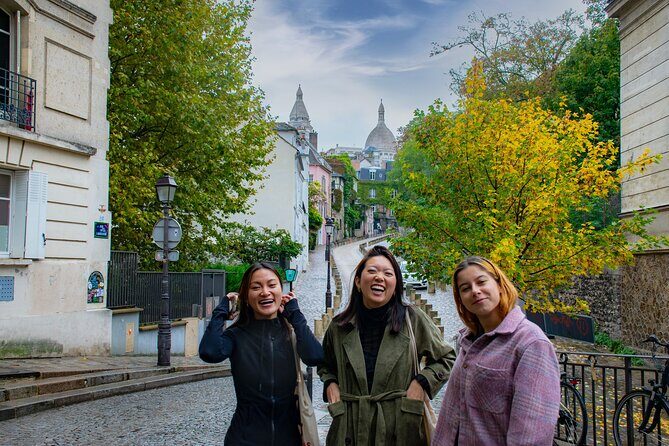
- The Montmartre Portrait Moment
- The Art and Rebel Legacy Theme: What You’re Really Learning
- Photo Tips and Walking Comfort: Pace, Stairs, and Solo Benefits
- Price and Value: Is $66.09 Worth It?
- Should You Book This Montmartre Walking Tour?
- FAQ
- How long is the Paris Montmartre walking tour?
- How much does the tour cost?
- How big is the group?
- Where does the tour start and end?
- Is Moulin Rouge admission included?
- Does the tour run in bad weather?
- What happens at the end of the tour?
Key Points You’ll Actually Care About
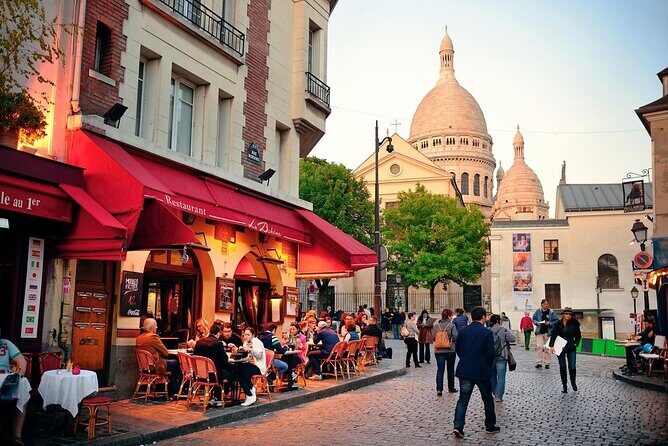
- Small group (max 8): easier questions, smoother pace, less “follow the leader.”
- Route starts at Moulin Rouge and finishes by Sacré-Cœur: you climb while seeing key Montmartre landmarks in order.
- Most stops are free: Rue Lepic, Place des Abbesses, Mur des Je t’aime, Le Bateau-Lavoir, and La Petite Maison Rose don’t require tickets.
- Moulin Rouge stop has no included admission: you’ll see the famous spot, but any ticket is on you.
- Your guide can reduce pain: people mention level-by-level back-road routing to limit stairs and avoid crowds.
- Optional portrait stop: you get a chance to do the classic Montmartre artist thing (cost not stated).
Moulin Rouge To Sacré-Cœur: How This Walk Plays in Real Life
This is a walking tour built for travelers who want their feet to do the exploring. You’re out for about 2 hours, and the group stays intimate with a maximum of 8 people. That matters in Montmartre, where streets are winding, hills are steep, and “just wander” often turns into a loop of dead ends and missed spots.
You meet at 82 Bd de Clichy, 75018 Paris near the Moulin Rouge and end at 35 Rue du Chevalier de la Barre, 75018 Paris, right in front of the Sacré-Cœur. That end point is great because you don’t have to retrace your steps. You can also linger for panoramic views before you head back down on your own.
The tour runs rain or shine, so bring a small layer for drizzle and wind. And since there’s no hotel pickup, you’ll want to use nearby public transit and show up a few minutes early. (This is one of those walks where being late costs you more than just time.)
One more practical note: the vibe here is “story walk.” You’re not touring a single museum building. You’re moving through Montmartre’s public spaces—streets, squares, and landmark facades—while your guide explains what they meant, and why people still care.
You can also read our reviews of more walking tours in Paris



Meeting Logistics: Where to Start, How to Finish, and What the Climb Means
Starting at the Moulin Rouge is a smart choice. It anchors the whole neighborhood in the cabaret era, so later stops don’t feel random. You’ll begin close to the energy of Montmartre’s most famous showhouse area, even if the landmark itself isn’t about to become your personal photo shoot for an hour.
Then the walk shifts from grand icon to small street details: quiet corners, hidden-feeling passages, and views that open up only when you crest a hill. You should assume you’ll work up a sweat. In one account, the route felt like about 14,000 steps with lots of uphill—and that’s from a morning that still moved efficiently.
The upside is that a good guide often changes how hard the climb feels. Several mentions highlight that guides can route you via paths that reduce stairs and avoid funicular bottlenecks. Even if your path isn’t fully stair-free, you’ll likely get a better effort-to-reward ratio than doing it solo.
Stop-by-Stop: Moulin Rouge and Rue Lepic

Moulin Rouge: Cabaret Legend, Can-Can Origins, and Icon Photos
Your first stop is the Moulin Rouge, with about 20 minutes on the ground. This is your entry point into Montmartre’s cabaret identity—the place tourists recognize instantly, and locals still treat as a cultural reference point.
Admission isn’t included here, so you’re really doing a landmark moment: exterior views, stories, and context. If you want inside access, you’ll need a separate ticket. If you’re happy with the outside and the guide’s background, you’ll still get value.
Rue Lepic: Art-Forward Paris in a Smaller Key
Next is Rue Lepic, around 20 minutes. This street is famous for an arty, bohemian atmosphere and for being one of those Montmartre lanes where life looks more human than postcard-perfect.
This stop is where your guide usually helps you “read” the place—how streets like this shaped artists’ routines and how the neighborhood’s character carried forward. Rue Lepic is also a good place to slow down for photos, because it feels less like you’re staring at a single monument and more like you’re walking through a scene.






Place des Abbesses and Mur des Je t’aime: Love Notes in Stone
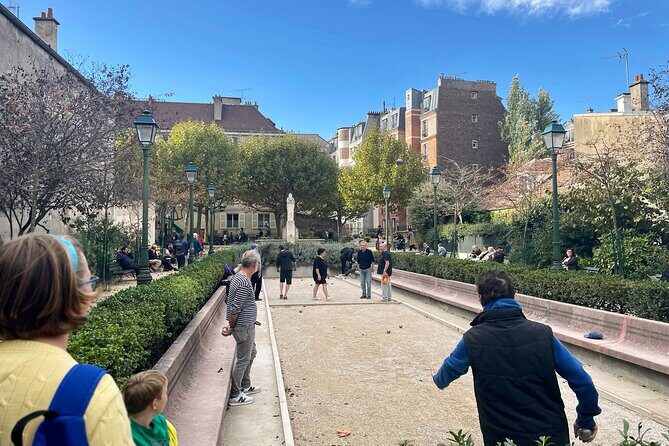
Place des Abbesses: Architecture + Local Meaning
You’ll spend about 10 minutes at Place des Abbesses. This is one of Montmartre’s charming squares, and it’s a helpful reset after the Moulin Rouge spectacle. Instead of pushing toward a single icon, you’re looking at the kind of space people actually use and pass through.
Your guide will add the “why.” Squares like this often tie together cultural details—how communities formed, how the neighborhood identity evolved, and what you should pay attention to as you walk by.
The Wall of I love you (Mur des Je t’aime): 250 Languages, One Photo Moment
Another 10 minutes brings you to the famous Mur des Je t’aime. You’ll say I love you in multiple languages—on a wall that turns a romantic concept into a public art statement.
This stop is short, but it’s a perfect pause. It gives you a recognizable landmark photo and a memorable detail to share later. It also helps you break up the walking pace before you continue deeper into Montmartre’s art-world sites.
Le Bateau-Lavoir, La Petite Maison Rose, and Sacré-Cœur Views
Le Bateau-Lavoir: Modern Art Started Here
Your next art stop is Le Bateau-Lavoir, about 20 minutes. This building is known for its bohemian past and as a key birthplace for Modern Art. It’s linked to artists like Picasso, Braque, and Apollinaire, and the point of this visit is less about what you see inside (since this tour is mostly street-level) and more about the story of the artists who worked here.
This is where the tour’s title really clicks: it’s not just “look at pretty spots.” It’s about how Montmartre became a magnet for artists who wanted freedom—creative and social.
La Petite Maison Rose (Since 1920): A Restaurant With Longevity
Then you’ll head to La Petite Maison Rose, another 20 minutes. This is one of Montmartre’s oldest and best-known restaurants, open since 1920.
Even if you don’t eat on the spot, this stop gives you something useful: a sense of how long the neighborhood’s reputation has lasted. It’s a quick lesson in how places become tradition, not just trend.
Sacré-Cœur: Big Views, Big Hours, and the Best Finish Line
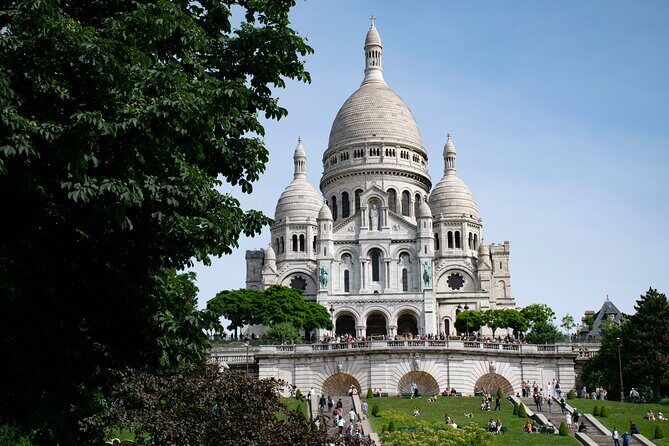
Finally, you’ll reach Basilique du Sacré-Cœur de Montmartre for about 20 minutes. This is the top-of-the-hill payoff: a major landmark, plus standout Paris views.
The tour ends right in front of the basilica so you can take pictures and decide how long you want to linger. If you’re planning your day, this end point is handy because you’ll be set up to walk around the Sacré-Cœur area first, then come down when you’re ready.
A smart tip: bring your photo patience. Even with a small group, this area can get crowded because everyone wants the same view. Your guide can help you time it better within the tour window.
The Montmartre Portrait Moment
There’s also a part of the experience where you can get your own portrait done and meet the artists of Montmartre. The data doesn’t specify price or exact timing, so treat it as an optional add-on. If you’re the type who likes keeping a physical souvenir (instead of only photos on your phone), this is one of the best places in Paris to do it.
The Art and Rebel Legacy Theme: What You’re Really Learning
This tour’s hook is the mix of creativity and attitude. Montmartre’s reputation isn’t only about beauty. It’s tied to people who challenged norms—artist circles, cabaret culture, and the kind of bohemian life that turns a hill into a legend.
You’ll see that theme in three ways:
- Cabaret power (Moulin Rouge): it shows how entertainment became part of the neighborhood’s identity.
- Artist workspaces (Le Bateau-Lavoir): it grounds the story in where art actually happened, not just where people posed for photos.
- Public art and public emotion (Mur des Je t’aime): it proves the “creative mindset” spilled into ordinary streets too.
And your guide’s job is to connect those dots while you walk. That connection is why people describe guides like Clara, Lou, Benoit, and Ruben as making Montmartre feel real, not like a list of sites.
Photo Tips and Walking Comfort: Pace, Stairs, and Solo Benefits
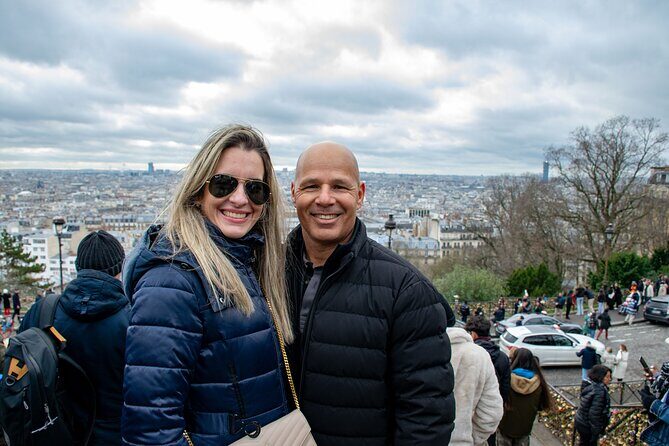
This tour is best when you plan for movement. Wear shoes that can handle uneven pavement and hill slopes. If you’re worried about stairs, you’ll be glad to know some guides in this style are credited with choosing routes that reduce stair strain and avoid heavy stair pushes.
A bonus you might not expect: if you’re solo, your guide may help you take photos so you don’t rely on strangers with shaky hands. That’s a small thing, but it makes the difference between getting a good Montmartre shot and leaving with only “I was there” proof.
Also consider your timing within your day. Because you end at Sacré-Cœur, you’ll likely want to avoid committing to an immediate reservation right after the tour unless you’re okay with a slow scramble down.
Price and Value: Is $66.09 Worth It?
At $66.09 per person for about 2 hours, the value comes from two things: the guide and the way the itinerary is designed.
You’re paying for:
- A local guide who explains what you’re seeing (and helps you understand the neighborhood fast)
- A small group (max 8), which makes the experience feel more like a guided walk than a crowded bus stop
- Multiple landmark moments with mostly free stops
- A walking route that covers key Montmartre sights without needing extra transportation
What you’re not paying for:
- Moulin Rouge admission (the stop itself is included, but tickets aren’t)
- Any optional portrait cost (not specified)
For me, the deciding factor is whether you want context. If you’re the type who reads museum placards anyway, this guide-led structure makes sense. If you just want to wander and you like figuring things out on your own, you might feel you could do it cheaper. But for first-time Montmartre visits, a good guide often turns a steep, confusing walk into something clear and memorable.
Should You Book This Montmartre Walking Tour?
Book it if you want:
- A guided introduction to Montmartre’s key art-and-cabaret landmarks
- A small-group pace where you can ask questions
- A route that starts at Moulin Rouge and finishes at Sacré-Cœur so your day flows
Skip it or consider alternatives if you:
- Have trouble with steep uphill walking
- Need a fully flat route (this is not described that way)
- Want lots of indoor time (this is primarily outdoor walking)
One last practical nudge: it runs rain or shine, so have a plan for wet pavement and bring a light layer. And because cancellation is free up to 24 hours in advance, you can book confidently and adjust if your day changes.
FAQ
How long is the Paris Montmartre walking tour?
It’s about 2 hours. Times per stop add up to a tour that typically stays close to that estimate.
How much does the tour cost?
The price is $66.09 per person.
How big is the group?
The group is limited to a maximum of 8 travelers, with the option of an intimate small-group experience (or private).
Where does the tour start and end?
It starts at 82 Bd de Clichy, 75018 Paris and ends at 35 Rue du Chevalier de la Barre, 75018 Paris, in front of the Sacré-Cœur.
Is Moulin Rouge admission included?
No. You’ll stop at Moulin Rouge, but admission tickets are not included for that stop.
Does the tour run in bad weather?
Yes. The tour will take place rain or shine.
What happens at the end of the tour?
There’s a time to discover the artists of Montmartre and get your own portrait done.
If you want, tell me what month you’re going and your fitness level (or how many stairs you can handle), and I’ll suggest the best time of day and a plan for pairing this walk with nearby stops.