REVIEW · PARIS
Paris: Musée d’Orsay Skip-the-Line Tour with Expert Guide
Book on Viator →Operated by Memories France · Bookable on Viator
Impressionism clicks faster with a guide. This Musée d’Orsay experience pairs skip-the-line entry with expert art storytelling inside the former railway station turned museum, so the paintings make sense instead of just impressing you. You’ll get a clear path through one of Paris’s top art stops, plus time after the tour to follow your own interests.
I like the reserved entry part because it saves you from the Orsay queue chaos. I also like the small-group feel with headsets, which helps you hear your guide even when the museum gets loud. The whole thing is timed well for a relaxed highlights visit, not a sprint.
One drawback to note: this is built around key works in limited time. If you want to spend hours doing serious, painting-by-painting comparison, you’ll still need extra time on your own after the guided portion.
In This Review
- Key things you’ll notice on this Musée d’Orsay tour
- Why Musée d’Orsay feels easier with a guide
- The Beaux-Arts station building is part of the show
- Meeting point and getting in smoothly on Paris time
- First guided phase: your 1-hour crash course in the Impressionist shift
- Second guided phase: 45 minutes of masterpieces and the reason they were revolutionary
- Small group size and headsets: the difference between hearing and hoping
- What you might see: adult themes in 19th-century art
- Price reality: why $67.60 can be good value here
- Using your free time after the tour wisely
- Who this tour fits best (and who might not need it)
- Should you book this Musée d’Orsay skip-the-line tour?
- FAQ
- How long is the Musée d’Orsay skip-the-line tour?
- How much does the tour cost?
- Is the tour offered in English, and how many people are in each group?
- Where do we meet, and where does the tour end?
- What’s included in the price?
- Can I cancel for a full refund?
Key things you’ll notice on this Musée d’Orsay tour
- Skip-the-line entry through a special entrance so you start sooner
- Small group (max 20) with headsets for clearer guide audio
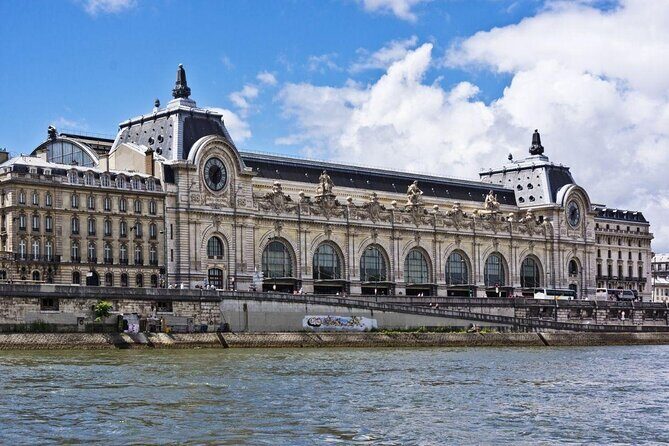
- A former train station turned Beaux-Arts landmark you can’t ignore
- Stories that connect Impressionism to what came before and why it shocked critics
- Iconic artworks paired with context instead of random browsing
- Free time after the tour to go back to your favorites
Why Musée d’Orsay feels easier with a guide
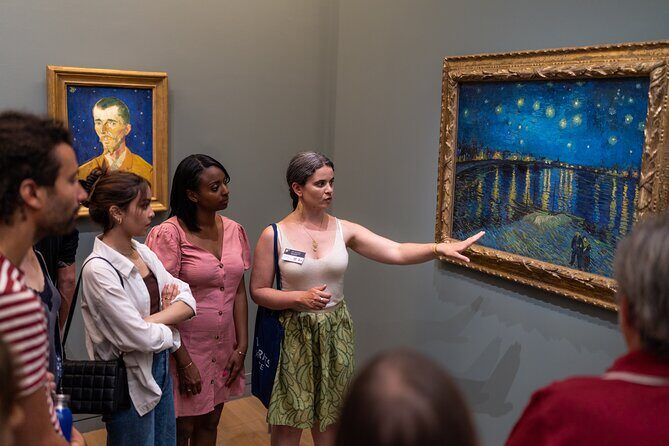
Musée d’Orsay is popular for a reason. It’s one of the best places in Paris to see how painting changed in the late 1800s, right when artists stopped aiming for approval and started aiming for impact.
On a normal self-guided visit, it’s easy to float from canvas to canvas. With a guide, you get the why behind what you’re seeing: how Impressionism broke rules, what critics disliked, and what painters were trying to prove. That turns the visit from looking at images into understanding a movement.
Also, you’re not just being shown names. You’re walking through the ideas that connect Manet to Monet, Renoir to Degas, and even the later shock of Van Gogh. When you know the thread, the museum stops feeling like a maze.
You can also read our reviews of more guided tours in Paris



The Beaux-Arts station building is part of the show
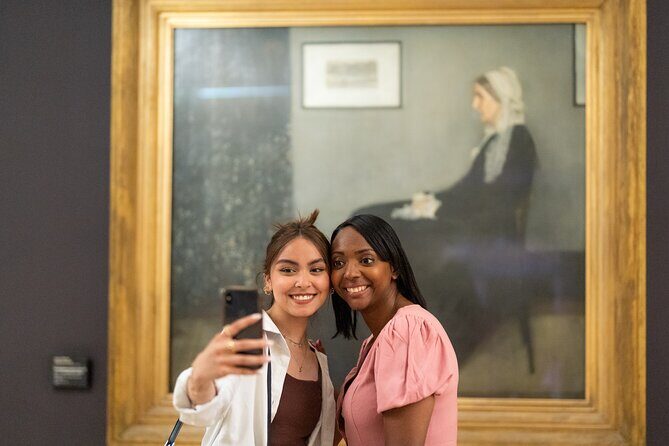
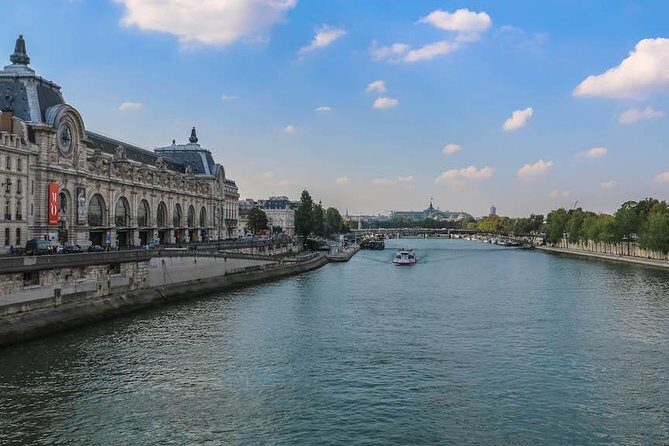
Before you even focus on the paintings, you’ll feel the Orsay’s architecture. The museum is housed in a Beaux-Arts railway station, and the space has that grand, old-world scale. It makes sense why Parisians love it so much.
There’s a practical side too: the building layout helps you orient quickly once you’re guided toward the right corridors. And once you’re free after the tour, you’ll have the confidence to wander instead of re-orienting every few minutes.
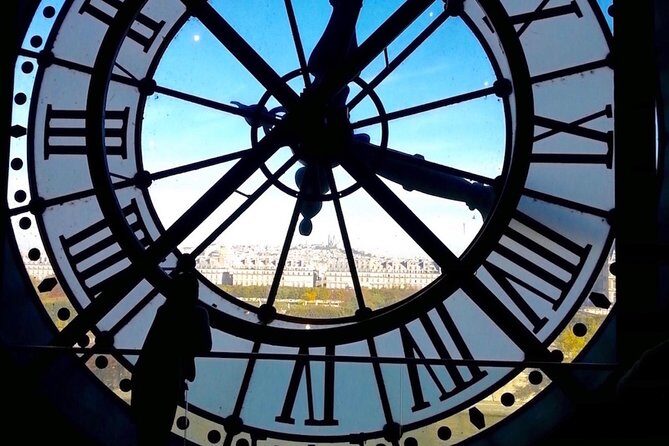
One photo spot people keep calling out is the Orsay’s giant clock. If it’s on your list, aim to spot it during your free time, when you can take your photos without the group moving along.
Meeting point and getting in smoothly on Paris time
You meet at 2 Rue de la Légion d’Honneur, 75007 Paris, and the tour ends inside the museum on the Esplanade Valéry Giscard d’Estaing, 75007 Paris. That end point matters: you’re not hiking back out after the guide finishes, so you can start your independent exploring right away.
The tour includes mobile tickets and pre-reserved entry through a special entrance. In plain terms: you should be ready to show your ticket on your phone and walk in with the group when your time slot arrives.
If you’re thinking about taxi, plan extra time. Paris traffic and taxi pickup can be slow and unpredictable, and you don’t want to cut it close on an art tour with a set start time.
First guided phase: your 1-hour crash course in the Impressionist shift
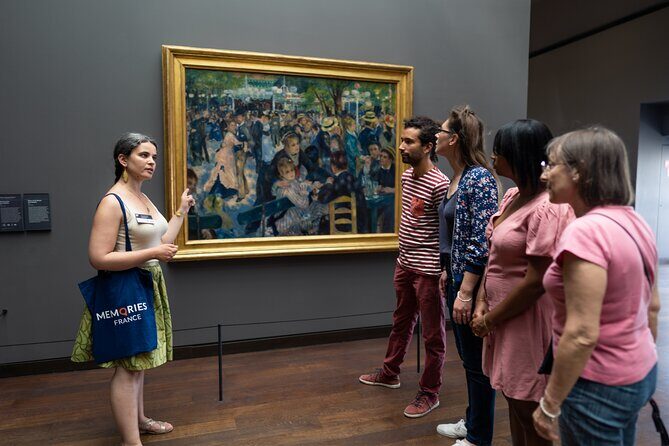
The guided portion starts right at the museum and focuses on giving you the big picture fast. This first stretch is designed to make you feel like you understand the art’s logic, not just its subject matter.
A major theme here is how Impressionist and Post-Impressionist painters changed the course of art history. You’ll hear why these works were once shocking or scandalous, and how that rejection of old standards led to a whole new visual language. Think bold color choices, visible brushwork, and modern subjects that critics weren’t ready for.
You’ll also meet the movement through the personalities behind it. The tour aims to connect the lives, rivalries, and ambitions of major names like Monet, Manet, and Degas, and then broaden the story. That matters because Impressionism wasn’t a single style invented overnight. It was a chain reaction across artists and ideas.
In this phase, the goal is orientation. You’ll get help navigating a huge museum and focusing on pieces that explain the storyline. When you reach famous works later, you’ll recognize what you’re seeing and why it mattered.
Second guided phase: 45 minutes of masterpieces and the reason they were revolutionary
After the broad setup, the tour moves into the artworks people come to Paris for. This second phase is where the Impressionism story gets sharper and more personal. You’ll stand before iconic paintings and learn what made them revolutionary in their time.
Expect the guide to spotlight works like Monet’s Water Lilies and Manet’s Olympia. The point isn’t to memorize facts. It’s to understand the choices: why the paint looks the way it does, why the subject caused outrage, and how the painting fits into the change happening across decades.
You’ll also get the sweep beyond the “headline” artists. The tour is built to include major figures such as Renoir, Degas, and Van Gogh, with context that helps you connect their styles to the world they were reacting to. When the guide ties a painting back to the broader shift, it clicks into place.
This is also the part that tends to feel most energizing. In past experiences with this tour, guides such as Cecilia, Claire, Ivan, Julie, Anthony, Sylviane, Caroline, and Christina have been singled out for clarity and humor. That kind of approach helps when you’re standing shoulder-to-shoulder with other visitors and your attention needs a nudge now and then.
You can also read our reviews of more tours and experiences in Paris





Small group size and headsets: the difference between hearing and hoping
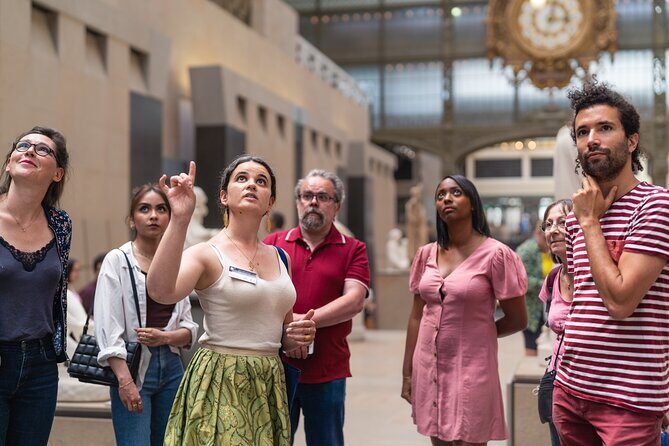
With a maximum of 20 travelers and headsets included, you’re not stuck guessing what your guide is saying. This is a big deal at the Orsay, where sound carries and crowds compress.
Headsets also let the guide keep moving at a pace that makes sense. The tour is relaxed, but it’s not slow enough to get boring. And because the group is small, you’re more likely to get questions answered. That’s how you leave with a real takeaway instead of just a mental scrapbook of names.
One more practical point: a good guide helps you avoid getting “stuck staring” in the wrong places. You’ll see highlights in a way that keeps the story coherent, so you can spend your time after the tour choosing what to re-see, rather than wandering hoping to stumble on something important.
What you might see: adult themes in 19th-century art
This is worth flagging, especially if you’re traveling with kids or teens. The Orsay is famous for Impressionism, but that art period also includes nudity and mature subject matter. Some works can touch on themes such as prostitution and exploitation.
The tour is guided, and the approach may be adjusted for younger ears. But the overall point is that 19th-century art didn’t sanitize reality, and the tour doesn’t pretend it did. If that’s a deal-breaker for your family, you’ll want to think carefully before booking.
Price reality: why $67.60 can be good value here
At $67.60 per person, this isn’t the cheapest way to see the museum. But this tour is paying for several things that matter in practice: an expert guide, headsets, small group size, and admission plus pre-reserved entry through a special entrance.
That last part is the sneaky value driver. If you try to buy tickets and enter on your own during peak times, you’re paying in time, not just money. Time is the one thing you can’t buy back in Paris.
This tour is also about return on attention. You’re spending 1 hour and 45 minutes with guidance that helps you understand what you’re looking at. Then you get additional free time to explore on your own, which is a solid way to stretch your investment: you can go back to favorites without rushing.
One more nudge: this experience is commonly booked around 36 days in advance on average. That tells me people plan this museum visit seriously. If you care about a particular day or time window, don’t wait for last-minute luck.
Using your free time after the tour wisely
You’ll finish the guided portion and then have time to keep exploring on your own. Use that time like a second visit, not like an afterthought.
Here’s a simple strategy: pick 2 or 3 paintings you liked during the tour, then go back to them. Stand in the same spot again and look for the details the guide pointed out. That repeated focus turns a quick highlight into real learning.
Because the Orsay is huge, you’ll want a plan. It’s known for having over 30,000 pieces on display across five long levels. Even with a guide, a 1h45 highlights tour can’t cover everything. So treat the guided time as a map, and the free time as your chance to follow your curiosity.
If you’re wondering when to go, one practical tip that often helps is arriving earlier rather than later, since the museum gets more crowded. If you have flexibility, schedule your visit for a quieter start. Your feet and your photo-taking will thank you.
Who this tour fits best (and who might not need it)
This tour is a great match if you:
- love Impressionism and want the story behind it
- want help figuring out what to see in a large museum
- appreciate museum time with a relaxed pace instead of constant running
- want a guided overview, then independence right after
It’s also a smart pick for first-timers. The Orsay can be easier than some other big Paris museums, but it’s still easy to miss the connections between works if you go totally on your own.
You might skip this option if you:
- plan to spend most of your day reading labels and comparing paintings in depth
- already know the movement well enough to self-guide confidently
- prefer a fully silent, self-paced visit with no guide storytelling
Should you book this Musée d’Orsay skip-the-line tour?
If you want an efficient, art-savvy introduction to Musée d’Orsay, I think this is a strong booking. You’re paying for reserved entry, headsets, a small group, and an expert guide who helps you understand why Impressionism upset people and changed everything.
The tour also earns very high satisfaction numbers from past bookings, with a 4.7 rating and 92% recommending it. More importantly, the consistent theme in feedback is that the guides make the art easier to follow, with great choices of works and strong explanations.
My advice: book it if you’re short on time or want the movement explained clearly. Then use the free time after to linger where your favorites are, instead of trying to cram it all into the guided window.
FAQ
How long is the Musée d’Orsay skip-the-line tour?
It runs about 1 hour 45 minutes.
How much does the tour cost?
The price is $67.60 per person.
Is the tour offered in English, and how many people are in each group?
Yes, it’s offered in English. The group size has a maximum of 20 travelers.
Where do we meet, and where does the tour end?
You meet at 2 Rue de la Légion d’Honneur, 75007 Paris, and the tour ends inside the museum on the Esplanade Valéry Giscard d’Estaing, 75007 Paris.
What’s included in the price?
You get admission ticket(s), pre-reserved entry through a special entrance, and guided time with headsets. Mobile ticket access is included as well.
Can I cancel for a full refund?
Yes. You can cancel up to 24 hours prior and receive a full refund. Refunds aren’t possible for missed tours.