REVIEW · PARIS
Paris Napoleon Walking Tour with an Historian Guide
Book on Viator →Operated by Paris Trip Touring France · Bookable on Viator
Napoleon is everywhere in Paris. This 3-hour, English-speaking walk threads his story through real streets and major sights with an historian guide, so the city feels like one connected narrative instead of a checklist. I like that you hit big anchors like Les Invalides and the surrounding arcades and gardens without spending the day crisscrossing Paris. I also like the tight pacing—short stops that still leave room for questions and street-level context.
One thing to consider: there’s no hotel pickup or drop-off, so you’ll start at Librairie Delamain on Rue Saint-Honoré and finish at Les Invalides on your own. Also, Hôtel de Salm (now the Musée de la Légion d’Honneur) has admission that isn’t included, so bring a little flexibility for that museum time.
In This Review
- Key highlights you’ll care about
- How this 3-hour route tells Napoleon’s Paris story
- Librairie Delamain to Palais-Royal: arcades, intrigue, and power
- Rue Saint-Honoré and Église Saint-Roch: Napoleonic streets and baroque memory
- Jardin des Tuileries: a walk on Napoleon’s Paris axis
- Hôtel de Salm and the Musée de la Légion d’Honneur: merit as policy
- Palais-Bourbon: the National Assembly as a political viewpoint
- Finishing inside Les Invalides: the tomb and the meaning
- Price value: what $226.39 buys you in real terms
- Who should book this Napoleon walking tour
- Should you book this Paris Napoleon walking tour
- FAQ
- How long is the Paris Napoleon Walking Tour?
- What does the tour cost?
- Is the tour private?
- What language is the tour offered in?
- What’s included in the price?
- What’s not included?
- Are admission tickets included?
- Where does the tour start?
- Where does the tour end?
- Do I need to be very fit to do it?
Key highlights you’ll care about
- Historian-led storytelling at street level: real places, real details, and clear links to Napoleon’s life and impact
- A smart route with multiple “wow” stops: Palais-Royal, Tuileries, Hôtel de Salm, Palais-Bourbon, then Les Invalides
- Mostly free stops: Palais-Royal, Église Saint-Roch, Jardin des Tuileries, and Palais-Bourbon are listed as free admissions
- Private by design: only your group participates, which makes the Q&A feel natural
- Mobile ticket included: fewer papers, less fuss while you’re in motion
- Ends at the tomb church: you don’t just see the outside of Les Invalides—you step into the church that guards Napoleon’s tomb
How this 3-hour route tells Napoleon’s Paris story
If you think Napoleon equals uniforms and battlefields, this tour nudges you into a wider view. You walk through Paris spaces tied to politics, ceremony, religion, and public power—then you end at Les Invalides, where all that history becomes physical again.
The format is a practical one: about 3 hours, with quick stops ranging from 10 to 30 minutes. That means you get momentum. You’re not stuck in one museum room all day, and you still get enough time at each stop to understand why it matters.
Because it’s private, you can slow down for the parts that hook you. If you care more about politics than art, you’ll likely get more time on the parliamentary side. If you’re more into architecture and symbolism, the guide can emphasize the neoclassical and baroque details.
One small caution: this isn’t designed for long, solo wandering. If you want hours inside every building, plan to add independent time after the tour—especially at Les Invalides.
You can also read our reviews of more walking tours in Paris



Librairie Delamain to Palais-Royal: arcades, intrigue, and power
You start at Librairie Delamain, 155 Rue Saint-Honoré (75001)—a solid landmark for gathering before you head into the quieter logic of central Paris. From there, the tour leans into atmosphere fast.
The first major stop is Palais-Royal. The key idea here is how everyday space can carry political heat. You’ll see the arcades that once hid scandal and dueling energy behind elegant facades, and you’ll hear how the area became a hotbed of revolutionary talk. Even now, you get gardens and boutiques that feel calm, which makes the past feel extra sharp.
This is also one of those stops where the guide’s framing makes a difference. You’re not just reading plaques. You’re learning how gossip, politics, and passion could mix in the same physical setting—so when you walk later to more formal institutions, you can feel the contrast.
The payoff: Palais-Royal helps you understand how ideas moved through Paris before they moved onto larger stages. It’s listed at about 15 minutes, which is just enough time to catch the main stories without turning it into a long detour.
Rue Saint-Honoré and Église Saint-Roch: Napoleonic streets and baroque memory

Next comes a stroll down Rue Saint-Honoré, described as the elegant artery of Napoleonic Paris. What I like about this segment is that it stays “walkable.” You see what the street feels like today—shops, perfumeries, the flow of people—then you’re asked to picture the different hum of another era.
The guide ties that visual contrast to Napoleon-era influence. It’s a simple technique, but it works: you stand in the present, then you let the guide’s story give the past a soundtrack.
Then you shift to Église Saint-Roch, a baroque church with a reputation for being more than pretty stone. The tour’s take is intense: echoes of revolution and empire are linked to this place, including the idea that Napoleon once prayed there and that revolutionaries shed blood on its steps. Even if you don’t know the details ahead of time, the guide’s story gives you a reason to look at the church as a historical witness rather than just a background landmark.
This stop is also about 15 minutes, and it’s listed as free admission. That makes it good value because you’re spending money mainly on the guide, not on tickets.
Practical tip: churches can be quiet and a bit cool compared to the street. Dress for layers if you’re doing this in shoulder season, and keep your phone volume down so you don’t feel like you’re narrating your own documentary.
Jardin des Tuileries: a walk on Napoleon’s Paris axis
From church to palace gardens, the tour moves to the Jardin des Tuileries. This is where you start seeing the city as a designed machine.
The Tuileries portion is framed as Napoleon’s royal promenade, tied to the grand east–west axis of Paris. You’ll look toward major reference points the guide highlights: the Louvre and Arc de Triomphe du Carrousel behind you, and the Champs-Élysées and Arc de Triomphe ahead. It’s a clever way to help you orient yourself in the city, because once you recognize that line, it’s easier to plan future days.
At about 30 minutes and listed as free, this is a strong balance stop. It’s long enough to breathe, take photos, and actually absorb the geometry, but not so long you lose your place in the tour.
Why it matters: Napoleon’s impact isn’t only about decisions made in rooms. It’s also about how power leaves marks on city planning and how you experience the city when you’re walking through it.
If you tend to get “museum fatigue,” this is usually the segment that resets your energy.
Hôtel de Salm and the Musée de la Légion d’Honneur: merit as policy
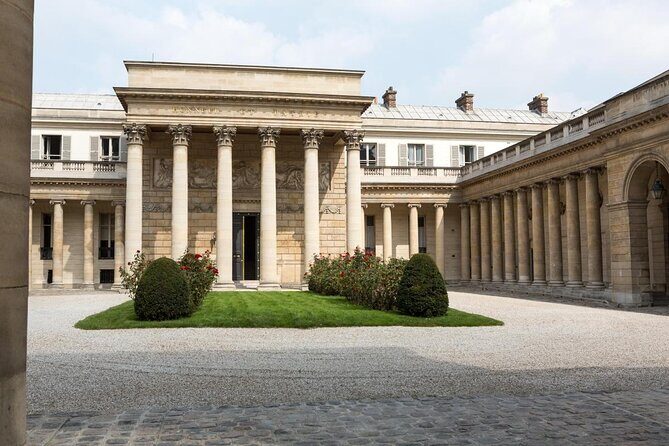
Next is the Hôtel de Salm, now the Musée de la Légion d’Honneur. This stop is about recognition—how an empire turns loyalty and valor into something official and repeatable.
The tour explains that Napoleon created what’s described as France’s highest order of merit here, rewarding loyalty and valor. I like this angle because it connects personal stories to state systems. You’re not only hearing about battles; you’re hearing about the mechanics of honor and how leaders build legitimacy.
One important logistics note: time here is about 15 minutes, and admission is not included. So if you want to go inside and see what’s relevant to the order itself, you’ll likely need to budget separately.
Also, this is a good moment to ask questions. If your brain wants “why did he do it this way?” this stop tends to produce strong conversations, because it’s a symbol you can see tied to an institution.
You can also read our reviews of more guided tours in Paris





Palais-Bourbon: the National Assembly as a political viewpoint
The tour then turns to the Palais-Bourbon, the building of France’s National Assembly, located in the 7th arrondissement facing Place de la Concorde. The practical value here is your viewpoint.
The tour highlights sweeping lines of sight toward Place de la Concorde and the Madeleine Church. Even in a short 10 minutes, this kind of perspective helps you understand how political power sits in the middle of everyday urban space.
Historically, you’ll hear that this area connects back to Napoleon’s power and politics. Even if you only remember one idea, make it this: Paris institutions can echo older regimes in both layout and symbolism. Standing in the right spot makes that idea feel less abstract.
This is listed as free admission, so again, the tour’s value mainly comes from the guide’s interpretation.
If you plan to visit more government or museum sites later, this stop can give you a mental framework for how places influence mood and message.
Finishing inside Les Invalides: the tomb and the meaning
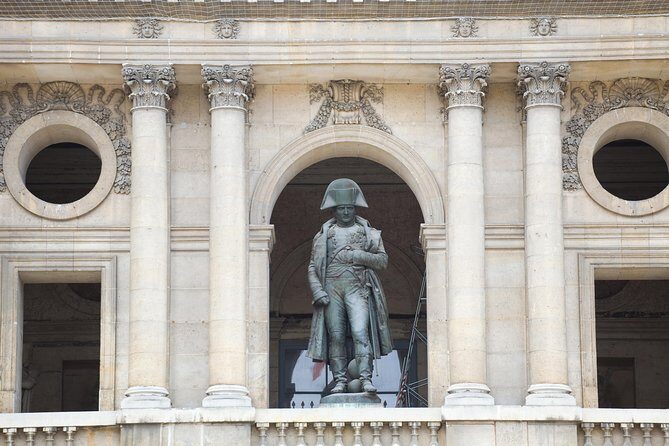
The tour concludes at Les Invalides, where you step inside the grand church that guards Napoleon’s legendary tomb. The meeting point is in the 1st arrondissement; the finish is in the 7th. That transition alone tells you you’re walking a real cross-city arc—one that ends with the physical center of Napoleon’s story in Paris.
This ending is powerful because it flips the tour’s earlier approach. Earlier you’re learning about stories and symbolism behind doors and streets. Now you’re in the place that anchors all of it.
The listing gives the feeling that the tomb is monumental in its own right, so plan to slow down at the end. If you’re the type who usually reads everything quickly and moves on, try the opposite here. Spend a little time letting the space affect your understanding of what you’ve just been learning.
And since there’s no hotel pickup or drop-off, plan your next step after the tour. Les Invalides is a major hub, so you should be able to connect to public transport easily, but you’ll want to have your departure plan ready.
Price value: what $226.39 buys you in real terms
At $226.39 per person for about 3 hours, this isn’t a bargain-priced stroll. The value comes from what you don’t have to do yourself.
You’re paying for a professional art historian guide, plus a route that hits multiple key Napoleon-linked sites with mostly free admissions. In other words, you’re funding interpretation more than ticket costs.
Two other details help justify the price. First, the tour is private, meaning you only compete for attention with your group. Second, you get a clear structure with a fixed time window, which reduces decision fatigue. You’re not trying to figure out which nearby landmark is truly connected to Napoleon’s Paris story.
There’s also a hint that dates move fast: the tour is booked on average about 15 days in advance. If you’re traveling in a busy season or you have tight plans, book early so you can pick the morning or afternoon slot that fits your day.
If you’re traveling as a group, there are group discounts, which can improve value. Even without discounts, the private, historian-led format is what you’re really buying.
Who should book this Napoleon walking tour
This tour fits you best if you like your history with structure. You want to walk between places, you like architecture and street context, and you enjoy asking questions without feeling rushed.
It also helps if you like the balance of art-history and politics. The stops cover arcades and gardens, a baroque church with revolutionary-empire echoes, an institutional honor site, and then a serious finale at Les Invalides.
You might want to skip or adjust your expectations if you want long museum time. The tour is short at each stop by design, and Hôtel de Salm has admission not included, so you’ll likely need extra time if you want to go deep.
Because the tour asks for moderate physical fitness, wear shoes you can walk in comfortably for a few hours.
Should you book this Paris Napoleon walking tour
I’d book it if you want a clean, guided way to connect Napoleon to the parts of Paris you’ll actually stand in. It’s a focused route with a strong ending, and the private setup makes the history feel personal rather than generic.
If you’re the type who plans to visit Les Invalides anyway, this tour can make that stop make more sense. And if you enjoy the mix of architecture, politics, and the story behind the stones, you’ll probably find the route satisfying without needing a full day.
Just go in with two expectations: you’re walking with interpretation, not doing a marathon museum day; and you’ll likely want to budget separately for Hôtel de Salm if you plan to enter.
FAQ
How long is the Paris Napoleon Walking Tour?
It runs for about 3 hours.
What does the tour cost?
The price is $226.39 per person.
Is the tour private?
Yes. It’s a private tour/activity, and only your group participates.
What language is the tour offered in?
The tour is offered in English.
What’s included in the price?
You get a professional art historian guide and a mobile ticket.
What’s not included?
Food and drinks are not included, and there is no hotel pickup or drop-off.
Are admission tickets included?
Admission is listed as free for Palais-Royal, Église Saint-Roch, Jardin des Tuileries, and Palais-Bourbon. Hôtel de Salm (Musée de la Légion d’Honneur) is marked as admission not included.
Where does the tour start?
The tour starts at Librairie Delamain, 155 Rue Saint-Honoré, 75001 Paris.
Where does the tour end?
It ends at Napoleon’s Tomb, 129 Rue de Grenelle, 75007 Paris, with the conclusion at Les Invalides.
Do I need to be very fit to do it?
You should have a moderate physical fitness level.