REVIEW · PARIS
Paris: Orangerie Museum Skip-the-Line Entry and Guided Tour
Book on GetYourGuide →Operated by Babylon Tours LLC · Bookable on GetYourGuide
Monet waits where lines don’t. This guided visit to the Musée de l’Orangerie lets you get inside faster and spend real time with French art from the 19th and early 20th centuries, not time stalled at the door. You’ll follow the story of Impressionism and beyond with an art historian, then settle into the museum’s famous oval room for Monet’s Water Lilies.
I especially like how the guide turns looking into learning without slowing the visit down. Seeing Monet’s water lilies is one thing, but understanding why the painters changed their methods is what makes it stick, especially with guides such as Hugo or Z who connected the paintings to the artists and their world.
One possible drawback: it’s a moderate walking experience and it’s not suitable for people with mobility impairments. Also, luggage or large bags aren’t allowed, so travel light unless you enjoy shopping for space after you land.
In This Review
- Key moments that make this tour worth your time
- Musée de l’Orangerie: why this museum hits fast
- Skip-the-line entry: what you really gain
- The art historian guide: how modern French art becomes understandable
- Monet’s Water Lilies: how to look beyond the wow factor
- The tour’s lineup: Cezanne, Matisse, Picasso, and friends
- Tuileries Gardens on the way: the easiest kind of Paris walking
- Pace and group size: what “small group” means in real life
- Price and value: is $128 a fair deal for the Orangerie?
- Who this tour suits best (and who should skip it)
- Should you book this skip-the-line guided tour?
- FAQ
- How long is the Musée de l’Orangerie skip-the-line guided tour?
- Where does the tour start?
- What’s included in the price?
- What artwork and artists will we see?
- Are we actually skipping the line?
- What languages are offered for the guide?
- Is there a lot of walking, and can I bring luggage?
- Does the tour run in bad weather and is it suitable for limited mobility?
Key moments that make this tour worth your time

- Skip-the-line entry so you start with paintings, not crowds
- Monet’s oval Water Lilies room where the scale changes how you see
- An art historian guide connecting movements from Impressionism to early modern art
- Tuileries Gardens walk as an easy, scenic lead-in to the museum
- Small group size (max 8 per guide) for a calmer pace and better questions
Musée de l’Orangerie: why this museum hits fast
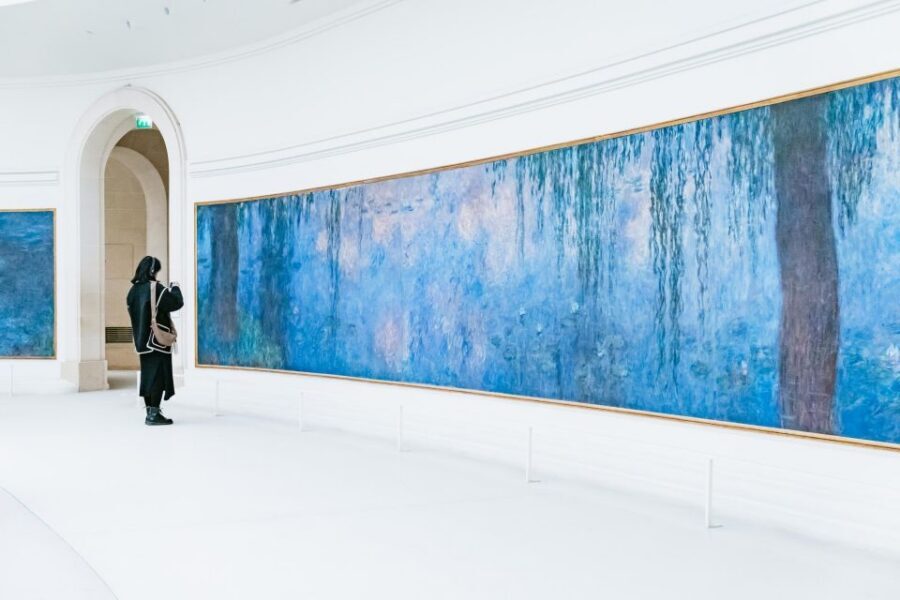
The Musée de l’Orangerie is one of those Paris stops that works even if you’re not chasing every major museum. The building is compact, but the experience feels big because the art is presented in a way that pulls your attention inward.
You start with context, then you end up in that iconic oval room where Monet’s Water Lilies wrap around you. It’s not like standing in front of a picture behind glass. You’re in a space designed for immersion through composition and light.
You can also read our reviews of more guided tours in Paris



Skip-the-line entry: what you really gain

The practical win here is timing. If you’ve ever watched people drift in and out while you’re stuck outside, you know how quickly that eats up a precious morning. This tour includes a skip-the-line entrance ticket, so you can cut the worst of the waiting and get to the first rooms sooner.
That matters because the Orangerie is best when you have time to settle. If you’re rushed, you’ll do quick glances and move on. If you’re on the calm side, you start noticing how the brushwork changes from artist to artist and even from painting to painting.
A small but important bonus: your guide is there from the start. Rather than figuring things out on your own with a spotty attention span, you get a straight route through the museum’s major ideas.
The art historian guide: how modern French art becomes understandable
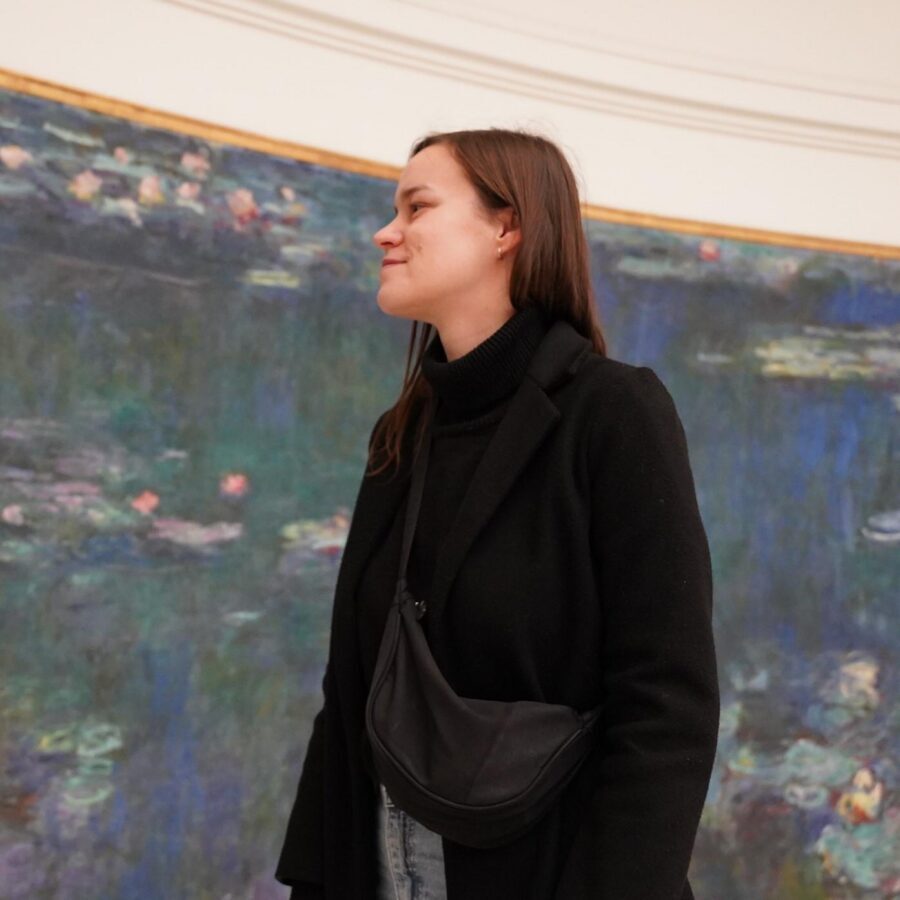
This tour is built around an art historian guide, and that’s the engine of the experience. You’re not just looking at famous names. You’re tracing how French artists changed what a painting could do during the 19th and early 20th centuries.
Expect the guide to connect styles and techniques to the bigger shifts in art. Impressionism isn’t only a label here. You’ll watch the movement unfold across the walls, then see how later painters pushed and broke from older rules.
And since the tour can be led in different languages, you’ll get explanations that actually match your pace. The languages listed include French, English, Russian, Italian, Spanish, and German.
Monet’s Water Lilies: how to look beyond the wow factor
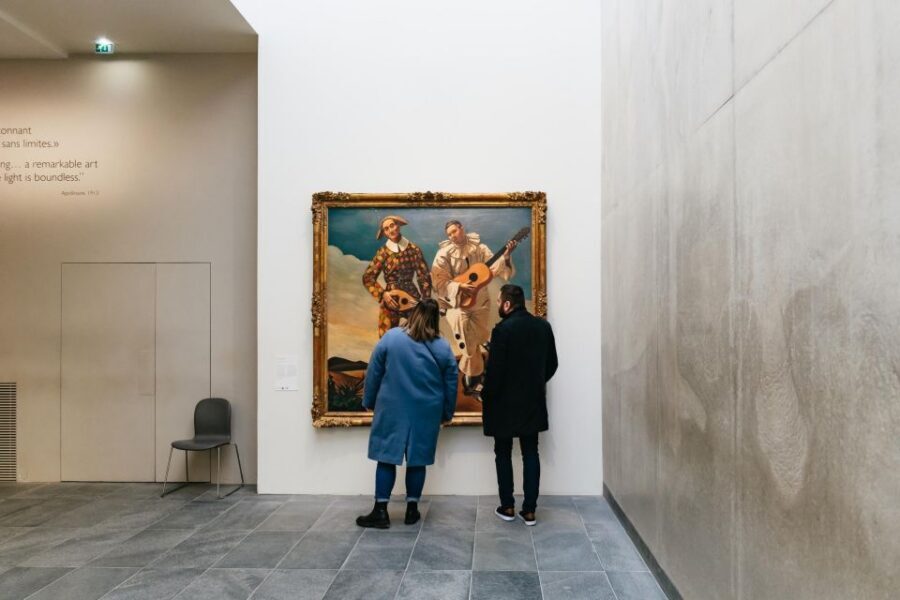
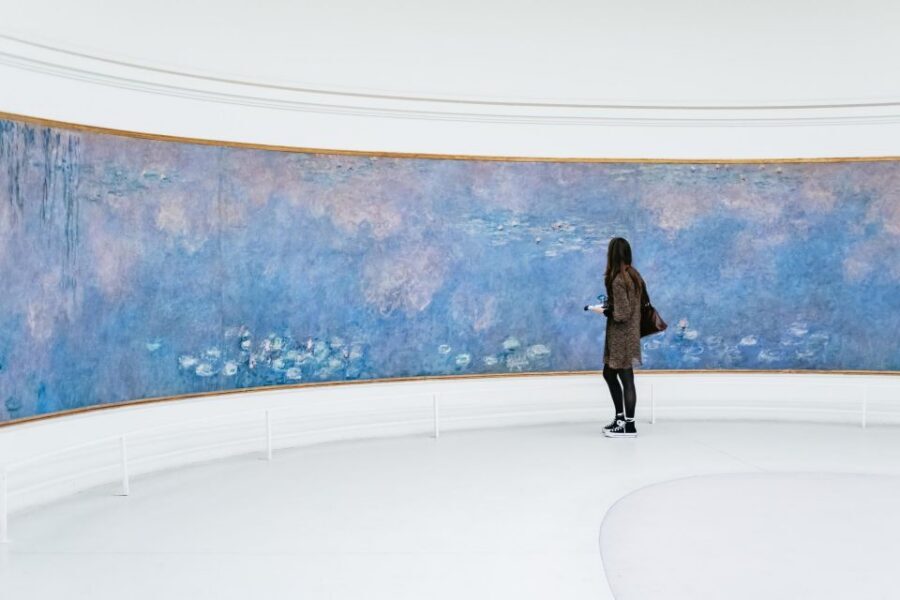
Yes, Monet’s Water Lilies are world-famous. But the reason the oval room works so well is that the paintings are arranged to control your attention.
In that oval space, you’ll likely notice how the horizon lines and reflections create a slow rhythm. The guide helps you look at things most people skip, like how the paint builds texture and how the feeling of water changes as you move around the room.
What I like most is that you can keep returning mentally to the same theme without it getting repetitive. One moment feels airy. Another feels denser. The overall effect is calm, but not static.
If you want a simple tactic: let yourself pause in spots the guide points out, then step a few feet and re-check what your eyes thought before. It’s the kind of room where tiny shifts matter.
The tour’s lineup: Cezanne, Matisse, Picasso, and friends
After Monet, the story widens quickly. This isn’t a museum visit built only around one artist. You’ll see works by major figures that represent different ways French painters reacted to modern life and new ideas.
From the information provided, you can expect stops tied to:
- Cezanne, including fruit and flowers
- Matisse, with attention to his distinctive style for portraits
- Picasso, traced through different stages connected to interpretations of nude models
- Additional names mentioned for the broader flow of the collection, including Modigliani, Renoir, and Utrillo
The key value here is sequence. When you’re walked through how these artists move from one approach to the next, it stops feeling like a random parade of masterpieces. It becomes a timeline you can feel.
You also get a sense of how artists didn’t just paint. They tested rules—color, form, and subject—until something new worked.
You can also read our reviews of more museum experiences in Paris






Tuileries Gardens on the way: the easiest kind of Paris walking
The museum is right by the Tuileries area, and the walk through the gardens is part of the rhythm. You’ll stroll through the Tuileries Gardens on your way to the former Orangerie.
This is a nice prep step. The gardens are open-air and light on stress, so you arrive at the museum more ready to slow down. It also breaks the monotony if your day is packed with indoor stops back-to-back.
Because the tour runs rain or shine, bring weather-appropriate clothing. In a light drizzle, you’ll still get those views between umbrellas and hedges. In heavier weather, you’ll simply want to pack the kind of footwear that won’t turn museum time into shin pain.
Pace and group size: what “small group” means in real life

This tour caps the group at 8 guests per guide. That number is small enough to make the experience feel less like a lecture in a crowd.
It also helps with pacing. You move room to room without feeling like you’re part of a conveyor belt. With only a handful of people, it’s easier to ask a question and get an answer that connects back to what you’re seeing.
The duration is listed at about 2 hours. That’s long enough for context and the big rooms, but short enough that you won’t end up museum-fatigued.
One practical note: some rooms may have rules that require quiet or restrict speaking. So keep your voice controlled once you’re inside those areas.
Price and value: is $128 a fair deal for the Orangerie?
At $128 per person, you’re paying for three things that are hard to replicate on your own: timed entry, a guided storyline, and an art historian.
If you were to do it alone, you’d still face the main challenge: entrance lines and the risk of losing your best energy to logistics. Here, skip-the-line entry reduces that friction. You also get a guided route that helps you connect one wall to the next without guessing what to focus on.
If you’re an art lover who likes context, the guide is the value multiplier. If you’re in the mood for a self-paced wander with no structure, you might feel the cost more strongly.
I’d frame it like this: you’re not only buying museum access. You’re buying a tight 2-hour explanation that helps you understand why the art looks the way it does.
Who this tour suits best (and who should skip it)

This experience fits best if you want an art story told clearly in a small group, with the center of gravity on major French artists and movements.
It’s also a good fit for people who like structured time. Two hours can be perfect for the Orangerie because it covers major ideas without stretching into a slow slog.
It may not fit if you need mobility accommodations, since it involves moderate walking and isn’t suitable for people with mobility impairments. It’s also not a match if you plan to carry a lot of luggage, because luggage or large bags aren’t allowed.
Should you book this skip-the-line guided tour?
Book it if you want the Orangerie experience with less stress and more meaning. The skip-the-line component is practical, and the art historian guidance helps Monet, Cezanne, Matisse, Picasso, and the rest feel like one connected story.
Skip it if you prefer full independence and don’t care about having art movements explained during your visit. You could still have a great time on your own, but you’ll spend more time solving logistics and less time learning what to notice.
If you’re traveling with mixed interests—someone who loves art plus someone who just wants a beautiful Paris morning—this is also a solid choice. The gardens, the famous oval room, and the clear walking route make it easier to enjoy even when you’re not a museum superfan.
FAQ
How long is the Musée de l’Orangerie skip-the-line guided tour?
The tour duration is listed as 2 hours. You’ll want to check available starting times when you book.
Where does the tour start?
The meeting point may vary depending on the option booked, and the activity ends back at the meeting point.
What’s included in the price?
The included items are the skip-the-line entrance ticket to the Orangerie Museum, the entrance fee, and a live art historian guide. Private and small group options are available, and it includes a museum tour.
What artwork and artists will we see?
You’ll see Monet’s Water Lilies in the iconic oval room. The tour also covers the evolution of Impressionism, and it references artists such as Renoir, Cezanne, Matisse, Picasso, Modigliani, and Utrillo.
Are we actually skipping the line?
Yes. The tour includes skip-the-line entrance ticket access, so you go directly inside rather than lining up at the entrance.
What languages are offered for the guide?
Live guide languages listed are French, English, Russian, Italian, Spanish, and German.
Is there a lot of walking, and can I bring luggage?
There’s a moderate amount of walking. Luggage or large bags are not allowed, so travel light.
Does the tour run in bad weather and is it suitable for limited mobility?
The tour runs rain or shine. It is not suitable for people with mobility impairments, and you may want to contact the provider about mobility needs before booking.