REVIEW · PARIS
Paris: Pastry & Chocolate Walking Tour with Tastings
Book on GetYourGuide →Operated by Devour Tours · Bookable on GetYourGuide
Two and a half hours of pure sweet time. This compact walking tour strings together chocolate, croissants, macarons, and crêpes while you move through Paris covered passages that many first-timers miss. I like the short format because it’s easy to fit into a day without turning your entire schedule into dessert.
Two things I really appreciate here are the small group size and the way the guide connects the food to stories as you go. Guides such as Emily, Sam, Khosi, Juan, Michelle, and Joshua are repeatedly described as friendly, welcoming, and good at pacing, so you’re not just collecting snacks.
One key thing to consider: come hungry. If you show up after breakfast, the croissant stop plus multiple sweets can feel like a lot, and the chocolate segment is mainly tastings (not a full chocolate-making workshop).
In This Review
- Key things I’d mark on your mental map
- Sweet value in 2.5 hours: why this tour makes sense
- Starting at 34 Rue du Faubourg Montmartre: how to find your group fast
- Stop 1 tasting: old-school chocolate that sets the tone
- The croissant and café crème stop in a hidden passageway
- Walking the covered passages: photo time, plus a Paris shortcut
- Stohrer macarons: color, crunch, and an origin story
- Crêpes in French Bretagne style, with apple cider on the side
- Rue Montorgueil finish: bean-to-bar chocolate and a Parisian ending
- How the pace feels in real life (and who this tour suits)
- Food limits and allergies: what you must know before booking
- The guide is the secret ingredient: what to expect from the experience team
- Price and value: what you’re really paying for
- Should you book this pastry and chocolate walking tour?
- FAQ
- How long is the Paris pastry and chocolate walking tour?
- How many tastings are included?
- What group size is this tour?
- Where do I meet the guide?
- Where does the tour end?
- Is hotel pickup included?
- Is the tour in English?
- Is this tour suitable for vegan or gluten-free diets?
- Can the tour accommodate nut allergies?
- What should I bring on the day of the tour?
Key things I’d mark on your mental map
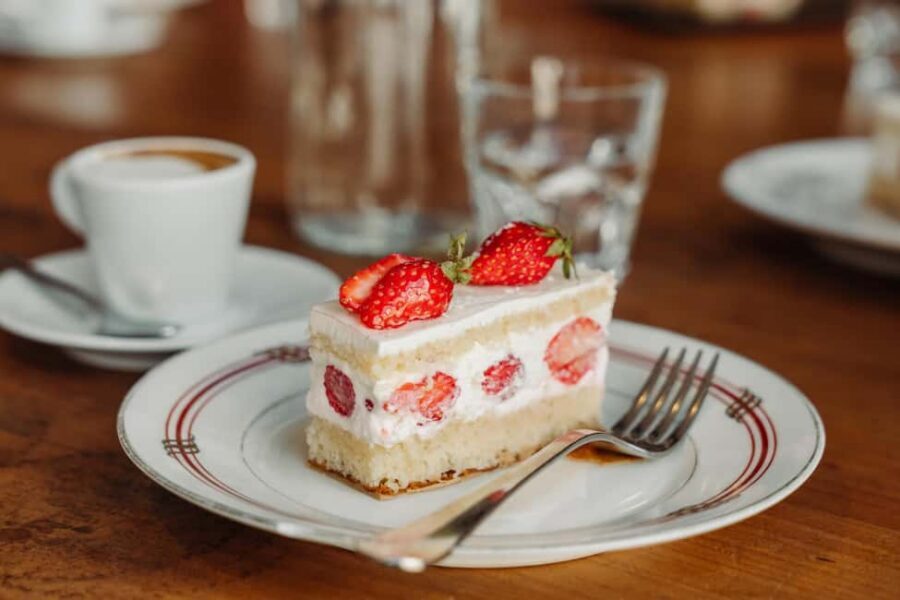
- 6+ food tastings in about 2.5 hours, not a quick couple of samples
- Old-school stops tied to an oldest chocolatier and the oldest patisserie
- Covered passages you can photograph, with a walking route that feels local
- Brittany crêpe with apple cider to balance all that sweetness
- Bean-to-bar chocolate at the end in the Rue Montorgueil area
- Max 10 people with an English-speaking guide, so it stays relaxed
Sweet value in 2.5 hours: why this tour makes sense
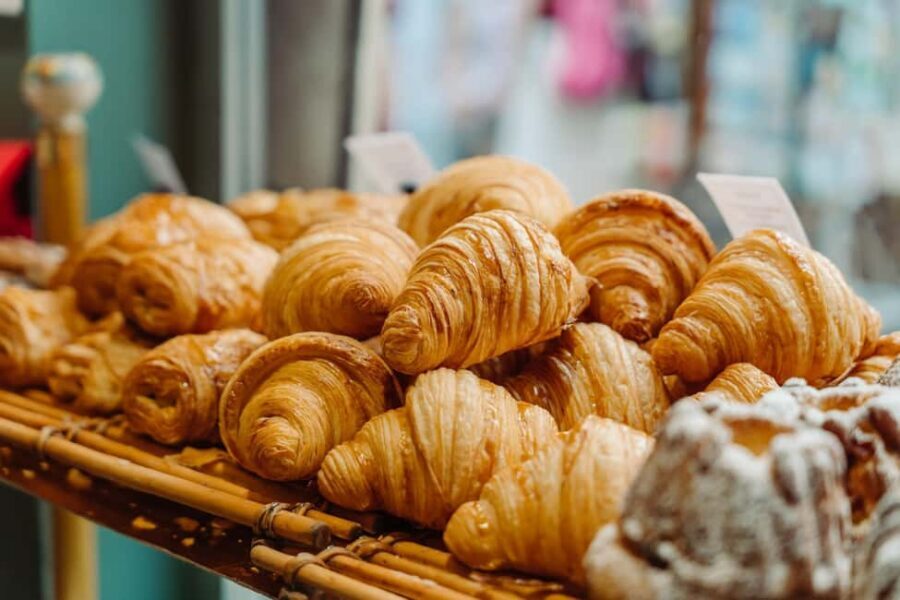
At $90 per person, this isn’t the cheapest way to eat pastry in Paris. But it is structured for value: you’re getting 6+ tastings, an English-speaking guide, and a walking route that includes sights you likely won’t find on your own. It’s basically a guided tasting crawl, not a pick-your-own adventure.
The time window matters too. In 2.5 hours, you can satisfy your dessert cravings and still have daylight left to explore other neighborhoods. That’s a big deal in Paris, where you can burn half a day just moving between spots.
Also, the group size is capped at 10, which changes the vibe. With fewer people, you spend more time at the counters and less time waiting behind a wall of strangers. It feels social, but not chaotic.
One small logistics point: there’s no hotel pickup, so you’ll want to plan to reach the meeting street on your own. If you’re using metro/bus, build in a little buffer for the walk from the stop to the exact start point.
You can also read our reviews of more walking tours in Paris


Starting at 34 Rue du Faubourg Montmartre: how to find your group fast
Your tour begins at 34 Rue du Faubourg Montmartre, 75009 Paris, in the pedestrian street area in front of restaurant Faubourg 34. The guide will be holding a red bag or a Devour Tours sign, and you’re asked to arrive 15 minutes early.
This matters because the tour is time-tight. You’re not just strolling at your own pace; you’re hitting specific food stops with tasting windows that add up. Showing up late can make you rush through the early tastings, and the early tastings are some of the most memorable.
My practical tip: wear your walking shoes, but also keep your hands free for photos. You’ll move through covered passages later, and you’ll want both a good pace and good light.
Stop 1 tasting: old-school chocolate that sets the tone
Right at the beginning of the food story, you’re guided to a classic chocolatier for an opening tasting. The format here is simple: you’ll try two homemade chocolates, and the guide shares the secrets of traditional French chocolate-making.
Starting with chocolate is smart. It sets your palate up for buttery pastries later, and it gives you a baseline flavor to compare the rest of the tour. Also, two pieces is a real start—enough to feel like you’ve started the tour, not like you’re being teased.
If you love chocolate, this first stop is where you settle in. You get the sense that the guide isn’t just moving you from shop to shop; they’re building a sequence.
The croissant and café crème stop in a hidden passageway
Next, you step into a cozy café tucked into a hidden passageway. You’ll sip café crème and eat a buttery, flaky croissant—the kind of combo locals reach for when they want something warm, simple, and perfect.
This is a great moment because it changes the texture game. Chocolate is rich and dense. Croissant is airy and crisp. Between the two, your taste buds get a reset.
And that covered, tucked-away café feel is part of the charm. The tour doesn’t just hand you food; it also gives you Paris in a way that feels slightly off the main tourist grid. That’s the type of detail that makes the whole experience feel intentional.
If you’re the type who normally stops for breakfast on vacation, read this carefully: don’t. Your stomach will thank you later.
Walking the covered passages: photo time, plus a Paris shortcut
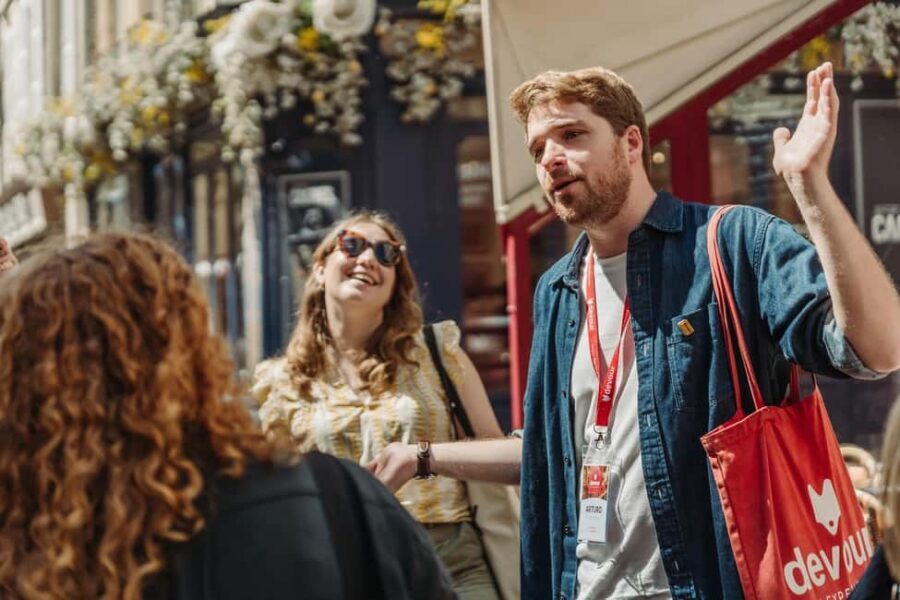
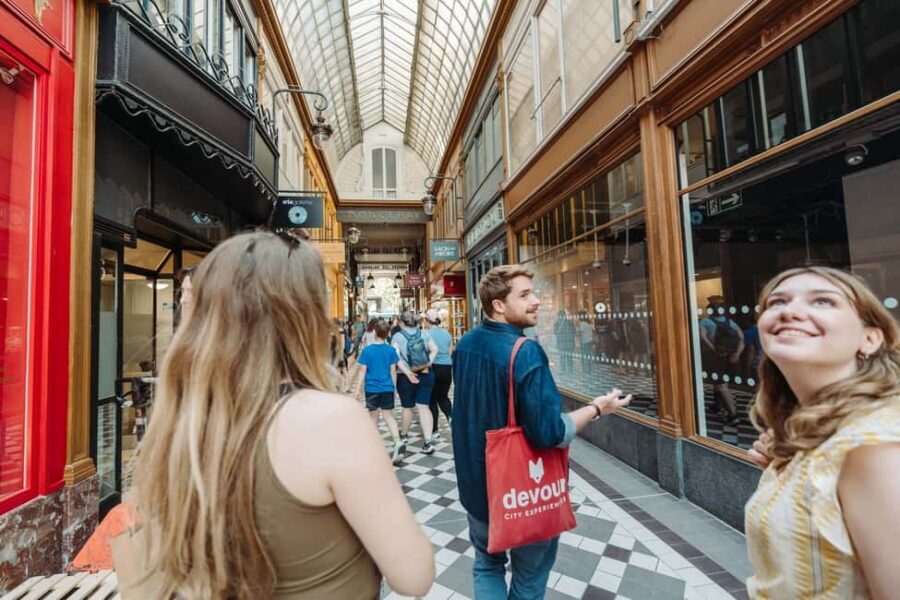
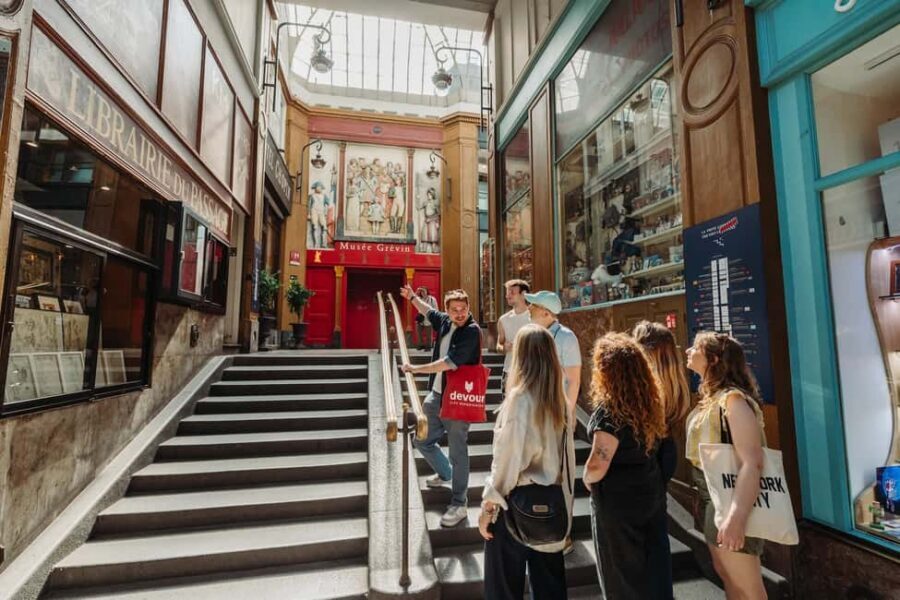
After the café, the tour shifts into walking mode with a guided stroll through Paris’ famous covered passageways. You’ll also get time to take photos and spot hidden boutiques and historic cafés.
The specific passages you pass through are:
- Passage de l’Ancre
- Passage du Bourg l’Abbé
- Passage du Grand Cerf
These stretches are useful for more than just sightseeing. Covered passages make the walk more comfortable, and they help you move through compact areas without the constant stop-and-start feel you get when you’re crossing wider streets. You’ll also end up seeing storefronts and alleys that don’t show up in the same way from the major boulevards.
This part is also where a good guide adds value. The route is structured, but the commentary is what turns it into something you’ll remember. People often love this walking segment because it feels like Paris is revealing little side streets on purpose.
You can also read our reviews of more tours and experiences in Paris

Stohrer macarons: color, crunch, and an origin story
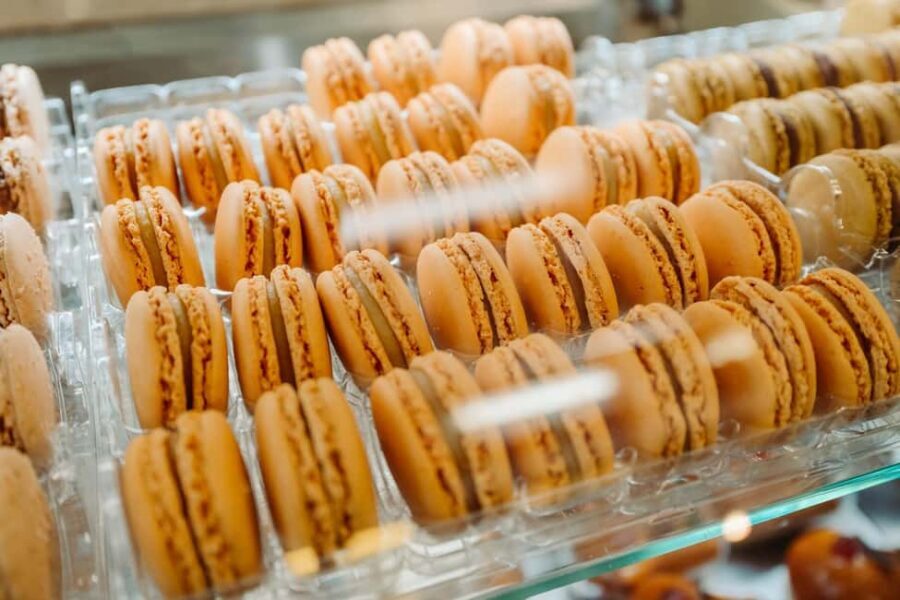
One of the standout stops is at Stohrer, which is described in the tour as the oldest patisserie in Paris. Here, you’ll linger for about 25 minutes, tasting colorful macarons while the guide explains where this French dessert comes from.
Macarons are already fun because they’re pretty and delicate. But the real win is learning the story behind them in the context of where you’re eating. You’re not chewing in silence. The guide frames the dessert so it feels connected to French culinary culture, not just a sweet you ordered.
This stop also benefits from timing. By the time you reach it, you’ve already had chocolate and croissant. That means the macaron isn’t just another sugary item—it becomes a texture contrast and a flavor shift.
If you’re a macro-photographer type, bring your phone strap or keep it secure. You’ll be walking and turning corners, and you want one less thing to worry about.
Crêpes in French Bretagne style, with apple cider on the side
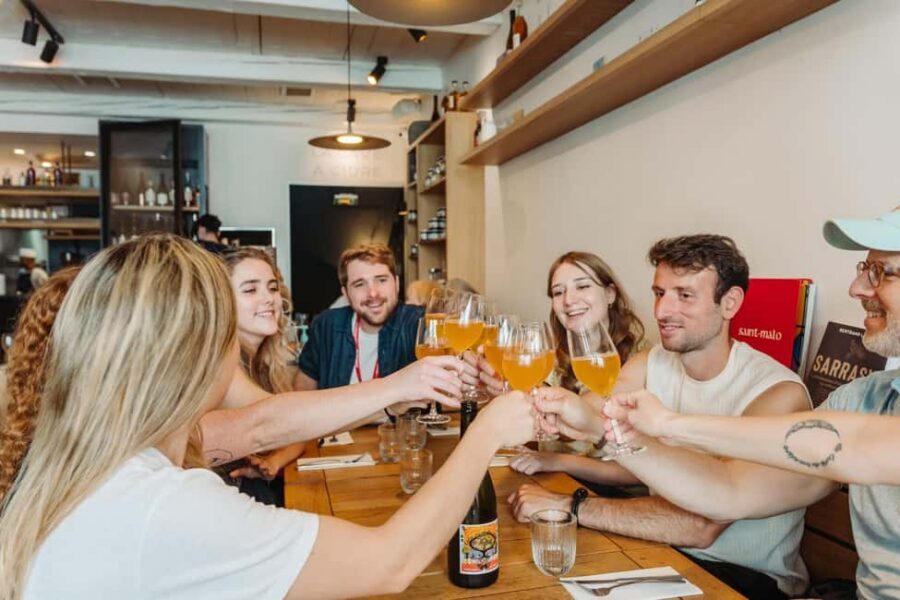
Next comes a taste of Brittany: a traditional crêpe served with a glass of apple cider. The tasting here is about 30 minutes, which is a longer window than some earlier stops. That usually means you get time to sit, nibble, and catch your breath.
Why this stop matters: after multiple pastries and chocolates, a crêpe helps rebalance your palate. It’s still a sweet, but it’s shaped and eaten differently. The apple cider adds a tang that cuts through the sugar and makes the final chocolate stop more enjoyable.
This is also a good point for the guide to work the group dynamic—keeping energy up while your feet recover. Guides like Sam and Michelle are often described as good at making the group feel relaxed, and stops like this are where that shows.
Rue Montorgueil finish: bean-to-bar chocolate and a Parisian ending
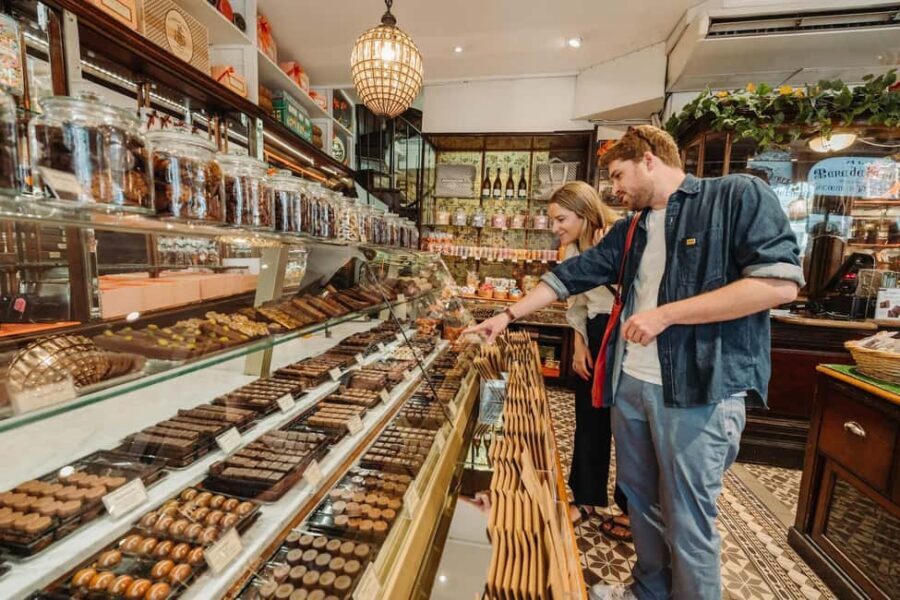
Toward the end, you move into the Rue Montorgueil area for another food stop, then finish around 51 Rue Montorgueil, 75002 Paris. This is where you try bean-to-bar chocolate made by artisanal chocolatiers in the heart of the city.
Bean-to-bar is a meaningful way to end, because it shifts your focus from dessert classics to how chocolate is made and sourced. Even if you don’t go deep into chocolate jargon, the difference in flavor and process tends to make an impression when you’ve already tasted simpler forms earlier.
This final stop is also convenient because Rue Montorgueil is a lively neighborhood to continue exploring on your own. Once you’ve got your last bite, you’re still in a place where it’s easy to keep walking for dinner or more coffee.
How the pace feels in real life (and who this tour suits)
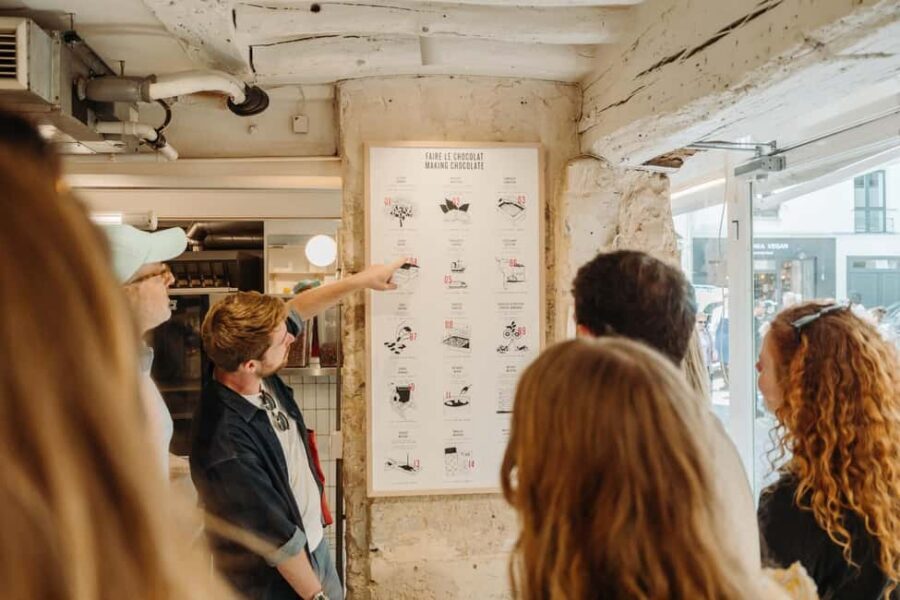
The tour is designed as a walking tour with a moderate pace. It’s short enough that you won’t feel like you need to train for it, but it’s also active enough that comfortable shoes are non-negotiable.
If you’re traveling with multiple ages, this format is often a good fit. The route is paced by tasting stops, so the walk doesn’t feel endless. It’s not a marathon; it’s a sequence.
If you have mobility concerns, the operator says they can accommodate guests with mobility impairment or wheelchairs, as long as you email their Guest Experience team to arrange it. Don’t assume. Just ask before you go so you don’t get stuck with an unworkable route on the day.
Food limits and allergies: what you must know before booking
This tour is not suitable for:
- Gluten free needs
- Vegan diets (not recommended, and noted as not suitable for vegans)
- Serious nut allergies
They also note that there are no peanuts, but there are almonds, hazelnuts, and pecans. That’s important even if you think your allergy is only to peanuts.
All guests with serious allergies must sign an allergy waiver at the start of the tour. If you’re on the border—like you can handle trace ingredients but not the real thing—email their Guest Experience team after booking so they can arrange ingredients.
They say the tour is adaptable for vegetarians and pescatarians, but not recommended for vegans. If you eat fish, you’ll be in better shape than a strict plant-based eater.
My advice here is blunt: if your diet is complicated, send the email as soon as you book. It’s the easiest way to avoid disappointment.
The guide is the secret ingredient: what to expect from the experience team
In a tasting tour, the food is the headline. But the guide decides whether it feels like a random snack crawl or a real, satisfying experience.
This one is led by a local English-speaking guide, and the small group size helps. Guides have been described as friendly and welcoming, and as good at showing you hidden sights and explaining the history behind pastry classics in a way that stays understandable while you’re eating.
You’ll also notice different styles depending on the guide. Some focus more on pastry facts and dessert origins. Others add architectural and neighborhood context during the walking portion, which is useful because it gives your feet a job while your stomach is busy.
If you care about where you’re walking, look for a guide who talks about what you’re seeing. Stops like the covered passages and the passageway café are exactly where that kind of commentary matters.
Price and value: what you’re really paying for
Let’s talk about the $90 price tag without pretending everything is cheap. You’re paying for:
- 6+ tastings across chocolate, pastry, macarons, crêpes, and bean-to-bar chocolate
- a guided route that includes specific Paris passageways
- an English-speaking guide who keeps the pace and gives context
If you tried to recreate this on your own, you’d likely pay for at least several items individually—plus you’d spend time figuring out where to go next. Here, someone else does the sequencing, and the tasting lengths suggest it’s not just a quick bite and a shove along.
Also, the small group cap at 10 people is part of the value. Larger groups mean less time at each counter. Smaller groups usually mean you can actually taste and talk.
Is it worth it? For people who like food with a story and don’t want to build a route themselves, yes. If you’re more of a pick-one-thing-and-call-it-a day person, it might feel like too much.
Should you book this pastry and chocolate walking tour?
Book it if you want a short, guided dessert plan that includes classic French sweets plus French chocolate in a way that feels connected, not random. It’s especially strong if you like:
- chocolate and pastry variety in one morning
- walking through covered passages
- a guide who makes the route feel purposeful
Skip it (or pick something else) if you:
- need strict gluten-free or vegan options
- have a serious nut allergy
- already plan a big breakfast, because you’ll regret it by stop three
My final nudge: come hungry, wear good shoes, and go in ready to learn a little while you eat a lot.
FAQ
How long is the Paris pastry and chocolate walking tour?
The tour lasts about 2.5 hours.
How many tastings are included?
You’ll have 6+ food tastings during the walk.
What group size is this tour?
It’s a small group limited to a maximum of 10 participants.
Where do I meet the guide?
Meet at 34 Rue du Faubourg Montmartre, 75009 Paris. Arrive 15 minutes early. The guide will be holding a red bag or a Devour Tours sign in the pedestrian street area in front of restaurant Faubourg 34.
Where does the tour end?
The activity ends at 51 Rue Montorgueil, 75002 Paris, France.
Is hotel pickup included?
No. Hotel pickup and drop-off are not included.
Is the tour in English?
Yes, the live guide speaks English.
Is this tour suitable for vegan or gluten-free diets?
No. The tour is not suitable for vegan diets and is not suitable for gluten free needs.
Can the tour accommodate nut allergies?
It’s not suitable for people with nut allergies. The tour notes there are no peanuts, but there may be almonds, hazelnuts, and pecans, and serious allergies require an allergy waiver.
What should I bring on the day of the tour?
Wear comfortable shoes, and bring a passport or ID card (passport/ID is noted for children as well).