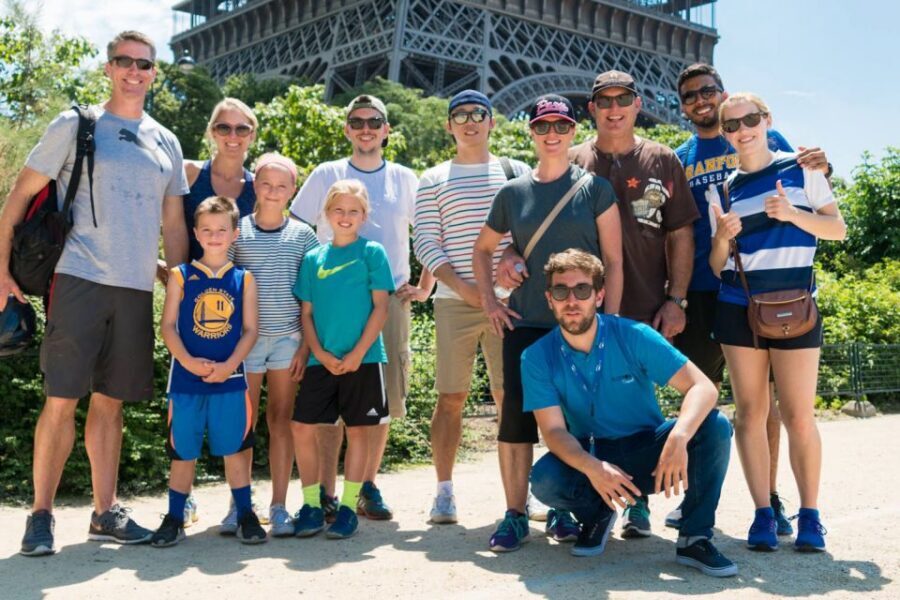
REVIEW · PARIS
Paris: Sacré-Coeur and Montmartre Tour with Expert Guide
Book on GetYourGuide →Operated by UTG EXPERIENCE · Bookable on GetYourGuide
Paris rewards the curious. This short, guided walk turns Sacré-Cœur exterior views into real meaning, then drops you into Montmartre with its artist-history streets and the famous Place du Tertre square. I like that you get a clear, story-driven route in just 1 hour, instead of wandering uphill hoping you’ll notice the important details.
Two things I especially like: the guide’s focus on the basilica’s architecture and its world-famous mosaic theme, and the way Montmartre feels personal once you’re moving street by street. The main catch is you’re mostly outside: no dome entry and no basilica interior visit, plus you’ll face plenty of steps and steep inclines if you’re going up to the basilica area.
In This Review
- Quick hits: what you get in 60 minutes
- Why this Sacré-Cœur exterior + Montmartre walk works
- Where to meet at Carrousel de Saint-Pierre (and how not to waste time)
- Sacré-Cœur from the outside: what your guide points out
- The biggest limitation: you’re not going inside
- The Montmartre artist neighborhood: stories you can feel in the streets
- Place du Tertre: why this square still pulls people in
- La Maison Rose and the Dalida statue: small stops, big photo impact
- Time, pacing, and the real issue: stairs
- Price and value: is $28 worth it for a 1-hour guide?
- What to do if you want more than the tour includes
- Should you book this Sacré-Cœur and Montmartre tour?
- FAQ
- How long is the tour?
- Where do I meet the guide?
- Is entrance to the dome included?
- Do we go inside Sacré-Cœur on this tour?
- Can I take photos inside the basilica?
- What’s included besides Sacré-Cœur?
- What should I wear?
Quick hits: what you get in 60 minutes

- Sacré-Cœur built story (1874–1914) explained on the exterior, not just admired
- Christ in Majesty mosaic theme, including who’s shown in the artwork
- Montmartre’s artist neighborhood backstory—outsiders, revolution, and creativity
- Place du Tertre time for photos and people-watching (about 20 minutes)
- Extra photo/stop moments like La Maison Rose and the Dalida statue
- Portuguese live guide with lots of group-friendly storytelling (names like Lara, Carlos, Morgan, and Ely show up in feedback)
Why this Sacré-Cœur exterior + Montmartre walk works
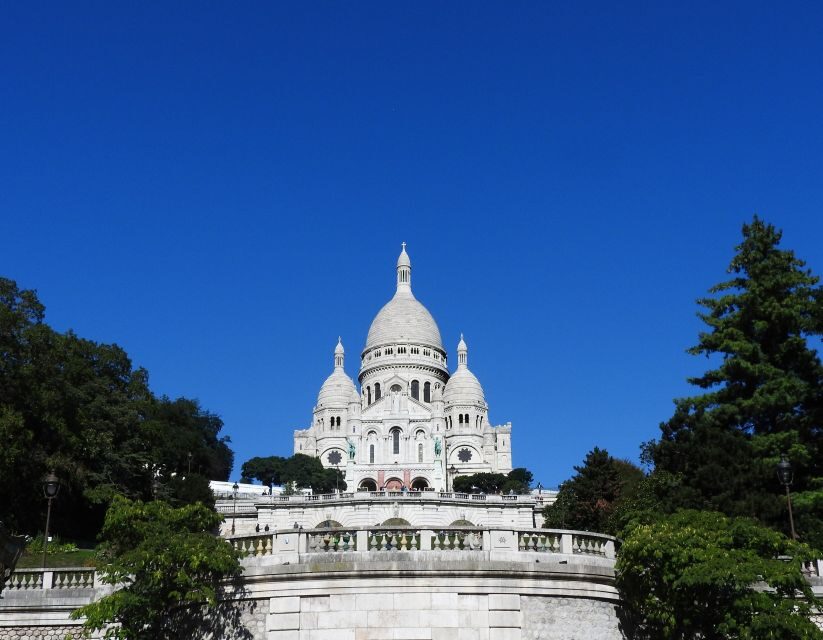
This tour is built for people who want the “wow” of the hilltop without committing to a long day. You start in the lower area at Carrousel de Saint-Pierre and end up in the Montmartre core, with just enough time to see the key sights and get your bearings.
The best part is that the guide gives you context fast. Instead of treating Sacré-Cœur like a postcard, you’re learning what you’re looking at—how the basilica came together over decades (built between 1874 and 1914), and what the big visual message means. Then Montmartre stops feeling like a name on a map. It becomes a neighborhood with a personality, shaped by artists, outsiders, and revolutionaries.
You should go into it with the right expectations: it’s a short walk, not a slow worship-and-stroll experience inside the church. If you want quiet time within the basilica or a dome viewpoint you can only get from entry, you’ll need to plan that separately.
You can also read our reviews of more guided tours in Paris



Where to meet at Carrousel de Saint-Pierre (and how not to waste time)
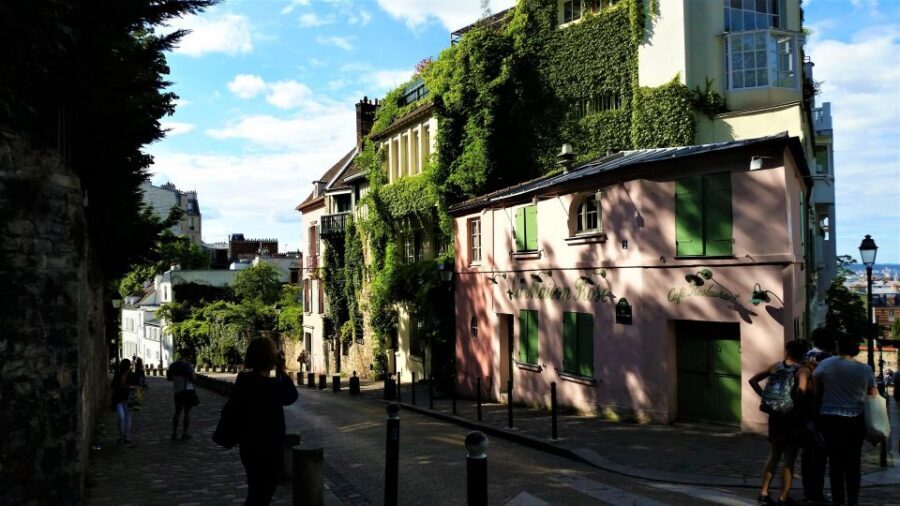
Your meeting point is in front of the Carrousel de Saint-Pierre, inside the Square Louise-Michel. The practical benefit of this spot is simple: once you arrive, you can already spot the basilica on top of the hill. That helps you orient immediately, even if it’s your first time in Montmartre.
One small reality check: meeting points in Montmartre can be a little confusing in busy periods. A review about finding the right guide had a straightforward lesson—bring a small sign with the tour name/guide name if you’re worried about matching up quickly. It’s not fancy, but it saves time and stress.
Also, because this is a 1-hour tour, punctuality matters. If you arrive late, you’ll feel it in the last stretch toward Place du Tertre.
Sacré-Cœur from the outside: what your guide points out

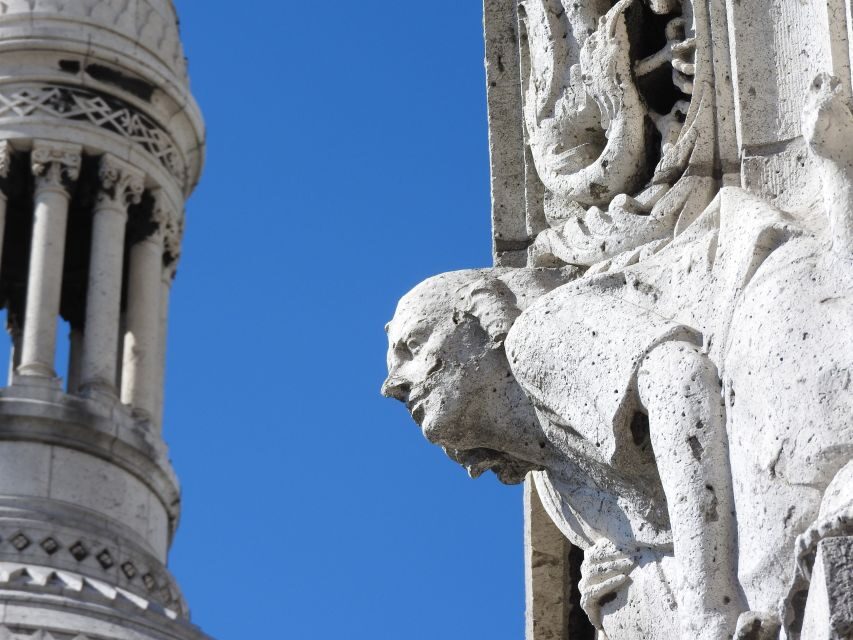
You don’t just look up at Sacré-Cœur. Your guide walks you through the exterior, and explains interior elements from the outside perspective. That matters because Sacré-Cœur isn’t only about the big white domes—it’s about what’s built into the visual language.
Expect the guide to focus on:
- The basilica’s overall construction story (1874–1914)
- How to read the exterior design like a design choice, not random stone
- The significance of the large mosaic called Christ in Majesty
About that mosaic: you’ll hear about Christ in Majesty, tied to the Sacred Heart theme, and the figures shown in the artwork—including the Virgin Mary, Jeanne d’Arc, and St. Michael the Archangel. That kind of detail makes the place feel less generic. It’s easier to remember, too, because you’ll know what you’re seeing.
The biggest limitation: you’re not going inside
This tour includes an outside look, not entrance to the dome and not an inside basilica visit. So if your dream is a calm sit-down inside the church, or if you want specific interior views, treat this as a “get oriented and understand it” tour. Then go back on your own later.
One more useful rule: no photography is allowed inside the basilica. Since you’re not entering here, it’s mostly relevant for anyone who decides to add time before or after your walk.
The Montmartre artist neighborhood: stories you can feel in the streets
After Sacré-Cœur, the tour shifts from architecture to neighborhood character. Montmartre has always felt separate from the rest of Paris—not just because of the hill, but because of who ended up here. Your guide ties the streets to the people who lived and worked there: artists, revolutionaries, and outsiders.
That history isn’t delivered as a lecture. It’s told while you’re walking. You catch why certain streets and viewpoints earned their reputations. You also learn how Montmartre’s “difference” became part of its identity—so you don’t just consume sights, you understand the why behind them.
This is where reviews get interesting. People repeatedly mention guides like Carlos and Lara as standout storytellers—turning stone, staircases, and street corners into narratives you can actually follow. Even when you’re not obsessed with historical facts, the storytelling helps you notice details on your own.






Place du Tertre: why this square still pulls people in
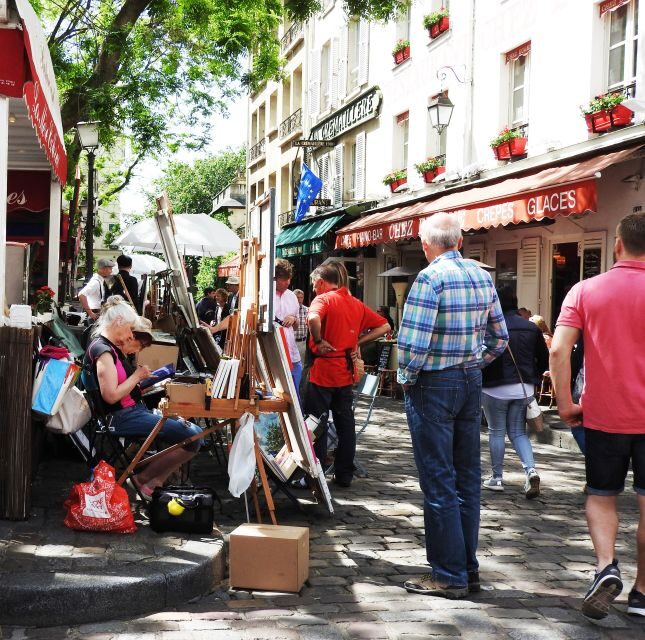
Then you arrive at Place du Tertre, one of Montmartre’s most famous squares. You’ll have around 20 minutes here, which is a good length for what the square is: a mix of classic views, street-art energy, and photo opportunities.
What makes Place du Tertre worth your time isn’t just that it’s famous. It’s that the square works like a stage. Once you’re standing there, you can connect the neighborhood vibe to the visual reality: performers, artists, and the sense that Montmartre has always been about making things.
Your guide also helps you slow down at the right spots—so you’re not rushing through, or standing in a bad angle spot for photos. Several reviews specifically praise the way guides recommended where to look and what to notice, which is exactly what you want in a place this crowded.
La Maison Rose and the Dalida statue: small stops, big photo impact
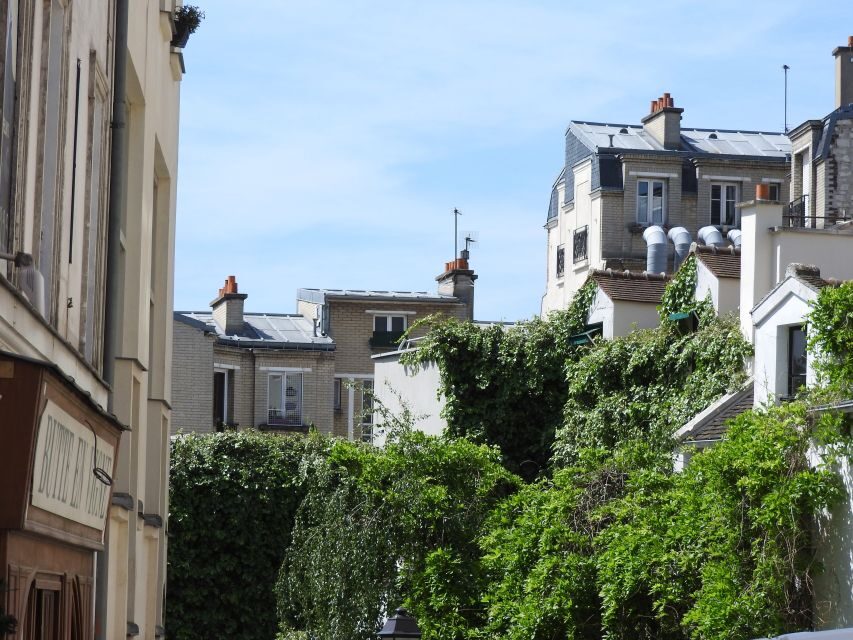
Two additional points of interest round out the walk: La Maison Rose and the Dalida statue. These aren’t massive monuments, but they’re the kind of stops that make your day feel “specific,” not generic.
- La Maison Rose gives you that instantly recognizable Montmartre look—perfect for photos and for understanding why the neighborhood became an artist magnet.
- The Dalida statue adds pop-culture connection, which helps the area feel lived-in and not frozen in old postcards.
If you love travel days that mix iconic landmarks with personality cues, these stops are a win. They also help break up the walking so your brain isn’t stuck on one long viewpoint-only focus.
Time, pacing, and the real issue: stairs
This is a 1-hour tour, so the pacing is “see, learn, move.” That’s usually a plus—Montmartre can eat time if you’re not careful.
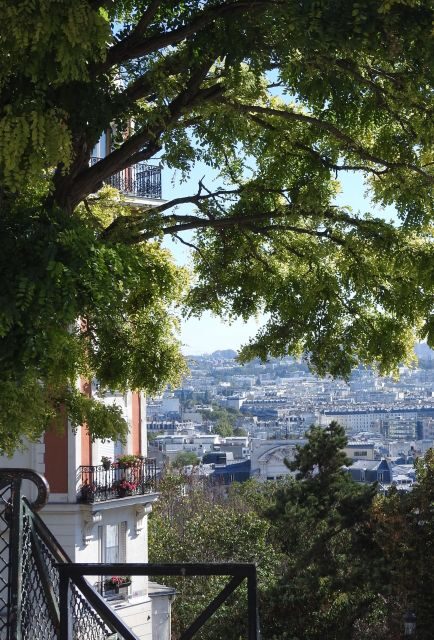
But here’s the practical note that matters most: you should expect steps and steep inclines. One review mentioned over 200 steps just to reach Sacré-Cœur, plus steep climbs overall. If you have mobility concerns, the “short” duration won’t cancel out the physical effort. Another review even suggested meeting at the top for people who prefer transport instead of walking uphill, which gives you a clue: the climb is often the hardest part, not the information.
My advice: if you’re fit enough, go for it. If you’re not, consider using a scooter/metro/bus approach before the tour so you’re not arriving already exhausted. And wear shoes you’re comfortable walking in for both pavement and stairs.
Price and value: is $28 worth it for a 1-hour guide?

At $28 per person for a 1-hour guided experience, the value comes from what you’re buying: interpretation. Montmartre and Sacré-Cœur can be “seen” on your own, sure. But a good guide helps you connect details that you might otherwise miss—like the basilica’s mosaic theme and what the neighborhood identity is rooted in.
Because this tour doesn’t include dome entry or an interior visit, you’re not paying for a museum-style experience. You’re paying for a focused walk plus a knowledgeable guide who can turn exterior architecture and street corners into a clear story. Based on the consistent praise for guides—many names come up, including Ely, Morgan, Anna, and Jade—this looks like the kind of tour where the guide quality is a big part of the ticket value.
If you only have a limited time window in Paris, this is a smart way to get something meaningful without committing to hours of lines, entrances, or separate planning.
What to do if you want more than the tour includes
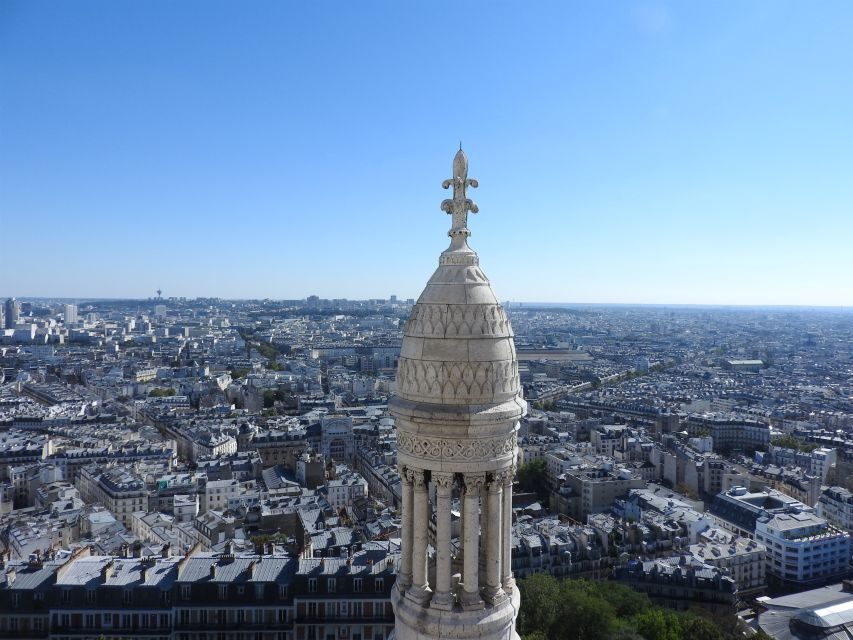
Since this experience stays outside the basilica, you might want to build your own add-ons.
A common approach:
- Book this tour for context and orientation
- Then, after, decide if you want extra time elsewhere around Montmartre (especially around Place du Tertre and nearby streets)
Also, if you’re a photo person, remember: the best photos often happen around viewpoints, squares, and street fronts. Plan a little extra time outside the tour for a second pass with less pressure.
And if you’re traveling with kids or teens: multiple reviews say the guides kept younger visitors engaged by explaining the area in a way that stuck. So this is a reasonable choice for families, as long as everyone is okay with stairs.
Should you book this Sacré-Cœur and Montmartre tour?
Book it if you want a short, story-led walk that covers the exterior of Sacré-Cœur, then gives you Montmartre’s signature sights like Place du Tertre, La Maison Rose, and the Dalida statue. The guides’ storytelling is a clear theme in the feedback, with names like Lara, Carlos, and Morgan showing up as standouts.
Skip or rethink if:
- You strongly want inside access to Sacré-Cœur or the dome
- You have mobility limits that make steep stairs a hard no
- You’re hoping to linger quietly in the church during this specific activity
If you fall in the middle—curious, moderately fit, and short on time—this is one of those Paris choices that helps you feel like you actually understand where you are, not just where you posed.
FAQ
How long is the tour?
It lasts 1 hour.
Where do I meet the guide?
Meet your guide in front of the Carrousel de Saint-Pierre, inside the Square Louise-Michel.
Is entrance to the dome included?
No. Entrance for the Dome is not included.
Do we go inside Sacré-Cœur on this tour?
No. The tour focuses on an outside visit, and entrance to the basilica is not included.
Can I take photos inside the basilica?
No photography is allowed inside.
What’s included besides Sacré-Cœur?
You also get a Montmartre walk that includes Place du Tertre.
What should I wear?
Dress appropriately for entering a church.