REVIEW · PARIS
Paris: Skip-the-Line Louvre Highlights Guided Tour
Book on GetYourGuide →Operated by Memories France · Bookable on GetYourGuide
At the Louvre, getting your bearings matters. This skip-the-line highlights tour gets you into the museum and onto the best-known works fast, with an expert guide helping you make sense of the place’s weird layout and sheer scale. It’s especially handy if you feel intimidated by nearly 10 miles of galleries and a museum that was never designed to be one.
Two things I really like: first, the focus on major hits like the Mona Lisa, Winged Victory, and Venus de Milo—so you’re not wandering in circles. Second, the guide storytelling sounds practical, not showy, with examples from past groups that included guides like Megan, John, Claire, Will, and John Edward, all praised for clear explanations and keeping people engaged (even in crowded halls).
One thing to consider: even with skip-the-line entry, Louvre security can still create delays, and the inside can stay crowded. If you hate any waiting at all, you’ll want to stay flexible.
In This Review
- Key highlights worth your attention
- Why this Louvre tour works (even if you only have a little time)
- Meeting at Arc de Triomphe du Carrousel and getting inside smart
- The highlights route: Mona Lisa, Winged Victory, Venus de Milo
- Napoleon III apartments and the Louvre’s less-obvious power plays
- How the guide handles the Louvre layout (and why you’ll feel less stressed)
- Small group (up to 6): what you gain with fewer people
- 1.5 hours vs. the 3-hour option: choose based on your style
- After the tour: staying until closing time
- Practical stuff that can make or break the day
- Price and value: is $137 worth it?
- Who should book this Louvre highlights tour
- Should you book this Louvre skip-the-line highlights tour?
- FAQ
- How long is the Louvre tour?
- Is this a small-group tour?
- Does the tour include tickets?
- Where do we meet for the tour?
- What should I bring?
- Are large bags allowed inside the Louvre?
- Is the tour in English?
- Can I cancel for free?
- Is the tour wheelchair accessible?
Key highlights worth your attention
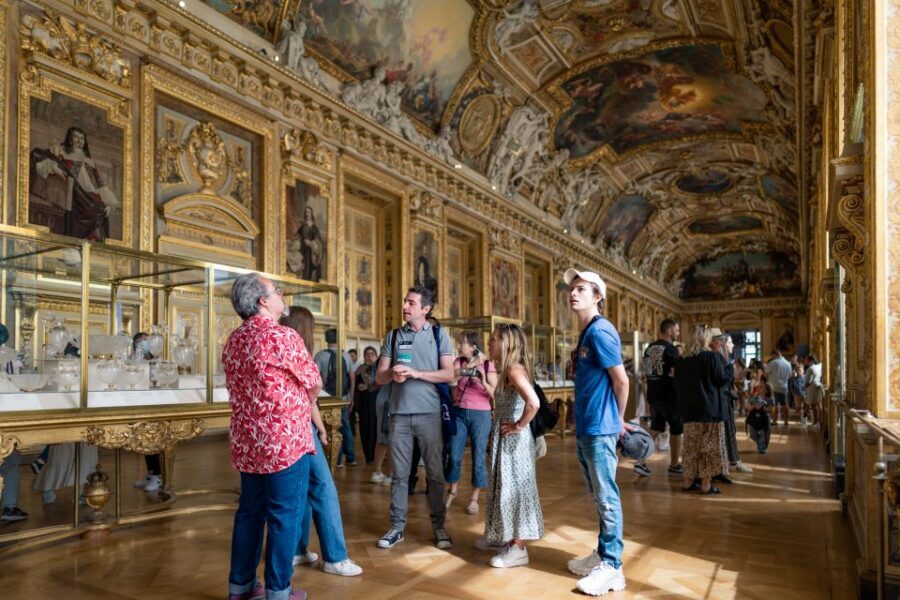
- Small group (up to 6) keeps the pace sane and the Q&A possible
- Skip-the-line entry via pre-reserved tickets gets you headed in faster
- Masterpiece stops include the Mona Lisa, Winged Victory, and Venus de Milo
- You’ll also see things beyond the poster art, like Napoleon III’s decorated apartments and major political-era paintings
- The guide helps you understand the Louvre layout so you stop feeling lost
- After your tour, you can stay until closing if you want extra time
Why this Louvre tour works (even if you only have a little time)
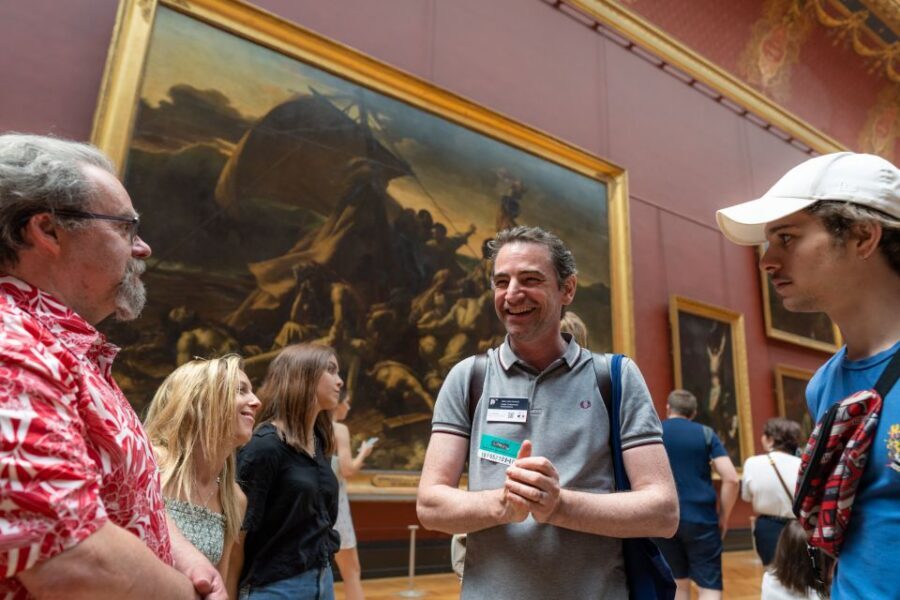
The Louvre’s biggest problem isn’t the art. It’s the geography. The building is sprawling because it wasn’t built to function as a museum, which means galleries stretch in surprising directions and you can burn an entire day just trying to find the next room.
That’s where a highlights tour earns its keep. You’re not paying just to see famous works. You’re paying to move through the museum with a plan—one that matches what most people actually want: the major masterpieces, plus a few “how did I miss this?” moments. With an expert guide, you’ll get context for what you’re looking at, not just a label pinned to a wall.
And the guide’s job isn’t only interpretation. It’s logistics. The tour is built to help you get to the right places, so you can spend your time looking, not plotting.
You can also read our reviews of more guided tours in Paris



Meeting at Arc de Triomphe du Carrousel and getting inside smart
Your tour starts at Arc de Triomphe du Carrousel (75001 Paris) and ends back at the same point. That matters because it keeps things simple: you’re not hunting for a museum-side meeting spot that changes by entrance.
The other big advantage is that pre-reserved entry tickets are included and the tour is designed to help you skip the ticket line. In real life, that’s the difference between making it to the Mona Lisa with some patience left—or spending your first hour watching people drift forward at a slow crawl.
Just don’t expect the day to be friction-free. The Louvre has increased security measures, and while skip-the-line helps with ticketing, security and crowd flow can still add time. Your best strategy is a relaxed one: show up with your ID ready, keep moving with the group, and let the guide handle the timing.
The highlights route: Mona Lisa, Winged Victory, Venus de Milo
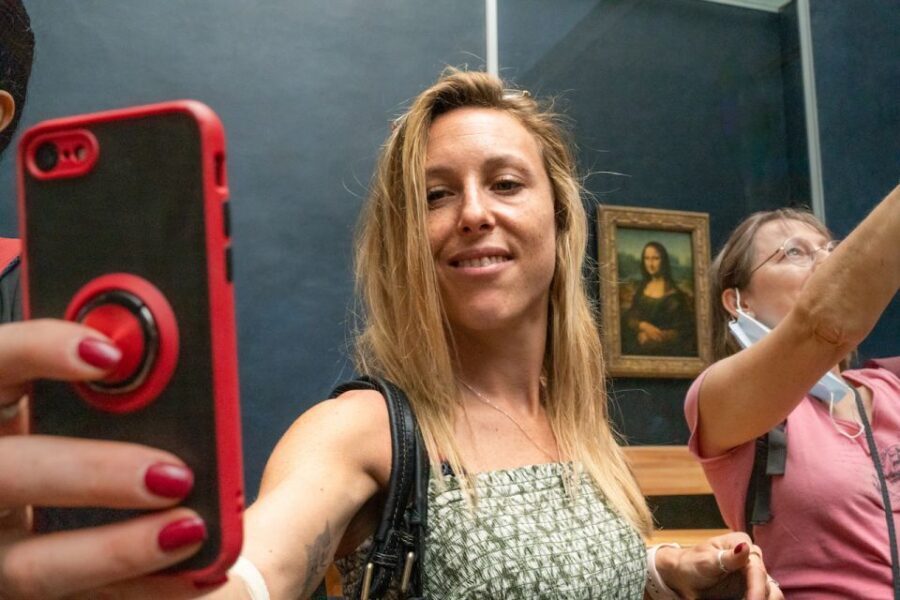
If your mental list of Louvre must-sees includes the usual suspects, this tour aims right at them. Expect stops that include:
- Da Vinci’s Mona Lisa
- Winged Victory
- Venus de Milo
What makes these stops work on a guided visit is not that someone says the name. It’s how you understand what you’re looking at once you’re standing there. The Mona Lisa is famous for a reason, but without context it can feel oddly small or strangely quiet compared to the hype. A good guide helps you notice the details and the story behind why it draws so much attention.
One small but important detail from past groups: guides have used waiting time around the Mona Lisa to share background, so you don’t feel like you’re just killing time. That’s a real quality-of-tour sign. Instead of wasting minutes, the guide turns them into something you can hold onto later.
The same goes for the sculpture highlights. Winged Victory and Venus de Milo can be overwhelming when you first see them—so much beauty, so many details, and the pressure to “do it right” in a crowded room. A guide helps you look in the right order, so you leave with more than a quick photo.
Napoleon III apartments and the Louvre’s less-obvious power plays
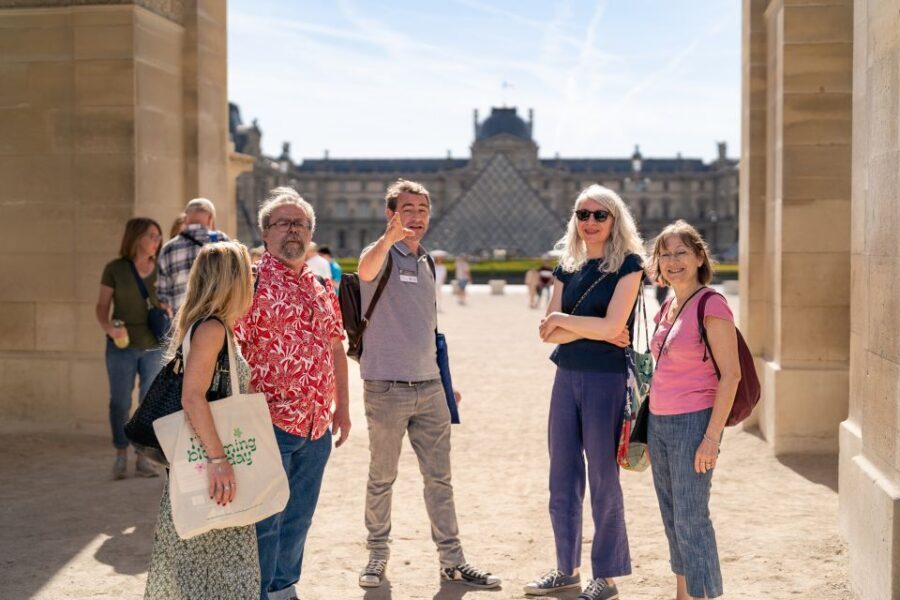
The Louvre isn’t only a hits package. It also has mood: royal rooms, opulence, and political symbolism tucked among the masterpieces.
This tour includes a look at the sumptuous apartments of Napoleon III, which is a big deal because it changes how you read the museum. In those Second Empire interiors, the Louvre isn’t just displaying art—it’s showing what elite life looked like when art, power, and image went together.
You also may see items that broaden the Louvre beyond “Renaissance-only” thinking, including:
- French Crown Jewels
- Egyptian antiquities that stretch into deep time
- Sculptural wonders by Michelangelo
- Large-format canvases such as Liberty Leading the People and the Coronation of Napoleon
These are the kinds of stops that help you understand the Louvre’s real theme: it’s a museum built from conquest, collection, and changing tastes across centuries. When a guide points out how these works connect—political messages, religious symbolism, mythic subject matter, and imperial storytelling—you start to feel you’re reading a long book, not just jumping between landmarks.
How the guide handles the Louvre layout (and why you’ll feel less stressed)
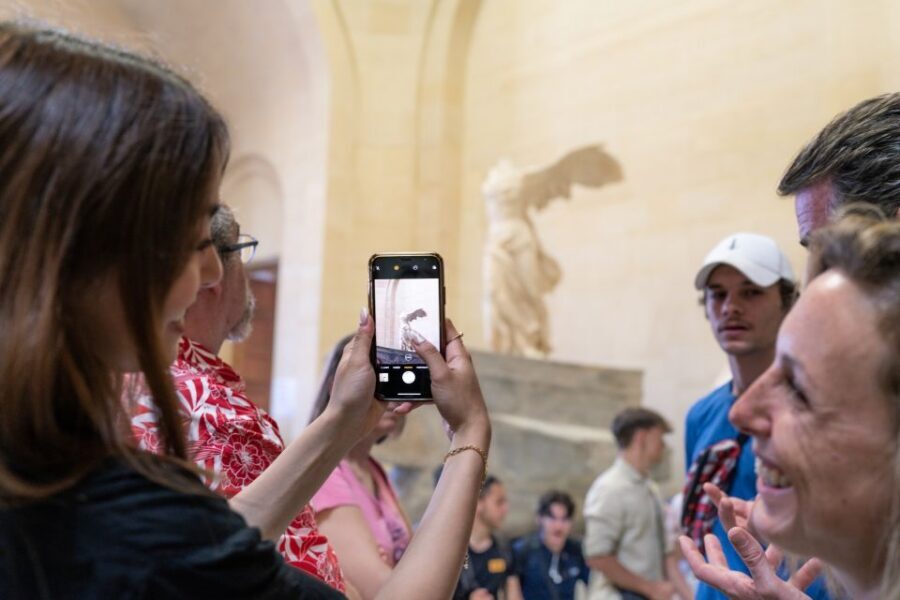
The tour is built around the Louvre’s awkward layout. That sprawling network of galleries—nearly 10 miles—is a recipe for stress if you’re trying to map your own route.
A strong guide does two things for you:
1) Routes you efficiently so you don’t bounce randomly between wings
2) Explains what you’re seeing in a way that makes the museum feel navigable
In practical terms, this means you’ll spend less time staring at your phone and more time noticing what’s actually in front of you. It also means the lesser-known beauties don’t slip past unnoticed. With the right explanations, even works that aren’t on your “must-see” list start to click.
There’s also a pacing benefit. The Louvre is crowded by nature, and the guide helps you keep momentum without sprinting. Past groups have praised guides for being warm, patient, and good at moving through busy halls while keeping the experience personal—something you really feel in a small group.
You can also read our reviews of more tours and experiences in Paris





Small group (up to 6): what you gain with fewer people
The tour is small group, limited to 6 participants. That’s a major value factor because the Louvre is not the place for a large crowd moving like a herd.
With a smaller group:
- You can ask questions without shouting
- The guide can adjust pacing if people slow down for photos
- You’re less likely to get separated from the key moments
This matters for first-timers and for families. Multiple guide names from past experiences—like Will and Astrid—were noted for keeping kids engaged and for managing the flow so families didn’t feel trapped in an adult-only lecture.
Even if you’re traveling solo, small group has a hidden benefit: it makes the visit feel like a conversation with context, not a one-way broadcast.
1.5 hours vs. the 3-hour option: choose based on your style
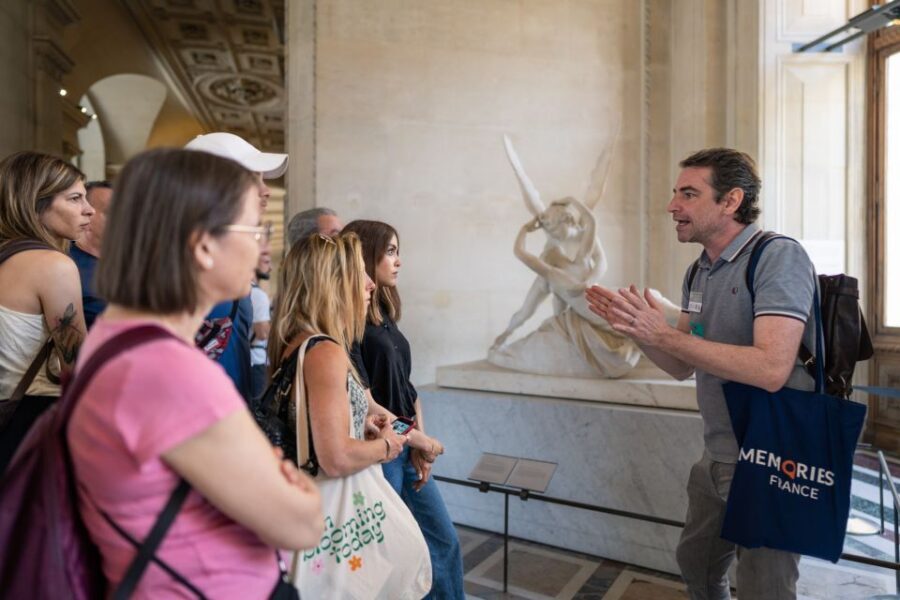
The experience is offered as a 1.5-hour highlights tour, with a 3-hour option listed as well. If you’re deciding which one fits, think about your travel style.
Pick 1.5 hours if:
- You have a tight schedule
- You want the core masterpieces and key context
- You’re happy to explore on your own afterward
Pick 3 hours if:
- You want more stops beyond the absolute top names
- You like taking time in front of works instead of moving quickly
- You’re the type who reads wall labels once you’re standing there
Either way, the tour’s structure is built for highlights. And if you choose the shorter option, you can still extend your day.
After the tour: staying until closing time
One of the nicer perks: after your guided portion, you can remain in the museum until closing time if you want. That’s useful because guided time only gets you part of the way—your brain still needs time to wander.
So here’s a smart strategy: use the tour to learn the museum’s logic, then spend your extra time chasing what you liked most. If Egyptian antiquities grabbed you, go back to that wing. If the Napoleon-era rooms made you feel something, linger there. The guide helps you identify what’s worth your attention, and then you get to control the rest.
Practical stuff that can make or break the day
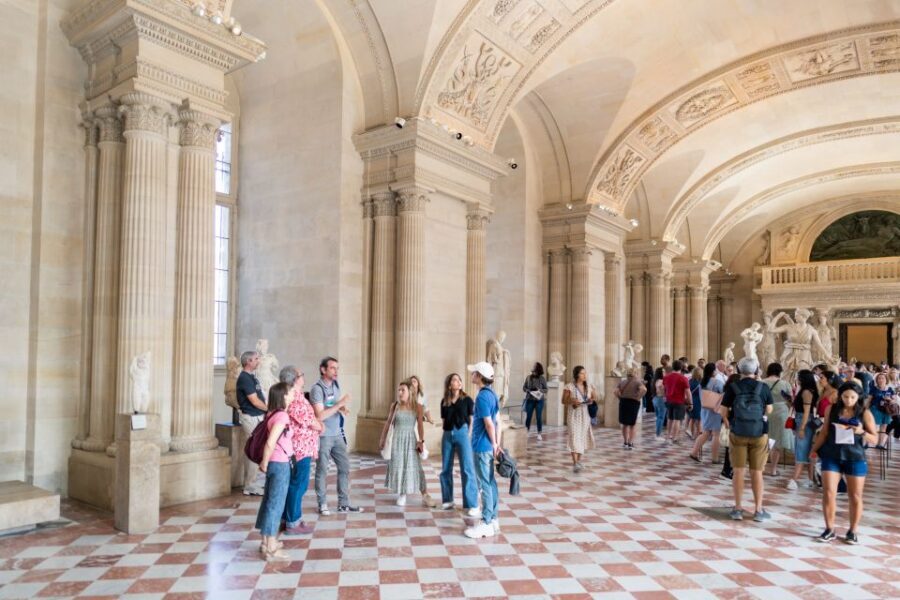
This tour comes with a few rules you’ll want to know before you show up.
Bring: a passport or ID card.
Bag rules: no luggage or large bags, and any item exceeding 55x35x20 cm isn’t permitted. So pack like you’re walking all day (because you are). A small day bag is usually the safe bet.
Language: the live guide is English.
And remember the reality of the Louvre: even when you skip the ticket line, security and crowd flow can still create waiting. If you’re the type who gets anxious when plans change, build a little buffer into your day.
Price and value: is $137 worth it?
At about $137 per person, this is not a cheap add-on. But it can be a smart use of money if your goal is to maximize art time and reduce stress.
Here’s what your money buys:
- A small group (up to 6), not a large bus-style crowd
- Fully guided time focused on major works and key connections across eras
- Pre-reserved entry tickets and skip-the-line entry benefits
- An accredited local guide who explains what you’re seeing
The biggest value isn’t the skip-the-line sticker. It’s the combination of fast entry plus guided “what to look at” navigation. If you’re visiting for the first time and you’re on a clock, a guide can turn a frustrating day of wandering into a coherent experience.
If you already know the Louvre well and you prefer to move freely without a structured route, you might not feel the same value. But if you’d rather spend your time seeing art than solving museum geography, this price starts to make sense quickly.
Who should book this Louvre highlights tour
This is a good fit if you:
- Want the big names (Mona Lisa, Winged Victory, Venus de Milo) without wasting time
- Feel overwhelmed by the Louvre’s size
- Want expert context, not just photos
- Like smaller groups and a more personal pace
It’s also a solid choice if you’re short on time in Paris. A 1.5-hour highlights visit can work as a “first chapter,” then you extend the day on your own with places that stuck with you.
One note on suitability: the info provided includes wheelchair accessibility but also states the tour is not suitable for wheelchair users. Because that’s contradictory, you should verify directly with the operator before you book if mobility is a concern.
Should you book this Louvre skip-the-line highlights tour?
I’d book it if you want your Louvre day to feel structured and efficient. The small group size, the guided focus on major works, and the pre-reserved skip-the-line entry are exactly what you want when the museum can swallow an entire day.
I wouldn’t book it if you’re traveling with a very flexible schedule and you’re excited to self-navigate with maps and guidebooks only. In that case, you might prefer a self-guided plan so you can roam freely without a set route.
If you do book, do yourself a favor: keep your bag small, bring your ID, and give yourself permission to come back after the tour for whatever you liked most.
FAQ
How long is the Louvre tour?
The experience is listed as a 1.5-hour guided tour, and it also mentions a 3-hour option. Check availability for the exact starting times.
Is this a small-group tour?
Yes. The group is limited to 6 participants, which helps keep the pace manageable and the experience more personal.
Does the tour include tickets?
Yes. Pre-reserved entry tickets are included, and the tour is designed to help you skip the ticket line.
Where do we meet for the tour?
You meet at Arc de Triomphe du Carrousel, 75001 Paris, France and the tour ends back at the meeting point.
What should I bring?
Bring a passport or ID card.
Are large bags allowed inside the Louvre?
No. Luggage or large bags are not allowed, and items exceeding 55x35x20 cm are not permitted in the museum.
Is the tour in English?
Yes. The live tour guide is English.
Can I cancel for free?
Yes. You can cancel up to 24 hours in advance for a full refund.
Is the tour wheelchair accessible?
The information provided includes both that the tour is wheelchair accessible and that it is not suitable for wheelchair users. Since that’s conflicting, you should confirm suitability with the provider before booking.