REVIEW · REIMS
Reims or Epernay: Short day family growers & lunch
Book on GetYourGuide →Operated by À la Française Champagne ! · Bookable on GetYourGuide
That first sip magic starts on the drive. This short-day outing is built for Champagne lovers who want more than a quick toast: you’ll ride from Reims to Epernay, see the famous Avenue de Champagne, visit UNESCO-designated vineyards, then tour a family Champagne estate with tastings and a lunch that’s actually paired with what you’re drinking.
Two big wins for me: the small-group size (max 8) keeps things personal, and the day balances sights with hands-on tasting—so you leave with clearer “how Champagne works” understanding, not just a buzz.
One possible drawback to plan for: it’s a full day (about 6 hours 15 minutes), and if you’re not a fan of sitting in a van and moving through multiple stops, the pace can feel like a lot by late morning.
In This Review
- Key points to know before you go
- A Full Day of Champagne Stops from Reims to Epernay
- The Avenue de Champagne Drive: More Than Just Famous Signs
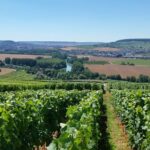
- UNESCO Vineyards Stop: Why the Region Looks Like This
- Hautvillers and Dom Pérignon’s Church: A Stop That Feels Personal
- Family-Run Winery Visits and Your 5-Glass Tasting Plan
- Lunch at a Champagne Estate: Pairing Done the Right Way
- Group Size and Pace: Comfortable, But Not a Lazy Day
- Price and Value: Is $245 Fair for What You Get?
- Who This Tour Fits Best (And Who Should Skip It)
- Practical Tips to Make Your Day Smoother
- Should You Book This Reims–Epernay Champagne Day?
Key points to know before you go
- Small group (8 max) means more time for questions during tastings.
- UNESCO vineyard stop gives context for why Champagne grapes grow and taste the way they do.
- Hautvillers + Dom Pérignon’s church is a meaningful, photo-friendly detour.
- Two family-run winery visits plus 5 glasses tasted keeps the tasting focused.
- Lunch at a Champagne estate is paired, so you don’t have to guess what goes with what.
- Reims pickup and drop-off makes the logistics much easier for a day trip.
A Full Day of Champagne Stops from Reims to Epernay
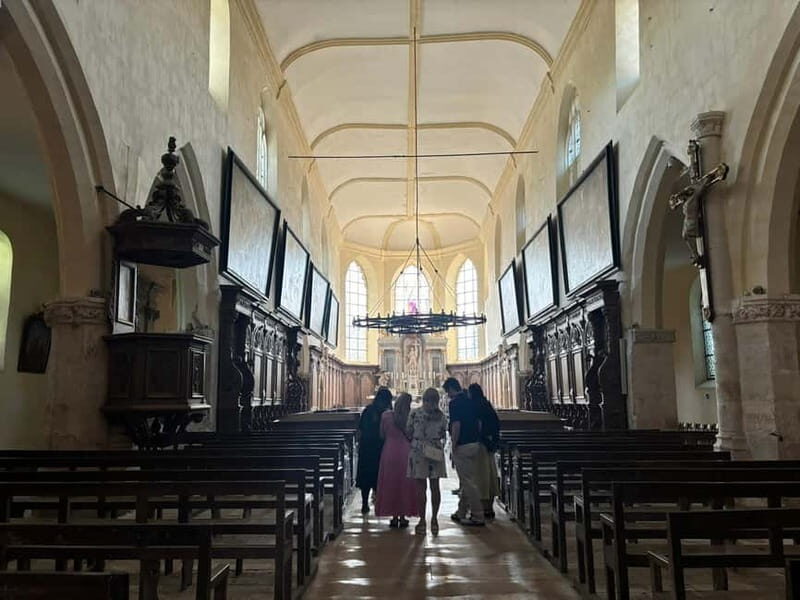
If you want a Champagne day that feels organized but still relaxed, this one hits the sweet spot. You meet your English-speaking guide at 11:15 am at the Reims train station, then you’re off in an air-conditioned minivan with a group capped at 8 people. The plan ends around 5:30 pm back at the Reims centre train station area, so you’re not stuck figuring out your own ride home.
What I like most is that the day isn’t just “visit places.” It’s built like a lesson: iconic sights first, then real vineyard context, then tasting in a working estate setting. You’ll leave with a better sense of the region’s rhythm—harvest-to-bottle reality, not just postcard views.
You can also read our reviews of more tours and experiences in Reims
The Avenue de Champagne Drive: More Than Just Famous Signs
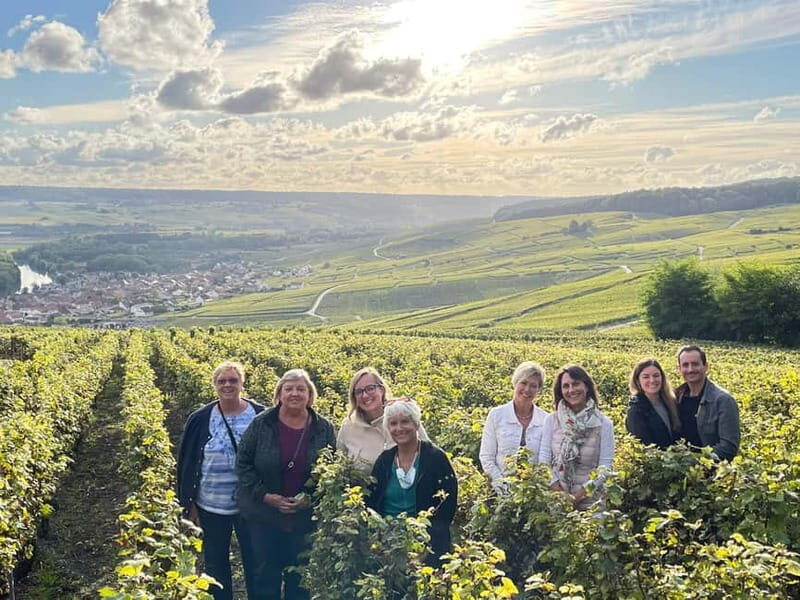
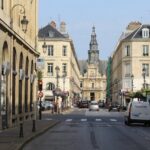
Epernay’s Avenue de Champagne is where you instantly feel you’re in Champagne country. From the road, you’ll pass prestigious names based there—places like Pol Roger, Perrier-Jouët, Mercier, Boizel, and Moët & Chandon—and it’s a quick way to get your bearings fast.
Here’s the practical value: seeing these big houses early helps you later understand what you’re comparing. When you eventually sit down with a smaller, family-run producer, you start noticing differences in approach—how they talk about their vines, what they emphasize during tastings, and how the bubbles feel in the glass.
This stop is also good for photos. If you’re the kind of person who likes to capture the “moment,” this is an easy win because you don’t have to hike or line up to get it.
UNESCO Vineyards Stop: Why the Region Looks Like This
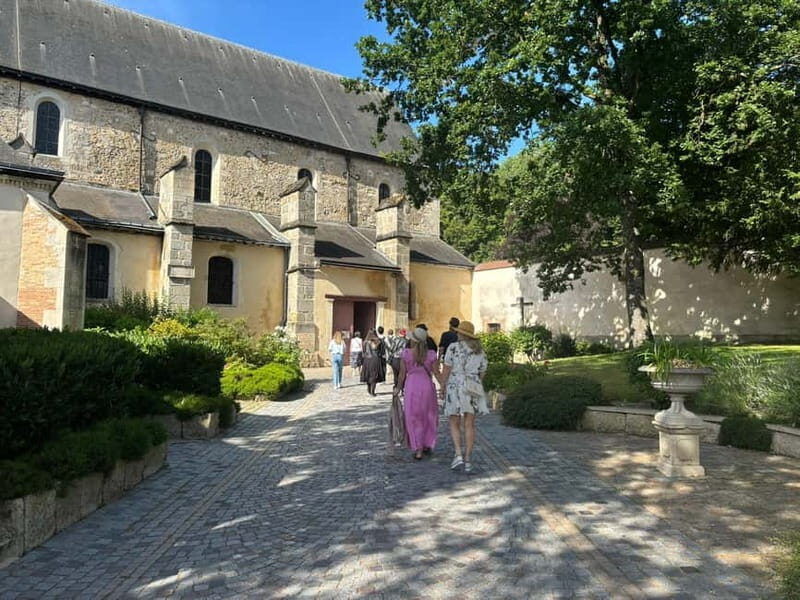
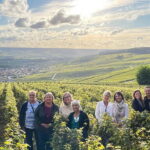
After Epernay, you’ll step into Champagne’s UNESCO World Heritage vineyards. This is where the tour shifts from “famous places” to “why the place matters.”
You’ll learn about the history of viticulture in the region and how the vineyards shaped what Champagne became. Even without getting overly technical, it helps you connect what you see—hillsides, rows of vines, the way the land is organized—to what you taste later.
One thing I appreciate: this stop gives you context before the tastings. It means when someone talks about grape character or style differences, it lands better. Instead of collecting facts, you’re building a mental map.
Hautvillers and Dom Pérignon’s Church: A Stop That Feels Personal
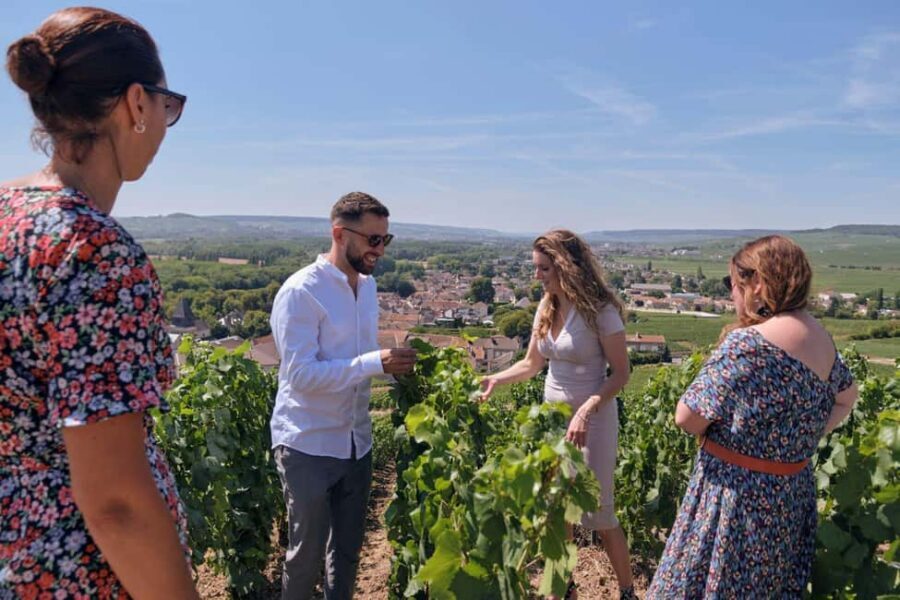
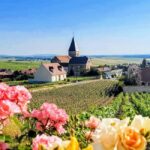
Next you’ll visit Hautvillers, the charming village closely tied to the legend of Dom Pérignon. You’ll stroll the area and visit Dom Pérignon’s church, plus you’ll have a viewpoint stop that’s ideal for photos of the surrounding vineyard hills.
I like this portion because it’s human-scale. You’re not just looking at wineries behind gates—you’re in a village where Champagne history feels like part of everyday life. And the viewpoint matters. Champagne is all about place, and seeing the hills from above makes the tasting stop make more sense.
If you get motion-sensitive, this is also the moment to keep an eye on your energy. The day already has driving time and then walking. It’s not extreme, but you’ll want to pace yourself.
Family-Run Winery Visits and Your 5-Glass Tasting Plan
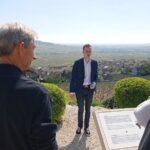
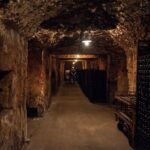
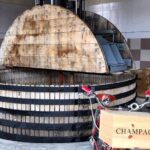
The core of the day is the winery time, and it’s where the tour earns its reputation. You’ll be welcomed at a Champagne estate and spend time with a small, family-run Champagne house where you can get an insider look at their winemaking process.
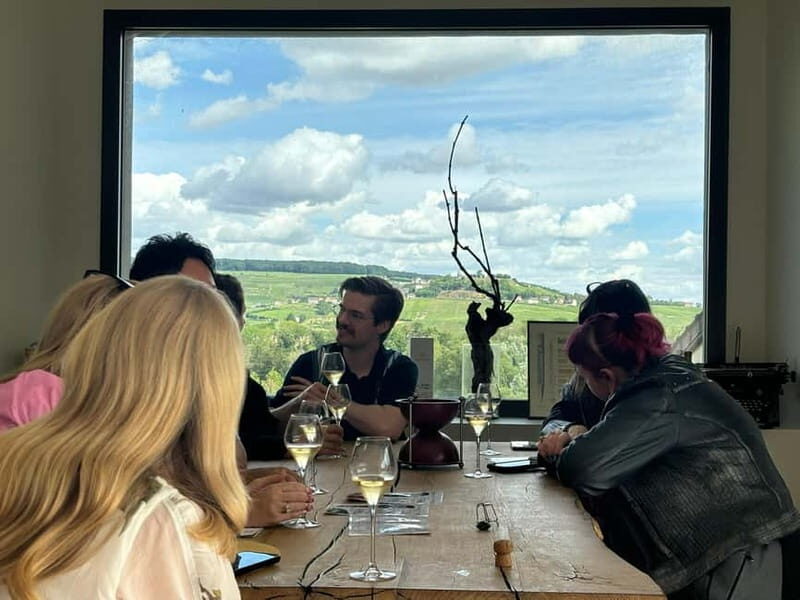
You’ll also have entrance fees for visits and tastings at 2 family-run wineries, and the tasting portion includes 5 glasses total. That’s an intentional amount: enough variety to learn, not so much that you’re trying to remember what you drank five stops ago.
From what I’ve seen work well on tours like this (and what fits the way this one is set up), the best tasting days share one thing: you’re guided through what to notice. You don’t just pour and smile. You learn to pay attention—how the bubbles feel, how the flavors shift, and how “style” can differ even within Champagne.
If you’re new to Champagne, this is the kind of tasting that helps you move from guesswork to actual confidence. You’ll understand why producers talk about vineyards and methods, and you’ll start recognizing how different bottles express themselves in the glass.



Lunch at a Champagne Estate: Pairing Done the Right Way
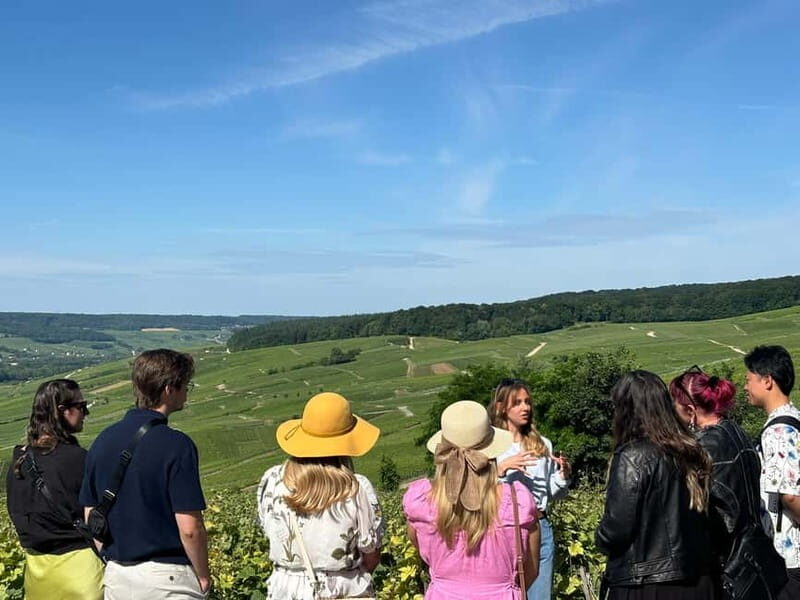
By the time lunch arrives, you’ll be ready for a break. The day includes lunch at a Champagne estate, and it comes with a selection of Champagnes paired with the meal.
This is a huge value point. Pairing is where many Champagne outings fall apart—you end up with a plate of food and a bottle, with no real connection between the two. Here, the tour is set up so the pairing is part of the experience, not an afterthought. It also helps you slow down and absorb what you tasted before lunch.
Vegetarian options are available if you advise at booking, which is the practical difference between “we can maybe do something” and actually having a good meal. If you have allergies, you’ll also want to mention them at booking so the estate can plan appropriately.
One more note: lunch timing matters on a day like this. It helps reset your energy before you finish your touring and head back toward Reims.
Group Size and Pace: Comfortable, But Not a Lazy Day
This tour is capped at 8 people, which makes a difference. In a small group, you’re more likely to hear the guide clearly, and you’re more likely to get your questions answered—especially during tastings when people naturally ask what they’re tasting.
The pace is active though. You’ve got driving, multiple stops, and tastings plus lunch. That’s why this is best for people who enjoy structured sightseeing and learning at a comfortable speed. One caution from real-world experience is that after a stretch of time—especially early in the day—some people start feeling the workload. If you’re easily tired by tours, plan a quiet evening after you’re back in Reims.
The good news: because it’s only about 6 hours 15 minutes, you’re not committing to an entire day of travel chaos.
Price and Value: Is $245 Fair for What You Get?
Let’s talk value plainly. At $245 per person, this isn’t the cheapest way to see Champagne. But it’s also not overpriced for what’s included.
You’re paying for:
- Reims pickup and drop-off
- air-conditioned transportation
- a local English-speaking guide
- entrance fees for two family-run wineries
- 5 glasses tasted
- lunch at a Champagne estate with Champagnes paired
When you line those up, the price starts to make more sense. The biggest cost drivers here are the guide and the winery/lunch access. If you tried to DIY this—transport, timed visits, and guided tastings—you’d likely spend more time managing logistics and more money on separate tickets and transfers.
For me, the best “value” sign is that the tastings and lunch aren’t tacked on randomly. They’re integrated into the day’s learning arc.
Who This Tour Fits Best (And Who Should Skip It)
You’ll probably love this tour if:
- you’re a Champagne enthusiast and want both context and tasting,
- you want family-run estates rather than just big-name sightseeing,
- you like small-group experiences with time for questions,
- you want lunch handled for you in a Champagne setting, not just grabbed on the street.
You might want to think twice if:
- you’re sensitive to a packed schedule and long stretches in a van,
- you’re looking for a fully relaxed day with long downtime,
- you’re traveling with kids—this tour has a minimum age of 18.
Also, it’s not suitable for pets, and it notes restrictions for non-folding wheelchairs and non-folding strollers, so plan accordingly if that’s relevant for your group.
Practical Tips to Make Your Day Smoother
A few small moves can make this day feel effortless.
- Eat something light before you go. You meet at 11:15, and the schedule builds toward tastings and lunch.
- Ask about vegetarian needs and allergies at booking. The tour says dietary restrictions can be accommodated, but it has to be specified.
- Wear shoes you’re happy to walk in. Hautvillers includes walking plus a viewpoint, even if it’s not a heavy hike.
- Take your time with tastings. With five glasses, pace yourself. The goal is to notice differences, not rush to the end.
- Bring a camera, but also look up. The viewpoint in Hautvillers is a great spot to slow down and take in the hills.
Should You Book This Reims–Epernay Champagne Day?
Here’s my straight recommendation: book it if you want a short-day Champagne education with real estate access—and you value small-group guidance more than self-guided wandering.
Skip it (or look for another option) if you’re craving a slow, flexible day with minimal stops. The schedule is structured, and after enough hours, you’ll feel it—especially if you’re not used to multi-stop tours.
If you’re between those two moods, choose it anyway. The combination of Avenue de Champagne context, UNESCO vineyard understanding, Hautvillers + Dom Pérignon’s church, and two family-run tastings with lunch pairing is a strong way to experience Champagne without turning your day into logistics work.