REVIEW · PARIS
River Seine Sightseeing Boat Tour with Audio Guide
Book on Viator →Bookable on Viator
This is Paris in motion. A river cruise like this compresses a lot of landmarks into one relaxed hour, with an audio guide that keeps the story straight and easy to follow. I like that you get upper-deck seating for better sightlines and photos without having to fight for position all day.
You’ll also appreciate the onboard WiFi, which is handy for mapping, sharing shots, or looking up anything the narration mentions. One drawback to keep in mind: a small number of people reported problems at the meeting point (including no one showing up), so I’d treat this like any timed activity—arrive early and have your confirmation ready.
In This Review
- Key Highlights You’ll Actually Feel on This Seine Cruise
- Why This 1-Hour Seine Cruise Beats a Half-Day Shuffle
- Getting On at 33 Av. de la Bourdonnais: A Simple Plan
- Notre-Dame and the Gothic Skyline From the Water
- Louvre Palace Views Without the Waiting Lines
- Place de la Concorde: A Wide Square That Changes the Mood
- Pont de l’Alma: The Bridge With a Backstory
- Eiffel Tower From the Champ de Mars Side
- Les Invalides: Military Architecture With Purpose
- Musée d’Orsay: The Former Gare That Looks Like Art
- Saint-Germain-des-Prés Church: Ancient Roots, Rebuilt Over Time
- The Audio Guide and WiFi: Your On-Boat “Control Panel”
- Price and Value: What $24.20 Buys You
- Who Should Book This Seine Tour (and Who Might Skip It)
- Quick Practical Tips Before You Go
- Should You Book This River Seine Boat Tour?
- FAQ
- How long is the River Seine Sightseeing Boat Tour?
- What is the price per person?
- Is the audio guide available in English?
- Do you get WiFi onboard?
- Is the ticket mobile?
- Where does the tour start and end?
- What are the main sights you’ll pass during the cruise?
- How many people are in the group?
- Is the tour refundable or changeable after booking?
- Is the tour near public transportation?
Key Highlights You’ll Actually Feel on This Seine Cruise
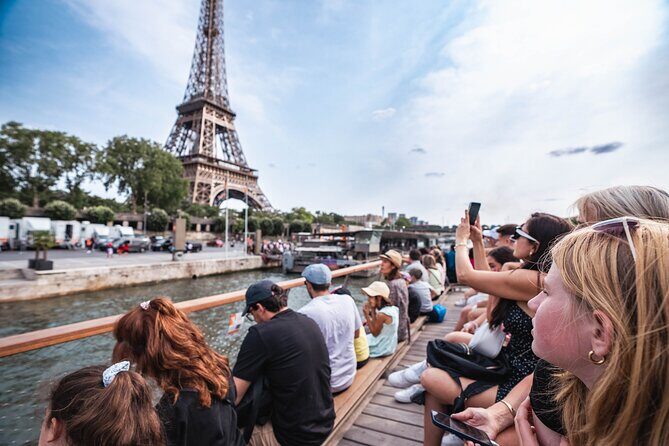
- Upper deck + better photo angles so you’re not stuck behind railings the whole time
- English audio guide that turns major landmarks into a clear, order-by-order story
- WiFi onboard so your phone stays useful during the ride
- A classic Left Bank sweep with views of Musée d’Orsay and Saint-Germain-des-Prés
- Comfort built in with both indoor and outdoor areas mentioned by past guests
Why This 1-Hour Seine Cruise Beats a Half-Day Shuffle
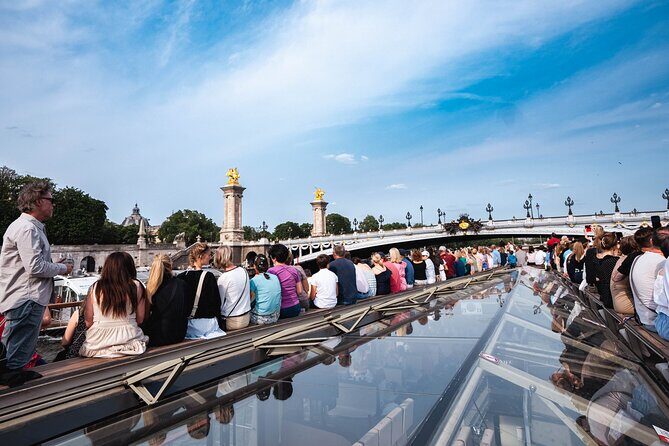
If you’ve ever tried to connect Notre-Dame, the Louvre area, the Eiffel Tower, and the Left Bank on foot, you already know the problem: Paris rewards walking, but it also punishes your schedule. This tour is built for the opposite goal. In about one hour, you get broad views of some of the city’s biggest names, without the sandbagging of staircases and long crossings.
What makes it work is timing. The Seine is basically the city’s moving “address book,” and a cruise lets you see landmarks while you’re still fresh. You’re not trying to memorize everything at street level. Instead, you get context first, then you can decide what you want to explore later (with tickets you actually control).
The other thing I like is the pace of the narration. With an audio guide, you can listen at your comfort level and re-focus when you spot something you care about—bridges, towers, churches, and museum facades.
You can also read our reviews of more boat tours in Paris

Getting On at 33 Av. de la Bourdonnais: A Simple Plan
This cruise starts at 33 Av. de la Bourdonnais (75007 Paris) and ends back at the meeting point. That matters because you’re not committing to a complicated transport puzzle after the boat docks. It’s also in a part of Paris that’s fairly logical to reach using public transit.
You’ll use a mobile ticket, and you should receive confirmation at booking time. That’s good news because it reduces the usual last-minute stress. Still, because there have been reports of meeting-point issues, the best move is basic: arrive with a cushion of time, not right on the dot.
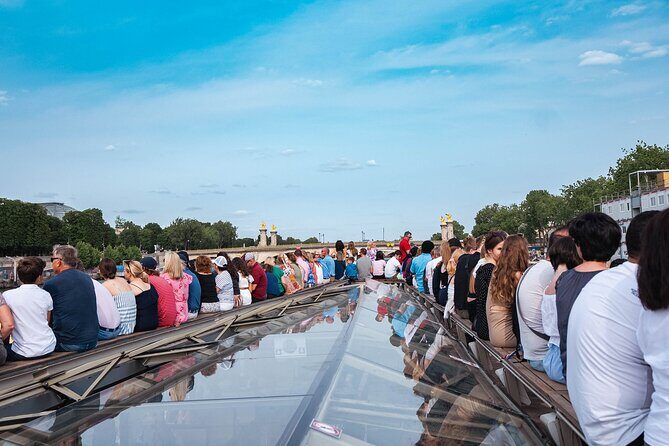
Also note the group size limit is up to 60 travelers. That’s not tiny, but it’s also not a school-bus situation. You should still be able to find a decent viewing spot on the upper deck when the big sights start coming into view.
Notre-Dame and the Gothic Skyline From the Water
The cruise begins with Notre-Dame de Paris, the famous Gothic cathedral built between the 12th and 14th centuries. Seeing Notre-Dame from the Seine changes it. Up close from land, you’re hit with details and scale. From the river, you get something different: the cathedral framed by the city’s river geometry.
This is one of those moments where an audio guide helps more than you’d expect. The guide isn’t just naming features; it gives you the kind of quick historical grounding that makes the building feel less like a photo background and more like a timeline you can recognize.
One drawback: you won’t be stepping inside. This is a sightseeing ride, not a cathedral visit. So if you want the interior experience, treat this as the best possible preview—then plan a separate visit when you have time.
Louvre Palace Views Without the Waiting Lines
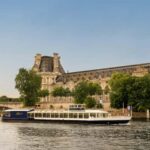
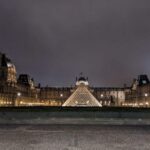
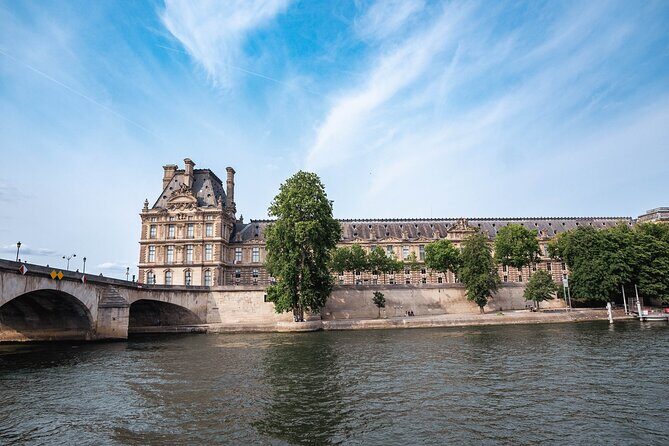
Next comes the Louvre Palace, described as the former residence of French kings and the home of the largest art museum in the world. It also has deep roots: it began as a 12th-century fortress, and parts of that older structure can still be seen.
From the river, the Louvre reads like a “wall of power,” with the museum facade acting as a backdrop to daily city life. That’s especially useful if you’re visiting for the first time. You get an instant mental map: where the palace sits, how the Seine shapes the area, and why everyone gravitates there.
Again, you’re not entering the museum on this cruise. But you are getting a visual anchor. If later you buy museum tickets, you’ll already understand what direction to aim for and what sections matter most to you.
Tip for your photos: aim for a quick burst as the narration lines up with the sight. Audio timing often matches the boat’s passing angle, which is when your phone camera will actually capture the landmark cleanly.
Place de la Concorde: A Wide Square That Changes the Mood
The tour also includes a pass by a major public square in Paris, measuring about 7.6 hectares (19 acres) and located in the 8th arrondissement, at the eastern end of the Champs-Élysées. That’s Place de la Concorde, one of the city’s most recognizable open spaces.
What’s special about seeing this from the Seine is how the mood changes. The city’s river edges tend to feel linear and tight. But a huge square like Concorde is open and dramatic, and from the water you can understand the scale right away.
With an audio guide, this stop works best as orientation. You learn where you are in the city’s grand layout—why the Champs-Élysées stretches the way it does, and how the river connects to the city’s showpiece avenues.
Small practical consideration: open squares can be harder to photograph than towers or domes because you might have more sky in your frame. Keep your expectations realistic. A good shot is about timing and cropping, not luck.
You can also read our reviews of more guided tours in Paris


Pont de l’Alma: The Bridge With a Backstory
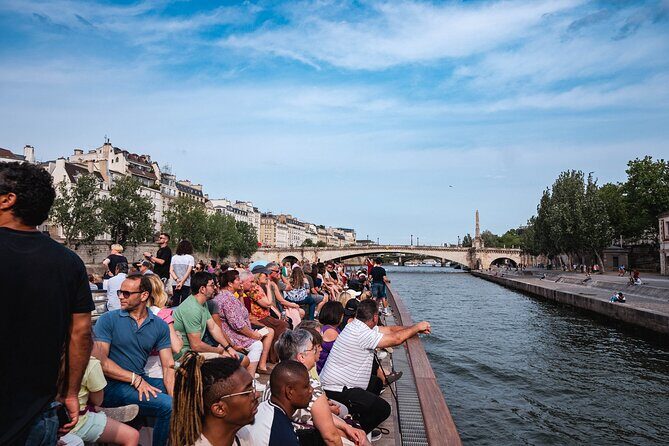
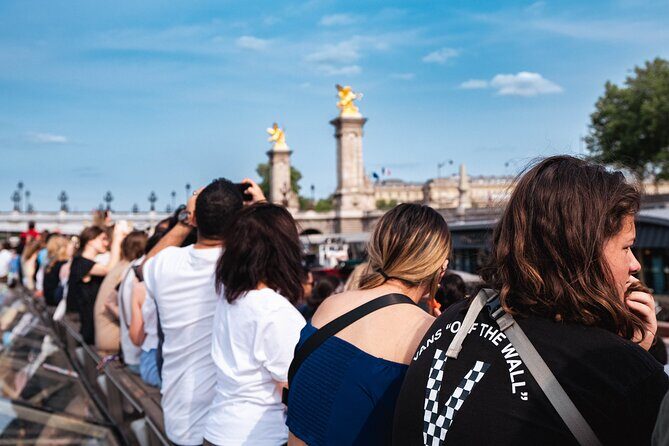
Then you reach the Pont de l’Alma, a road bridge over the Seine named for the Battle of Alma during the Crimean War in 1854. That kind of detail is exactly what makes a cruise more than “drive-by sightseeing.”
Bridges are easy to ignore when you’re on foot. From the river, they become part of the composition, and the narration gives you a reason to look up at the structure instead of only the skyline behind it. It also teaches you something important about Paris: a lot of what looks decorative or official has a story attached.
If you like history but hate long museum days, this is a sweet spot. You get quick meaning without needing a ticket.
Eiffel Tower From the Champ de Mars Side
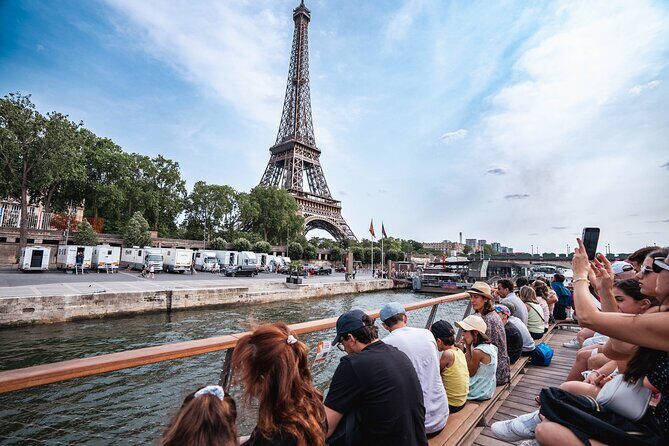
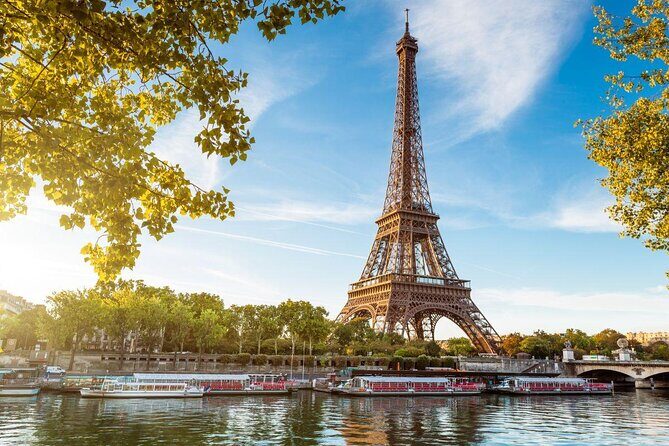
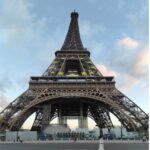
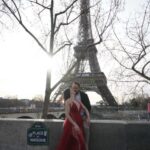
Of course, one of the highlights is the Eiffel Tower, the wrought-iron lattice tower on the Champ de Mars. It’s named after engineer Gustave Eiffel, whose company designed and built it from 1887 to 1889.
This is the moment where the upper deck earns its keep. When you’re positioned well, the tower feels less like a distant icon and more like a physical object that’s towering over the river corridor. If you care about photos, the boat angle can give you a cleaner “tall vertical” perspective than you’d get from a crowded viewpoint on land.
But here’s the tradeoff: because the stop is part of a moving route, you’re not lingering. You’re getting a passing view, not a long stare. Treat this as a first hit. If you want the full Eiffel experience, you’ll still likely want a separate visit (especially if you want to go up).
Les Invalides: Military Architecture With Purpose
Next is Les Invalides, a complex in the 7th arrondissement tied to French military history. It includes museums and monuments, plus a hospital and retirement home for war veterans—its original purpose.
From the river, Les Invalides has a different energy than the big, attention-grabbing landmarks. It feels structured and official, like you can sense the institutional backbone behind it. The narration makes it more than stone and symmetry. It helps you connect why the buildings exist and who they were meant for.
This is also a good stop if you’re tired of the “icon-only” version of Paris sightseeing. Les Invalides can be a refreshing change of pace—still famous, but with substance.
Practical note: like the others, you won’t tour inside on the boat. But seeing the exterior layout from the Seine can help you decide later whether you want to visit the museums on land.
Musée d’Orsay: The Former Gare That Looks Like Art
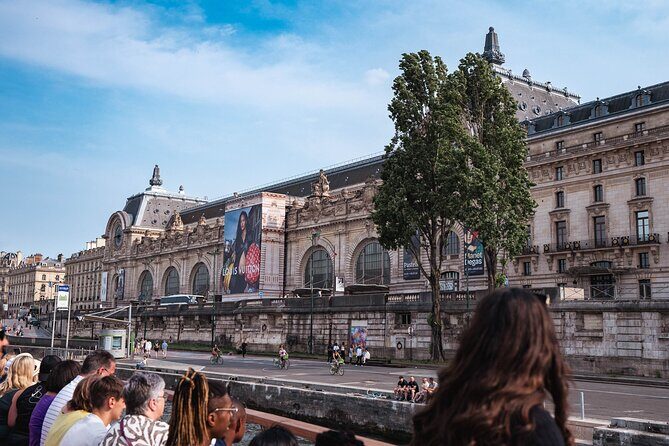
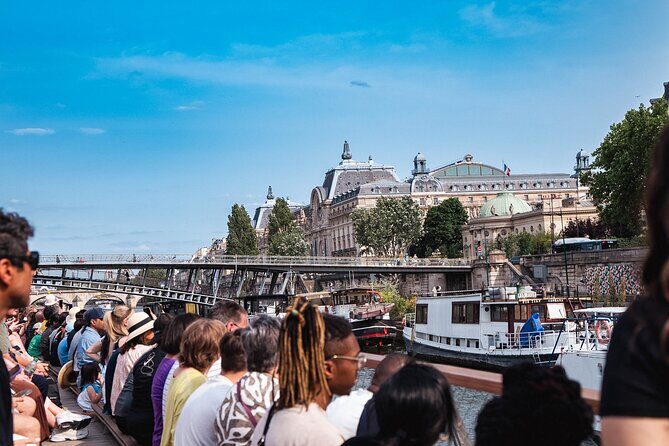
On the Left Bank, you’ll see Musée d’Orsay in the former Gare d’Orsay railway station, built between 1898 and 1900. That station-to-museum conversion is a big reason people love this building—it carries the drama of rail architecture, then repurposes it for art.
From the water, the key win is understanding the setting. Musée d’Orsay isn’t just a museum name; it sits in a specific visual relationship with the river, the banks, and the surrounding neighborhoods. When you later walk into the museum, you’ll have that “I know where I am” feeling.
One more useful point: this cruise gives you a map you can feel. After the boat passes, you’ll be able to picture where the museum sits relative to other sights you’ve already seen.
Saint-Germain-des-Prés Church: Ancient Roots, Rebuilt Over Time
The tour also includes Saint-Germain-des-Prés, a Roman Catholic parish church in the Saint-Germain-des-Prés quarter. The backstory is intense for a structure you might otherwise treat as just another church: it was originally the church of a Benedictine abbey founded in 558 by Childebert I, the son of Clovis. It was destroyed by the Vikings, rebuilt, and renamed in the 8th century for Saint Germain, an early bishop of the city.
From the Seine, this kind of layered history is where audio really shines. The narration helps you notice that the building isn’t one single era frozen in time. It’s a result of rebuilding—history stacked on history.
Because you’re viewing from the river, you’ll likely notice the exterior impression more than tiny architectural details. But if you’re the type who likes to know what you’re looking at, this stop is one of the most satisfying on the itinerary.
The Audio Guide and WiFi: Your On-Boat “Control Panel”
This tour includes an English audio guide, plus WiFi onboard. Together, they change how you experience the city. You’re not stuck in a passive mode where landmarks become random flashes. You can listen, look, and if you want, check anything on your phone while you’re still on the water.
The WiFi also helps with practical things: keeping your maps accessible, sending a message, or quickly refreshing details you want to remember after the cruise. On a trip where you’re doing multiple timed activities, that convenience adds real value.
One more note from past experiences: the ride is described as comfortable, with both indoor and outdoor areas. That’s important in Paris because weather can flip your mood fast. If you prefer air conditioning and shade, you can shift indoors. If you want the best views, you’ll head out to the viewing side.
Price and Value: What $24.20 Buys You
At $24.20 per person for about 1 hour, the price is competitive for a Seine sightseeing option, especially because you’re not just buying a loop ride—you’re buying multiple landmark “hits” with guided context. You’re also getting upper-deck seating built in, plus WiFi and an English audio guide.
So what’s the real value equation?
- You save walking time and energy between major areas.
- You get an ordered introduction to landmarks you’ll likely want to revisit.
- You get a comfortable, mixed indoor/outdoor setup.
- You spend less mental effort trying to connect the dots yourself.
Where it can feel less valuable: if you already know you’ll only do the Eiffel Tower and skip everything else, then the cruise may feel like you’re paying for views you won’t revisit. But if you’re building a first-week itinerary, this is a strong way to get your bearings fast.
Who Should Book This Seine Tour (and Who Might Skip It)
I think this tour fits best if you fall into one of these groups:
- You want a quick Paris overview with less walking
- You like history but don’t want it delivered in a museum classroom
- You care about photo angles and want upper deck access
- You want a plan that includes both sides of the river (you’ll see major Right Bank sights and then move toward the Left Bank)
I’d hesitate if your trip is extremely tight and you can’t spare time for a no-frills sightseeing pass. Also, if you’re someone who needs complete certainty down to the minute, keep in mind there have been reports of meeting-point problems. A simple buffer time and ready confirmation can reduce stress.
Quick Practical Tips Before You Go
Here’s how to make the hour work for you:
- Dress in layers. Paris weather has opinions, and you’ll be moving between indoor and outdoor areas.
- Charge your phone. Between photos and the WiFi onboard, your screen time can jump.
- Have your camera ready for the Eiffel Tower and bridge moments. Those are the landmarks you’ll want to catch cleanly.
- Listen to the audio once, then skim again in your head as the boat passes. That helps the story stick.
And if you’re thinking, this feels like a lot of stops for one hour, you’re right. The point isn’t deep study. The point is a sharp first pass.
Should You Book This River Seine Boat Tour?
I’d book it if you want an efficient, good-feeling way to see Paris’s key icons from the river, with an English audio guide and WiFi that keep your phone useful during the ride. The itinerary is built around major landmarks—Notre-Dame, Louvre, Place de la Concorde, Pont de l’Alma, the Eiffel Tower, Les Invalides, Musée d’Orsay, and Saint-Germain-des-Prés—so it works especially well for first-time planning.
I’d reconsider if you’re very schedule-sensitive and can’t tolerate potential meeting-point drama. If you do book, arrive early, keep your mobile ticket and confirmation handy, and treat it like a timed entry event even though it’s “just a cruise.”
FAQ
How long is the River Seine Sightseeing Boat Tour?
The tour lasts about 1 hour.
What is the price per person?
The price is $24.20 per person.
Is the audio guide available in English?
Yes, the tour is offered in English.
Do you get WiFi onboard?
Yes, WiFi is included onboard.
Is the ticket mobile?
Yes, you use a mobile ticket.
Where does the tour start and end?
It starts at 33 Av. de la Bourdonnais, 75007 Paris, and ends back at the meeting point.
What are the main sights you’ll pass during the cruise?
You’ll see landmarks including Notre-Dame de Paris, the Louvre area, Place de la Concorde, Pont de l’Alma, the Eiffel Tower, Les Invalides, Musée d’Orsay, and Saint-Germain-des-Prés.
How many people are in the group?
The tour has a maximum of 60 travelers.
Is the tour refundable or changeable after booking?
No. It is non-refundable and cannot be changed for any reason.
Is the tour near public transportation?
Yes, it’s near public transportation.