REVIEW · PARIS
Small Group Walking Tour of Montmartre -10 people max
Book on Viator →Operated by SLL Paris Tours · Bookable on Viator
Montmartre feels bigger with a smaller plan. This walk strings together major landmarks and small oddities in one smooth loop, from Place Pigalle to the inside of Basilique du Sacré-Cœur, with a local guide who keeps the stories moving.
I especially like the small-group size (max 10), which makes it easier to ask questions and get photo help without feeling rushed. I also like that Sebastien brings the area alive with humor and practical Paris tips, including where to grab lunch afterward.
One thing to consider: you’ll climb uphill through a lot of stops. It’s fine for many people with moderate fitness, but comfortable shoes matter.
In This Review
- Key Highlights You’ll Actually Use
- Why This Montmartre Walk Works So Well
- Place Pigalle: A Quick Starter Lesson in Napoleon III Paris
- Eglise de St Jean Montmartre: The Church on Stilts
- Le Mur des Je t’aime: 2000 and Every Language
- Le Bateau-Lavoir: Passing a Key Picasso-Era Spot
- Le Moulin de la Galette: Artists, Food, and Renoir’s Inspiration
- La Petite Maison Rose de Montmartre: A Photo Stop With Date Stamp
- Vigne du Clos Montmartre: The Little Vineyard Still Producing Wine
- Au Lapin Agile: The Donkey Anecdote
- Place du Tertre: Artists Still Gather Here
- Eglise Saint-Pierre and Sacré-Cœur: From Roman-Era Detail to the City’s Highest Point
- The Pace, the Photos, and What to Expect Walking
- Price and Value: What $60.34 Buys You Here
- Lunch Help at the End: Turning a Tour Into a Real Meal
- Who Should Book This Montmartre Tour
- Should You Book This Montmartre Walk?
- FAQ
- How long is the Small Group Walking Tour of Montmartre?
- What is the group size limit?
- Where do you meet for the tour?
- What time does the tour start?
- Is the tour offered in English?
- Are there admission tickets needed for the stops?
- Do I need to be in good physical shape?
- Is there a mobile ticket?
- Can I cancel for a full refund?
- Are service animals allowed?
Key Highlights You’ll Actually Use
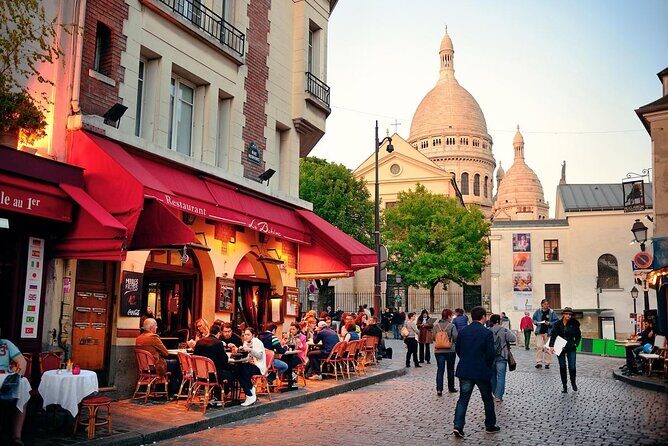
- Max 10 people keeps the pace human and questions easy
- Free entry at every listed stop means you’re paying for the guide and time, not tickets
- Churches, artists, and surprises: from a church on stilts to the I Love You wall
- The hill loop includes viewpoints and classics like Sacré-Cœur and Place du Tertre
- Lunch guidance at the end helps you turn a great walk into a good meal
Why This Montmartre Walk Works So Well
Montmartre can be chaotic if you go it alone. You end up either sprinting for photos or wandering for hours without a plan. This tour keeps things tight and readable, with about 2 hours 30 minutes total time and short stop windows that give you enough look-but-not-too-much-stand.
The price—about $60.34 per person—isn’t “cheap,” but it is good value for what you get: a real guide, an easy structure, and admission listed as free at each stop. You’re basically paying for interpretation plus the time saved by having someone point out what’s actually worth your attention.
Logistics are also straightforward. You meet at Place Pigalle (75018 Paris) around 10:00 am, and the tour ends back at the same meeting point. It runs with a mobile ticket and is offered in English, and you’ll be near public transportation along the route.
Group size matters here. With no more than 10 travelers, the guide can keep a relaxed rhythm, answer questions, and adjust pacing so the walk stays enjoyable instead of tiring.
You can also read our reviews of more walking tours in Paris



Place Pigalle: A Quick Starter Lesson in Napoleon III Paris
You begin at Place Pigalle, which is more than just a name on a map. Your guide frames the area with history tied to Napoleon III, focusing on what changed before and after his era. It’s a helpful mental anchor because Montmartre today can look whimsical and random—this gives you a “why” for what you’re about to see.
This first stop is short, so don’t expect a long lecture. Instead, treat it like orientation: you’ll understand the vibe of the neighborhood as the buildings and streets start making more sense.
Eglise de St Jean Montmartre: The Church on Stilts

Next comes the Eglise de St Jean Montmartre, famous for being built on stilts. Even if you’re not the type to study architecture, this is the sort of detail that makes you stop mid-walk and go, wait, how did they do that?
This stop is brief, but it’s the right kind of quick. You get a strong visual hook and a story that makes the rest of Montmartre feel less like a photo hunt and more like a living hillside.
Le Mur des Je t’aime: 2000 and Every Language
At the Le Mur des Je t’aime, you’ll see the I Love You wall, created in 2000, with the message written in many languages. It’s the kind of stop that works for couples, families, and solo travelers because it’s both meaningful and playful.
This is a great place to slow down for photos, because the wall is designed to be read and framed. If your camera roll always needs “one iconic thing,” this delivers.
Le Bateau-Lavoir: Passing a Key Picasso-Era Spot
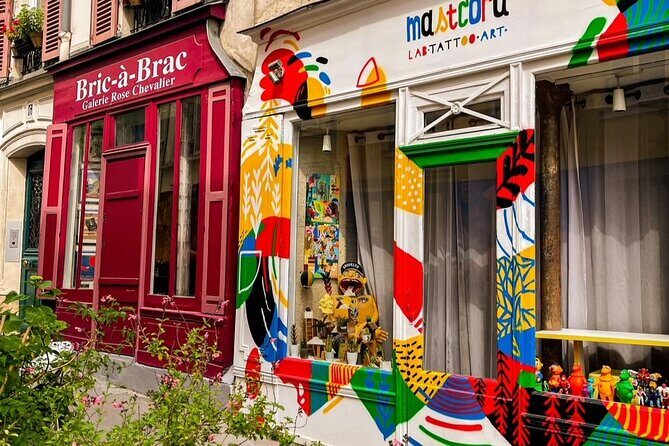
Then you pass Le Bateau-Lavoir, an artist studio connected to Picasso. The focus here is simple and specific: this is where Picasso painted some of his most famous works, and the building’s artistic legacy still hangs in the air.
You won’t be stuck too long at the curb, but the point is to connect what you’ve heard with what you’re walking through. Montmartre’s art story isn’t confined to museums; it’s built into the street-level geography.






Le Moulin de la Galette: Artists, Food, and Renoir’s Inspiration
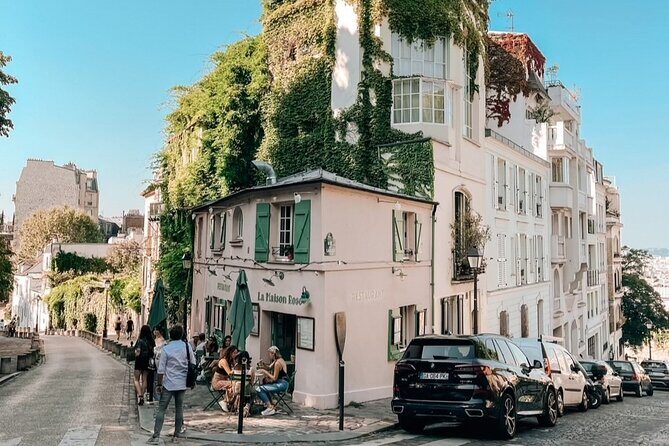
Your walk includes the area around Le Moulin de la Galette, known for a restaurant atmosphere that has long attracted artists. The names matter because they help you picture the place historically: Renoir, Pissaro, and Van Gogh are tied to its creative draw.
This stop also connects to art-making in a direct way: it inspired Renoir’s Bal du Moulin de la Galette. Even if you’re not an art-history person, that kind of link helps you understand why Montmartre became such a magnet in the first place.
One practical note: because this is a famous spot, it can feel busy. If you want cleaner photos, be ready to wait a moment while people move through.
La Petite Maison Rose de Montmartre: A Photo Stop With Date Stamp
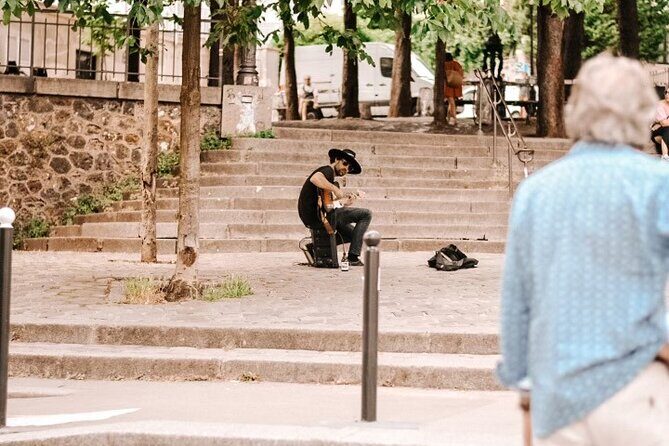
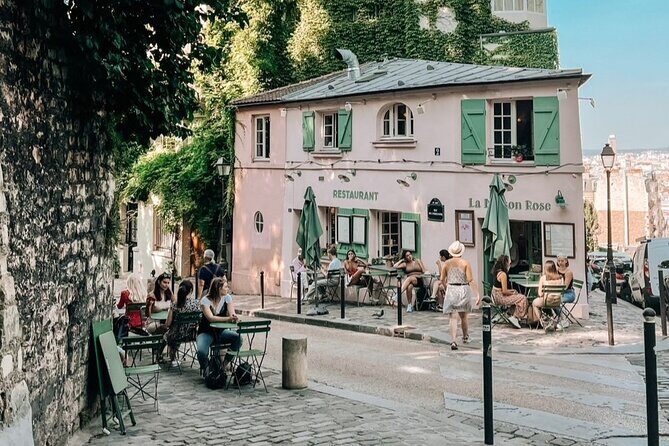
Then comes La Petite Maison Rose de Montmartre, a pink house that dates to since 1920. It’s a straightforward photo moment, but the date detail makes it more interesting than just a cute facade.
This kind of stop is perfect in the middle of a hill walk. You’ll need the visual reset, and you’ll probably enjoy that it’s quick enough not to stall the whole momentum of the tour.
Vigne du Clos Montmartre: The Little Vineyard Still Producing Wine
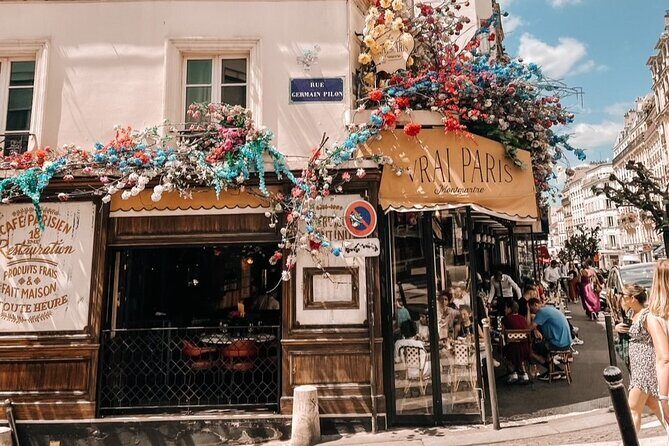
At the Vigne du Clos Montmartre, you’ll see the small vineyard at the top of the hill, where wine is still produced today. It’s one of those Montmartre facts that feels surprising because Paris usually reads as all stone and sidewalks.
This stop gives you a different side of the neighborhood: not just art and cafés, but agriculture and stubborn tradition. If you like unique stops that break up the usual “church and more churches” rhythm, this is one of the best payoff moments.
Au Lapin Agile: The Donkey Anecdote
Next is Au Lapin Agile, where you hear an anecdote about a donkey. It’s brief, but it adds personality to the area because this is how Montmartre is meant to be experienced: with odd stories, colorful characters, and human scale.
Even if the anecdote doesn’t sound like it belongs on your timeline, that’s kind of the point. Montmartre has always been about turning everyday life into legend.
Place du Tertre: Artists Still Gather Here
At Place du Tertre, you’ll see the square where artists still gather. The value of this stop isn’t just the view—it’s the continuity. Montmartre’s creative identity isn’t only in old paintings; it’s still performed in public space.
If you like seeing street art and craft culture in real time, this is a nice moment. Also, it helps you place what you’ve seen so far: these artists have always needed meeting points, and this square is one of them.
Eglise Saint-Pierre and Sacré-Cœur: From Roman-Era Detail to the City’s Highest Point
The tour doesn’t just point at big sights; it gives you a sequence of meanings.
You’ll see Eglise Saint-Pierre de Montmartre and learn about its oldest column in France, dating back to Roman times, plus the fact that this area reaches the city’s highest point. That combination—ancient detail and high ground—makes the climb feel worth it.
Then you visit the inside of Basilique du Sacré-Cœur de Montmartre. You’ll hear its history too, but the main win is stepping in. From the outside, Sacré-Cœur is dramatic. Inside, it’s calmer, and that contrast makes the moment more memorable.
The Pace, the Photos, and What to Expect Walking
This is a walking tour with moderate fitness expectations. Montmartre has steep stretches, and the route includes several churches and viewpoints, so plan for a hill workout disguised as sightseeing.
A big plus: the guide helps with an easy walking pace and is accommodating when you want to take photos. That matters because Montmartre’s streets tempt you to stop every 20 seconds. If you’re trying to capture good pictures without feeling stressed, this kind of guide-led rhythm helps a lot.
Also, because the tour is near public transportation, you can reset easily afterward if your schedule needs flexibility.
Price and Value: What $60.34 Buys You Here
Let’s be practical about value.
You’re paying for:
- a local English-speaking guide (Sebastien is repeatedly mentioned as fluent and friendly)
- a tight route through major Montmartre touchpoints in about 2.5 hours
- interpretation that turns landmarks into stories, not just scenery
- free admission for the listed stops, so your cost doesn’t spike at entrances
For many visitors, that’s worth more than it sounds because Montmartre is expensive in time if you do it casually. A guided loop helps you avoid “what’s the point of this stop” moments.
And since the tour is max 10 people, you’re not paying boutique pricing for a crowd experience.
Lunch Help at the End: Turning a Tour Into a Real Meal
At the end, you come back down toward Place Pigalle. Your guide can help you with ideas for a typical French restaurant for lunch in the area.
This is a smart touch because it solves a common Paris problem: after a great walk, you want good food nearby without spending an hour searching. Even if you already have a plan, the guide’s suggestions can help you pick a place that matches your taste and energy level.
Who Should Book This Montmartre Tour
This tour is a strong fit if you:
- want a focused Montmartre highlights loop without overplanning
- enjoy history told with humor and real local context
- prefer English guidance and the ability to ask questions
- like photo stops that don’t require museum-level patience
It may be less ideal if you:
- hate steep uphill walking
- want a long, free-form wander without structure
- want only one or two major monuments and don’t care about art and odd details
Should You Book This Montmartre Walk?
Yes, if you want Montmartre that feels organized, personable, and actually understandable. The small group size, the guide’s lively storytelling (including Sebastien’s humor and fluent English), and the mix of art culture, church stops, and quick surprises make this a high-yield outing.
If you’re unsure, do this check before booking: can you comfortably handle an uphill walk for a couple of hours? If the answer is yes, you’re likely to leave with photos you’re proud of and a much clearer sense of why Montmartre became Montmartre.
FAQ
How long is the Small Group Walking Tour of Montmartre?
The tour lasts about 2 hours 30 minutes.
What is the group size limit?
The tour has a maximum of 10 travelers.
Where do you meet for the tour?
You meet at Place Pigalle, 75018 Paris, France.
What time does the tour start?
The start time is 10:00 am.
Is the tour offered in English?
Yes, the tour is offered in English.
Are there admission tickets needed for the stops?
The stops listed are marked as free admission.
Do I need to be in good physical shape?
The tour recommends moderate physical fitness because it involves walking with some uphill sections.
Is there a mobile ticket?
Yes, the tour includes a mobile ticket.
Can I cancel for a full refund?
Free cancellation is available up to 24 hours in advance for a full refund.
Are service animals allowed?
Yes, service animals are allowed.