REVIEW · PARIS
The Gourmet Gastronomy of Paris: 2.5-Hour Food Tour
Book on GetYourGuide →Operated by Meeting the French · Bookable on GetYourGuide
Les Halles has that special energy that makes you hungry fast. This 2.5-hour food tour is built around the famous central market area locals call the belly of Paris, mixing walking, short stops, and tastings while your guide connects what you’re eating to how French gastronomy evolved from the Middle Ages to today.
I especially like two things: you get practical insight as you walk through real shops (including Stohrer, the city’s oldest pastry shop), and the tasting mix covers the core French flavors—pastries and bread, cheese, cured meats, and local wine. One fair drawback to consider: it is not a long, sit-down meal and it isn’t a nonstop scripted performance. It’s more like guided market wandering with food stops, so go in ready to ask questions and guide your own curiosity.
In This Review
- Where the tour leads you in 150 minutes
- Key points I’d plan around
- Les Halles: the belly of Paris, in walking form
- What you taste: the French lineup that makes sense
- Stohrer and the pastry stop that changes your mindset
- Cheese and cured meats: where a tour beats a supermarket
- Local wine: small sips, big context
- The market route: how the walking part helps the food part
- History on food: the Middle Ages to now, without the lecture vibe
- Timing and group size: why 8 people is the right number here
- Price and value: is $176 fair for 2.5 hours?
- Getting there: meeting point near Les Halles
- Should you book this food tour?
- FAQ
- How long is the Gourmet Gastronomy of Paris food tour?
- Where is the meeting point?
- What is the nearest metro station?
- What food is included in the tasting?
- How big is the group?
- What languages are the guides available in?
- Is there free cancellation?
- What’s the price per person?
Where the tour leads you in 150 minutes
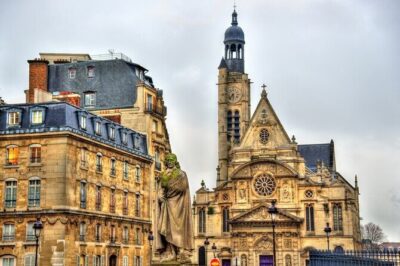
You’ll meet near Les Halles and spend the bulk of your time moving through the market district, weaving past old pastry traditions, specialty counters, and the kind of brasseries and restaurants that keep this area working all day. Along the way, you’ll also get pointed at key nearby landmarks—like the Church of St Eustache and the Tower of John the Fearless—so the eating feels anchored to the neighborhood, not just a list of snacks.
Key points I’d plan around
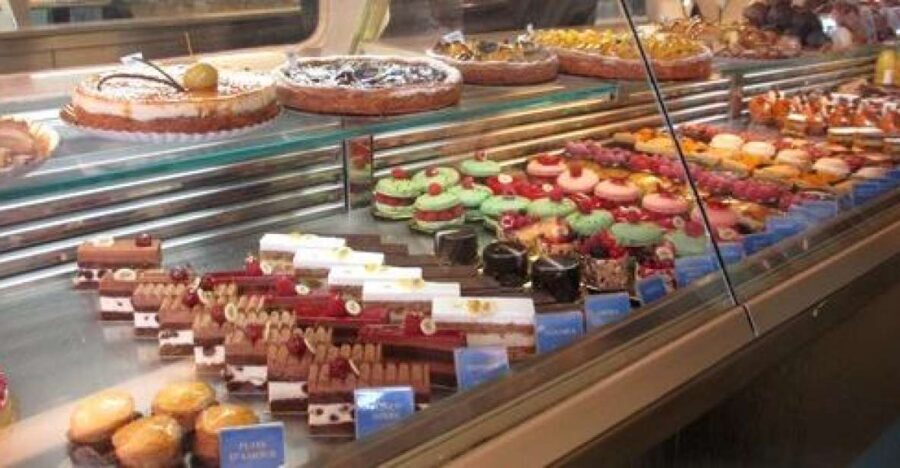
- Stohrer is part of the route, so you’re tasting with real historical context
- You’ll sample a spread that covers the main categories: pastries/bread, cheese, cured meats, wine
- Your guide ties food to the broader story of French culinary evolution from the Middle Ages onward
- The group is capped at 8 people or fewer, so questions are actually possible
- The tour runs 150 minutes, which is long enough for multiple stops without dragging
You can also read our reviews of more food & drink experiences in Paris



Les Halles: the belly of Paris, in walking form
If you want Paris food without guessing, Les Halles is the place. The district is one of the city’s most concentrated areas for where ingredients meet shops that know how to turn them into something you want to eat right now. The nickname belly of Paris fits because the whole area feeds people—shoppers, cooks, quick lunch crowds, and visitors who want to understand what makes French food feel so methodical.
This tour uses that setting well. Instead of treating food like a museum exhibit, you’re moving through the market environment while your guide explains how French eating habits changed over time. That matters because it turns the tastings into clues: what you taste is connected to why French cuisine became what it is—patterns of bread, pastry craft, cheese culture, cured meats, and wine alongside meals.
I also like that the tour doesn’t ignore the wider neighborhood. You’re not just stuck inside counters. The route points you toward major cultural anchors in the area, including the Church of St Eustache and the Tower of John the Fearless. That helps you remember this as a real place in the city, not just a food detour.
What you taste: the French lineup that makes sense
The tasting portion is where value lives or dies on a food tour. Here, the focus stays true to classic French staples. You can expect tastings that include:
- pastries and breads
- an assortment of cheeses
- cured meats
- local wines
That list is useful because it mirrors how a typical French food board feels: bread and pastry for texture and technique, cheese and cured meats for salt, fat, and depth, and wine to pull the flavors together.
A couple of practical thoughts before you go. First, plan to arrive hungry enough to enjoy everything. The tour is only 150 minutes, so the pacing is designed to keep you moving between stops rather than stretching tastings into a full dinner. Second, don’t treat it as a strict meal replacement. Think of it as a guided sampler that also gives you the map and vocabulary to order well on your own later.
Also, watch for how the tastings connect to the story. If your guide explains how certain food traditions moved from earlier eras into more recognizable modern French cuisine, you’ll start tasting with better instincts: why certain products became standards, what regional or historical influences might mean, and why pastry, cheese, and curing traditions developed strong followings.
Stohrer and the pastry stop that changes your mindset
Stohrer is a name you’ll hear in Paris pastry talk for a reason, and this tour builds the first layer of your understanding right around it. Stohrer is described as the oldest pastry shop in the city, which makes the stop more than a convenient refreshment break.
Even if you don’t already care about pastry history, an old institution like this shifts how you look at what’s in front of you. You’ll likely notice that pastry isn’t just about sugar. It’s craft, consistency, and a long-running business that survived changing tastes and trends. When your guide ties what you taste to the evolution of French gastronomy, Stohrer becomes a physical marker of continuity: the city’s food culture didn’t pop into existence overnight.
One small caution: pastry can be very filling quickly. If you have a sweet tooth, you’ll love this stop. If you’re more savory-minded, still lean into the tasting and then balance with the cheese and cured meat later. The tour’s spread helps with that.
Cheese and cured meats: where a tour beats a supermarket
French cheese and cured meats are the kind of foods that can go from boring to fascinating depending on context. On your own, you’ll stand in front of a counter and wonder what makes one choice better than another. On this tour, the market setting gives you a shortcut: you’re seeing these products in the environment where people buy them, and your guide provides the story that makes the tastes easier to understand.
The tasting includes an assortment of cheeses and cured meats. That’s a strong combo because it gives you contrast. Cheese brings dairy richness and a range of textures, while cured meats bring salt, aroma, and depth. Together, they’re the foundation of many French bites and aperitif moments.
Here’s how to get the most out of this section: slow down for your tastings and pay attention to pairings. Even without a formal lesson, your guide’s history framing helps you make sense of why these categories became central to French eating. You’re not just sampling flavors. You’re learning what these foods represent in French culinary culture.
You can also read our reviews of more tours and experiences in Paris



Local wine: small sips, big context
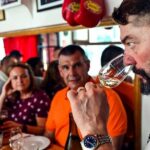
Wine is included in the tastings as local wine. On a short food tour, wine can go two ways: either it’s a random add-on or it becomes a tool for taste. Here, the structure supports the second option because it fits the broader theme of French gastronomical evolution.
If you drink wine, you’ll likely find it helps unify the flavors of cheese, cured meats, and breads. If you don’t drink much, you can still treat the inclusion as part of learning how French meals flow. Wine is often part of the reasoning behind how foods are served and enjoyed together, and that makes it more relevant than a simple free pour.
Practical tip: pace yourself. With multiple tasting stops packed into 150 minutes, you’ll want to stay sharp for the later portions. A few small sips can be enough to appreciate the pairing and keep the tour enjoyable.
The market route: how the walking part helps the food part
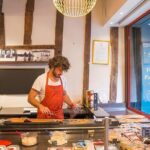
What I like about this format is that it uses the shopping streets as a classroom. You’re weaving through the central market area in Les Halles, visiting old shops and specialty counters rather than staying in one place. That matters because you learn what these streets look like and how people move through them.
You also pass through different types of food culture in a natural way—traditional brasseries and restaurants, plus specialty culinary shops. The variety prevents the tour from becoming one-note. You taste French classics and you also get a feel for how the neighborhood supports both quick bites and full meals.
It also helps you take the next step after the tour. Once you’ve walked this area with guidance, you’ll find it easier to point at what you want later: the right kind of pastry, the cheese counter that makes sense for your taste, or the kind of place where cured meats aren’t an afterthought.
History on food: the Middle Ages to now, without the lecture vibe
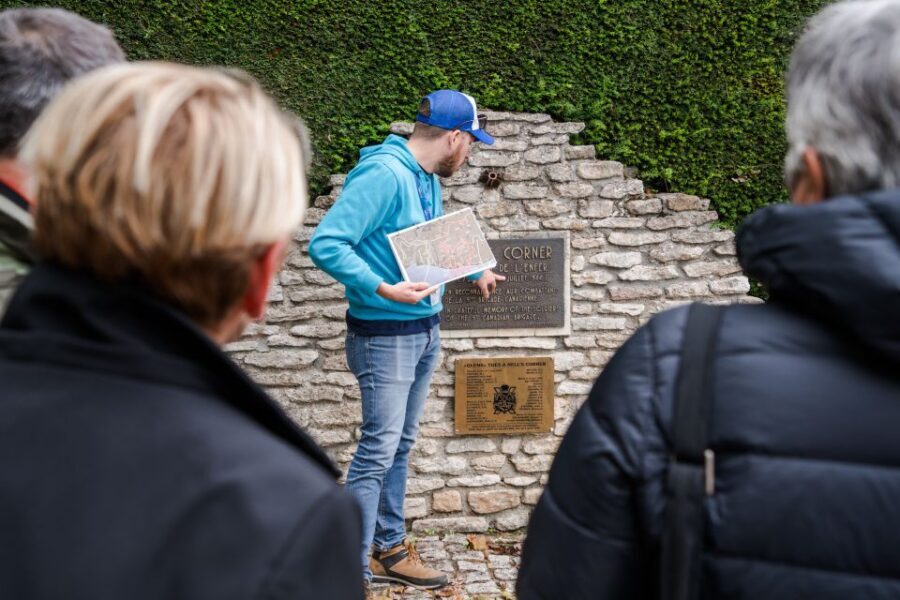
One of the most praised aspects of this experience is how the guide explains the history of Les Halles and the area. In at least one case, the guide named Carol is highlighted for connecting the district’s story to what you’re tasting.
That kind of explanation can make a big difference on a food tour. Without it, you might remember only flavors. With it, you remember why those flavors matter. The tour’s framing moves from France’s gastronomical evolution starting from the Middle Ages and continuing to present day, using the market as the through-line.
You don’t need to be a food historian to enjoy this part. The goal is to give you a mental map: this is how Paris food culture grew, and this is how a market district like Les Halles became a hub for the ingredients and crafts that define French cuisine.
Timing and group size: why 8 people is the right number here
The tour is 150 minutes and capped at 8 participants or fewer. That size is ideal for a food walking experience because it gives your guide room to respond to questions and keep everyone from feeling separated.
It also changes the vibe. With a smaller group, you’re more likely to get a real conversation rather than just a recitation of facts while you stand in a line. Based on the range of reviews, the friendly, personable approach seems to land well when you’re open to interaction.
If you’re the type who likes structured tours with a very rigid schedule, keep this in mind. One review criticized the experience for feeling less like a guided route and more like a choose-your-own pacing situation. The fix is simple: come with curiosity. Ask what the guide recommends and how to order those foods if you’re eating on your own later.
Price and value: is $176 fair for 2.5 hours?
At $176 per person, this is not a cheap snack tour. So here’s how to judge value in a real way: you’re paying for (1) guided market navigation through Les Halles, (2) multiple tastings across core French categories, and (3) a guided narrative about how French gastronomy evolved.
If you just wanted to eat pastries and walk around, you’d spend less on your own. But the paid part is what turns the market into knowledge you can use. A guide can help you understand what you’re tasting and what to buy next time. In a market district, that “what to do next” value can easily justify the price—especially if you’re short on time.
Still, $176 is a lot for a 150-minute experience. If you prefer lots of food volume over explanation, or if you expect a very tightly structured itinerary with zero flexibility, this might feel steep. If you like food plus context, and you’re comfortable treating tastings as a curated sampler, the price can make sense.
Getting there: meeting point near Les Halles
You’ll meet at 1 Rue de Montmartre, 75001 Paris. The nearest metro options listed are Les Halles (line 4) or Etienne Marcel (line 4). I’d plan to arrive a few minutes early. Market areas are easy to miss if you’re rushing, and you’ll want a calm start so you enjoy the first tasting stop.
Should you book this food tour?
I’d book it if you want a focused, guided way to understand French food basics in one of Paris’s most important market districts. It’s a strong fit for first-timers who don’t want to guess their way through cheese counters and pastry shops, and it’s also good for repeat visitors who want a sharper story behind what they’re eating.
Skip or reconsider if you’re looking for a long, meal-like experience with lots of time seated, or if you dislike tours that rely on conversation and questions rather than a tight script. The format works best when you participate.
If you book, come hungry, ask questions, and treat the tastings as your training wheels. After 150 minutes, you should be able to walk Les Halles on your own with better instincts—and that’s the real souvenir.
FAQ
How long is the Gourmet Gastronomy of Paris food tour?
The tour lasts 150 minutes, which is about 2.5 hours.
Where is the meeting point?
Meeting point is 1 Rue de Montmartre, 75001 Paris.
What is the nearest metro station?
The nearest metro stations listed are Les Halles (line 4) or Etienne Marcel (line 4).
What food is included in the tasting?
The tasting includes French specialties, such as pastries and breads, an assortment of cheeses, cured meats, and local wines.
How big is the group?
It’s a small group with a maximum of 8 participants.
What languages are the guides available in?
The live guide offers English, French, and Italian.
Is there free cancellation?
Yes. You can cancel up to 24 hours in advance for a full refund.
What’s the price per person?
The price is $176 per person.