REVIEW · EPERNAY
The Must-sees 3h30 from Epernay (Private Half day Champagne Tour)
Book on Viator →Operated by Aÿ-Champagne Experience · Bookable on Viator
Champagne lessons travel fast. This private half-day threads together UNESCO vineyards, village viewpoints, and the story behind the people who made Champagne famous. You’ll get picked up near Epernay in a clean, comfortable vehicle, then follow a route built around Dom Pérignon and the Avenue de Champagne.
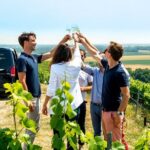
I love the pairing of big sights with hands-on wine time. You’ll tour a family independent producer/grower (with press, winery, and cellar time) and taste three Grand Cru or Premier Cru Champagnes during a commented tasting.
One thing to consider: this tour is not built like a Champagne-house sprint. You’ll focus on one main producer visit plus village discoveries and three classic aperitifs, so if you’re craving many separate Champagne houses, you might wish for more Champagne pours from additional brands.
In This Review
- Key highlights you’ll actually feel in your day
- Avenue de Champagne: where the Champagne capital flexes
- Abbaye Saint-Pierre d’Hautvillers and Dom Pérignon’s grave
- Hautvillers viewpoints plus an independent grower tasting
- The tasting: 3 Grand Cru/Premier Cru Champagnes
- A quick reality check on how much Champagne you get
- Avenue glamour, then Aÿ-Champagne: Pinot noir at the center
- Stops in front of major houses in Aÿ
- The Goyard Distillery aperitifs: the bonus tasting you can’t ignore
- Mareuil-sur-Aÿ and Mont du Gruguet: views with a Premier Cru feel
- Small villages like Mutigny: the quieter layer of Champagne
- How the private format changes what you learn
- Vehicle comfort and what to expect getting in
- Price and value: is $293.14 per person fair?
- Who this tour suits best
- Should you book the Epernay private half-day?
- FAQ
- How long is the private half day from Epernay?
- What language is the tour offered in?
- Do they pick up from outside Epernay?
- Is this tour private?
- What tastings are included?
- Where does the grower tasting take place?
- Is there an admission fee for the Abbaye Saint-Pierre d’Hautvillers?
- What’s the transportation like?
- What if weather is bad?
- How flexible is cancellation?
Key highlights you’ll actually feel in your day
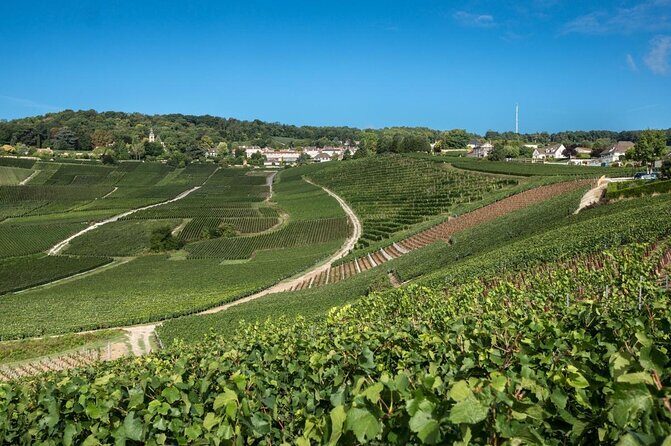
- Avenue de Champagne, UNESCO World Heritage Site: passes lined with the great houses and massive cellar history
- Abbaye Saint-Pierre d’Hautvillers: a church visit centered on Dom Pérignon’s resting place
- Independent grower visit: press, winery, cellar, then a commented tasting of 3 Grand Cru/Premier Cru Champagnes
- Hautvillers viewpoints: photo-friendly stops above the Marne Valley where Dom Pérignon tested ideas
- Aÿ-Champagne and Premier Cru villages: Pinot noir country with a mix of village history and viticulture talk
- Three aperitifs from Goyard Distillery: Ratafia, Fine de la Marne, and Marc de Champagne alongside Champagne tastings
Avenue de Champagne: where the Champagne capital flexes
Epernay is the city that makes you understand why Champagne became a global obsession. Your tour begins with a commented passage along the Avenue de Champagne, described as one of the most expensive streets in the world, lined with prestigious Champagne mansions.
You’ll also hear numbers that put the scale into perspective: around 100 kilometers of cellars and the storage of some 200 million bottles. That’s not just bragging—it helps you picture why the region’s big houses built massive underground worlds, and why brand identity matters here.
Practical note: this part is more about seeing and hearing than long walking. You’ll get the highlights quickly, then move into the villages and vineyard viewpoints where Champagne feels more human.
You can also read our reviews of more private tours in Epernay
Abbaye Saint-Pierre d’Hautvillers and Dom Pérignon’s grave
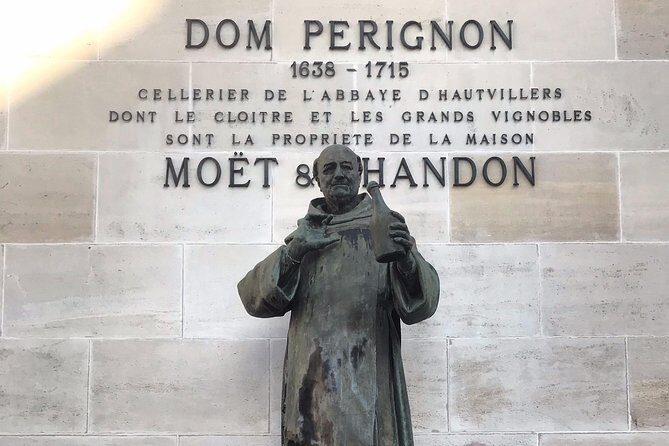
The Hautvillers stop is the emotional anchor of the day. You’ll visit the Abbaye Saint-Pierre d’Hautvillers, known as part of the village the tour calls the cradle of Champagne. The center of gravity is the church visit tied to the grave of Dom Pérignon, spiritual father of Champagne in local storytelling.
The guide explains his story and you’ll get a clear sense of what he did, what people credit him with, and the nuance around whether he was truly the inventor of Champagne. That’s a fun moment because the tour doesn’t treat it like a simple myth—it gives you enough context to form your own opinion.
If you’re the kind of visitor who likes origins, this stop lands. If you’re rushed, it still works because the time is short and focused—about 30 minutes, with the admission ticket listed as free.
Hautvillers viewpoints plus an independent grower tasting
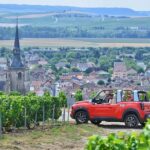
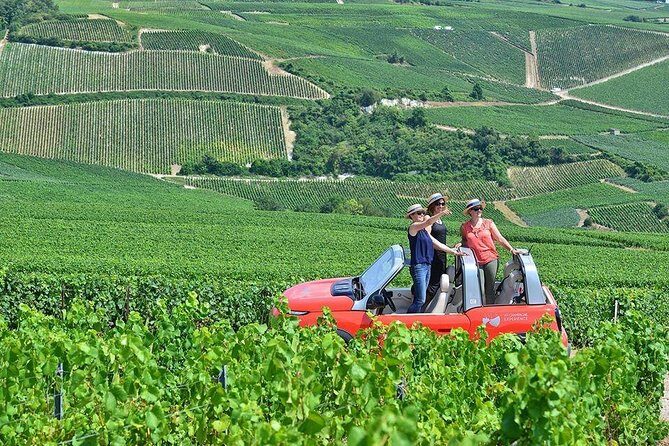
Next you shift from legend to grapes. In Hautvillers, you’ll stop in the historic hillsides listed by UNESCO, with a panorama over the Marne Valley. The viewpoint is also described as tied to where Dom Pérignon carried out winemaking experiments, which gives the photos you’ll take a little extra meaning.
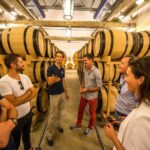
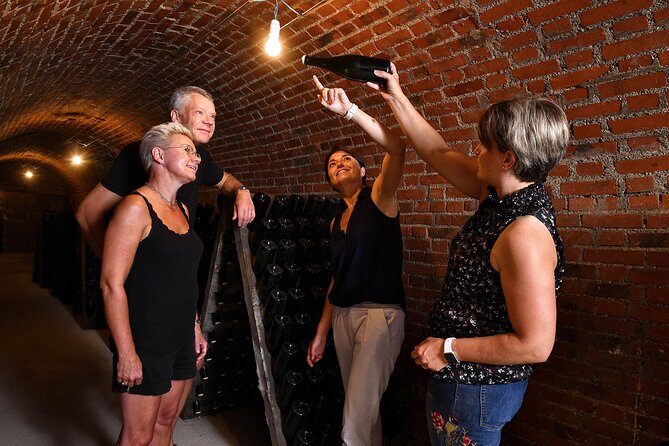
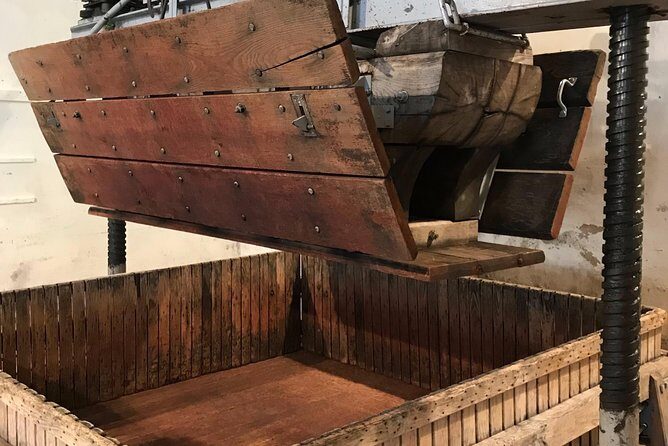
Then comes the part I’d circle on a map if you love Champagne beyond the label. You’ll visit a family independent producer/grower, with time to see the press, winery, and cellar. This is where the half-day stops feeling like sightseeing and starts feeling like learning how Champagne actually works.
The tasting: 3 Grand Cru/Premier Cru Champagnes
You’ll enjoy a commented tasting of three different Champagnes, specifically Grand Cru/Premier Cru (the exact place can shift). The tour notes that depending on season and availability, this grower experience may take place in a village of the Côte des Blancs or in Aÿ-Champagne.
That matters because the terroir conversation changes slightly when you’re tasting from different parts of Champagne. Either way, you get a structured tasting rather than random sips, which is a big deal if you’re a first-timer trying to learn the difference between styles.
A quick reality check on how much Champagne you get
From the tour structure, you should expect Champagne tastings to be concentrated, not spread across multiple large-brand visits. That can be perfect if you want quality and context. If you hoped for a tasting spree across several Champagne houses, one booking feedback flagged that they wanted more Champagne from more places—so plan your expectations accordingly.
You can also read our reviews of more wine tours in Epernay
Avenue glamour, then Aÿ-Champagne: Pinot noir at the center
After Hautvillers, you head to Aÿ-Champagne, one of the famous UNESCO-listed areas. This stop has a strong village-history vibe: you’ll learn that Aÿ was a main center of Champagne industry in the 16th century, that France’s kings had their own presses there, and that Champagne was once called Wines of Aÿ.
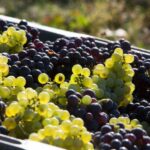
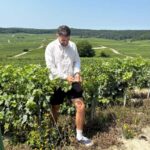
You’ll also get viewpoints and walks tied to vineyards, with the tour explaining work in the vines, grape varieties, and sustainable viticulture as part of the discussion. Aÿ is mainly associated with Pinot noir, and this stop should satisfy you if you want to leave knowing which grapes and practices connect to which flavors.
Stops in front of major houses in Aÿ
You’ll stop in front of the headquarters of several well-known houses from the Aÿ area, including Bollinger, Deutz, and Ayala. It’s not a long house visit, but it’s useful because it anchors the big names to a place you’ve now seen in the real geography of the vineyards.
The Goyard Distillery aperitifs: the bonus tasting you can’t ignore
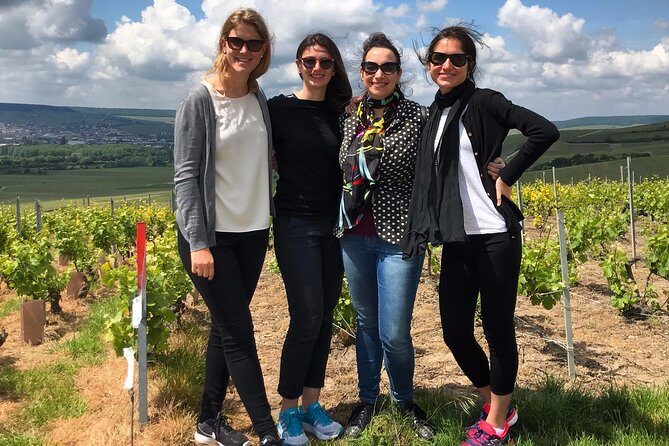
One of the most memorable parts for many people is that the tour doesn’t only do Champagne. Along with the village experience, you’ll taste three essential Champagne alcohols and aperitifs: Ratafia, Fine de la Marne, and Marc de Champagne from the Goyard Distillery, noted as the oldest distillery in Champagne.
This is a smart inclusion for two reasons. First, it broadens your understanding of the region’s fermentation and distillation traditions—Champagne culture is bigger than the sparkling wine bottle. Second, it makes the tasting feel less repetitive if you arrive with Champagne already in your head.
If you’re thinking about food pairing back home, this is the kind of tasting that gives you mental hooks. Even if you don’t buy anything, you’ll have three new flavors to explain to friends who only think Champagne is Champagne.
Mareuil-sur-Aÿ and Mont du Gruguet: views with a Premier Cru feel
The tour then passes through Mareuil-sur-Aÿ, another UNESCO-listed area and a Premier Cru village. The focus stays on Pinot noir country, and you’ll get a viewpoint at a place called Mont du Gruguet.
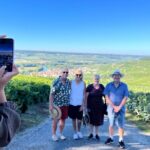
This viewpoint is described as a spot where you can see both the Côte des Blancs side (Chardonnay Grand Cru country) and the Marne Valley villages and historic hillsides where Champagne is said to have started. If you’re trying to understand the Champagne region as a whole, this stop helps you connect dots between what you’re tasting and what you’re seeing.
You’re also told that Mareuil-sur-Aÿ is where more confidential houses are located, including Billecart-Salmon and Philipponnat. Again, it’s more about placing names on a map than doing a long brand tour.
Small villages like Mutigny: the quieter layer of Champagne
Between the bigger stops, you’ll also cross Mutigny, a small wine-growing village above Aÿ-Champagne. There’s mention of a charming early 16th-century church overlooking the vines.
These quick cross-by moments matter because the Champagne region is not only famous addresses and glossy cellars. It’s also the smaller villages that make the vineyard work possible every day.
How the private format changes what you learn
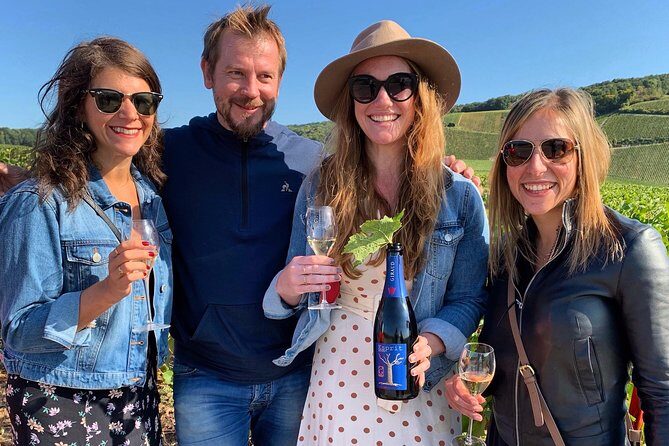
This is a private tour, meaning only your group participates. That changes the feel in a practical way: you can ask questions, and the guide can slow down when you’re curious instead of rushing to keep a larger group on schedule.
In real bookings, guides stood out for how well they connected story to place. People reported days guided by Philippe, Nina, Victoria, Lucie, Svetlana, Carolin, Charlotte, and Coralie, with praise for how they explained Champagne production and answered questions as the day went along. One booking even described the team arranging a secret photographer for a proposal—proof this isn’t only about wine facts.
Vehicle comfort and what to expect getting in
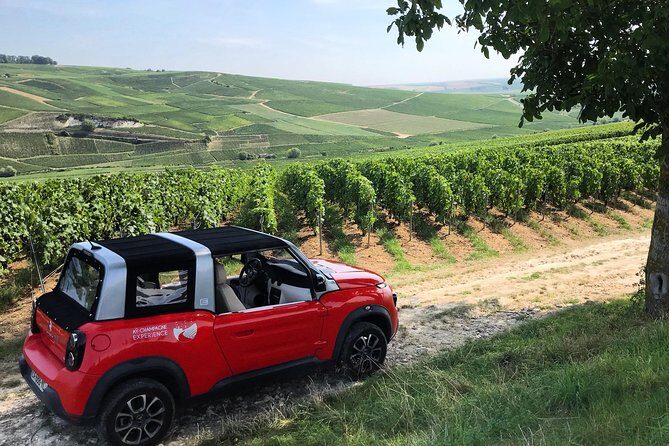
Transportation is part of the experience here. Depending on weather/season and group size, the operator chooses from electric E-Mehari Jeep-style cars, premium vans, and minivans. Reviews mention clean, comfortable vehicles.
If you have mobility concerns, pay attention to the note that E-Mehari crossovers have slightly raised entry. If that’s you, tell the operator ahead of time so they can steer you toward the easiest vehicle.
Price and value: is $293.14 per person fair?
At about $293.14 per person for roughly 3 hours 30 minutes, this tour sits in the higher tier for a half-day. The value case is pretty clear, though: you’re paying for private guiding, a structured multi-part route, and tastings that go beyond a basic Champagne sip.
Here’s what you’re really buying with that price:
- Private time with a guide who explains both Champagne history and how it’s made
- One independent grower visit with press/winery/cellar time, plus three Grand Cru/Premier Cru tastings
- Three aperitifs (Ratafia, Fine de la Marne, Marc de Champagne) added to the wine experience
- A route that hits the UNESCO Champagne vineyards through multiple villages—Epernay’s Avenue first, then Hautvillers and Aÿ, then Mareuil-sur-Aÿ and the viewpoints
The only real value concern is expectation management. This is not many separate Champagne house tastings in one afternoon. It’s a tighter, story-driven route with focused tastings. If you’re okay with that approach, the price can feel justified. If you want a house-hopping spree, you might decide to compare with longer or more producer-heavy tours.
Who this tour suits best
This tour is a strong match if:
- You’re a first-time Champagne visitor and want a guided start in the right places
- You want a mix of legend, terroir, and production (church grave + vineyards + press/cellar)
- You enjoy tastings, but you’d rather have context than endless stops
- You like a private day with time for questions, not a big-group conveyor belt
It might feel less perfect if:
- You’re hunting for a high volume of different Champagne houses in one half-day
- You’re very short on time and need a tasting-only experience with minimal driving and viewing
Should you book the Epernay private half-day?
I’d book it if you want a clean, well-paced Champagne education that still feels like a fun day out. The strongest argument is the balance: UNESCO sights up front, Dom Pérignon’s resting place, an independent grower visit that goes beyond a quick pour, and then the aperitifs that add real variety.
Before you book, do two quick checks:
1) Are you happy with a single main tasting producer plus additional spirits, rather than multiple Champagne-house tastings?
2) Will your entry comfort work with the vehicle type used for your group?
If the answer is yes, this is one of those half-days that leaves you with real takeaways, not just photos of cellars.
FAQ
How long is the private half day from Epernay?
It runs about 3 hours 30 minutes.
What language is the tour offered in?
The tour is offered in English.
Do they pick up from outside Epernay?
Pickup is offered only within a perimeter of 6 km around Epernay. Reims is about a 40-minute drive away and not within that radius.
Is this tour private?
Yes. It’s a private tour/activity, so only your group participates.
What tastings are included?
You’ll taste three Champagnes (Grand Cru/Premier Cru) during the grower visit, plus three aperitifs: Ratafia, Fine de la Marne, and Marc de Champagne from the Goyard Distillery.
Where does the grower tasting take place?
Depending on season and availability, the grower visit/tasting may take place in a village of the Côte des Blancs or in Aÿ-Champagne.
Is there an admission fee for the Abbaye Saint-Pierre d’Hautvillers?
The tour information lists the admission ticket for that church stop as free.
What’s the transportation like?
Pickup uses a vehicle chosen based on weather/season and group size, with options including electric E-Mehari Jeep-style cars, premium vans, and minivans.
What if weather is bad?
The experience requires good weather. If it’s canceled due to poor weather, you’ll be offered a different date or a full refund.
How flexible is cancellation?
You can cancel up to 24 hours in advance for a full refund. Canceling less than 24 hours before the start time is not refundable.