REVIEW · PARIS
Versailles: Marie Antoinette Petit Trianon & Estate Tour
Book on GetYourGuide →Operated by Elyrea · Bookable on GetYourGuide
Some corners of Versailles feel different.
This tour takes you past the usual crowd trail and into Marie Antoinette’s private world—starting with the Petit Trianon and continuing through the Queen’s domains and gardens. I love how the guide turns rooms, furniture, and routes into real stories, not just facts. I also like the pacing trick: after the hamlet and garden time, you ride the Petit Train back so you’re not doing a full slog. The main drawback is simple: you’ll walk a reasonable amount, and it’s not wheelchair accessible.
A big plus for your comfort is the use of headsets when appropriate, so you can actually hear your guide even when the group spreads out. When we look at real experiences from guides and groups, names like Ivan, Stephanie Fouret, and Val pop up for strong storytelling and real care—one guide (Stephanie Fouret) even handled a serious moment with fast help and stayed close. Plan on a focused 150 minutes, though, so if you want a slow, linger-everywhere pace, you might feel the tour moves quickly.
If you already saw the big palace and gardens in the morning, this afternoon-style add-on makes a lot of sense. I think it’s also a smart choice for first-time Versailles visitors who want context for why Marie Antoinette’s estate was such an emotional and personal escape—without getting buried in the palace’s crowds.
In This Review
- Key things I’d mark on your map before you go
- Why Petit Trianon and the Hamlet Change the Whole Versailles Story
- Meeting at La Flottille and the One Walk You Can’t Avoid
- Petit Trianon Palace: Private Rooms, Personal Taste, and the Key Idea
- Marie Antoinette’s Gardens and the English-Garden Style Walk
- The Queen’s Hamlet: Pastoral Escape as a Built Environment
- The Petit Train Back: Save Your Energy for the Main Palace
- Price and Value: What $58 Buys You in Real Time
- Who This Works Best For (and Who Should Rethink It)
- Should You Book This Versailles Marie Antoinette Estate Tour?
- FAQ
- How long is the Versailles: Marie Antoinette Petit Trianon & Estate Tour?
- Where is the meeting point?
- What will I see during the tour?
- Do I need to buy tickets for Versailles gardens?
- Does the tour include audio headsets?
- Is the tour wheelchair accessible?
- How do we return to the main palace area?
- What is the price?
Key things I’d mark on your map before you go
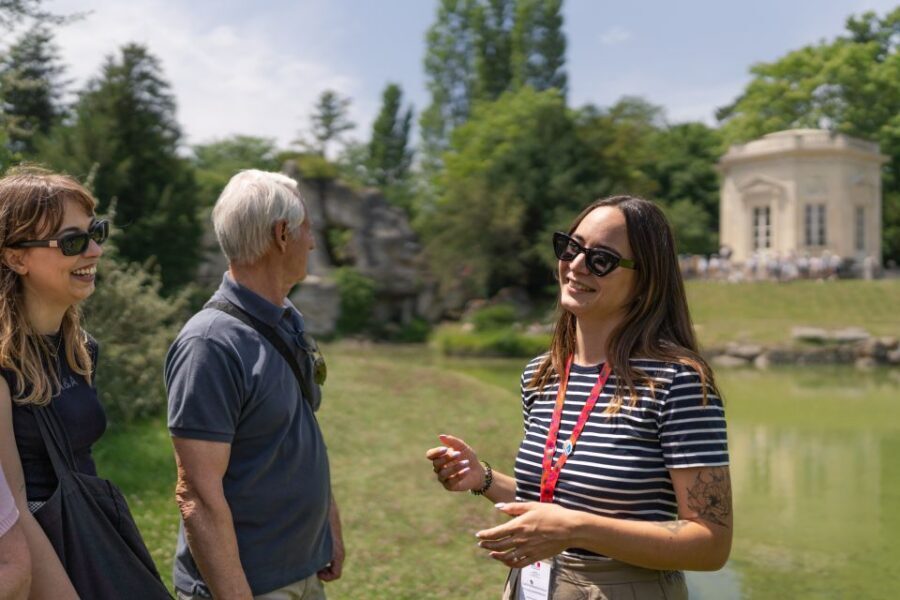
- Petit Trianon inside a “private Versailles” mindset: the tour focuses on Marie Antoinette’s personal space, not the public showrooms.
- The Queen’s Hamlet as an actual replica village: thatched cottages and a pastoral feel meant to bring Normandy vibes to the grounds.
- Headsets help you stay connected: you’re less dependent on hearing your guide over footsteps and noise.
- A Petit Train return saves your legs: you get back to the main palace area without repeating every step.
- Two guided highlights, one walking thread between: palace rooms, then a guided hamlet, with gardens connecting it all.
Why Petit Trianon and the Hamlet Change the Whole Versailles Story
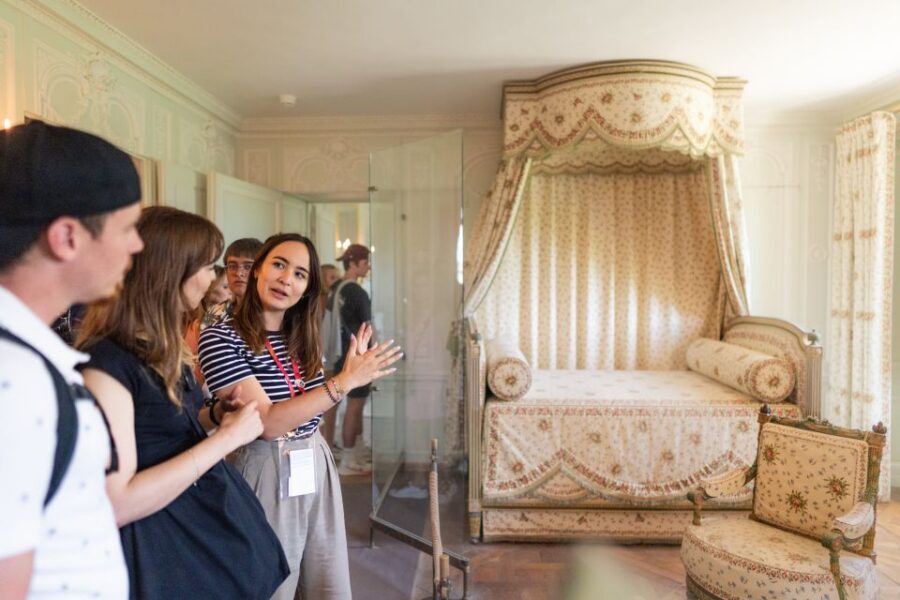
Most people see Versailles as a single machine: grand rooms, major staircases, and crowds that move in waves. This tour gives you a different lens. You’re stepping into a quieter Versailles—one tied to escape, friendship, and personal taste. The guide’s job here is to connect the physical places to the emotional reasons behind them.
I like that the narrative isn’t just about luxury. It’s about contrast: public court life versus a private world where Marie Antoinette could breathe. The tour explains that Louis XVI gave her a key—described as diamond-encrusted in the tour’s storytelling—which symbolized a way out of the stiff ritual of public attention. Whether you think the details are romantic or historical, the point lands: the Petit Trianon and its surroundings were meant to feel like a choice, not a requirement.
The Hamlet adds another layer. It’s not a random photo spot. It’s a replica rustic village, described as evoking Normandy with thatched cottages and dairy-farm life. That matters because it shows how her idea of rest wasn’t just quiet rooms—it was also an entire environment designed to feel informal and nourishing.
You can also read our reviews of more tours and experiences in Paris.


Meeting at La Flottille and the One Walk You Can’t Avoid
You meet your guide at the bottom of the Versailles gardens, outside La Flottille restaurant, next to the Grand Canal. From the terrace behind the palace, you can see the canal—then you’ll walk through the garden area toward it, staying on the right. The guide is waiting in front of the restaurant and wears a guide card on an orange lanyard.
Here’s how to make this easier for yourself:
- Wear shoes you won’t regret. The tour itself is only 150 minutes, but the walking adds up.
- Arrive early enough to find the correct spot without rushing. One booking experience noted it can be tricky to identify the guide until you receive a message with what they’re wearing.
Now the ticket question. The tour info says you need to purchase a ticket to enter the Versailles gardens, because you must cross the gardens to reach the gate that leads into the Domain of Marie Antoinette. That’s the safe plan. One review also points out a possible shortcut: entering the park on foot from Boulevard de la Reine may avoid buying garden entry just to reach the meeting point. Use that as a “maybe,” not a guarantee, and build in time either way—especially if lines happen.
Petit Trianon Palace: Private Rooms, Personal Taste, and the Key Idea
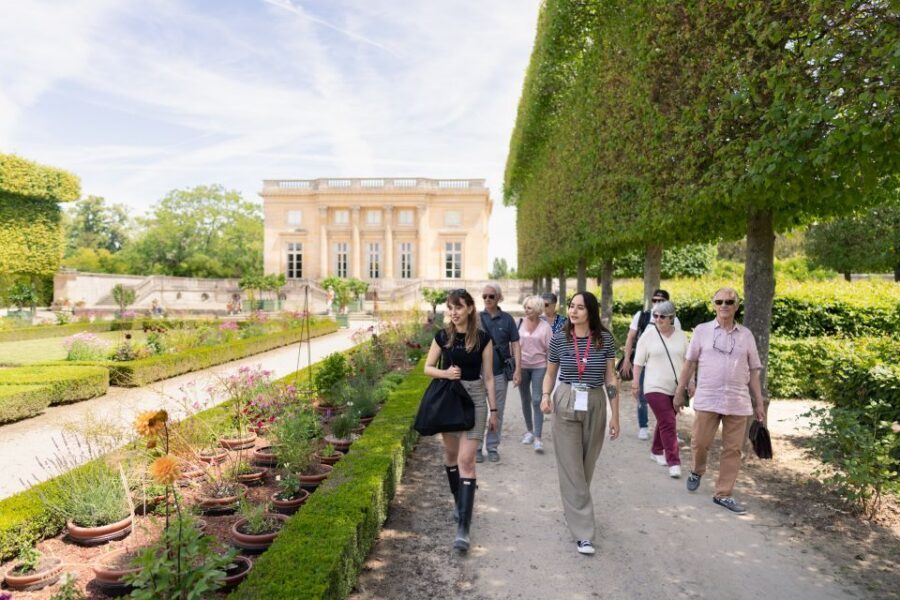
The first big stop is the Petit Trianon, with a guided tour lasting about an hour. This is the heart of the experience and the reason many people choose this instead of just touring the State Apartments.
What makes it feel special is the angle. Instead of showing you Versailles as power and ceremony, the guide frames Petit Trianon as personal space—an intimate palace within the larger palace complex. The tour emphasizes that the furniture and decoration are representative of Marie Antoinette’s own taste and her favored craftsmen. In practical terms, it means you’ll look at rooms differently. You’re not just reading labels. You’re trying to understand the decisions behind them: style, comfort, and the kind of life she wanted away from the public eye.
You’ll also hear the story of that key and what it meant. Even if you’ve read about Marie Antoinette before, having the narrative tied directly to the rooms makes the estate click in your head. It turns the palace from an expensive backdrop into a designed refuge.
A small consideration: Petit Trianon can feel less about size and more about focus. Some visitors expect more “big room” time. If you’re the type who likes to linger in every corner, you may wish you had extra minutes—because the tour keeps moving toward the gardens and the hamlet.
Marie Antoinette’s Gardens and the English-Garden Style Walk
Between the palace and the hamlet, you’ll spend time in the gardens—private in spirit, even if people are still around. The tour specifically mentions the English gardens. That’s important because it sets expectations: these aren’t only formal, symmetrical designs.
This part of the experience is about atmosphere and pacing. You’ll follow paths that help you understand how Marie Antoinette’s estate was meant to feel like a separate world. If you’re short on time in Versailles overall, this is one of the ways to add depth without spending all day. You’re learning the geography of her retreat while still getting fresh air and changing views.
Practical tip: treat this as a “walking and listening” segment. The guide’s story makes the garden paths make sense. Without that, you might just wander. With it, you start noticing why certain routes are where they are—like how the estate unfolds from the palace toward more pastoral spaces.
The Queen’s Hamlet: Pastoral Escape as a Built Environment
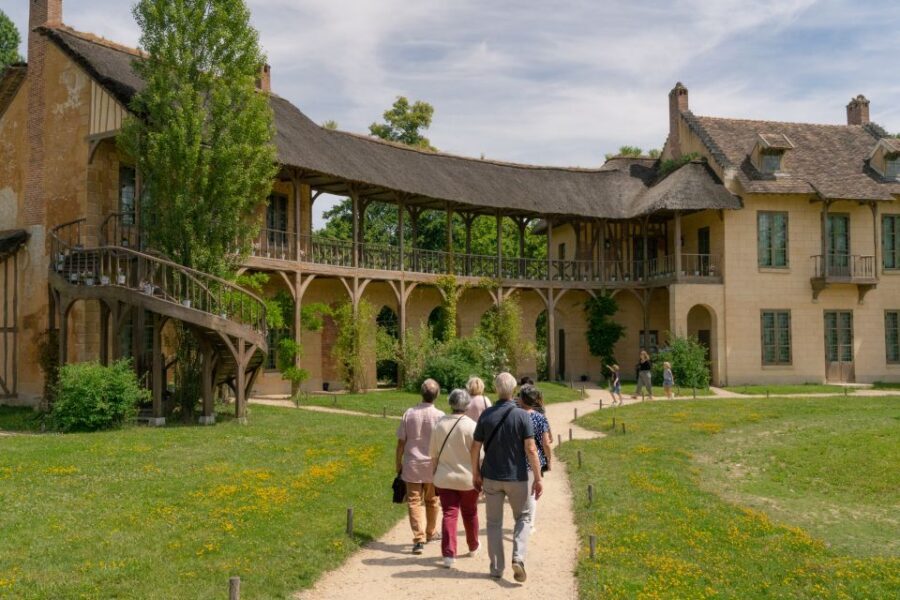
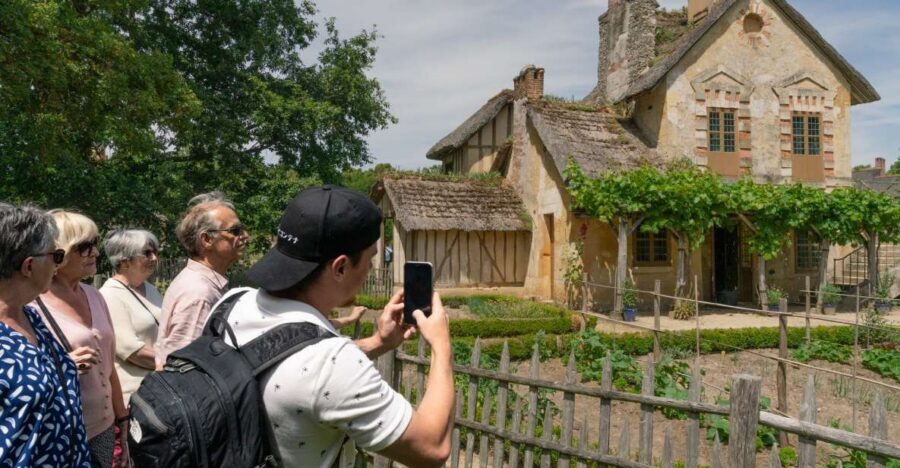
Then comes the Queen’s Hamlet (also called the Hamlet of the Queen). The guided portion is about an hour.
This stop is special for one reason: it’s a replica rural village commissioned for the Queen, designed to feel like Normandy. The tour storytelling highlights thatched cottages and a dairy herd. The point isn’t agriculture as a lesson plan—it’s the atmosphere. It’s Marie Antoinette choosing a different mood: rustic, informal, and healthier-feeling air.
What I like about this part is the contrast. You go from a palace with court-level symbolism to a village meant to feel down-to-earth. It’s a very Versailles move, too: even the “escape” is curated and constructed. The guide helps you see that the hamlet isn’t a random whim. It’s part of a system of private pleasure inside an otherwise public empire.
One realistic consideration: this can be visually charming but not huge in “museum object” payoff. If you’re expecting endless rooms, plan on it being more about setting, layout, and guided interpretation of what you see.



The Petit Train Back: Save Your Energy for the Main Palace
At the end, you ride the Petit Train back from Marie Antoinette’s domain to the main palace area. The itinerary notes a tram segment around 20 minutes, and the highlight list calls out the Petit Train return.
This is one of the most practical elements of the tour. Versailles is easy to overdo on foot. The train gives you a clear off-ramp from walking, so you can still enjoy the final palace zone without arriving at the end exhausted.
It also helps with flow. The tour finishes at the Palace of Versailles area, so you’re not stranded or forced into a complicated self-journey. You can plan your next step—whether that’s staying for more palace time, shifting to dinner nearby, or taking a breather before transit.
Price and Value: What $58 Buys You in Real Time
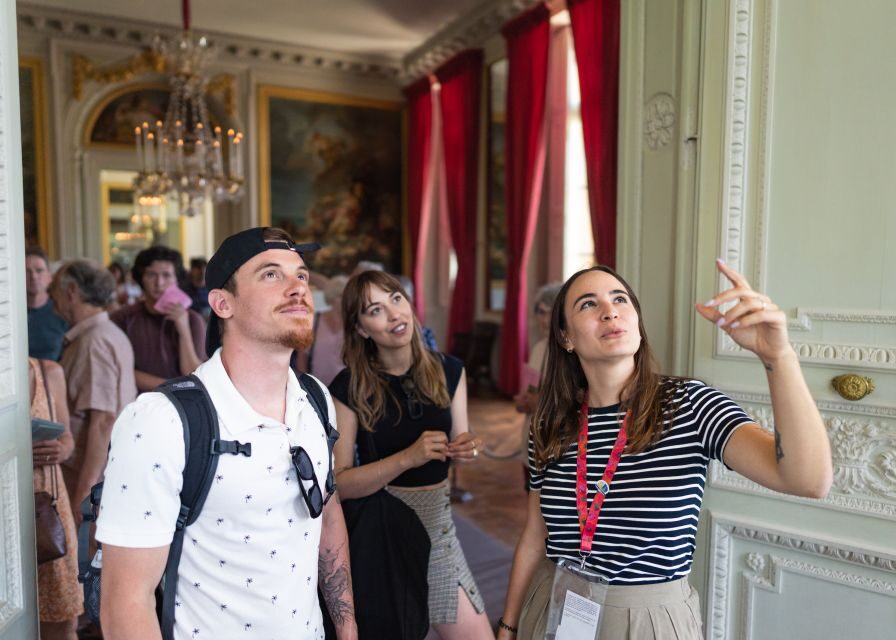
At about $58 per person for 150 minutes, this tour isn’t trying to be the cheapest way to see Versailles. It’s priced for guided access to the places most people don’t get to treat as fully as you can here.
Where the value comes from:
- Two guided highlights: Petit Trianon and the Queen’s Hamlet.
- Headsets when appropriate, so you don’t lose half the story to noise.
- Skip-the-ticket-line language in the tour details (use it as a time-saver expectation).
- The Petit Train return, which matters more than it sounds once your legs are tired.
- An English-speaking guide with story-led context that makes the estate make sense.
Also, this tour is strongest as an add-on after you’ve already built a baseline with the main palace and gardens. If you haven’t done that, you can still enjoy it—but you’ll get even more out of it if you understand the broader Versailles layout first.
Who This Works Best For (and Who Should Rethink It)
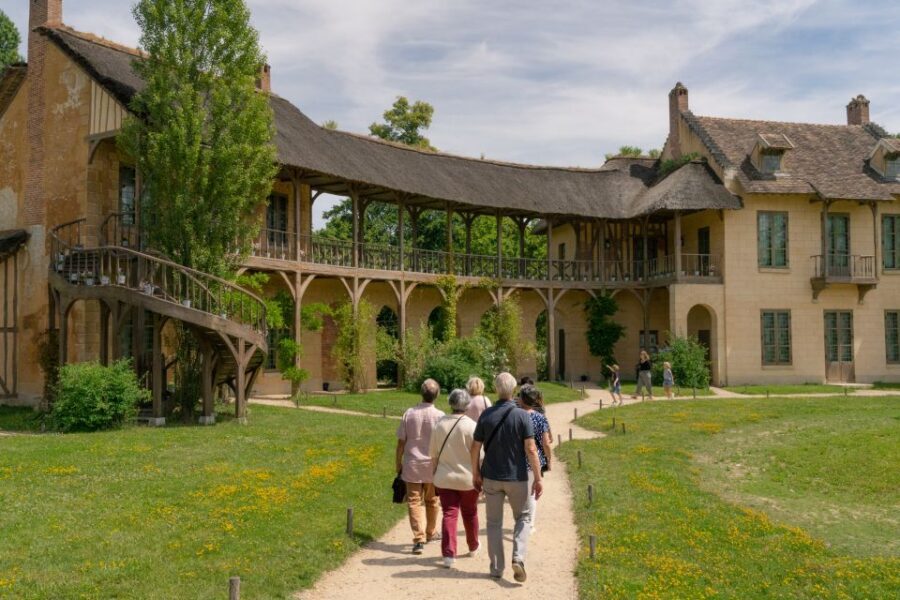
This tour is a great fit if:
- You already visited the palace and gardens earlier and want a more personal Marie Antoinette angle.
- You enjoy guided interpretation—especially storytelling that connects people, objects, and spaces.
- You want a “less crowded” feel compared to the standard palace-only route.
It’s also a strong pick for families, based on at least one experience where the guide (Ivan) kept children entertained even when everyone was tired from the full day.
Be cautious if:
- You hate walking. The tour involves a reasonable amount of it, and it’s not wheelchair accessible.
- You prefer long, slow viewing. Some feedback points to a tour that feels a bit rushed for the time allotted, which tells me this is more “see and understand” than “linger for hours.”
Should You Book This Versailles Marie Antoinette Estate Tour?
If your Versailles goal is to understand Marie Antoinette as a person with a space she could control, I’d book this. The combo of Petit Trianon, the English gardens, and the Queen’s Hamlet gives you a well-rounded view of her private world—without requiring you to figure out every route alone.
One more reason: the guide quality shows up in the details. Headsets, responsive group handling, and strong engagement are clearly part of what people liked, including guides such as Stephanie Fouret, Josephine, Sophie, and Val. That matters on a 150-minute tour, where you don’t get much room for wasted time.
If you’re tight on stamina, plan your day so this is the afternoon “reset,” not your first experience in Versailles. And if you’re sensitive to not moving slowly, treat it as a guided overview with purpose—not a leisurely estate amble.
If your schedule is flexible, the tour offers free cancellation up to 24 hours in advance and also a reserve now/pay later option, which is handy in a place where plans can shift fast.
FAQ
How long is the Versailles: Marie Antoinette Petit Trianon & Estate Tour?
The tour lasts about 150 minutes.
Where is the meeting point?
Meet your guide at the bottom of the Versailles gardens in front of the restaurant La Flottille, by the Grand Canal.
What will I see during the tour?
You’ll get a guided visit of the Petit Trianon, a guided experience in the Queen’s Hamlet, and guided gardens time (personal gardens are included, with hamlet gardens described as exterior).
Do I need to buy tickets for Versailles gardens?
The tour information says you need to purchase a ticket to enter the Versailles gardens to cross the gardens to reach the gate leading to the Domain of Marie Antoinette. (One review suggests there may be pedestrian access that avoids buying tickets just to reach the meeting point, but the provided guidance still notes garden entry is required for the route to the domain.)
Does the tour include audio headsets?
Yes. Headsets are included when appropriate so you can always hear your guide.
Is the tour wheelchair accessible?
No. This tour is not wheelchair accessible.
How do we return to the main palace area?
You ride the Petit Train (tram segment is included) back from the Marie Antoinette domain to return to the Palace of Versailles.
What is the price?
The price is listed as $58 per person.