REVIEW · PARIS
Virtual Reality Guided Tour at the Eiffel Tower
Book on Viator →Operated by VIALITY TOUR · Bookable on Viator
The Eiffel Tower, rebuilt in your head. This VR time-travel tour takes you into the Parc du Champ-de-Mars and pairs what’s real around you with what’s shown through your headset. I especially liked the small-group feel, capped tightly so you can actually hear your guide and follow the story.
My favorite part is the combo of live guide commentary and the headset visuals. You’re walking in the park while you watch the Eiffel Tower’s construction and then its public opening in 1889 for the Universal Exhibition, with your guide talking you through what you’re seeing.
One thing to consider: VR isn’t a safe bet for everyone. If you’re prone to motion sickness, epilepsy, balance issues, or migraines, this experience is specifically not recommended.
In This Review
- Key highlights you’ll care about
- VR at the Eiffel Tower grounds: why it works
- Starting near the Monument to Human Rights: your first move
- The walk through Champ-de-Mars: real space + virtual scenes
- Construction and the 1889 opening: what the VR story actually covers
- Live guide commentary: the difference between watching and understanding
- Comfort, timing, and the VR reality check
- Small-group setup: easier hearing, less stress, better flow
- Price and value: is $34.84 for an hour fair?
- Practical logistics that can make or break it
- Who should book this, and who should skip it
- Should you book this virtual Eiffel Tower tour?
- FAQ
- How long is the Eiffel Tower VR guided tour?
- Is the tour offered in English?
- Do I get a VR headset?
- How many people are in the group?
- Where do I meet, and where does it end?
- What is included in the price?
- Is it suitable for children?
- Is it safe for people with epilepsy or motion sickness?
- What if the tour is canceled due to poor weather, or I need to cancel?
Key highlights you’ll care about

- Time travel at ground level in the Parc du Champ-de-Mars while the tower’s past appears through your headset
- Live English guiding that turns visuals into a clear story, not random sci-fi footage
- Construction and 1889 opening scenes tied to what you’re looking at nearby
- A small-group cap (listed up to 10 people, with a maximum of 8 travelers noted for the activity) for a calmer feel
- No crowds or queues focus so you get Eiffel Tower time without lining up for typical attractions
- You end at the foot of the Eiffel Tower, with a real Paris walk after the VR part
VR at the Eiffel Tower grounds: why it works
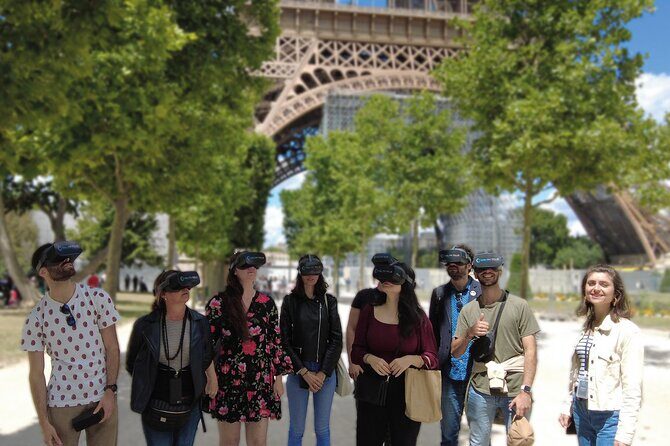
The Eiffel Tower looks familiar fast. But the moment you add VR, the place stops feeling like a postcard and starts feeling like a construction site from another era. You’re not staring at a screen in a room—you’re walking in Paris while the story plays over the location.
I like this approach because it’s honest about what you’re there to do. Yes, it’s a technology experience. But the guide’s goal is to connect it to the park, the sightlines, and the tower’s early public moment in 1889.
And the practical win is big: you’re set up for Eiffel time without the usual crowding pressure. The highlight promise is you can explore without crowds or queues, and the small-group format helps it feel manageable.
You can also read our reviews of more guided tours in Paris



Starting near the Monument to Human Rights: your first move
The tour starts at the Monument to Human Rights on Av. Charles Risler (75007). This is good news if you like to arrive on your feet rather than hunting across the city at the last second.
From the start, you’ll move through the Parc du Champ-de-Mars toward the foot of the Eiffel Tower. The walking is tied to the theme: you’re literally traveling from place to place as the story unfolds, instead of just standing still while VR happens around you.
Your end point is at 4 Av. Pierre Loti (also 75007), and the visit finishes at the foot of the Eiffel Tower. So you’re not stuck figuring out where to go next; you naturally land in the place you came for.
The walk through Champ-de-Mars: real space + virtual scenes
Here’s what makes the itinerary more than a headset demo: the tour blends real walking with VR moments that match the location around you.
You’ll spend about an hour total on the experience, and the plan centers on the Champ-de-Mars area. You’re guided along the grounds, and the headset delivers the historical visuals on top of your current surroundings. In plain terms, it turns a normal stroll into a guided time setting.
One subtle benefit: it helps you get your bearings. If you’re seeing the Eiffel Tower area for the first time, you’ll likely leave with a clearer sense of how the park and tower relate, not just a single view angle. That matters because the Eiffel Tower area can feel like a maze of fences, viewpoints, and paths if you’re doing it unguided.
Construction and the 1889 opening: what the VR story actually covers
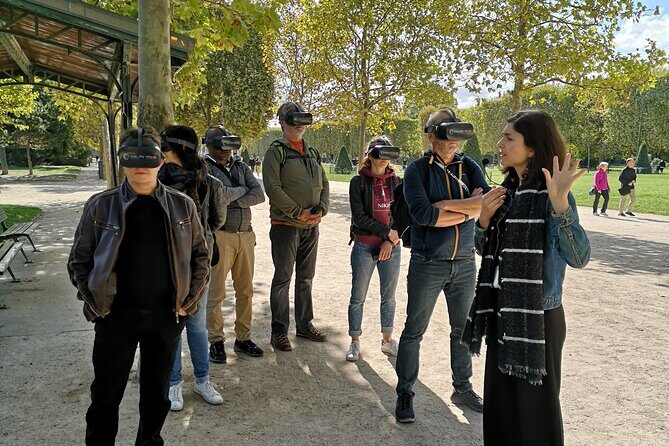
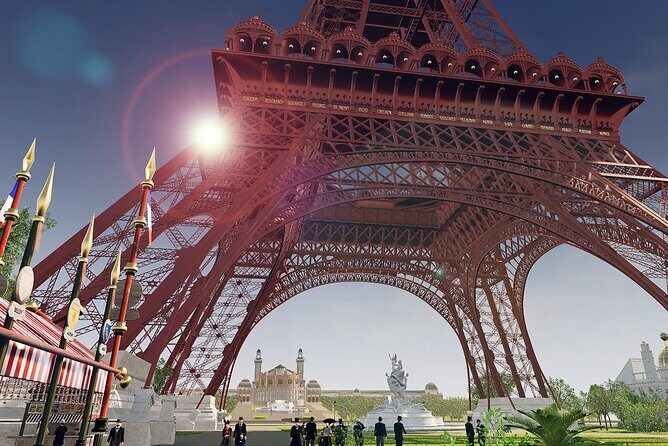
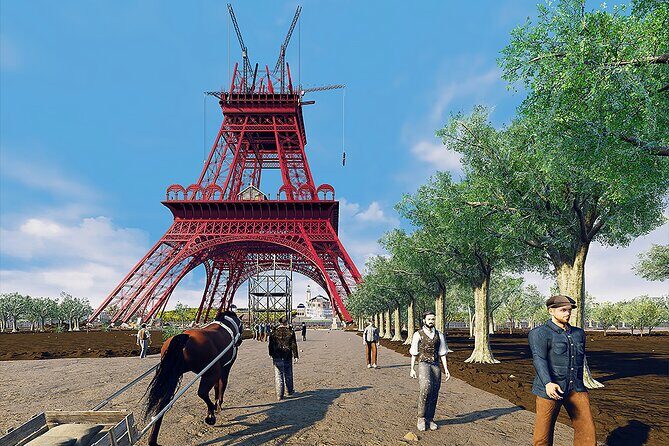
The big theme is straightforward, and it’s what makes the visuals feel purposeful: you’ll witness the Eiffel Tower’s construction and then its opening to the public during the Universal Exhibition of 1889.
That storyline is smart. Construction gives you the “how did this happen” part. The 1889 public opening gives you the “how did people experience it first” part. Put together, it turns the tower from an icon into a moment in time when it was brand new.
Also, it’s not just history as names and dates. It’s history as scenes you can watch while your feet stay on the ground. The guide keeps the sequence understandable, so you’re not left trying to interpret visuals on your own.
The finale is planned for the foot of the tower area. That’s where the contrast hits: you’re looking at the real structure in the present while the headset has been showing its earlier life stages.
Live guide commentary: the difference between watching and understanding
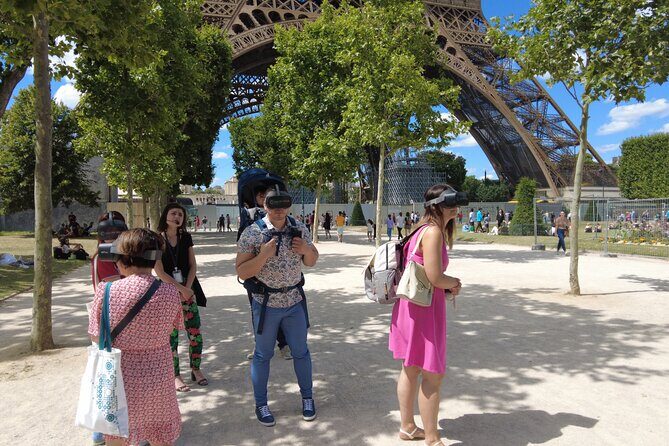
A headset can be impressive and still feel empty if no one helps you connect the dots. Here, your guide talks you through the experience while you watch the VR moments.
I really like this format because you’re not stuck reading captions or guessing what you’re looking at. A good guide also handles pacing, so the VR doesn’t turn into a quick blur. In the experience feedback, one guide named Vladina stood out for being extremely friendly and able to welcome guests well, and that kind of warm, clear guiding matters more than you’d think.
Even better, the tour is structured for comprehension. The guide voice stays your anchor while the headset changes what you see. That’s how you get from wow-factor to real understanding.
And because it’s a guided walk, you don’t just focus on the screen. You’re still responding to your surroundings, listening for cues, and moving with the group.






Comfort, timing, and the VR reality check
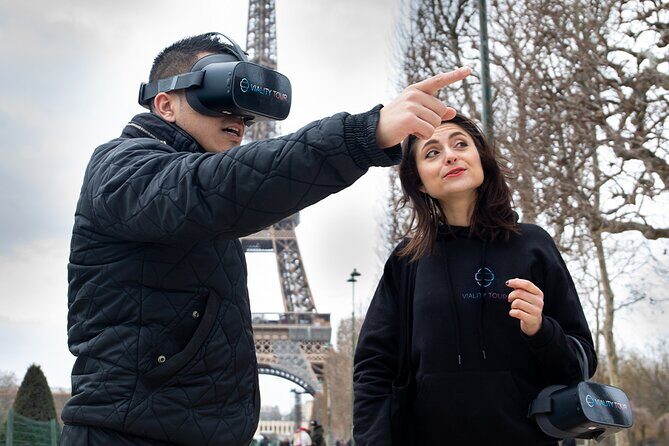
This is an active experience. You’ll have a moderate physical fitness level requirement, since you’re walking in the park as part of the tour. Wear shoes you’re comfortable walking in, and plan to keep your pace steady.
Timing-wise, the tour is listed as about 1 hour. In practice, some groups report finishing around 45 to 50 minutes, so don’t panic if it feels a bit shorter than you expected.
VR comfort is the real watch-out. The activity is not recommended if you have epilepsy, are prone to motion sickness, deal with balance disorders, or tend to get migraines. If any of those are you, I’d skip this one. VR can be a gamble even when it’s well-run.
If you do go, treat it like motion exposure: sit the headset correctly, follow the guide, and speak up if you feel off. The best-case scenario is you leave with a stronger mental picture of the tower’s early days. The worst-case scenario is discomfort you can’t power through.
Small-group setup: easier hearing, less stress, better flow
The tour is built for small groups. It’s listed as maximum 10 people for the guaranteed small group, and the activity also notes a maximum of 8 travelers. Either way, it’s not a huge crowd experience.
That size matters at the Eiffel Tower area. You’re navigating paths in a popular zone, and you also need to manage the headset element. Smaller numbers help with both: you spend less time waiting, and the guide can actually keep track of the group while VR is happening.
It also helps the social feel. You’re not shouting across ten strangers. You can ask questions, and the guide can respond without turning it into a classroom lecture.
One more practical point: dogs are not accepted (even on a leash), except assistance dogs. Service animals are allowed. If you’re traveling with a pet, plan accordingly.
Price and value: is $34.84 for an hour fair?
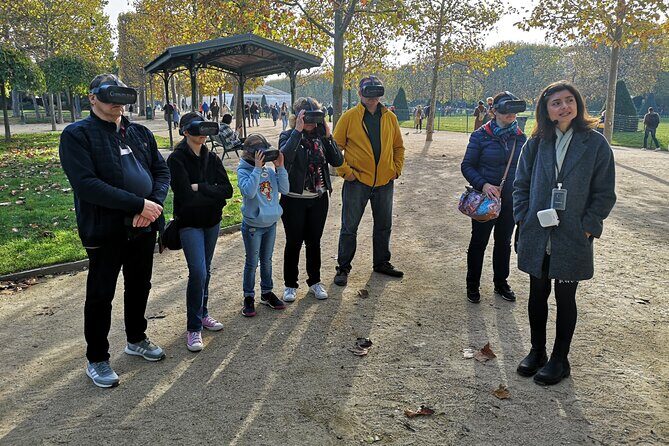
At $34.84 per person for about an hour, you’re paying for three things that add up quickly: a professional guide, a VR headset loan, and guided time in the park that ends at the tower area.
The value gets clearer when you look at what’s included versus what’s not:
- Included: VR headset loan, professional guide, and the guided tour of Champ-de-Mars (listed as one hour).
- Not included: tips and transport to the meeting point.
There’s also a line that says Admission Ticket Free in the itinerary details, so you’re not seeing an extra paid entry add-on in the tour framing. What you are paying for is the experience itself—VR plus guiding—rather than Eiffel Tower admission access.
Is it worth it? For me, it comes down to what you want that day. If your priority is an “Eiffel Tower icon” moment only, you might choose a simpler option. If you want context—how the tower came together and how it debuted—this setup is a smart use of time because it’s story-driven and location-driven.
And the price feels more reasonable when you remember you avoid the typical crowd-and-queue stress. Even if you don’t mind lines, having a guided, calm hour in the middle of a busy area can be a vacation win.
Practical logistics that can make or break it
A few details matter so you don’t waste energy:
- You’ll use a mobile ticket and receive confirmation at booking time.
- It’s offered in English.
- It’s near public transportation, which helps if you’re pairing it with other Eiffel Tower plans.
- You should be ready for a small walk in the park. Comfortable shoes beat stylish-but-slow footwear.
Weather is also a factor. The experience requires good weather, and if it’s canceled due to poor weather, you’ll be offered another date or a full refund. Since it’s outdoors as part of the route, don’t schedule it on your most fragile weather day.
Finally, service animals are allowed, but regular dogs aren’t. If you’re traveling with an assistance animal, keep that documentation handy, just like you would for any Paris attraction.
Who should book this, and who should skip it
This is a strong match if you:
- Want the Eiffel Tower story without turning the day into a queue marathon
- Like guided walking and clear explanations
- Enjoy VR when it’s tied to a real location, not just a “sit and watch” format
- Travel with a small group dynamic (since the cap is tight)
It’s also a good fit for first-timers who want to understand where the park fits around the tower. You’ll likely leave with better spatial sense than you’d get from a quick photo stop.
Skip it if VR is a known problem for you—especially if you’ve had motion sickness with VR before, or you’re managing epilepsy, balance disorders, or migraines. In those cases, the experience is specifically not recommended, and you’ll be better off choosing a standard guided walk instead.
Should you book this virtual Eiffel Tower tour?
If you want one hour that feels different from a standard Eiffel Tower visit, this is an easy yes. The combination of walking the Champ-de-Mars plus VR scenes of the tower’s construction and 1889 debut is exactly the kind of storytelling that makes sightseeing stick.
Book it if you care about context and pacing more than maximum time staring upward. The small-group structure and guide-led narrative are where the value really lands.
But if your day is fragile—weather uncertainty, VR sensitivity, or health concerns—then skip the headset and choose a lower-risk option. This tour is built to work well in the right body and the right conditions.
FAQ
How long is the Eiffel Tower VR guided tour?
The tour runs for about 1 hour.
Is the tour offered in English?
Yes, it’s offered in English.
Do I get a VR headset?
Yes. The headset is provided as a loan for the tour.
How many people are in the group?
It’s listed as a small group with a maximum of 10 people, and the activity also notes a maximum of 8 travelers.
Where do I meet, and where does it end?
You start at the Monument to Human Rights on Av. Charles Risler (75007). The tour ends at 4 Av. Pierre Loti (75007), at the foot of the Eiffel Tower.
What is included in the price?
Included are the VR headset loan, a professional guide, and the one-hour guided tour at Champ-de-Mars.
Is it suitable for children?
It’s not accessible to children under 8 years old.
Is it safe for people with epilepsy or motion sickness?
It’s not recommended for visitors with epilepsy, those prone to motion sickness, or those with balance disorders or migraines.
What if the tour is canceled due to poor weather, or I need to cancel?
The tour requires good weather. If it’s canceled due to poor weather, you’ll be offered a different date or a full refund. You can cancel for a full refund up to 24 hours before the experience start time.