REVIEW · PARIS
Small Group Marais/Place des Vosges Walking Tour -10 people max
Book on Viator →Operated by SLL Paris Tours · Bookable on Viator
Le Marais clicks when someone explains it. This small-group walking tour (up to 10 people) gives you a fast, story-led route through some of the neighborhood’s best sights, all in English and finished with time to enjoy the rest of your day.
I especially like two things. First, you get a smooth pace that’s long enough to notice details, but short enough to stay energetic. Second, the route mixes big landmarks with human-scale stops, like private hôtels particuliers and the famous square that anchors the area, Place des Vosges.
One thing to consider: if you’re hoping for lots of museum-style time or a heavy “inside” tour, this is more about seeing key exteriors and courtyards and learning the stories as you walk. It’s a smart sampler, not a full deep dive.
In This Review
- Key highlights worth your time
- Why Le Marais feels easier after a guided walk
- Sébastien’s style: friendly facts and practical Paris recommendations
- The route, stop by stop: what you’ll see and what to notice
- Stop 1: Le Marais introduction at Paroisse Saint-Paul Saint-Louis
- Stop 2: Hôtel de Beauvais (Hôtel particulier Beauvais)
- Stop 3: Maisons à l’Enseigne du Mouton et du Faucheur
- Stop 4: Maison Européenne de la Photographie (Hénault de Cantobre)
- Stop 5: Square Albert Schweitzer and Hotel d’Aumont’s roofs
- Stop 6: Hotel de Sens
- Stop 7: The Wall of Philip II Augustus (vestiges)
- Stop 8: Cour et jardin de l’Hôtel de Sully
- Stop 9: Place des Vosges (your big payoff square)
- Stop 10: Maison de Victor Hugo (lived there, 1832–1848)
- Stop 11: Rue des Francs Bourgeois
- Stop 12: La Rue des Rosiers and La Boutique Jaune
- Morning timing and how to fit it into your day
- Price and value: what $60.24 buys you in Paris
- Practical tips so you enjoy every stop
- Should you book this Marais and Place des Vosges tour?
- FAQ
- How long is the Small Group Marais/Place des Vosges Walking Tour?
- What is the group size limit for this tour?
- Is the tour offered in English?
- Where is the meeting point?
- Where does the tour end?
- Do I need to buy separate admission tickets at the stops?
- Is a mobile ticket provided?
- Can I bring a service animal?
- What is the cancellation policy for a full refund?
Key highlights worth your time
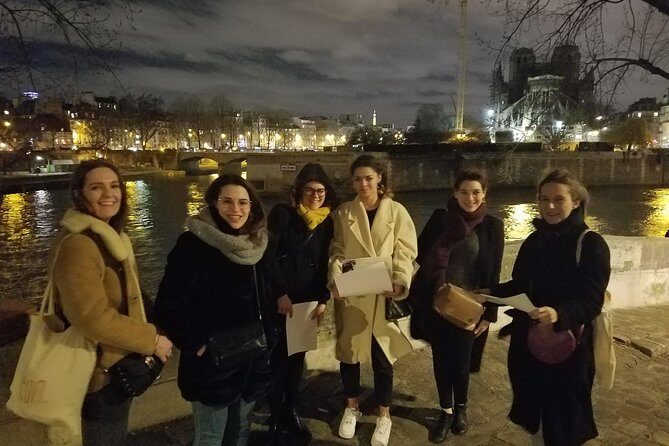
- Max 10 people means you can actually hear the guide and ask questions
- Sébastien’s English is praised as clear, friendly, and fast-moving in the best way
- Two hours in the morning so you keep the rest of the day free for your own plans
- Place des Vosges + Victor Hugo’s home give you payoff landmarks near the end
- Free admission stops on the tour mean you’re not scrambling for ticket timing
Why Le Marais feels easier after a guided walk
The Marais can be a lot—pretty streets, old buildings, and endless corners that all look similar until someone points out what you’re looking at. This tour helps you get oriented fast. You start in the heart of the neighborhood and build a mental map as you go: where power lived, how streets evolved, and why certain walls and squares still matter.
Because the group is small, the guide’s pace stays human. You don’t feel like you’re part of a crowd stamp. It also helps that the tour format is steady and legible: brief stops, short walks between them, and stories that connect one place to the next. By the time you reach Place des Vosges, the neighborhood stops feeling random.
You can also read our reviews of more walking tours in Paris



Sébastien’s style: friendly facts and practical Paris recommendations
One name comes up again and again: Sébastien. His approach is built on three things you’ll feel right away during the walk—he’s on time, he’s very friendly, and he’s organized. If you like a guide who talks like a real person (not a lecture), you’ll likely appreciate his playful conversations along with the historical details.
Another reason this tour works well is that Sébastien doesn’t just point at buildings. He also shares recommendations for food, restaurants, arts, and museums in Paris. That matters because it turns the tour into a planning tool, not just an hour-and-a-half of sightseeing.
If you’re the type who enjoys asking questions, you’ll also have more breathing room in a max-10 group. That can be the difference between hearing a cool fact and actually understanding why it matters.
The route, stop by stop: what you’ll see and what to notice
You’re walking across a compact patch of Paris, usually settling for about 5–20 minutes per stop. Each stop is timed so you get context, see key features, and then move on before you lose interest.
Stop 1: Le Marais introduction at Paroisse Saint-Paul Saint-Louis
You begin at 99 Rue Saint-Antoine, near Paroisse Saint-Paul Saint-Louis. The first stop is essentially your orientation briefing—what you’re about to see and how the Marais developed into the place you recognize today.
This early setup is useful. It gives you a way to judge what you’re seeing later. Instead of just thinking old buildings, you’ll start thinking: who lived here, what the architecture signaled, and how the neighborhood changed over time.
Stop 2: Hôtel de Beauvais (Hôtel particulier Beauvais)
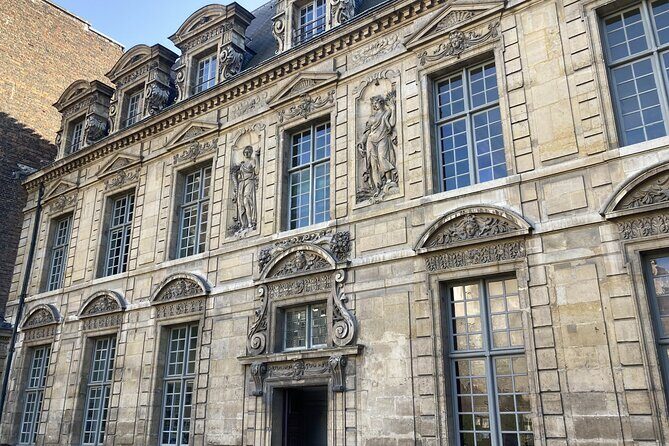
Next you walk to the hôtel particulier Beauvais and hear its story. These private mansions are a signature of the Marais. They look like “just impressive stone façades” at first glance, but the guide helps you read them—power, status, and the kind of world that produced them.
A small drawback here: because it’s mostly about a specific mansion’s exterior and story, you’ll get the most out of it if you like listening. If you prefer to quietly photograph and wander, you might want to pause for longer on the street level details as the group moves on.





Stop 3: Maisons à l’Enseigne du Mouton et du Faucheur
Then comes a pair of Medieval-style buildings associated with the signs of the Mouton and the Faucheur. This is the stop where the Marais starts to feel less like postcard Paris and more like the layered city it actually is.
What to notice: the way these structures preserve older character amid newer surroundings. It’s the kind of detail that’s easy to walk past if you’re not looking for it.
Stop 4: Maison Européenne de la Photographie (Hénault de Cantobre)
You head to the Maison Européenne de la Photographie, housed in the hôtel particulier Hénault de Cantobre. Even if you don’t go inside, the stop is worthwhile because the building’s identity as a private mansion is part of the story.
This is a good moment to slow down mentally. The Marais keeps reusing spaces—old forms finding new purposes. The guide connects that idea to what you’re seeing outside.
Stop 5: Square Albert Schweitzer and Hotel d’Aumont’s roofs
At Square Albert Schweitzer, the focus shifts toward the Hotel d’Aumont and the famous mansard roofs associated with that style. This is one of those “stop and look up” moments.
If you’ve ever seen rooflines in Paris and wondered why they look the way they do, this stop gives you a starting point. You’ll leave with a better eye for what’s French about it.
Stop 6: Hotel de Sens
The tour then moves to Hôtel de Sens. Like the earlier hôtel particuliers, this one is framed as a story—who it belonged to, what made it important, and what survives today.
This stop is strong if you like pattern recognition. Once the guide has shown you how to think about these buildings, each new mansion feels like another chapter, not another random façade.
Stop 7: The Wall of Philip II Augustus (vestiges)
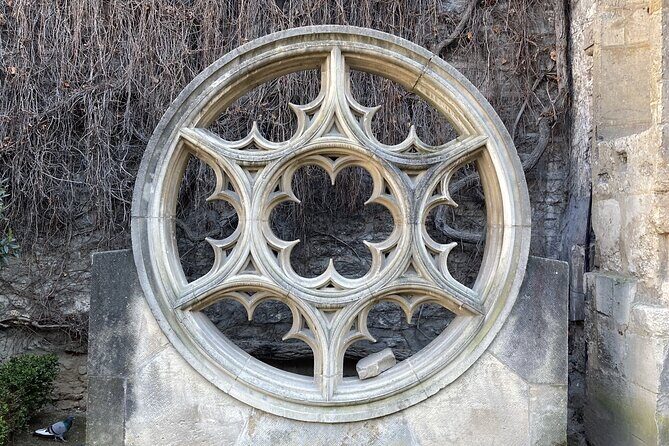
Now you get the oldest city-wall angle: remnants of the Wall of King Philip II Augustus. That’s a big deal because it anchors the area in the medieval city layout, not just later Paris.
What to notice here is scale and placement. The guide helps you understand what it meant when the wall was active—and why you still see traces today.
Stop 8: Cour et jardin de l’Hôtel de Sully
Next is the Hôtel de Sully with its courtyard and garden. This kind of space explains how these private mansions worked. They weren’t only about street-facing beauty; they also had internal life.
Even if you only glimpse what you can see from the outside, it’s a reminder that Paris buildings often hide their “real” space behind gates and courtyards. This stop helps you spot that pattern in other neighborhoods too.
Stop 9: Place des Vosges (your big payoff square)
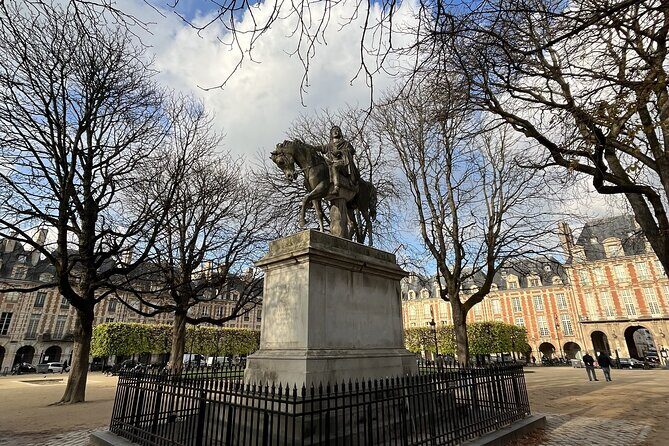
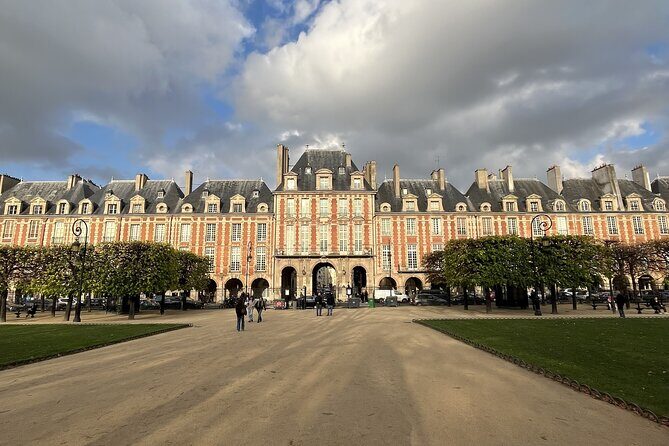
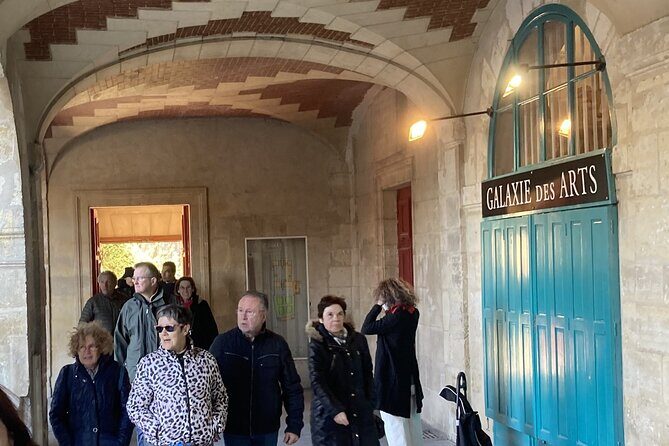
Then you arrive at Place des Vosges. This is your signature landmark moment, and the timing is perfect: you’ve built enough context that the square feels earned.
Take your time here. Look around the façades, notice the uniform rhythm, and treat it as a pause in the walk where you can reset and take photos without feeling rushed.
Stop 10: Maison de Victor Hugo (lived there, 1832–1848)
After Place des Vosges, you spend time at the home of Victor Hugo, where he lived from 1832 to 1848. Even if you know the author only in broad strokes, this stop connects a literary name to a real address.
This is also a good “tone shift” in the tour. By now you’ve been working through medieval and early-modern Paris. Victor Hugo brings the story into a more familiar modern era—still French, but closer to the world you recognize.
Stop 11: Rue des Francs Bourgeois
Rue des Francs Bourgeois comes next. It’s a short walk, but it matters because this street is part of the neighborhood’s identity. The guide helps you see how a street name can carry history in its words.
If you like street-level texture—shops, stonework, and the sense of daily life—this is a nice stretch before you reach the final neighborhood chapter.
Stop 12: La Rue des Rosiers and La Boutique Jaune
You finish in La Rue des Rosiers, tied to the old Jewish quarter, with the visit of La Boutique Jaune. This is where the tour becomes about more than architecture. It’s about community memory and what still lives on in the neighborhood today.
La Boutique Jaune is a traditional kosher deli/bakery, and it’s a fitting ending point because it gives you a practical next step: food. If you’re hungry, you’re in the right place to keep the day rolling.
Morning timing and how to fit it into your day
Starting at 10:00 am is a smart move. You get the sights early, then you’re free to linger on your own—maybe do a museum you’re excited about, grab lunch, or simply roam. The tour length is about 2 hours, which is just enough time to feel satisfied without burning the whole day.
This is also a good choice if you want your “must-see” Marais moments done before lines and crowds build later. You’ll still have plenty of energy to explore after.
Price and value: what $60.24 buys you in Paris
The price is $60.24 per person for a roughly two-hour small-group walk. The value here isn’t bargain shopping. It’s buying focused time with a guide who can connect the dots between buildings, streets, and stories.
A few value signals stand out:
- The group max is 10, so your time isn’t diluted.
- The guide’s performance is repeatedly praised, especially Sébastien’s friendly way of teaching and his fluent English.
- Stops are described as admission-ticket free, which helps you avoid extra costs and timing stress.
If you enjoy walking tours that explain what you’re seeing and you like leaving with a clearer plan for the rest of Paris, this price feels reasonable. If you’re already a hardcore Marais scholar and just want photos, you could do it on your own—but you’d miss the thread the guide ties through the neighborhood.
Practical tips so you enjoy every stop
A couple of simple things will make this tour smoother:
- Wear comfortable shoes. You’re doing steady walking with lots of short stops.
- Bring layers. Paris mornings can swing from cool to warm quickly.
- Have your camera ready, but don’t rush the stories. Some of the best details are the ones you understand only after the guide points them out.
Also, because you get a morning window and the tour ends near La Boutique Jaune, it’s easy to turn the walk into a real plan: eat, then keep exploring the Marais with your new mental map.
Should you book this Marais and Place des Vosges tour?
I’d book it if you want a high-impact first visit to Le Marais without spending hours piecing together guidebooks. The small group size, the strong English delivery from Sébastien, and the mix of hôtels particuliers, the city wall vestiges, and Place des Vosges make this a solid sampler.
I’d skip it or consider alternatives if you need a heavy interior/museum experience. This walk is best for people who like streets, façades, courtyards, and stories you can carry with you as you wander.
FAQ
How long is the Small Group Marais/Place des Vosges Walking Tour?
It’s listed as approximately 2 hours.
What is the group size limit for this tour?
The tour has a maximum of 10 travelers.
Is the tour offered in English?
Yes, it’s offered in English.
Where is the meeting point?
The start is at Paroisse Saint-Paul Saint-Louis, 99 Rue Saint-Antoine, 75004 Paris, France.
Where does the tour end?
The tour ends at Sacha Finkelsztajn – La Boutique Jaune, 27 Rue des Rosiers, 75004 Paris, France.
Do I need to buy separate admission tickets at the stops?
The stops are listed as admission ticket free.
Is a mobile ticket provided?
Yes, the tour includes a mobile ticket.
Can I bring a service animal?
Service animals are allowed.
What is the cancellation policy for a full refund?
You can cancel up to 24 hours in advance of the experience for a full refund.