REVIEW · REIMS
Champagne Guy De Chassey: Traditional Tour & Tasting
Book on Viator →Operated by Champagne Guy de Chassey · Bookable on Viator
Champagne is a science, and it smells great. This Traditional Tour & Tasting at Champagne Guy de Chassey mixes handmade vaulted cellars with real production details, then caps it with tastings you can actually use to understand Champagne.
I particularly like the focus on traditional methods such as manual riddling, tied to the terroir idea behind the cuvées. I also love that the tour is built for a small group, so your questions don’t get lost in the crowd.
One thing to consider: it’s not a long, hop-on/hop-off style outing. At about 1 hour 30 minutes, you’ll want to arrive on time and be ready to concentrate.
In This Review
- Key things to know before you go
- Finding Champagne Guy de Chassey near Reims: the 90-minute pace
- Handmade vaulted cellars and manual riddling: why this terroir story matters
- Pressing, extracting, and storing juice: the machinery lesson that makes tasting easier
- Bottling process from start to sale: how the tour avoids the boring parts
- Summer vine collection and weather effects: a lesson you can’t get from a bottle alone
- Aperitif and tasting three traditional cuvées: how to taste with purpose
- Your guide experience with Hélène: patient, flexible, and clear
- Price and value: what you really get for $36.05
- Who should book this Champagne Guy de Chassey tour
- Should you book Champagne Guy de Chassey?
- FAQ
- How long is the Champagne Guy De Chassey Traditional Tour & Tasting?
- Where does the tour meet?
- What language is the tour offered in?
- How many people are in the group?
- Is the tasting included, and how many glasses are served?
- What is included in the sample menu?
- Do I need a printed ticket?
- When will I receive confirmation after booking?
- Are service animals allowed?
- Is private transportation included?
Key things to know before you go
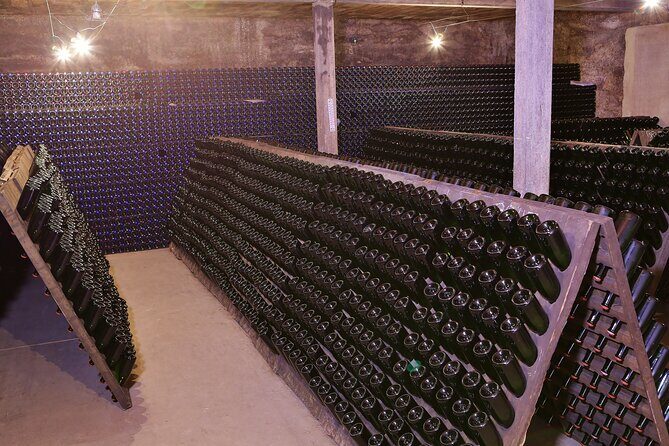
- Handmade vaulted cellars give you the right cool setting to learn how Champagne is made
- 3 glasses of traditional cuvées are included, so you taste what you learn
- Small group size (max 12) means you’ll get clearer answers from the guide
- Pressing and bottling walkthrough helps the whole process click from start to sale
- Summer added layer: you may get a look at how weather affects grape maturation via vine collections
- English tour with a mobile ticket for easier day-of logistics
Finding Champagne Guy de Chassey near Reims: the 90-minute pace
This tour is short enough to fit cleanly into a busy Reims day, but long enough to feel like more than a quick tasting stop. You’re looking at roughly 1 hour 30 minutes, and the experience is offered in English with a maximum of 12 travelers (small-group energy, not cattle-car sightseeing).
You’ll meet at 1 Pl. de la Demi Lune, 51150 Val de Livre, France. The meeting point matters here because there’s no mention of shuttle service. Plan to get there under your own power, then treat the tour as the main event. If you’re thinking about pairing this with other Reims activities, I’d leave breathing room before and after—because wine always runs on schedule, but people don’t.
Also, keep an eye on your confirmation timing. You should receive confirmation within 48 hours of booking, subject to availability. The activity uses a mobile ticket, which is a nice time-saver when you’re bouncing between sights.
You can also read our reviews of more food & drink experiences in Reims

Handmade vaulted cellars and manual riddling: why this terroir story matters
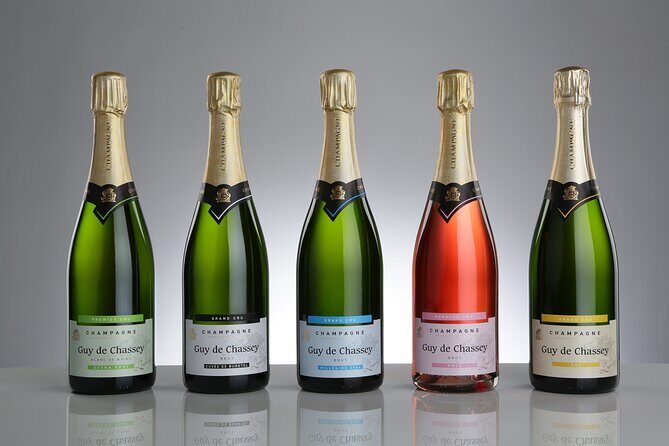
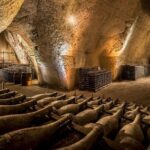
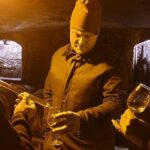
The heart of this tour is the way Guy de Chassey explains Champagne as a link between place and technique. You’ll visit their handmade vaulted cellars, where the setting alone helps you understand why Champagne wants patience. Low light, stable temperatures, and stone architecture all push the lesson from marketing into reality.
From there, the guide connects the dots: the cuvées reflect the Rems Mountain terroir, and traditional methods such as manual riddling can influence the end result. That phrase matters because it signals what the tour is trying to teach: not just what Champagne is, but why the process is done that way.
In plain terms, manual riddling is part of the traditional approach to managing what happens during aging and clarification. You don’t need to memorize steps. What you want is the big picture—how careful handling over time affects texture, aroma, and the final feel in the glass. A good Champagne tour doesn’t overwhelm you. This one aims to make the logic stick.
Practical tip: if you’re the type who likes to ask questions, this is the moment. The cellars are where you can connect sensory experience (cool, quiet, slow) to technical explanation.
Pressing, extracting, and storing juice: the machinery lesson that makes tasting easier
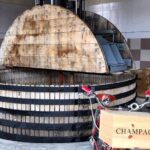
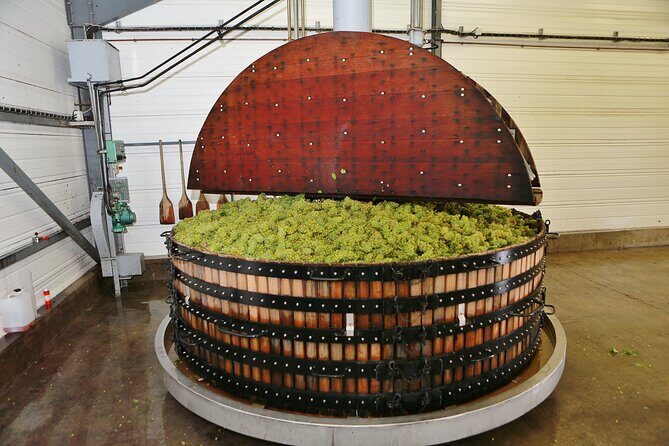
One of the most praised parts of this experience is seeing the machinery used to press grapes and handle what comes out afterward. Champagne starts with decisions you can’t taste right away—so watching the press and understanding juice handling helps you later when you sip.
You’ll get walked through the journey from pressing into the next stages, including extracting and storing the juice. Even without technical jargon, this is hugely helpful. When you know what the juice goes through, tasting stops being random. You start asking better questions like: Is the style showing more freshness or more roundness? Does it feel lighter or weightier? That’s when production knowledge starts paying you back.
If you’re tasting with friends, this part is also a fun conversation starter. You can point out what you saw and compare it to what you’re tasting later, instead of just saying, This one is good.
Bottling process from start to sale: how the tour avoids the boring parts
A lot of Champagne tours do the same thing: sell the dream, pour the wine, move on. This one goes further by showing the bottling process and giving a clearer sense of the full path from pressing to sale of champagne.
That “from start to sale” framing is what makes the tour feel practical. It helps you understand why Champagne is not just a drink—it’s a controlled production line with a lot of checkpoints. And it helps you appreciate the skill involved, because you’re not just watching people perform. You’re seeing what happens to the wine as it transitions into a bottled product you can actually buy.
One small drawback: if you expected purely scenic cellars and a long, slow stroll, this is more about process than scenery. But if you want real detail—pressing, juice handling, bottling—this is the sweet spot.
Summer vine collection and weather effects: a lesson you can’t get from a bottle alone
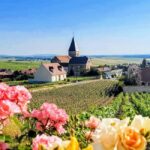
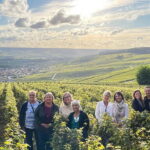
There’s an added bonus when you visit during summer time. The tour can include a look at the impact of weather conditions on grapes maturation, explained through a French and worldwide vine collection.
This is valuable because weather is one of those invisible forces. On a bottle, you get a vintage year and some marketing language. Here, you get a human explanation of how maturation changes when the season changes. It also gives you a useful lens for understanding why two bottles from different years can feel different even if they’re made with the same general philosophy.
If you’re visiting outside summer, you might not get this specific weather angle. Still, the core production walkthrough and tastings are the main focus.
You can also read our reviews of more wine tours in Reims



Aperitif and tasting three traditional cuvées: how to taste with purpose
The tour includes an included sample menu. You’ll start with an aperitif (local production), and then you’ll taste three glasses out of the traditional cuvées.
Three pours is a great number. It’s enough to notice differences without turning the whole thing into a blur. And it’s exactly why the earlier production lessons matter: you’re not learning for the sake of learning—you’re learning so the tasting clicks.
Here’s how I’d taste to get maximum value:
- Take one sip and decide whether you feel more crisp or more round first.
- Then pay attention to whether the flavor leans more fruit-forward or more bread/toast-like (no need to name exact aromas).
- Finally, ask yourself which one you’d actually open at home without overthinking it.
Also, keep in mind you’re tasting alcoholic beverages as part of the experience. If you plan to drive afterward, don’t. If you plan to buy bottles, bring a realistic plan for carrying them. Champagne packaging is heavier than it looks.
Your guide experience with Hélène: patient, flexible, and clear
This tour tends to shine because of the guide. Multiple bookings highlight Hélène (spelled Hélène/Helene in confirmations) for clear explanations and a patient approach to questions. In a small group, that matters. You get real time, not just a script.
One of the nicest moments described is how accommodating the guide can be if you’re a bit late. That’s not about being casual—it’s about reducing stress. You can focus on learning instead of worrying about timing.
And the explanations are not only adult-friendly. One review notes the experience also holds kids’ attention, which usually means the guide explains things in a way that’s easy to follow. If you’re traveling with family, that’s a big plus.
Pro tip: if your group is curious (and especially if you have kids asking questions), go with it. Asking “why” questions during the cellars and production stops is where the tour becomes memorable rather than just pleasant.
Price and value: what you really get for $36.05
At $36.05 per person, this is priced like a straightforward, focused activity. The best value signal is that you’re not paying only for the tasting. You’re paying for a guided tour that includes three glasses of traditional cuvées, plus an aperitif.
The small-group cap of 12 also changes the value equation. In a larger group, a guide’s time gets diluted. Here, you’re more likely to get direct answers and spend less time listening to other people’s questions.
Also, this is an efficient length: about 90 minutes. If you’re weighing costs against time, that matters. You get a complete mini-lesson plus tastings without sinking half a day.
What’s not included is private transportation. So the real cost is your ability to reach the meeting point. If you already have a car, taxi plan, or a reliable local ride, the $36.05 price becomes more attractive.
If you’re the type who ends up buying bottles anyway, you’ll be glad you tasted with context. Buying blind is how people regret Champagne purchases. This tour helps you avoid that.
Who should book this Champagne Guy de Chassey tour
Book it if:
- you want hands-on production details (pressing, juice handling, bottling)
- you like explanations tied to terroir and traditional methods
- you prefer a small group and a guide who answers questions
- you want included tasting without committing to a full-day tour
- you’re visiting Reims with family and want an activity that can hold interest
You might skip it if:
- you want a long, scenic, city-style Champagne day with minimal focus on process
- you’re only looking for a quick tasting with no production walkthrough
- you can’t make the meeting time and location work (since it returns to the start and the session is compact)
Should you book Champagne Guy de Chassey?
If you care about understanding what you’re drinking—rather than just collecting sips—this is a smart bet. The biggest win is how the tour connects traditional cellar work and production steps to a tasting you can interpret. The guide experience with Hélène, the small group size, and the included three traditional cuvées make it feel like real value for your money.
If that sounds like your style, I’d book it. If you’re expecting a long roaming day or you need transportation handled for you, plan differently.
FAQ
How long is the Champagne Guy De Chassey Traditional Tour & Tasting?
It lasts about 1 hour 30 minutes (approx.).
Where does the tour meet?
You start at 1 Pl. de la Demi Lune, 51150 Val de Livre, France.
What language is the tour offered in?
The tour is offered in English.
How many people are in the group?
The tour has a maximum of 12 travelers.
Is the tasting included, and how many glasses are served?
Yes. You’ll taste 3 glasses from the traditional cuvées, and an alcoholic beverages tasting is included.
What is included in the sample menu?
The starter is an aperitif made with local production.
Do I need a printed ticket?
No. The tour uses a mobile ticket.
When will I receive confirmation after booking?
You should receive confirmation within 48 hours of booking, subject to availability.
Are service animals allowed?
Yes, service animals are allowed.
Is private transportation included?
No. Private transportation is not included.