REVIEW · PARIS
Guided tour of Montmartre in songs with a professional
Book on Viator →Operated by Montmartre en chansons · Bookable on Viator
Songs make Montmartre click fast.
This is a guided walk where music guides you from one landmark to the next, with a professional singer leading the way and getting you to participate.
I love how the stop-by-stop singing turns famous places into something you actually remember. I also love the themed mix of art and Paris pop culture, from Renoir and Dalida to Montmartre cabarets and the Sacré-Cœur viewpoint.
One thing to consider: you’re moving through Montmartre’s hills and the time at each stop is brief, so it’s not for slow, long-stay sightseeing or serious mobility limits—plan on moderate walking.
In This Review
- Key highlights worth your time
- Songs as a shortcut to real Montmartre
- What you’ll actually do on the walk (and why it works)
- Stop-by-stop: the Montmartre route in music
- Saint-Jean de Montmartre at Place des Abbesses (first impression)
- Place des Abbesses energy and the musicians around you
- Le Mur des Je t’aime: singing with the languages of love
- Rue des Abbesses: a lively shopping stretch with a local nickname
- Rue Lepic and Le Moulin de la Galette (Renoir’s Montmartre)
- Dalida’s house and the themed sing-along stops
- Theatre Lepic and Claude Lelouch’s film link
- The iconic pink house: La Petite Maison Rose
- Vigne du Clos Montmartre: vineyards in a surprising spot
- Au Lapin Agile: the oldest Montmartre cabaret stop
- Rue Norvins and old cabaret streets
- Place du Tertre: artists and a return moment
- Saint-Pierre de Montmartre: the end-of-tour church visit
- Rue de Mont Cenis and the Patachou cabaret reference
- Sacré-Cœur parvis and the big Paris view
- Value and pacing: is $33.79 a fair deal?
- Who should book this tour
- A note on the guide experience (and what to expect)
- Should you book this Montmartre in Songs tour?
- FAQ
- How long is the Montmartre in songs tour?
- How much does it cost?
- Where does the tour start and end?
- What time does it start?
- Is the tour available in English?
- Do I need a paper ticket?
- How physically demanding is it?
- How large is the group?
- What happens if the weather is bad or I need to cancel?
Key highlights worth your time
- A sing-along guide who uses music to teach you the story behind each spot
- Starts at Place des Abbesses with a quick look at Saint-Jean de Montmartre
- The Wall of I Love You plus a hands-on song moment tied to languages
- Artist and film references like Renoir’s Moulin de la Galette and Claude Lelouch’s Edith and Marcel
- Classic Montmartre nightlife stops including Au Lapin Agile and cabaret streets
- Ends at Sacré-Cœur with the big view over Paris
Songs as a shortcut to real Montmartre
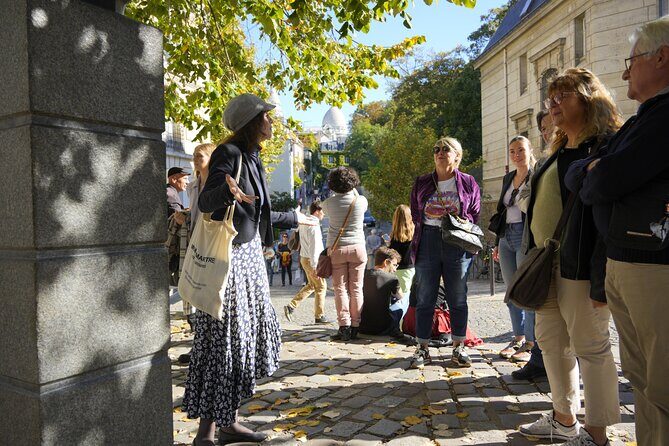
If you’ve ever tried to wander Montmartre on your own, you know the problem: there are so many stairs, so many viewpoints, and so many “you are here” moments that it can feel like a photo scavenger hunt. This tour is different. It uses songs as a built-in rhythm for the walk, so you’re not just moving from one landmark to another—you’re learning why those places matter.
The format is also a practical win. You get a planned route with frequent, short moments at meaningful places. Each stop is listed as free to enjoy, so you’re not juggling extra tickets while you’re trying to keep your footing on uneven streets.
And it’s not just sightseeing. You’re encouraged to sing along with your guide at multiple points. That turns the experience into a kind of moving performance—good energy, but also very “Montmartre,” where art and entertainment have always been right on the street.
You can also read our reviews of more guided tours in Paris



What you’ll actually do on the walk (and why it works)
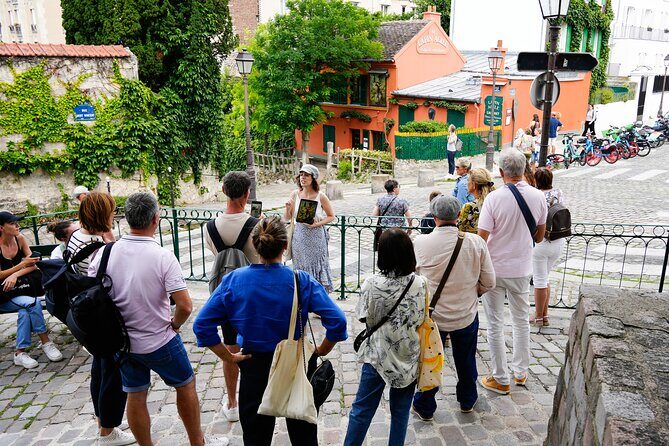
This tour runs about 2 hours and is capped at 28 people, which helps it feel lively without turning into a stampede. You’ll start at Place des Abbesses at 2:15 pm, then finish at the Parvis du Sacré-Cœur, near the Place du Tertre area and souvenir shops.
You’ll also get a mobile ticket, and the tour is offered in English. One detail that matters: based on reported experiences, the singing can be in French, with English support on a pamphlet. If you’re comfortable following a melody even when the words aren’t your first language, this works well.
Because it’s an active walking tour, this is best when you want:
- a clear structure for a neighborhood that can be confusing
- culture in small doses, rather than waiting for a museum opening
- an easy way to connect names (Dalida, Renoir, Lelouch) to real streets and buildings
Stop-by-stop: the Montmartre route in music
Below is the flow you can expect, with what each stop adds and any practical trade-offs.
Saint-Jean de Montmartre at Place des Abbesses (first impression)
You’ll begin at Place des Abbesses, where the streets immediately feel like Montmartre: musicians, people lingering outside cafés, and that lived-in “we’re in on the story” vibe. Before the main route, you get to admire Saint-Jean de Montmartre from the square and also visit it.
Why this works: it sets the tone. Montmartre isn’t just views and postcards—it’s a neighborhood with religious buildings, street life, and daily routines.
Practical note: churches can have changing opening hours and crowd levels. Your guide’s timing helps, but still bring patience.
Place des Abbesses energy and the musicians around you
This part is short (around 10 minutes), but it matters. You’re oriented right away at the square, and you can soak up the soundscape before the walk starts. If you like the idea of arriving at a destination rather than teleporting into it, this start is a good one.
Trade-off: if you dislike crowds or loud street music, arrive ready to tune in rather than tune out.






Le Mur des Je t’aime: singing with the languages of love
Next comes the Wall of I Love You (Le Mur des Je t’aime). You’ll spend about 5 minutes here, using the guide’s cue to sing along while you recognize languages you already know.
Why it’s memorable: it’s one of those places that looks simple from a distance, but it lands differently once you’re participating. Music turns a wall of words into a small human moment.
Practical note: it’s a popular photo stop. You may have to share space and keep moving, especially during peak hours.
Rue des Abbesses: a lively shopping stretch with a local nickname
From there, you’ll walk along Rue des Abbesses (about 10 minutes). It’s described as a lively shopping street, sometimes compared to the Champs-Élysées of Montmartre—same idea, smaller scale, and more neighborhood character.
Why you’ll like it: it’s a break from “only monuments” and it gives you a feel for what daily Montmartre looks like.
Consideration: shops mean pedestrians. Keep an eye on the group so you don’t get pulled into doorway-to-doorway browsing.
Rue Lepic and Le Moulin de la Galette (Renoir’s Montmartre)
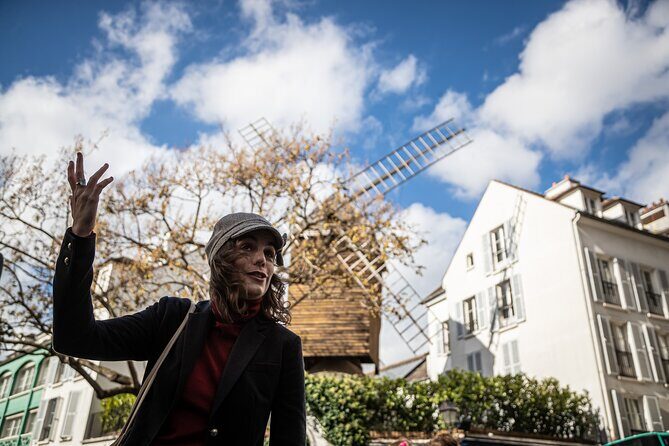
At Rue Lepic, you’ll pass through the upper part and stop near Le Moulin de la Galette, tied to Renoir’s famous Montmartre scenes. You get about 5 minutes here, just enough to connect the street to the painting.
Why this matters: it’s one thing to see a famous image in a book; it’s another to stand near the setting and understand why the artist kept coming back.
Trade-off: the stop is brief. If you want a long, in-depth look at the restaurant itself (or anything inside), this is not that kind of tour.
Dalida’s house and the themed sing-along stops
You’ll have a short series of moments tied to Dalida, starting with La Maison de Dalida (about 5 minutes). You’ll also see a Dalida statue (another 5 minutes), with song moments at both stops.
What you’ll gain: Montmartre is full of “who lived where” stories, but the Dalida stops make it feel personal and contemporary, not just historical. It’s also a fun way to memorize places because the music cues the name.
Practical note: these are exterior sights, so you’re not waiting around for ticketed entry.
Theatre Lepic and Claude Lelouch’s film link
At Theatre Lepic, you’ll discover the facade of Claude Lelouch’s former cinema and sing a song connected to Edith and Marcel, including a scene that was filmed inside.
Why it’s worth it: film references can feel random on sightseeing tours, but here it’s tied to a specific building you can actually look at. It turns “movie knowledge” into a street-level connection.
Trade-off: if you’re not into French cinema, you might care less about the film tie-in. Still, it’s a striking facade moment.
The iconic pink house: La Petite Maison Rose
Next is La Petite Maison Rose de Montmartre (since 1920). You’ll get around 5 minutes to admire it and take the kind of photo everyone does here, plus a song that evokes the place.
Why this part works: it’s instantly recognizable, and the song gives you something to do besides just waiting for the perfect angle.
Consideration: it’s photo-heavy. If you want quiet, step away from the main flow right after the group cue.
Vigne du Clos Montmartre: vineyards in a surprising spot
You’ll then reach Vigne du Clos Montmartre (about 5 minutes). The guide explains the vineyards and their history.
Why you’ll like it: vineyards in Montmartre sound like a gimmick until you see the setting. It adds a different side of the neighborhood—food and land use, not just entertainment.
Trade-off: time here is short, so think of it as an orientation moment, not an agricultural deep lesson.
Au Lapin Agile: the oldest Montmartre cabaret stop
One of the most Montmartre stops is Au Lapin Agile, described as the oldest cabaret in Montmartre. You’ll spend around 5 minutes here and sing a song about Montmartre and rue Saint Vincent.
Why it’s a highlight: cabarets are part of Montmartre’s identity, and this one connects to the neighborhood’s “art after hours” reputation in a direct way.
Practical note: this area can get crowded. Your guide will keep the group moving so you don’t linger where it’s hard to hear.
Rue Norvins and old cabaret streets
You’ll also pass along Rue Norvins (about 5 minutes). Expect musician energy, souvenir shops, cafés, and a look at old cabarets that sat in the area.
What you’ll gain: it helps you understand that Montmartre’s nightlife wasn’t just one building. It was a network of streets and venues.
Consideration: it’s commercial and touristy at this point, like it or not. If you’re sensitive to crowds, keep your expectations realistic.
Place du Tertre: artists and a return moment
Along the route, you’ll pass by Place du Tertre and, after the tour, you return there so you can get a portrait taken.
Why this is clever: you see the art square twice—once as you go through, and later with a bit more time to plan. It also keeps the tour ending in a familiar, lively zone.
Trade-off: portraits are optional, and it can feel busy. If you dislike street performers, treat this as a quick photo-and-leave area.
Saint-Pierre de Montmartre: the end-of-tour church visit
You’ll admire Saint-Pierre de Montmartre on the way and then visit it at the end (near the finish).
Why it works: it gives a calming, reflective tone at the point you’re most tired. After songs, streets, and crowds, a church visit feels like a natural “slow down.”
Practical note: plan for a bit of walking right up to the final viewpoint.
Rue de Mont Cenis and the Patachou cabaret reference
Next is Rue de Mont Cenis (about 5 minutes). You’ll pass musicians, souvenir shops, cafés, and hear about old cabarets located there, including the famous Patachou cabaret.
Why this matters: you get extra context on Montmartre’s entertainment history without adding museum time.
Trade-off: again, it’s a short stop. Use it to connect names to places, then keep exploring on your own if you want deeper detail.
Sacré-Cœur parvis and the big Paris view
Finally, you end at Parvis du Sacré-Cœur and the Basilique du Sacré-Cœur de Montmartre. You’ll get around 5 minutes for the view from the square, plus time to visit the basilica.
This is the payoff. From here, the neighborhood layout makes more sense, and you can see why artists and travelers kept choosing this hill.
Weather note: the tour requires good weather. If conditions are poor, the experience may be canceled and you’ll be offered a different date or a full refund.
Value and pacing: is $33.79 a fair deal?
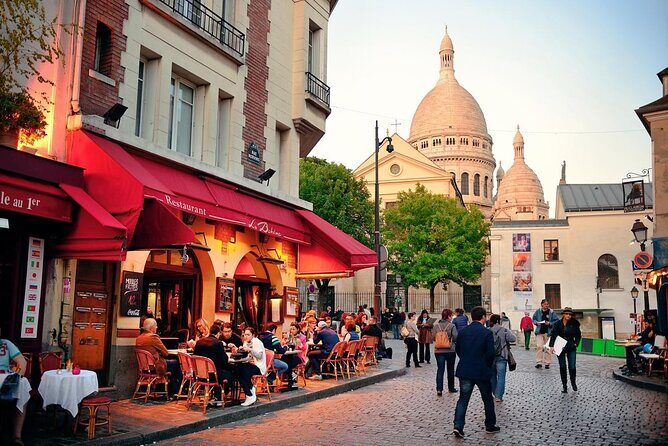
At $33.79 per person for about 2 hours, the value is mostly in three things:
- A professional singer guide doing more than reciting facts. The music is the product, not an add-on.
- A structured route that strings major landmarks together in a way that’s easy to follow.
- Frequent free sight moments along the way, so you’re not stuck paying for add-ons to enjoy what you came for.
The main “cost” is time and pacing. Each stop is intentionally short, which is great for orientation and energy. But if your ideal day is long sits, quiet corners, and slow museum-style exploration, you might feel rushed.
Who should book this tour
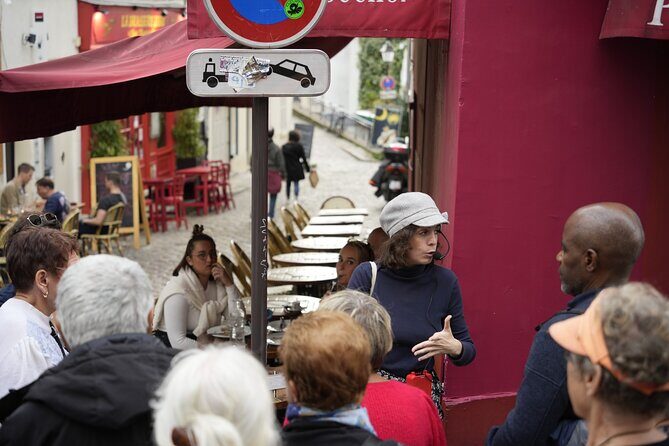
I’d book this if you:
- want an easy introduction to Montmartre’s layout
- like music-based storytelling (and singing along doesn’t scare you)
- enjoy seeing cultural references connected to real streets
- want a small-group feel (max 28) rather than a huge crowd
I’d skip it if you:
- need long, quiet time at a small number of places
- have serious mobility limits (the tour isn’t recommended for that)
- strongly prefer silent, low-activity sightseeing
One tip for a smoother experience: wear comfortable shoes. Montmartre is not flat, and you’ll be moving often even though each stop is brief.
A note on the guide experience (and what to expect)

The tour is run by Montmartre en chansons, and it’s led by a professional who sings and guides the group. One reported highlight is Ann-Sophie, described as charming and a wonderful singer, and the departure also included French singing with English support via a pamphlet.
If you’re curious about this format, the safest mindset is: come ready to participate lightly. You don’t have to be a performer to enjoy it, but you’ll get more out of the tour if you’re willing to join in for a few lines.
Should you book this Montmartre in Songs tour?
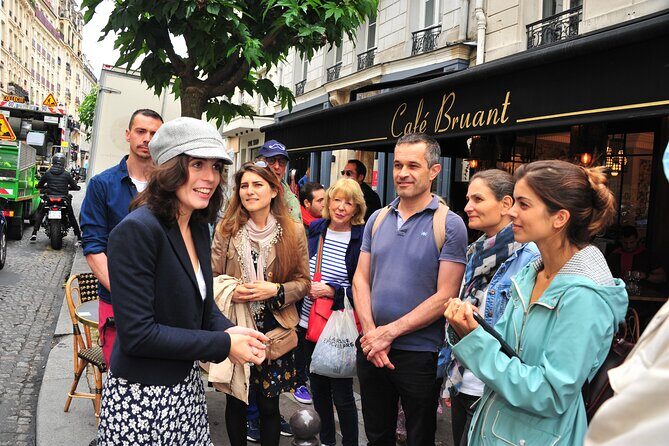
Yes, if you want Montmartre with momentum. This tour is built for people who would rather learn through songs and street-level context than wrestle with an unplanned route.
No, if your priority is deep time at one or two major sites. Since the stops are short and the walking is real, you’ll get the best payoff when you treat it like an efficient introduction and then continue exploring afterward on your own—maybe lingering around Place du Tertre once you’re already oriented.
If weather is iffy, keep your plan flexible. The tour requires good weather, and you’ll either reschedule or get a full refund if it’s canceled for poor conditions.
FAQ
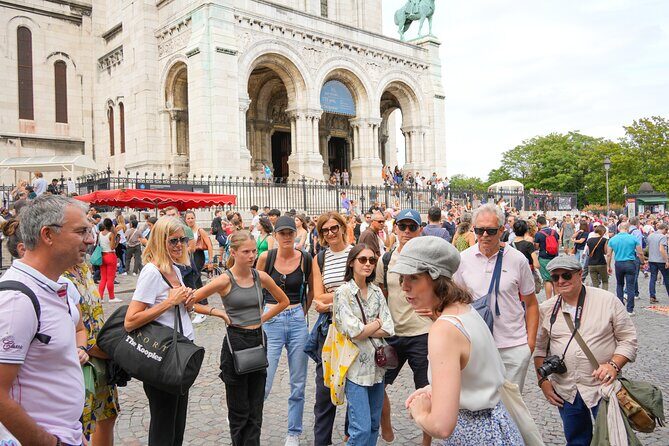
How long is the Montmartre in songs tour?
It lasts about 2 hours.
How much does it cost?
The price is $33.79 per person.
Where does the tour start and end?
It starts at Place des Abbesses (Pl. des Abbesses, 75018 Paris) and ends at Parvis du Sacré-Cœur (Parv. du Sacré-Cœur, 75018 Paris).
What time does it start?
The start time is 2:15 pm.
Is the tour available in English?
Yes. It is offered in English.
Do I need a paper ticket?
No. You’ll have a mobile ticket.
How physically demanding is it?
It’s suitable for people with moderate physical fitness. It is not recommended for people with serious mobility problems.
How large is the group?
There is a maximum of 28 travelers.
What happens if the weather is bad or I need to cancel?
The tour requires good weather. If it’s canceled due to poor weather, you’ll be offered a different date or a full refund. You can cancel up to 24 hours in advance for a full refund.