REVIEW · PARIS
Latin Quarter Paris – Exclusive Guided Walking Tour
Book on Viator →Operated by Babylon Tours Paris · Bookable on Viator
Paris at walking speed is different.
This Latin Quarter tour is built for flow, not crowd control, so you can actually hear the stories as you move from spot to spot. I especially like the way it connects the area’s timeline, from ancient Paris to medieval institutions, and the attention you get with a guide such as Alasdair, Hugo, Eden, or Georgia. One possible drawback: the tour is mostly outdoors, and some major sites are exterior only or can’t be entered depending on security.
You’ll cover a lot in a reasonable 2 hours 30 minutes, with frequent short stops that feel doable even if you’re not trying to turn Paris into a fitness challenge. It also runs in all weather, so you’ll want to dress for rain and plan for wind near the Seine.
In This Review
- Quick take: what makes this tour worth your time
- Latin Quarter Paris works best when someone narrates it
- Starting at Île de la Cité: where Paris begins
- Notre-Dame (exterior): big Gothic, even from the outside
- Saint-Michel fountain: a quick myth stop with Haussmann flair
- Shakespeare and Company: literature in a living storefront
- Old churches on the Left Bank: Saint Julien le Pauvre to Saint Séverin
- Musée de Cluny: Roman bath foundations under a medieval museum
- Sorbonne and the Pantheon: learning and secular memory
- La Sorbonne
- Le Pantheon (exterior only)
- Luxembourg Gardens: the classic landing spot for a reason
- St. Étienne du Mont and the Wall of Philip II Augustus: if time allows
- St. Étienne du Mont (10 minutes, free)
- Wall of Philip II Augustus (10 minutes, free)
- Price and value: what you’re really paying for
- Logistics that can affect your comfort (and how to plan)
- What guides do well here, based on the patterns you can watch for
- Should you book the Latin Quarter Paris exclusive walking tour?
- FAQ
- How long is the Latin Quarter Paris guided walking tour?
- How much does the tour cost?
- Where does the tour start and end?
- Is it offered in English?
- Is the tour private?
- What sites are seen during the tour?
- Are entrance tickets included for Notre-Dame and the Pantheon?
- Is Musée de Cluny included?
- What should I bring, and does it run in bad weather?
- Is there free cancellation?
Quick take: what makes this tour worth your time
- Exclusive pacing that avoids the shove-and-go rhythm of big group tours
- Île de la Cité to Luxembourg Gardens in one sweep, with a clear story thread
- Stop-and-say-it-out-loud guiding at major landmarks, including Notre-Dame exterior and Pantheon exterior
- Book culture meets medieval Paris at Shakespeare and Company and nearby churches
- You see institutions that shaped French learning, from Sorbonne to the Musée de Cluny setting
- Multiple guides have been praised for practical help like restaurant recommendations and comfort-first adjustments (like rearranging for a bad back)
Latin Quarter Paris works best when someone narrates it
The Latin Quarter can look like a postcard until you walk into it and realize it’s a living layer cake: Roman roots, medieval faith, Enlightenment ideas, and still-today student energy. The best part of a guided walk here is that you don’t just spot buildings. You understand why they matter and how the city grew around them.
I also like that this tour doesn’t try to cram in every museum ticket under the sun. You get a tour length that fits a real afternoon, and you still end with a payoff: the calmer green space of Luxembourg Gardens.
You can also read our reviews of more walking tours in Paris



Starting at Île de la Cité: where Paris begins
You meet at Cité75004 Paris, then head straight into the oldest chapter of the city. The focus is Île de la Cité, the former Roman settlement known as Lutetia, which is the seed for the Paris that spread outward.
This opening matters because it gives your eyes context. Once you understand this island as the origin point, everything you see later on the Left Bank starts to feel connected rather than random. It’s a smart move for first-time visitors, and even if you’ve been to Paris before, it can still reset your sense of direction.
You’ll spend about 15 minutes here, with the emphasis on orientation and story rather than rushing.
Notre-Dame (exterior): big Gothic, even from the outside
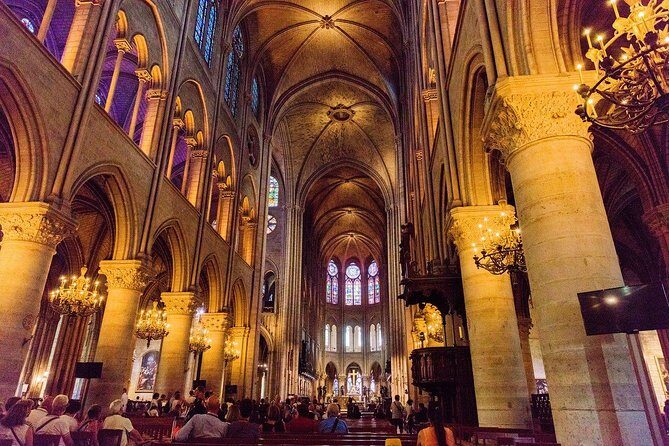
Next comes Cathédrale Notre-Dame de Paris, and you’ll see it from the exterior only. That’s important for expectations. You’re not relying on a ticketed interior visit, so the experience stays flexible, and it’s easier to keep the day moving.
Why this stop works: Notre-Dame isn’t just famous. It’s a template for how medieval Gothic was built for scale and drama. From outside, your guide can point out architectural ideas that are easy to miss when you’re just walking past the façade.
Plan for about 20 minutes at this stage. Also note that tickets are not included for the cathedral itself, because the visit is exterior.
Saint-Michel fountain: a quick myth stop with Haussmann flair
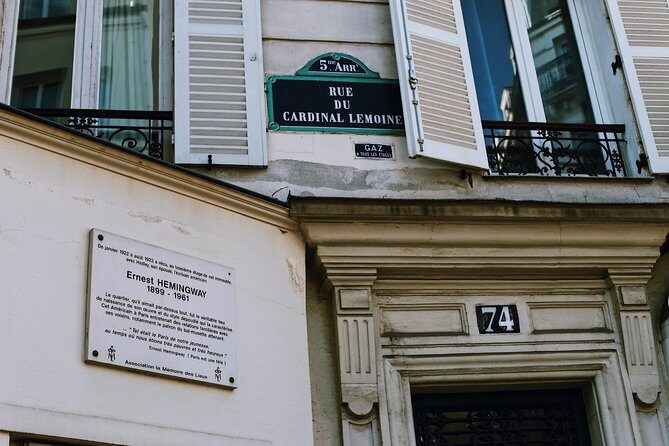
You pass the Fontaine Saint-Michel, commissioned by Haussmann under Napoleon III. It’s a monumental fountain scene: the archangel Michael vanquishing the Devil, a visual reminder of good versus evil that fits the religious tone of the area.
This is the kind of stop that feels small but sticks. It gives you a bridge between the medieval feel of Notre-Dame and the later Paris that refined streets, squares, and public spaces. Expect around 10 minutes, mostly walking past and taking it in.
Shakespeare and Company: literature in a living storefront
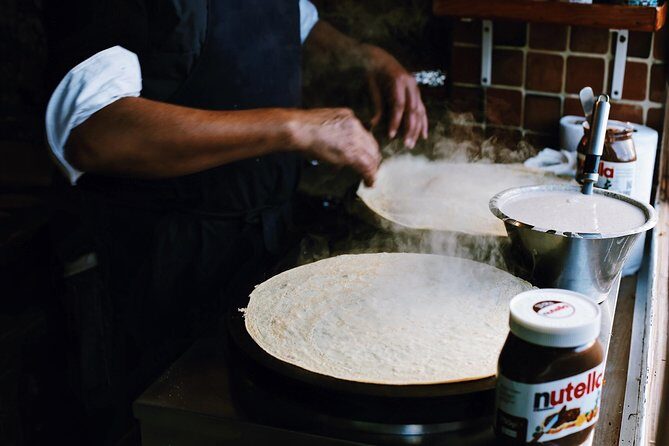
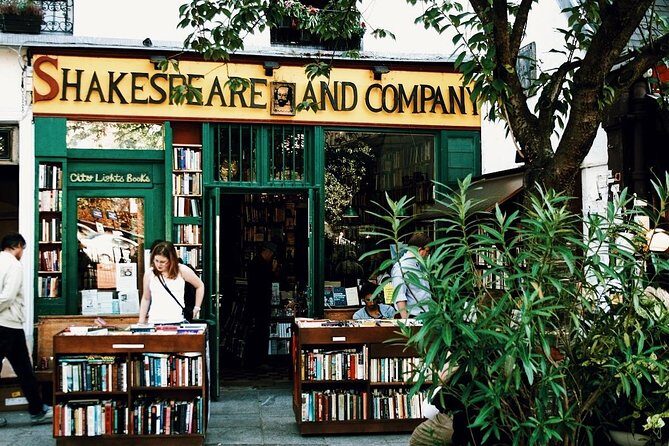
Then you head to Shakespeare and Company, the world-famous bookstore a short walk from Notre-Dame. This isn’t just a place to buy books; it’s part of Paris’ literary identity. The shop is tied to writers and visitors who shaped the Beatnik era through the 1950s and 60s.
If you like “why does this place exist” answers, this stop delivers. And it’s a natural break in energy after the cathedral zone—shops and streets let you look around without feeling like you’re falling behind.
About 15 minutes is the right amount of time here for browsing the windows and grabbing a book title to chase later.
You can also read our reviews of more guided tours in Paris





Old churches on the Left Bank: Saint Julien le Pauvre to Saint Séverin

The walk keeps turning back toward religion and architecture with two quick church stops.
First is Église Saint Julien le Pauvre (about 10 minutes). This church is a Melkite Greek Catholic parish church and among the oldest religious buildings in Paris. Even when you only have a short window, it’s the kind of building that shows age in its structure and placement.
Next comes Église Saint-Severin (about 10 minutes). It’s Roman Catholic and one of the oldest churches still standing on the Left Bank, and it remains in use as a place of worship.
These brief stops are a great value trick. You get the sense of depth without turning the afternoon into a checklist. Also, since admission isn’t listed for these stops, you’re not juggling ticket plans for every turn.
Musée de Cluny: Roman bath foundations under a medieval museum

After those churches, you reach Musée de Cluny, also known as the National Museum of the Middle Ages. The site is special because parts of it sit on remnants of third-century Gallo-Roman baths, and the museum holds collections spanning the 1st through the 15th centuries.
Your visit time here is short (about 10 minutes), and admission is not included. That’s a key consideration: you may see the site and learn how it connects eras, but you’ll need separate entry if you want full museum time.
Still, even without going inside, the context can change how you understand the neighborhood. You stop viewing the Latin Quarter as “pretty old buildings” and start seeing the continuity of occupation and belief.
Sorbonne and the Pantheon: learning and secular memory

From Cluny, the route shifts into institutions of knowledge and power.
La Sorbonne
You’ll pass La Sorbonne, where the French university story took shape. Even a quick look can be meaningful because the Sorbonne is less about a single building and more about what it represented: an engine for learning and influence.
This stop is about 10 minutes, with admission free as you’re mainly viewing from the outside.
Le Pantheon (exterior only)
Then you reach the Pantheon (exterior only), built originally as a church dedicated to St Genevieve and later repurposed as a secular mausoleum. The big name angle here is that it holds the remains of major French citizens such as Voltaire and Rousseau.
You’ll spend about 15 minutes here, and admission is not included, because again this portion is exterior only.
I like how these two stops pair with each other. Learning and “who gets remembered” are linked in French history, and the tour makes that connection easy to see.
Luxembourg Gardens: the classic landing spot for a reason
After the academic and political weight of the Pantheon zone, you end up in Luxembourg Gardens, on the border between Saint-Germain-des-Prés and the Latin Quarter.
This is a strong finishing move. Luxembourg Gardens gives you room to pause, sit, and let the stories settle. It’s also historically grounded: created in 1612 on initiative of Queen Marie de Medici, inspired by the Boboli Gardens in Florence, and covering about 25 hectares.
Expect about 15 minutes here, mostly for orientation and a breather. You don’t need to rush, which makes this finish feel less like a sprint and more like a proper break.
St. Étienne du Mont and the Wall of Philip II Augustus: if time allows
Two extra stops appear if your timing works out.
St. Étienne du Mont (10 minutes, free)
You may also see St. Étienne du Mont, which contains the shrine of St Geneviève and the tomb of Jean Racine. Even from the outside, this church is a reminder that the Latin Quarter has always been about memory, names, and ideas.
Wall of Philip II Augustus (10 minutes, free)
You’ll also pass by the Wall of Philip II Augustus, described as the oldest city wall in Paris. Built during conflicts involving Philip II and the Anglo-Norman House of Plantagenet, it was ordered as protection for the French capital before leaving for the Third Crusade.
Both of these are listed as free and included as “pass by” stops, around 10 minutes each. This is where a guide’s storytelling really changes your experience—you start seeing street lines as evidence, not just streets.
Price and value: what you’re really paying for
At $59.69 per person for roughly 2.5 hours, this tour sits in the mid-range for guided Paris walking. The value isn’t just in the sites. It’s in the pacing, the continuity, and the ability to ask questions without feeling like you’re holding up a train of strangers.
Also, the tour is offered in English and uses a mobile ticket, which makes planning simpler. It runs in all weather, which is honest and practical in Paris—rain doesn’t take a day off, and neither does your itinerary.
If you opt for the private version, you get a guide exclusively for your group, which helps a lot in places like Notre-Dame and the Pantheon exterior zones where you’ll want time to stop, look, and ask what to notice.
Logistics that can affect your comfort (and how to plan)
This walk is set for moderate physical fitness, and it’s mostly outdoors. So bring the basics that keep you happy:
- Comfortable shoes
- A bottle of water
- Umbrella in case of rain, plus a hat in summer
Two other practical notes matter:
- No large bags or suitcases are allowed.
- Some attractions can’t be visited from the inside due to increased security measures.
That doesn’t mean you miss the point. It means you should treat this as a narrative walking tour with thoughtful exterior viewing. If you want museum time, plan to do that separately—especially with Musée de Cluny, since admission isn’t included.
Finally, the tour route may change for national celebrations. You’ll still see the highlights via an alternative route, but refunds or discounts aren’t offered in those cases.
What guides do well here, based on the patterns you can watch for
Across the many guide styles you might encounter, there’s a clear theme: the best guides here don’t just name buildings. They turn the Latin Quarter into a timeline you can picture.
When you get a lively storyteller like Alasdair, Hugo, or Eden, you’re likely to hear history with humor and clear explanations, and you’ll likely get help with what to do next. Several guides are praised for practical recommendations for places to eat and what to explore beyond the tour.
Comfort adjustments also show up. For example, one guide rearranged the tour on the spot to accommodate a participant with a bad back and checked in about whether seating was needed. That’s exactly the kind of flexibility you want from a tour leader in a neighborhood that requires lots of walking.
If you like photos, some guides have even helped by taking pictures at scenic stops—another small touch that can make the afternoon feel more complete.
Should you book the Latin Quarter Paris exclusive walking tour?
You’ll probably love this tour if:
- You want a 2.5-hour plan that hits key Latin Quarter landmarks without turning into a museum marathon.
- You like storytelling that connects eras (Roman Paris to medieval institutions to secular memory).
- You prefer a calmer pace and the chance to ask questions—especially if you book private.
You might skip it if:
- You mainly want inside visits and ticketed museum time right during the tour.
- You’re traveling with large luggage (the tour restricts bags and suits).
My take: this is one of the best ways to get oriented fast and still leave time to wander on your own afterward. You’ll finish with names in your head, not just sights on your camera.
FAQ
How long is the Latin Quarter Paris guided walking tour?
The tour lasts about 2 hours 30 minutes.
How much does the tour cost?
The price is $59.69 per person.
Where does the tour start and end?
It starts at Cité75004 Paris, France and ends in the Latin Quarter, Paris.
Is it offered in English?
Yes, it’s offered in English.
Is the tour private?
It is a private tour/activity where only your group participates. The guide being exclusively for you applies to the private walking tour option (it does not apply if you choose the small-group option).
What sites are seen during the tour?
The highlights include Île de la Cité, Notre-Dame de Paris (exterior only), Fontaine Saint-Michel, Shakespeare and Company, Église Saint Julien le Pauvre, Église Saint-Severin, Musée de Cluny, La Sorbonne, Pantheon (exterior only), and Luxembourg Gardens, plus optional time permitting stops like St. Étienne du Mont and the Wall of Philip II Augustus.
Are entrance tickets included for Notre-Dame and the Pantheon?
No. Notre-Dame and the Pantheon are listed as exterior only, and tickets are not included for them.
Is Musée de Cluny included?
Musée de Cluny is on the route, but admission is not included.
What should I bring, and does it run in bad weather?
Bring comfortable shoes, a bottle of water, and an umbrella if it rains (plus a hat in summer). It operates in all weather conditions, so dress appropriately. No large bags or suitcases are allowed.
Is there free cancellation?
Yes. You can cancel for a full refund up to 24 hours in advance of the experience start time. If you cancel less than 24 hours before, the amount paid is not refunded.