REVIEW · PARIS
Montmartre Walking Tour Cultural Charm and Tasty Treats
Book on Viator →Operated by TOUR TRIP · Bookable on Viator
Montmartre tells stories as you walk. In about two hours, you follow an easygoing route through bohemian Paris, with a local guide connecting places to artists you already know, from Van Gogh to Picasso. I especially love the short, focused stop-and-look pacing, and I love the way the route mixes big-name landmarks with street-level details like the Amélie-linked Café des 2 Moulins.
One drawback to plan for: you’ll be dealing with hills and stairs, especially near Sacré-Cœur, so comfortable shoes matter.
In This Review
- Key points that make this Montmartre tour worth your time
- Why Montmartre works so well with a guide
- Starting at Cœur Sacré: setting your “Montmartre mood” early
- Moulin Rouge: the can-can origin story, not just the landmark
- Rue Lepic and the Café des 2 Moulins moment
- Le Moulin de la Galette: the last windmill with artist influence
- Place des Abbesses and the Art Nouveau metro entrance
- Le Mur des Je t’aime: the Wall of Love in over 300 languages
- Rue des Abbesses: where the story continues on real streets
- Place Émile Goudeau and the Bateau-Lavoir connection
- Eglise Saint-Pierre de Montmartre: the 12th-century quiet contrast
- Place du Tertre: portrait painters and the street-artist scene
- Sacré-Cœur finish: panoramic views and a choice in how you spend your last minutes
- Price and value: what $40.48 buys you
- Who this Montmartre walk is best for
- Should you book this Montmartre tour?
- FAQ
- How long is the Montmartre Walking Tour?
- How much does the tour cost?
- Where does the tour start?
- Is it a mobile ticket tour?
- What’s included in the tour price?
- Are tips included?
- What is the maximum group size?
- What is the cancellation policy?
Key points that make this Montmartre tour worth your time
- Short, 2-hour route with many “look here” moments instead of one long lecture
- Artist-to-address connections you can picture while standing in the street
- Café and street scenes like Rue Lepic and the Café des 2 Moulins
- Photo stops with personality, including Le Mur des Je t’aime and Le Moulin de la Galette
- A strong finish at Sacré-Cœur with panoramic views you can linger over
Why Montmartre works so well with a guide
Montmartre can feel like a postcard factory from a distance. Up close, though, it’s a patchwork of cobbled lanes, small squares, and places where art history sticks to the walls. A guided walk helps you connect the dots fast, instead of wandering and hoping you’ll land on the right corners.
I like that this tour keeps the pace practical: you get a series of stops, each with a clear reason to be there. That matters in Paris. Streets are charming, but they’re also easy to get turned around in.
This is also one of the best areas to enjoy with the people you’re traveling with. The mood is romantic and walkable, and the route naturally mixes classic sights with café-and-street energy. If you want that Montmartre feel without spending hours piecing the day together yourself, this format makes sense.
You can also read our reviews of more walking tours in Paris



Starting at Cœur Sacré: setting your “Montmartre mood” early
The tour starts at Cœur Sacré, at 5 Rue Saint-Éleuthère, 75018 Paris. You’ll want to arrive a little early so you can match the group and get oriented before the climb-y part starts to show up.
From the start, the setting already tells you what kind of day you’re having: Montmartre’s higher streets, steeper grades, and the general feeling that this neighborhood is made for slow wandering. The best part is how the guide turns that into a story—so every next street feels connected, not random.
Also note the tour ends back at the meeting point. That can be comforting if you don’t want to worry about where your feet will take you at the end of a long walking day.
Moulin Rouge: the can-can origin story, not just the landmark
The first major stop is the Moulin Rouge. This isn’t presented as a “pose for a photo” moment only. You’ll learn about the cabaret’s history and its role in Montmartre’s bohemian nightlife—especially the birthplace of the can-can dance.
What I like about this opener is that it gives you context for the whole neighborhood. Montmartre isn’t just artists and sketches; it’s also nightlife, performance, and reinvention. When you understand that early, the rest of the walk lands better.
A small consideration: Moulin Rouge is a famous spot. You should expect it to be busy at times, and your best move is to focus on the guide’s context while still getting your photo in cleanly.
Rue Lepic and the Café des 2 Moulins moment
Next up is Rue Lepic, a charming street lined with cafés and shops. This is where the tour shifts from “big icon” to “daily street life,” and it gives you the kind of scenery that makes you want to linger.
A standout detail here is the Café des 2 Moulins, featured in the movie Amélie. That kind of pop-culture reference isn’t just trivia. It helps you feel the neighborhood through familiar images, then compare them to what you see in real life.
If you’re the type who likes to pause for a coffee terrace break, Rue Lepic is a smart place to do it—just keep an eye on the group’s timing. Even without a scheduled food stop, this area sets you up to grab a snack or drink on your own.
Le Moulin de la Galette: the last windmill with artist influence
Le Moulin de la Galette is a key Montmartre stop because it’s the last-standing windmill. Instead of treating it like a prop, the guide connects it to the influence it had on artists such as Renoir and Van Gogh.
This is one of those moments where you can look around and understand why painters were drawn to the light and the texture of the area. Windmills, views, and working-class energy were part of what made Montmartre such fertile ground for art.
One practical point: windmill-area viewpoints can include uneven ground and angles that make photos tricky. If you care about pictures, keep your camera ready but don’t rush the look—this is a slower “take it in” stop.






Place des Abbesses and the Art Nouveau metro entrance
Then you’ll reach Place des Abbesses, a lively square where the Abbesses Metro Station’s Art Nouveau entrance is a real conversation starter. Even if you’re not a design nut, this is the kind of detail you’d miss if you were just walking by.
This stop works because it balances the art-world references with actual Parisian craftsmanship. It also gives you a brief visual reset from the largest monuments, letting the neighborhood’s personality come through.
A consideration here is simple: squares can be crowded, and that can make it harder to see the entrance clearly if you arrive during peak foot traffic. The fix is to stand where the guide points and give yourself one good minute for the view.
Le Mur des Je t’aime: the Wall of Love in over 300 languages
You’ll stop at Le Mur des Je t’aime, the Wall of Love. It features I love you in over 300 languages, turning a small wall into a worldwide message.
This stop is more than sweet branding. It shows how Montmartre can feel global while still being distinctly local. You’re standing in a neighborhood known for art, now with art-as-language written directly into a public space.
If you’re traveling with someone who likes symbolic moments, this is a good one. It’s quick enough to fit the tour, but it’s meaningful enough to remember later. Expect people to gather there, so aim for calm pacing and don’t block others while you photograph.
Rue des Abbesses: where the story continues on real streets
After the mural, the tour moves along Rue des Abbesses, where historic streets and everyday storefronts mix together. You’ll walk past charming boutiques and cafés, and you’ll also hear about famous artists who lived and worked here.
This is the “keep your eyes up” portion. When you’re in Montmartre, it’s tempting to look only at the big sights. Rue des Abbesses is the opposite. It asks you to notice the scale and texture of the streets—how narrow they feel, how local life folds into art.
The drawback? Because it’s a walking section, it’s not ideal if you need frequent sitting breaks. If you have limited stamina, plan to go at a steady pace and don’t hesitate to use any small pauses the group allows for regrouping.
Place Émile Goudeau and the Bateau-Lavoir connection
Place Émile Goudeau is the setting for the Bateau-Lavoir, where artists like Picasso and Modigliani created masterpieces. The value of this stop is the link between art movements and a real address you can stand on.
I like it because it turns “famous names” into a sense of place. Instead of thinking of Picasso as a museum painting, you start imagining the kinds of rooms, studios, and creative communities that helped shape his work.
This stop can also be a great photo moment, depending on lighting and crowd levels. Keep your focus on what the guide explains, but still take one or two photos to anchor the memory.
Eglise Saint-Pierre de Montmartre: the 12th-century quiet contrast
You’ll visit Eglise Saint-Pierre de Montmartre, one of the oldest churches in Paris, dating back to the 12th century. This stop changes the mood in a helpful way.
After squares and artist-linked street scenes, the church offers a calmer rhythm. Even if you don’t go inside, the presence of something older than the modern Montmartre myths helps you understand the layered history of the neighborhood.
The only real consideration is timing and stairs nearby. If your feet feel tired, take the slow lane with the group and focus on the guide’s points while you’re still fresh.
Place du Tertre: portrait painters and the street-artist scene
Place du Tertre is where Montmartre turns into open-air art theater. You’ll see street artists and portrait painters displaying their work, which is a big part of what people imagine when they think of this neighborhood.
This stop works best if you treat it like a gallery with foot traffic. Look at styles, watch how artists work, and note how the square feels like a living art room.
A practical downside: because it’s a popular spot, you may feel pulled in many directions at once. The guide’s job here is useful—so you don’t get distracted and lose the thread of the tour.
Sacré-Cœur finish: panoramic views and a choice in how you spend your last minutes
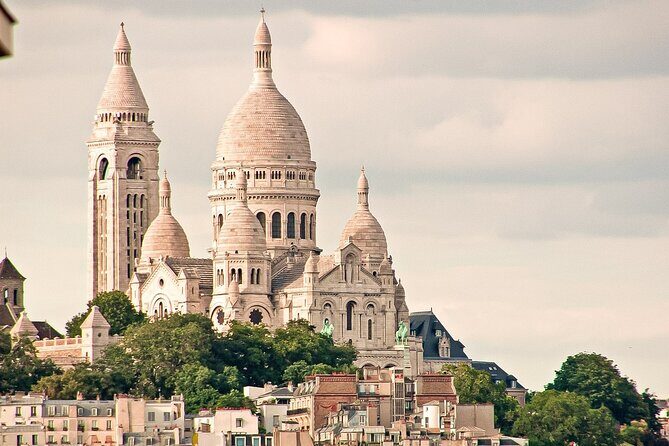
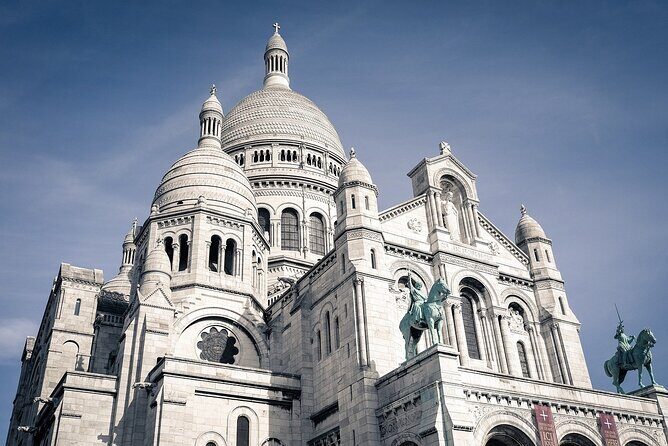
The final stop is Basilique du Sacré-Cœur de Montmartre. You’ll reach it at the highest point in the city for panoramic views of Paris, and the tour ends here so you can linger.
This is where the walk pays off. Montmartre’s streets and stories are fun, but the basilica viewpoint is the visual reward that makes the climbing worth it. If you want photos, this is your main chance.
You also get a choice: explore the basilica’s interior or relax on the steps. That flexibility is a real value for different travel styles. Some people want inside details; others just want the view and the quiet.
Price and value: what $40.48 buys you
At $40.48 per person, this tour isn’t trying to be the cheapest way to see Montmartre. The value is in the structure: in about two hours, you cover multiple iconic and story-heavy stops without wasting time figuring out what to see and why.
You’re also paying for a local, professional guide and a guided visit of Montmartre. That’s the difference between walking through Montmartre and understanding it. When you learn why a windmill matters, why a square has a specific Metro entrance, or why an art location connects to major artists, the neighborhood turns from scenery into meaning.
Group size matters too. With a maximum of 20 travelers, it’s not a giant crowd experience. That usually makes it easier to hear the guide at each stop and keep the pace civilized.
Tips aren’t included, so budget a little extra if you want to reward good guiding. If you’re traveling with a tight budget, you can still consider this as a “guided highlights” day rather than an all-day tour.
Who this Montmartre walk is best for
This is a great fit if you want:
- A two-hour plan that covers many Montmartre icons without getting stuck
- Art and culture context, especially connections to Van Gogh, Picasso, and other famous names
- A romantic-feeling stroll with cafés and scenic streets worked into the route
It’s also a smart choice for first-time visitors to Paris who want a neighborhood that feels different from the big central sights. And it’s a good match for couples, since the walk naturally shifts between intimate street scenes and big-view moments at Sacré-Cœur.
If you’re someone who hates stairs or struggles with hills, consider that the route climbs and the basilica area has steps. Comfortable shoes and a slower personal pace will make a noticeable difference.
Should you book this Montmartre tour?
I think you should book this tour if you want Montmartre to feel like more than a list of landmarks. The biggest strength here is how quickly the guide connects the dots between places and artists, so you don’t just see Moulin Rouge or Sacré-Cœur—you understand why they matter in the Montmartre story.
If you’re already a DIY pro who knows exactly what you want to photograph and you don’t care about context, you might prefer to walk on your own. But for most people, this hits a sweet spot: structured, short, and packed with the kind of details you’d never hunt down alone.
If you do book, wear grippy shoes and plan to enjoy the last stretch at Sacré-Cœur instead of rushing your way through it.
FAQ
How long is the Montmartre Walking Tour?
The tour lasts about 2 hours.
How much does the tour cost?
The price is $40.48 per person.
Where does the tour start?
The meeting point is Cœur Sacré, 5 Rue Saint-Éleuthère, 75018 Paris, France.
Is it a mobile ticket tour?
Yes, it uses a mobile ticket.
What’s included in the tour price?
The tour includes a local and professional guide and a guided visit of Montmartre.
Are tips included?
No, tips are not included.
What is the maximum group size?
The tour has a maximum of 20 travelers.
What is the cancellation policy?
You can cancel for a full refund up to 24 hours in advance. If you cancel less than 24 hours before the start time, the amount paid is not refunded.