REVIEW · PARIS
Montmartre Walking Tour with a Local Guide
Book on GetYourGuide →Operated by Parifiane Tours · Bookable on GetYourGuide
Montmartre feels like a Paris state of mind. On this 2-hour walk, your local guide (often Samy) connects the neighborhood’s bohemian vibe to real artists like Picasso, Van Gogh, and Lautrec. I especially liked the story-led stops that make landmarks click, and the payoff view over Paris from the Sacré-Cœur hill.
One thing to keep in mind: this is an uphill stroll on cobbles. If your legs tire easily, plan for a slower pace and wear truly comfortable shoes.
You’ll start by Place Blanche near the metro (Metro 2), then work your way through classic photo spots and quieter corners, rain or shine. The tour is in English, and it’s built as a guided walk with photo moments, not a sit-down museum day.
In This Review
- Key highlights worth your time
- How Montmartre’s streets change the way you see Paris
- Starting at Place Blanche: your easy entry point to the hill
- Moulin Rouge photo stop: classic Paris, explained
- The Wall of Love: quick, photogenic, and surprisingly meaningful
- Moulin de la Galette and nearby streets: old-school Montmartre flavor
- Dalida statue and La Maison Rose: pop culture meets the artist story
- Place du Tertre: where you see artists working, not just buildings
- Sacré-Cœur Basilica: the hilltop finish (with a real view payoff)
- How the pacing and group size actually affect your experience
- Price and value: why $27 makes sense for a guided Montmartre day
- Who should book, and who might skip it
- Should you book this Montmartre walking tour?
- FAQ
- How long is the Montmartre Walking Tour?
- Where do I meet the guide?
- Is the tour in English?
- What stops are included?
- Does the tour include food and drinks?
- Is it accessible for wheelchair users or mobility impairments?
- Is it free to cancel?
- Is reserve now pay later available?
Key highlights worth your time
- Place Blanche meeting point near Metro 2, easy to find and close to the action
- Photo stops at major icons like Moulin Rouge and the Wall of Love
- Artist-area focus, with stories tied to Picasso, Van Gogh, and Lautrec
- Place du Tertre for the painter square atmosphere
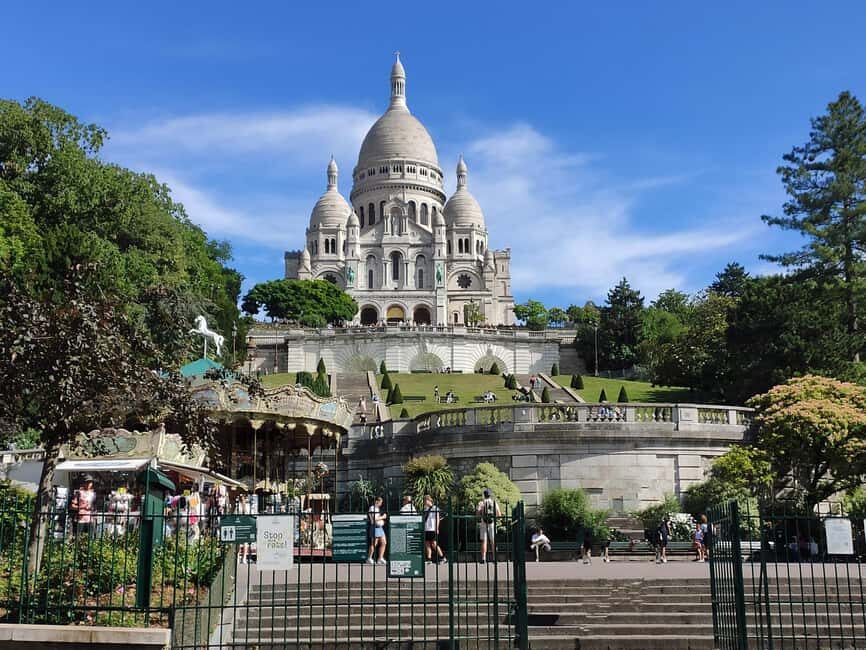
- Sacré-Cœur inside and out, plus a hilltop view showing Eiffel Tower, Notre-Dame, and Montparnasse
- A cozy pace with breaks built in for questions and group comfort
How Montmartre’s streets change the way you see Paris
Montmartre is one of those places where Paris looks different on every corner. One minute you’re in a lively, tourist-recognizable zone; the next you’re in a side street that feels like it’s still waiting for an artist to come back with a fresh sketch.
The big value of this tour is that you don’t just “see sights.” You get the neighborhood’s logic: how the artists found inspiration here, what brought them to the area, and why certain spots became symbols. Your guide’s stories help you notice details you would normally walk past—like how the street layouts and building personalities shape the mood of the hill.
I also liked that the tour keeps moving at a cozy walking pace, with time for questions and multiple photo stops. That matters in Montmartre, because the best scenes are brief, and timing is everything.
You can also read our reviews of more walking tours in Paris



Starting at Place Blanche: your easy entry point to the hill

You meet your guide near the exit of Metro 2 Blanche, close to Moulin Rouge. This is a smart starting choice. You’re already in the neighborhood’s center of gravity, so you don’t spend the first part of your day commuting around Paris.
Look for your guide with a green booklet and green badge—it’s the kind of simple detail that saves real minutes. From there, you’re walking into Montmartre rather than being deposited into it.
Practical note: expect a few uphill sections. Even if the route isn’t a long endurance hike, it still includes moderate climbs, and the ground can be uneven underfoot. That’s why the guide’s “comfortable shoes” advice isn’t a throwaway line.
Moulin Rouge photo stop: classic Paris, explained
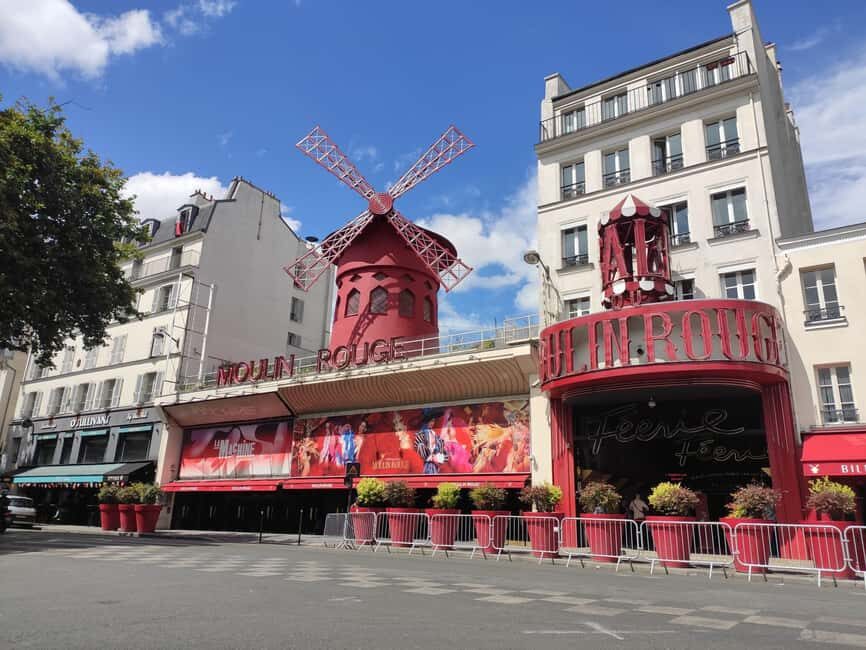
Your first major landmark is Moulin Rouge. You’ll get a short photo stop and guided context (about 10 minutes).
This stop works well even if you’re not a hardcore cabaret fan. The key is what you learn around it: how Montmartre’s entertainment culture developed, and why this area became so tightly associated with artists and performance. In other words, it’s not just a photo; it’s a starting point for understanding the neighborhood’s identity.
Drawback to consider: this is a famous spot, so it can feel busy. The tour helps by giving you a reason to look closely, instead of just letting the crowd noise take over the experience.
The Wall of Love: quick, photogenic, and surprisingly meaningful
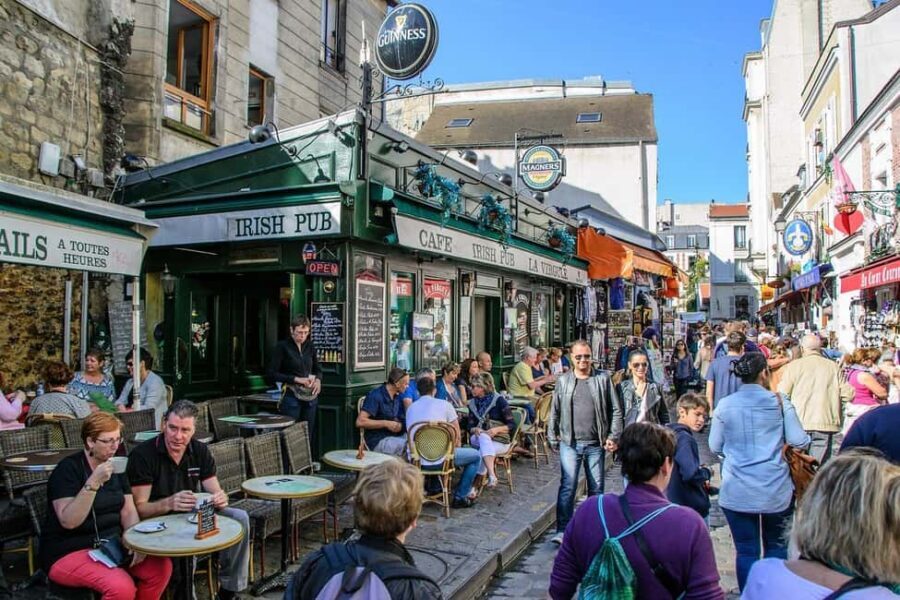
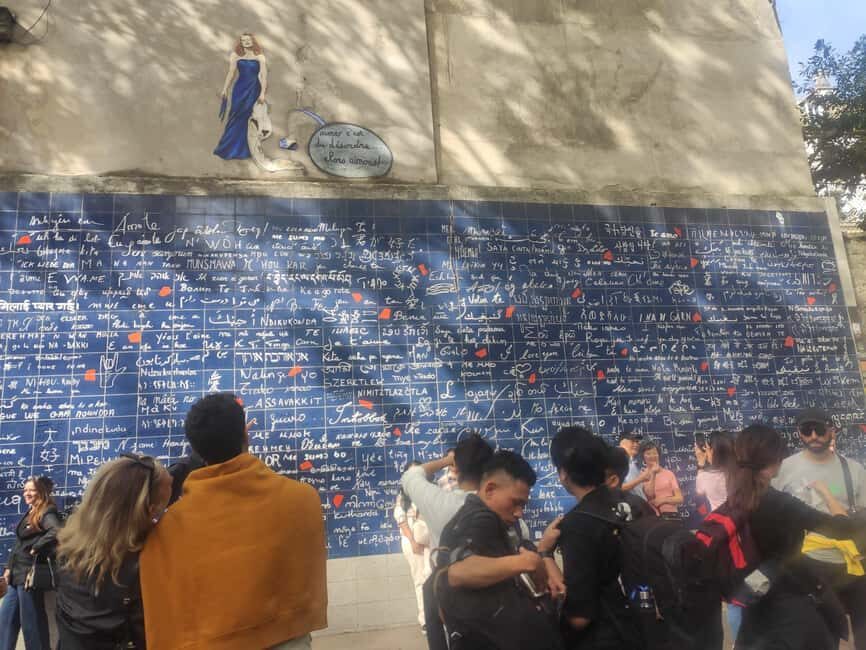
Next up is Le Mur des Je T’aime (often called the Wall of Love). You’ll stop for photos and get guided commentary (about 10 minutes).
This is a simple scene—people write, pose, and take pictures—but the guidance makes it more than a sticker-style photo moment. You start to notice how Montmartre blends romance, public art, and local character in a way that feels different from the bigger, more formal parts of Paris.
If you’re traveling with teens, this is also a good “energy lift” stop. It breaks up the walking and gives everyone something fun to do right away.
Moulin de la Galette and nearby streets: old-school Montmartre flavor
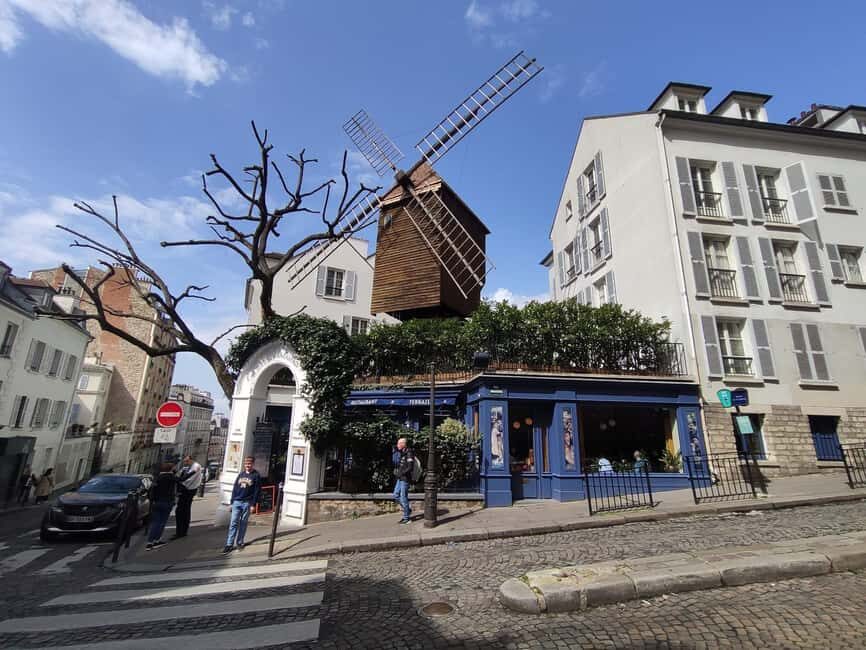
Then you’ll head to Moulin de la Galette for another photo stop and short guided tour (about 10 minutes).
What makes this stop worthwhile is the way it anchors Montmartre’s past. It’s the kind of building that looks iconic because it’s iconic—but the guide’s job is to explain why the neighborhood’s history is tied to places like this. You get better context for what you’re seeing instead of treating it like set dressing.
Also, the area around Montmartre’s attractions often has a “lived-in” feel. That shows up in little street details—like the graffiti and street markings people notice only once they’re prompted to look.
You can also read our reviews of more guided tours in Paris





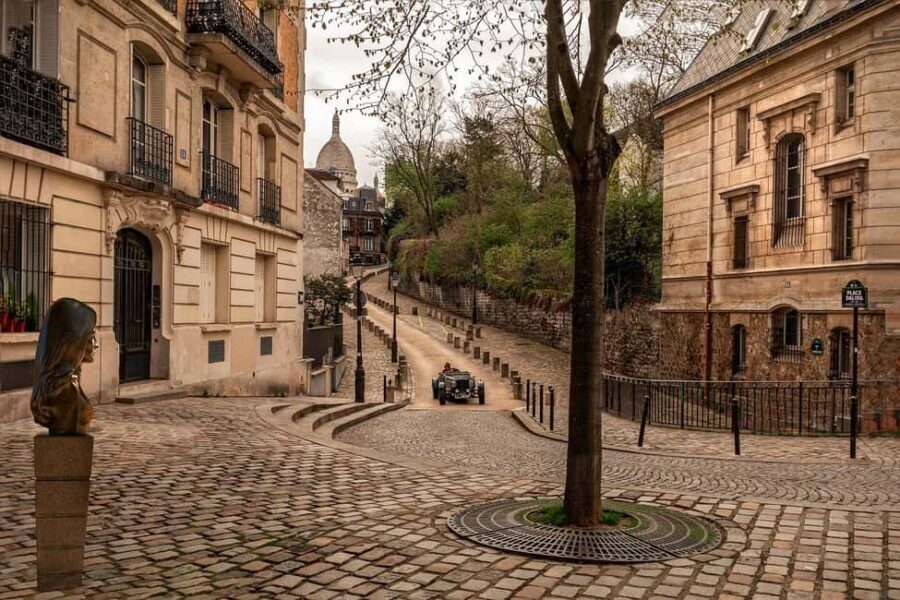
Dalida statue and La Maison Rose: pop culture meets the artist story
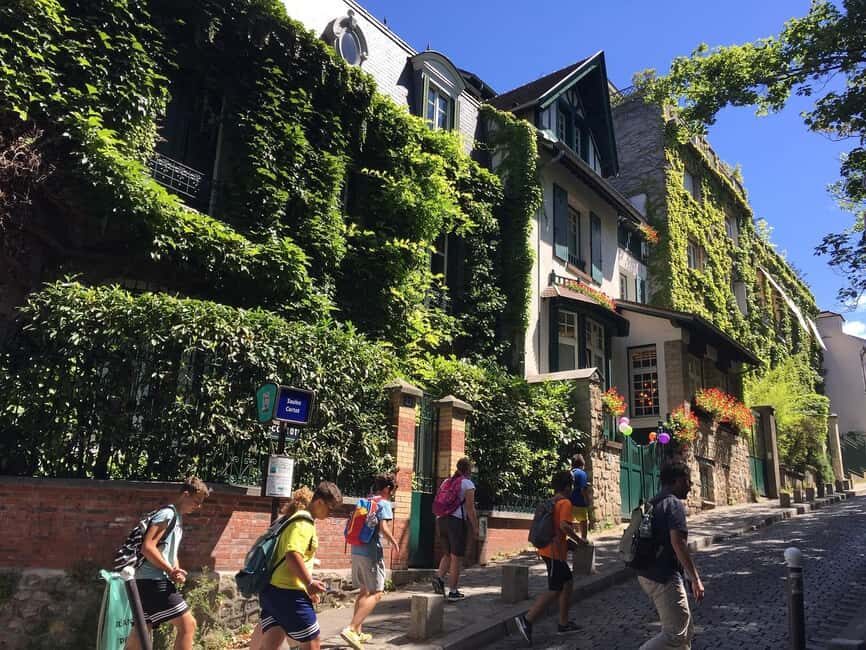
Two quick but memorable stops come next:
- Dalida statue (photo stop + guided time)
- La Maison Rose (photo stop + guided time)
The point here isn’t just to tick boxes for pretty sights. It’s to show how Montmartre’s identity kept evolving after the painters. Even when the neighborhood shifted from one wave of fame to the next, the “stage” stayed.
I like stops like these because they help you understand Montmartre as a continuum. The artists you came for aren’t trapped in a textbook; you can feel how the neighborhood keeps attracting attention and creativity.
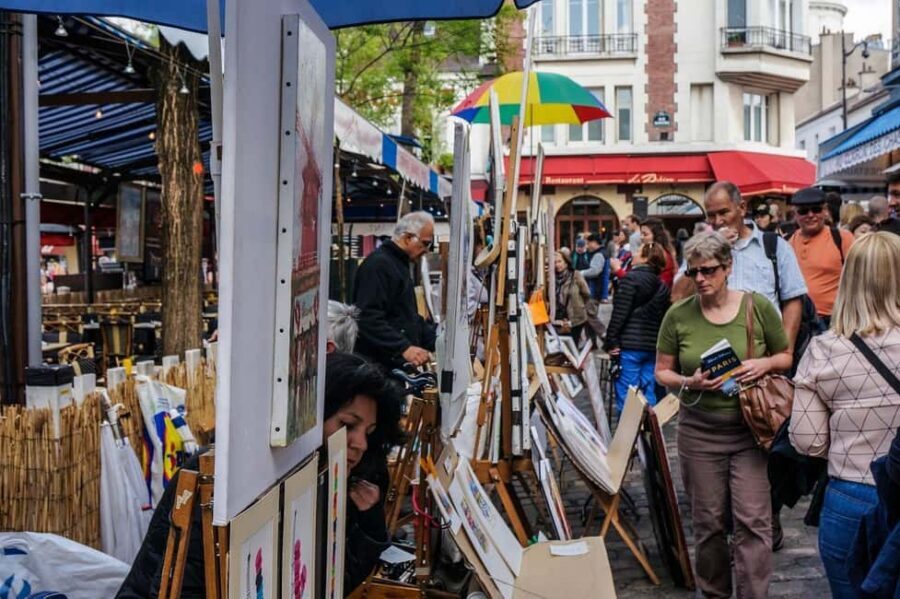
Place du Tertre: where you see artists working, not just buildings
Place du Tertre is next. Expect a photo stop, guided context, and a short walk (about 10 minutes).
This is Montmartre at its most “you can’t fake this” level. The square has a classic painter-sitting vibe, and it’s one of the places where you can sense the neighborhood’s long connection to art-making. You’ll be there long enough to soak in the atmosphere and ask questions about what you’re seeing.
One practical consideration: this is one of the busier spots on the route. If you want quiet for photos, go with the guide’s timing and positioning rather than trying to fight the crowd yourself.
Sacré-Cœur Basilica: the hilltop finish (with a real view payoff)
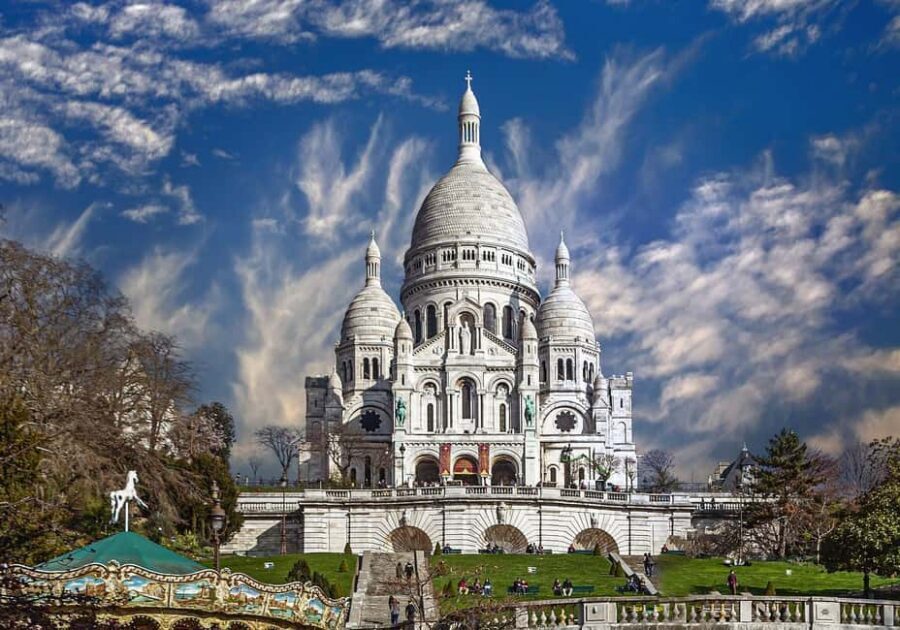
The tour finishes at the Basilica of Sacré-Cœur. You’ll stop for photos and guided time around the basilica area (about 10 minutes), and you’ll also get scenic viewpoints on the way.
What I love here is the view. From the hill, you can see major landmarks in the distance—the Eiffel Tower, Notre-Dame, and the Montparnasse Tower—and that instantly helps you understand why Montmartre became such a magnet. It’s high ground, and it’s also a kind of natural stage.
A small but meaningful detail: the route often gets you to Sacré-Cœur in a way that can reduce some of the steepest step-stress. In practical terms, that means you get the basilica experience without turning the day into a stair-only workout.
You’ll also explore the outside and inside of the basilica. That inside time is what turns the view into something deeper than a photo op. The building feels like part of the neighborhood’s emotional story—faith, art, and a stubborn hilltop identity all in one.
How the pacing and group size actually affect your experience
This tour runs about 2 hours, and it may stretch a bit depending on pace, how many photo stops land in the group’s preferred rhythm, and how comfortable everyone feels with the uphill walking.
A detail that shows up in real results: the group tends to be small. People describe it as intimate (often up to about 8 people). That matters because Montmartre is visual and crowded, and you don’t want a guide shouting over a big herd. A smaller group also makes it easier to ask questions and get genuine help with what to look for.
I also appreciated the way the guide handles different comfort levels. The route includes hills, so the practical expectation is that not everyone will walk at the same speed. When a guide builds in time and keeps the flow calm, the tour feels friendly instead of rushed.
Price and value: why $27 makes sense for a guided Montmartre day
At $27 per person for around 2 hours, the value comes from what you’re buying: local guidance that turns famous landmarks into context.
Without a guide, Montmartre can feel like a string of famous photos. With a guide, you get:
- Artist-area storytelling tied to names like Picasso, Van Gogh, and Lautrec
- Quick, efficient stops that match the walking rhythm
- Help noticing details you’d likely miss on your own
This isn’t a full-day itinerary, and it’s not a food tour. It’s also not pretending to be one of those huge, all-day museum slogs. For $27, it’s a focused introduction—especially if you want Montmartre to be your “first feel” of the neighborhood.
One more practical value note: family photos are included. If you’re traveling with kids, or you want clean group photos without juggling your camera timing, that’s a real benefit.
Food and drinks aren’t included, so plan on grabbing a snack or coffee elsewhere before or after.
Who should book, and who might skip it
This tour is a great match if you want a guided walk that mixes iconic sights with a stronger sense of Montmartre’s artistic roots. It’s especially good for:
- First-time visitors who want Montmartre to make sense fast
- Families who want a paced introduction rather than a long museum day
- Travelers who enjoy viewpoints and photo stops, but still want context
It’s not suitable for people with mobility impairments or wheelchair users, since the walking involves uphill climbs and uneven surfaces.
If you’re someone who dislikes hills or hates slow stair-like effort, you might still enjoy Montmartre on your own—but this guided hilltop route won’t match your comfort level.
Should you book this Montmartre walking tour?
Yes—if your goal is to understand Montmartre in a short window and get the best hilltop payoff without improvising your route. I’d book it when you want:
- A guided, story-driven walk instead of random sightseeing
- A clear start point near Metro 2 Blanche
- A finish at Sacré-Cœur with landmark views
Skip it if you can’t handle uphill walking or uneven ground. Also skip it if you only want self-paced photo collecting with no interest in neighborhood context.
If you’re trying to choose between winging it and booking a guide, this one is a fair deal: you’re paying for direction, pacing, and the kind of local context that turns Montmartre from scenery into a place with meaning.
FAQ
How long is the Montmartre Walking Tour?
It lasts about 2 hours, though the exact time can vary with group pace and how long you spend at each stop.
Where do I meet the guide?
Meet near the exit of Metro station Blanche (Metro 2), close to Moulin Rouge. The guide is identified with a green booklet and green badge.
Is the tour in English?
Yes, the live tour guide speaks English.
What stops are included?
You’ll see Moulin Rouge, Le Mur des Je T’aime (Wall of Love), Moulin de la Galette, Dalida statue, La Maison Rose, Place du Tertre, and the Basilica of Sacré-Cœur (outside and inside).
Does the tour include food and drinks?
No. Food and drinks are not included.
Is it accessible for wheelchair users or mobility impairments?
No. The tour is not suitable for people with mobility impairments or wheelchair users.
Is it free to cancel?
You can cancel up to 24 hours in advance for a full refund.
Is reserve now pay later available?
Yes. You can reserve now & pay later, keeping your plans flexible and paying nothing today.