REVIEW · PARIS
Napoleon III’s Paris city tour
Book on Viator →Operated by Paris in person · Bookable on Viator
Paris got rebuilt on purpose. This private Napoleon III and Haussmann tour explains how Paris transformed in just 17 years, from medieval lanes toward an industrial capital—and at a real human cost. I like that the story stays grounded in what you can see: broad boulevards, monumental architecture, and the new “modern” Paris that still shapes your walks today.
Two things I really like: first, the focus on the street-level plan behind Paris’s famous look. Second, you’ll meet it through serious art-historian guidance, with examples of guides such as Amy (known for 19th-century architecture and art) and Boris (who’s spoken publicly about Haussmann in media you might recognize). One possible drawback: this is mostly an outside-and-street tour, and the route is light on food stops, so you’ll want to plan your timing around snacks elsewhere.
In This Review
- Key points worth knowing before you go
- Haussmann’s Paris and Napoleon III: why this 2-hour walk matters
- A quick reality check on the cost
- Place Vendôme: the royal-square model for Napoleon III’s new Paris
- What to watch for
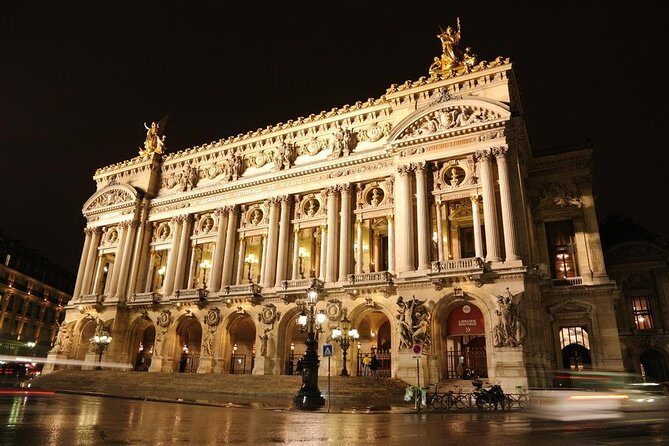
- Palais Garnier outside: the opera that signaled a new center
- The symbolism angle
- Societe Generale: why a bank can feel like a cathedral
- A practical note
- Galeries Lafayette and Printemps: consumer culture takes the spotlight
- If you’re budget-conscious
- Boulevard Haussmann at Havre-Caumartin: industrial scale you can measure
- What you’ll learn to notice
- Chapelle Expiatoire: reconciliation efforts after a fractured France
- Why it fits the route
- Saint-Augustin: the church and steel pact in the final chapter
- Ending location and what that means for your walk
- What you’re really paying for: private time with an art historian
- It’s also a good fit for couples and small groups
- Before you go: practical tips for this Napoleon III route
- Should you book Napoleon III’s Haussmann Paris city tour?
- FAQ
- How long is Napoleon III’s Paris city tour?
- What is the group size and is it private?
- Where does the tour start and where does it end?
- Will we enter the Opéra Garnier?
- Are there admission fees for the stops?
- What’s included in the tour price?
- Are food and drinks included?
- Is free cancellation available?
- Are service animals allowed?
Key points worth knowing before you go
- Haussmann’s 17-year makeover, explained as you walk: from the political engine (Napoleon III) to the built result you see everywhere.
- Place Vendôme to Boulevard Haussmann, with the “why” behind the look: you learn how the design model spread across the city.
- Opéra Garnier exterior only: you get the visual and symbolism without committing to an indoor visit.
- Banking and shopping as power: you’ll look at Societe Generale and the big department stores as part of the same urban story.
- Politics and religion in the finishing chapters: Chapelle Expiatoire and Saint-Augustin tie the “new city” back to France’s fractures.
Haussmann’s Paris and Napoleon III: why this 2-hour walk matters
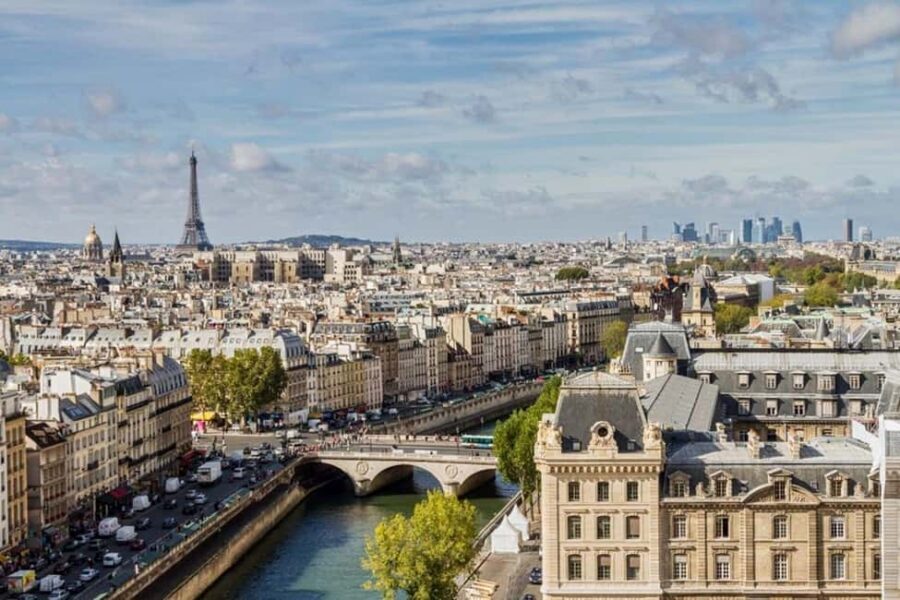
If you’ve ever wondered why Paris looks so intentionally designed—why streets suddenly feel wide, straight, and theatrical—this tour gives you the blueprint. The Haussmann rebuild is often summarized as pretty buildings and famous boulevards. Here, you get the full package: ambition, industry, and politics, plus the fact that the project erased a massive slice of older Paris. The tour frames it as a dramatic move toward modern life, not just a facelift.
What makes it especially useful is the way the route connects “style” to “systems.” You see how the new Paris supported industrial growth and bourgeois power, and how everyday places—finance, retail, and church—became stage sets for the era. That’s why the tour doesn’t just name landmarks. It explains what each one was doing in the big machine of modernization.
You can also read our reviews of more city tours in Paris


A quick reality check on the cost
The tour doesn’t gloss over the scale of disruption. It points to the rebuilding that destroyed over 70% of the city. That matters, because Paris’s beauty today is tied to a planning choice that was harsh by human standards. If you want your Paris stories balanced, this approach will feel more honest than the postcard version.
Place Vendôme: the royal-square model for Napoleon III’s new Paris
You start at Place Vendôme, one of the royal squares of Paris. It’s a clean starting point because it represents a design idea that later shaped the rebuilt city: order, symmetry, and a kind of authority you can feel just by standing still and looking around.
The tour treats Place Vendôme as more than a pretty square. It’s the kind of architectural reference point officials could use as they planned a city that would look consistent, impressive, and easier to navigate. You’ll get enough context to notice details you might otherwise skip—how the square’s style communicates power, and how that communication fit the era’s goals.
What to watch for
Look at the way the facades present themselves as a unified whole. Even if you don’t read architecture formally, you’ll feel how “designed” this space is compared with older, more irregular neighborhoods.
Palais Garnier outside: the opera that signaled a new center
Next comes Palais Garnier—famous, grand, and impossible to ignore. The tour is very clear about one thing: you don’t go inside the opera house. Instead, you focus on how the building functions as a statement from the outside, as part of the “new Paris” that was meant to replace the old symbolic center associated with Notre Dame.
That matters for your expectations. If you’ve got limited time and you’re deciding what you can skip, this is a good compromise: you get the visual and historical meaning without adding indoor ticket time.


The symbolism angle
The guide’s angle is that the new city needed new icons. A major opera wasn’t just entertainment; it was civic messaging—culture, status, and modern grandeur, built in a form designed to look permanent.
Societe Generale: why a bank can feel like a cathedral
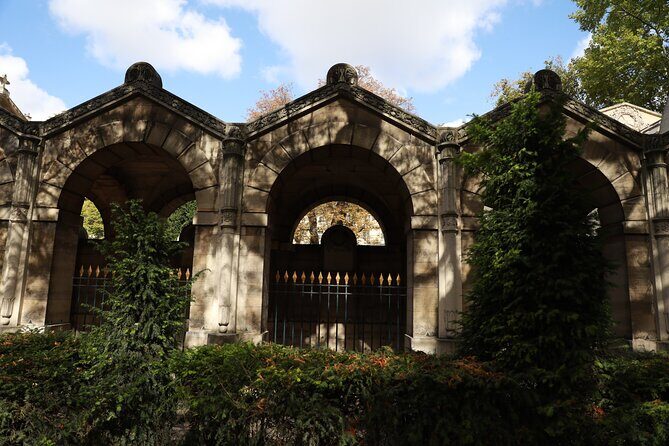
Then you head to Societe Generale, framed as a kind of wealth cathedral. That description is playful, but the idea is serious: in Haussmann’s modernized Paris, money wasn’t hidden away. It was displayed, monumentalized, and made part of the city’s visual language.
I like this stop because it changes the way you interpret Paris. A bank facade can look like “just another building,” but here it becomes a clue to what modern life was becoming. Finance, industry, and the confidence of the bourgeois class show up in stonework and scale.
A practical note
You won’t be hunting for this building from afar; it’s right in the flow of central Paris architecture. Expect the guide to point out the traits that make it feel ceremonial compared with ordinary commercial buildings.
Galeries Lafayette and Printemps: consumer culture takes the spotlight
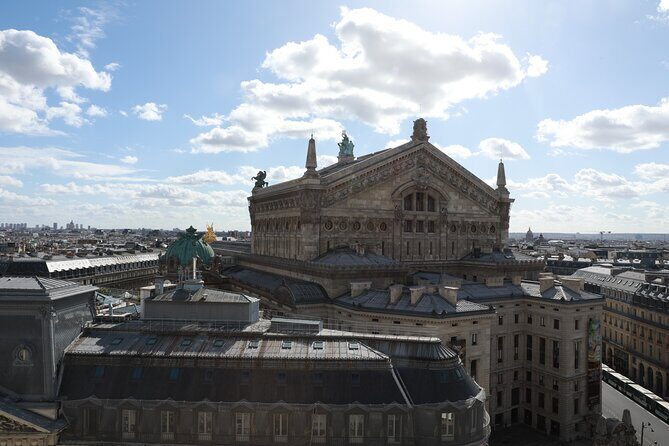
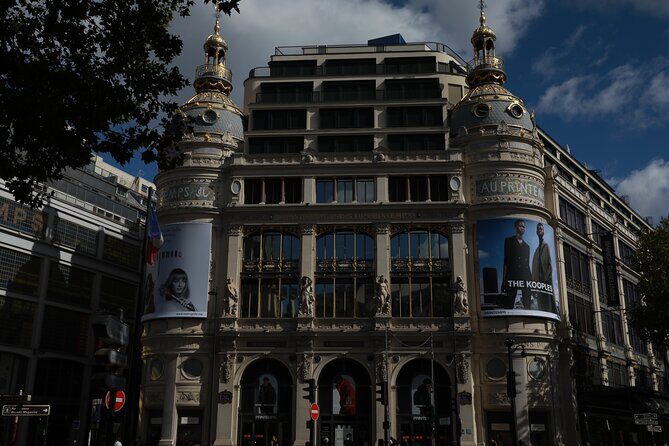
From finance to shopping. The tour visits Galeries Lafayette Paris Haussmann, then Printemps, treating both as high-drama examples of department-store luxury.
I enjoy that the tour doesn’t treat shopping as a side quest. It places it in the same story as city planning. The point is that the new Paris wasn’t only about moving people through wide streets. It was also about giving modern life new public stages—places where consumption, fashion, and identity played out on a grand scale.
If you’re budget-conscious
This is still a great tour even if you never buy anything. The value is in learning how these buildings reflect the era’s values. That said, if you do want to shop, plan extra time elsewhere because this tour’s stop lengths are short and designed for explanation, not retail marathons.
Boulevard Haussmann at Havre-Caumartin: industrial scale you can measure
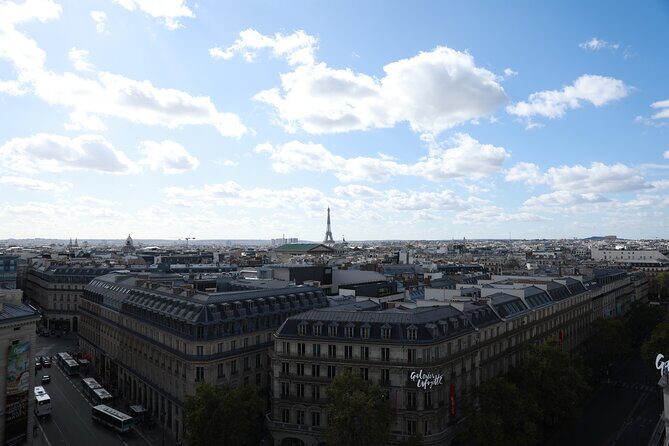
Next is Havre–Caumartin, a place where the tour’s main theme becomes physical. The guide uses Boulevard Haussmann as the prime example of what Haussmann-style boulevards were meant to do: create a new kind of street for an industrial, bourgeois Paris.
This is one of those stops where you’ll feel the planning in your body. Wide streets change walking pace, sightlines, and how buildings relate to the street. It’s not abstract. It’s geometry as power.
What you’ll learn to notice
When you understand the boulevard concept, you start to see it everywhere—how the city channels movement, frames views, and separates old textures from new ones. That’s the real “upgrade” you get from this tour: you stop seeing streets as random and start seeing them as decisions.
Chapelle Expiatoire: reconciliation efforts after a fractured France
After the urban planning and consumer power, the tour shifts into politics and memory with Chapelle Expiatoire. This stop is about France’s divisions in the second half of the 19th century and the attempts to reconcile competing sides—monarchic aristocrats and the republican bourgeois.
I like that the tour doesn’t leave you only with architecture. Paris’s built world was shaped by political conflict and social disagreement. The guide uses the church to tie ideology back to stone and street space.
Why it fits the route
You might expect a Haussmann tour to focus only on roads and facades. This stop reminds you the “new city” was still trying to solve old problems—and it didn’t do it cleanly.
Saint-Augustin: the church and steel pact in the final chapter
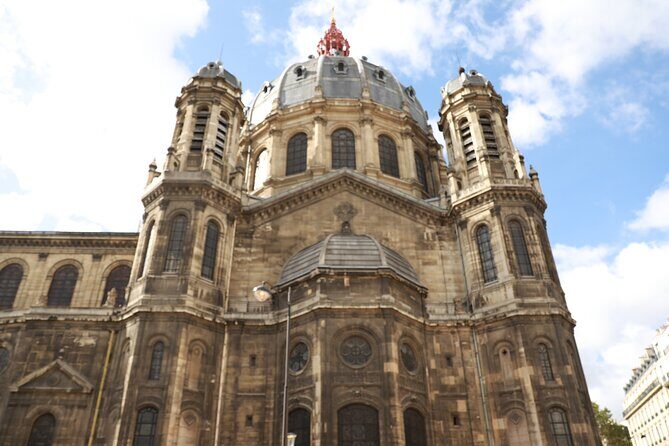
The last stop is Saint-Augustin Church. The tour frames it as a symbol of a pact between church and industrial forces, with the detail that it was the first church in Paris to use extensive steel.
This ending works because it makes the Haussmann story feel forward-looking. You’re not just seeing a city built with traditional materials and historical styles. You’re seeing modernization show up in construction choices too.
Ending location and what that means for your walk
The tour ends near Saint-Augustin at the junction of boulevard Malesherbes and boulevard Haussmann. That’s a smart finish point because you’re placed right where transport options and major streets make it easy to continue exploring without backtracking.
What you’re really paying for: private time with an art historian
The price is $347.28 per group, up to 6 people, for about 2 hours. If your group fills all seats, that works out to roughly $58 per person—not cheap, but it’s a fair rate for a private art-historian-led route in central Paris.
Here’s the value logic: you’re buying interpretation. Anyone can stand in front of landmarks. Few people can explain why a square, an opera, a bank, and a department store belong to the same 19th-century system. The private format also means the guide can answer your questions without turning it into a lecture for strangers.
It’s also a good fit for couples and small groups
If you’re traveling with a partner, a family unit, or a small group of friends, the “up to 6” setup helps keep the pacing comfortable. You’re not stuck waiting for slow walkers while the story goes on.
Before you go: practical tips for this Napoleon III route
This experience uses a mobile ticket, and it runs as a private activity with just your group. It’s also listed as near public transportation, which helps if you want a smooth start or quick return to your hotel.
Because there’s no food and drinks included, I recommend thinking about your timing. Build in a snack plan before or after, especially if you’re combining this tour with museum time the same day. Also, the tour ends at Saint-Augustin-area streets, so it’s easiest if your next stop is in that general zone.
If you’re sensitive to walking length or crowds, this is still described as suitable for most people, and the stops are broken into short segments. Still, come prepared for a steady city pace.
Should you book Napoleon III’s Haussmann Paris city tour?
Book it if you want Paris explained as a system, not just a list of famous buildings. You’ll get a clear through-line from Napoleon III’s political push to Haussmann’s urban planning, with stops that show how modern life took shape in stone and steel.
Don’t book it if you’re mainly chasing interior access. The Opéra Garnier is outside-only, and the tour doesn’t include food. If you want museum-grade time inside major sights, you’ll likely do better pairing this with an indoor ticket on another day.
If you want a tight, thoughtful way to understand why Paris looks the way it does—especially the “Haussmann” look—this one is a strong choice.
FAQ
How long is Napoleon III’s Paris city tour?
It runs for about 2 hours.
What is the group size and is it private?
It’s a private tour/activity with only your group participating, and the tour price is for up to 6 people.
Where does the tour start and where does it end?
The tour starts at 2013 Pl. Vendôme, 75001 Paris, France. It ends at the junction of boulevard Malesherbes and boulevard Hausmann, near Saint-Augustin.
Will we enter the Opéra Garnier?
No. The tour covers Opéra Garnier from the outside only.
Are there admission fees for the stops?
The stops are listed with admission tickets as free, so you shouldn’t face additional ticket costs for those specific stops.
What’s included in the tour price?
The tour includes a private tour and a professional art historian guide.
Are food and drinks included?
No. Food and drinks are not included.
Is free cancellation available?
Yes, you can cancel for a full refund up to 24 hours in advance. Free cancellation applies as described by the policy.
Are service animals allowed?
Yes, service animals are allowed.