REVIEW · PARIS
Paris City Center Free Walking Tour (Tip-Based)
Book on Viator →Operated by StellarTours · Bookable on Viator
Paris clicks faster when you have a good storyteller. This tip-based walk threads major Paris landmarks with clear explanations of how the city got built, smashed, and rebuilt, from early temples on Île de la Cité to Napoleon-era Paris. Guides like Ezra, Alberto, Bruce, and Sanna are repeatedly praised for turning history into fun, easy-to-follow stories.
I especially like the pace: it’s a long stroll, but it feels organized, with short stop times so you don’t just march in a line. I also love the way the tour links big events to small details you would otherwise miss, like the marks of WWII and the reasons famous monuments look the way they do. One thing to consider: you won’t enter Notre-Dame or the Louvre Museum, so if you’re hunting for ticketed time inside, you’ll need a separate plan.
In This Review
- Key things to look forward to
- A tip-based walking tour that actually feels practical
- Price and what you’re really buying
- Starting at Saint-Michel: where you learn the city’s logic
- Île de la Cité and Notre-Dame: the heart of old Paris
- St. Michel fountain, WWII on a bridge, and why details matter
- The pace here is short-stop, not marathon
- Place Dauphine and Henri IV: a square built for calmer lunch breaks
- Pont Neuf and its unusual stories: what you’d miss without a guide
- Louvre area without museum tickets: why the glass pyramid matters
- A practical heads-up on breaks
- Tuileries Garden to Eiffel Tower: finishing with big-sight payoff
- Guides like Ezra, Alberto, Sanna, and Bruce make the whole thing
- Group size: small enough to feel personal
- What you’ll enjoy most (and what might not fit you)
- Should you book this Paris City Center Free Walking Tour?
- FAQ
- How long is the Paris City Center Free Walking Tour?
- Is the tour in English?
- Do we enter Notre-Dame or the Louvre Museum?
- Where does the tour start and end?
- How are tips handled on this tour?
- What happens if the weather is bad?
Key things to look forward to
- English-guided walk with strong audience volume, including guides using microphones in busy spots
- A tight route across central landmarks with a finish in the Tuileries area (not back at the start)
- History tied to real street corners, including French Revolution and Napoleon stories
- Outside views only for major sights like Notre-Dame and the Louvre, focused on quick context
- Tip-based model with suggested generosity and cashless/electronic tip payments
A tip-based walking tour that actually feels practical
Paris is huge in scale, but central Paris is very walkable. This tour is built for getting oriented: you pass the key landmarks, then learn what each one represents and why the city chose that location. It’s a smart way to spend a morning (or part of your afternoon) when you want context fast.
The tip-based setup is also part of why guides push storytelling hard. If you liked Ezra’s humor or Sanna’s ability to keep a whole group engaged, you’ll feel the same vibe here—this is not a quiet lecture. You’ll also get an easy rhythm: walk, stop, listen, move on.
You can also read our reviews of more walking tours in Paris



Price and what you’re really buying
The listed price is low, shown per group (up to 9), but the real model is tips. Tips are accepted only via credit/debit cards and electronic payments, and VAT is added to contributions, so budget for that if you plan to tip. In real terms, you’re paying for a guided route that saves you time and confusion—someone else does the order-of-sites thinking.
At the same time, a “cheap” walking tour still costs your energy. Expect to stand in places for explanations and do a fair amount of walking across the center. If you want lots of museum time, you’ll likely be better served by a ticketed museum day.
Starting at Saint-Michel: where you learn the city’s logic
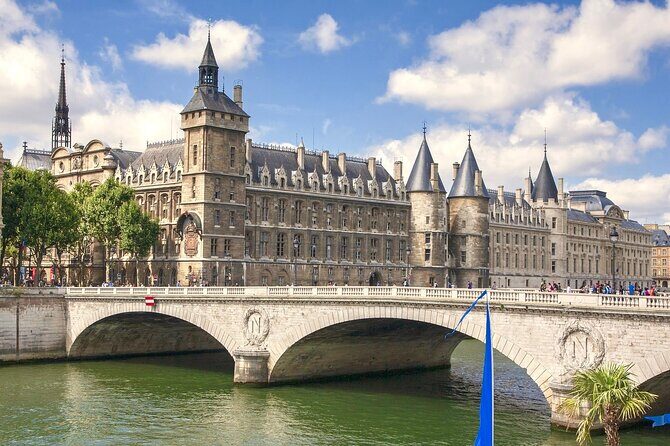
Your walk starts at Fontaine Saint-Michel in the Latin Quarter area (Pl. Saint-Michel, 75005). This is a strong choice because it puts you near major bridges and historical ground zero. You begin with an easy win: you’re in a classic photo-friendly zone, and the guide can set the big story without complicated transit.
From there, the tour moves toward the heart of older Paris. If this is your first time in the city center, you’ll like that you get immediate geography: islands, bridges, squares, and major museum streets all connect in a way that later helps you navigate on your own.
Île de la Cité and Notre-Dame: the heart of old Paris
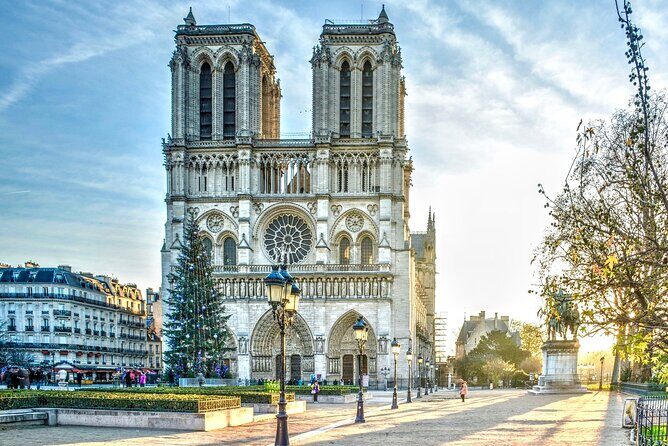
First stop is Île de la Cité, the island that became the central point of early Paris. The guide’s focus here is what came first: temples linked to the Parisii, then a shift under the Roman Empire. That early timeline matters because it teaches you to look at the island as more than a pretty postcard.
Then you move to Cathedral Notre-Dame de Paris from outside. You’ll hear how the cathedral’s construction began in 1163 and how later events shaped its story, including the French Revolution and Napoleon’s coronation. You’ll also learn about the 2019 fire—framing why modern Notre-Dame is still part of a longer, messy human story.
Important practical note: you do not enter the cathedral during this tour. That’s not a problem for most people, since the goal here is context and exterior orientation. Just don’t expect cathedral interior time to replace a timed ticket.
St. Michel fountain, WWII on a bridge, and why details matter
Next comes the Fontaine Saint-Michel, tied to the city’s big reconstruction periods. It’s the kind of stop that feels small until you understand why it exists where it does. This is one of the tour’s strengths: even short stops get meaningful explanations.
A little farther, you reach Pont Saint-Michel, where the guide points out WWII bullet holes. That detail changes the mood of the bridge immediately; it turns a normal crossing into a historical document you’re standing on. Guides also explain why Paris was not destroyed in the way many cities were, which helps you remember that modern Paris is a survival story too.
You can also read our reviews of more city tours in Paris





The pace here is short-stop, not marathon
The stop pattern stays consistent: short, focused segments. You get time for listening and a few minutes for photos, but you’re not stuck forever in one spot. Still, you should wear good shoes, because even “short” segments happen repeatedly over a 2h15 walk.
Place Dauphine and Henri IV: a square built for calmer lunch breaks
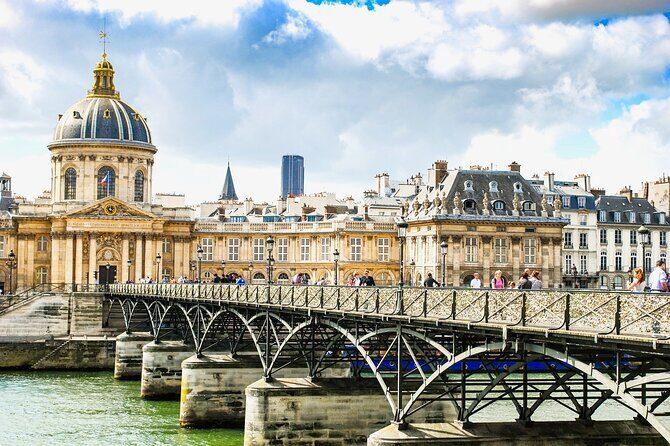
At Place Dauphine, you get a break from the “major monument” feel and into a quieter, more neighborhood scale. This charming square is known for restaurants, and it’s a natural place to imagine where you might stop for lunch after the walk. The guide also ties it to Henri IV, noting it as one of the early projects attributed to his era.
From there, you’ll see the equestrian statue of Henri IV and get Seine river views along the way. This isn’t just a photo stop. The guide’s job is to explain the king’s short but meaningful reign, which makes the monument feel less like random metal and more like a specific political moment.
If you’re the type who likes understanding why a building or statue exists in that exact spot, this half of the route is a good match.
Pont Neuf and its unusual stories: what you’d miss without a guide
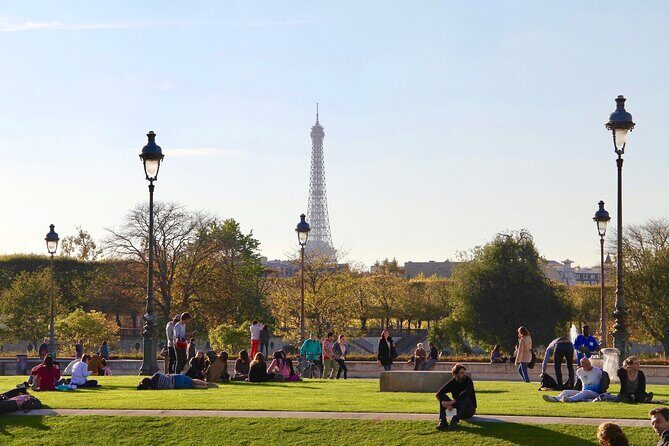
The tour then heads toward Pont Neuf, the oldest bridge in Paris. You’ll get the big-view advantage: bridge lines, river angles, and classic sightlines that help your brain map the city.
What makes this stop fun is the story layer. You’ll hear about Henri IV’s role in finishing the bridge in 1607, plus unusual local history like the tooth pullers of Paris. That kind of detail is exactly what you need on a walking tour: it gives the city character, not just dates.
Louvre area without museum tickets: why the glass pyramid matters
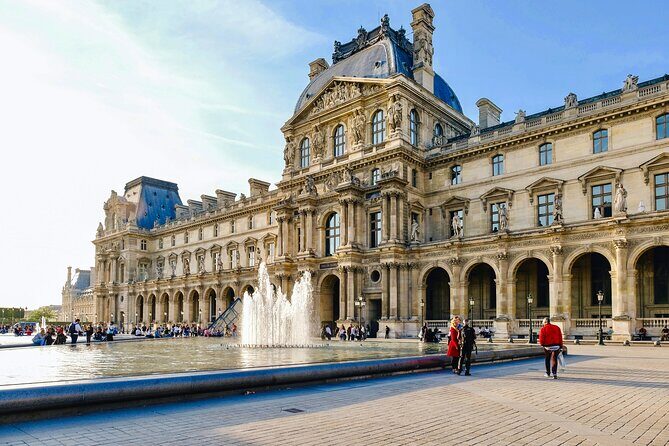
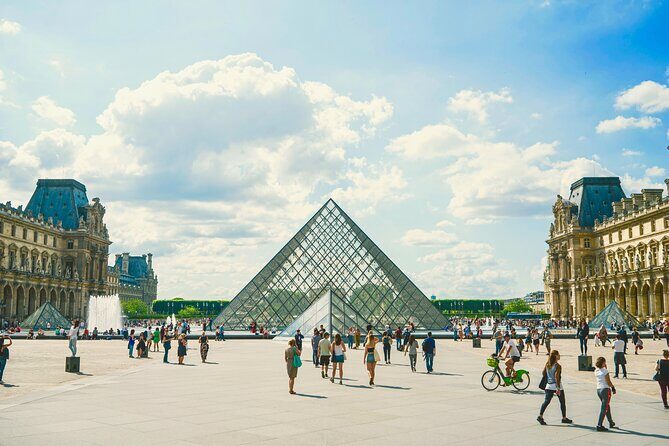
One highlight is that you end up at the Louvre Museum area for context without entering. You’ll hear a story about Leonardo da Vinci and why the Mona Lisa became so famous, plus a look at how Francis I helped lay the foundations of the Louvre as a fortress and palace. The key is that you walk away understanding the building as a historical machine, not just a famous museum name.
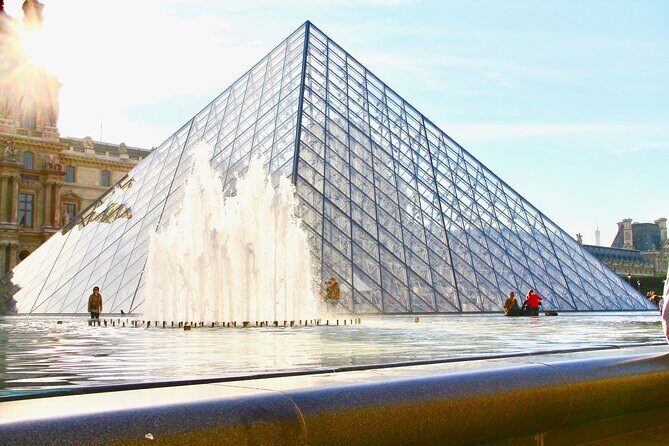
You’ll also see the glass pyramid from the outside and learn why it became such a focal point. Even without ticketing, the view helps connect what you know from films and headlines to the real space in front of you.
A practical heads-up on breaks
Some people like me plan a restroom stop right before a walking tour like this. One review noted there wasn’t an easy bathroom option until later near the Louvre area. You don’t want to ruin the second half by scrambling—use the restroom before you start if you can.
Tuileries Garden to Eiffel Tower: finishing with big-sight payoff
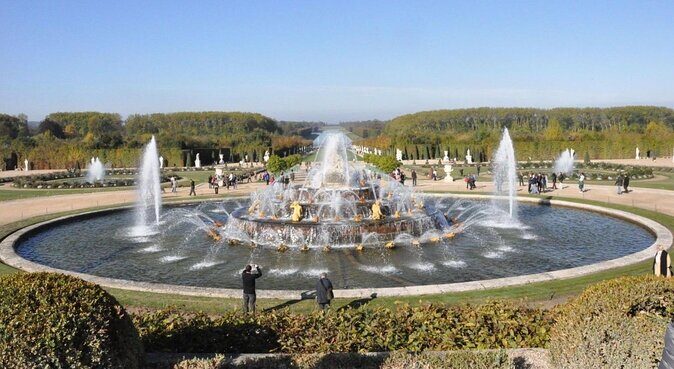
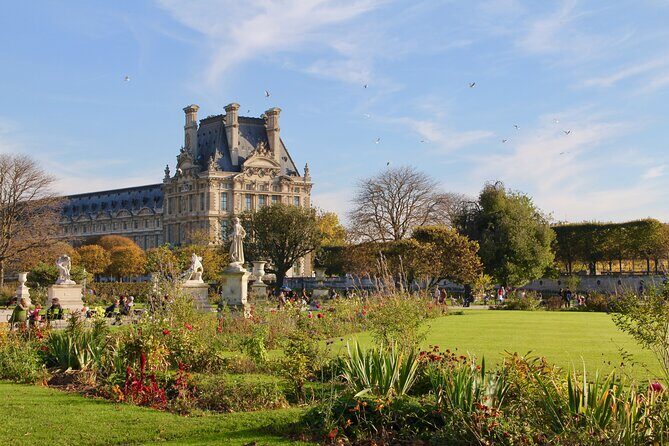
As the route moves on, you reach the Jardin des Tuileries, described as a transformation from a tile factory into royal gardens. You’ll hear about the statues, sculptures, and fountains, and you’ll also learn that the garden design was influenced by the same designer associated with Versailles gardens. That connection makes the Tuileries feel like a “second chapter” of the Versailles world.
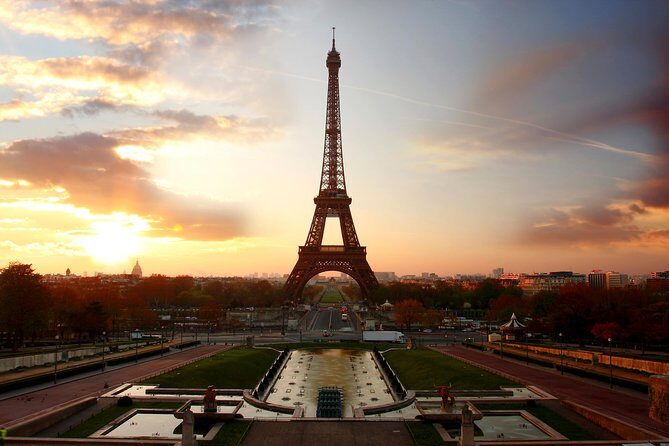
Then you get an Eiffel Tower view from the gardens. The guide explains how Gustave Eiffel pulled off the construction in 1889. Even if you’ve seen Eiffel Tower photos a thousand times, hearing the “how” while standing in a nearby viewpoint tends to make the tower feel real again, not just decorative.
Guides like Ezra, Alberto, Sanna, and Bruce make the whole thing
The strongest praise across the reviews centers on the guides. Names that come up often include Ezra, Alberto, Sanna, Bruce, and Michael, with many people calling out humor, clarity, and group management. Several reviews specifically mention body mics or microphones so the guide is heard even in busy spots.
English delivery is also a big deal on this route. Multiple comments note that the guide speaks clear English, uses sound amplification when needed, and is approachable for questions. If you like interacting—asking why a bridge has certain features or where the story leads next—this tour is built for that.
Group size: small enough to feel personal
The tour caps at 50 travelers. In practice, that’s usually large enough to be lively but not so huge that you lose the guide. Reviews mention mic use even in groups around the mid-20s, which is a good sign for audio.
What you’ll enjoy most (and what might not fit you)
This tour is best if you want a guided “core Paris” sweep with history and stories that stick. You’ll likely love it if you prefer understanding why landmarks matter instead of just collecting screenshots.
It might be less ideal if you want ticketed time inside the big sites. You don’t enter Notre-Dame or the Louvre on this walk, so you still need separate plans if those are your main goals. Also, if you’re sensitive to standing around for explanations, be ready for some longer stops where the guide talks more.
Should you book this Paris City Center Free Walking Tour?
I think it’s a smart booking for most first-timers in central Paris. You get a guided route that hits key points—Île de la Cité, Notre-Dame exterior framing, bridges with WWII context, Henri IV monuments, the Louvre area, the Tuileries, and an Eiffel Tower viewpoint—without needing museum logistics. The guide talent (Ezra, Alberto, Sanna, Bruce, Michael show up repeatedly) seems to be the real engine behind the great ratings.
Book it if:
- you want orientation and story context in one go
- you’re okay with outside views at big monuments
- you can handle a solid walking morning or afternoon
Consider a different plan if:
- you must go inside Notre-Dame or the Louvre on the same day
- you want frequent restroom breaks (this walk has limited options)
If you do book, take the tip model seriously and pay with the card/electronic method the tour uses. Do that, show up a bit early, and wear good shoes. You’ll walk away with a Paris map in your head, not just a list of places.
FAQ
How long is the Paris City Center Free Walking Tour?
It runs about 2 hours 15 minutes (approx.).
Is the tour in English?
Yes, it’s offered in English.
Do we enter Notre-Dame or the Louvre Museum?
No. The cathedral and the Louvre are covered for context, but you do not enter them on this tour.
Where does the tour start and end?
It starts at Fontaine Saint-Michel (Pl. Saint-Michel, 75005 Paris) and ends at the Tuileries Garden (75001 Paris).
How are tips handled on this tour?
Tips are accepted only via credit/debit cards and electronic payments (and VAT is added to contributions).
What happens if the weather is bad?
The experience requires good weather. If it’s canceled due to poor weather, you’ll be offered a different date or a full refund.