REVIEW · PARIS
Croissant Baking Class, Mastering the Art with a Pastry Chef
Book on Viator →Operated by Studio Pâtisserie · Bookable on Viator
Butter, dough, and a Paris lesson. This croissant class is a simple idea done right: you make flaky pastries with a chef in a max-eight setting, so you get time for real questions and hands-on correction. I like how the teaching is laid back but precise, and how the focus stays on the techniques that matter, not just the final photo.
There’s also a practical side to plan for. Kneading takes some strength, and the class is for ages 17+, so it’s not the easiest “light snack” activity if you’re short on energy or space in your day.
In This Review
- Why this class works: small-group attention and real technique
- Where you go in Paris: Studio Pâtisserie on Rue de Rome
- What a 3-hour session feels like (and what you’ll do during it)
- Ingredients and measurements: why this matters more than you think
- Lamination: folding butter into layers (without losing your mind)
- Shaping croissants (and pain au chocolat) like you mean it
- Baking time and the best part: eating what you made
- Getting value for the price: what you actually pay for
- Who should book (and who might want a backup plan)
- Quick prep tips before you show up
- Should you book this croissant class in Paris?
- FAQ
- How many people are in the class?
- How long is the croissant baking class?
- Is the class offered in English?
- Where does the class start?
- What is the minimum age?
- Can I bring a service animal?
Why this class works: small-group attention and real technique
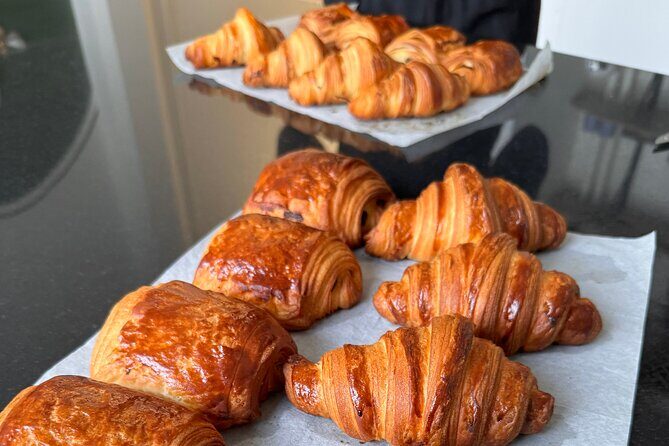
Croissants look fancy. The process is not magic, it’s math, timing, and muscle memory. What makes this experience feel worth it is the setup: a maximum of eight people. In a bigger class, you can watch and hope. Here, you’re working, and the chef can actually notice what your dough is doing.
You’ll also get an English-language session, which matters in Paris if you want to understand the why, not just follow the steps. The chefs running the class (like Chef Leo and Chef Maria, based on what’s shared) are described as fun and patient, with explanations that help you keep up instead of feeling rushed.
One more plus: you’re not just mixing dough. You’re learning the logic behind lamination (the layered butter method), measuring, and the folding/rolling pattern that creates that crisp shell and tender interior.
Where you go in Paris: Studio Pâtisserie on Rue de Rome
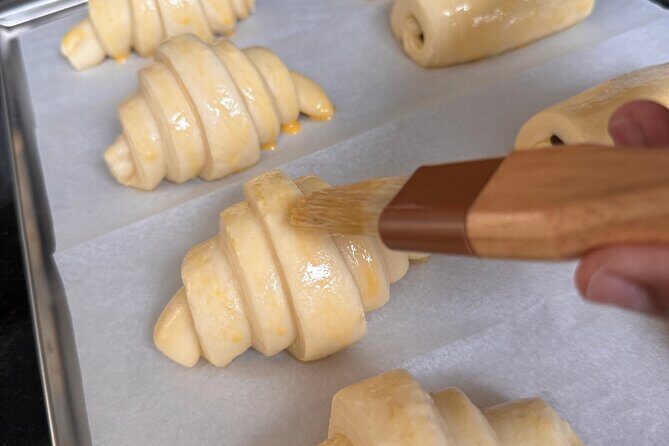
The class meets at Studio Pâtisserie, 85 Rue de Rome, 75017 Paris. It’s in the 17th arrondissement, and it’s described as near public transportation, which is handy if you’re planning the day around metro lines.
You finish back at the meeting point. That’s helpful because croissant classes can get messy (flour everywhere, inevitably). Knowing you don’t have to move after you’ve baked is a small comfort.
If you’re the type who likes to show up calm and ready, try to arrive a bit early. In a hands-on pastry setting, a few minutes of settling in makes a big difference when the chef starts talking dough consistency and butter temperature.
You can also read our reviews of more cooking classes in Paris
What a 3-hour session feels like (and what you’ll do during it)
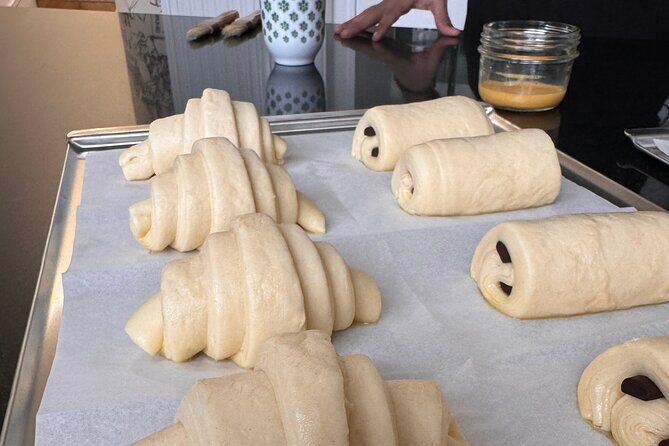
This is about three hours, give or take. The pacing is built around one goal: you should leave with croissants (and often pain au chocolat as part of the batch) that you helped make. That means the session usually hits a sequence: dough and butter prep, lamination and folding practice, shaping, and baking.
Here’s the flow I’d expect you to see:
- Welcome + French pastry basics: You’ll get an intro to what makes croissants different from other doughs—mainly the dough yield, ingredient quality, and the balance between softness and structure.
- Hands-on dough work: Expect kneading and learning how dough should feel, not just how it should look.
- Lamination practice: This is where the class earns its keep. You’ll work on folding and rolling so the butter forms even layers instead of streaks.
- Shaping: You’ll cut and shape into crescents. If pain au chocolat is included in your session, you’ll shape that too.
- Baking + take-home moment: While the pastries bake, you’ll have time to absorb tips—then you head home with the results.
Because it’s a small group, you’re likely to get direct help if your layers are slipping or your dough is getting too warm. That’s often the difference between a good learning experience and a frustrating one.
Ingredients and measurements: why this matters more than you think
Croissant success is less about talent and more about repeatable process. The class emphasizes quality ingredients and precise measurements. Even if you’ve baked before, croissants punish shortcuts because lamination is sensitive to consistency.
What you’ll likely focus on:
- Butter behavior: Butter isn’t just an ingredient; it’s a layer-forming tool. It needs the right temperature so it stays pliable but doesn’t melt into the dough.
- Flour and dough texture: You’ll learn how to get dough smooth enough to fold, but elastic enough to handle rolls without tearing.
- Measurements you can use at home: Several pastry cooks insist the dimensions and weights are what make it repeatable, not vibes.
One helpful tip that comes up for people who want to keep baking at home: it can be smart to write down dimensions for the rolling rectangles and the cuts used for both butter and final shaping. If you’re working from memory later, those millimeters matter.
If you’re coming from the US, also plan for metric conversions. The class is in a French setting, so you’ll likely hear measurements in metric. Your phone can do the conversions fast, but having a quick plan makes you feel confident.
Lamination: folding butter into layers (without losing your mind)
Lamination is the technique everyone talks about for a reason. It’s also the part that can go wrong fast if butter melts, dough stretches, or folds aren’t aligned.
In this class, you’re not left to guess. You’ll learn how to:
- Fold and roll so layers stay distinct
- Keep the dough and butter in the right relationship (too cold and it tears; too warm and layers merge)
- Maintain even pressure and straight edges so your rectangles and final shapes look consistent
The best part of a small group is that you can get correction on the spot. If your dough is sticking, if your folds are uneven, or if you’re struggling to judge when to roll versus rest, the chef can show you what to change.
Also, lamination teaches patience. You’ll understand why croissants need time and controlled handling. That’s useful even beyond croissants—because you start thinking like a pastry chef: structure first, then flavor.
Shaping croissants (and pain au chocolat) like you mean it
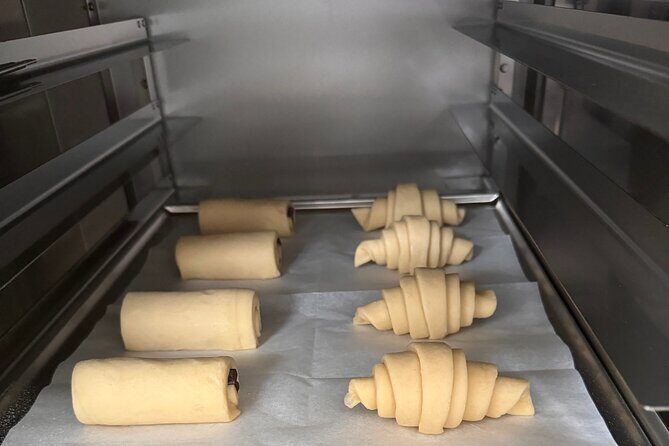
After lamination comes shaping—the moment where the class stops being purely technical and becomes satisfying. You’ll learn how to create the classic croissant silhouette by cutting triangles (or using triangle-based steps) and rolling them into crescents.
If pain au chocolat is included in your session, you’ll shape that too. One reason this class gets praised is that the end product isn’t just croissants. It’s the full French breakfast feel: flaky, buttery croissant plus a chocolate-stuffed option.
A couple of practical things to note:
- Expect a hands-on rhythm: you’ll roll, cut, and shape as a group, not just watch.
- It’s okay to ask questions early: the earlier you fix technique, the less your dough temperature and layer alignment will suffer.
Shaping is also a good point to take notes. When you replicate at home later, those exact steps decide whether you get tight spirals or loose mess.
You can also read our reviews of more tours and experiences in Paris




Baking time and the best part: eating what you made
Baking is where you see if all that folding paid off. You’re working in real time: dough shaped, oven heat applied, layers rising into those crisp-edged folds.
Even when you’re focused, you’ll probably notice how quick the final stage feels once everyone’s hands are done. That’s one of the reasons people rate this so highly: you get a complete arc. You don’t just learn theory. You make something that smells like Paris.
Also, the class is set up so you can leave with a take-home batch that reflects your work during the session. In other words, you aren’t walking away empty-handed after a demo.
Getting value for the price: what you actually pay for
At $143.92 per person for around three hours, you might wonder if it’s pricey compared with buying pastries across the street. It is. But it’s a different type of purchase.
You’re paying for:
- Small group teaching (max eight), which is the main value driver
- Hands-on coaching, especially during lamination and shaping
- Ingredient work you can replicate, since the techniques are the lesson
- A full pastry outcome you can eat right away and take home
If you go to a large group class, you can end up standing around while someone else works. This setup reduces that. One-on-one attention is also what helps you avoid wasting a batch of dough at home when you try again.
If you love food enough to bring home a new skill, this price starts to make sense fast.
Who should book (and who might want a backup plan)
This is best for you if you want:
- A serious hands-on baking lesson in Paris, in English
- A small, friendly group rather than a big “watch and wait” class
- A chef who explains patiently and keeps the tone light (people cite Chef Leo and Chef Maria styles)
It might be less ideal if:
- You don’t want dough work. The class notes that strength is needed to knead.
- You’re under 17 years old, since the class is for ages 17+.
Quick prep tips before you show up
You’ll enjoy the class more if you’re mentally ready for “bakery hands.”
Bring a good attitude about learning by touch. Croissant dough teaches you through feel. Also:
- Plan for flour on you. Wear something you won’t mind getting dusted.
- If metric is not your thing, have your conversion method ready (phone is fine).
- If you want to bake later, be ready to write down dimensions and keep track of the rectangle sizes and cut shapes.
That last part is boring advice until you’re home with dough and realizing you forgot a number. Then it becomes the difference between repeat success and a sad second batch.
Should you book this croissant class in Paris?
Yes, I’d book it if you like the idea of learning a technique you can actually use again. The small-group size, the hands-on lamination coaching, and the focus on precise process are exactly what you want for a “Paris memory you can bake” kind of trip.
Skip it only if you’re not up for kneading or if dough work feels like a chore rather than fun. Otherwise, this is a very practical way to turn a classic Paris pastry into a skill set you can carry home.
If your goal is to taste buttery croissants only, you can do that on every corner. But if your goal is to understand how croissants are made—layer by layer—this class is one of the better uses of a few hours in the city.
FAQ
How many people are in the class?
The class has a maximum of eight travelers, which helps you get more direct attention from the pastry chef.
How long is the croissant baking class?
It runs for about 3 hours.
Is the class offered in English?
Yes, it’s offered in English.
Where does the class start?
The meeting point is Studio Pâtisserie, 85 Rue de Rome, 75017 Paris, France.
What is the minimum age?
Participants need to be 17 years of age and above, and the session involves kneading dough.
Can I bring a service animal?
Yes, service animals are allowed.