REVIEW · PARIS
Paris: Croissant Baking Class with a Chef
Book on GetYourGuide →Operated by Studio Pâtisserie · Bookable on GetYourGuide
Croissant dough is where Paris really shows up. This class gives you the real pastry-kitchen feel: small group, hands-on instruction, and a seasoned chef guiding every folding step. I like that the pacing explains what you are doing and why it matters, not just what to copy, and I especially like the end payoff: you taste what you made while it is still warm. One thing to plan for: croissant-making asks for real arm work while rolling, so this is not a casual sit-and-watch activity, and there are age limits.
You meet at Studio Pâtisserie near Metro lines 2 and 3, then spend about three hours moving through the dough-to-oven process in a compact, friendly setup (max 8 people). It’s taught in English, with the goal that you can repeat the method at home using the recipe you take away.
In This Review
- Key highlights at a glance
- Studio Pâtisserie: a proper bakery kitchen, not a demo room
- What you’re really buying with this class
- Chef Léo’s style: coaching you through each folding step
- The best part: questions feel welcome
- The croissant workflow: from dough prep to shaped crescents
- Dough prep and getting the base right
- Rolling and folding for those flaky layers
- Rest and rise: the science you’ll actually use
- Shaping: classic crescents under watchful eyes
- What you taste and why the tasting matters
- The bi-color option: extra fun when you want more than classic
- Small group coaching: why max 8 matters more than you think
- Physical effort and age rules: plan for the rolling arm workout
- Price and value: $140 feels fair when you count what you get
- Who this croissant class is best for
- Quick tips to get the most from the class
- FAQ
- Is the croissant class taught in English?
- How long is the class?
- What’s the group size?
- Is the class suitable for kids?
- Is there an option for bi-color croissants?
- Where do I meet for the class?
- Should you book this Paris croissant class?
Key highlights at a glance
- Chef-led, small-group teaching (limited to 8) so you get real corrections as you work
- Hands-on lamination training: rolling, folding, and shaping for flaky layers
- Science plus technique: butter quality, proofing, and texture and flavor explained
- Fresh tasting during class and an easy win for home baking confidence
- Optional bi-color croissants on selected days for extra flair
- Take-home recipe so you can practice what you learned after the trip
Studio Pâtisserie: a proper bakery kitchen, not a demo room
The first thing I’d tell you is to show up hungry. Not because the class is a snack tour, but because croissant dough is interactive—your hands will be busy, your brain will be engaged, and the smell in the kitchen ramps up fast. You’ll meet at Studio Pâtisserie, in the building with the gray storefront, a quick hop via Metro Line 2 (Rome) or Line 3 (Villiers). That matters in Paris, because finding the right micro-location is half the battle.
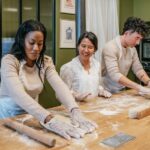
The setting is intimate by design. With a group capped at 8 participants, the chef can actually watch your technique and adjust it. In a larger class, you might get a quick once-over. Here, it’s more like being coached at a workstation, which is exactly what you want if your goal is to learn repeatable results.
You can also read our reviews of more cooking classes in Paris
What you’re really buying with this class
For $140 per person and a three-hour run, you are paying for three things that don’t happen in most “tourist cooking” formats:
- the chef’s attention while you roll and fold
- the professional equipment and tools you get to use
- the method explained in plain language, plus a recipe to take home
Croissants are fussy. That fussiness is the point. You learn how small choices—like butter behavior and proofing timing—show up in the flake level and the inside texture.
Chef Léo’s style: coaching you through each folding step
This class is guided by Chef Léo (and on some sessions, you may have a chef named Maria lead). Either way, the teaching style is consistent in the way that matters: you are not just handed steps. You work at the counter while the chef demonstrates, then you copy, then you get corrected.
A lot of croissant classes stop at the big idea. This one keeps going with the small mechanics:
- how the dough is handled
- how folding affects layers
- how shaping gets you classic crescents
- how resting fits into the process
That step-by-step method is also why it works for different skill levels. Beginners get clarity. People who bake already get “why” explanations that help them stop guessing.
The best part: questions feel welcome
One underrated piece here is that you can ask questions while you work. And when croissants are involved, questions matter. You’ll likely want to know things like:
- Why does the dough need to rest?
- What should the butter feel like at the moment you use it?
- How do you tell the difference between under-proofed and properly proofed dough?
The class is structured to support those moments, not shut them down.
The croissant workflow: from dough prep to shaped crescents
Even though the total duration is about 3 hours, croissant-making is naturally paced because lamination and proofing take time. In practice, your session is organized so you move through the process with short waiting periods built in for dough rests and rising.
Here is what you can expect from the class flow:
You can also read our reviews of more tours and experiences in Paris




Dough prep and getting the base right
You start at the workstation with guidance on preparing the delicate dough. This is where a big part of success is set: you’re learning what the dough should look and feel like as it comes together. The chef’s coaching is key because croissant dough isn’t forgiving the way some quick breads are.
Rolling and folding for those flaky layers
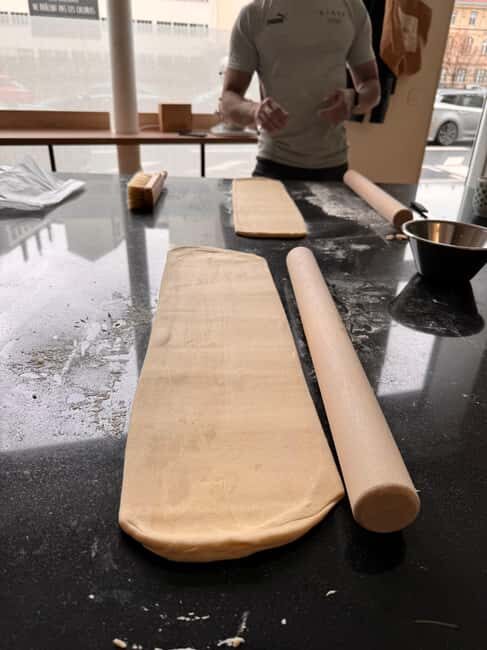
Then comes the part most people picture when they think croissants: the folding technique. The class focuses on mastering the sequence so the dough develops those thin layers that later expand in the oven.
Hands-on time is a major reason to book. You don’t just watch lamination happen—you do it. And because the group is small, the chef can point out when your rolling is uneven or when your folds aren’t aligned.
Rest and rise: the science you’ll actually use
As the dough rests and rises, you learn the science behind what’s going on. The class emphasizes things like:
- the importance of butter quality
- nuances of proofing
- how those choices affect texture and flavor
This is valuable because croissants fail in predictable ways. When you understand the role of butter and proofing, you can troubleshoot at home instead of starting over.
Shaping: classic crescents under watchful eyes
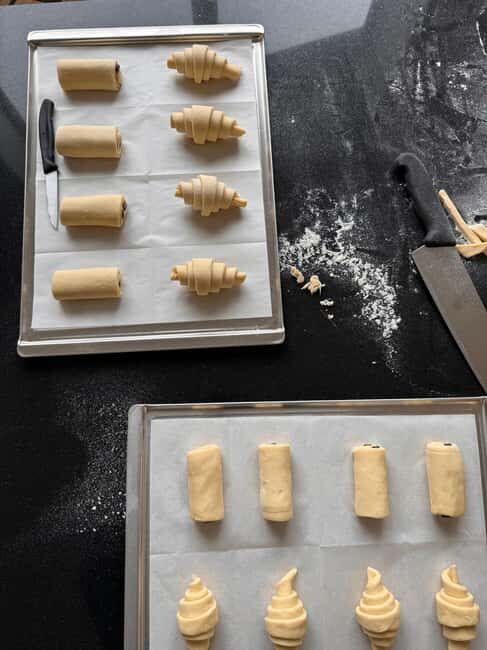
Once your dough is ready, you shape. You’ll cut, roll, and form classic crescents with the chef watching so you learn consistent technique. This is also where you build confidence. When your croissants start looking like real croissants (not just dough lumps), that’s when the process clicks.
What you taste and why the tasting matters
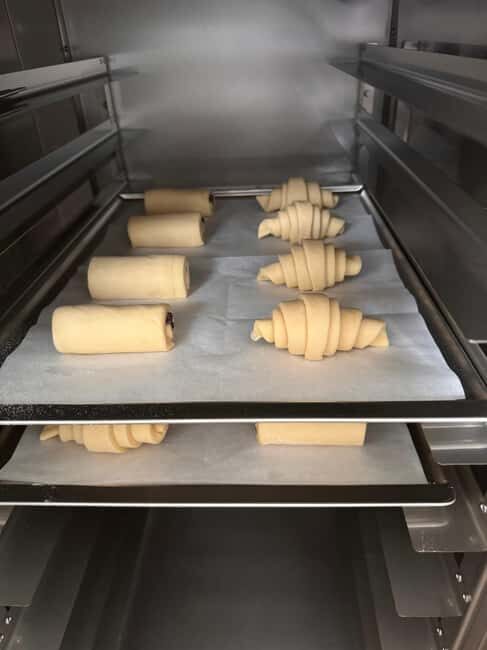
You’ll have ample sampling of freshly baked croissants during the class—specifically the ones you make. This isn’t just a reward. It’s the feedback loop that makes the lesson stick.
Here’s why:
- If you know what your dough should feel like, tasting confirms if the oven behavior matched your technique.
- If you learn the theory about proofing, the crumb and texture after baking show whether you got it right.
- If you shaped carefully, you get a visual check on how layer formation and baking expansion worked out.
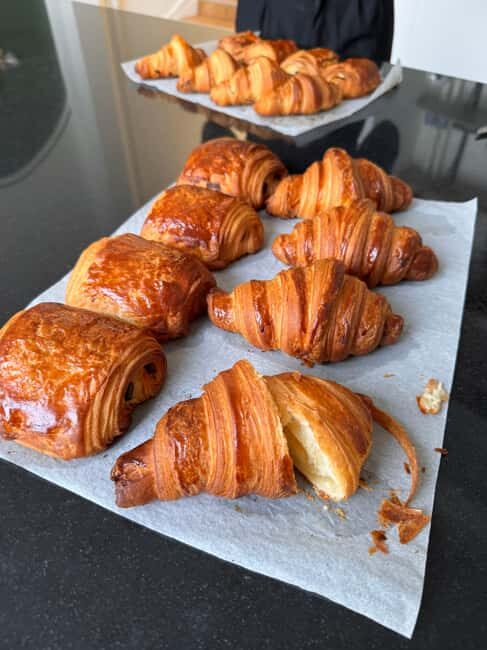
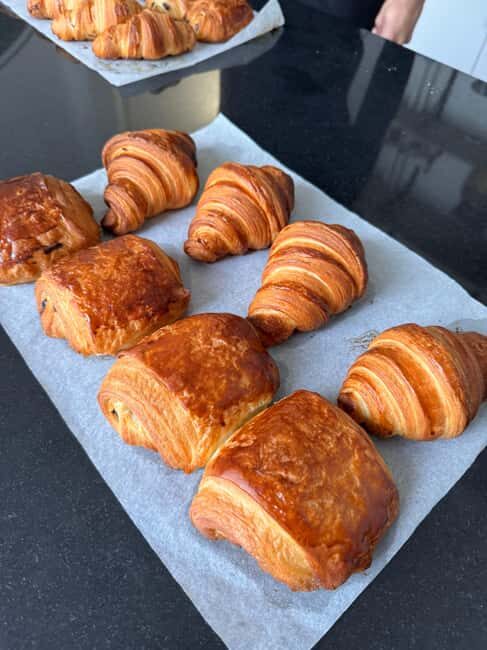
Many people also mention leaving with enough pastries to eat and take some home. You may make a mix that can include butter croissants and chocolate versions, with some sessions adding pain au chocolat alongside croissants. The exact mix can vary by session, but the takeaway is consistent: you get real results, not just a baked sample for show.
The bi-color option: extra fun when you want more than classic
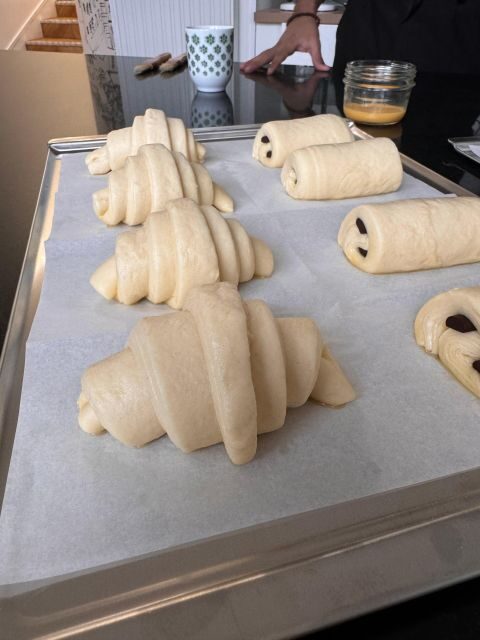
On selected days, there’s an exclusive bi-color croissant baking class option. If you choose it, you learn how to incorporate vibrant colors into the dough so the finished pastry shows a two-tone effect.
This option is best if:
- you’ve already baked before or you like a more creative challenge
- you want a croissant that looks like it came from a pastry shop window
- you’re traveling with someone who enjoys a visual “wow” moment
Even if you skip the bi-color version, you still come away with the core lamination and shaping skills. The bi-color part is an add-on flair, not the foundation.
Small group coaching: why max 8 matters more than you think
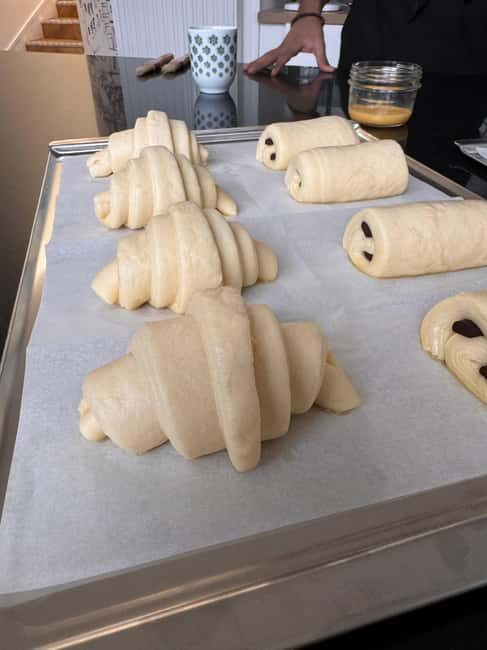
Limiting the class to 8 participants is not a marketing detail. It changes how you learn.
In croissant class, the difference between good and great often comes from a few minutes of correction—like the angle of a roll, the thickness you’re creating, or how consistently you fold. With a small group, those corrections can happen while you’re still mid-process. That means you can adjust before the dough leaves the stage where it’s still fixable.
The coaching also makes it more comfortable to ask questions. When you’re not waiting for the chef to finish with the whole room, you learn faster and feel less nervous.
Physical effort and age rules: plan for the rolling arm workout
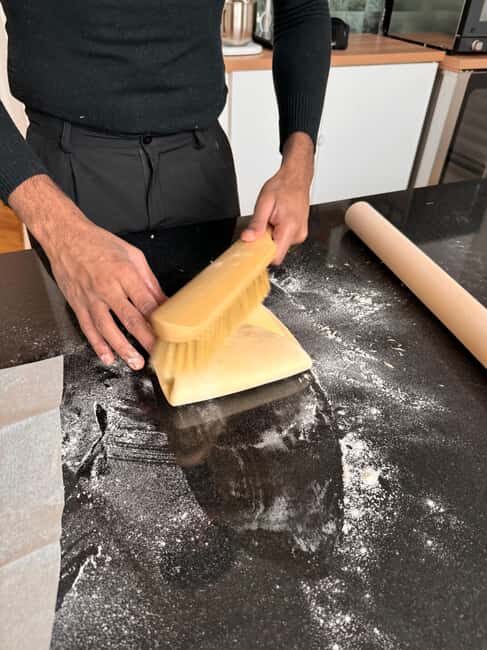
Let’s be honest: croissant dough requires physical strength, especially during rolling. That’s why there’s an age requirement. The class is not suitable for children under 15, and children under 17 must be accompanied by a paying adult.
If you’re booking with a teen or with a family group, this is worth taking seriously. You’ll be doing hands-on work with dough that needs consistent pressure and technique. If you or the person you’re traveling with can’t comfortably roll and handle dough, the experience can feel more frustrating than fun.
Price and value: $140 feels fair when you count what you get
At $140 per person for a three-hour class, the price can look steep at first—until you factor in what’s included.
You get:
- expert guidance (Chef Léo throughout the class)
- all ingredients for your croissants
- access to professional-grade kitchen equipment
- a recipe to take home
- fresh sampling during class
- history and science insights
- personalized tips and tricks
In other words, the fee is paying for teaching time and technique, not just ingredients. If you’ve ever tried to learn croissants from a single recipe online, you already know how easy it is to go wrong on butter behavior, folding rhythm, or proofing. This class shortens the learning curve by giving you immediate feedback while you work.
So for food lovers and home bakers, it’s good value. For people who just want a quick souvenir snack, it might feel overpriced—because this is real baking work.
Who this croissant class is best for
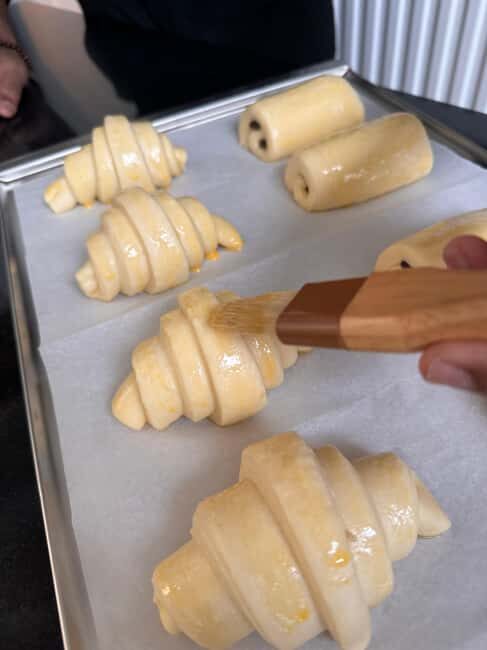
This is a good fit if:
- you like hands-on cooking and you don’t mind physical effort
- you want to understand the method, not memorize a list of steps
- you enjoy learning from a chef who explains technique and science
- you’re traveling with a partner or small group and want a shared activity with a satisfying result
It’s also a fun choice for multi-generation trips. Several people describe it as a standout experience for parent-child travel, including mother/daughter trips, because everyone can participate in shaping and learning the process—even if only some people do the heavy rolling.
If you’re trying to squeeze in something that is mostly passive, this probably won’t be your favorite. If you want to bake, yes.
Quick tips to get the most from the class
You’ll get the best experience by going in with the right mindset:
- Focus on consistency during folding and shaping. That’s what creates good layers.
- Pay attention during the science parts. Butter quality and proofing directly affect what you see after baking.
- Don’t be shy about asking questions while you work. Croissants are made of small details.
- Be ready to carry what you bake. Many people leave with a bag full of pastries.
Also: the pace includes rest time for the dough. That downtime is part of the lesson. Use it to watch what the chef emphasizes and to ask targeted questions.
FAQ
Is the croissant class taught in English?
Yes. The instructor is listed as English.
How long is the class?
The duration is 3 hours.
What’s the group size?
It’s a small group limited to 8 participants.
Is the class suitable for kids?
Children under 15 are not suitable. Children under 17 must be accompanied by a paying adult, and the class requires physical strength for rolling the dough.
Is there an option for bi-color croissants?
Yes. There’s an exclusive bi-color croissant option on selected days, and it includes bi-color croissant ingredients and the class for that style.
Where do I meet for the class?
You meet at Studio Pâtisserie, the building with a gray storefront. The nearest metro stations are Metro Line 2 – Rome and Metro Line 3 – Villiers.
Should you book this Paris croissant class?
If you want the most Paris-like souvenir that isn’t tacky, book it. Not because it’s cute, but because it teaches you a skill you can repeat. The small group setup, the chef-led hands-on coaching, and the science behind butter and proofing are exactly what make the class more than a one-off meal.
Book it especially if you (or your travel partner) enjoy baking, or you want a clear path to better results at home. Skip it if you’re hoping for a light, low-effort activity or if dough rolling isn’t realistic for your group.
Bottom line: for a three-hour block in Paris, you get real technique, fresh results, and a recipe you can actually use. That’s solid value for this kind of craft.