REVIEW · PARIS
Paris: Guided Segway Tour Paris by Night
Book on GetYourGuide →Operated by Wheels and Ways, the Paris Original Tours · Bookable on GetYourGuide
Paris at night feels made for gliding. This Segway tour turns the city into a moving light show, timed to start near sunset and keep you snapping photos in front of major sights. I especially like the built-in full training session before you head out, and the fact that you get planned photo moments right next to the monuments.
You’ll meet at Place de Fontenoy and then get a safety briefing, helmet, and (if needed) a raincoat plus thermal waterproof gloves. One consideration: it’s a Segway-style experience, so it’s not a good fit if you have inner ear issues, limited mobility, or you’re outside the stated height/weight and age limits.
Because the route is paced for sightseeing, you won’t just get from A to B. You’ll also learn what you’re seeing from a passionate guide who loves Paris, in English and French, and you’ll cover a lot more ground than you would on foot in the same time.
In This Review
- Key things to know before you ride
- Getting ready at Place de Fontenoy: helmet, rain gear, and a real training block
- From the first glide to Champs de Mars: where the light show begins
- Eiffel Tower at light-up time: fast access with planned stops
- Lavirotte Building and Cathédrale de la Sainte-Trinité: architecture you actually learn
- Pont Alexandre III and the sweep toward Champs-Élysées: river glow and big-city scale
- Place de la Concorde to l’Assemblée Nationale: wide streets, big landmarks, short stops
- Les Invalides and the ride home: closing the loop at night
- Price and value: what you get for about $93 in 2 hours
- Who this tour fits best (and who should skip it)
- Should you book the Paris by Night Segway Tour?
- FAQ
- FAQ
- Where is the meeting point?
- What’s the tour duration?
- What time does the tour start?
- What languages are offered?
- How big is the group?
- What’s included with the tour?
- Do I need experience riding a Segway?
- What monuments or areas will we see?
- What should I bring and wear?
- Is alcohol allowed?
Key things to know before you ride
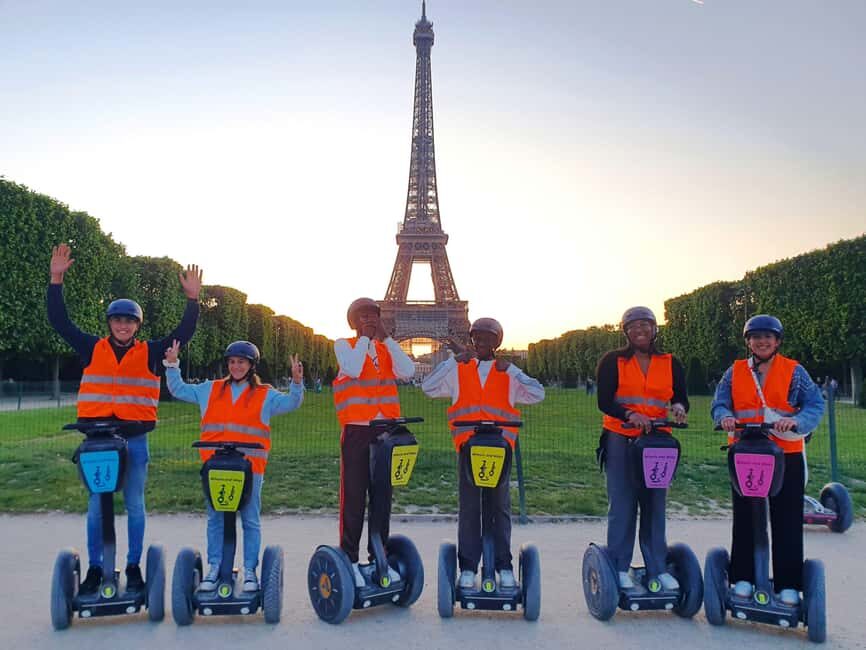
- Training first: you get time to feel comfortable before you roll into traffic-adjacent streets
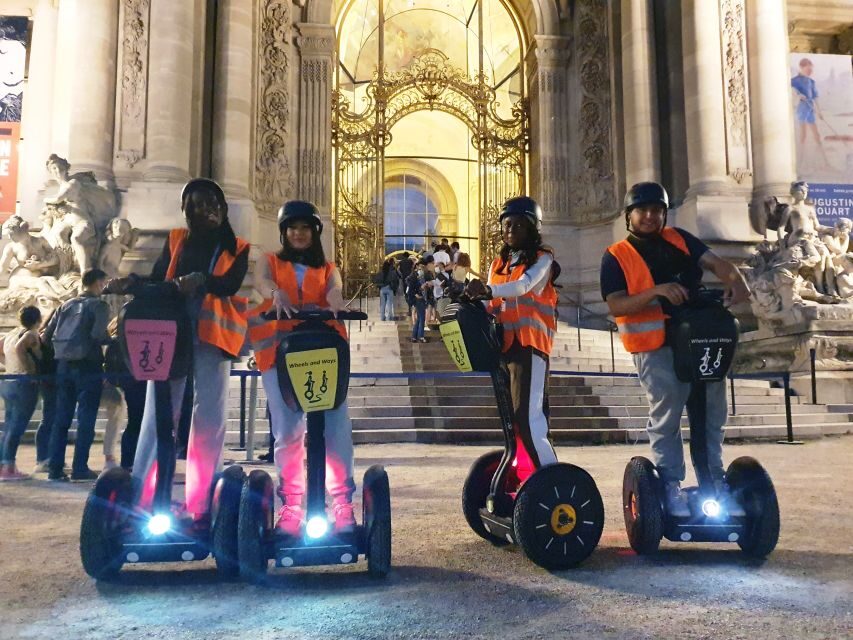
- Photo stops on the move: you stop often for pictures, usually with the Segway in frame
- Small group feel: limited to 10 participants, so the guide can keep an eye on everyone
- Illuminated landmarks only: the tour is built around the night lighting starting near sunset
- Real guide energy: guides like Florian and Kenya have a strong focus on safety plus fun city storytelling
Getting ready at Place de Fontenoy: helmet, rain gear, and a real training block
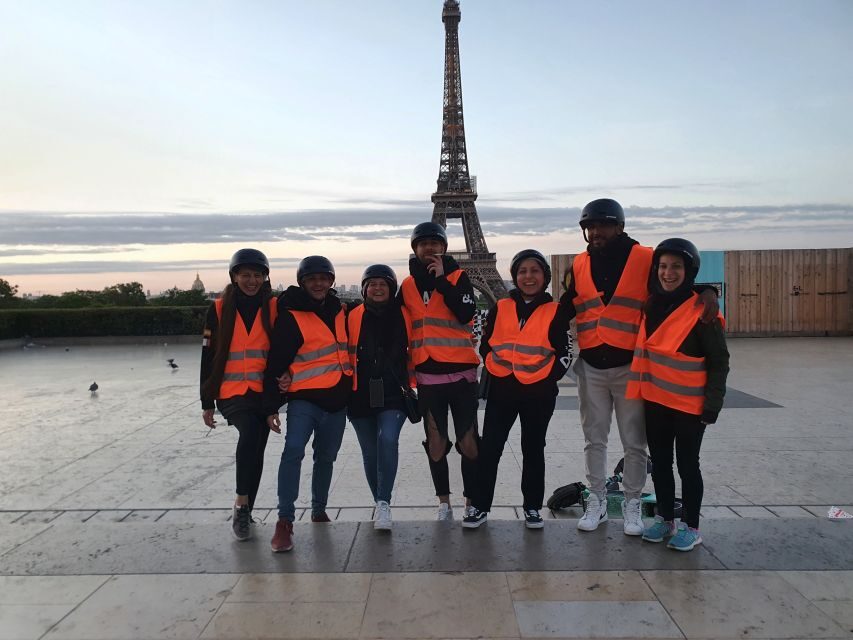
This tour starts at Place de Fontenoy (UNESCO). Plan to arrive about 15 minutes early so you can check in and not feel rushed. Once you’re there, you’ll get a safety briefing that takes around 15 minutes, then you’ll practice until you’re confident. That training matters more than people expect. A Segway isn’t hard once you get the feel, but it’s much easier when the guide sets you up first rather than letting you figure it out while you’re already sightseeing.
You’ll be provided with the Segway, plus a helmet. If weather turns damp or cold, you may also get a raincoat and waterproof thermal winter gloves. That’s a practical touch for a night tour in Paris, where conditions can change fast once the sun drops.
What to wear is simple: comfortable shoes (no sandals or flip-flops), and bring basics like sunglasses, sunscreen, and weather-appropriate clothing. Even in the evening, you can still get glare from streetlights and reflections from the river and broad boulevards.
You can also read our reviews of more guided tours in Paris


From the first glide to Champs de Mars: where the light show begins
Your ride officially kicks off near the Parc du Champs de Mars. Expect a photo stop and sightseeing, plus a short Segway ride segment (around 10 minutes). This is a smart opening area because the space lets you settle in: you’re not instantly thrown into the tightest, busiest blocks, and the guide can correct your posture and steering habits before you’re fully in tour mode.
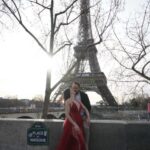
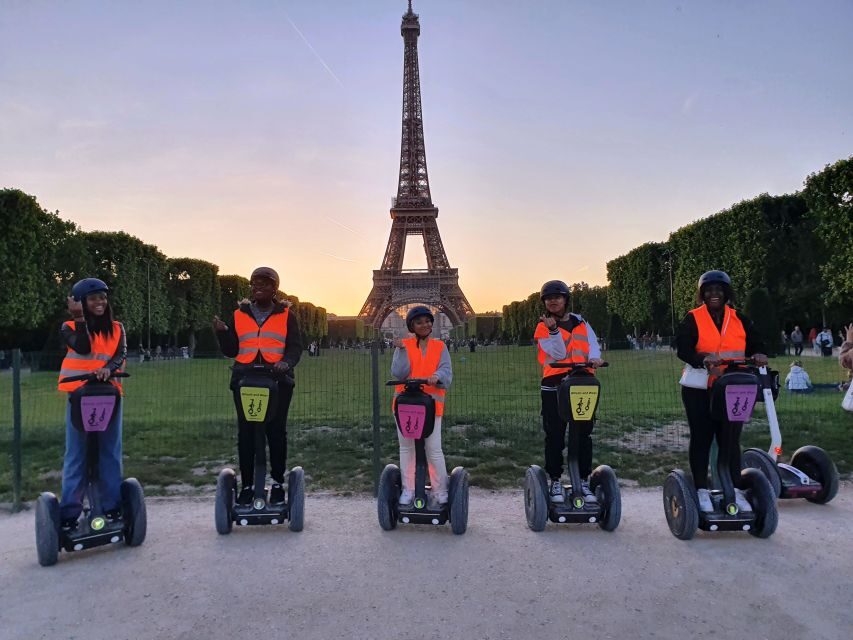
Champs de Mars is also a great “first wow.” The Eiffel Tower area reads differently at night. You get those crisp lines and bright highlights, and you’re close enough that you can photograph without feeling like you’re trapped behind a crowd.
A small but real benefit of Segway tours: you’re high enough and moving smoothly enough to get a cleaner shot than you would trying to balance on uneven ground while walking. You’ll still want to keep your camera ready, but it feels less chaotic.
Eiffel Tower at light-up time: fast access with planned stops
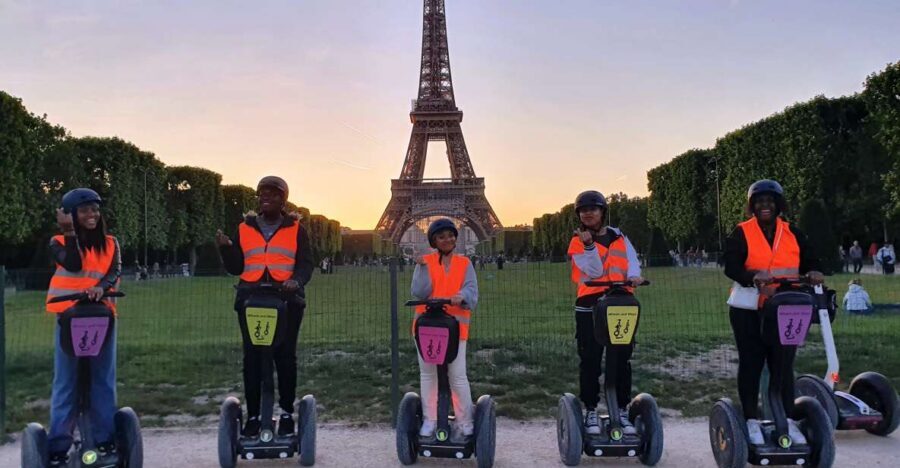
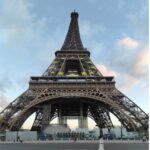
Next up is the Eiffel Tower itself. You’ll get a photo stop and a short Segway ride segment (about 5 minutes), timed so you can catch the lighting moments. The guide’s job here isn’t just pointing at the landmark. It’s about helping you be in the right place at the right moment—when the tower looks its best rather than when everything is just dim shapes.
You’ll likely spend enough time to get the classic views plus a few angles that feel different from the usual postcard framing. The Segway also helps because you’re not constantly stopping and starting on foot. If your legs tire easily, this part is a relief.
The one drawback to keep in mind: you’re on a night route, so lighting can be bright and shadows sharp. If you’re shooting photos, you might want to check your camera settings early so you’re not scrambling during the stop.
Lavirotte Building and Cathédrale de la Sainte-Trinité: architecture you actually learn
After the Eiffel Tower area, the tour turns toward neighborhoods and buildings that many first-time visitors pass without a second look. There’s a photo stop and guided ride segment (about 10 minutes) at the Lavirotte Building, which is a great example of why a guide helps. At night, the details can be subtle, and without context it’s easy to miss what makes a façade special.
Then you head to Cathédrale de la Sainte-Trinité, with another photo stop and guided sightseeing (around 10 minutes). Night lighting can make churches feel dramatic, but you’ll get more out of it when you understand what you’re looking at—style, setting, and the why behind the landmark.
This is also where the guide’s personality shows. In reviews, guides like Florian have been singled out for balancing architecture talk with a calm, safety-first approach. That matters because you’re learning while you’re still riding, and the best tours keep the pace friendly rather than turning it into a lecture.
Pont Alexandre III and the sweep toward Champs-Élysées: river glow and big-city scale
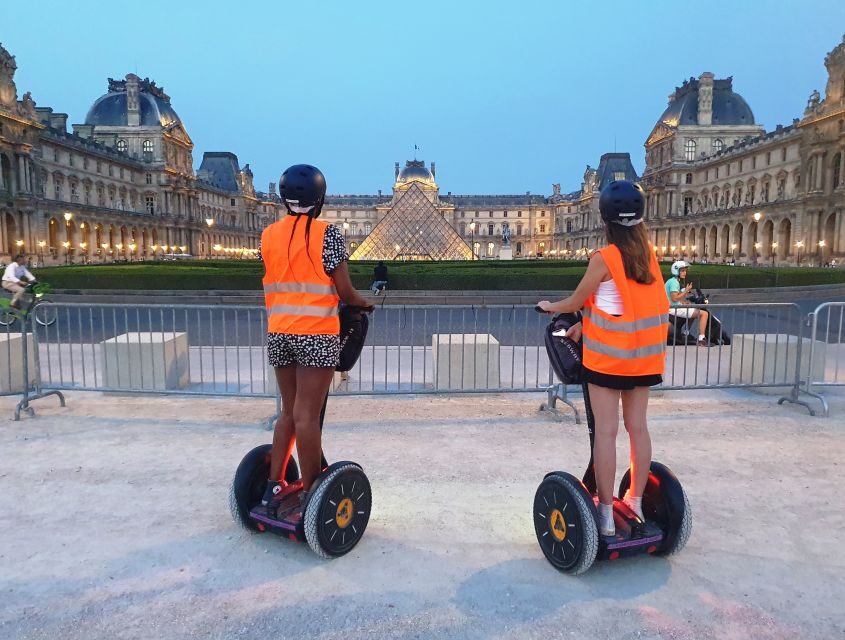
The route hits Pont Alexandre III next, with a photo stop and guided ride (about 10 minutes). This bridge is one of those Paris views that instantly feels cinematic at night. You’ll get the benefit of being positioned for photos without needing to fight for the best standing spot hours in advance.
From there, you roll into the Champs-Élysées area. Expect another photo stop and a Segway ride segment (about 10 minutes). This part of the tour is less about quiet charm and more about experiencing the scale. The boulevard looks different at night—more theatrical, more layered, and easier to take in from a moving vantage point.
Practical tip: street lighting can make metal railings and signage pop in photos, but it can also wash out faces if you’re shooting with a phone. If you care about portraits, do a quick test shot when you arrive, then adjust exposure.
You can also read our reviews of more evening experiences in Paris




Place de la Concorde to l’Assemblée Nationale: wide streets, big landmarks, short stops
The tour then reaches Place de la Concorde for a photo stop and guided sightseeing, followed by a Segway ride segment (around 10 minutes). Concorde is a landmark that can feel confusing in daylight because it’s so open and busy. At night, it reads more clearly. The lights help define the square’s edges, and the monument geometry becomes easier to frame.
After that, there’s another photo stop plus guided sightseeing and a ride segment (about 10 minutes). Even when the exact landmark isn’t spelled out in your materials, the idea is consistent: the tour keeps pausing in high-value photo positions rather than just driving past.
Then you move to l’Assemblée Nationale for another photo stop and short ride (around 10 minutes). Government buildings aren’t usually the first thing people want to photograph in Paris, but seeing them at night adds contrast: the city looks formal, not just romantic.
This is where I think the small group matters. With only up to 10 participants, you’re less likely to get stuck waiting while people fumble with helmets, adjust positioning, or ask the same question twice.
Les Invalides and the ride home: closing the loop at night
Finally, the tour heads to Les Invalides for a photo stop and guided sightseeing, plus another Segway ride segment (around 10 minutes). This end point works well because Les Invalides has that “finished Paris picture” quality. By the time you arrive, you’ve already seen the big fireworks (Eiffel Tower lighting, major bridges, major avenues), so it feels like a calmer, more grounded finale.
From there, you return to Place de Fontenoy. The night tour format stays efficient, but it still gives you time to stop and look, not just pass through.
One more practical note for the end of the ride: if it’s cold or damp, keep your gloves on and your sleeves covered. You want your hands free for photos and comfortable on the controls.
Price and value: what you get for about $93 in 2 hours
At about $93 per person for around 2 hours, this is not the cheapest way to see Paris at night, but it also isn’t hard to justify.
Here’s why the value holds up:
- You’re paying for guided navigation through multiple key areas rather than sorting transport and routes yourself.
- You get included gear: helmet, and likely a raincoat and winter gloves if conditions call for it.
- You’re paying for the time cost savings of Segways. In two hours, you can cover a lot more than a walking loop while still making frequent photo stops.
- You’re paying for a small group experience, capped at 10 people, which supports safety and attention.
If you’re traveling with teenagers, couples, or anyone who wants a fun night activity that also feels like sightseeing, this pricing starts to look fair. It also tends to fit well if you want a single “wow” evening rather than multiple evenings of planning and walking.
Who this tour fits best (and who should skip it)
This is best for you if:
- You want iconic Paris by night without the exhaustion of long walking
- You like photo stops and want to build a set of shots with monuments lit up
- You’re comfortable trying a new way to travel after a training session
It’s not for you if:
- You have limited mobility or inner ear deficiencies
- You’re under the age limit (activity is strictly forbidden for people 13 and under)
- You’re pregnant, under 99 lbs (45 kg), or over 260 lbs (118 kg)
- You plan to wear sandals or flip-flops, or you’re counting on alcohol to help you relax (that’s not allowed)
Should you book the Paris by Night Segway Tour?
If you want a fun, photo-friendly way to see the Eiffel Tower lighting and several major landmarks in one go, I’d say yes, book it, especially if you value the training-first approach and a guide who keeps things safe and lively.
Skip it if your body or balance won’t work well with a Segway, or if the route feels too structured for your style. But if you’re looking for an efficient, guided night experience with real built-in practice time, this one is a strong bet for your Paris evenings.
FAQ
FAQ
Where is the meeting point?
You’ll meet at Place de Fontenoy (UNESCO). You’re asked to arrive about 15 minutes before departure.
What’s the tour duration?
The tour lasts about 2 hours.
What time does the tour start?
It starts at sunset, with the exact timing depending on the time of year.
What languages are offered?
The live guide speaks French and English.
How big is the group?
The group is limited to 10 participants.
What’s included with the tour?
You get the Segway, a helmet, and you may also receive a raincoat and waterproof thermal winter gloves if needed.
Do I need experience riding a Segway?
You get a full training session and a safety briefing first, with time to feel comfortable before you ride on the streets.
What monuments or areas will we see?
You’ll pass by or stop near Champs de Mars, the Eiffel Tower, Lavirotte Building, Cathédrale de la Sainte-Trinité, Pont Alexandre III, Champs-Élysées, Place de la Concorde, l’Assemblée Nationale, and Les Invalides, plus other photo stops along the route.
What should I bring and wear?
Bring comfortable shoes, sunglasses, sun hat, sunscreen, and weather-appropriate clothing. Avoid sandals or flip-flops.
Is alcohol allowed?
No. Alcohol and drugs are not allowed on the tour.