REVIEW · PARIS
Paris: Eiffel Tower and Notre Dame Night Tour by E-Bike
Book on GetYourGuide →Operated by XL Tour Paris · Bookable on GetYourGuide
Paris at night has a different rhythm.
On this 2-hour e-bike tour, you get the big-name sights without the stop-and-go stress of daytime traffic. I love that the route is mostly bike lanes and sidewalks, so the ride feels steady. I also love the way you hit major landmarks in a tight loop while the city glows—especially the Eiffel Tower views. The main drawback to plan for: you’ll be cycling the whole time, so it’s not the right pick if you need slow, car-style accessibility.
This tour is built for people who want to see more than just a quick photo stop. You’ll start near Opéra at 10 Rue de la Paix, get helmeted up, do a short test ride, then roll into the night toward the Louvre area and along the Seine. And yes, the lights matter here—moonlight and streetlamps turn famous places into something softer and more personal.
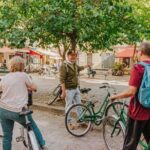
It’s also a good choice if you’re new to e-bikes. You’ll get a safety briefing and guidance on handling the bike, which helps a lot when you’re moving through busy central Paris. Just note the height rule: adults need to be at least 155 cm (5’01) to ride.
In This Review
- Key things I’d bank on before you go
- The good idea: a night ride that actually fits 2 hours
- Starting at 10 Rue de la Paix: bikes, helmets, and your first minutes
- What to wear and bring (so you don’t hate the ride)
- Louvre area after dark: major sights in motion
- Tuileries Gardens to the Seine docks: greenery plus water views
- Pont Neuf and Pont des Arts: bridges that tell the story
- The quick stop at Conciergerie
- Sainte-Chapelle and Notre-Dame: Gothic details without the entry pressure
- Institut de France and the river loop: why small stops matter
- Musée d’Orsay at night: from train station to art space
- Big avenues and “great vs. small palace” contrast
- Eiffel Tower at the right angle: Trocadéro glow and Chaillot scale
- Photo help is part of the value
- From Pont Alexandre III to Place de la Concorde: finishing on classics
- Price and value: what $116 buys you in 2 hours
- Languages and how to follow along
- Who should book this, and who should skip it
- Practical tips so your night ride feels smooth
- Should you book it?
- FAQ
- How long is the Eiffel Tower and Notre-Dame night e-bike tour?
- Where do I meet the guide?
- Is the price $116 per person, and what’s included?
- What languages are offered?
- Do I need to pay for attraction tickets?
- Does the tour run in bad weather?
- What should I wear or bring?
- Is there a height requirement?
- Is the tour wheelchair accessible?
Key things I’d bank on before you go
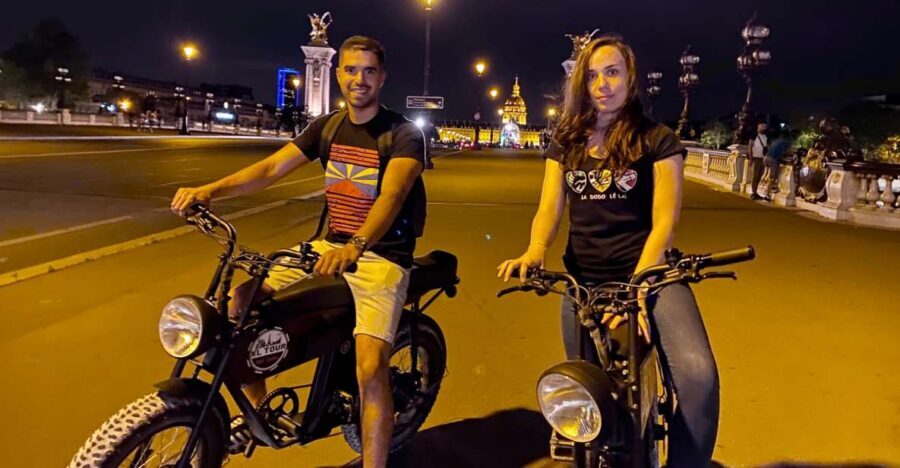
- Mostly bike lanes and sidewalks make the ride feel calmer than you might expect
- Night views of the Eiffel Tower from Trocadéro Gardens are the main payoff
- Guided stops with short walks keep you moving without feeling rushed
- Photo help along the way, including picture-taking at major locations
- Notre-Dame and Sainte-Chapelle highlights without needing to manage entry lines
- Two-hours, big sights is great value if you want maximum coverage
The good idea: a night ride that actually fits 2 hours
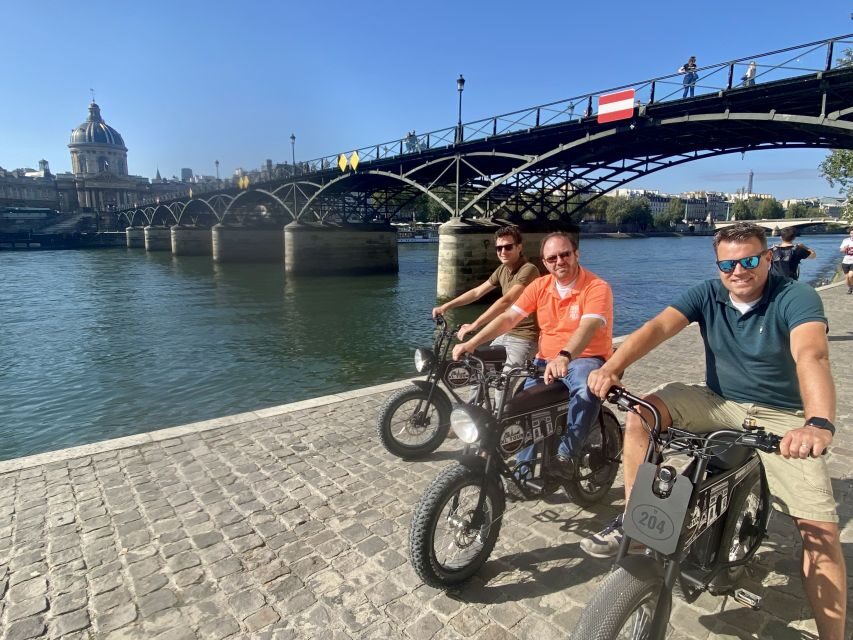
Paris is famous for walking tours, but night is where wheels shine. Streets look and feel different after dark: traffic eases, the lighting looks dramatic, and you can experience the city’s layout in motion. This tour is designed for that. You’re not stuck in one plaza waiting for something to happen; you’re moving through classic areas like the Louvre–Tuileries corridor, then across bridges over the Seine, then up to the Eiffel Tower and back.
The e-bike does two useful things. First, it reduces fatigue, which matters when the route includes plenty of distance and short stops. Second, it lets you focus on the sights instead of constantly managing your legs. That’s especially handy if you’re not a confident cyclist. You’ll get a test ride and guidance so you’re not guessing how the bike responds.
You can also read our reviews of more cycling tours in Paris

Starting at 10 Rue de la Paix: bikes, helmets, and your first minutes
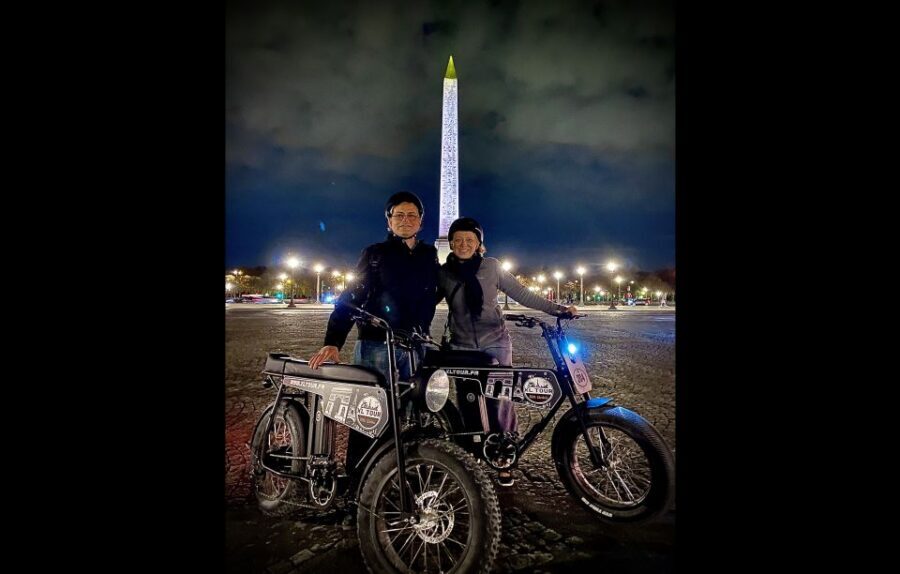
You meet at 10 Rue de la Paix, at a technical area inside the car park. It’s one of those meet-up spots that can feel vague at first glance—so go in with a calm plan. If you don’t see your guide or a bike shop right away, the guide comes upstairs once you arrive.
Before you roll, you’ll get:
- A safety briefing (about 15 minutes)
- Helmet and equipment fitting
- A test drive to make sure you can handle the electric assist smoothly
This is the right kind of “prep.” It doesn’t slow you down in a meaningful way, but it reduces the jitters. In the feedback tied to this experience, the standout guide Tomas was specifically praised for explaining how to ride through central Paris traffic and for keeping the ride comfortable for people doing e-bikes for the first time. That matters because the first 10 minutes set the tone for the whole tour.
What to wear and bring (so you don’t hate the ride)
Bring comfortable shoes and comfortable clothes. Avoid anything that could slip or snag—no sandals/flip-flops/open-toed shoes and no high heels. And keep drinks and snacks simple: alcohol and drugs are not allowed, and alcoholic drinks aren’t permitted in the vehicle.
Louvre area after dark: major sights in motion
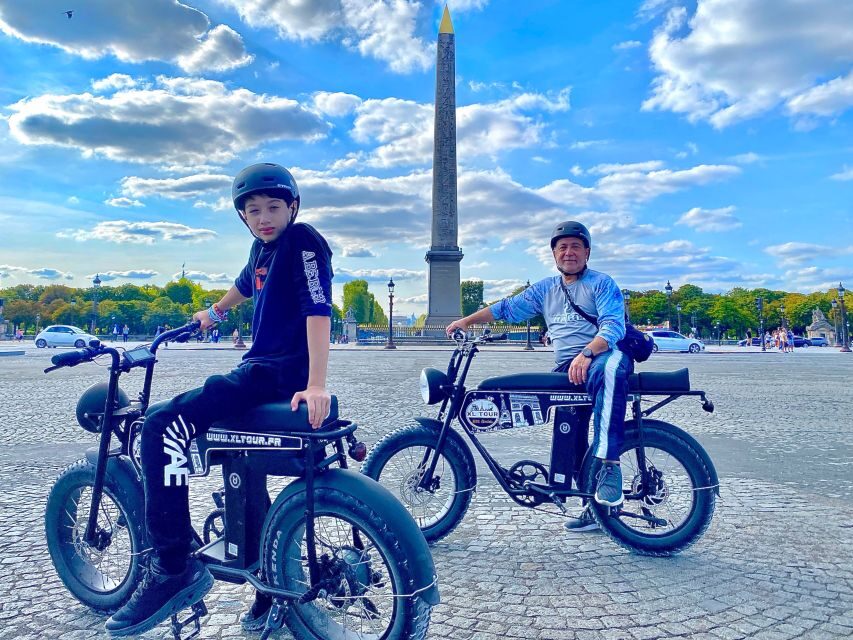
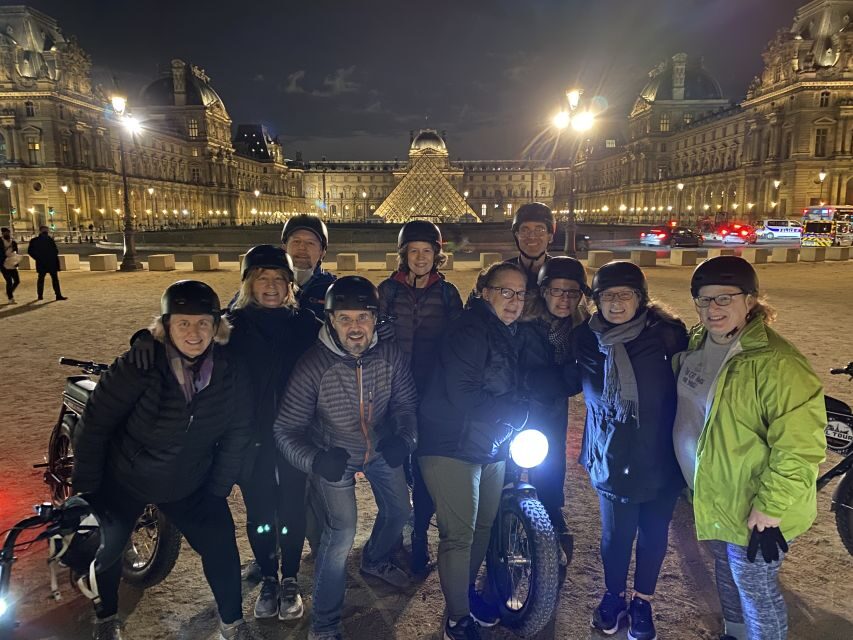
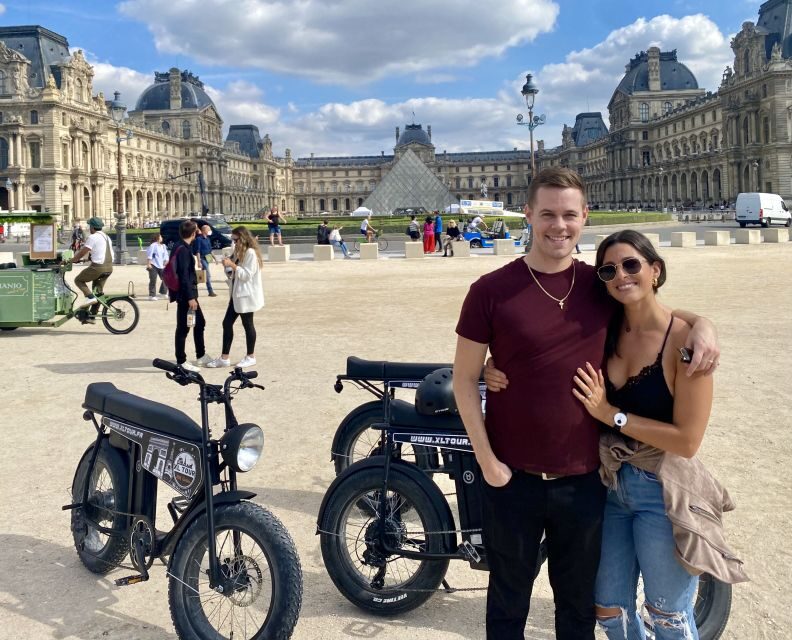
You kick off with a guided sightseeing stretch near the Louvre. The stop is short, but it’s timed well. At night, the Louvre area has breathing room compared with daytime crowds, and you can actually get a sense of the big civic geometry without getting pinned in place.
You’ll pass the Louvre Museum and the Carrousel shopping center, and you’ll get the fun moment of the Mona Lisa mention as you ride by. It’s the kind of playful landmark reference that keeps the tour from feeling like just checkpoints.
A practical note: entry to attractions isn’t included. So you’re seeing the sites from the outside and at the viewing points the route allows. That’s not a compromise here—it’s the whole value of the tour. You buy movement, guide context, and timing under the city’s night lighting.
Tuileries Gardens to the Seine docks: greenery plus water views
Next you glide into the Tuileries Gardens area. The gardens work at night because they soften the bright, formal Paris vibe into something calmer. You’re not just sightseeing buildings—you’re getting a sense of how Paris uses green space inside the city core.
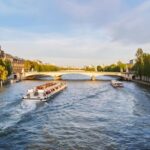
Then the route picks up the river energy. You’ll be able to watch ships pass by the docks, which is one of those quietly satisfying Paris moments. This is the kind of detail that’s easy to miss if you only walk from monument to monument.
The short guided moments here are useful. You’ll get quick context while the e-bike keeps you comfortable and moving. With only 2 hours total, that timing is everything.
You can also read our reviews of more evening experiences in Paris


Pont Neuf and Pont des Arts: bridges that tell the story
When the tour crosses the Seine, it stops being just about landmarks and starts being about how the city connects itself. Pont Neuf is the kind of bridge you remember because it looks historic even when you can’t immediately name every feature. The guide will point out why it matters.
Then you go to Pont des Arts, where the fun symbolic stop is the love locks on the Arts Bridge. Even if you’ve seen photos before, seeing that detail at night can feel different—more personal, less like a meme, more like a small human tradition happening under the streetlights.
The quick stop at Conciergerie
You’ll also pass by Conciergerie with a short guided stop. Even without entering anything, you get an anchor point for Paris’s layered past. The benefit of a guide here is simple: you don’t have to guess what you’re looking at.
Sainte-Chapelle and Notre-Dame: Gothic details without the entry pressure
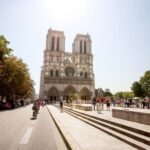
If there’s a reason to do this at night, it’s that the Gothic areas can look sharper when the background gets darker. You’ll see Saint Chapelle with its Gothic architecture and a standout feature: the rose window. That’s a big enough visual cue that even a brief stop feels meaningful.
Then comes Notre-Dame Cathedral. The tour is designed to give you the wow factor while staying focused on what you can see from the route. Entry isn’t included, so you’re not spending your night fighting schedules or lines. You’re getting the architecture and the vibe—plus guide context to help you read what you’re seeing.
This is also where the tour’s “entertaining anecdotes” style can shine. Short explanations during photo stops keep you engaged without turning the evening into a lecture.
Institut de France and the river loop: why small stops matter
You’ll visit Institut de France briefly. The point of this kind of stop on a 2-hour tour is to break the rhythm. Instead of only focusing on headline monuments, you get to feel how Paris stacks institutions, neighborhoods, and river crossings close together.
And once you’re in that flow, the love-locks stop on the Arts Bridge feels less like a random photo moment and more like a theme: people marking places, building meaning around the city’s most visible settings.
Musée d’Orsay at night: from train station to art space
You’ll ride by Musée d’Orsay, and the guide highlights that it was once a train station. That detail changes how you perceive the building. At night, seeing the structure from the bike route helps you remember that this wasn’t always museum life—it was a major transport hub first.
You’ll also pass the Orsay Docks, which adds a touch of industrial-river texture. Paris can feel elegant on the surface, but the Seine area also reminds you the city is practical and working, not just staged.
Big avenues and “great vs. small palace” contrast
Then you swing toward the grand avenue zone. You’ll pass Grand Palais and Petit Palais, with the tour calling out a fun contrast: the connection between the big and the small palace experience. You get a modern way to frame what you’re seeing—less “two random buildings,” more “a deliberate visual pairing.”
You’ll also catch Palais de Tokyo for a taste of modern art. Again, it’s about contrast. Paris nights aren’t only about one era. You’re moving from Gothic to beaux-arts-ish grandeur to modern culture in a compact route.
Eiffel Tower at the right angle: Trocadéro glow and Chaillot scale
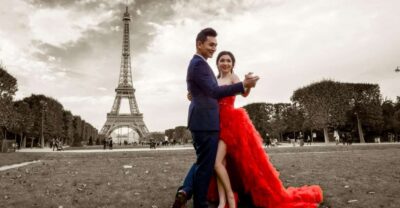
This is where the tour earns its name. You’ll get up close to the Eiffel Tower, including the key viewpoint across from Trocadéro Gardens. In moonlight and streetlight, the tower’s shape can look more delicate than it does in daytime tourist glare.
You’ll also see the immensity of Palais de Chaillot, with both wings in view. That’s one of those architectural lessons you don’t realize you need until you’re actually standing (or riding) in the right spot. From here, the Eiffel Tower isn’t a single photo moment—it’s framed by a whole architectural stage.
Photo help is part of the value
One of the standout themes in the feedback connected to this tour is guide support for photos—taking pictures at major stops, not just telling you where to stand. Tomas, in particular, is credited for taking photos of riders at the iconic locations and even sharing them afterward. That’s a real convenience if you’re traveling as a couple or solo and you don’t want to hand your phone to strangers every 300 meters.
From Pont Alexandre III to Place de la Concorde: finishing on classics
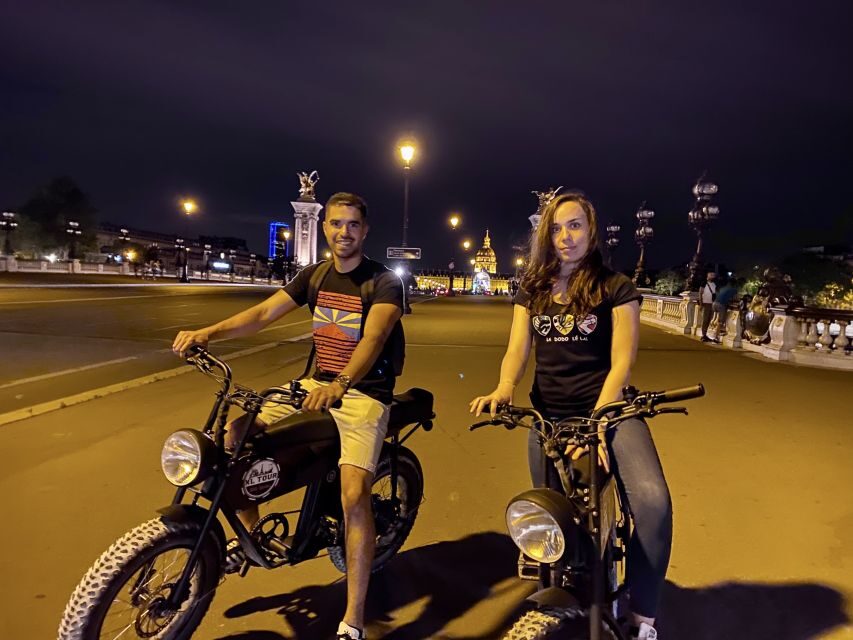
As you continue, you’ll cross Pont Alexandre III, known for its arched look. This bridge is dramatic in daylight, but it also holds up at night because its forms catch the lighting. From there, you ride through major squares and areas that define central Paris.
You’ll appreciate the use of space at Vendôme and Concorde square, and you’ll pass through Place de la Concorde, then Place Vendôme on the way back toward your starting neighborhood.
One more meaningful cultural stop comes before the final stretch: Liberty Flame in Lady Diana square. The tour frames it as the connection between the United States and France. On a night ride, quick symbolic stops can feel surprisingly impactful, because the meaning lands faster when you’re not drowning in crowds.
You’ll also stop at Les Invalides briefly. It’s one of those places that anchors the skyline. Even if you’re not entering, the exterior view has that “Paris, you again” feeling that makes the tour feel complete.
Price and value: what $116 buys you in 2 hours
At $116 per person for 2 hours, you’re paying for three things:
- A live guide who keeps the route moving and explains what you’re seeing
- An electric bike plus helmet and equipment
- A night-optimized itinerary that focuses on big sights without entry fees
If you tried to replicate this solo, you’d still need to rent an e-bike, map the bike-friendly route, and handle the logistics of stopping, posing, and finding good angles. Entry is not included here, so you’re not double-paying for sights you’d rather spend time cycling toward.
For many people, the value is that you’re getting a structured night route that avoids decision fatigue. You show up, get fitted, and the evening runs like a plan.
Languages and how to follow along
Your live guide speaks French, English, Portuguese, and Spanish. That’s a nice spread if you’re traveling as a group with mixed languages.
There’s also an audio guide included with additional languages: Dutch, Japanese, German, Hebrew, Arabic, Chinese, and Italian. That flexibility helps if your group prefers audio support or if you want extra detail at stops where you’re lingering for photos.
Who should book this, and who should skip it
This is a great fit if you:
- Want major Paris landmarks in a short timeframe
- Prefer moving by bike rather than standing in lines
- Enjoy night photography and getting views you can’t easily manage on foot
- Want help handling e-bikes and don’t want to figure it out alone
It’s not a great fit if you:
- Are pregnant
- Have mobility impairments or use a wheelchair (not suitable for wheelchair users)
- Are under 155 cm height requirement for adults to ride
- Want a slow, stroll-only pace
Practical tips so your night ride feels smooth
Here’s how to make the ride work for you:
- Wear closed, comfy shoes. You’re on sidewalks and bike paths, and your feet should feel stable.
- Bring a layer. The tour runs rain or shine, and Paris nights can cool down fast.
- Expect short guided stops, not long museum-style experiences. That’s the deal.
- Use the photo moments. If the guide is taking pictures for the group, it’s smart to be ready at the curb/spot when you stop.
- If you’re new to e-bikes, treat the first few minutes as practice time. The safety briefing and test ride exist for a reason.
Should you book it?
If your goal is to see Eiffel Tower and Notre-Dame along with a stack of central Paris highlights in one compact night plan, I think this tour is a strong yes. The combination of comfortable e-bikes, a route that leans on bike lanes and sidewalks, and a guide who keeps things lively makes it a practical way to get a real-feeling Paris night.
Book it especially if:
- You want maximum sight coverage in 2 hours
- You like guided context more than self-guided wandering
- You’re happy to ride continuously and walk only briefly at stops
Skip it if you need accessibility accommodations beyond what a standard bike route can offer, or if you’re looking for mostly inside-the-building museum time. For that kind of trip, you’d plan a different day.
FAQ
How long is the Eiffel Tower and Notre-Dame night e-bike tour?
The tour duration is 2 hours.
Where do I meet the guide?
Meet at the technical area inside the car park at 10 Rue de la Paix. If you don’t see the guide at first, they will come upstairs once you arrive.
Is the price $116 per person, and what’s included?
The price listed is $116 per person. What’s included: a live guide, an electric bike, and a helmet and equipment. Entry to attractions is not included.
What languages are offered?
The live guide is available in French, English, Portuguese, and Spanish. An audio guide is included in Dutch, Japanese, German, Hebrew, Arabic, Chinese, and Italian.
Do I need to pay for attraction tickets?
No. Entry to attractions is not included, so you’d need tickets separately if you want to go inside anything.
Does the tour run in bad weather?
Yes. The tour runs rain or shine.
What should I wear or bring?
Wear comfortable clothes and comfortable shoes. High heels, sandals/flip-flops, and open-toed shoes are not allowed.
Is there a height requirement?
Yes. Adults need to be at least 155 centimeters (5’01) tall to ride.
Is the tour wheelchair accessible?
No. It is not suitable for wheelchair users, and it’s also not suitable for pregnant women or people with mobility impairments.