REVIEW · PARIS
Paris Guided Bike Tour
Book on GetYourGuide →Operated by ParisCityVision · Bookable on GetYourGuide
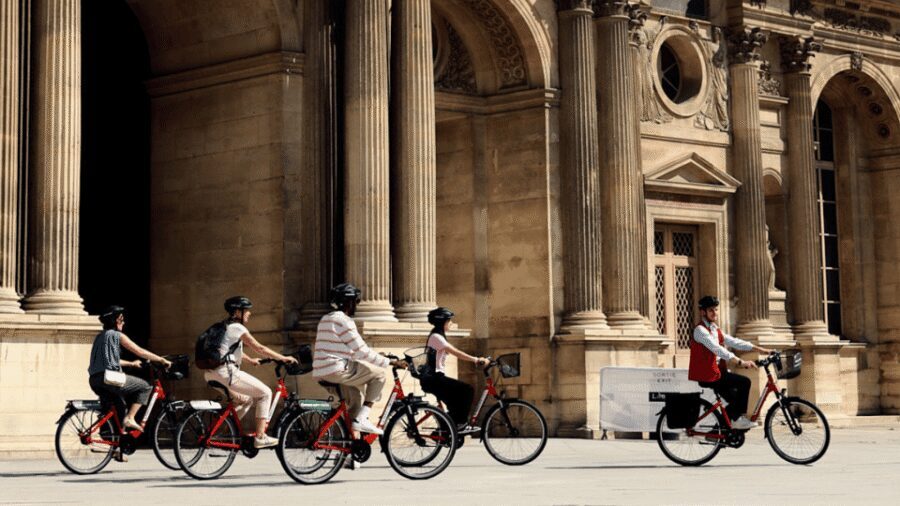
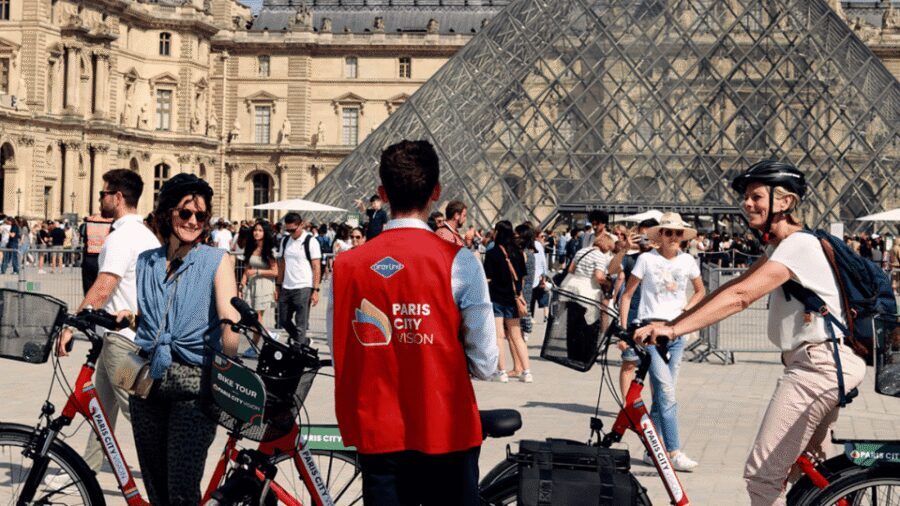
Pedaling Paris feels like cheating. In just 3 hours, you’ll ride past the big postcard monuments and then cut into calmer, almost neighborhood-feeling streets, with a guide who keeps things moving and tells the stories that make the city click. Two things I really like: the small group size (up to 12) and the flexible stop rhythm, so you’re not stuck waiting while others shop for souvenirs.
You also start in a great spot near the Louvre, and you end close to where you started, which makes it easy to keep the rest of your day simple. One thing to consider: monument entrances aren’t included, so plan your expectations around seeing the sights from the bike and photo stops rather than a full inside visit.
If you’re comfortable riding in city traffic (at least at a basic level), this is a fun way to get bearings fast. The guide will chat at your pace, answer questions, and even share culinary directions like where to find a top croissant or a good artisan ice cream.
In This Review
- Key highlights worth showing up for
- Why this bike route works for first-time Paris planning
- Where you meet and how the 3-hour plan stays organized
- Palais-Royal to the Louvre: starting with elegance and orientation
- Louvre bridges and Île de la Cité: Pont Neuf to Notre-Dame viewpoints
- Latin Quarter flow: Sorbonne, Saint-Michel, and a stop for sweets ideas
- Through Les Invalides and along the Seine: classic views without the marathon
- Eiffel to Arc de Triomphe: Pont d’Alma, then a big visual corridor
- Concorde, Saint-Germain-des-Prés, and Comédie-Française: finishing with style
- Price, pace, and what you should bring to make it work
- Who this tour suits best (and who should skip it)
- Should you book this ParisCityVision bike tour?
- FAQ
- How long is the Paris guided bike tour?
- Where does the tour start?
- What languages are available with the live guide?
- What sights are included on the route?
- Are entrance tickets to monuments included?
- Is tasting included during the tour?
- Do I need a certain cycling ability?
- What is the minimum age for the tour?
- Is free cancellation available?
Key highlights worth showing up for
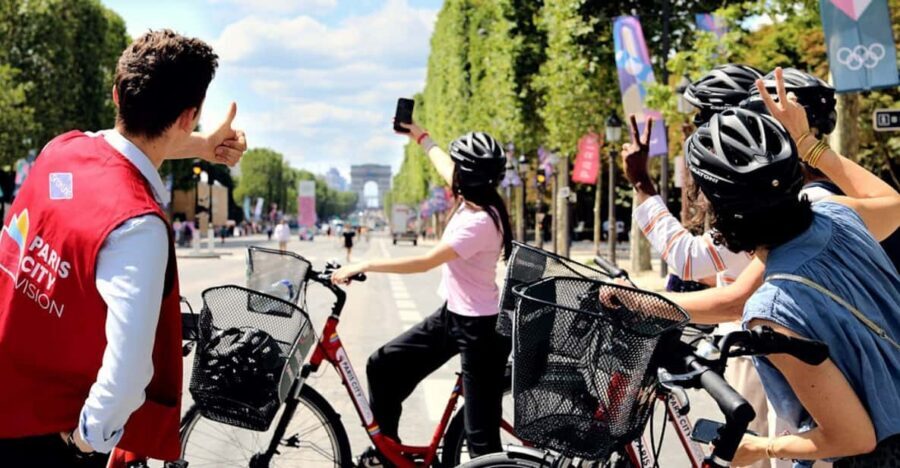
- Small groups (max 12) keep the ride calmer and the guide easier to hear
- Flexibility on stops lets the tempo match your group
- Big monument loop plus confidential Paris streets for a more local feel
- Guide-led culture and anecdotes, including filming locations and Parisian habits
- Photo-friendly planning, with regular chances to pull in safely and shoot
- Culinary tips geared toward sweets (croissants and ice cream ideas)
Why this bike route works for first-time Paris planning
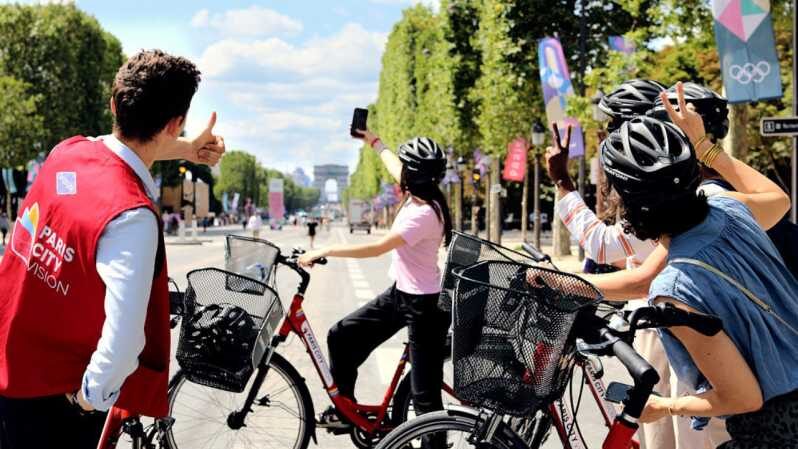
A bike tour is one of the fastest ways to understand how Paris is laid out without doing the mental gymnastics of trains, buses, and walking that never feels like it ends. This route is built around a satisfying loop: you hit the headline sites, then you slow down into streets where Paris stops feeling like a museum and starts feeling like a living city.
What makes this particular tour practical is the pacing. The guide is dedicated to the group, including deciding when to pause and how often, based on how everyone’s doing. That matters because Paris is not flat and straight, and the difference between a stressful ride and a fun one is usually the stop rhythm.
Also, the group limit is a big deal for quality. With a maximum of 12 people, the guide can actually look after riders and keep the ride from turning into a line of bumping handlebars. And based on feedback, guides like Andrea and Hugo are strong at mixing facts with something lighter, so you’re not just being recited at while you pedal.
One more reality check. You’ll see a lot, but you’re also moving. If you want hands-on museum time or you expect long inside visits, you’ll need to pair this with other plans later in your trip.
You can also read our reviews of more cycling tours in Paris

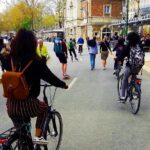
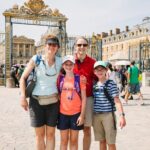
Where you meet and how the 3-hour plan stays organized
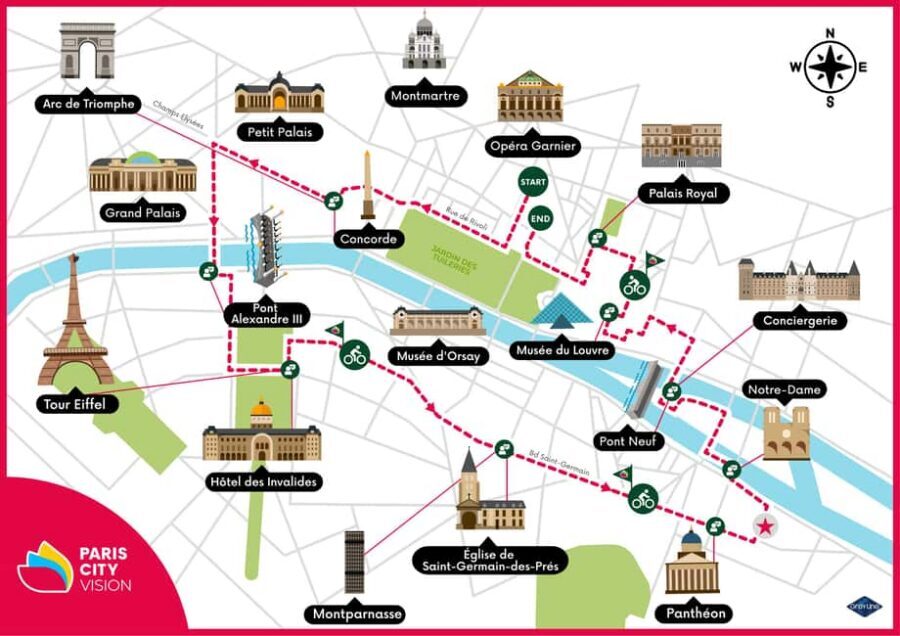
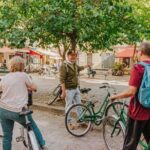
You meet at Paris City Vision, 3 Place des Pyramides, 75001 Paris. Arrive about 15 minutes early so you can get set up without rushing. The tour runs for 3 hours, and the timing is designed around an efficient ride, not a slow sightseeing crawl.
Language options are English, Spanish, and French, which is helpful if you’re traveling with family or friends who prefer to ask questions in their comfort language. The guide also stays ready to answer anything you ask, from history questions to the practical stuff like what you’re seeing and why it matters.
Here’s how I think about the value: you pay for the guide’s route planning, group management, and the stories you get along the way. You also benefit from seeing filming locations and the kinds of Parisian habits that usually only show up if someone local points them out.
What’s not included is monument entry. So you’re paying for a guided ride and interpretation, not for ticketed access. That choice keeps the schedule tight and helps you fit this tour into almost any day.
Palais-Royal to the Louvre: starting with elegance and orientation
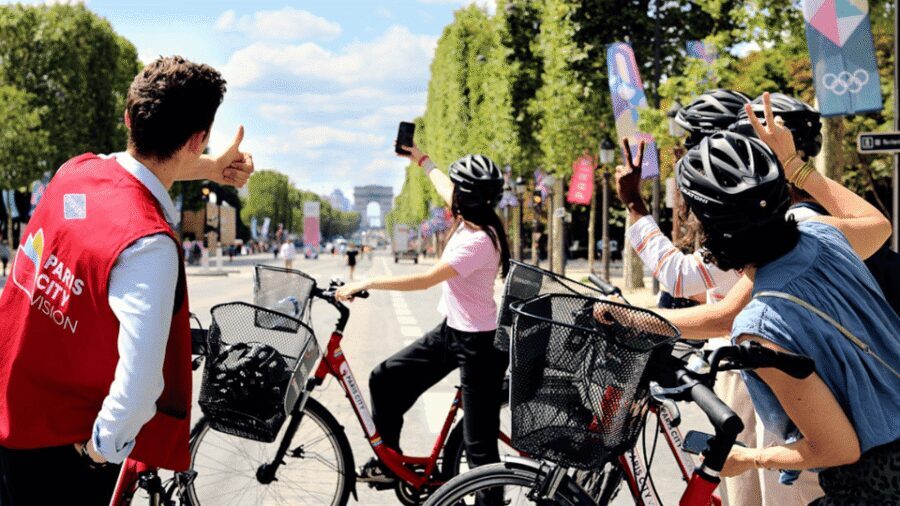
The tour begins in the Palais-Royal area. This is a smart opening choice because it helps you calibrate your sense of scale and style early on. You’ll glide through a part of Paris that feels polished and intimate at the same time, setting the tone for what’s next.
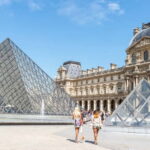
From there, you head to the Louvre Museum area, which is a natural magnet for first-time visitors but also a place where it’s easy to get overwhelmed. From the bike, you’re not trapped on a single sidewalk for hours. You get context and direction: where things sit relative to the river, how the bridges connect neighborhoods, and what major monuments you’re aiming at as the route unfolds.
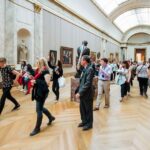
Even though the Louvre itself isn’t part of a ticketed inside visit, the exterior viewpoints and the surrounding streets give you a quick mental map. If you plan to return to the museum later, this ride helps you understand where to focus and what to expect.
In the feedback, one theme stands out: the oral content stays focused on what interests people, with anecdotes rather than lectures. That’s exactly what you want when you’re outside, moving, and taking photos every few minutes.
Louvre bridges and Île de la Cité: Pont Neuf to Notre-Dame viewpoints
From the Louvre zone, you roll toward Pont Neuf, one of the classic river-crossing viewpoints that helps you understand how the Seine shapes Paris life. Bridges in Paris aren’t just practical links. They’re also boundaries between different layers of the city’s personality.
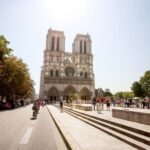
Next come Place Dauphine and then Cathédrale Notre-Dame de Paris and Île de la Cité. This is the part of the route that gives the city its dramatic spine. You don’t need to be a cathedral expert to feel why this island matters, because the area forces you to slow down visually even when you’re still pedaling.
From a practical standpoint, this segment is also a nice reset after busy central blocks. There’s a rhythm to it: you pass, you look, you listen, then you’re back in motion. If you like filming-location facts, this is a good time to ask the guide what scenes were shot here and why these angles show up on screen.
You’ll also touch Île de la Cité itself, so you get more than one perspective. That helps avoid the all-too-common problem of seeing one monument from one side and walking away feeling like you missed the real story.
Latin Quarter flow: Sorbonne, Saint-Michel, and a stop for sweets ideas
Then it’s into the Latin Quarter, where the streets feel more lived-in and student-like, even if you’re there as a visitor. You’ll pass the Sorbonne and Fontaine Saint Michel, which are easy landmarks to recognize and fun to photograph because they sit in street-level life rather than high-tourist plazas only.
There’s a stop at Restaurant La Fontaine Saint Michel on the route. Even though tasting isn’t included, the setting gives you a natural moment to regroup and catch your breath. In my book, that’s what good tour design does: it builds small pauses into the flow without turning the day into a long wait.
One of the strongest advertised themes here is sweet-food guidance. The guide shares culinary specialties and can suggest places for the best croissant in Paris or an artisan ice cream. You don’t need the tasting on the tour to benefit from this. Think of it as getting directions for your next snack mission.
This part of the ride also matches the comments you’ll see about the tour feeling almost village-like in certain alleys. That’s the value of mixing big sights with lesser-known streets. You get the famous icons, but you also get the Paris texture that makes the city memorable after the photos are posted.
You can also read our reviews of more guided tours in Paris



Through Les Invalides and along the Seine: classic views without the marathon
After the Latin Quarter segment, the route heads toward Les Invalides. This is a stop that works well on a bike because you can see how it relates to the surrounding river corridor and broader avenues. It also keeps you in that “architectural Paris” mode that’s easy to enjoy even when you’re not stopping for tickets.
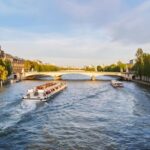
Then you’ll ride along the Quai de la Seine, which is the kind of road Paris does exceptionally well. It’s scenic, but it’s also functional, and biking lets you cover more ground than walking would. You get the waterline perspective and the skyline connections in a way that makes the city feel more connected, not just spotted.
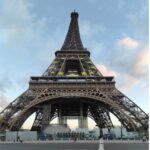
You’ll pass toward the Eiffel Tower area next. This is another iconic target, but getting there by bike makes it different. Instead of arriving at the tower like a destination only, you reach it as part of a growing sequence of views, including bridges and river angles that explain why this spot became a symbol.
Eiffel to Arc de Triomphe: Pont d’Alma, then a big visual corridor
After the Eiffel Tower, you’ll pass Pont d’Alma, another bridge point that gives you one of those “okay, now I get the city” moments. Bridges and crossings are like punctuation marks in Paris. They separate scenes and help you build a mental story as you ride.
Next is Arc de Triomphe de l’Etoile, and you’ll feel why this monument matters as soon as you start seeing the surrounding geometry. It’s a landmark built around the idea of perspective lines, and it looks different depending on where you approach it from.
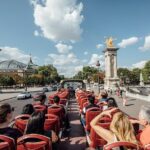
Then the ride continues into Champs-Élysées, with Grand Palais and Petit Palais along the way. This stretch can feel intimidating if you only visit it on foot at peak hours. On a bike with a guide, it becomes a structured tour moment instead of a stress zone.
You also get the benefit of the guide’s “why this place exists” explanations. Even if you don’t care about detailed historical dates, you’ll likely care about the stories behind the design, the people connected to these buildings, and the Paris habits tied to how locals use these spaces.
If you’re sensitive to crowds, the pace and group size help. You’re still in central Paris, but you’re moving through it rather than stuck inside it.
Concorde, Saint-Germain-des-Prés, and Comédie-Française: finishing with style
After Champs-Élysées, you reach Place de la Concorde. This square gives you a wide-angle view and a nice sense of symmetry before the tour turns toward more classic “Left Bank” energy.
Then comes Saint-Germain-des-Prés, a neighborhood that feels slower and more literary in vibe. You’ll also pass La Comédie-Française, which adds culture texture without requiring a ticket. Even from outside, it’s the kind of stop that makes you look up and pay attention.
The tour ends at Musée du Louvre, which is a handy finish. It means you don’t have to figure out a totally new meetup point for your next activity. If you’re planning to hop to another museum, a café, or a walk along the river, ending near the Louvre gives you a lot of options.
The tour’s “photo then go” approach also helps here. You’re not waiting for a late-stage inside visit. Instead, you get the last big impressions, then you’re released back into your own Paris plans.
Price, pace, and what you should bring to make it work
The price is $43 per person for a 3-hour guided bike tour. That can be good value when you factor in the guide’s work: route planning, keeping a group moving, and providing historical and cultural explanations that are actually tied to what you’re seeing.
It also fits well for travelers who want highlights without sacrificing the rest of their day. You can use this as a first-day orientation tool. Or you can place it later to connect the dots after you’ve already wandered a few neighborhoods.
Pace-wise, the tour is designed for “optimal pedaling time” and includes flexibility on stop frequency. That’s important because Paris isn’t a race track. If you ride at an uncomfortable pace, you’ll spend the tour thinking about your legs instead of what’s around you.
So what should you bring? Practical stuff: weather-appropriate clothing and a bike-ready mindset. Check the forecast before you go and dress for wind and changing light. If the day is cold, add layers. If it’s hot, keep water in your plan even though tasting isn’t included.
Cycling ability matters. This tour is for everyone, but it requires a certain level of comfort. It’s not suitable for wheelchair users. And the minimum age is 13. Children’s bikes are suitable for kids aged 13 to 17, or about 130 cm tall, with the required cycling ability.
One more value tip: since entrances aren’t included, decide in advance what you want to do after the tour. The Louvre is a finish point, so if you’re planning to see it inside, make sure you’ll have time later.
Who this tour suits best (and who should skip it)
This is a strong match if you want a structured way to see Paris’ top monuments without losing an entire day to walking. It’s also ideal if you care about stories, filming locations, and the human side of the city, not just the postcard facts.
It’s also a good fit for couples and small groups who can handle bike riding and want a guide to keep them on track. The max group size and the stop flexibility are exactly what helps a bike tour feel friendly instead of chaotic.
You should think twice if you’re expecting long indoor visits. Since monument entrances aren’t included, you’ll get views, context, and photo opportunities rather than full ticketed experiences at each stop.
And if your mobility needs mean a bike tour won’t work, this isn’t designed for wheelchair users. That’s a hard limitation, not a convenience issue.
Should you book this ParisCityVision bike tour?
I’d book it if you want a 3-hour hit of Paris that combines big monuments with quieter streets and a guide who talks about things that make sense on the road. The guide quality looks consistent, with Andrea and Hugo showing up in feedback as people who mix facts and fun and keep the pace calm.
I’d skip it if you’re looking for monument ticket access or a museum-heavy itinerary. This tour is built to keep you moving and seeing a lot from the outside, not to replace a full day of indoor sightseeing.
If you’re deciding, use this rule: if you want orientation plus storytelling at bike speed, this is a solid fit for your schedule.
FAQ
How long is the Paris guided bike tour?
The tour lasts 3 hours.
Where does the tour start?
The departure point is Paris City Vision at 3 Place des Pyramides, 75001 Paris.
What languages are available with the live guide?
The live tour guide is available in English, Spanish, and French.
What sights are included on the route?
The itinerary includes stops and passes such as the Louvre, Pont Neuf, Notre-Dame and Île de la Cité, the Latin Quarter (including Sorbonne and Fontaine Saint Michel), Les Invalides, the Eiffel Tower, Arc de Triomphe, Champs-Élysées, Grand Palais, Petit Palais, Place de la Concorde, Saint-Germain-des-Prés, and La Comédie-Française.
Are entrance tickets to monuments included?
No. The tour does not include entrance to the monuments.
Is tasting included during the tour?
No. Tasting is not included.
Do I need a certain cycling ability?
Yes. A certain level of cycling ability is required, and the tour is not suitable for wheelchair users.
What is the minimum age for the tour?
The minimum age is 13.
Is free cancellation available?
Yes. You can cancel up to 24 hours in advance for a full refund.