REVIEW · PARIS
Paris: Latin Quarter and Saint Germain Guided Walking Tour
Book on GetYourGuide →Operated by Black Cat Tours Paris · Bookable on GetYourGuide
Paris turns political on its left bank. This guided walk through the Latin Quarter and Saint-Germain-des-Prés turns famous landmarks into human stories, from writers and artists to the French Revolution. I especially like how the guide’s narration connects what you’re seeing to why it mattered, with English-speaking guides praised for patient, story-first pacing, including Johnny, Ewan, and Laleh.
I also like the route that strings together major sights without turning into a checklist: you’ll work through the 6th and 5th arrondissements, pause in the Luxembourg Gardens, and keep moving toward the world-famous Notre Dame. At the same time, you get a realistic mix of big moments and quieter streets where Paris feels lived-in.
One consideration: this is a real walking tour. Sidewalks and older streets can be tough if you have mobility limits, and the activity notes it is not suitable for wheelchair users (and even sets an age limit for people over 95).
In This Review
- Key things you’ll notice on this Left Bank walk
- Where the tour starts: Saint-Germain-des-Prés, Paris’ old-church mood
- The 6th arrondissement segment: Saint-Germain’s cafés, artists, and talk of ideas
- 5th arrondissement time: the Latin Quarter’s student streets and revolution energy
- Luxembourg Gardens: a calm reset with political history in the background
- Pantheon and Sorbonne: big institutions you can see, even if entry isn’t included
- Bookish and artistic Paris stops: Delacroix, Shakespeare and Company-style lore, and Ernest Hemingway connections
- Ending at Notre Dame: finishing with the skyline’s emotional punch
- Price, pace, and who this tour fits best
- Should you book this guided Latin Quarter and Saint-Germain walk?
- FAQ
- How long is the Paris Latin Quarter and Saint Germain guided walking tour?
- Where do I meet the guide?
- What does the tour include in terms of major landmarks?
- Is Notre Dame entered during the tour?
- Is the Pantheon entrance included?
- What language is the guide?
- What should I bring, and what is not allowed?
- Is this tour wheelchair accessible?
Key things you’ll notice on this Left Bank walk
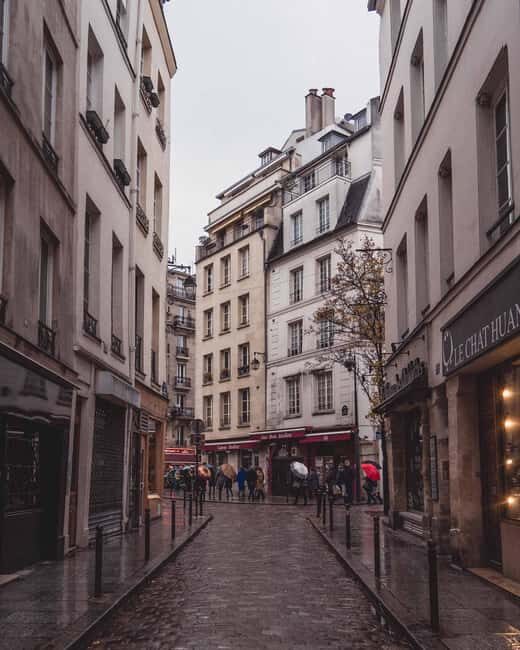
- Saint-Germain-des-Prés to Notre Dame: start at the oldest-church energy, end at Paris’ most iconic cathedral.
- Luxembourg Gardens stop: a breather built into the route instead of a nonstop slog.
- Pantheon is outside only: you’ll see it from the outside, with entry left to you if you want more.
- Artists and writers woven into the streets: you’ll pass places tied to famous creative lives (like Delacroix’s studio, plus bookish and literary stops).
- Revolution stories on the route: history is explained in context, not just recited.
- Guide styles matter: you may be with guides described as relaxed, funny, and attentive, like Johnny, Ewan, or Laleh.
Where the tour starts: Saint-Germain-des-Prés, Paris’ old-church mood

You’ll meet outside the door of the Church of Saint-Germain-des-Prés, in the 6th arrondissement. It’s a strong way to begin because the area already feels like the “old Paris” people imagine: stone, narrow streets, and a steady rhythm of locals going about their day.
From there, the tour doesn’t treat architecture like a museum object. The guide uses the neighborhood’s layout to explain what changed over time—who lived here, what ideas spread here, and how the Left Bank became a center for intellectual life. It’s a good match if you like your travel with stories you can picture, not just dates you memorize.
Practical tip: plan on comfortable shoes from the first minute. Even a “short” walk through these arrondissements adds up quickly once you factor in stops and turns.
You can also read our reviews of more walking tours in Paris



The 6th arrondissement segment: Saint-Germain’s cafés, artists, and talk of ideas
The first half of the tour covers about 1.5 hours in the 6th arrondissement. This is the part where Saint-Germain starts to feel like a stage set for creative Paris. You’ll move through streets associated with famous artists and writers, and the guide ties those people to the buildings and corners you can actually see.
One detail that stands out from guide narratives: the storytelling style is often described as relaxed and engaging, with humor and patient pacing. Guides like Johnny and Ewan are called out for making the time pass fast without rushing the group.
You may also get small, vivid references that bring the neighborhood’s culture into focus, like creative studios and the kind of places where artists and thinkers would have crossed paths. In other words, you’re not just walking past landmarks—you’re learning how the Left Bank’s personality formed.
If you’re the type who likes to connect art to place, this is one of the best zones for that. The streets feel made for observation: shop fronts, older facades, and little squares where conversation seems to echo.
5th arrondissement time: the Latin Quarter’s student streets and revolution energy

Next comes the 5th arrondissement for another 1.5 hours. This is where the Latin Quarter identity really clicks. The area is known for learning and debate, and the tour leans into that with history tied to everyday sights.
You’ll hear about how the French Revolution shaped the city and the way people thought about power, institutions, and public life. The guide’s job here is to make those big events understandable at street level. You’ll likely notice how the neighborhood’s landmarks and institutions connect to that story—who held influence, who challenged it, and how the city’s map of ideas formed.
The Latin Quarter also helps you see Paris as more than monuments. It’s a working neighborhood with students, commuters, and everyday life. That makes the history feel grounded. Even when you’re near famous names, the streets keep their realism.
Small watch-out: this segment involves more turns and stop-and-go moments. If you prefer a steady walking pace with fewer pauses, tell the guide what you need. Many guides are used to adjusting to different group energy levels.
Luxembourg Gardens: a calm reset with political history in the background
Midway through the day, you’ll cut through the Luxembourg Gardens. This is an important stop for one simple reason: it gives your legs a breather and gives your brain a chance to reset after the dense streets of the Latin Quarter.
It also fits the tour theme. Gardens here aren’t just pretty scenery. The guide connects the space to how power, culture, and education played out in the city. You’re in a green pocket, but the conversation keeps moving toward ideas—how Paris shaped public life.
This is also the kind of stop where you can take photos without feeling like you’re standing in a rush. You’ll walk into the gardens, pause long enough to absorb the setting, then keep moving toward major institutions.
Practical tip: bring water. Even in pleasant weather, 3 hours of stops and walking adds up.
Pantheon and Sorbonne: big institutions you can see, even if entry isn’t included
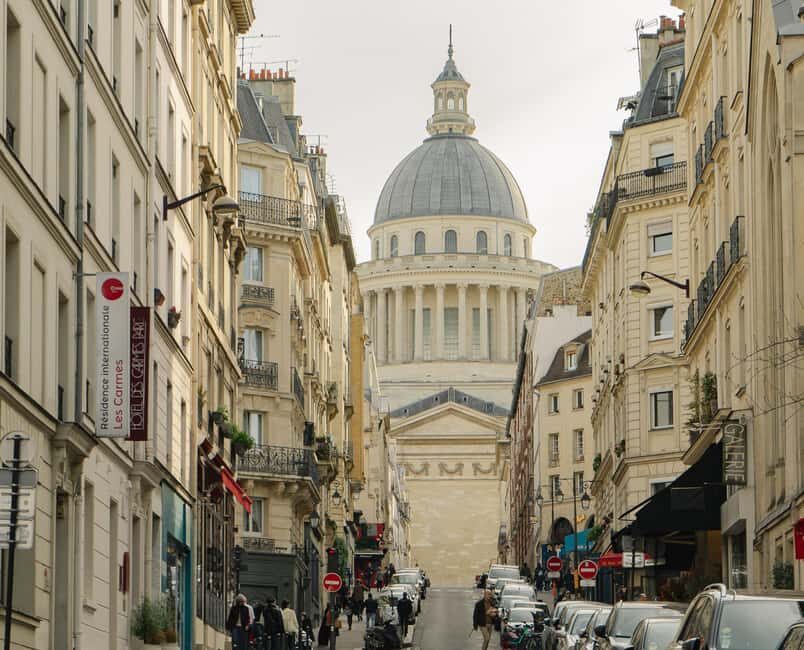
As you continue, the route takes you toward the Pantheon and the Sorbonne area. Here’s the key detail: the Pantheon visit is from outside. Entry is possible, but it’s not included in the tour price.
That matters because the Pantheon is one of those places where interior views can steal the show. If you care about sculptures, views from inside, or just want to go deeper, you’ll need to add it separately. The trade-off is that the guided experience keeps you moving and focused on explanation along the street.
Even from the outside, the Pantheon acts like a visual anchor. The building signals the kind of institution the Left Bank was building—and the guide uses it to frame the broader story: who the city honors, what it remembers, and why.
Then you’ll head along toward the Sorbonne. This is another “read the city with your eyes” moment. You’re surrounded by the signs of learning and tradition, and the guide helps you connect what you’re seeing to the neighborhood’s reputation as a place where ideas traveled fast.
If you’re short on time, seeing these landmarks from the outside still works well because the guide puts them into context. You get meaning, not just photos.
You can also read our reviews of more guided tours in Paris





Bookish and artistic Paris stops: Delacroix, Shakespeare and Company-style lore, and Ernest Hemingway connections
A walking tour like this lives or dies by its story choices. This one leans hard into creative personalities. Depending on your guide’s route and timing, you may pass by spots connected to major names and creative culture.
For example, you might hear about the studio of the Romantic painter Eugène Delacroix, and you may also see references to bookish landmarks, including the original location of Shakespeare and Company. Ernest Hemingway also comes up in the kind of place-based storytelling this tour is known for.
You’ll also encounter classic Paris theater energy and historic café-style atmosphere. One example that shows up in guide stories: Le Procope. You might even catch references to squares that pop up in pop culture, including a square associated with Emily in Paris.
Why I like these stops: they give you a bridge between Paris as history and Paris as a living influence. It’s not just what happened; it’s who later turned this neighborhood into a source of inspiration.
One practical note: some landmarks can be affected by crowds or events. If the Pantheon or a major interior space is closed during your dates, the exterior viewing and the walking story still do the heavy lifting.
Ending at Notre Dame: finishing with the skyline’s emotional punch
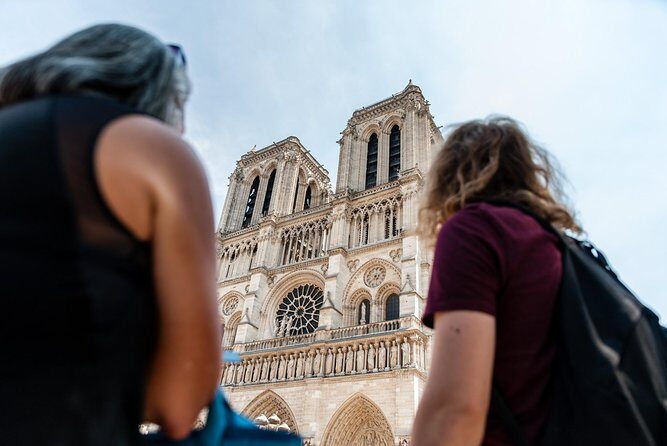
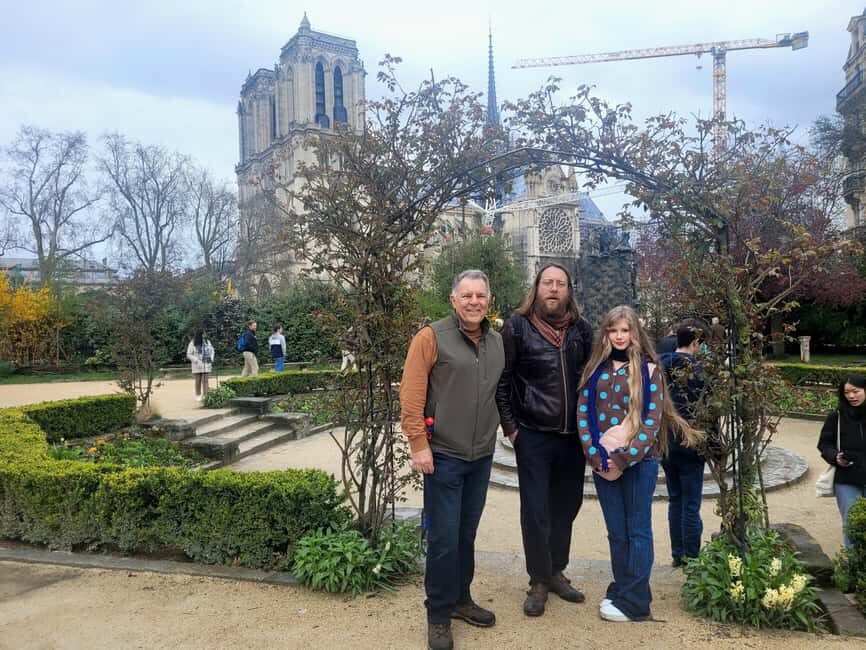
The tour ends near Notre Dame Cathedral. That’s a smart ending because it feels like a payoff: the route starts in an older church setting, and it finishes at the most recognizable Gothic symbol in the city.
Even if you’re not going inside, Notre Dame makes a strong final moment because the area around it pulls everything together—old Paris street life, the power of institutions, and the city’s habit of turning belief into architecture.
If you want to keep the day going after the tour, this is one of the best locations to do it. You can wander at your own pace, grab a meal, or simply keep taking photos from different angles.
Price, pace, and who this tour fits best
The price is $41 per person for about 3 hours with a live English guide. For that length, you’re not just paying for “walking time.” You’re paying for someone to connect sights to the story of the Left Bank—especially the French Revolution thread and the artist-and-writer thread that brings these neighborhoods to life.
Pace: expect a comfortable walking rhythm with stops for explanations and photos. Guides are often described as attentive and able to adjust the pace to the group.
Best fit:
- You want a first real look at the Left Bank without doing it all on your own.
- You like guided context for places like the Pantheon and Sorbonne, even when entry isn’t included.
- You enjoy street-level history: artists, writers, institutions, and ideas.
Not ideal for:
- People who need wheelchair-friendly surfaces at every step. The tour notes it is not suitable for wheelchair users and people with mobility impairments, even though one part of the activity description says wheelchair accessible. In situations like that, I’d treat the safest assumption as: check with the provider before booking.
- People over 95, since the activity lists an age limit.
Should you book this guided Latin Quarter and Saint-Germain walk?
Book it if you want a 3-hour hit of classic Left Bank Paris with clear storytelling and a route that ends at Notre Dame. It’s especially worth it if you’d rather learn the why behind the sights—French Revolution context, creative personalities, and the role of major institutions—than just collect photos.
Skip it (or ask for help tailoring it) if your mobility is limited or you need a fully smooth, minimal-walking experience. Also, if you feel strongly about Pantheon interior views, plan an add-on elsewhere, since the tour is set for outside viewing only.
If your goal is to get your bearings fast and leave with a mental map of how Saint-Germain and the Latin Quarter became what they are, this is a solid way to do it.
FAQ
How long is the Paris Latin Quarter and Saint Germain guided walking tour?
It lasts 3 hours.
Where do I meet the guide?
You meet outside the door of the Church of Saint-Germain-des-Prés.
What does the tour include in terms of major landmarks?
You’ll see stops including the Luxembourg Gardens, the Pantheon (from outside), and the Sorbonne. The tour also ends near Notre Dame Cathedral.
Is Notre Dame entered during the tour?
The tour ends near Notre Dame Cathedral, but the provided information does not specify cathedral entry.
Is the Pantheon entrance included?
Pantheon entry is possible, but it is not included in the tour price. The tour focuses on seeing it from outside.
What language is the guide?
The tour is guided in English.
What should I bring, and what is not allowed?
Bring comfortable shoes, a camera, water, and weather-appropriate clothing. Smoking is not allowed.
Is this tour wheelchair accessible?
One part of the activity info says wheelchair accessible, but it also states it is not suitable for wheelchair users and people with mobility impairments. It’s best to check with the provider before booking.