REVIEW · PARIS
Paris: Le Marais Highlights Guided Small Group Walking Tour
Book on GetYourGuide →Operated by Paris Tours Experiences · Bookable on GetYourGuide
Old Paris still walks at human speed. This Le Marais small-group tour keeps the neighborhood’s medieval feel intact, since the Marais escaped the big Haussmann rebuilds that reshaped much of Paris. You start at Place des Vosges and move through cobbled lanes, mansions, and standout churches tied to centuries of change, with a thoughtful stop at the Holocaust memorial. I love the small group (9 max) because it stays conversational, and I love the time at Saint-Paul Church, which is one of the most meaningful stops on the route.
Wear shoes. The streets are old, the walk is real, and the tour is not suitable for people with mobility impairments. It also runs rain or shine, so you’ll want warm layers and a plan for getting comfortable while you’re on your feet for about 2¼ hours.
In This Review
- Key highlights you’ll actually feel on the walk
- Why the Marais still feels different from the rest of Paris
- Meeting at Place des Vosges (and why it’s a smart start)
- Place des Vosges: the square that sets the tone
- Hôtel de Sully: a 17th-century mansion stop that teaches you how to look
- Saint-Paul Church: where the walking turns meaningful
- Philippe Auguste’s wall: medieval Paris you can still touch
- Private mansions and royal echoes: the Marais behind the postcards
- Rue des Rosiers: Jewish quarter energy and a chance to shop
- Saint Gervais Church: another pause from the narrow streets
- The Holocaust memorial stop: history handled with care
- Ending at Place de l’Hôtel de Ville: you finish with Paris momentum
- How the pace works (and why small groups are worth it)
- Price and value: is $58 worth it?
- Who should book this Marais walk
- Practical tips before you go
- Should you book the Paris Le Marais Highlights guided small-group tour?
- FAQ
- How long is the Paris Le Marais Highlights guided small group walking tour?
- What does the tour cost?
- Is the tour in English?
- Where do I meet the guide?
- What is included in the tour?
- Are food and drinks included?
- Does the tour run in bad weather?
- Is it suitable for kids or strollers?
- Is the tour suitable for people with mobility impairments?
Key highlights you’ll actually feel on the walk
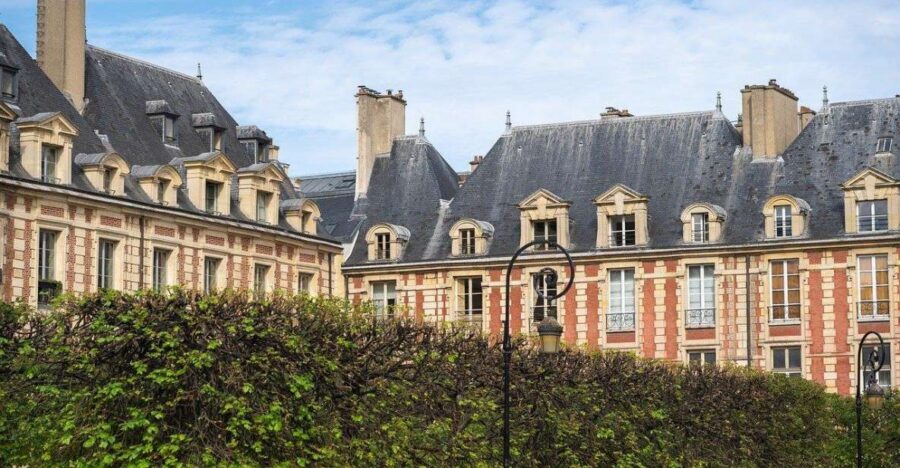
- Place des Vosges first: a calm, green starting point that makes the rest of the maze easier to navigate
- Saint-Paul Church visit: a guided look at a church with centuries behind it
- Hôtel de Sully photo stop + context: 17th-century grandeur without turning it into a museum day
- Medieval Paris on Philippe Auguste’s wall: you’ll see what’s left of the city’s earlier fortifications
- Rue des Rosiers time for shopping: a short, practical pause in the Jewish quarter atmosphere
- Holocaust memorial stop: history with respect, before the tour ends near Hôtel de Ville
Why the Marais still feels different from the rest of Paris
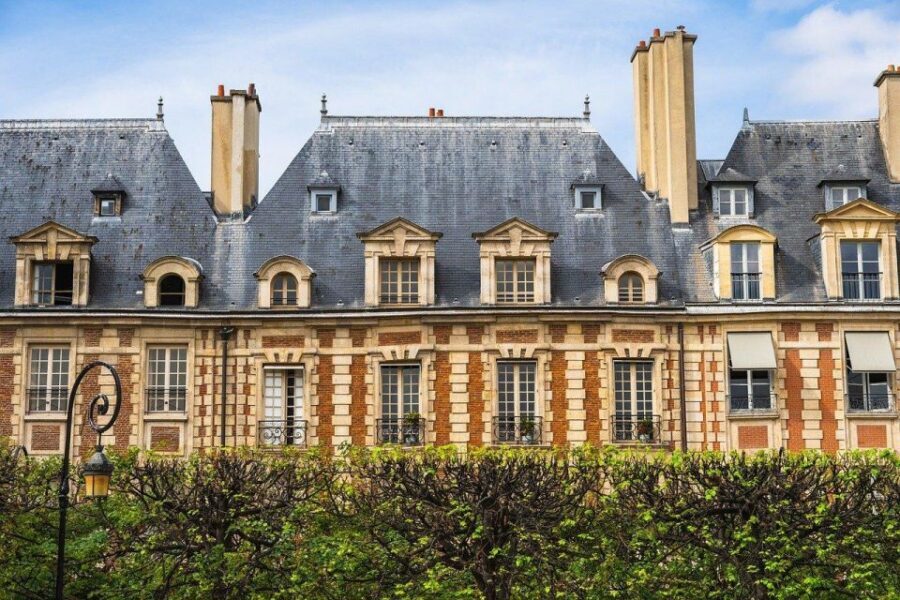
Le Marais is one of the easiest places in Paris to understand just by walking. You don’t need fancy tickets or timed entries to feel the shift from medieval streets to grand private mansions. The big reason this district works is simple: the Marais wasn’t reshaped by Haussmann’s 19th-century “make-everything-broader” logic the way many other central neighborhoods were.
That means your feet follow a street pattern that feels older and tighter than the boulevards around it. And because the tour is built around landmarks like Place des Vosges, Hôtel de Sully, and the old fortification remains tied to Philippe Auguste, you get a clearer map of how Paris grew in layers.
This is the kind of walk where you start noticing details you usually miss. A doorway. A courtyard wall. The way one street seems to funnel you toward a church. The guide’s job is to connect those dots fast, so the city feels less random and more logical.
You can also read our reviews of more walking tours in Paris



Meeting at Place des Vosges (and why it’s a smart start)
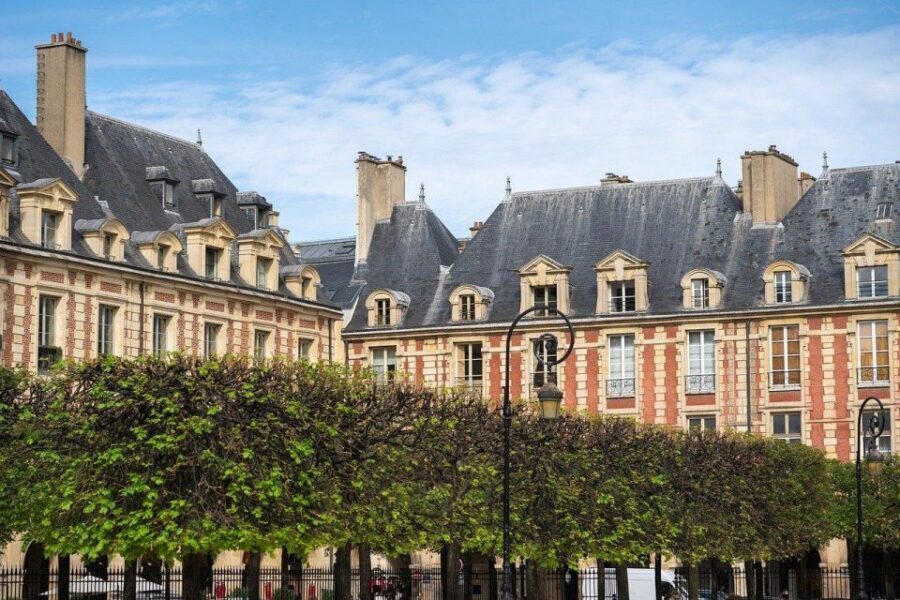
You begin at Place des Vosges, one of the prettiest ways to start any Marais day. The square has greenery and a symmetrical layout, which helps you orient before you hit the narrower lanes.
Check in with your voucher when you arrive. Look for the representative under the Louis XIII statue for Paris tours experiences, and the guide will be wearing a white shirt. It sounds like a small thing, but it removes that first-minute stress. Paris can be busy. You want your meeting point to be predictable.
The tour is scheduled for 135 minutes, so you’re not just doing a quick highlights loop. It’s long enough to slow down and still cover a lot of ground without feeling rushed.
Place des Vosges: the square that sets the tone
You’ll spend about 30 minutes here with guided context. Place des Vosges works as more than a pretty starting line—it’s a primer. You get a sense of how the old town looked and why the Marais has that “contained” feeling compared to other areas of Paris.
Expect to hear the kind of explanations that make later stops click. For example, when you start seeing hôtels particuliers (private mansions) along the route, you’ll understand they were more than fancy homes. They were political, social, and economic power in stone.
If you’re coming off a long flight or you’re still shaking off jet lag, this first segment is also gentle. You’re not immediately fighting with tight streets and crowds.
Hôtel de Sully: a 17th-century mansion stop that teaches you how to look
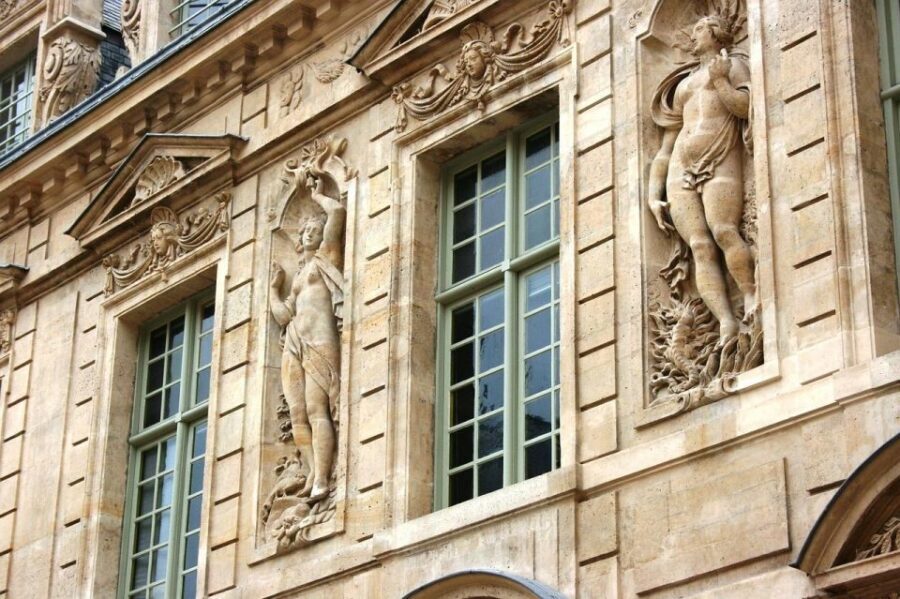
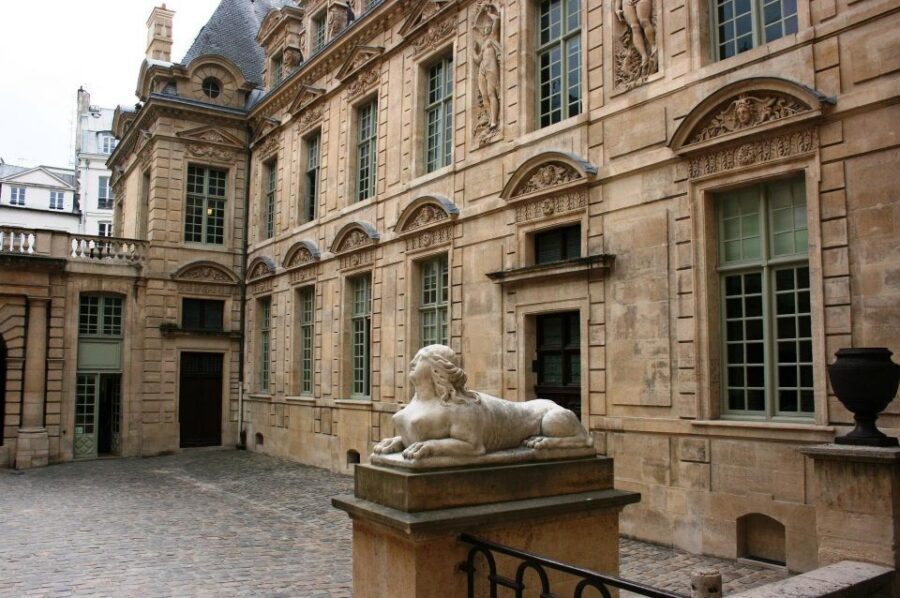
Next comes Hôtel de Sully, usually a photo stop with guided time. Even if you only see the outside, the guide’s explanations can change what you notice. You’ll start paying attention to symmetry, scale, and the way the mansion façade signals status.
This stop also helps you shift from the square into the residential grandeur that defines parts of the Marais. It’s a useful contrast: you can go from greenery and open space to a neighborhood where private architecture dominates the street feel.
A quick note: photo stops are short by design. If you want more interior access, plan a separate visit later. This tour is built for context on the move.
Saint-Paul Church: where the walking turns meaningful
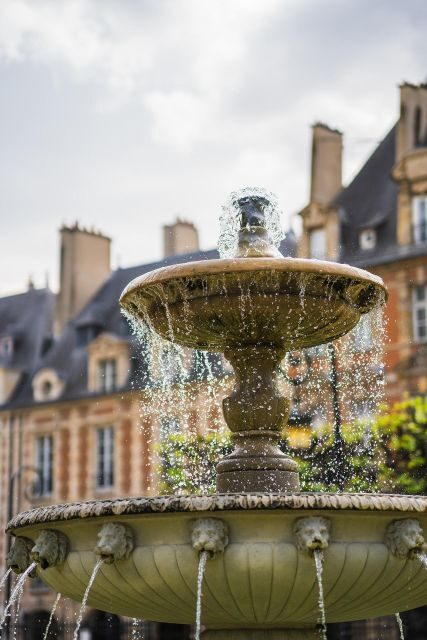
The Saint-Paul Church visit is one of the core included experiences, with guided time around 20 minutes. This is where the tour stops feeling like sightseeing and becomes story-driven.
Saint-Paul Church matters because it connects you to the religious and community life that shaped daily life in earlier Paris. The guide will point out details you might otherwise overlook. After this, your eyes adjust. You’ll look at churches and realize they’re not random stops. They’re landmarks of how people lived, argued, prayed, and rebuilt over centuries.
One practical plus: the church visit gives you a natural “reset” in the middle of the walk. Even for people who don’t love churches, it’s usually a calm, focused break.
You can also read our reviews of more guided tours in Paris





Philippe Auguste’s wall: medieval Paris you can still touch
One of the tour’s most striking teaching moments is the mention of the wall of Philippe Auguste. You’ll see impressive remains, and the guide frames what that means. This isn’t just “old stone.” It’s physical evidence of medieval Paris boundaries and priorities.
Here’s the value: it helps you picture where the city once ended, then imagine how it expanded. Once you understand that, the Marais starts to feel less like a picture-perfect neighborhood and more like a living timeline.
You’ll likely think differently about the tight streets too. Walls shape movement. When you remove a wall, the streets don’t always magically become wide. In the Marais, you still feel those old boundaries.
Private mansions and royal echoes: the Marais behind the postcards
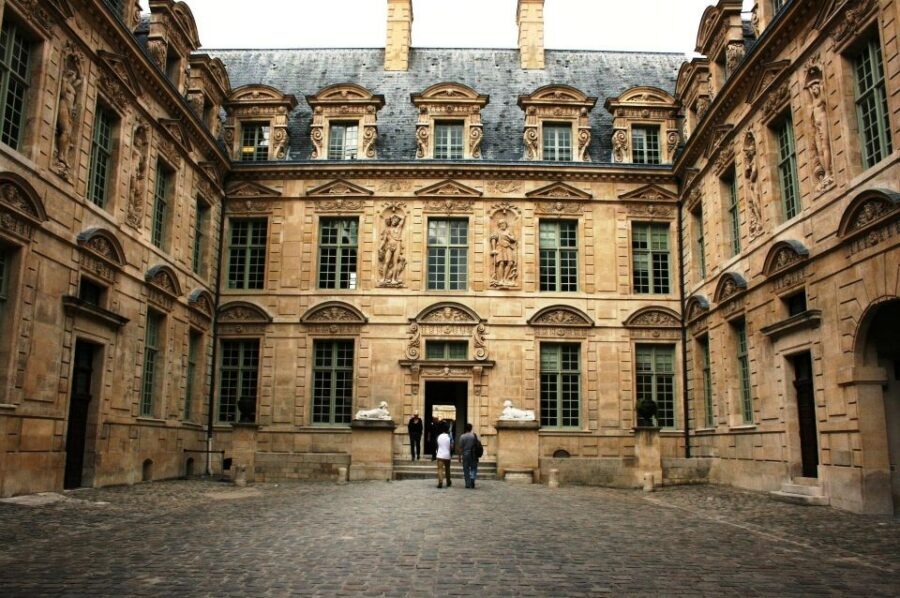
As the walk continues, you’ll get time around several Hôtel particuliers, including Hôtel de Sens. You’ll also cover the kind of stories tied to medieval royalty, with mentions like Louis XIII and Henry II, plus Catherine de Medici.
These stops aren’t meant to turn the tour into an architecture lecture. They’re about making the mansion culture understandable. In the Marais, these hôtels were built to impress and to protect. They also show how wealth and politics worked in Paris—inside walls and behind gates.
The route description includes Hôtel de Tournelles as well, with stories of medieval royalty. Even when you only get brief guided segments, the guide’s job is to give you a framework so each façade and passage makes sense.
If you like history told with street-level realism, this part usually lands hardest. You can stand in one spot and suddenly understand why the area feels like a patchwork of eras rather than a single aesthetic.
Rue des Rosiers: Jewish quarter energy and a chance to shop
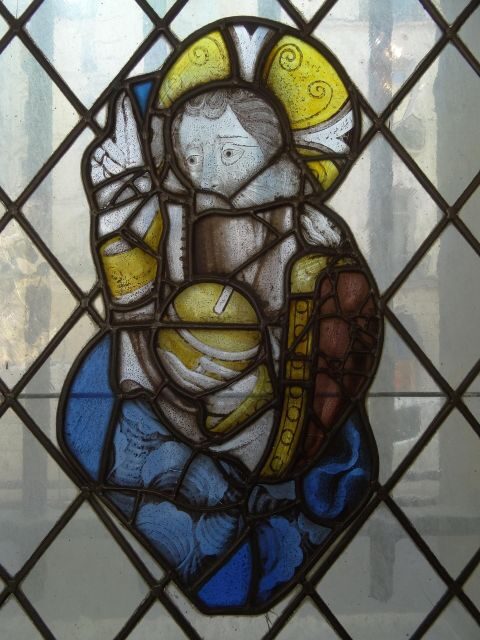
You’ll reach Rue des Rosiers with a guided shopping stop. This is one of the most practical parts of the walk. The guide gives context, and then you get a window to browse.
This street is famous for its food and shops, but the real value on this tour is that it’s not just a commercial stretch. It’s tied to the Jewish quarter identity of the Marais, and the guide connects today’s atmosphere to the area’s long presence in Paris life.
Even if shopping isn’t your thing, it’s still a great stretch for people-watching and for spotting small details like signs, storefront styles, and how the street’s character differs from nearby lanes.
Saint Gervais Church: another pause from the narrow streets
The tour includes Saint Gervais Church for about 15 minutes. Like Saint-Paul, it’s a stop that gives shape to the district’s community fabric. You’ll get guided time, not just a quick exterior glance.
By this point, you’re likely feeling the rhythm of the neighborhood: narrow passages, small squares, and churches showing up like anchors. This stop helps you keep that pattern in your head instead of letting the walk blur into one long street photo session.
The Holocaust memorial stop: history handled with care
The route includes a stop at a place of importance for the Jewish community of Paris: the Holocaust memorial. This isn’t a “grab-a-snapshot” moment. It’s part of the tour’s historical understanding of the Marais and the people who lived there across dramatic periods.
On a walk like this, you’re getting both the architectural story (mansions, walls, churches) and the human story tied to the 20th century. The memorial stop matters because it prevents the tour from becoming only decorative. It grounds what you’re seeing in real memory.
Ending at Place de l’Hôtel de Ville: you finish with Paris momentum
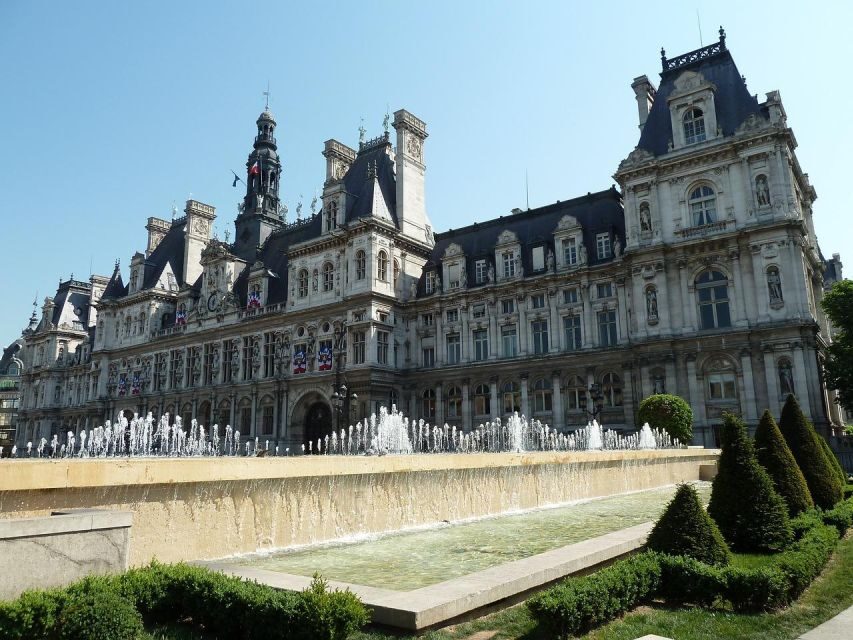
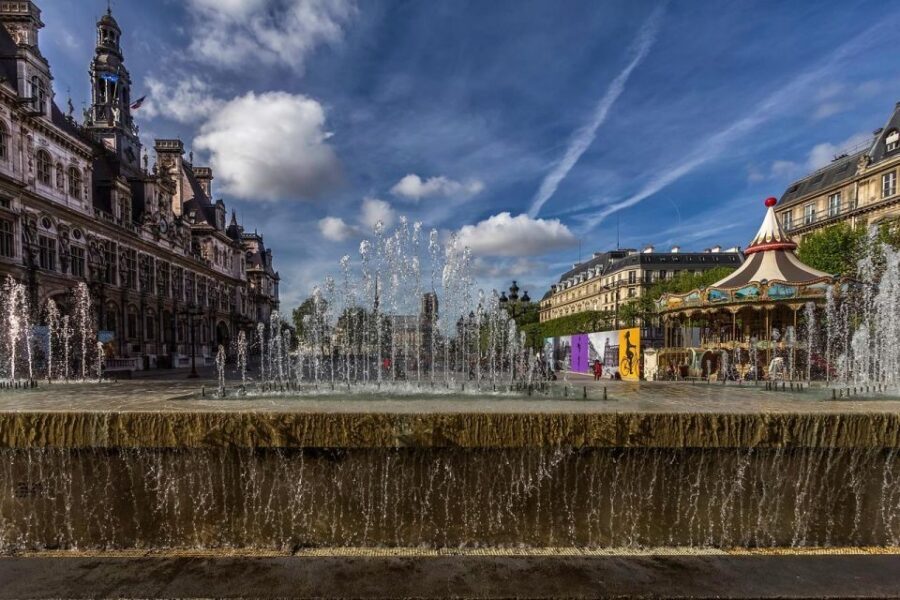
The tour concludes at Place de l’Hôtel de Ville. Ending near City Hall is convenient because it keeps your options open afterward. You can head toward other major sights without feeling stranded in a side street.
It also feels like a satisfying narrative finish. Earlier, you started in an old-town square and moved through medieval boundaries and private architecture. Now you land in a central civic hub area, which makes the Marais feel like a meaningful part of the whole city rather than a tucked-away corner.
How the pace works (and why small groups are worth it)
This is a small group limited to 9 participants. That number matters more than you’d think. You don’t spend your whole time saying Sorry and Excuse me while trying to hear the guide. You can actually ask a follow-up question when something grabs you.
The walking time totals about 135 minutes. That includes guided moments, photo stops, and short breaks in actual stops you can stand at. Expect a steady pace, not a stroll where you stop every 2 minutes for a story, and not a sprint where you barely see anything.
The tour also adapts for kids, but it’s still a walking tour. If you’re bringing a stroller, keep the provider informed so they can set expectations for the route and timing.
Price and value: is $58 worth it?
At $58 per person for 135 minutes, the price makes sense if you care about understanding what you’re looking at. A self-guided walk in the Marais is possible, sure. But without a guide, a lot of what makes these stops powerful becomes invisible: the why behind hôtels particuliers, the meaning of the old wall remains, and how the churches fit into the district’s evolution.
This tour also includes Saint-Paul Church and focuses on a cluster of significant Marais points rather than spreading you across the whole city. That concentration is part of the value. You’re paying for interpretation and direction, not just for movement from A to B.
If you love history but don’t want to spend your vacation in research mode, this is a good trade. You get structure and context while walking at street level.
Who should book this Marais walk
You’ll probably be happy with this tour if you:
- want a history-forward Marais experience without museum hopping
- like small group tours where you can ask questions
- enjoy connecting architecture to real stories
- want a Jewish quarter component that includes time at the Holocaust memorial
You might skip it if you:
- need a fully accessible route for mobility constraints, since it’s not suitable for mobility impairments
- don’t like walking for about 2¼ hours, rain or shine
It’s also a solid first or second day in Paris option. The Marais is easy to revisit later once you know how it’s laid out and what your “anchor points” are.
Practical tips before you go
Bring comfortable shoes. This is the Marais—old streets can be a little unforgiving. Also bring warm clothing, since the tour happens rain or shine.
If you’re sensitive to weather, layer up rather than wearing one heavy coat. You’ll move in fits and starts and stop in places where airflow can change quickly.
For questions, don’t be shy. The tour format is small enough that your guide can respond to you directly, not like you’re one voice in a crowd. Guides like Yazid, JB (Jean-Baptiste), Daniel, or Jean-Christophe have been mentioned as leading this kind of walk, and what they share in common is energy and story focus—so you’ll get plenty of chances to ask.
Should you book the Paris Le Marais Highlights guided small-group tour?
If you’re trying to choose between wandering the Marais alone and getting a guided understanding, I’d lean guided here. The stops are well matched to what makes the Marais special: Place des Vosges, Hôtel de Sully, Saint-Paul Church, the Philippe Auguste wall remains, major hôtels particuliers, Rue des Rosiers, Saint Gervais Church, and the Holocaust memorial, finishing near Hôtel de Ville.
It’s also a good value when you factor in that it’s a small group with guided time inside at least one major church stop. The walk is active, and it’s not built for mobility impairments, but for most people it’s an efficient way to learn the neighborhood in a way you can’t easily pick up just by reading plaques.
If your schedule is flexible, you can usually book now and pay later, and free cancellation up to 24 hours in advance is offered, which gives you some breathing room if plans shift.
FAQ
How long is the Paris Le Marais Highlights guided small group walking tour?
The tour lasts 135 minutes.
What does the tour cost?
The price is $58 per person.
Is the tour in English?
Yes, the live guide offers the tour in English.
Where do I meet the guide?
Meet at Place des Vosges. Check in with your voucher and look for Paris tours experiences under the Louis XIII statue. The guide will wear a white shirt.
What is included in the tour?
Included are a local guide, a visit to Saint Paul Church, and exploration of Le Marais highlights, including the Jewish quarter.
Are food and drinks included?
No. Food and drinks are not included.
Does the tour run in bad weather?
Yes. It takes place rain or shine.
Is it suitable for kids or strollers?
It is adapted for kids. If you’re coming with kids or a stroller, keep the provider informed.
Is the tour suitable for people with mobility impairments?
No. It is not suitable for people with mobility impairments.