REVIEW · PARIS
Paris – Montmartre Small Group Walking Tour with a True Local
Book on Viator →Operated by LM Tours · Bookable on Viator
Montmartre has a way of rewriting your mental map of Paris. This small-group walk is built for the neighborhood feel, with a born-and-raised guide, local stories, and a pace that lets you actually look around.
I like two things right away: you get a maximum of 6 people, so Corentin can answer your questions without herding you like a crowd, and the route mixes famous names with quieter spots you’d miss on your own. One thing to think about: it’s walking on hills with moderate fitness needs, and it isn’t recommended for guests with mobility issues or for older travelers.
In This Review
- Key things to know before you go
- Getting your bearings around Montmartre’s steep streets
- Moulin Rouge, Café des Deux Moulins, and Belle Époque Paris
- Van Gogh’s Paris era and Renoir at Moulin de la Galette
- Bateau-Lavoir and the birthplace energy of modern art
- The odd characters: Passe-Muraille, Montmartre’s vineyard, and Au Lapin Agile
- Sacré-Cœur views and the artists of Place du Tertre
- Price and value: $80 for art stories, local context, and small-group time
- Who should book this, and who might skip it
- Should you book this Montmartre walk?
- FAQ
- How long is the Paris Montmartre Small Group Walking Tour?
- What is the group size limit?
- Where does the tour start and where does it end?
- Is a ticket for Moulin Rouge included?
- Are we allowed to enter buildings on this tour?
- Is the tour suitable for older travelers or people with mobility issues?
- Is there a mobile ticket?
- Do I need a special fitness level?
- Can I cancel and get a full refund?
Key things to know before you go
- Max 6-person group means more conversation time and less road-noise crowding.
- Local guide Corentin shares neighborhood legends, art stories, and personal context.
- Moulin Rouge is outside-only here; no entry ticket is included.
- Most stops are free for access (outside viewing), with the tour centered on art and street corners.
- End near Sacré-Cœur so you can keep exploring after the tour, if you want.
- Mobile ticket is included, making check-in simple.
Getting your bearings around Montmartre’s steep streets
The tour starts at Five Guys, 3 Pl. Blanche (75009) and finishes at 1 Parv. du Sacré-Cœur (75018). That end point matters. You’re not dragged back to where you began—you’re dropped close to Sacré-Cœur, which is handy if you plan to grab a snack, visit the basilica area again, or simply keep wandering.
This is a 1 hour 45 minute walk, so you’ll want to treat it like a proper neighborhood circuit, not a quick photo sprint. The route includes multiple stops spread across Montmartre’s slopes, with short time at each location (think about 5–10 minutes per stop). The tour also mentions moderate physical fitness. If you hate hills or if stairs tire you quickly, you may find it more effort than you expected.
What you really pay for here is the way Corentin talks about place. The tour’s structure isn’t just “sight → facts.” It’s more like: why this corner matters, who once walked here, and how the stories became part of Montmartre’s identity. In the reviews, people praised the way he could switch gears based on questions—history questions, art questions, even family-friendly curiosity.
You can also read our reviews of more walking tours in Paris



Moulin Rouge, Café des Deux Moulins, and Belle Époque Paris
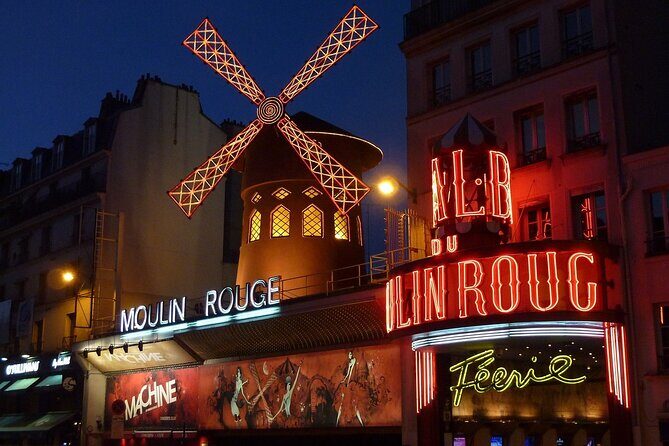
Your first stop is the Moulin Rouge, a classic symbol of Parisian nightlife. Expect time to look and listen—about 10 minutes—with the big picture of how the cabaret became tied to the idea of Paris itself. Just note the important catch: admission isn’t included, so if you’re hoping for an inside visit, this tour won’t deliver that.
Right after, you pass by Café des Deux Moulins, known from the film Amélie, where the character worked as a waitress. Even if you’re not obsessed with the movie, this stop is a reminder that Montmartre’s fame didn’t come from one single era. The neighborhood keeps getting “reused” in stories—art, cinema, music—each layer adding to the mood.
A practical tip: at Moulin Rouge, it can be crowded. The small-group size helps, but if you want calmer photos, keep an eye on where the group clusters and take a breath before you shoot. This is one of those locations where your best photos often come from a short wait for foot traffic to shift.
Van Gogh’s Paris era and Renoir at Moulin de la Galette
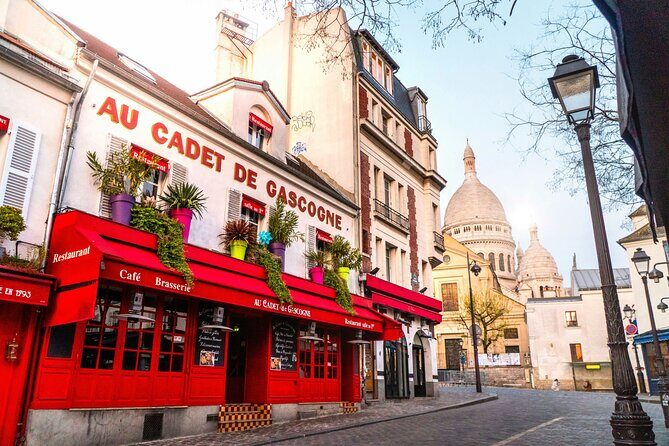
Next up is the Appartement des frères Vincent et Théo van Gogh. You spend about 10 minutes here, and it’s marked as free to access. The focus is the Paris period—how Vincent van Gogh’s time in the city shaped his path, and how Montmartre’s atmosphere fed his ideas.
From there you head to Le Moulin de la Galette. Again, about 10 minutes and free. This stop comes with a twist: the location connects to both art and a darker side of the past. You’ll also hear how Renoir painted Le Bal du Moulin de la Galette there. The value isn’t just “Renoir was here.” It’s the way Corentin connects the place to the artistic moment—why scenes like that captured what people wanted to see in that era.
Drawback to keep in mind: because these are stop-and-look segments, you won’t get museum-style time with objects. If you want a hands-on art experience, pair this with a museum visit later. But if you want a walking understanding of where the artwork’s settings came from, these two stops do a nice job.
Bateau-Lavoir and the birthplace energy of modern art
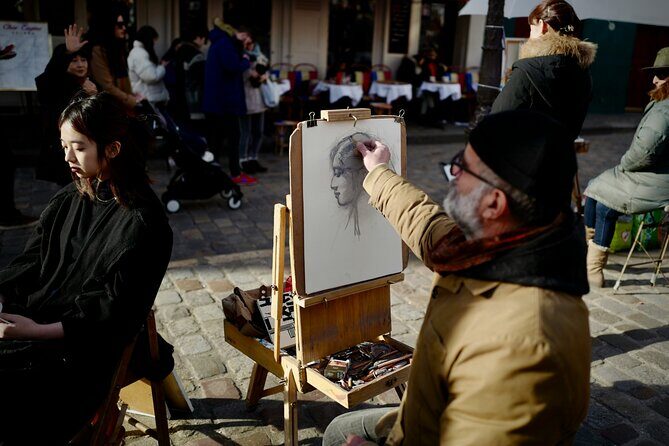
The tour then moves to Le Bateau-Lavoir, another 10-minute stop. This is one of the places where Montmartre’s reputation becomes real fast. You’ll learn why it mattered as a hub where artists lived and worked in the early 20th century, including Picasso. The idea here is simple: you’re not just seeing a building name—you’re seeing a type of place. A workshop-and-living space where style shifted because artists were close enough to influence each other.
If you like modern art history but struggle to place it in geography, this stop helps. It gives you a location you can mentally anchor. Suddenly, “modern art” stops being an abstract label and becomes a real neighborhood story.
The odd characters: Passe-Muraille, Montmartre’s vineyard, and Au Lapin Agile
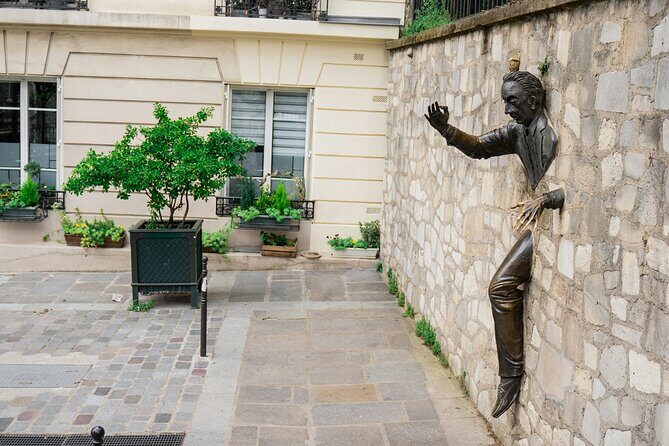
After the major art stops, the tour adds some personality. You visit Le Passe-Muraille, a statue of a man appearing to pass through a wall, inspired by Marcel Aymé. You only get about 5 minutes, but it’s a quick win. These short stops are where you get the “Montmartre makes you feel something” moments—fun symbols, literary ties, and playful symbolism.
Then comes Vigne du Clos Montmartre (again about 5 minutes). A vineyard inside the city sounds like a legend, and that’s part of the point. You’ll hear why this vineyard matters in French wine culture and why it’s tied so strongly to Montmartre. If you assume Paris is all concrete, this stop corrects that assumption.
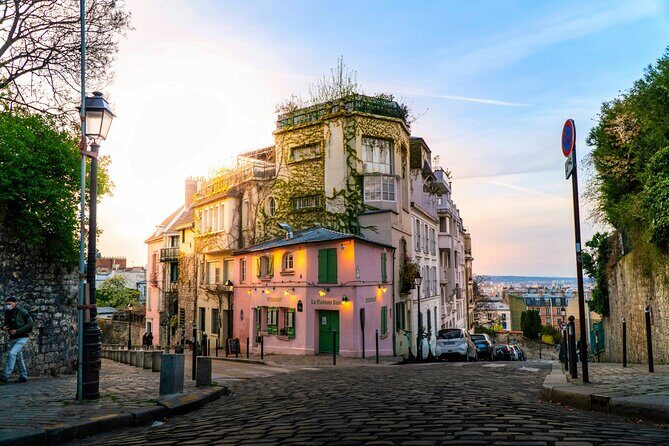
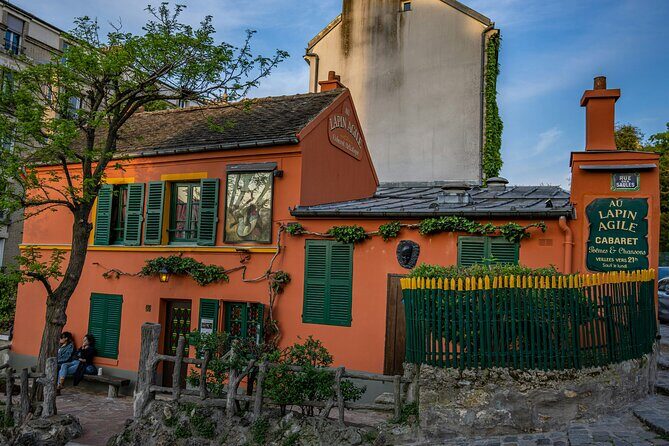
Finally, you’ll reach Au Lapin Agile, about 5 minutes. This cabaret is known as Montmartre’s oldest cabaret, and it’s famous for stories and amusing anecdotes. It’s the kind of place where you can feel the neighborhood’s creativity even if you don’t go inside. The “why it matters” here is cultural. It shows how Montmartre stayed itself as Paris changed.






Sacré-Cœur views and the artists of Place du Tertre
You finish with the big Montmartre reward: Basilique du Sacré-Cœur. This stop is about 10 minutes and is described as free to access. The key point is the views. From up here, you get the panoramic sense of why artists and writers kept circling back to this hill.
One consideration: Sacré-Cœur area photo time often overlaps with other visitors. The small group won’t make the place empty, but the tour’s timing usually gives you a chance to enjoy the view without feeling like you’re stuck in a line for the whole visit.
Then you end at Place du Tertre (about 5 minutes). This is a classic Montmartre square where artists display their work. It’s a good ending because it’s more current than the earlier stops. You get to see the “still alive” version of the arts scene right where it became famous.
Price and value: $80 for art stories, local context, and small-group time
At $80, this tour isn’t a throwaway “walking tour for the basics.” But the value makes sense if you care about context more than check-box sightseeing.
Here’s where the price earns its keep:
- Small-group cap (6 people): You’re paying for conversation time. In the feedback you’ll see people loved being able to ask questions and not feel rushed.
- Local guide credibility: Corentin is from Montmartre and lives there, which shows in the kinds of details he includes—stories that sound like local chatter, not just textbook history.
- Route design: Instead of repeating only the busiest tourist icons, the tour threads famous names (van Gogh, Renoir, Picasso) through lesser-seen corners and symbols (Passe-Muraille, the vineyard, Au Lapin Agile).
Compare it to DIY walking. If you go alone, you can hit Sacré-Cœur, Place du Tertre, and a few iconic stops. But you’ll likely miss the connections: why certain sites matter to specific artistic moments, and how Montmartre’s legends grew alongside its art.
Also, a practical note: the tour is mobile ticket. That reduces stress on arrival day—one less thing to manage.
Who should book this, and who might skip it
Book it if you:
- want a neighborhood-first Montmartre experience rather than a checklist
- enjoy art history with street-level context
- like tours where you can ask questions and get full answers
- want something fun for families; the reviews specifically mention kids enjoyed the storytelling
You might want to skip (or be selective) if you:
- have mobility limitations (it’s not recommended for guests with reduced mobility)
- struggle with hills and stairs, since the route includes moderate walking and Montmartre’s incline
- expect guaranteed building entrances at every stop; access to buildings isn’t what this tour is built around
One more thing to keep in mind: there was at least one reported guide no-show due to a scheduling error, with a full refund mentioned in the response. That’s not the normal theme of the experience, but it’s a real reminder to show up early and plan for human error like you would with any live service.
Should you book this Montmartre walk?
If your goal is to understand Montmartre as a place—not just a backdrop—then yes, it’s a strong pick. The combination of Corentin’s local perspective, the small-group size, and the art stops (van Gogh, Renoir, Picasso) plus character moments (Passe-Muraille, the vineyard, Au Lapin Agile) makes it feel like a guided walk with actual personality.
If you want “inside tickets to monuments” and museum-style time, you’ll probably be happier with a different plan. But for a smart, story-driven afternoon that helps you connect the dots across Montmartre, this one fits the bill.
FAQ
How long is the Paris Montmartre Small Group Walking Tour?
It lasts about 1 hour 45 minutes.
What is the group size limit?
The tour has a maximum of 6 travelers.
Where does the tour start and where does it end?
It starts at Five Guys, 3 Pl. Blanche, 75009 Paris and ends at 1 Parv. du Sacré-Cœur, 75018 Paris.
Is a ticket for Moulin Rouge included?
No. The Moulin Rouge stop notes that admission ticket is not included.
Are we allowed to enter buildings on this tour?
The tour notes that access to buildings is not included. Stops are mainly for viewing and learning at locations.
Is the tour suitable for older travelers or people with mobility issues?
It’s listed as not recommended for older people and not recommended for those with reduced mobility. You’ll also want moderate physical fitness for the walking.
Is there a mobile ticket?
Yes. A mobile ticket is included.
Do I need a special fitness level?
The tour is described as requiring moderate physical fitness.
Can I cancel and get a full refund?
Yes. You can cancel for a full refund if you cancel up to 24 hours in advance of the experience start time. If you cancel within 24 hours, the amount is not refunded.