REVIEW · PARIS
Paris Murders and Mysteries semi-private tour of the Louvre
Book on Viator →Operated by Meeting the French · Bookable on Viator
The Louvre turns darker in this tour. I like the small-group cap of six, and I love how the guide mixes famous works with lesser-known corners so you don’t just speed through wall-to-wall art. One thing to consider: the mystery angle can feel lighter than the title suggests, depending on your guide and what you want from the theme.
This is a smart pick when you’re new to the museum. I also like that your Louvre admission ticket is included, and you’ll end with enough time to keep exploring after the tour—useful in a place this big. You may even notice different guide styles; names like Akiko, Romain, Veronique, Daphne, and Stephanie have been singled out for making the stories click.
Plan for a tight 2-hour pace. I’ve seen how “mystery” can mean dark background details rather than an interactive whodunit, and English can vary by guide, too. If you’re bringing kids, pay attention to the warning that some material may not be child-suitable.
In This Review
- Key points before you go
- The Louvre in Two Hours: What Semi-Private Really Means
- Where to Meet: Cour Napoléon and the Louis XIV Copy
- Stop 1: Medieval, Egyptian, and the Dark Side of Art
- Venus de Milo and Crown Jewelry Without the Museum Shuffle
- French Masterpieces: Stories You Can Actually Remember
- Mona Lisa: The Route Includes Her, but Timing Is Tight
- How Strong Is the “Murder and Mystery” Theme, Really?
- Price and Value: $204.70 for Guide Time and Your Louvre Ticket
- What You’ll Actually Do Inside the Louvre
- After the Tour: Use Your Free Time Without Burning Out
- Who This Tour Fits Best
- Should You Book This Louvre Murder and Mystery Tour?
- FAQ
- How long is the Paris Murders and Mysteries semi-private Louvre tour?
- How big is the group?
- What language is the tour offered in?
- Where do we meet?
- Where does the tour end?
- What’s included in the price?
- What’s not included?
- Is it suitable for children?
- Are there any free-admission options for some visitors?
- Can I get a refund if I cancel?
Key points before you go
- Max 6 people keeps the experience personal and easier to hear in the crowds
- Top masterpieces plus oddball details like medieval remnants and ancient-world stories
- Entrance ticket included means less hassle at the door
- Mona Lisa is on the route, with a fresh way to look at her smile
- You finish inside the Louvre and can keep wandering after the tour ends
The Louvre in Two Hours: What Semi-Private Really Means
With a maximum of six people, this tour doesn’t try to cram an entire museum into your head. Instead, you get a guided “greatest hits” route with story-driven stops, which helps when the Louvre feels like a maze made of marble.
I love tours that let you hear the guide. In a museum where everyone’s moving, smaller groups reduce that problem. You’ll likely spend less time playing catch-up and more time understanding what you’re actually looking at.
The drawback is simple: two hours is not long. You’ll see key works, but you won’t get deep, slow museum-study time for every masterpiece. Use the tour to get your bearings, then do your own exploring afterward.
You can also read our reviews of more private tours in Paris



Where to Meet: Cour Napoléon and the Louis XIV Copy
Your meeting point is specific, and that matters in the Louvre. Meet at the Louis XIV sous les traits de Marcus Curtius (copie) in Cour Napoléon, near the Louvre Pyramid area (75001).
Here’s how to make this easy on yourself: arrive early, look around the Cour Napoléon space, and confirm you’re at the correct landmark rather than guessing from the big crowds. If your group is small, a few minutes of searching can eat into your tour time.
The good news: the tour is near public transportation. That helps if you’re stacking other sights the same day, since you won’t lose time to long transits.
Stop 1: Medieval, Egyptian, and the Dark Side of Art

The tour’s entire session happens inside the Louvre, and your first big advantage is that you’re not left to figure out the museum’s scale on your own. You start by moving through major collections, with a story-first approach.
You’ll be guided through sections that include medieval remnants and the Egyptian collection. This combo is useful because it changes the museum’s “vibe” quickly: you’re not just seeing painted portraits; you’re watching centuries collide in the same building.
And then comes the theme fuel. The guide brings to life horror-tinged and dark historical backstories connected to iconic works. Within the ancient world collections, you’ll hear about magic and long-forgotten rituals. That’s where the Murder and Mysteries branding makes sense: not as a scripted crime plot, but as a lens that treats art like evidence and history like drama.
The practical consideration: if you’re expecting scary thrills only, you might find the storytelling feels more historical than cinematic. Still, it’s a memorable way to keep interest when you’re standing in front of works that can otherwise blur together.
Venus de Milo and Crown Jewelry Without the Museum Shuffle

Some Louvre tours are too painting-focused. This one spreads the attention across different types of art, including sculpture and decorative regalia.
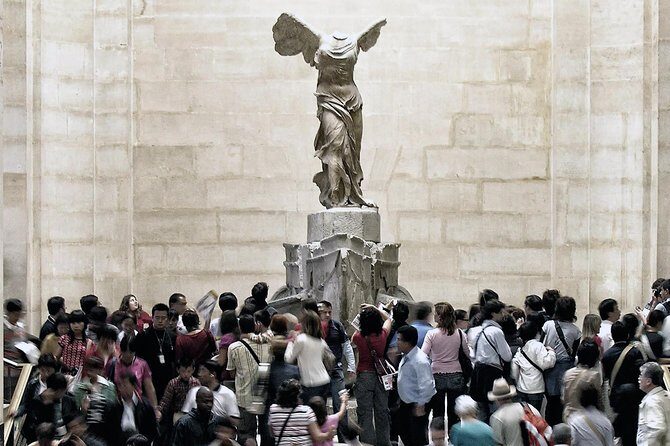
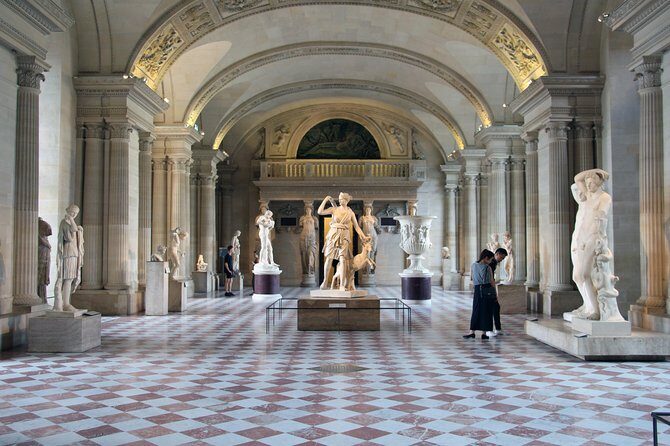
You’ll see Venus de Milo, and you’ll also visit the crown jewelry collection. That’s a smart choice for first-timers because it gives you contrast: beauty in one room, power and symbolism in another. Crown jewelry in particular can feel surprisingly human when a guide explains what it signaled and who used it.
This is also where the small group format pays off. In the biggest halls, crowds turn everything into a standstill. With fewer people, your guide can steer you to viewpoints and timing that make photos and listening more realistic.
One caution: if you’re a slow-walker or you want lots of time for close looking, two hours is still tight. You’ll likely get a guided moment at each stop, then you’ll need to revisit on your own if you want extra time.
French Masterpieces: Stories You Can Actually Remember
A big part of the value here is how the guide frames French masterpieces with “what’s going on underneath.” The tour aims to bring to life dark events depicted in iconic paintings and tie those moments to the larger history around them.
This approach helps your brain file what you see. Instead of memorizing titles and dates like flashcards, you remember the narrative: motive, consequence, symbolism, and why the painting made noise in its time.
I also like that the guide isn’t only talking about the art. You’re hearing story context about the museum world as you move through it, so the Louvre feels less like a warehouse and more like a place with consequences.
But there’s a possible drawback: not every guide delivers balance the same way. Some guests have felt guides spent too long on the building itself instead of pushing faster into the works. If your goal is maximum time in front of art, go in expecting the guide’s style will shape the balance.






Mona Lisa: The Route Includes Her, but Timing Is Tight
You will be led to Mona Lisa, and the tour includes an emphasis on seeing her smile from a new perspective. The Louvre crowd around this painting is famous for a reason, and any short stop there will feel compressed.
I like tours that treat Mona Lisa as the moment where the guide shifts from factual description to interpretation. Even if the time in front of her is brief, the “why people stare” angle can make it easier to appreciate what you’re looking at.
Here’s how to get the most from the Mona Lisa stop: stay calm about the crowd. Focus on what the guide asks you to notice, then use your own time after the tour to return if you want a longer look.
Remember: the tour ends and you can remain in the Louvre. So even if Mona Lisa feels like a quick stop, your day doesn’t have to stop there.
How Strong Is the “Murder and Mystery” Theme, Really?
The theme shows up in the storytelling style: dark events, horrifying backstories, magic, rituals, and secrets tied to major works. It’s more “mystery lens” than “interactive crime game.”
That matches what the route is set up to do: it’s built around major collections and iconic masterpieces, then connected with a dramatic narrative thread. If you’re someone who loves art history but finds it sleepy in straight lecture form, you’ll likely enjoy this.
Still, there’s a real consideration before you book: a few people have felt the title overpromises. If you want lots of explicit murders and crime-style mysteries on every stop, you may not get that level of action.
My advice: think of this as a storytelling tour with a spooky-historical flavor. If you also want a traditional highlights tour with a darker tone, you’re in the right neighborhood.
Price and Value: $204.70 for Guide Time and Your Louvre Ticket
At $204.70 per person for about two hours, you’re paying for three things:
- a professional guide
- admission (the listing notes a €22 adult ticket)
- taxes and fees included in the total
Is it worth it? For me, the value comes down to what you’re buying: time and direction. The Louvre is overwhelming. A good guide helps you skip the wandering, and a small group keeps you from getting swallowed by the crowd.
If you’d otherwise buy your own ticket and pay for a standard highlights tour, this adds a story twist plus a tightly managed route. If you care more about free wandering than guided interpretation, you might prefer a self-guided ticket and a loose plan.
Also factor in what’s not included: no food or drinks, and there’s no hotel pickup/drop-off. That’s fine, just don’t assume you’re being chauffeured or fed.
What You’ll Actually Do Inside the Louvre
Even though there’s one official stop, you’ll experience several mini-worlds during the tour. You’ll move from medieval remnants to Egyptian galleries, then shift to famous sculpture and royal jewelry, and finish with major French masterpieces and Mona Lisa.
That flow matters. It prevents that common new-visitor problem: you see ten rooms and retain nothing because the museum jumps eras without a guide to connect them.
You’ll also get that “dark secrets” narrative thread that turns a typical art stop into a story you can remember. For instance, you’re not just looking at famous paintings; you’re hearing the “backstory” the guide attaches to them.
If your English matters a lot to you, know that the guide experience can vary. Some guides have been praised for clarity and humor, like Romain and Veronique. Others have drawn complaints about understanding and pacing. If you’re sensitive to accents or want every word, consider that risk.
After the Tour: Use Your Free Time Without Burning Out
The tour ends with you still inside the Louvre, so you can keep going on your own. This is a big deal because the Louvre is too large to finish in one go.
Use the guided tour as your “map moment.” Then pick a short list for your free time:
- one painting you want to revisit without crowds blocking your view
- one sculpture or decorative display you liked most
- one section you skipped because the tour paced past it
Don’t try to “win” the Louvre by seeing everything. That approach turns a dream day into a checklist.
If you still want more mysteries, you can also re-read the work through the lens your guide gave you. That’s often the best way to make a huge museum feel personal.
Who This Tour Fits Best
This is best for:
- first-time Louvre visitors who feel overwhelmed
- people who like art history with story flavor
- anyone who wants a short plan that still includes major names like Venus de Milo and Mona Lisa
It can also work for return visits, especially if you like discovering lesser-known works alongside the big stars. I’ve seen guides like Stephanie praised for pointing out pieces visitors miss on their own route.
For families: there’s a warning that some stories and material may be unsuitable for children. Kids must be accompanied by an adult, and while many visitors under 18 have free admission, the content is the real question—not the ticket.
For accessibility: the info says most travelers can participate, but it’s still a museum with walking and crowd navigation. If you need slow pacing, arrive with realistic expectations and consider that the guide may keep the group moving to stay within the time limit.
Should You Book This Louvre Murder and Mystery Tour?
Book it if you want a guided route that hits famous works and adds dark, story-driven context. The small group size, the included entrance ticket, and the fact you finish inside the museum make it practical.
Think twice if you want a hardcore mystery plot or an interactive crime experience. This tour sounds more like art history with a thriller soundtrack than a full whodunit production.
My final take: for most first-timers, this is a solid way to start your Louvre day. Get the stories, lock in your bearings, then spend your remaining time doing the slower, personal looking that a two-hour tour can’t provide.
FAQ
How long is the Paris Murders and Mysteries semi-private Louvre tour?
It’s listed as about 2 hours.
How big is the group?
The tour is capped at a maximum of 6 people.
What language is the tour offered in?
It’s offered in English.
Where do we meet?
Meet at Louis XIV sous les traits de Marcus Curtius (copie), Cour Napoléon et Pyramide du Louvre, 75001 Paris, France.
Where does the tour end?
It ends at the Louvre Museum (75001 Paris, France), and you’ll be able to stay inside to visit on your own afterward.
What’s included in the price?
A professional guide, all taxes/fees/handling charges, and a €22 adult entrance ticket to the museum.
What’s not included?
Hotel pickup and drop-off, plus food and drinks.
Is it suitable for children?
Children must be accompanied by an adult, and some stories or material may be unsuitable for children.
Are there any free-admission options for some visitors?
Yes. Free admission applies to visitors under 18 and EEA residents under 26 if they show valid ID and proof of residency.
Can I get a refund if I cancel?
This experience is non-refundable and cannot be changed for any reason. If it’s canceled due to minimum traveler numbers, you’ll be offered an alternative date/experience or a full refund.