REVIEW · PARIS
Paris Passageways Walking Tour: Secrets Uncovered w/ Local Guide
Book on Viator →Operated by Dayin · Bookable on Viator
Paris’s hidden walkways are pure magic. This tour takes you off the main streets and into narrow covered passages where the city feels quieter and older. You’ll move with a local guide, not a map app, and the route is built around places that are hard to find on your own.
I especially like the mix of iconic-but-underseen spots and practical “how to move through Paris” tips you’ll use right after. One thing to consider: this is still a walking tour, so expect steady walking and some tight passageway conditions along the way.
In This Review
- Key things to know before you go
- Why Paris passages work so well on your trip
- Price and value: what $66.16 buys you in 2 hours
- Start at Rue Cadet and begin with Passage Verdeau
- Passage des Panoramas: one of the last survivors of its kind
- BnF Richelieu: the Oval Room at the French National Library
- Galerie Vivienne: built in 1823 and still used today
- Palais-Royal: gardens, columns, and stories back to the 1600s
- Galerie Vero-Dodat and Passage du Grand Cerf: shop streets with serious height
- Galerie Vero-Dodat: a small village for the bourgeoisie
- Passage du Grand Cerf: 12 meters of passageway drama
- How to get the most from a covered passage walking tour
- Who this walking tour fits best
- Should you book this Passageways Walking Tour?
- FAQ
- How long is the Paris Passageways Walking Tour?
- What is the meeting point and where does the tour end?
- How many people are in the group?
- Is the tour offered in English?
- Are there admission tickets you need to buy for the stops?
- Is this tour good for rainy weather?
- Is hotel pickup included?
Key things to know before you go
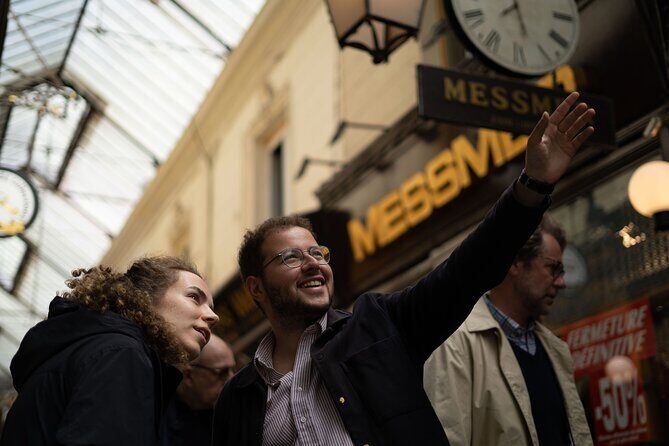
- Covered passages help on rainy days: you keep moving even when the weather doesn’t cooperate.
- Small group (max 8): more conversation, less waiting, and an easier pace through tight spaces.
- Ticket-free stops: each listed highlight is marked admission ticket free.
- Real navigation help, not just sightseeing: you’ll leave with tips to plan the rest of your Paris days.
- Photography-friendly interiors: passages like Galerie Vivienne are built for great angles.
- A high, shop-lined finish: Passage du Grand Cerf rises about 12 meters and is ideal for browsing crafts and jewelry.
Why Paris passages work so well on your trip
Paris has two speeds. One is grand boulevards and big landmarks. The other is the slow, tucked-away lanes you only notice when you start looking for them. These passages are exactly that second speed: narrow corridors that run parallel to traditional streets, often roofed over, where you can feel the city’s character without fighting traffic or crowds.
What makes this tour smart is that it’s designed for movement. Most of the walk is in areas with covered walkways, so if it’s misty or raining, you’re not stuck indoors. And because the streets are tight, car traffic never becomes your problem. That sounds minor—until you’re actually trying to do Paris on your own and realizing every detour costs time.
The guide format is a big deal for first-timers. You don’t waste energy figuring out which passage connects to which street. Instead, you follow the route, listen, and get the “why this matters” context while you’re there.
You can also read our reviews of more walking tours in Paris



Price and value: what $66.16 buys you in 2 hours
At $66.16 per person for about 2 hours, this isn’t a bargain-price street stroll. You’re paying for two things that are hard to replicate solo: an organized route through multiple passage highlights, and a local guide to connect the stories.
Look at what’s included:
- a local tour guide
- an intimate group capped at 8 (or private)
- a walking tour
- tips to help you navigate Paris after you finish
Also, the stops are listed as admission ticket free. That matters. You avoid the annoyance of finding, paying, and timing separate entries for every highlight. In a short window, it’s a relief.
And that “tips after” part is more valuable than it sounds. When you tour Paris by yourself, you usually learn two things: where to go, and how to avoid wasting half a day backtracking. A good guided route can give you both—especially in a maze of corridors like these.
Start at Rue Cadet and begin with Passage Verdeau
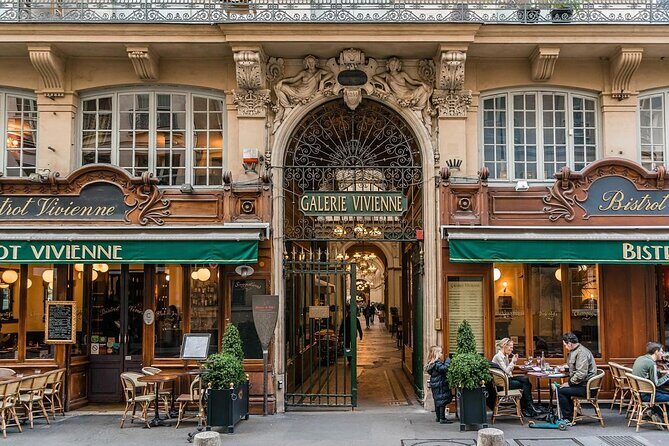
You’ll start at 26 Rue Cadet (75009), then work your way toward the passage network. The first stop is Passage Verdeau, and the point of starting here is size. You begin with the smallest of the passages so you get the rhythm early: narrow lanes, covered structure, and the feeling of being inside a different kind of Paris.
Passage Verdeau is described as a network of parallel streets. In practice, that’s what you’re learning: these aren’t just pretty walkways. They’re a system. Once you understand how one passage relates to the next, the rest of the tour feels smoother and more logical.
What I like about this opening: it sets the tone fast. You’re not spending the first 20 minutes hunting for the correct doorways or wondering how the passages connect. You step in, you get the lay of the land, and the guide keeps things moving.
If you prefer quieter starts: this works well because Passage Verdeau is more intimate before you move to the “must-see” passages later.
Passage des Panoramas: one of the last survivors of its kind
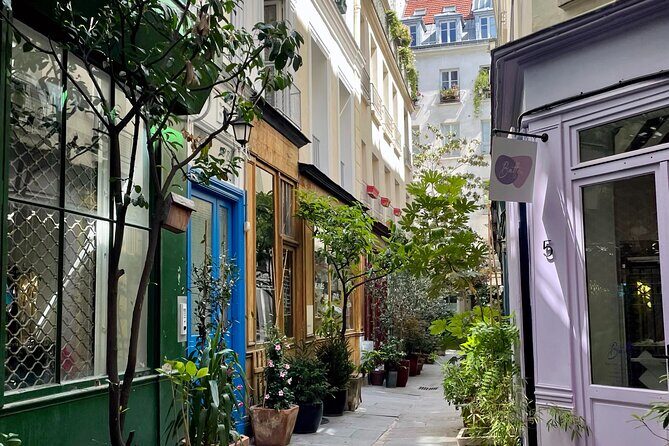
Next comes Passage des Panoramas. This is a “must-see” passageway in the city, and it has a rare status: it’s one of only 20 passages still left in Paris.
That number changes how you look at it. You’re not just walking through something pretty. You’re walking through a surviving piece of a larger historical system that many cities no longer have. And the tour also points you toward what makes it lively: hidden traditional restaurants and small boutiques tucked into the passage.
This stop is a good reminder that the passages aren’t frozen in time. They’re functional spaces. Even if you’re not shopping, you can still sense the everyday Paris layer—people passing through, storefront life, and a street feel that’s more human-scale than the big avenues outside.
Possible drawback to keep in mind: passages are tight. If you’re someone who hates close quarters or gets uncomfortable in crowds, you’ll want to keep your expectations flexible. The group size helps, but it’s still a passage environment.
BnF Richelieu: the Oval Room at the French National Library
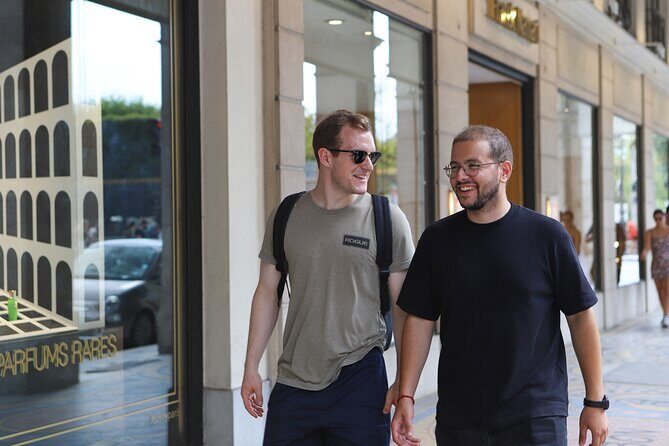
From passageways, you shift to an institutional Paris moment with Bibliothèque nationale de France (site François Mitterrand)—specifically the Oval room at the BnF Richelieu.
This stop is short, but it gives you range. You go from covered commercial lanes into a landmark setting of French learning and architecture. The tour frames it as a place worth seeing even if you’re not doing a full library visit on your own.
What makes it a good “breather” is that it breaks the pattern. You don’t just repeat “walk and look.” You get a distinct type of space, with a different atmosphere and a different reason for existing.
If your travel style is part sightseeing and part curiosity, you’ll appreciate stops like this. Even brief visits can add context to what you’re seeing around the city.
You can also read our reviews of more guided tours in Paris





Galerie Vivienne: built in 1823 and still used today
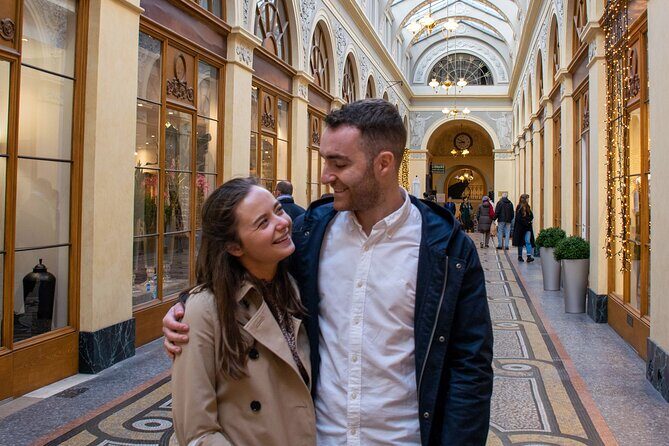
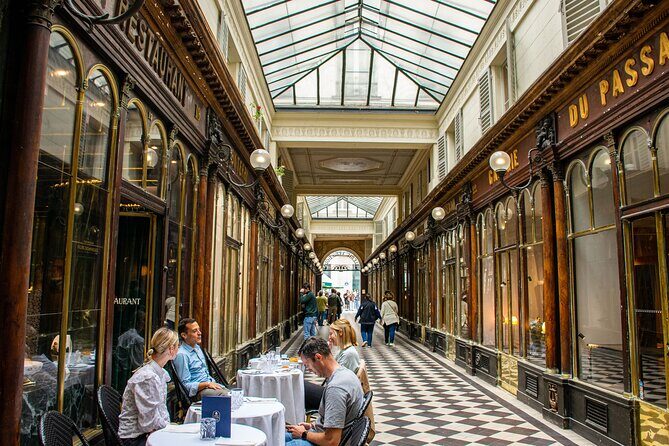
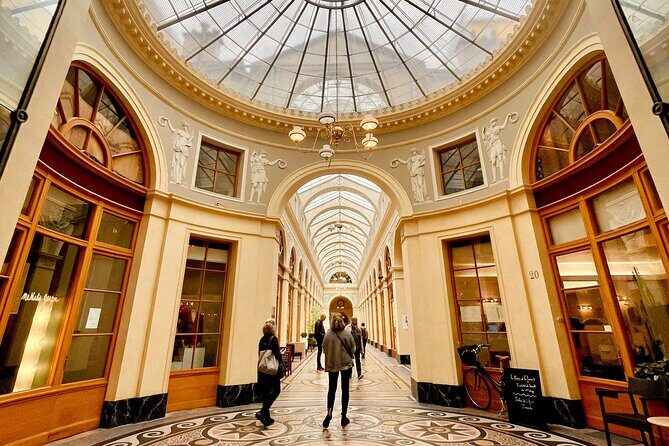
Then you step into Galerie Vivienne, described as the most stunning and prestigious gallery in the city, built in 1823 and still enjoyed today by Parisians.
This is the moment where the passages really start to feel like a world of their own. Galerie Vivienne is a place where you can slow down—visually, at least. The tour encourages you to take unique photos here, and the design is the kind that rewards standing still for a few seconds and looking up.
What you’ll get out of this stop: contrast. The tour has already shown you how the passages work as streets and shortcuts. Here, you see how they also work as interiors—spaces with a sense of ceremony. That’s why this is such a common highlight for people who like architecture and atmospheres.
Small practical tip: if you want the best shots, you’ll usually need to pause at less crowded spots for a second. Tight passages make it easy to get a good photo, but you still have to work around other walkers.
Palais-Royal: gardens, columns, and stories back to the 1600s
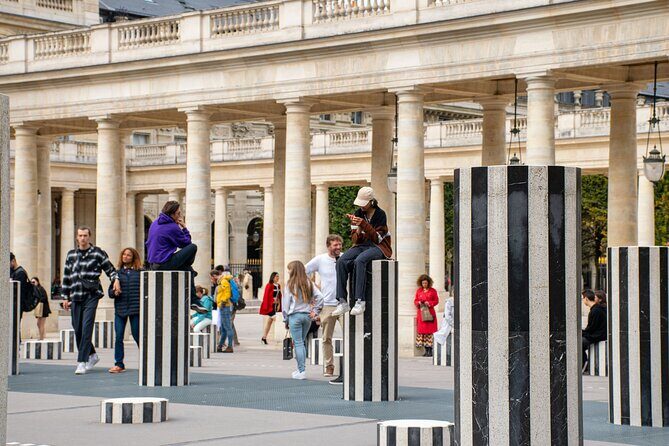
After the galleries, the tour heads to Palais-Royal, a royal palace area with a reputation for scandals and secrets. The key detail is the time depth: the tour points to stories dating back to the 1600s.
Here’s why this stop feels meaningful on a walking tour: it turns the volume down. You go from passage corridors into a place known today for gardens, columns, and a more peaceful rhythm. Even if you’re not deep into court history, it’s a strong “only in Paris” contrast.
The tour also emphasizes the dual personality of the palace complex. It has the past—scandals, secrets, power—and it also has the present—space to slow down and breathe for a bit. In a two-hour tour that covers a lot of walking, this sort of pause matters.
What to watch for: give yourself a minute to orient. Columns and courtyard layouts can make you feel turned around at first. Your guide’s job is to keep it simple, but you’ll still get more out of the stop if you take a beat before moving on.
Galerie Vero-Dodat and Passage du Grand Cerf: shop streets with serious height
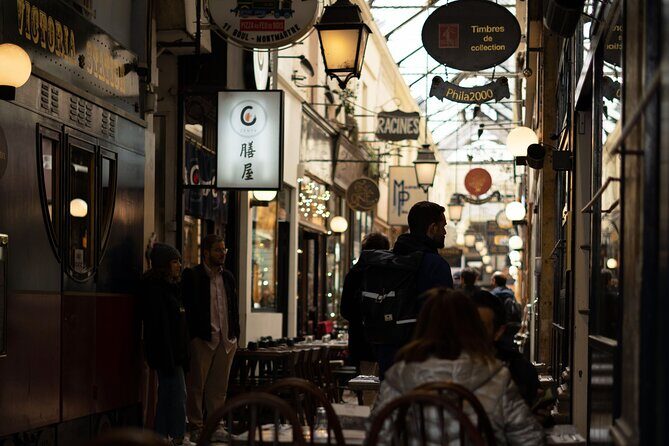
The final stretch moves back into passage territory with Galerie Vero-Dodat, then ends at Passage du Grand Cerf.
Galerie Vero-Dodat: a small village for the bourgeoisie
Galerie Vero-Dodat is described as made for the rich and still loved by the Parisian bourgeoisie. That’s a fascinating way to frame a passage: it wasn’t just a practical corridor. It was also a social space—connected to who belonged where, and how Paris class dynamics showed up in everyday design.
If you like seeing how architecture reflects society, you’ll probably enjoy the “small village inside the city” idea. Even without long explanations, the feel of the passage supports the concept: it reads like an in-between world.
Passage du Grand Cerf: 12 meters of passageway drama
Finally, you reach Passage du Grand Cerf. Before you get there, you walk a little through narrow streets in Chatelet. That transition matters. It helps the passage feel like a destination rather than just another hallway.
Then comes the headline feature: Passage du Grand Cerf is about 12 meters high. That height is a big part of why this stop works. You’re in a narrow passage, but it doesn’t feel cramped in the same way many covered lanes do. The guide steers you toward what you can do here too: it’s a strong place if you’re looking for jewelry or artisan shops.
Even if you don’t buy anything, the browse-friendly setup is useful. It’s a natural place to pause your mind after earlier sightseeing stops and just enjoy the atmosphere.
One more practical thought: because it’s a shopping-focused passage, you may see people lingering. With an 8-person group, it’s still manageable, but you’ll want to keep your “move with the group” mindset if you don’t want to get separated.
How to get the most from a covered passage walking tour
This is a two-hour route, but it’s still real walking in tight spaces. Here’s how to make it smoother:
- Wear comfortable shoes with decent grip. Passage floors can be uneven or slick depending on the weather.
- Bring a light rain layer anyway. Even covered passages don’t make you immune to drizzle at street-level entry points.
- Use your phone smartly. If you’re taking photos in places like Galerie Vivienne, pause rather than rushing for the shot.
- Expect tight turns and stop-and-go. Tight corridors mean you’ll naturally slow down, especially when looking up or listening.
Most importantly, lean into the guide’s “how to move around Paris after” advice. The tour ends around Passage du Grand Cerf (the end stop may vary within the area). When you leave, you want a plan, not just a pile of photos.
Who this walking tour fits best
I think this tour is a great match if you:
- want a rain-friendly Paris plan with real walking streets
- enjoy hidden architecture and the story behind everyday spaces
- like small groups and guided navigation through confusing areas
- are short on time and want a concentrated “passage tour” rather than a long day of random stops
- prefer English (the semi private option is available in English)
It’s also a good option for people who love the idea of Paris, but don’t love doing the mental work of route-finding. A guide handles the connections so you can focus on noticing details.
If you’re the type who wants only big, famous museums and overlooks everything that isn’t instantly recognizable, this might feel too “in-between.” But if you want the Paris that lives in the side streets, you’ll likely enjoy it.
Should you book this Passageways Walking Tour?
Yes—if you want an efficient, atmosphere-first Paris experience. For the price, you’re getting a guided route through multiple ticket-free highlights, a small group, and that handy take-home navigation advice. The covered nature makes it especially practical when weather turns.
I’d only hesitate if you dislike walking, tight spaces, or shopping-oriented streets near the end. Otherwise, this is the kind of tour that gives you a different mental map of Paris fast—one built from passages, courtyards, and clever shortcuts you’ll remember when you’re planning your next day on your own.
FAQ
How long is the Paris Passageways Walking Tour?
It runs for about 2 hours (approx.).
What is the meeting point and where does the tour end?
The tour starts at 26 Rue Cadet, 75009 Paris, and it ends at Passage du Grand Cerf in the 75002 area. The end stop might change but will be in the same area.
How many people are in the group?
The tour has a maximum of 8 travelers. There’s also a private option.
Is the tour offered in English?
Yes. The tour is offered in English, and the semi private option is only available in English.
Are there admission tickets you need to buy for the stops?
The listed stops are marked as admission ticket free, so you won’t need to pay admission fees for these specific highlights.
Is this tour good for rainy weather?
Yes. It’s ideal for rainy days because it focuses on mostly covered walkways.
Is hotel pickup included?
No. Hotel pickup and drop-off are not included.