REVIEW · PARIS
Paris: Private Sightseeing Segway Tour
Book on GetYourGuide →Operated by SeeWay · Bookable on GetYourGuide
Paris looks different at Segway speed.
This private 2-hour ride makes the big sights feel close up, with a live guide steering you from landmark to landmark instead of waiting at crosswalks all day. I love the feeling of gliding through central streets while you get history and street-level notes, not just a list of monuments, and the route saves its best photo moments for key stops like Pont Alexandre III.
The second thing I really like is the way the guides teach and keep things moving. First-timers often feel shaky for a few minutes, then the controls click, and guides like Alex and Sasha make safety the priority without turning it into a lecture. You also get repeated stops for pictures and context as you roll past places such as the Grand Palais, Petit Palais, and the Eiffel Tower area.
One clear consideration: this is not a fit for everyone. The tour isn’t recommended for children under 12, pregnant women, people with mobility impairments, or anyone over 264 lb (120 kg), so check those limits before you fall in love with the idea.
In This Review
- Key highlights to know before you go
- Segway Training First, Then Paris By Glide
- Why This Route Hits Invalides, Pont Alexandre III, and the Eiffel Tower
- Invalides: Military Museums and the Dôme Setting
- Grand Palais and Petit Palais: Classic Elegance Without the Long Museum Lines
- Pont Alexandre III: Crossing the Most Extravagant Bridge
- Champs-Élysées and Arc de Triomphe: Napoleon’s Big Message in Street Form
- Champ de Mars and the Eiffel Tower Moment
- Ecole Militaire: A Smooth Ending With One More Paris Landmark
- How Long Two Hours Really Feels
- What’s Included: Segway i2, Helmet, and a Live Guide
- Price and Value: Is $70 Worth It?
- Best Fit: Who Should Choose This Private Segway Tour
- Not for Everyone: Weight, Age, Pregnancy, and Mobility Limits
- Meeting Point Tip: 14 Rue Mathurin Régnier Isn’t a Famous Landmark
- Should You Book This Paris Segway Tour?
- FAQ
- What is the duration of the Paris Private Sightseeing Segway Tour?
- What landmarks does the tour include?
- Where do we meet the guide?
- What’s included in the price?
- What language is the tour guide?
- Who is this tour not suitable for?
Key highlights to know before you go
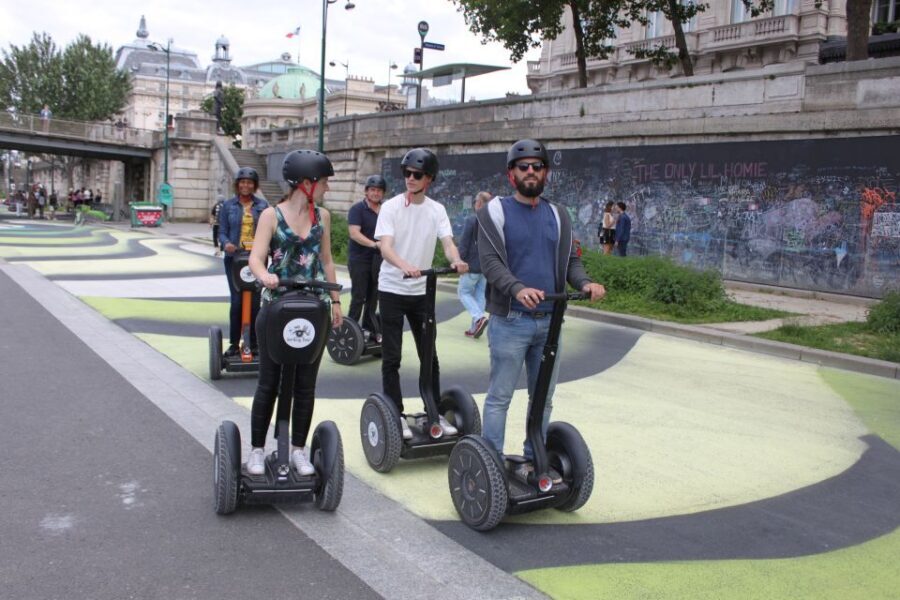
- Private, guide-led Segway sightseeing through major Paris sights in about 2 hours
- First-time friendly practice run and patient instruction from guides such as Alex and Sasha
- Pont Alexandre III + Champs-Élysées in the same loop for maximum classic Paris payoff
- Stops timed for photos, including a memorable glide toward the Eiffel Tower
- Segway i2 and helmet included so you’re not hunting gear
- Meeting point is fixed at 14 Rue Mathurin Régnier (no hotel pickup)
Segway Training First, Then Paris By Glide
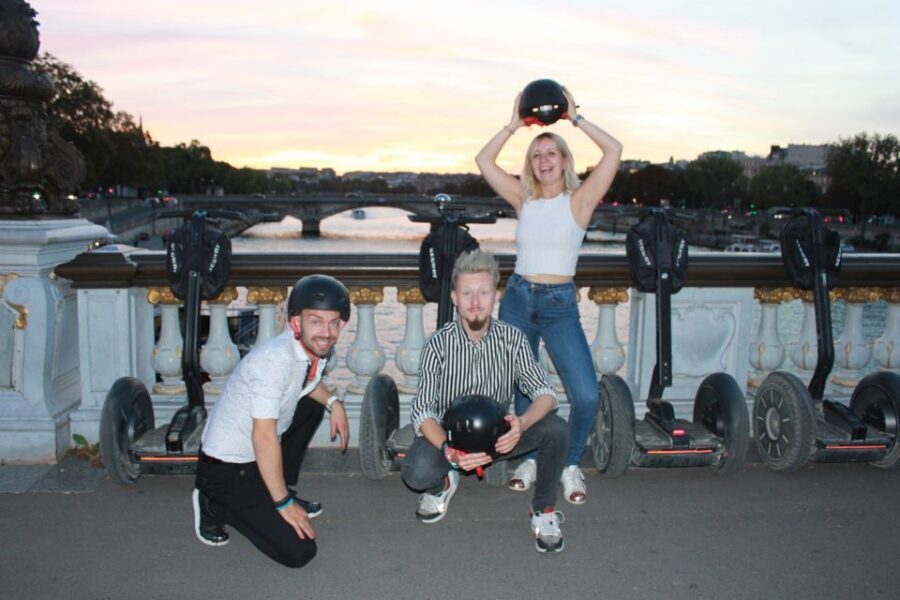
The magic of this tour is that it doesn’t waste your time. You start with the Segway basics and a short practice run, then you’re off. That matters because Paris is not a place you want to learn complicated gear on the fly. The guide’s job is to get you comfortable fast and keep you safe as you mix into city traffic patterns at a slow, controlled pace.
If you’re a total beginner, you’ll probably feel a little wobbly at first. That’s normal. The guides on this tour are known for being patient and clear with instructions until you’re steady. People also mention that once they hit the first few minutes of the route, the rest of the experience feels smooth and fun rather than stressful.
You should also know what this kind of tour does best: it turns “I want to see everything” into “I saw a lot, without getting exhausted.” Walking can be slow in Paris because you stop for photos, pause for museums, and then your legs start bargaining with you. Here, the Segway lets you keep a steady rhythm, so you reach big sights while you still have energy for dinner afterward.
You can also read our reviews of more private tours in Paris



Why This Route Hits Invalides, Pont Alexandre III, and the Eiffel Tower
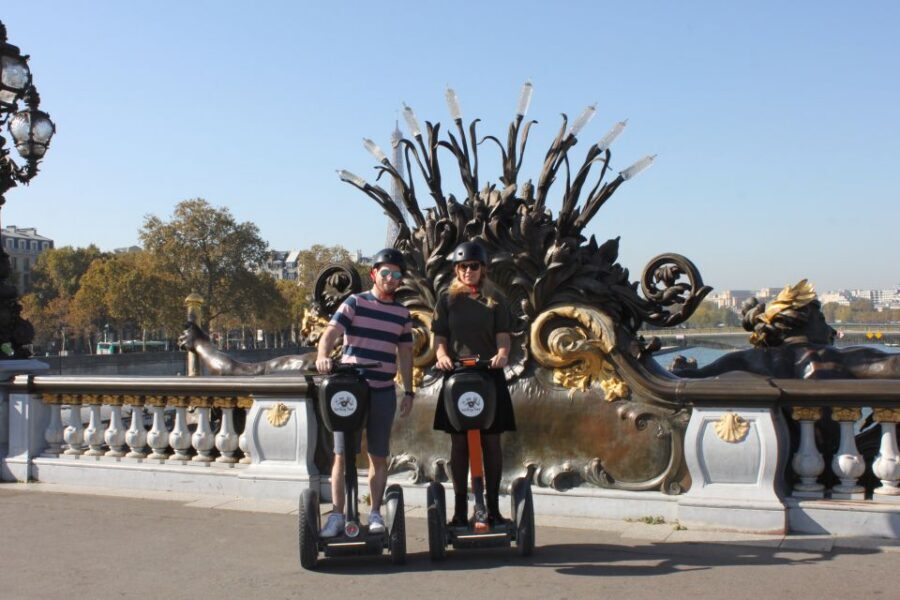
This itinerary is built like a classic Paris greatest-hits reel, but it avoids the common problem of cramming too much into too little time. You get a logical progression: start with Invalides, move through the elegant museum-palace zone around Grand Palais and Petit Palais, cross the showpiece Pont Alexandre III, then roll into the grand ceremonial axis of Champs-Élysées and Arc de Triomphe before finishing with the Eiffel Tower area.
That sequence matters. It helps you see Paris as a connected whole: the military history at Invalides, the belle-époque grandeur along the river-side and palace corridor, the 1900-era drama of Pont Alexandre III, then the Napoleonic and modern Paris atmosphere around the Champs-Élysées and Arc de Triomphe.
And the best part is the payoff at the end. The tour concludes with the view toward the Eiffel Tower—an experience that works even if you’ve already seen it from postcards. Seeing it from the streets feels different. It’s taller, louder, and more real than the photos.
Invalides: Military Museums and the Dôme Setting
You begin at Invalides, a major complex that brings military history into the center of Paris. Even if you’re not planning to go inside museums for hours, this stop sets the tone. The architecture and the scale of the complex make it feel like a city within a city.
What you’ll get from the guide here is context—how the place fits into France’s broader story. A good tour guide doesn’t just point at buildings; they help you look at them with a purpose. At Invalides, that means understanding why this area matters before you glide onward.
The practical side is that it’s also a solid “start strong” location. You’re not yet tired, you’re still getting your balance and confidence with the Segway, and it’s a good place to learn the rhythm of the tour—move, stop, listen, take a photo, repeat.
Grand Palais and Petit Palais: Classic Elegance Without the Long Museum Lines
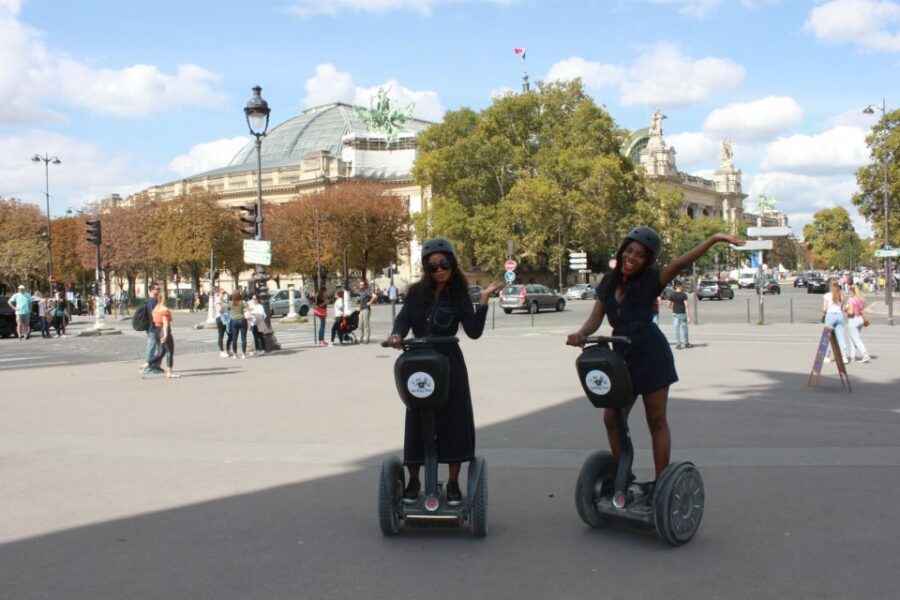
Next up are the Grand Palais and Petit Palais, both famous for their elegant exteriors. This is an important point for decision-making: you’re seeing these places from outside and during short stops, not committing to a big museum visit.
That can be a plus. If your goal is to see Paris highlights quickly, the outside architecture still delivers. Grand Palais especially is known for its grand statement, and Petit Palais balances that formality with a more refined, approachable vibe. Even without entering, you get a sense of how Paris uses stunning buildings to shape public space.
The guide also adds a modern layer. Instead of only historical facts, you’ll hear observations about today’s Paris—gastronomy, everyday life, and practical ideas for where to spend time after the tour. That combination is what makes the stops feel useful rather than like scenery checkpoints.
Pont Alexandre III: Crossing the Most Extravagant Bridge
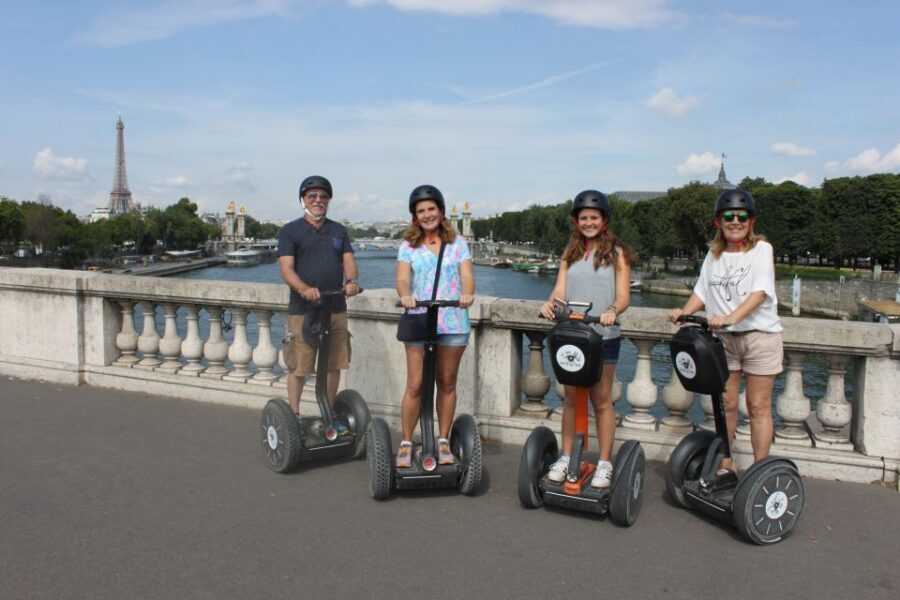
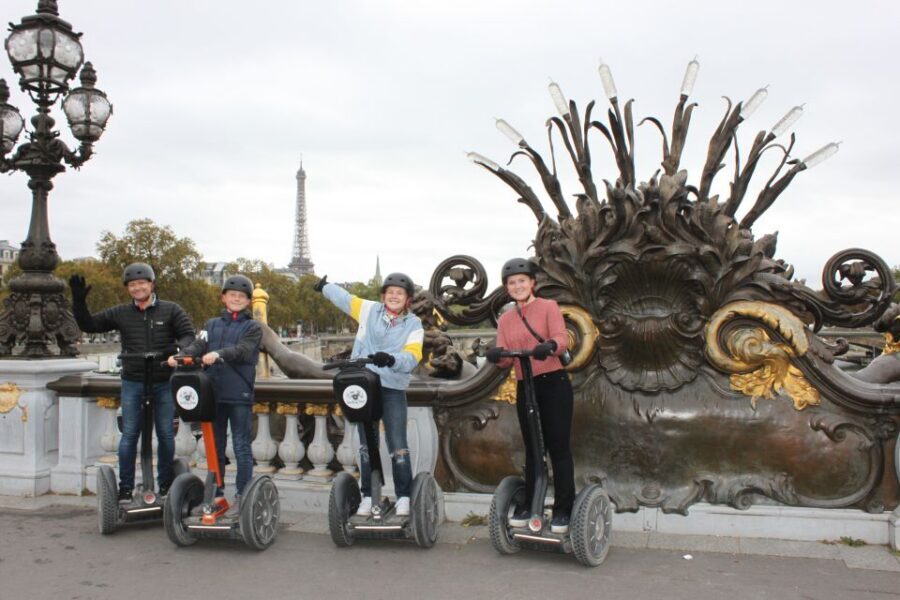
Pont Alexandre III is one of those Paris icons where you can’t help noticing the details. The bridge is built for spectacle, and crossing it by Segway makes it feel like you’re moving through a stage set. You get the view in motion, and then you get a moment to soak it in at a stop.
The 1900 origin story matters here. When the guide explains the bridge’s role in the Paris Exposition era, the ornamentation stops being random decoration. It becomes part of a plan: Paris wanted to show off its power, taste, and ambition.
This is also a great place for photos. You’ll want to take a few from different angles because the bridge’s design feeds your camera. And if you’re traveling with teens or friends who want variety beyond museums, this stop tends to deliver instant wow.






Champs-Élysées and Arc de Triomphe: Napoleon’s Big Message in Street Form
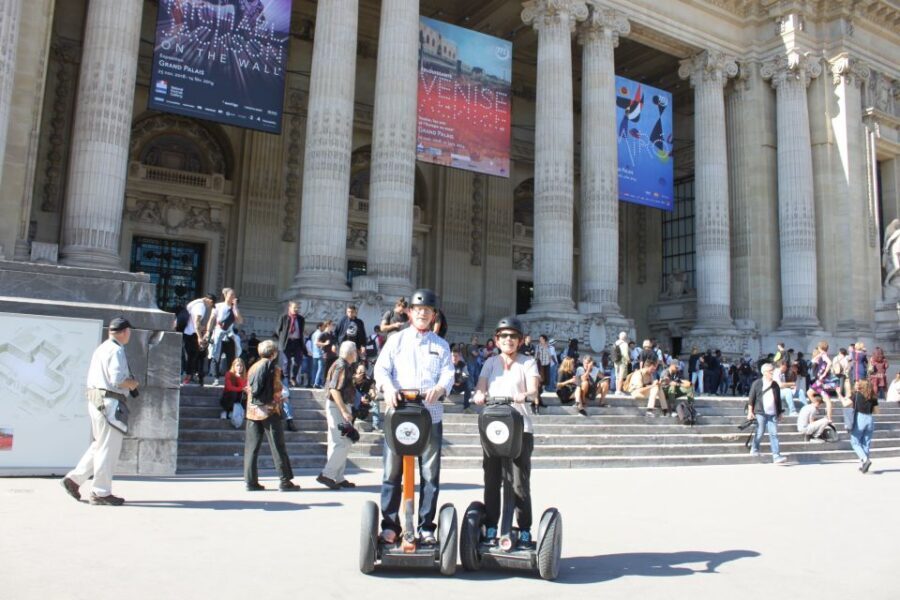
After Pont Alexandre III, the tour rolls into the world-famous Champs-Élysées. This is one of the most recognizable avenues on earth, but Segway speed changes your experience of it. You’re not stuck shuffling at a walking pace while cars and buses rush by. You get a guided “scroll” through the avenue’s energy—then you pause to take in what you’re actually looking at.
Arc de Triomphe is the next major anchor, and it’s especially powerful when you understand the reason it was commissioned. Napoleon ordered it in 1806 to commemorate victories, which gives the monument an intentional tone. It’s not only a photo backdrop; it’s a statement placed in the city on purpose.
One practical advantage: by the time you reach this axis, you’ve already seen the more museum-heavy parts of Paris. So the Arc stop feels like a shift—from ornate architecture and history buildings into the ceremonial public space where modern Paris performs itself.
Champ de Mars and the Eiffel Tower Moment
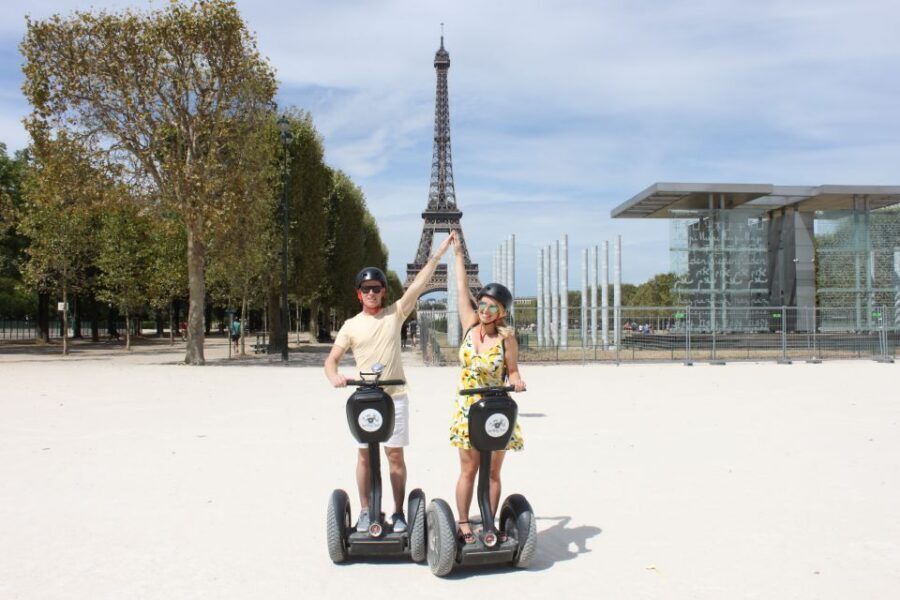
The tour then flows toward Champ de Mars and the Eiffel Tower area. Champ de Mars is a wide, open setting that makes the Eiffel Tower feel closer and more dramatic. From a street-level view, the tower reads as structure, not just a landmark.
The highlight here is the glide toward the Eiffel Tower. You’re not stuck at one spot the whole time, and you’re not walking every step either. You get brief, timed time at the key viewpoints, enough for photos and for that surprised feeling of seeing it in person.
Also, if you’re hoping for an evening vibe later, this tour is a nice way to build momentum. Some people mention doing this, then heading out for dinner and watching the Eiffel Tower sparkle at night. Even if you don’t plan the timing that tightly, you’ll leave with a clear sense of where the tower sits in the city so you can return or plan dinner nearby.
Ecole Militaire: A Smooth Ending With One More Paris Landmark
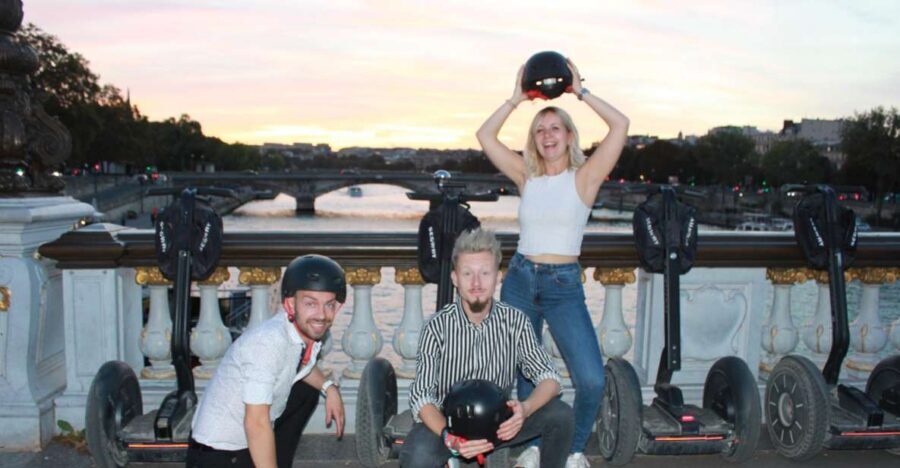
The tour doesn’t stop once you see the tower area. It finishes with time around Ecole Militaire, which helps you avoid the common letdown where an itinerary ends right as your excitement peaks.
Ecole Militaire adds a “final chapter” feeling. It’s another landmark tied to France’s institutional story, so the tour closes with a sense of continuity: you started in a military-history complex at Invalides, and you end in another military educational site setting.
This also makes the return to the meeting point feel more natural. Instead of rushing back immediately, you get one more stop to reset your eyes and take in another slice of Paris identity before you wrap up.
How Long Two Hours Really Feels
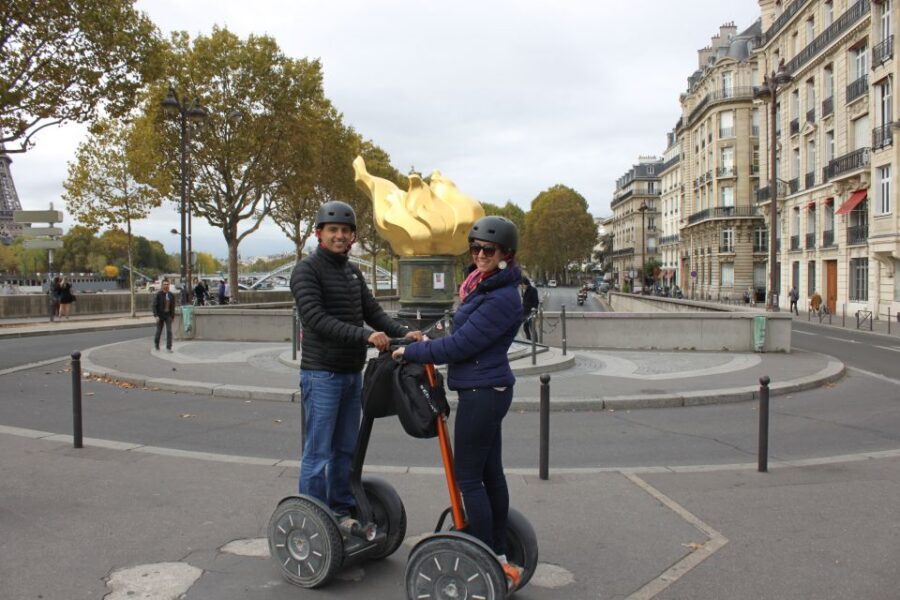
On paper, it’s 2 hours. In practice, it works because you have a rhythm: short riding segments, then short sight stops. The tour time is structured so you’re not constantly standing still, and you’re not constantly moving past everything without time to look.
You’ll likely spend around a quarter hour at Invalides, about a quarter hour around the Pont Alexandre III area, then shorter timed blocks at places like Grand Palais, Petit Palais, Champs-Élysées, Arc de Triomphe, Champ de Mars, and finally the Eiffel Tower approach area. The exact minutes may vary depending on the day and traffic, but the flow stays consistent.
Two hours is also a sweet spot for people who want the big sights but don’t want a full-day commitment. If your Paris itinerary is already packed with museum tickets, cafés, and walking tours, this gives you an efficient, different way to cover the city’s main monuments in one go.
What’s Included: Segway i2, Helmet, and a Live Guide
You don’t need to bring your own Segway or helmet. The tour includes the Segway i2, a helmet, and a live guide. That inclusion matters for value because it removes friction. You can focus on showing up and learning the controls instead of renting equipment or hunting gear.
The guide experience is the other key part. The tour is private, and the guide speaks English and French. People also describe guides as patient when it’s someone’s first Segway and as attentive about stopping at key points for safety and photos.
Some guides also help with small extras. In the feedback provided, people mention the guide taking photos for them and even giving water bottles. Those details aren’t something you should demand, but they add to the sense that you’re getting a full service tour rather than a “follow the route” experience.
Price and Value: Is $70 Worth It?
At $70 per person for 2 hours, the question isn’t just cost. It’s what you get for that money: transportation plus guiding plus vehicle rental plus safety training. Segways can be a splurge compared to public transit, but you’re also paying for time.
Here’s how I think about value on this tour:
- You cover several major landmarks that would take much longer on foot, especially if you factor in photo stops and the need to cross streets safely.
- You get a guide who explains what you’re seeing. That turns “I walked past it” into “I understood why it matters.”
- You get the Segway equipment included, so the experience is plug-and-play.
If you’re in Paris for a short time and you want a high hit-rate day—Invalides, Grand Palais, Petit Palais, Pont Alexandre III, Champs-Élysées, Arc de Triomphe, and the Eiffel Tower area—this price can feel fair. If you’re traveling solo on a shoestring or you enjoy long walking days, you might decide to spend your money on a museum ticket instead. But for most first-timers who want big monuments with less fatigue, the math usually works.
Best Fit: Who Should Choose This Private Segway Tour
This is a strong choice if you:
- Want to see the big Paris highlights in one compact outing
- Have at least a bit of curiosity about history and city life
- Like an active option that still includes guided stops and photos
- Are traveling with teens or family members who might tire of only walking
It’s also a good fit for people who are nervous about driving a Segway. The guides have a reputation for making the practice run simple and keeping the tour safe. If you follow the instructions and move at the pace they set, you’ll likely find it easier than you expect.
And because it’s a private group, you can generally feel less rushed than with large, crowded tours. That matters on the Champs-Élysées and near the Eiffel Tower area, where pedestrian flow can get messy fast.
Not for Everyone: Weight, Age, Pregnancy, and Mobility Limits
This part is not negotiable. The tour is not recommended for:
- Children under 12
- Pregnant women
- People with mobility impairments
- Anyone over 264 lb (120 kg)
If any of these apply, your best move is to choose a walking or alternative vehicle tour. Segway rules exist for a reason—comfort and safety. It’s better to protect the experience than to force something that won’t fit your body.
Meeting Point Tip: 14 Rue Mathurin Régnier Isn’t a Famous Landmark
You meet at 14 Rue Mathurin Régnier, 75015 Paris. There’s no guarantee the meeting spot looks like a monument on your map. Some people describe it as an office block on a side street, so plan to arrive a few minutes early with the address handy.
If you’re worried about being lost, do this: stand outside the meeting point, double-check the address, and ring the bell rather than wandering around nearby trying to guess. It’s a small street, and that saves time when you’re already on a schedule.
Also, watch for city traffic and event road blocks. The guide’s flexibility can make a difference if you’re delayed. Just don’t treat delays as something you can ignore—build in a buffer.
Should You Book This Paris Segway Tour?
Book it if you want a fun, efficient way to hit classic Paris monuments with a live guide and clear guidance on using the Segway. At $70 per person for two hours, it’s easiest to justify if you’re short on time, want big-name sights, and don’t want your day swallowed by walking.
Skip it if you need an accessible option, you’re traveling with someone who falls outside the age or weight guidance, or you prefer slow, self-directed exploring with no vehicle time. In those cases, a walking tour or museum-focused day may feel better.
If you fit the limits and you’re excited by the idea of floating past Paris highlights, this one is a strong bet—especially because it ends with a satisfying Eiffel Tower moment rather than stopping mid-route.
FAQ
What is the duration of the Paris Private Sightseeing Segway Tour?
The tour lasts 2 hours.
What landmarks does the tour include?
You’ll see Dôme des Invalides, Grand Palais, Petit Palais, Pont Alexandre III, Champs-Élysées, Arc de Triomphe, Champ de Mars, the Eiffel Tower area, and Ecole Militaire.
Where do we meet the guide?
Meet your guide at 14 Rue Mathurin Régnier, 75015 Paris, France.
What’s included in the price?
Included are the Segway i2, a helmet, and a guide.
What language is the tour guide?
The guide offers live commentary in English and French.
Who is this tour not suitable for?
The tour is not recommended for children under 12, pregnant women, people with mobility impairments, and anyone over 264 lbs (120 kg).